
Guided Hiking in Switzerland: Finding Your Social Group
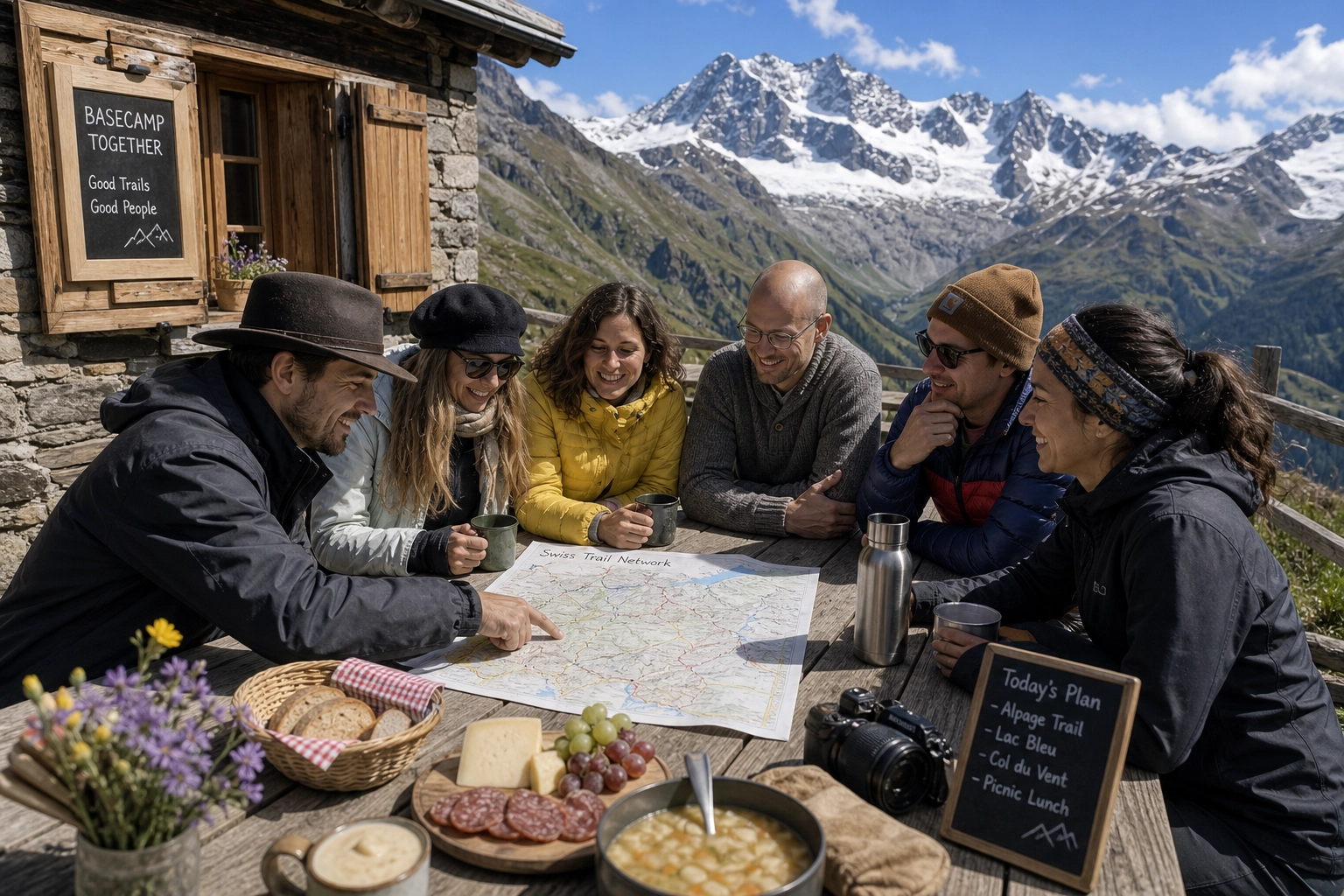
If you search for guided hiking in the Swiss Alps, the internet will immediately try to sell you a $6,000 luxury package. The standard industry offering involves a meticulously planned, highly sanitized, and frankly rigid itinerary where your bags are shuttled between upscale hotels by van while you walk. It is a beautiful way to see the mountains, but it caters heavily to an older, high-budget demographic.
For solo travelers, digital nomads, budget-conscious backpackers, and families who want a communal experience, that traditional model feels isolating. You don’t just want to see the Matterhorn or Mont Blanc; you want to share a grueling climb with like-minded people, split a hard-earned beer at the summit, and return to a basecamp where communal dinners and shared stories are prioritized over turn-down service and mints on pillows.
The reality of guided hiking in Switzerland is that you do not need to empty your bank account to access professional guides, world-class trails, and seamless logistics. A new, community-driven model—often centered around adventure lodges and basecamps—has emerged. This approach strips away the white-glove luxury and replaces it with high-speed Wi-Fi, home-cooked meals, and a genuine “home away from home” atmosphere.
The Myth of the Luxury-Only Swiss Tour
Switzerland has long been branded as the playground of the elite. Traditional tour operators like Backroads or Wilderness Travel do an incredible job of curating high-end treks. However, this positioning has created a widespread myth that safe, guided alpine hiking is exclusively a luxury product.
Here is the contrarian truth: The mountains do not care how much you paid for your hotel. The physical challenge of gaining 1,200 meters of elevation in the Val de Bagnes is exactly the same whether you are sleeping in a five-star chalet or a vibrant, community-run hostel.
The traditional hut-to-hut or hotel-to-hotel guided tour operates on a strict schedule. If it rains on day three, you are hiking in the rain, because your reservation in the next valley is non-refundable.
The basecamp model flips this. By utilizing a central hub—like the Ski Hostel in the Liddes or St. Stephan regions—the logistics are entirely different. You sleep in the same comfortable bed every night. The host and volunteer guides monitor the micro-climates of the Alps each morning. If a massive storm is rolling into the Valais region, the group can pivot, load into a van, and drive an hour to a completely different weather system for a sunnier, safer hike. Flexibility is the ultimate alpine luxury.
Traditional Guided Tours vs. The Social Basecamp Model
To understand why younger adventurers, remote workers, and international backpackers are abandoning the legacy tour model, we need to look at how the daily experience diverges.
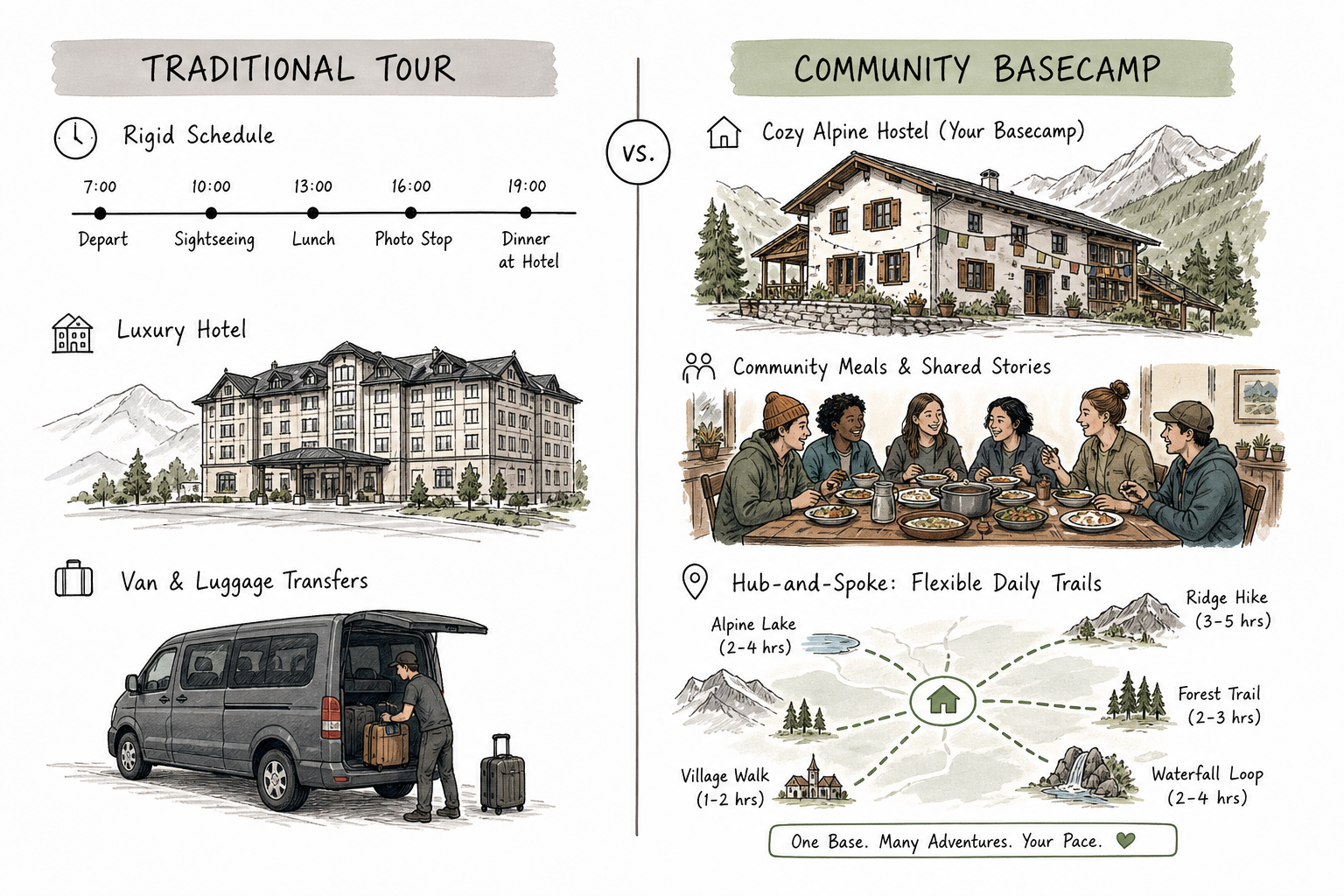
| Feature | Traditional Guided Tours | Community-Driven Basecamps |
|---|---|---|
| Demographic | Often 50+, wealthy couples, established friend groups. | Solo travelers (20s-40s), digital nomads, backpackers, adventurous families. |
| Flexibility | Rigid. Must reach the next hotel regardless of weather or group fatigue. | Highly flexible. Daily excursions adapt to weather, skill levels, and group consensus. |
| Social Dynamics | Formal. You eat at separate tables or engage in polite, structured mingling. | Highly social. Communal dinners, spa nights, BBQs, and organic bonding. |
| Cost | Extremely high. Often $500 to $800+ per day. | Affordable. Often bundled with accommodation, meals, and gear rental for a fraction of the cost. |
| Luggage | Forwarded by van every day (high carbon footprint and logistical risk). | Unpacked once. Your gear stays in your room while you take day packs on the trails. |
| Remote Work | Nearly impossible due to daily transit and inconsistent remote Wi-Fi. | Supported. High-speed Wi-Fi, dedicated common areas, and a culture that respects work blocks. |
Navigating the Val de Bagnes and The Mont Blanc Massif
When you establish a basecamp in a strategic location like Liddes, you unlock some of the most dramatic topography in Europe. You aren’t just confined to one trail; you have direct access to over 250 kilometers of interconnected alpine routes.
The Val de Bagnes
This region is the beating heart of Swiss mountain culture. It is famous for the Verbier ski resort, but in the summer, it transforms into a hiker’s paradise. The trails here range from meandering paths along ancient bisses (irrigation channels built into the cliffs) to intense scrambles up the flanks of the Grand Combin.
Guided hikes in this specific valley often focus on discovering the local flora and fauna. It is not uncommon to sit quietly on a ridgeline while your guide points out a herd of chamois or ibex navigating a near-vertical rock face. Because you are with a guide who knows the seasonal patterns, you avoid the heavily trafficked tourist paths and find the secluded high-alpine lakes that don’t appear on standard Instagram feeds.
The Three-Country Advantage: Border Excursions
One of the most unique aspects of basing yourself in the heart of the Swiss Alps is the proximity to international borders. You aren’t just limited to Switzerland.
A strong guided hiking program will leverage this geography by offering border-crossing excursions.
- Aosta, Italy: A short drive and a steep hike through a high mountain pass can drop you into the Aosta Valley. The culture shifts immediately. The architecture changes, the language switches to Italian, and instead of a mid-hike Rivella (a Swiss soda), you are stopping for a perfectly pulled espresso and fresh focaccia.
- Chamonix, France: Head in the opposite direction, and you find yourself in the shadow of Mont Blanc. Guided excursions to Chamonix offer a stark contrast to the quiet Swiss valleys. It is the bustling, adrenaline-fueled capital of world alpinism. Walking the balcony trails here provides unobstructed views of massive, tumbling glaciers.
Doing these border crossings solo requires complex logistical planning regarding public transit, border requirements, and unfamiliar trail markers. A guided basecamp program handles the transport and navigation, allowing you to simply enjoy the cultural whiplash of eating Swiss chocolate for breakfast, Italian pasta for lunch, and French cheese for dinner.
Selecting the Right Guided Hike for Your Skill Level
One of the greatest fears for a solo traveler joining a guided group is the pace. You are either terrified of holding the group back, or frustrated by a pace that feels like a slow crawl.
In Switzerland, trail grading is notoriously understated. What the Swiss call a “pleasant walk” often involves a 600-meter vertical ascent that leaves foreigners gasping for air. This is why joining a structured basecamp environment is so beneficial—the guides and hosts curate different levels of activity daily.
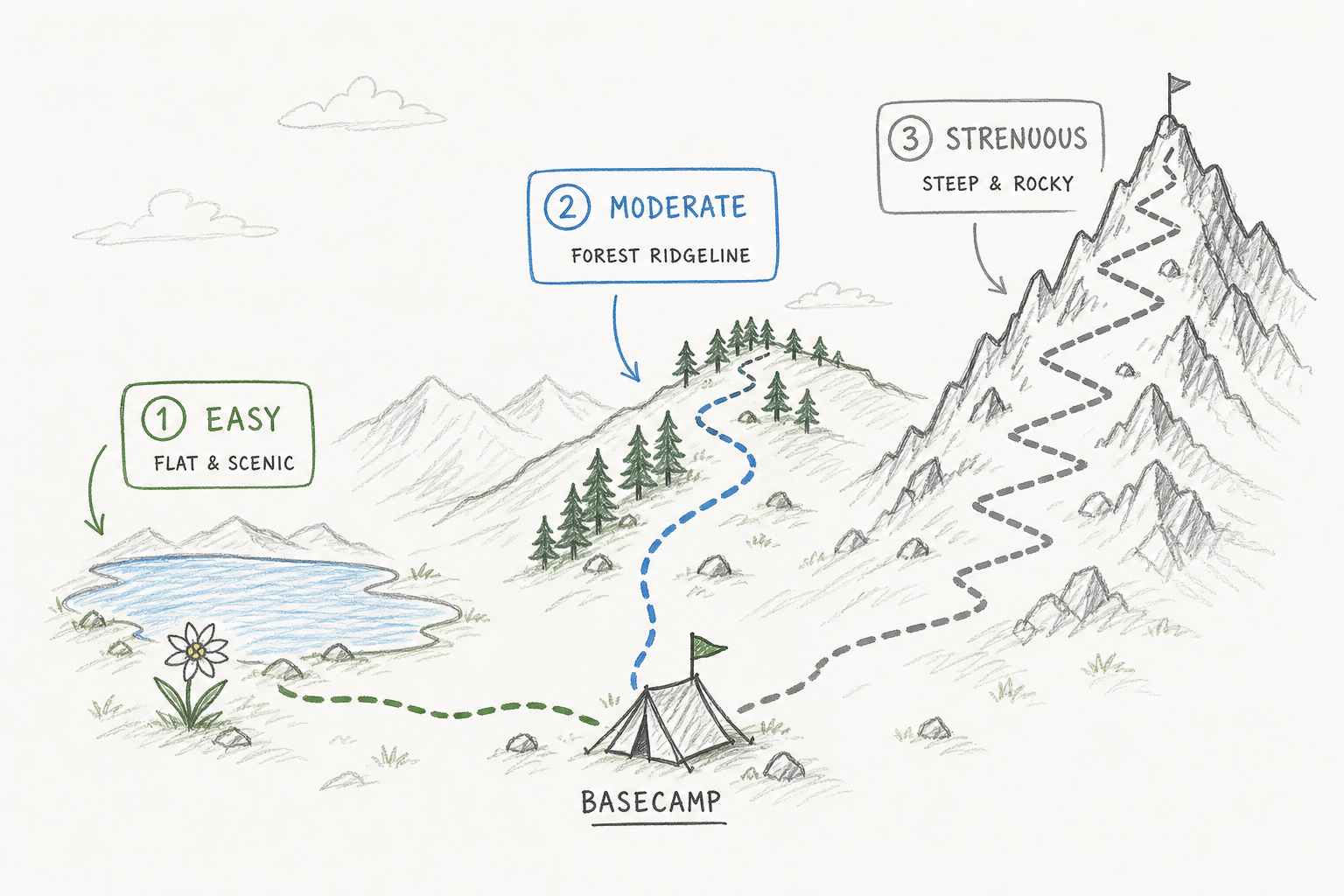
Level 1: Easy / Beginner
- The Terrain: Well-maintained paths, wide gravel tracks, minimal exposure to steep drops.
- The Effort: 200 to 500 meters of elevation gain. Typically 3 to 5 hours of walking.
- The Vibe: Conversational. These hikes are about taking photos, identifying wildflowers, and enjoying a long picnic lunch by a glacial lake. It is the perfect entry point for someone adjusting to the altitude or recovering from a long travel day.
Level 2: Moderate
- The Terrain: Single-track trails, rocky steps, some steep ascents through forests breaking out above the tree line.
- The Effort: 600 to 1,000 meters of elevation gain. 5 to 7 hours on the trail.
- The Vibe: This is the sweet spot for most active travelers. You will sweat, your legs will burn on the ascents, but the pace allows for recovery. These hikes often target prominent viewpoints or mountain passes (cols) that offer sweeping views of adjacent valleys.
Level 3: Strenuous / Expert
- The Terrain: High-altitude environments, boulder fields, scree slopes, narrow ridges with significant exposure.
- The Effort: 1,200+ meters of elevation gain. 8 to 10 hours of sustained effort.
- The Vibe: Focused and athletic. The conversation usually stops during the steep climbs. These routes require proper footwear, layered clothing, and serious mental grit. Reaching the summit on a strenuous day fosters intense camaraderie within the group.
The Social Dynamics: From Shared Suffering to Communal Dinners
Why does a communal adventure lodge work so well for hiking? It comes down to the psychology of shared effort.
When you spend six hours sweating alongside a stranger, navigating rocky switchbacks and helping each other over difficult stream crossings, the normal social barriers dissolve. You skip the polite “What do you do for work?” small talk and move straight to genuine connection.
Consider Sarah, a 32-year-old UX designer from Toronto. She booked a two-week stay at a mountain lodge in Liddes. She arrived alone, nervous about her fitness level, and worried she wouldn’t fit in. On day two, she joined a moderate hike toward a high pass. The final hour was a brutal, unshaded climb. Another guest, a backpacker from Germany, stayed back to hike at her pace, offering encouragement. When they finally crested the ridge, the entire group cheered.
That evening, the dynamic wasn’t formal or isolated. The group returned to the hostel, stripped off their muddy boots, and gathered in the common space. The hosts had prepared a massive Brazilian-influenced BBQ—a warm, hearty, spice-rich contrast to standard Swiss alpine fare of cheese and potatoes. Stories from the trail were amplified, beers were shared, and by the time the post-hike spa night began, Sarah had found a tight-knit community.
This is the “home away from home” atmosphere that luxury tours struggle to replicate. It isn’t forced networking; it is organic bonding forged in the mountains and cemented around a dinner table.
Integrating Remote Work: The Digital Nomad Angle
The profile of the average hiker in Switzerland is changing. It is no longer just vacationers; it is remote workers integrating adventure into their daily lives. The traditional guided tour model, which requires you to be off-grid and moving from 8:00 AM to 5:00 PM every day, is incompatible with remote work.
A basecamp model is designed for it. Imagine waking up at 6:00 AM, logging onto high-speed Wi-Fi to clear emails and attend a daily stand-up meeting. By 9:00 AM, you shut the laptop, grab your rented gear from the hostel’s gear room, and jump into the van for a guided ascent of a nearby peak.
You spend four hours pushing your physical limits in the crisp alpine air, eating a packed lunch on a granite slab overlooking a glacier. By 3:00 PM, you are back at the lodge, showered, and settled into a comfortable chair in a shared workspace, knocking out deep-focus work while looking out the window at the very mountain you just climbed.
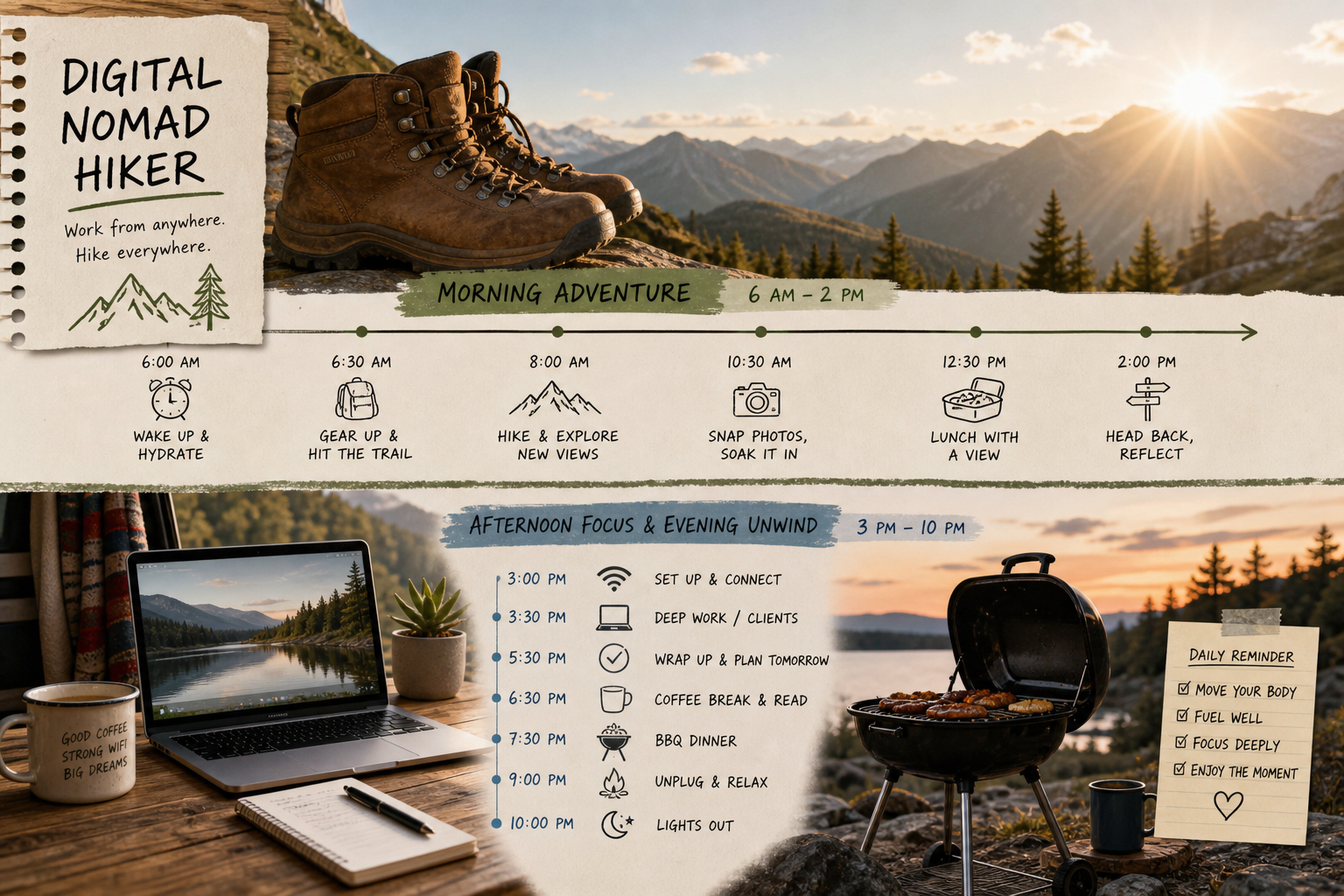
This lifestyle requires two things: reliable infrastructure (fast internet, quiet spaces) and logistical simplicity. When the hostel host manages the trail planning, the transport, and the cooking, your cognitive load is freed up entirely for your work and your hike.
A Practical Framework: Preparing for Your Alpine Basecamp
Even with guides handling the logistics, hiking in the Swiss Alps requires personal preparation. The weather can swing wildly, and the terrain is unforgiving to the unprepared.
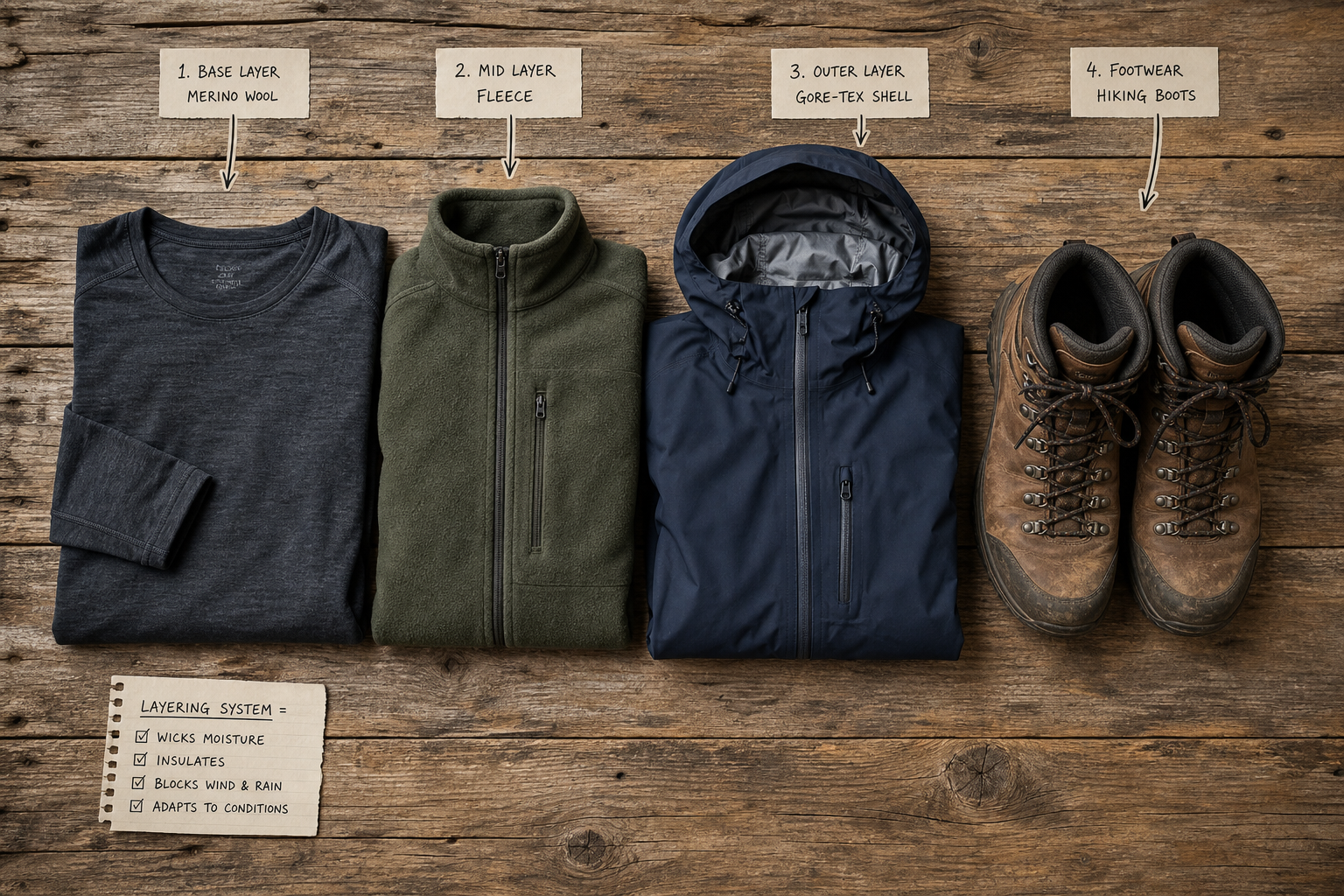
1. The Modular Packing System
One of the massive advantages of a community lodge is gear rental. Traveling internationally with heavy boots, trekking poles, and waterproof shells is a nightmare. However, you still need to master the art of layering with what you bring or rent.
- Base Layer: Moisture-wicking synthetic or merino wool top. Never cotton. Cotton holds sweat, and when the alpine wind hits you at 2,500 meters, cotton will cause your core temperature to plummet.
- Mid-Layer: A light fleece or synthetic puffy jacket. This goes on when you stop for lunch and comes off when you are climbing.
- Outer Shell: A breathable, waterproof Gore-Tex (or equivalent) jacket. In the Alps, a sunny morning can turn into a violent afternoon thunderstorm in less than twenty minutes.
- Footwear: Stiff-soled trail runners or dedicated hiking boots. If renting, ensure you wear them around the lodge for an evening to check for pressure points before hitting the trail.
2. Physical Preparation
While basecamps offer “Easy” hikes, you should still prepare your body. Focus on eccentric leg strength (downhill walking is what destroys knees and quads) and cardiovascular endurance. Stairmaster sessions, loaded step-downs, and long walks with a weighted pack in your home city will pay massive dividends in Switzerland.
3. Financial Planning
Guided alpine hiking does not have to ruin your budget, but you must be strategic. By choosing an all-inclusive basecamp, you lock in your major costs (bed, food, transport, guiding) upfront. To keep extraneous costs down, check out our 7 Tips for Hiking in Switzerland (Without the High Cost). The biggest financial leaks usually come from mid-hike cable car rides and buying lunch at high-altitude restaurants—both of which are mitigated when your hostel provides packed lunches and ground transport.
The Ecosystem of Alpine Support
The unsung heroes of the community basecamp model are the volunteers and hosts. Unlike a clinical, corporate tour guide who recites a memorized script about the geology of the Alps, lodge hosts are living the lifestyle.
They know which local bakery has the best croissants. They know that a certain trail is currently blocked by a late-season snowpack, or that a specific farmer in the valley just opened their seasonal cheese stall. They are the ones organizing the weekly itineraries, managing the complex logistics of coordinating 15 people of varying fitness levels, and ensuring that everyone gets home safely to a hot meal.
This ecosystem relies on a shared social contract. Guests are expected to bring good energy, respect the mountains, and contribute to the communal atmosphere. It is not a place for divas; it is a place for participants.
Overcoming the Intimidation Factor
Many solo travelers look at the towering peaks of the Valais or the jagged skyline of Chamonix and feel a profound sense of imposter syndrome. “I’m not a real mountaineer,” they think. “I don’t belong here.”
This is the greatest lie in outdoor culture. The Swiss Alps are steep and demanding, yes, but they are also incredibly accessible if you have the right support system. You do not need to be an elite athlete to enjoy this landscape.
The guided basecamp model democratizes the mountains. It places you in a group of peers who are likely feeling the exact same anxieties. When you strip away the pressure of navigating, route-finding, and surviving in a foreign environment alone, you are free to simply put one foot in front of the other, breathe the cold air, and enjoy the monumental scale of the world around you.
FAQs: Guided Hiking in Switzerland
How much does a guided hike cost in Switzerland?
If you book through a traditional luxury tour operator (like Alpenwild or Exodus Travels), you can expect to pay $4,000 to $7,000+ for a week-long package. However, by utilizing a community-driven adventure lodge or hostel that bundles accommodation, home-cooked meals, and guided day-trips, you can experience a similar level of alpine access for a fraction of that cost, often fitting neatly into a standard backpacker or digital nomad budget.
Do I need to be an expert hiker to join a guided group?
No. A major benefit of the central basecamp model is that excursions are tailored to the guests currently in the lodge. Good hosts will divide groups based on ability, offering everything from flat, scenic valley walks to strenuous 1,500-meter ascents. You only need a baseline level of fitness and a willingness to try.
What is the best time of year for guided alpine hiking?
The core hiking season in the high Swiss Alps runs from late June through September. In June, you may still encounter snow patches on high passes. July and August offer the warmest weather but the busiest trails. September is often considered the optimal month—the crowds have thinned, the temperatures are crisp, and the autumn colors begin to show, though you must be prepared for the occasional early snow flurry.
Is it safe to cross borders into Italy or France on foot?
Yes, but it requires logistical knowledge. The physical trails crossing into Aosta or Chamonix are well-trodden, but weather can change rapidly at high border passes. Going with a guide ensures you have someone monitoring the meteorological data, managing the pacing, and coordinating the transport on the other side so you don’t get stranded in a foreign country after the last bus departs.
Beyond the Summit
Ultimately, guided hiking in Switzerland shouldn’t just be about ticking famous peaks off a bucket list. It is about the texture of the experience. It is the crunch of gravel under your boots, the biting chill of the wind on a ridgeline, and the deep, satisfying exhaustion that settles into your bones at the end of the day.
More than that, it is about the people you share it with. By choosing a community-driven basecamp over a sterile luxury tour or an isolated solo trek, you are choosing connection. You are guaranteeing that when you finally stand exhausted and triumphant on a Swiss peak, you will have someone standing next to you, ready to celebrate, and ready to walk back down the mountain together for dinner. dinner. a shared meal.