7 Tips for Hiking in Switzerland (Without the High Cost)
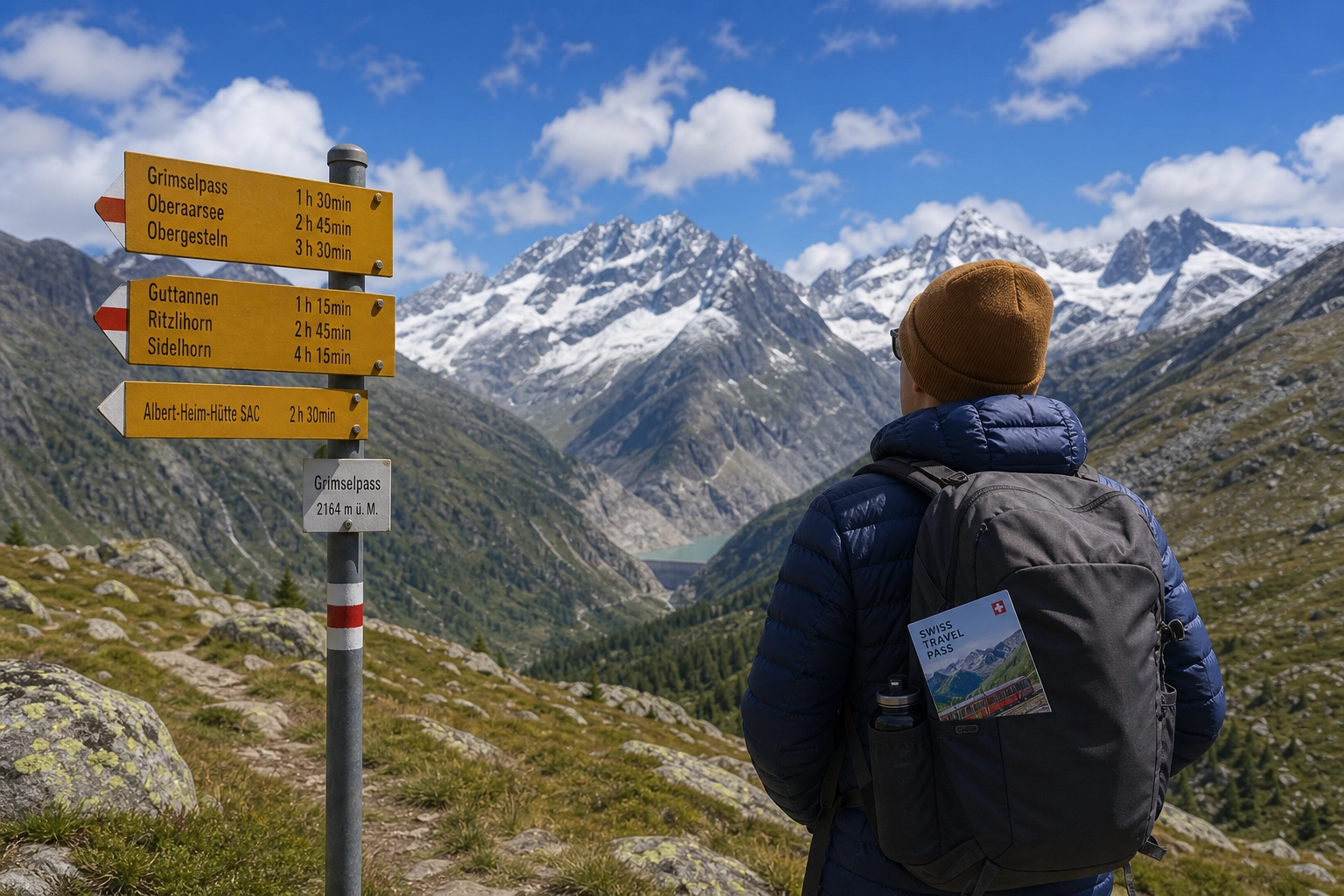
Let’s address the reality of planning a trip to the Swiss Alps: the sticker shock is real. You might find yourself staring at a menu where a simple sandwich costs CHF 15, or looking at a train ticket that rivals the cost of a budget airline flight. For many outdoor enthusiasts, the high price tag is the single biggest barrier to experiencing some of the most dramatic alpine scenery in the world.
But the Swiss Alps are not exclusively reserved for luxury travelers staying in five-star Zermatt resorts. A vibrant subculture of backpackers, digital nomads, and budget-conscious hikers navigate these mountains every season without draining their savings. By rethinking how you travel, where you sleep, and how you manage trail logistics, you can experience world-class hiking for a fraction of the expected cost.
Here are seven practical, field-tested tips for hiking in Switzerland on a budget, combining strategic planning with community-driven travel.
1. Leverage the SBB Half-Fare Card and Regional Passes
Transportation will likely be your second-highest expense after accommodation. Switzerland’s public transit network—run primarily by SBB (Swiss Federal Railways)—is famously efficient, punctual, and expensive. Buying full-price, point-to-point tickets for every trailhead and cable car will quickly consume your budget.
The Math Behind the Half-Fare Card
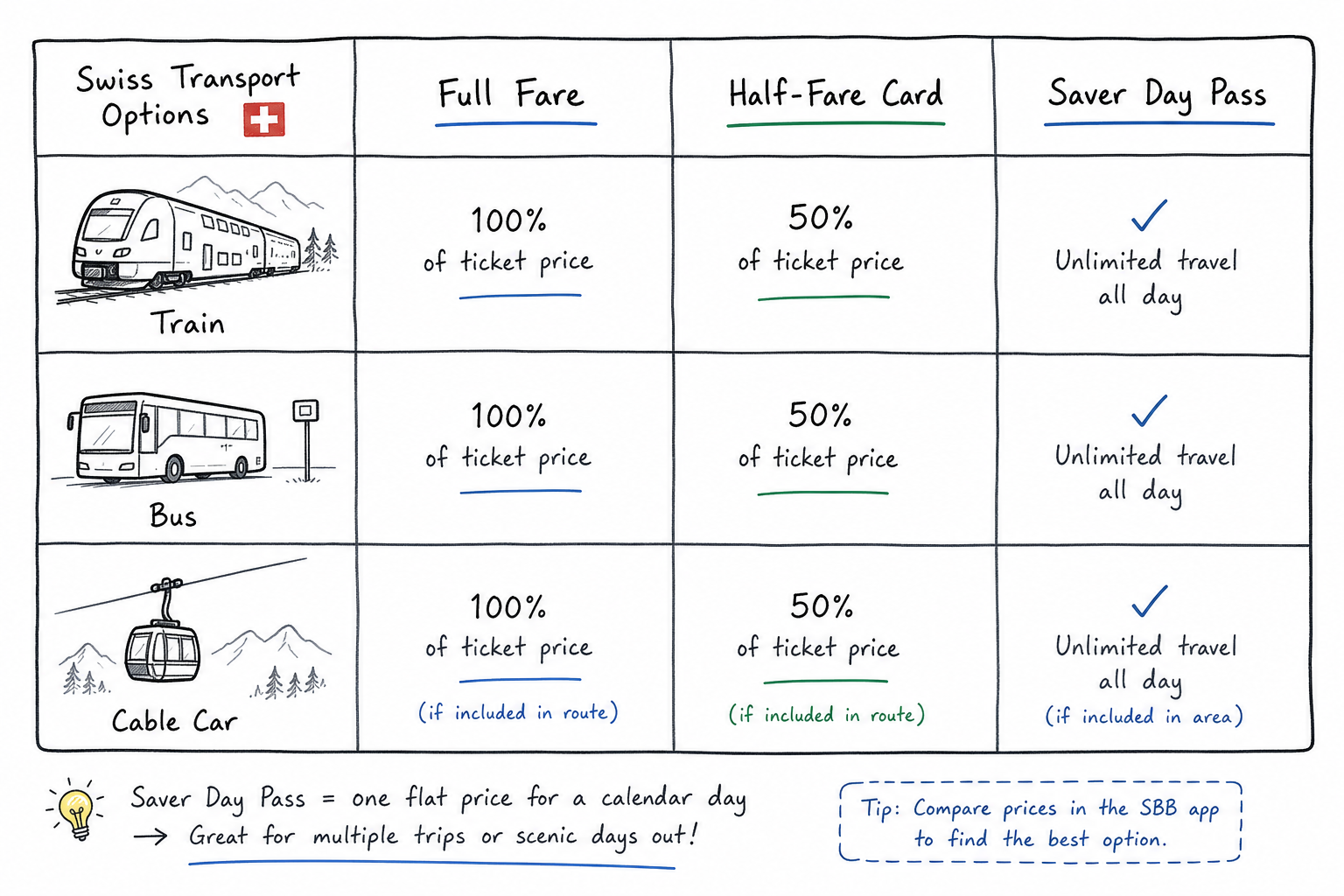
If you plan to use trains, buses, or cable cars for more than a few days, the Swiss Half-Fare Card (Halbtax) is almost always worth the initial investment. Valid for one month for tourists, it costs around CHF 120 and gives you a 50% discount on nearly all trains, buses, boats, and—crucially for hikers—mountain cable cars.
To know if it’s worth it, map out your itinerary and calculate full-price fares. If your total transit costs exceed CHF 240, the card pays for itself.
Supersaver Tickets and Saver Day Passes
Once you have the Half-Fare Card, combine it with the SBB Mobile app to hunt for discounts:
- Supersaver Tickets: Available up to 60 days in advance. These tie you to a specific train time but can offer up to 70% off the standard fare.
- Saver Day Pass: A ticket that gives you unlimited travel for a single day across the entire Swiss network. If bought far in advance, they can cost as little as CHF 29 (with a Half-Fare Card). This is perfect for days when you are crossing the country, such as traveling from Zurich airport to the Val de Bagnes region.
Avoid the Cable Car Tax
Mountain railways and gondolas (Bergbahnen) are incredibly convenient but notoriously expensive. A single return trip up a popular peak can cost CHF 60 to CHF 100. To save money, use cable cars strategically. Ride the gondola up to save your knees on a steep 1,000-meter ascent, but hike the descent. Alternatively, seek out trailheads accessible by the ubiquitous yellow PostBuses, which are fully covered by standard SBB tickets and passes, unlike privately owned mountain lifts.
2. Swap Expensive Hotels for Community-Driven Alpine Lodges
Traditional hotel stays in Switzerland easily exceed CHF 200 per night, and that rarely includes meals. If you are a solo traveler, digital nomad, or backpacker, this traditional model is not only expensive but isolating.
The most effective way to cut costs while improving your trip is to base yourself in a community-driven adventure lodge. Establishments like Ski Hostel, located in authentic alpine villages like Liddes and St. Stephan, flip the traditional hospitality model. Instead of paying à la carte for a bed, breakfast, dinner, and gear rental, these lodges offer all-inclusive packages that heavily subsidize the cost of an alpine adventure.
The Basecamp Strategy
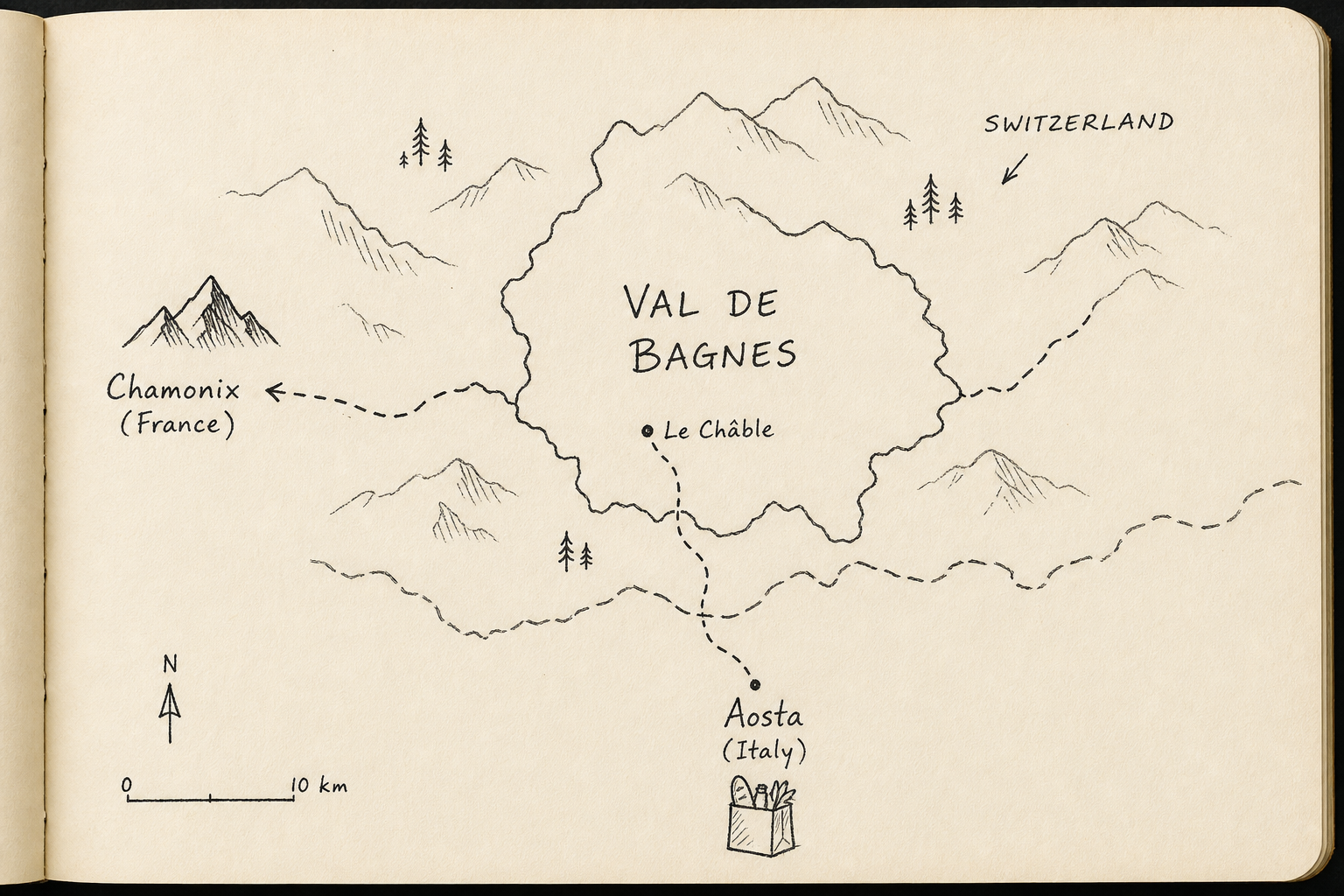
Rather than moving to a new hotel every night—which costs time, transit money, and energy—set up a “basecamp.” From a central hub in the Val de Bagnes region, you have direct access to over 250 kilometers of trails, including routes facing the iconic Mont Blanc massif.
Why this model works for budget hikers:
- Communal Dining: Eating at Swiss restaurants costs roughly CHF 30-50 per meal. Community lodges typically feature shared kitchens or provide hearty, home-cooked communal dinners (often with unique twists, like Brazilian-influenced cuisine) that keep food costs incredibly low.
- Built-in Itineraries: Instead of paying hundreds of francs for a private mountain guide, you can join weekly adventure programs curated by hosts and volunteers.
- Gear Inclusion: High-altitude environments require specific gear. Instead of buying expensive waterproofs or trekking poles for a one-off trip, community lodges often include gear rental in their stay packages.
- Remote Work Infrastructure: For digital nomads, staying in an affordable lodge with high-speed Wi-Fi allows you to extend your trip. Work during the morning, hike in the afternoon, and socialize at a BBQ gathering in the evening.
Daily Budget Comparison
| Expense Category | Traditional Swiss Resort Trip | Community Lodge Basecamp |
|---|---|---|
| Accommodation | CHF 150 - 300 / night | Included in weekly package |
| Breakfast & Dinner | CHF 60 - 90 / day | Home-cooked communal meals |
| Local Transport | CHF 30 / day | Shared volunteer transport |
| Guided Hikes | CHF 120 - 250 / day | Curated group itineraries |
| Vibe | Isolated, formal | Social, international, warm |
3. Embrace “Hut Life” for Multi-Day Treks Strategically
If you want to experience the high alpine wilderness, you need to sleep in it. The Swiss Alpine Club (SAC) operates a vast network of mountain huts (Hütten) perched on cliffs, glaciers, and mountain passes. Doing a hut-to-hut trek—like sections of the famous Haute Route—is a rite of passage.
Hut hiking is a unique experience. As noted by resources like Wander We Go, you trade privacy for atmosphere, sleeping in dormitory-style bunk rooms and eating heavy, caloric meals at long wooden tables with strangers.
Managing Hut Costs
Huts are cheaper than valley hotels, but they aren’t exactly budget hostels. A night with “half-board” (bed, dinner, and breakfast) generally costs between CHF 80 and CHF 90.
Here is how to optimize the costs:
- Do the SAC Reciprocity Math: If you plan to spend more than 4 or 5 nights in huts, consider buying a membership to the Swiss Alpine Club (or an affiliated club in your home country, like the Austrian Alpine Club, which is often cheaper to join). Members get a discount of 20% to 50% on their overnight stay.
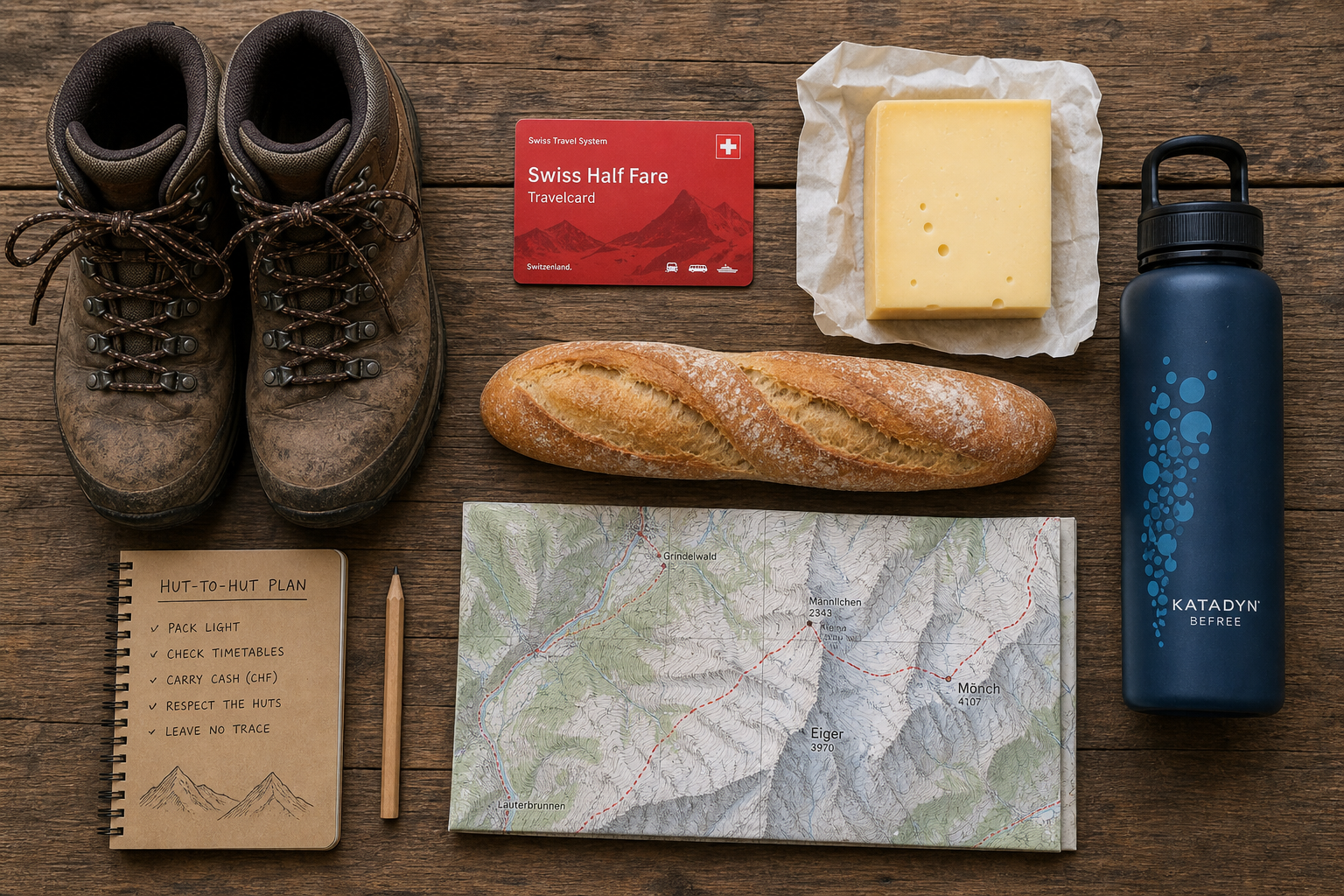
- Bring Your Own Lunch: While huts offer a packed lunch (Marschtee and sandwiches) for an extra CHF 15-20, you will save considerably by carrying your own hard cheeses, salami, and dense bread from a valley supermarket.
- Choose Off-the-Beaten-Path Huts: Highly famous huts along the Chamonix-Zermatt Haute Route book out months in advance and charge premium rates. Look toward quieter regions. Huts like the Geltenhütte in the Bernese Oberland or the Terrihütte in Graubünden offer equally stunning views without the massive crowds.
- Filter Water Carefully: Bottled water at a hut can cost CHF 10 because it has to be flown in by helicopter. Most huts have a safe tap for drinking water, but high-altitude huts on glaciers do not. Bring a lightweight water filter (like a Sawyer Squeeze or Katadyn BeFree) to filter snowmelt or stream water safely.
4. Master the Swiss Trail Signage System
Switzerland has one of the most meticulously maintained trail networks on earth, totaling over 65,000 kilometers. You rarely need to pay for premium GPS apps to find your way.
Before you start, understand the color-coded signage system, which strictly dictates the skill and gear required. Ignorance here doesn’t just cost money in rescue fees; it can be dangerous.
- Yellow Signs (Wanderweg): Broad, easy paths, often paved or well-graveled. Suitable for running shoes. Minimal elevation risk.
- Red-White-Red Signs (Bergwanderweg): Mountain trails. Expect steep, uneven terrain, rocks, and roots. Hiking boots are highly recommended. You need a baseline level of mountain fitness and surefootedness.
- Blue-White-Blue Signs (Alpinwanderweg): Alpine routes. These traverse glaciers, scree fields, and highly exposed ridges. They often require the use of your hands, and sometimes technical gear like ice axes or ropes. Do not attempt these unless you are an experienced mountaineer.
Free Digital Resources
Instead of paying for premium navigation apps, utilize free local resources. The SchweizMobil web map and app are the gold standard for Swiss hiking. They overlay the official trail network onto highly detailed topographical maps, showing exact bus stops and water sources.
For finding user-reviewed routes and inspiration, cross-reference your plans with guides like Journey Era’s 50 Best Hikes in Switzerland or browse AllTrails’ Switzerland section to read recent trail conditions.
5. Cross Borders for Cheaper Provisions and Unique Hikes
One of the best-kept secrets of hiking in the Valais region is its proximity to Italy and France. Switzerland is landlocked, and its southern and western borders trace the highest ridges of the Alps.
If you base yourself in a hub like the Val de Bagnes or Liddes, you are perfectly positioned to execute “border-crossing excursions.” This is a brilliant tactic for both diverse hiking and budget management.
The Aosta and Chamonix Strategy
Hostels and community lodges in this region frequently organize group excursions through the Grand St. Bernard Pass into Aosta, Italy, or over the Col de la Forclaz toward Chamonix, France.
Why do this?
- Grocery Arbitrage: The cost of groceries in Italy and France is significantly lower than in Switzerland. Savvy long-term travelers often take a day trip to Aosta, hike the Italian side of the Mont Blanc massif (Monte Bianco), and then fill their backpacks with Italian pasta, cured meats, wine, and coffee before returning to their Swiss basecamp.
- Diverse Trail Profiles: The Italian side of the Alps tends to be slightly wilder and less manicured than the Swiss side, offering a rugged contrast.
Mastering the Swiss Supermarket
When you are buying food within Switzerland, avoid convenience stores near train stations (like Coop Pronto or Migros Daily) as they carry a markup. Go to the large, full-sized Coop or Migros supermarkets.
Look for the budget product lines:
- M-Budget (at Migros): Distinctive green and white packaging.
- Prix Garantie (at Coop): Distinctive pink and white packaging.
You can buy a block of excellent Swiss cheese, a loaf of crusty bread, and high-quality chocolate for under CHF 10—providing enough calories for a massive day of elevation gain. Many travelers on forums like Reddit’s hiking community cite supermarket picnics as their number one tip for surviving the Swiss economy.
6. Optimize Your Gear Strategy (Rent vs. Buy)
Alpine weather is notoriously volatile. You can start a hike in a valley at 25°C (77°F) wearing shorts, and arrive at a 2,500-meter pass two hours later in a freezing whiteout. You must carry layers, a waterproof shell, a warm mid-layer, a headlamp, and a first-aid kit.
However, buying forgotten gear in a Swiss mountain town is a surefire way to blow your budget. A basic fleece that costs $40 at home might cost CHF 120 in a boutique in Verbier or Zermatt.
The Rental Advantage
If you are a casual hiker or a digital nomad traveling with a minimalist carry-on, hauling heavy hiking boots and trekking poles across Europe is inefficient.
Seek out accommodations that solve this problem. Hostels focused on adventure hospitality frequently maintain a “gear library.” At places like Ski Hostel, gear rental is often woven directly into the stay packages. You can borrow trekking poles, daypacks, and even outer layers. This prevents you from needing to purchase expensive technical gear for a one-week trip, while ensuring you are still safe on the mountain.
7. Time Your Hikes for the “Shoulder Seasons”
Switzerland experiences peak tourism twice a year: the winter ski season (late December to March) and the summer hiking season (July and August). During July and August, accommodation prices surge, mountain huts hit maximum capacity, and the trails around famous areas like the Matterhorn or the Jungfrau region feel like busy city sidewalks.
To save money and preserve your sanity, target the shoulder seasons.
June: The Early Season
June offers long daylight hours, blooming alpine wildflowers, and lower accommodation rates. However, there is a catch: high passes (above 2,000 meters) may still be choked with winter snow. If you hike in June, stick to valley routes, lower-elevation panoramic trails, or sun-drenched southern cantons like Ticino. For inspiration, check out resources on the best day hikes in Switzerland that highlight lower-altitude options.
September to Early October: The Sweet Spot
For serious hikers, September is arguably the best month to visit the Swiss Alps.
- Trail Conditions: The winter snow has melted off the high passes, opening up complex hut-to-hut routes and technical terrain.
- Weather: The aggressive summer thunderstorms become less frequent, replaced by crisp, clear, stable high-pressure systems.
- Pricing: Summer crowds recede as European schools resume, leading to shoulder-season pricing at lodges and occasionally discounted transport passes.
Just remember that many higher-altitude SAC huts close their doors for the winter by mid-October. Always verify hut operating dates before setting off late in the season.
Frequently Asked Questions
Are there free hikes in Switzerland?
Yes. Every single trail in the official Swiss hiking network (over 65,000 km) is entirely free to access. There are no national park entrance fees or trail permits required. The only costs associated with hiking are how you get to the trailhead (trains/cable cars) and where you sleep.
Do I need a mountain guide?
For yellow and red-white-red trails, absolutely not. The trails are perfectly marked, and navigation is straightforward if you pay attention. You only need a guide if you plan to tackle blue-white-blue alpine routes, cross glaciated terrain, or attempt technical summits where ropes and crampons are mandatory. For beginners looking for guidance without the hefty fee, staying at a community lodge where volunteers lead group hikes is the perfect middle ground.
How much should I budget per day for a Swiss hiking trip?
If you stay in standard hotels and eat at restaurants, expect to spend CHF 200 - 350 per day.
If you utilize a community hostel basecamp, buy supermarket lunches, and use a Half-Fare card, you can easily reduce that to CHF 80 - 120 per day (inclusive of your accommodation and food).
The Mountain Community Awaits
Hiking in Switzerland doesn’t have to be an exclusive, bank-breaking endeavor. By stepping away from the resort towns and leaning into the hostel subculture, you open up a completely different side of the Alps. You trade sterile hotel lobbies for communal dinners, expensive private guides for knowledgeable local volunteers, and massive transit bills for strategic, basecamp-style exploration. Pack smart, download your maps, and prepare for some of the most spectacular terrain on earth.