
Hotels in Swiss Mountains? Why Social Lodges Beat Luxury
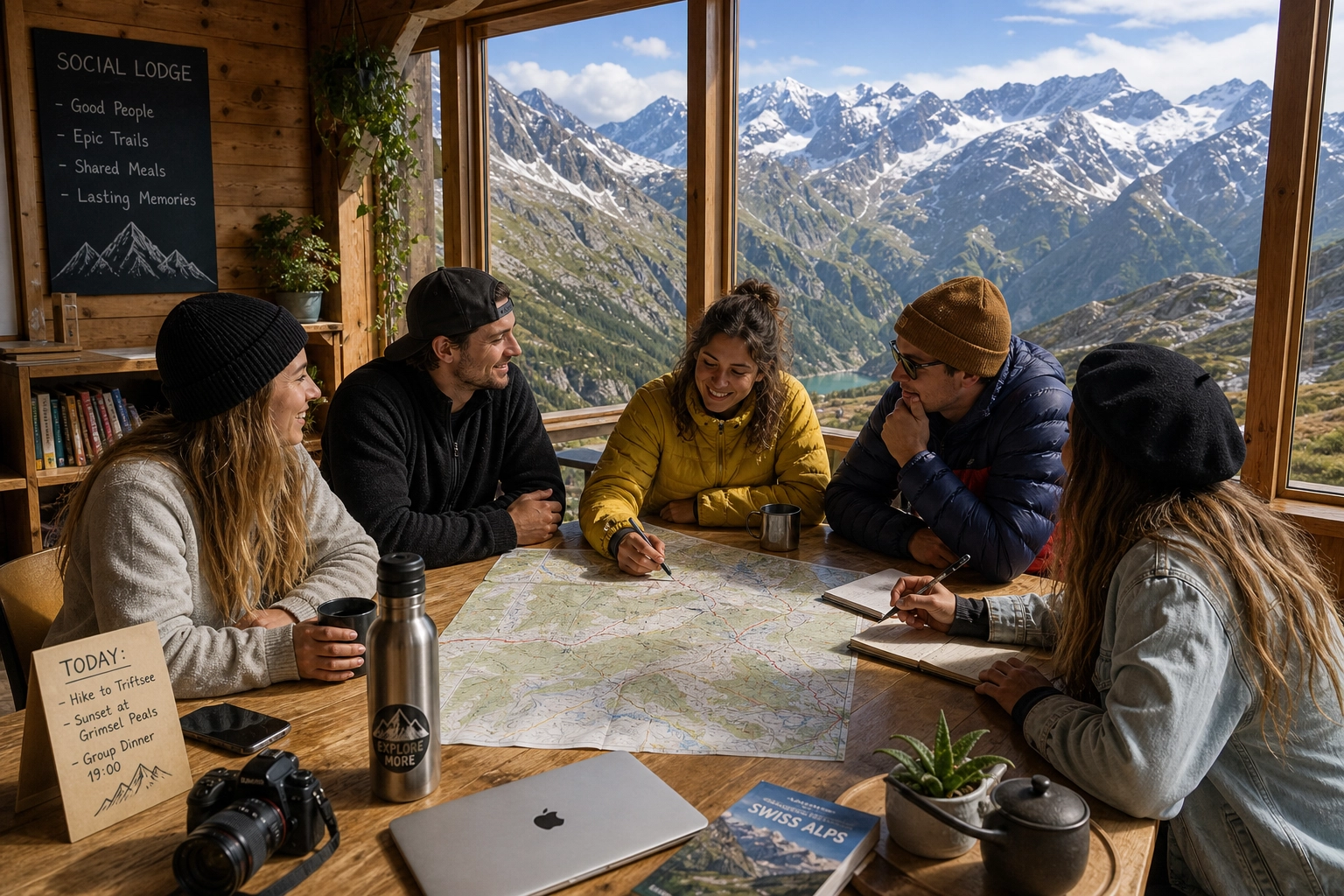
Run a quick search for Swiss mountain accommodation, and you are immediately bombarded with a very specific image. The results are dominated by infinity pools overlooking snow-capped peaks, 1,000-CHF-per-night suites, and champagne lounges tucked away in five-star enclaves.
It is an undeniably beautiful aesthetic. But for a growing demographic of modern travelers—solo adventurers, digital nomads, and budget-conscious hikers—traditional luxury hospitality feels increasingly out of touch. If you came to the Alps to actually put boots on dirt, rack up elevation, and connect with like-minded people, a sterile luxury suite is isolating. You don’t need a mint on your pillow; you need a reliable trail report, a ride to the trailhead, and someone to share a beer with after a 15-kilometer hike.
This shift in traveler priorities has fueled the rise of the social adventure lodge. Blending the community atmosphere of a backpacker hostel with the curated logistics of a guided tour, these lodges offer a “home away from home” that fundamentally outperforms traditional hotels for outdoor enthusiasts.
Here is a breakdown of why the classic Swiss mountain hotel model is being disrupted, and why a community-driven lodge might be the smartest booking you make for your next alpine trip.
The State of Swiss Mountain Hospitality in 2026
The traditional hospitality sector in Switzerland has long leaned into high-end exclusivity. Lists like 18 of the best hotels in Switzerland or The 24 most beautiful mountain hotels in Switzerland highlight properties explicitly designed for honeymoons, romantic getaways, and spa retreats.
These properties excel at what they do. If you are looking to remain entirely on the property grounds, drifting between a sauna and a Michelin-starred dining room, a traditional luxury hotel is the right tool for the job.
However, this model falls apart when you introduce the practical friction of alpine adventure. Traditional mountain hotels are designed to keep you inside. Adventure lodges are designed to get you outside.
Consider the typical friction points of a self-directed mountain trip:
- Transport: Navigating the complex web of Swiss trains, postbuses, and gondolas to reach remote trailheads.
- Equipment: Locating rental shops, aligning with their limited operating hours, and transporting gear back to your room.
- Information: Relying on generic front-desk advice rather than localized, up-to-the-minute trail conditions.
- Community: Returning to a quiet hotel room with no easy way to meet fellow hikers or find a partner for a tricky ascent the next day.
Social lodges invert this dynamic by turning the accommodation itself into a logistical basecamp and a community hub.
Luxury Hotels vs. Social Adventure Lodges: A Breakdown
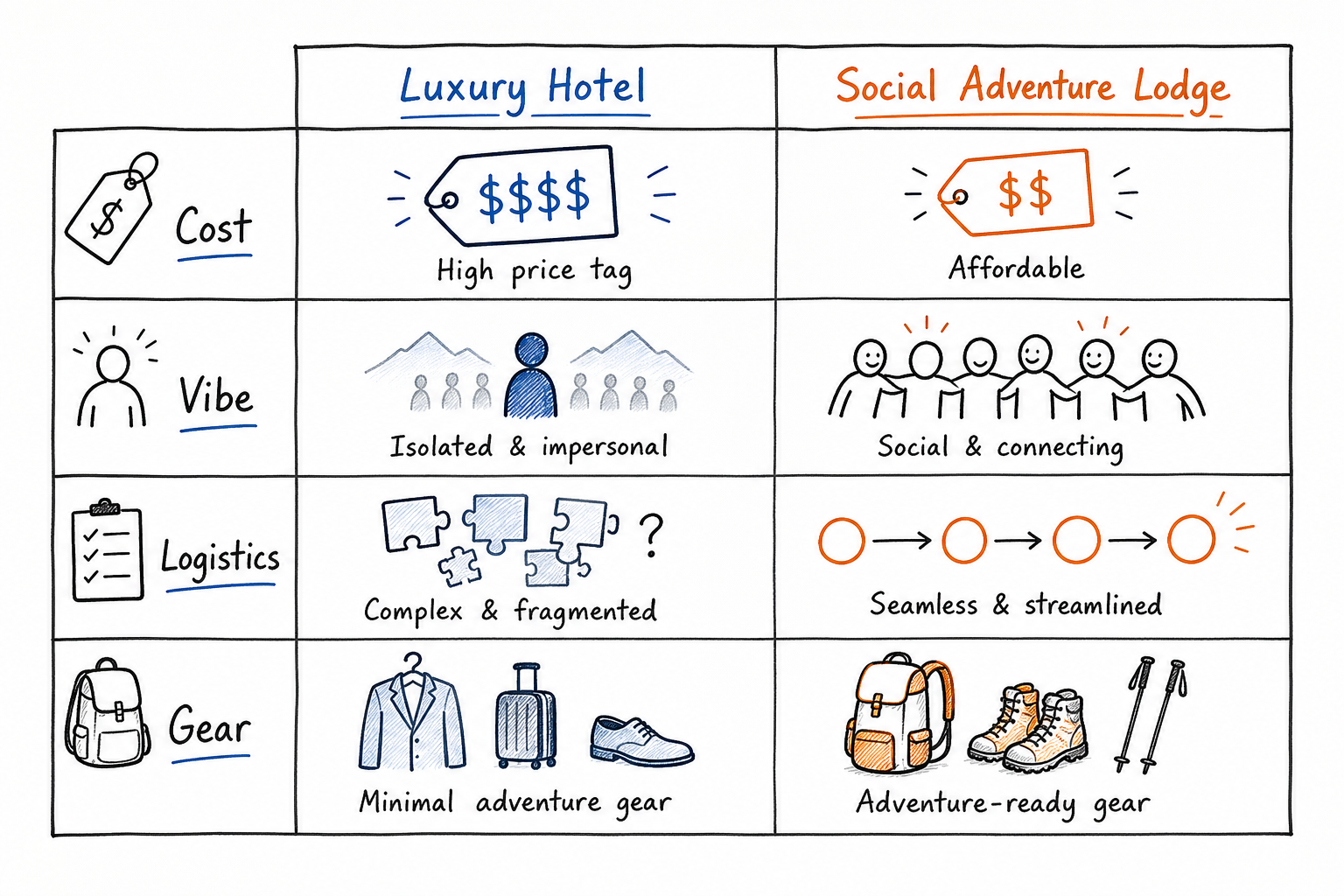
To understand the practical differences, it helps to compare the two models across the criteria that actually dictate the quality of a mountain trip.
| Feature | Traditional Luxury Hotel | Social Adventure Lodge |
|---|---|---|
| Core Focus | On-property relaxation, spa services, privacy. | Off-property adventure, community, shared experiences. |
| Logistics | Guest is responsible for booking guides, gear, and transit. | Fully managed by hosts/volunteers (all-inclusive). |
| Dining | Formal, isolated tables, high cost per meal. | Communal, family-style dinners, often home-cooked. |
| Target Audience | Couples, luxury vacationers, short-term tourists. | Solo travelers, digital nomads, backpackers, active families. |
| Cost Structure | High base rate + expensive a la carte add-ons. | Affordable base rate + inclusive food, gear, and transit. |
Why the “Home Away From Home” Vibe Matters
Solo travel has surged over the last half-decade, but mountain towns can be surprisingly difficult places to meet people. If you book a standard room in a highly-rated property on Tripadvisor, you are buying privacy. For a solo hiker or a remote worker, that privacy quickly turns into isolation.
Imagine finishing a grueling eight-hour hike. In a standard hotel, you shower, sit on your bed, and eventually walk to a local restaurant where you eat dinner alone while scrolling on your phone.
Contrast this with the ecosystem of a community-driven lodge like Ski Hostel in the Liddes or St. Stephan regions. You walk through the door and the communal area is already buzzing. The hosts are running a BBQ gathering, or perhaps serving a Brazilian-influenced family-style meal. You sit at a long table with a mountain biker from Canada, a digital nomad from Germany, and a local volunteer who knows exactly which trails will be free of snow tomorrow.
This social infrastructure is not accidental. It is engineered through shared spaces, weekly adventure programs, and communal dining. It turns a disparate group of international backpackers and budget-conscious outdoor enthusiasts into a cohesive team, fostering a warm, highly international community.
Mastered Logistics: The All-Inclusive Adventure Advantage
The most overlooked cost of a Swiss alpine vacation is cognitive load. Planning a high-altitude hike or a multi-day mountain biking itinerary requires intense logistical coordination.
You have to map the route, check the weather windows, secure the right gear, figure out the PostBus schedule, and ensure you make the last gondola down the mountain so you aren’t stranded at 2,500 meters at dusk.
Traditional luxury hotels at Swiss ski resorts, such as those featured by Relais & Châteaux, will happily point you to a concierge. But a concierge is essentially a booking agent. They will hand you a map and a third-party invoice for a guide.
Social lodges operate differently. Their core offering is often an all-in-one experience where logistics, equipment, and group itineraries are actively managed in-house by the host and volunteers.
The Gear and Transit Ecosystem
When you stay at a dedicated adventure hub, the friction of gear rental and transport evaporates.
- In-House Gear: Instead of trekking to a village sports shop, you pull boots, poles, or a mountain bike directly from the lodge’s own fleet.
- Guided Instruction: Whether you are a beginner looking for basic pacing advice or an expert seeking high-altitude challenges, guidance comes from the people actually living and working at the lodge.
- Direct Trail Access: Lodges strategically situated in areas like the Val de Bagnes region offer direct access to over 250 kilometers of trails right from the doorstep, bypassing the need for complicated public transit connections.
By bundling affordable accommodation with organized outdoor activities, these lodges offer a frictionless path to the alpine wilderness.
Basecamp for Border-Crossing Excursions
Switzerland’s geography makes it a prime staging ground for multi-country exploration, provided you are positioned correctly.
Standard hotel tourists often spend their entire trip within a five-mile radius of their resort. But the true value of regions like Liddes is their proximity to international borders. An adventure lodge functions as a launchpad for unique border-crossing excursions that are logistically nightmarish to plan on your own.
From the Liddes region, you are striking distance from iconic peaks like Mont Blanc. Coordinated lodge excursions routinely push into famous neighboring destinations:
- Aosta, Italy: A short push over the border for distinct Italian alpine culture, espresso, and drastically different trail topography.
- Chamonix, France: The undisputed capital of global alpinism, easily accessible for a day trip when organized by a lodge with dedicated transport.
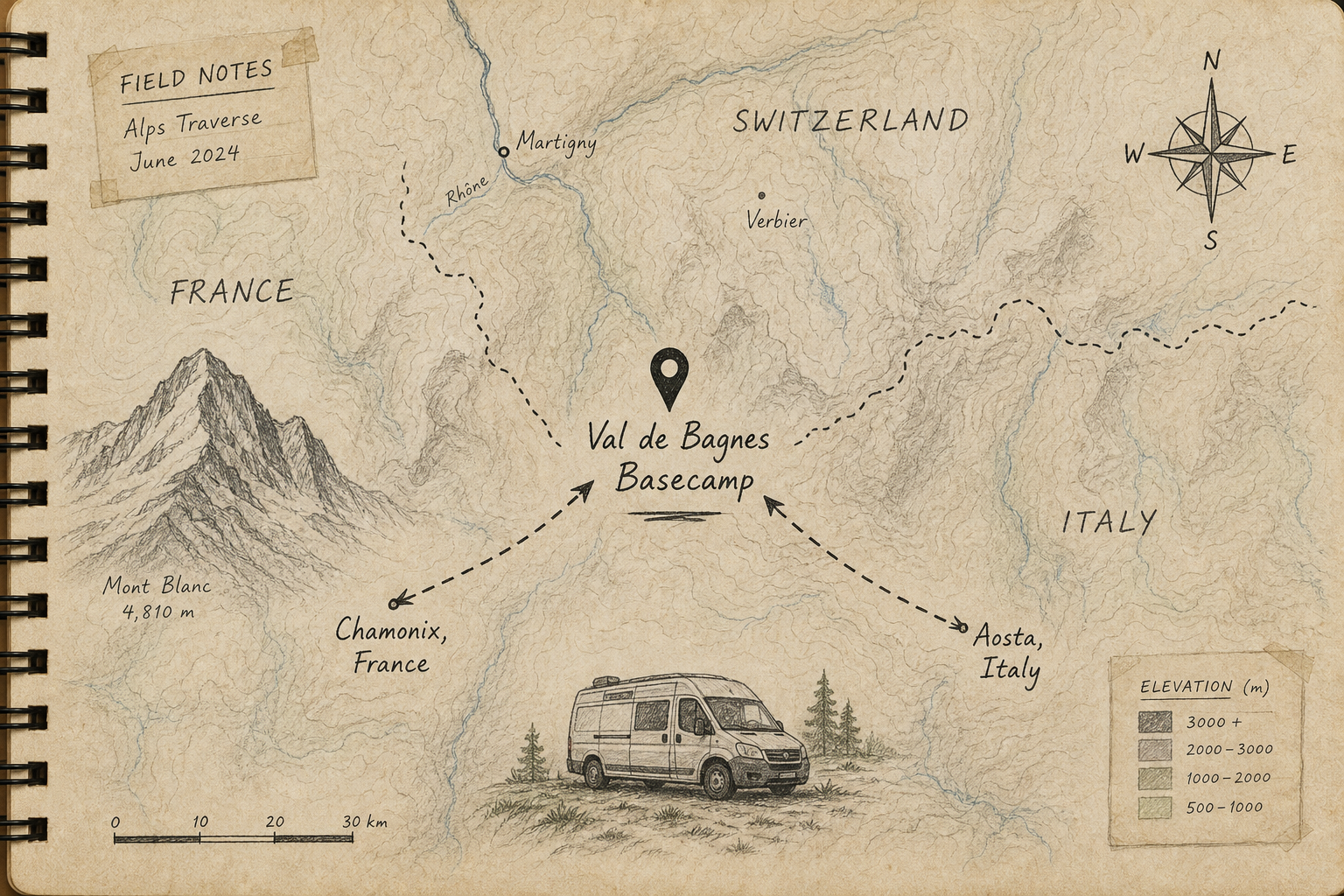
Doing this independently requires renting a car (expensive), navigating mountain passes (stressful), or deciphering three different national train applications. Doing it through a community lodge means waking up, grabbing a coffee, and piling into a van with eight new friends.
Built for the Modern Explorer: Remote Work Meets Altitude
The definition of a mountain vacation has changed. It is no longer strictly a one-week, offline holiday. The rise of the digital nomad means visitors are staying longer, working remotely, and integrating adventure into their daily routines.
Traditional hotels struggle with this demographic. Their “business centers” are often windowless rooms with a printer from 2012, and their in-room Wi-Fi is rarely optimized for video calls.
Adventure lodges have recognized this shift and adapted their infrastructure to support it. Properties catering to this crowd feature high-speed Wi-Fi robust enough for remote workers to run Zoom calls by day and hit the trails by late afternoon. The communal dining spaces double as co-working hubs in the morning, creating an environment where you can comfortably work alongside other professionals before logging off for a sunset hike or a spa night.
Rethinking the “Spa Hotel”
A common search query in this space is: Which hotel with a spa to choose in the mountains in Switzerland?
If you want a clinical, whisper-quiet room where a therapist plays pan-flute music while applying hot stones, a five-star resort is your destination. But if your goal is muscle recovery mixed with social interaction, the lodge ecosystem offers a more grounded alternative.
Many adventure lodges integrate wellness into their programming, but they strip away the pretension. Instead of a 200-CHF individual massage, you get communal spa nights. It is a sauna session followed by a cold plunge, shared with the same people you just spent eight hours hiking with. It is functional recovery wrapped in social connection.
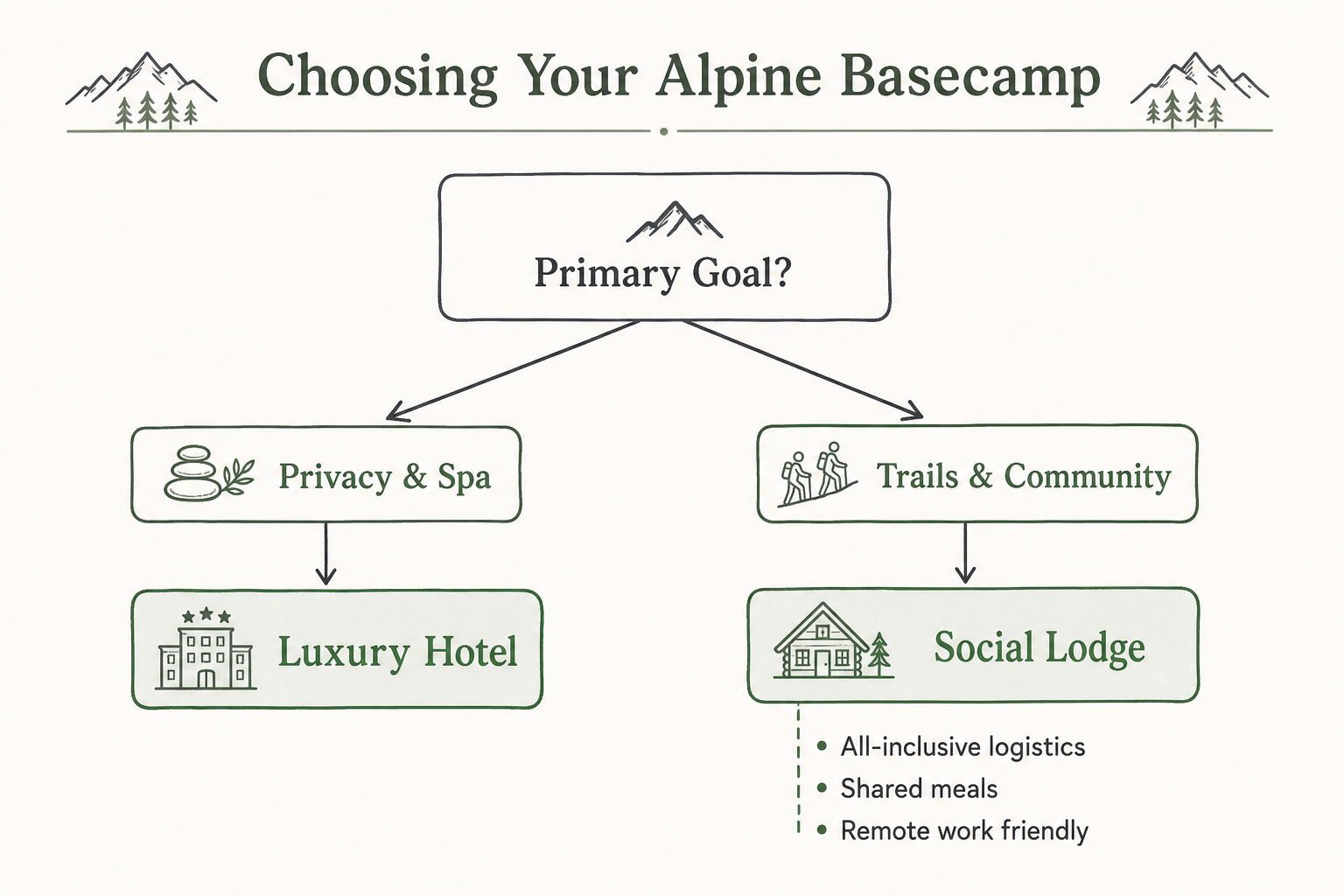
Framework: Choosing Your Alpine Basecamp
If you are staring at a browser full of accommodation options, use this set of criteria to filter your choices based on your actual travel style.
Choose the Traditional Luxury Hotel if:
- Your primary goal is absolute privacy and isolation.
- You plan to spend more than 50% of your waking hours inside the hotel.
- You prefer formal, individual dining experiences.
- Budget is entirely unlimited.
Choose the Social Adventure Lodge if:
- Your primary goal is hitting the trails, biking, or exploring the mountains.
- You want the logistical friction of gear and transit handled for you.
- You value meeting international travelers and sharing communal meals.
- You need a realistic budget that leaves room for longer stays or remote work.
- You want easy access to guided group excursions, like border crossings to Italy or France.
Frequently Asked Questions About Swiss Mountain Lodging
What is the best boutique hotel in the Swiss mountains?
If “boutique” means small, independent, and highly curated, the definition is expanding. While luxury sites define boutique by thread count, adventure travelers define it by unique, highly personalized experiences. A lodge that curates weekly adventure programs, serves home-cooked Brazilian-influenced meals, and knows you by your first name offers a far more “boutique” experience than a sterile corporate luxury suite.
Where to find the best luxury hotel vs. budget lodge in the Swiss mountains?
Luxury hotels are typically clustered in heavily commercialized resorts like St. Moritz, Zermatt, and Verbier. If you are looking for community-driven, budget-conscious lodges, look slightly off the main tourist drag. Regions like Liddes, St. Stephan, and the wider Val de Bagnes offer spectacular trail access (often connecting to the same mountains as the mega-resorts) without the inflated base-town pricing.
How to find a hotel with a pool in the mountains in Switzerland?
While many high-end properties boast infinity pools, consider what you actually need water for. If it is purely for recovery after a long day of outdoor activities, look for lodges that feature saunas, hot tubs, or organized spa nights. These provide the necessary muscle recovery while fostering the social atmosphere that makes an adventure lodge special.
Redefining the Alpine Experience
The mountains are vast, intimidating, and exceptionally beautiful. Experiencing them in total isolation from behind the triple-glazed glass of a luxury suite is one way to do it. But experiencing them alongside a community of diverse, international travelers, with the logistical headaches entirely removed, is a fundamentally richer approach.
By trading the superficial perks of a five-star hotel for the genuine connection, practical infrastructure, and managed adventure of a social lodge, you stop being a passive tourist. You become an active participant in the alpine environment.