
Mountain Mont Blanc: 7 Ways to Visit Without the Crowd
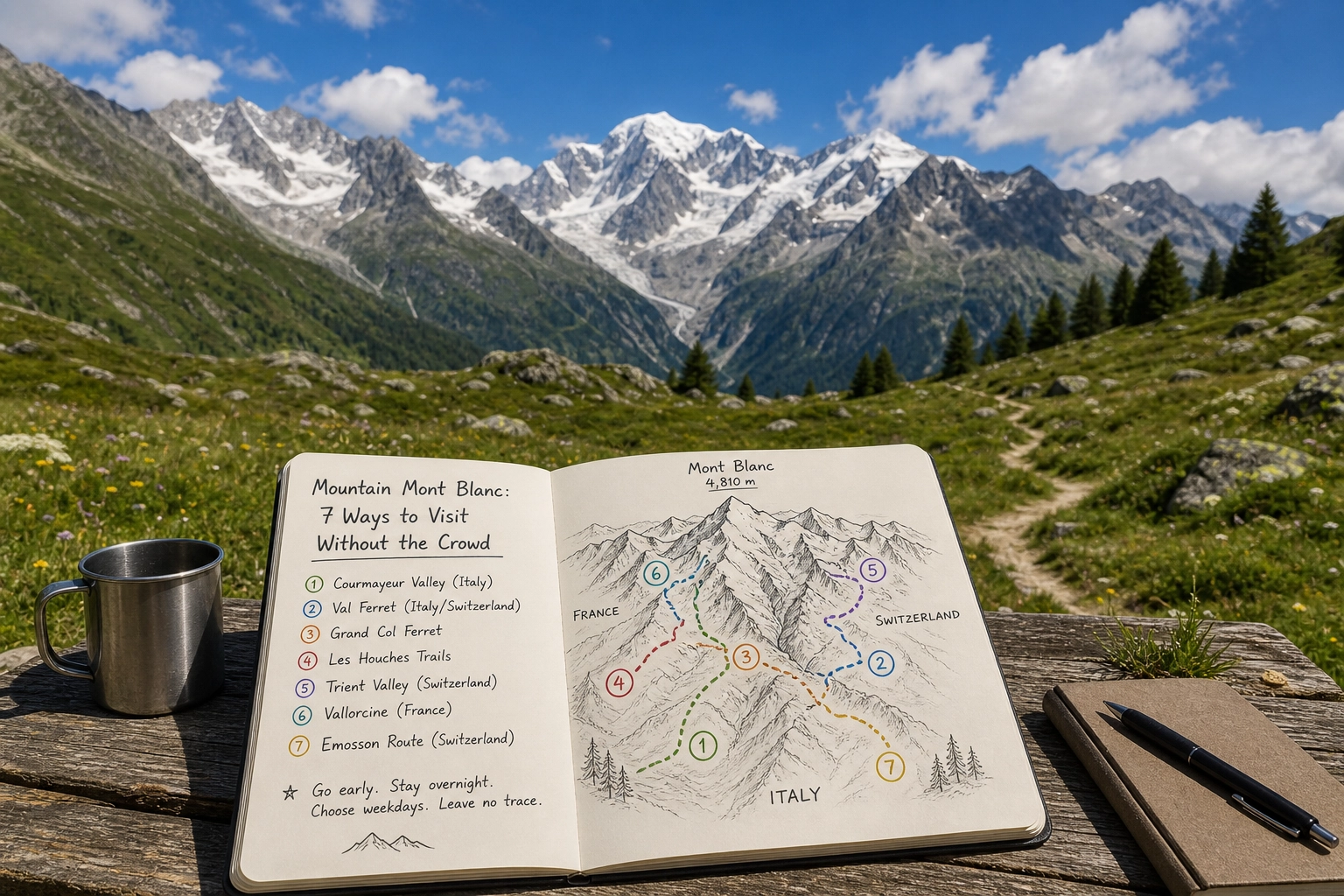
Standing at 4,805 meters (15,777 feet), Mont Blanc is the undisputed monarch of the Alps. It is a geological marvel of granite and ice, a historic crucible of modern mountaineering, and undeniably one of the most breathtaking sights in Europe. But there is an uncomfortable truth about visiting the “White Mountain” today: you are rarely alone.
Every year, millions of visitors flood the Chamonix valley. On a sunny July morning, the queue for the Aiguille du Midi cable car can feel more like a crowded amusement park than an alpine expedition. The narrow streets of Chamonix become shoulder-to-shoulder bottlenecks, and the standard hiking trails resemble busy commuter sidewalks.
If you are a solo traveler, a digital nomad seeking quiet focus, or an outdoor enthusiast who prefers the sound of wind over the chatter of massive tour groups, the standard Mont Blanc itinerary might leave you exhausted.
But the Mont Blanc massif is vast, spanning three countries and covering over 400 square kilometers. You do not have to join the herds to experience its grandeur. Here are seven field-tested ways to experience Mont Blanc without the suffocating crowds, leveraging smart logistics, alternative basecamps, and a willingness to step off the beaten path.
The Reality of Visiting Mont Blanc
Before detailing how to avoid the crowds, it helps to understand why the congestion exists. Mont Blanc’s primary access point is Chamonix-Mont-Blanc, a French resort town that successfully transitioned from a quiet farming village into the undisputed capital of global alpinism.
The infrastructure here is unparalleled. Cable cars can whisk you from the valley floor to 3,842 meters in roughly 20 minutes. This accessibility is a double-edged sword; it democratizes the high mountains, but it also creates intense localized bottlenecks.
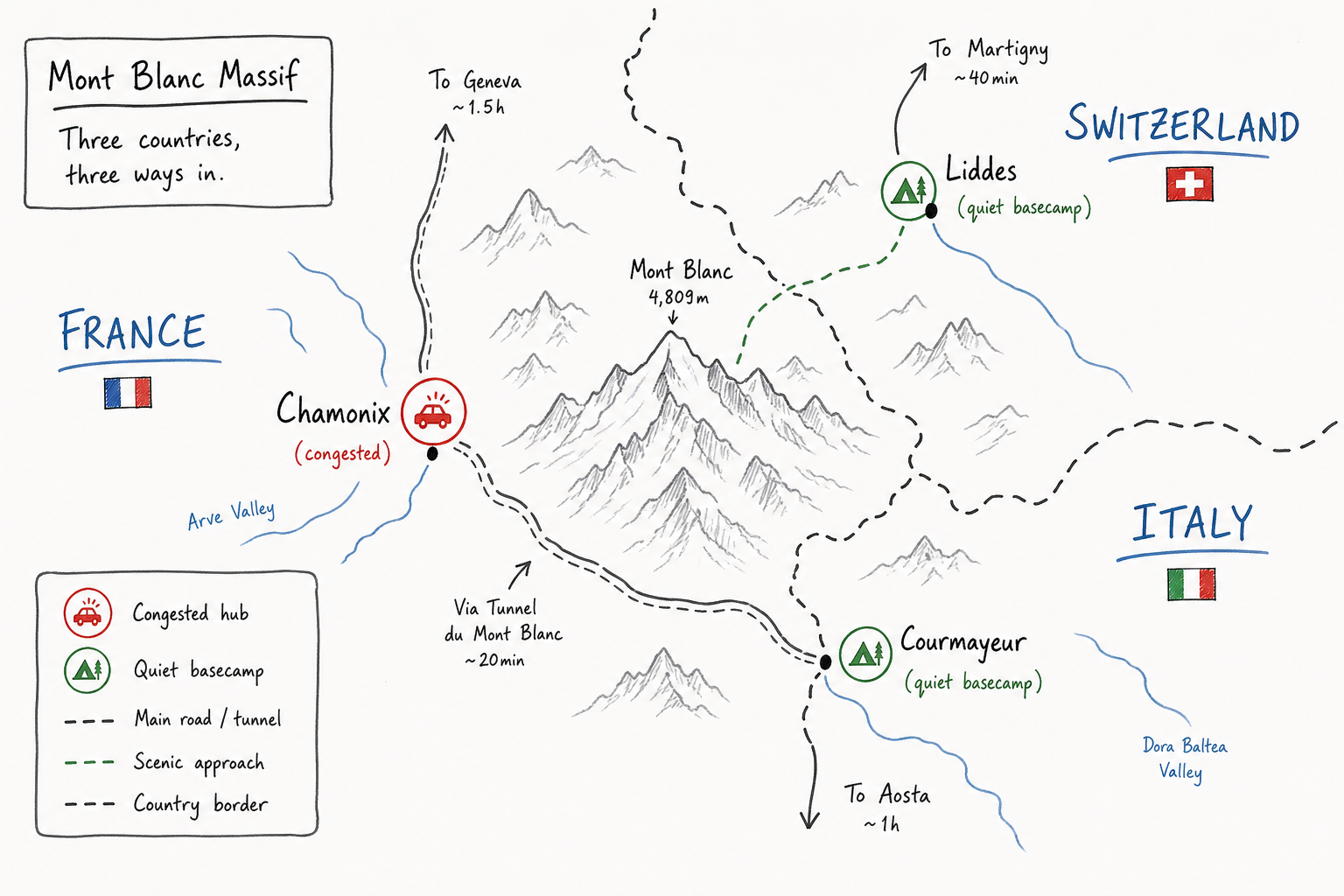
Furthermore, the peak summer season is shrinking due to the impacts of climate change. Warmer temperatures are increasing the risk of rockfall on standard climbing routes like the Goûter corridor, forcing both climbers and hikers into tighter, safer weather windows. The result? When the conditions are good, everyone rushes the mountain at exactly the same time.
To bypass this, you need to change your geometry. Instead of funneling straight into Chamonix, you must look at the mountain from a wider, tri-border perspective.
1. Approach from the Italian Side (Aosta Valley)
Mont Blanc straddles the border of France and Italy. In fact, the exact ownership of the summit has been a subject of historical dispute between the two nations for centuries. While the French side receives the lion’s share of international tourism, the Italian side—approached via Courmayeur in the Aosta Valley—offers a dramatically different, distinctly quieter experience.
The Italian face of Mont Blanc (Monte Bianco) is steeper, wilder, and visually arresting. Instead of waiting hours for the famous Aiguille du Midi on the French side, you can ride the Skyway Monte Bianco from Courmayeur to Punta Helbronner.
Why the Skyway Beats the Midi for Crowd-Averse Travelers:
- Modern Infrastructure: Rebuilt in 2015, the Skyway features rotating circular cabins, giving everyone a 360-degree view without needing to elbow to the glass.
- Better Pacing: The Italian side naturally draws a slightly more relaxed crowd. It lacks the frantic “summit fever” energy often felt in Chamonix.
- Superior Culinary Options: You are in Italy. The mid-station at the Pavillon offers exceptional local Aosta Valley cuisine, a far cry from overpriced cafeteria food.
For travelers looking for a unique day out, crossing the border through the Mont Blanc Tunnel to explore Courmayeur is a highly rewarding strategy that instantly cuts the crowd density in half.
2. Base Yourself Outside the Chamonix Valley
One of the biggest mistakes visitors make is assuming they must sleep in Chamonix to see Mont Blanc. Basing yourself directly beneath the peak means paying premium prices, dealing with packed grocery stores, and fighting for parking.
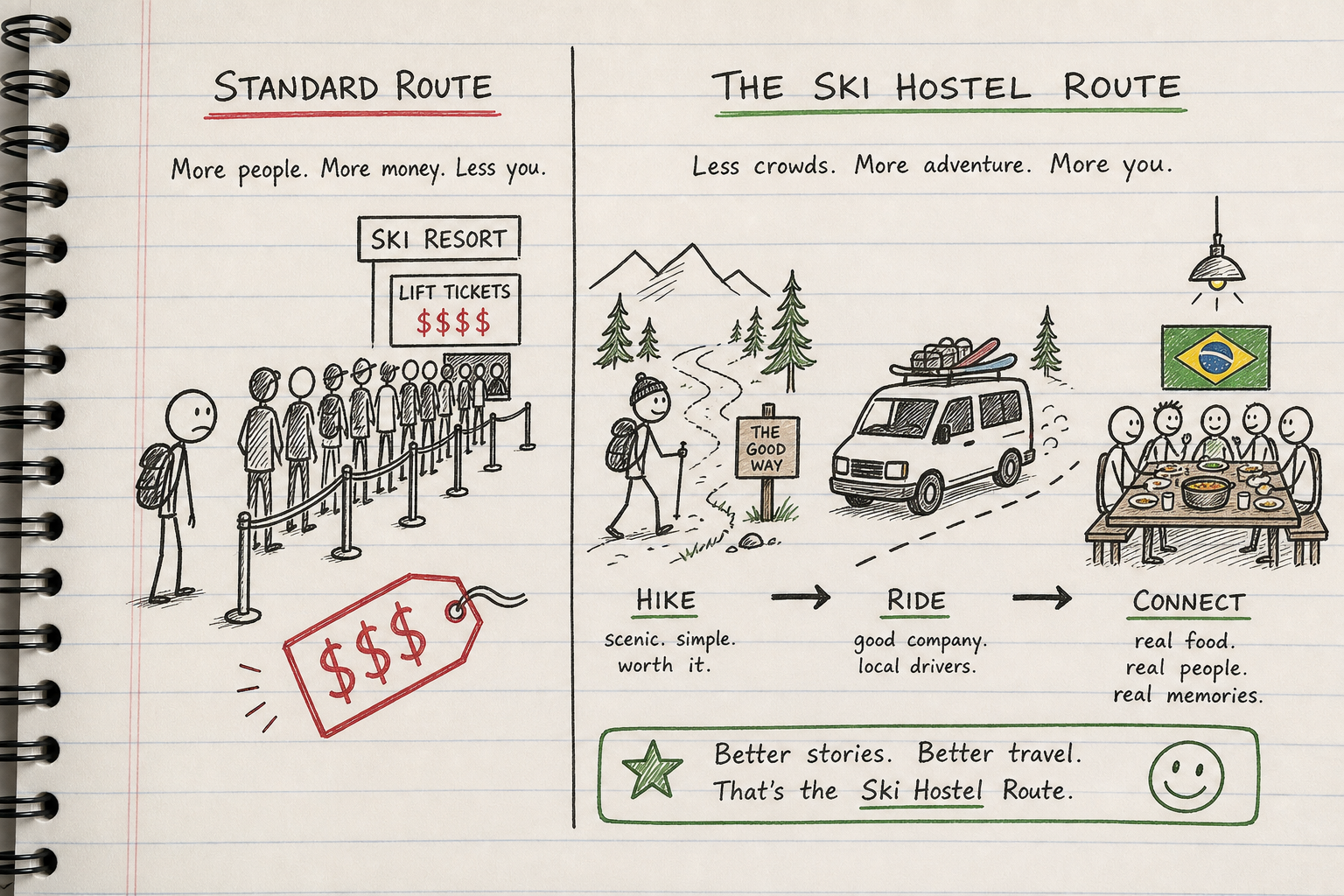
Instead, consider basing yourself in the neighboring Swiss Alps. At Ski Hostel, located in the Liddes and St. Stephan regions, we built our community-driven adventure lodge specifically for this reason. We serve solo travelers, digital nomads, and families who prioritize social connection over luxury hotel stays, providing a “home away from home” atmosphere.
The Strategic Advantage of a Swiss Basecamp
By staying in the Val de Bagnes region or surrounding Swiss valleys, you gain several tactical advantages:
- Direct Access to Quiet Trails: You have direct access to over 250 kilometers of trails right outside your door, free from the mega-crowds of the Chamonix valley.
- Organized Border-Crossing Excursions: You can visit Mont Blanc as a targeted strike. Ski Hostel organizes weekly border-crossing excursions. We handle the transport logistics over the Col de la Forclaz into France or through the St. Bernard pass into Aosta. You get the iconic Mont Blanc experience during the day, but retreat to a peaceful, communal lodge by evening.
- Community Connection: Rather than isolating in an expensive hotel, you return to communal dinners (featuring our signature Brazilian-influenced cuisine), spa nights, and a network of international backpackers.
Basecamp Comparison Matrix
| Feature | Chamonix (France) | Courmayeur (Italy) | Liddes/Swiss Valleys (Ski Hostel) |
|---|---|---|---|
| Crowd Density | Extremely High | Moderate to High | Low (Community-focused) |
| Vibe | Bustling, intense, tourist-heavy | Chic, relaxed, alpine village | Communal, warm, nature-first |
| Mont Blanc Views | Immediate, overhead | Immediate, rugged | Accessible via organized day trips |
| Ideal For | Pure alpinists, luxury shoppers | Foodies, relaxed hikers | Digital nomads, solo travelers, budget-conscious adventurers |
3. Hike the “Other” Balcony Trails
The Tour du Mont Blanc (TMB) is one of the most famous long-distance treks in the world. Because of its fame, sections of it—particularly the Grand Balcon Sud leading to Lac Blanc—are heavily congested. During July and August, hiking to Lac Blanc can feel like waiting in line.
To view the Mont Blanc massif without the traffic, you need to step off the primary TMB route and explore the secondary balcony trails.
Off-the-Radar Alternatives
- Lacs des Chéserys instead of Lac Blanc: Just slightly lower and off to the side of the famous Lac Blanc, these lakes offer the exact same mirror-reflection views of the Mont Blanc massif but filter out roughly 60% of the casual day-trippers who only hike point-to-point to the main refuge.
- The Aiguillette des Posettes: Located near the top of the Chamonix valley near Vallorcine, this ridge walk provides a spectacular longitudinal view down the entire Mont Blanc range. It requires more effort to reach, which acts as a natural barrier to the crowds.
- Val Ferret (Swiss Side): Hiking from La Fouly offers sweeping views of the eastern edge of the massif. The infrastructure here is quieter, catering more to dedicated hikers than cable-car sightseers.
4. Master the Timing of Mountain Infrastructure
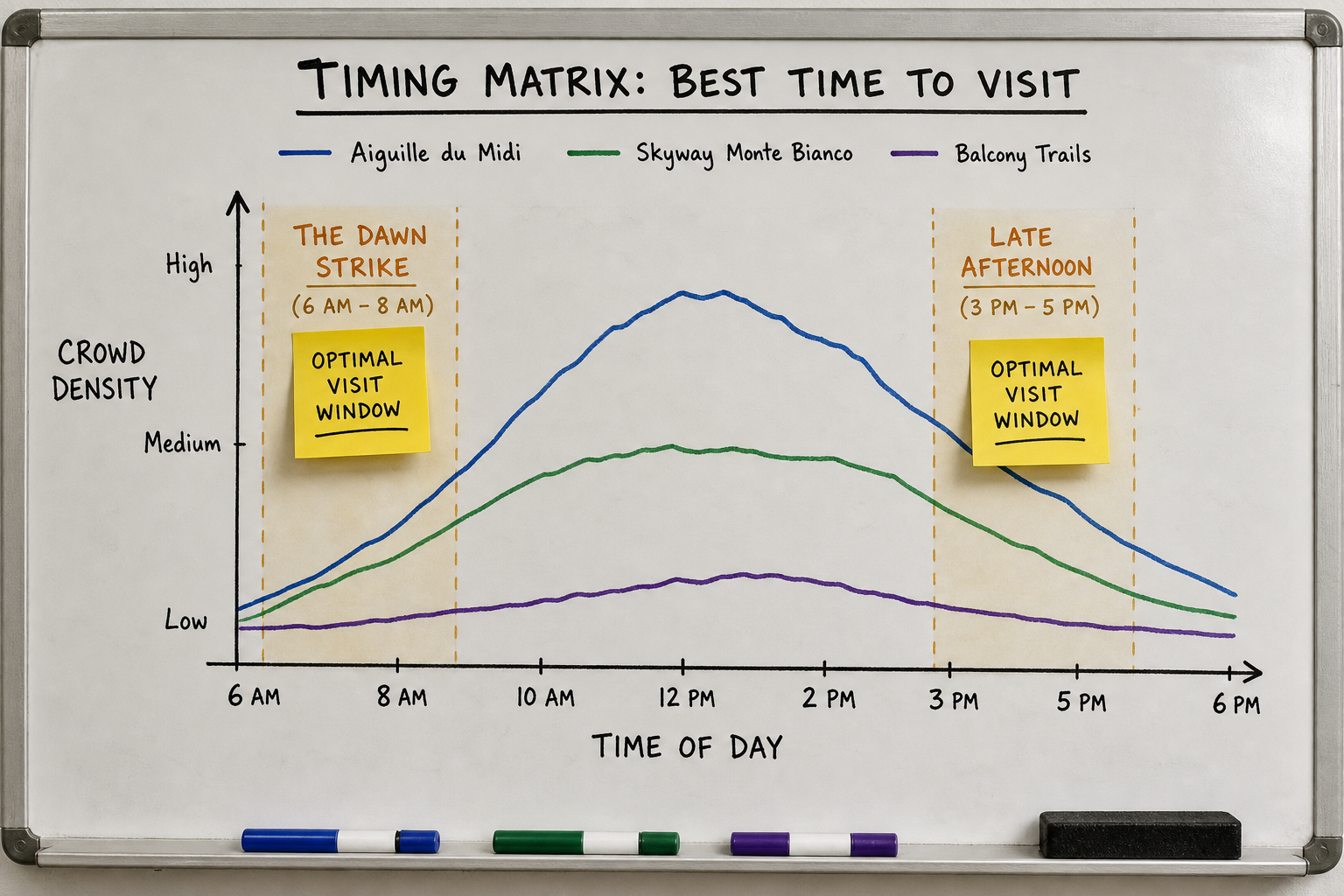
If you absolutely must visit the classic Chamonix-Mont-Blanc attractions like the Aiguille du Midi or the Montenvers Mer de Glace train, your weapon against the crowd is precise timing.
Most visitors operate on a standard vacation schedule: wake up at 8:00 AM, eat breakfast at 9:00 AM, and arrive at the ticket office by 10:30 AM. This creates a massive surge of humanity between 10:00 AM and 2:00 PM.
The Timing Playbook
- The Dawn Strike: Book the absolute first cable car of the day. You will share it mostly with serious alpinists heading out for routes. The air is clearer, the light for photography is vastly superior, and you can be back down in town enjoying a coffee while the two-hour queues form.
- The Late Afternoon Window: Alternatively, book a ticket for 3:30 PM. Tour buses leave, day-trippers head down for dinner, and the viewing platforms suddenly empty out. The late afternoon alpine glow (Alpenglow) on the Mont Blanc summit is a visual you will never forget.
- Pre-Purchase Everything: Never walk up to a ticket window. As noted in comprehensive Mont Blanc visitor guides, pre-booking your lift passes online is mandatory if you want to bypass the entry queues.
5. Skip the Standard Goûter Route (For Climbers and Aspirants)
If your goal is to actually climb Mont Blanc, the crowd issue becomes a safety issue. The standard route—the Goûter Route—sees hundreds of climbers a day during the summer. The refuge is notoriously overbooked, and the crossing of the Grand Couloir (often called the “Bowling Alley”) is incredibly dangerous when crowded due to rockfall.
While climbing Mont Blanc requires technical skill and a certified mountain guide, aspiring alpinists should look at alternatives:
- The Trois Monts Route: Accessed via the Aiguille du Midi, this route traverses Mont Blanc du Tacul and Mont Maudit before reaching the main summit. It is more technically demanding and requires excellent fitness, but it sees a fraction of the foot traffic of the Goûter.
- The Italian Normal Route (Via Ratti): Starting from the Gonella Refuge, this is a much longer, wilder, and physically taxing expedition. It is the route for purists who want to experience the mountain as a vast, lonely wilderness rather than a guided conveyor belt.
Note: At Ski Hostel, we cater to all skill levels. For beginners, we provide guided instruction on lower-altitude peaks to build foundational skills before you ever consider tackling high-altitude challenges like Mont Blanc.
6. Target the “Shoulder-Shoulder” Seasons
Everyone knows about shoulder season (May and October). The problem with the Alps during these months is that the mountain infrastructure completely shuts down. Lifts close for maintenance, refuges lock their doors, and trail conditions become dangerous hybrids of melting snow and mud.
To avoid crowds while maintaining access, you need to target the micro-seasons—the exact weeks where infrastructure is open, but the school holidays have not yet begun or have just ended.
The Golden Weeks
- The Third Week of June: The snow has mostly cleared from the balcony trails, the lifts have just reopened for the summer season, but the heavy influx of European vacationers hasn’t started. Wildflowers are at their absolute peak.
- The Second Week of September: The heat of August has broken, providing crisp, clear atmospheric conditions perfect for viewing the massif. The massive summer crowds have gone back to work and school, leaving the trails wonderfully quiet.
7. Travel With a Community-Led Group
One of the most stressful parts of visiting a highly trafficked destination like Mont Blanc is managing the logistics alone: navigating train schedules, finding gear rentals, and figuring out which trails aren’t packed.
This is where the traditional hospitality model fails and community-driven models succeed. When you join a curated weekly adventure program, the mental load of avoiding the crowds is outsourced to locals and experienced volunteers who know the terrain intimately.
At our lodge, we provide an all-in-one experience. Logistics, high-quality gear rental, and group itineraries are fully managed. Instead of fighting for a table at a crowded Chamonix restaurant, you spend your day exploring a hidden valley with a professional guide, then pile into a van to return to the Swiss Alps for a shared BBQ gathering. It transforms a solitary, stressful tourist scramble into a shared, memorable adventure.
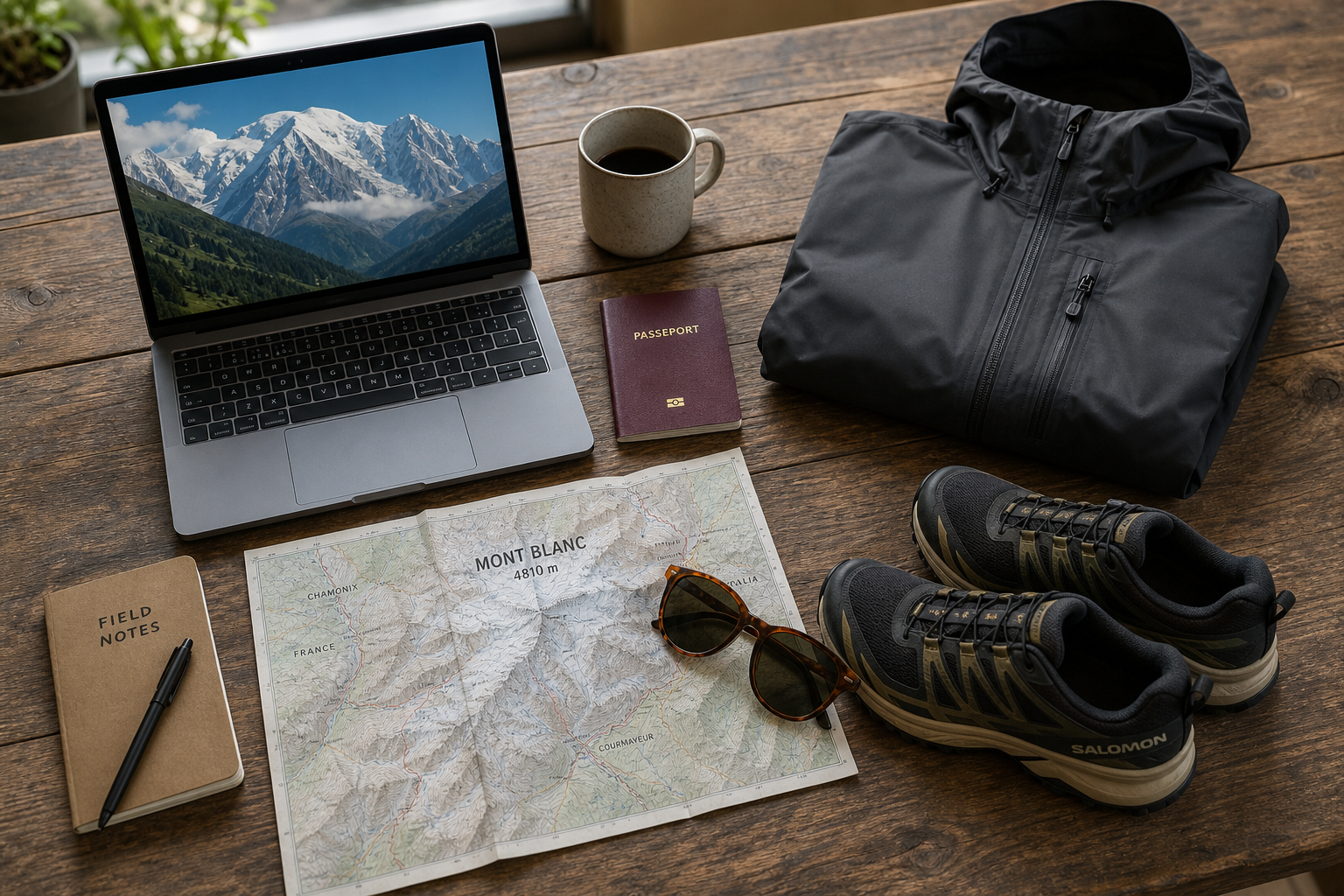
Essential Gear and Logistics for a Crowd-Free Mont Blanc Trip
Whether you are viewing the mountain from a quiet Swiss ridge or taking the early Skyway Monte Bianco, preparation is key. Here is a checklist to ensure your off-piste adventure is successful.
The Digital Nomad & Hiker Loadout
- Versatile Layering System: The valley floor might be 25°C (77°F), but the Aiguille du Midi viewing platform will be near freezing. Bring a moisture-wicking base layer, a mid-weight fleece, and a packable wind/waterproof shell.
- Sturdy Trail Footwear: If you are escaping the crowds, you are likely tackling slightly more rugged terrain. Ditch the sneakers for proper trail running shoes or lightweight hiking boots.
- Offline Maps: Do not rely on cell service. Download areas on apps like Fatmap, PeakVisor, or SwissTopo before leaving the hostel’s high-speed Wi-Fi.
- Sun Protection: UV radiation at 3,000+ meters is intense. Category 3 or 4 sunglasses and SPF 50 are non-negotiable.
- Passport: Because the Mont Blanc massif borders France, Italy, and Switzerland, you can easily cross borders on a day trip. Always carry your passport.
FAQs About Visiting Mont Blanc
Do I need to be a climber to see Mont Blanc?
Not at all. You can get world-class, up-close views of the Mont Blanc summit and its surrounding glaciers via the Aiguille du Midi cable car (France) or the Skyway Monte Bianco (Italy) wearing normal street clothes—though warm layers are required!
How long does a day trip from the Swiss side take?
From a basecamp in the Liddes region, crossing the border into Chamonix or Aosta typically takes about 60 to 90 minutes by road. It is highly manageable as a day trip, allowing you to experience the high peaks by day and retreat to the quiet Swiss valleys by night.
Is the Italian side cheaper than the French side?
Generally, yes. While the Skyway cable car is comparably priced to the Aiguille du Midi, food, coffee, and accommodation in Courmayeur and the Aosta Valley tend to offer better value and higher quality than the heavily touristed center of Chamonix.
A Final Word on the White Mountain
Mont Blanc is too magnificent to be skipped, but it is also too wild to be experienced exclusively shoulder-to-shoulder with thousands of strangers. By changing your approach—basing yourself in the communal atmosphere of the Swiss valleys, crossing borders into Italy, mastering the timing of the lifts, and seeking out the secondary trails—you reclaim the sense of awe that the Alps were meant to inspire.
The mountain has been there for millennia. It isn’t going anywhere. But how you choose to approach it will dictate whether you remember the stunning glaciers, or just the back of the backpack in front of you.