Swiss Alps Summer: A Simple 5-Step Packing Guide
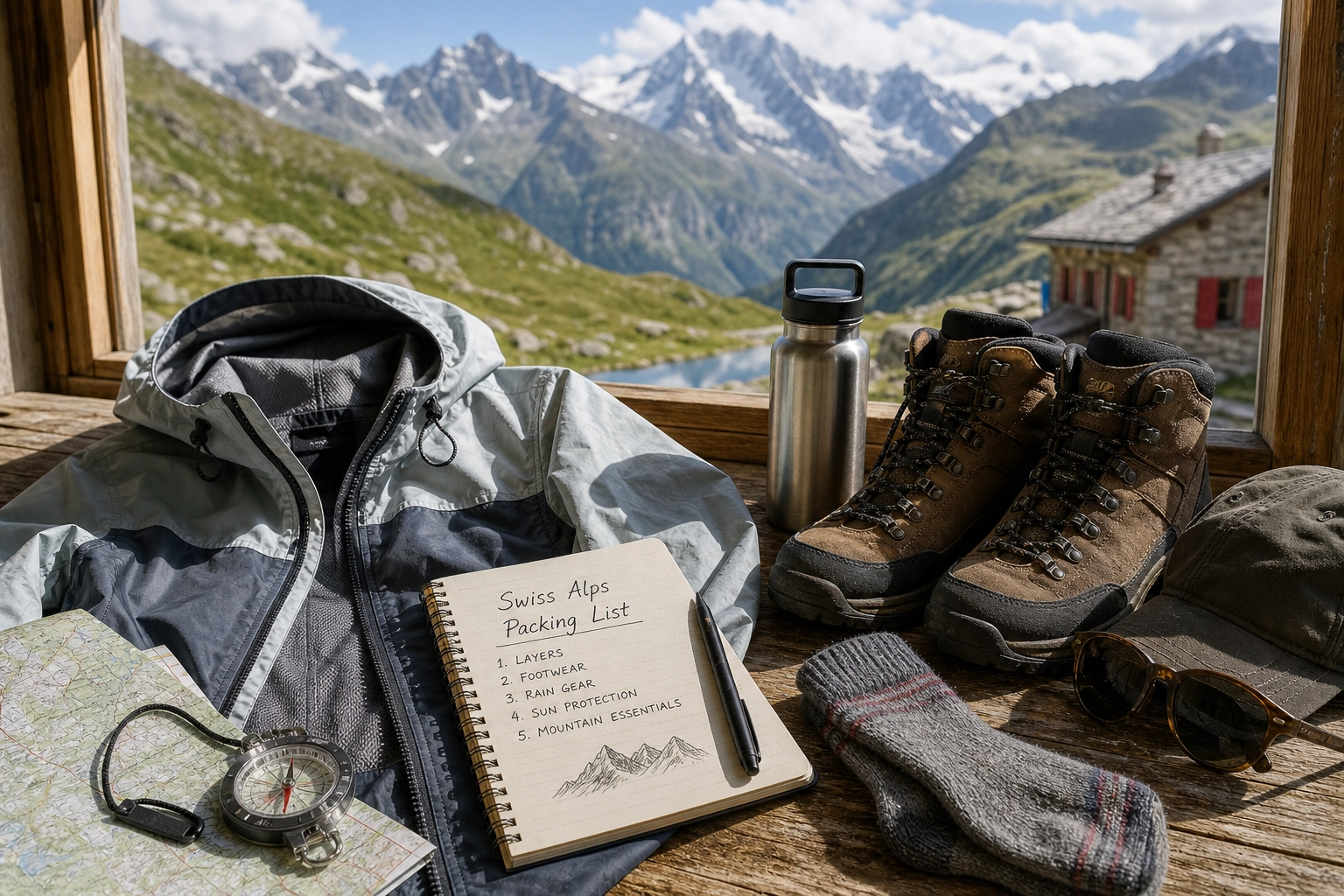
You step off the train in the Val de Bagnes, greeted by an immaculate blue sky and valley temperatures hovering around 80°F (26°C). Fast forward three hours: you are standing on a ridge at 2,500 meters, the wind is howling, the temperature has plummeted to 45°F (7°C), and a fast-moving afternoon thunderstorm is rolling in over the Mont Blanc massif.
This rapid shift is the reality of a summer in the Swiss Alps.
The biggest mistake first-time visitors make is packing for a single season. They either fill their bags with heavy winter parkas—forgetting that July in the valley can be sweltering—or they pack exclusively for a Mediterranean beach holiday, leaving them shivering during a high-altitude hike. Summer in the Swiss Alps requires a strategic approach to your wardrobe.
Whether you are a digital nomad setting up a remote office in our communal lounge, a solo backpacker tackling the trails of Liddes, or a family plotting out border-crossing excursions to Chamonix, your packing list dictates your comfort.
To strip away the complexity of mountain logistics, we have refined the process into a straightforward, adaptable 5-step packing guide. This system ensures you are prepared for extreme elevation changes, communal hostel living, and unpredictable alpine microclimates—without paying for overweight baggage.
Step 1: Master the Alpine Layering System
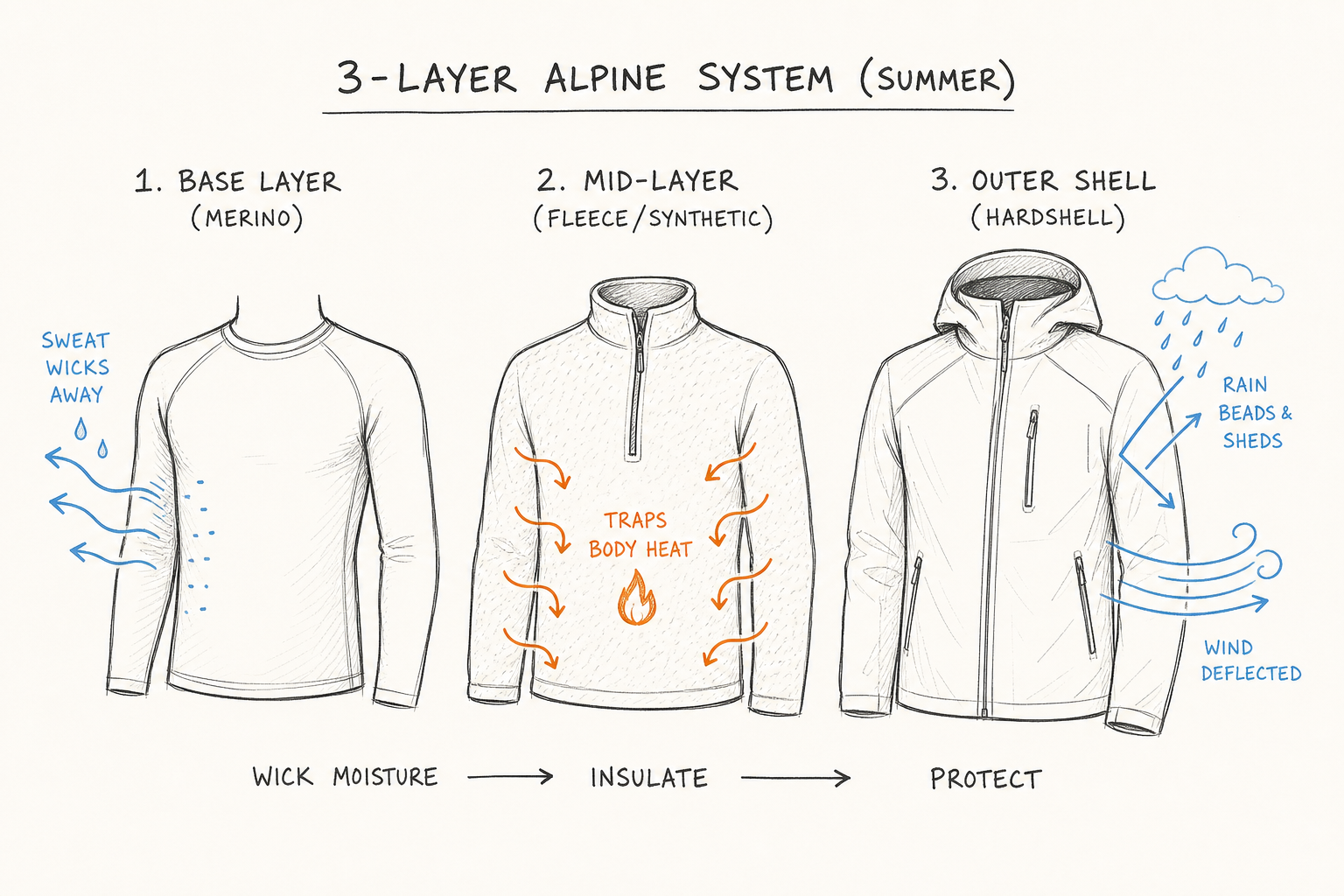
The golden rule of mountain travel is to dress in layers. Instead of relying on one thick, bulky jacket, a proper layering system utilizes multiple thin garments that trap heat and wick moisture. You can add or remove these pieces as your exertion level and the weather dictate.
The Moisture-Wicking Base Layer
Your base layer sits directly against your skin. Its primary job is not to warm you, but to pull sweat away from your body so it can evaporate. If your skin stays wet in a cold alpine breeze, you will chill rapidly.
- The Rule: Absolutely no cotton. Cotton absorbs moisture, dries incredibly slowly, and loses all its insulating properties when wet.
- The Solution: Opt for lightweight Merino wool or high-quality synthetics. Merino wool is a natural marvel for backpackers; it regulates temperature beautifully and possesses natural antimicrobial properties, meaning you can wear a Merino t-shirt for three days of intense hiking without it carrying an odor.
- What to Pack: Bring 2-3 short-sleeve base layers, 1 long-sleeve base layer for higher altitudes or cooler evenings, and 1-2 pairs of moisture-wicking hiking trousers. Convertible pants (where the legs zip off) are highly functional, though modern, lightweight softshell hiking pants that breathe well are often preferred for their better fit and durability.
The Insulating Mid-Layer
The mid-layer traps your body heat. In the summer Alps, this layer spends a lot of time in your backpack, coming out during rest stops, summit lunches, or evening BBQs at the hostel.
- Fleece vs. Puffer: A lightweight synthetic fleece is highly breathable and perfect for active movement. A packable down or synthetic “puffer” jacket offers the highest warmth-to-weight ratio for static periods.
- What to Pack: 1 lightweight micro-grid fleece (excellent for hiking) and 1 packable synthetic insulated jacket. We recommend synthetic insulation over natural down for summer in the Alps because afternoon rain showers are common, and synthetic materials retain their warmth even when damp.
The Weatherproof Outer Shell
This is your shield against wind and rain. The Swiss Alps in July and August are famous for their brilliant mornings and sudden, aggressive afternoon thunderstorms.
- The Crucial Distinction: Do not settle for “water-resistant.” You need “waterproof.”
- What to Pack: 1 unlined, waterproof, seam-sealed hardshell jacket (Gore-Tex or equivalent). It should be large enough to comfortably fit over your base and mid-layers. A pair of lightweight, packable waterproof rain pants is also highly recommended if you plan on embarking on full-day hikes across the St. Stephan region.
Step 2: Choose Footwear for Variable Terrain
Your feet are your transportation. Blisters, rolled ankles, or soggy socks will end a mountain adventure faster than anything else. Footwear in the Alps generally falls into three categories, and you should bring options that cover both the trail and the hostel.
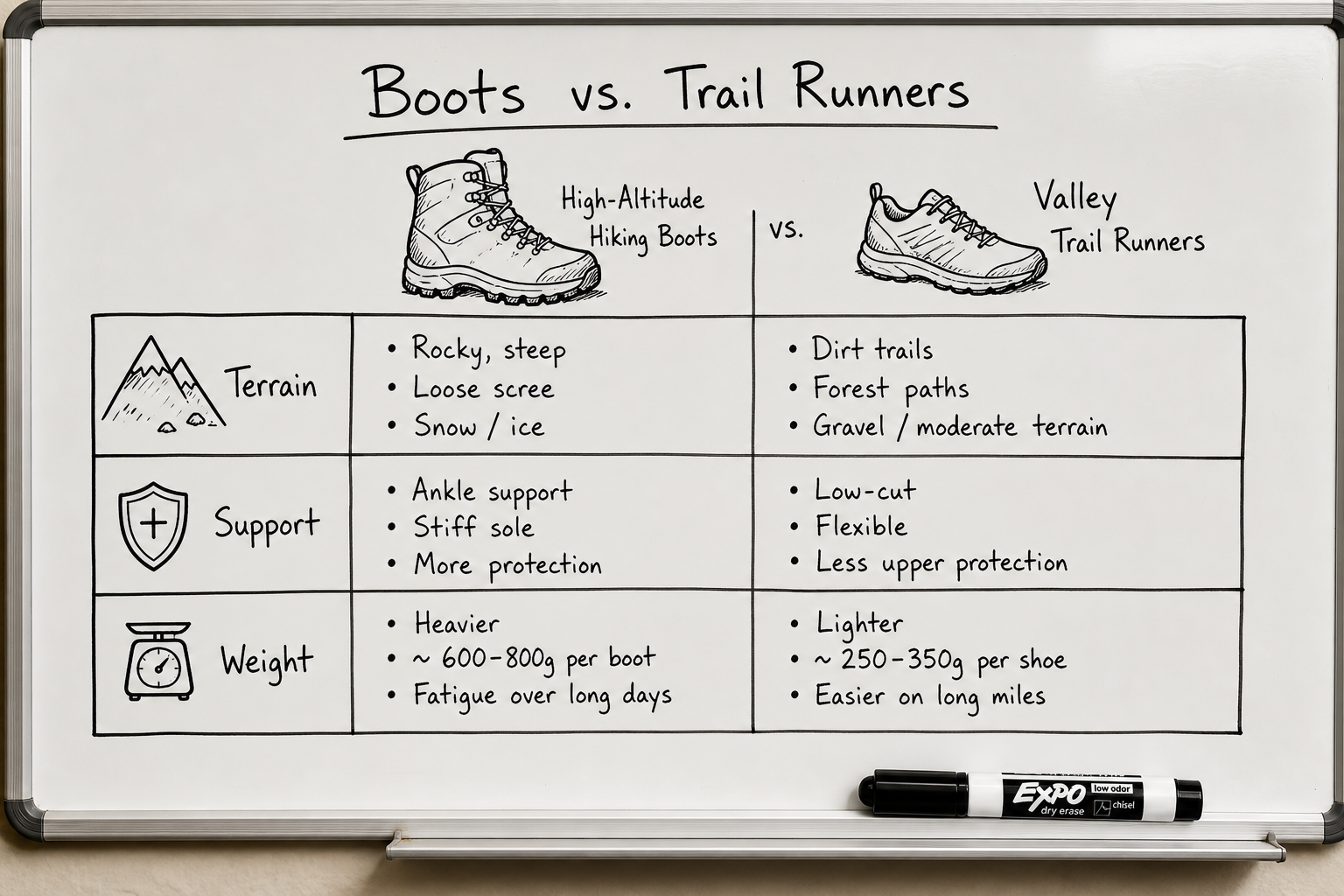
High-Altitude Hiking Boots vs. Valley Trail Runners
The debate between traditional hiking boots and lightweight trail runners is endless, but the right choice depends entirely on your itinerary.
| Footwear Type | Best For | Pros | Cons |
|---|---|---|---|
| Mid-to-High Hiking Boots | Scree fields, snow patches, heavy backpacks, weak ankles. | Excellent ankle support, highly durable, usually fully waterproof. | Heavy, take a long time to dry if water breaches the top, require breaking in. |
| Trail Running Shoes | Well-groomed valley trails, fast-paced day hikes, dry conditions. | Extremely lightweight, highly breathable, require zero break-in time. | Minimal ankle support, feet get wet quickly in mud or rain, less sole protection on sharp rocks. |
If you plan to utilize our organized border-crossing excursions to rugged trails near Aosta, Italy, a sturdy pair of hiking boots with a stiff Vibram sole is ideal. If your goal is to hike the gentler 250 kilometers of lower valley trails in Val de Bagnes, aggressive trail runners will save your legs a lot of fatigue.
- The Sock Strategy: Pair your footwear with mid-weight Merino wool hiking socks. Bring 3-4 pairs. Consider bringing one pair of ultra-thin liner socks to prevent blisters on long, high-elevation days.
The “Hut Shoe” / Hostel Slipper
This is the most frequently forgotten item by international backpackers. In European mountain culture, it is considered highly disrespectful (and exceptionally messy) to wear your dirty hiking boots inside a hostel, chalet, or mountain hut.
- What to Pack: Bring a dedicated pair of lightweight slip-on shoes, robust sandals, or rubber clogs. These serve a dual purpose: they give your feet a chance to breathe and recover after a 15-kilometer hike, and they keep the shared spaces clean for everyone. You will also use these when navigating to the showers or hanging out during our communal dinners.
Step 3: Pack Essential Mountain Day-Trip Gear
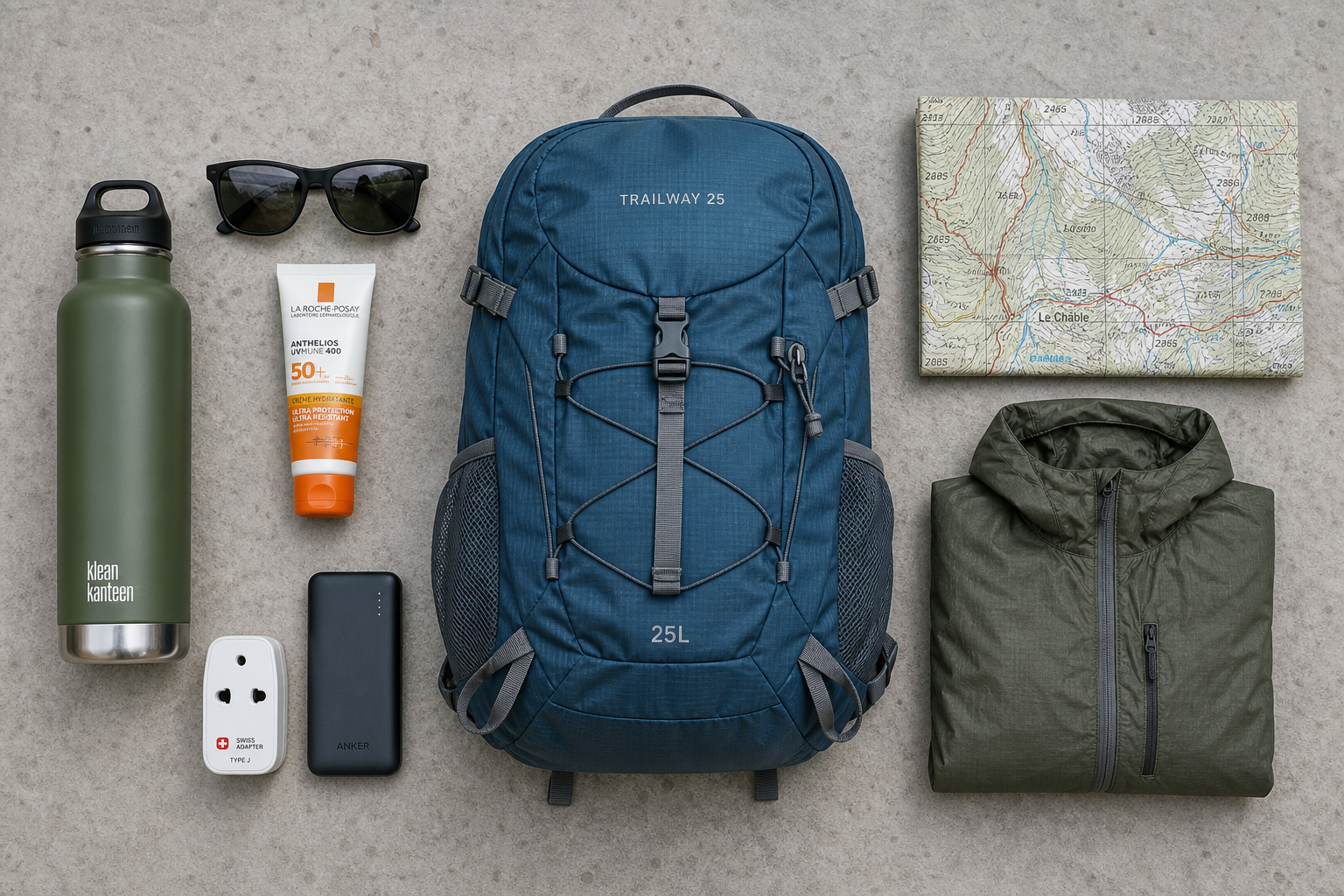
When you leave Ski Hostel for the day, you need a mobile basecamp on your back. An efficient daypack allows you to navigate the Alps safely without feeling like a pack mule.
The 20-30 Liter Daypack
A 20 to 30-liter backpack is the sweet spot for summer alpine day trips. It is large enough to hold your waterproof shell, lunch, and hydration, but small enough to remain agile. Look for a pack with a hip belt to transfer the weight off your shoulders, and ensure it has an integrated rain cover (or buy a separate waterproof pack cover).
The Alpine Sun Protection Kit
At 2,000 meters, the atmosphere is thinner, and UV radiation is significantly stronger than at sea level. The cool mountain breeze often masks how quickly your skin is burning.
- Sunglasses: Bring polarized sunglasses with a category 3 or 4 lens rating. Snow glare from high-altitude glaciers (even in August) can cause temporary snow blindness.
- Sunscreen: Pack a high-SPF (50+) sport sunscreen and an SPF lip balm. Reapply every two hours.
- Headwear: A wide-brimmed hat or a lightweight, breathable hiking cap.
Hydration and Nutrition Logistics
One of the greatest joys of hiking in Switzerland is the abundance of fresh, cold, potable water flowing from village fountains.
- Hydration: You rarely need to carry heavy, complex water filtration systems or three liters of water at a time. Pack a 1-liter to 1.5-liter reusable water bottle or a hydration bladder. You can easily refill at the wooden water troughs found in almost every alpine village along your route.
- Nutrition: While we provide hearty, home-cooked meals at the hostel, your daypack needs trail fuel. Pack a small reusable container for summit sandwiches, and bring a stash of high-calorie energy bars from home (as specialized sports nutrition can be expensive in Swiss mountain towns).
Step 4: Curate Communal and Down-Time Clothing
The Ski Hostel experience is built around community. After a grueling day navigating elevation gains, the evening is about recovery, social connection, and shared experiences. Your packing list needs to account for the hours you spend off the trail.
Communal Dinners and Social Events
We host weekly adventure programs that include BBQs, Brazilian-influenced cuisine nights, and casual gatherings. The atmosphere is famously relaxed—there is no need for formal wear or luxury resort attire.
- What to Pack: Pack 1-2 “town outfits.” A clean pair of jeans or comfortable linen trousers, paired with a casual button-down shirt, a neat blouse, or a fresh t-shirt is perfect. A comfortable sweater is essential, as temperatures in alpine villages drop quickly once the sun dips behind the peaks.
Spa Nights and Lake Dips
Many alpine villages feature thermal baths, and our hostel organizes dedicated spa nights to help guests recover their tired muscles. Furthermore, the mountain lakes you encounter on your hikes, while brisk, offer incredible cold-plunge opportunities.
- What to Pack: Do not forget your swimwear. A quick-drying microfiber towel is also incredibly useful; it takes up a fraction of the space of a cotton towel and dries overnight in a shared dorm room.
Digital Nomad Logistics
For remote workers seeking an inspiring backdrop, the Swiss Alps offer incredible infrastructure. We provide high-speed Wi-Fi, but the physical hardware is up to you. Planning the logistics of working abroad in the Alps requires attention to detail, as noted in many Swiss travel hack forums.
- The Swiss Adapter: Switzerland uses Type J electrical outlets. This is a hexagonal plug with three pins. While many standard European Type C (two-pin) plugs will fit into a Type J socket, grounded appliances (like many laptop chargers) require a specific Type J adapter. Bring at least two.
- Power Bank: Cold mountain air drains smartphone batteries rapidly. If you are using your phone for trail navigation and photography, a 10,000mAh power bank is non-negotiable.
Step 5: Leverage Local Rentals and Skip the Bulky Items
The most advanced packing skill is knowing what not to bring. Lugging oversized baggage through Swiss train stations is exhausting and expensive.
At Ski Hostel, our all-in-one experience model is designed to eliminate logistical friction. By utilizing local rentals, you keep your luggage sleek and travel stress-free.
Leave the Heavy Hardware at Home
Unless you are a sponsored professional or have hyper-specific ergonomic needs, do not fly with heavy outdoor equipment.
- Mountain Bikes: Renting a mountain bike or e-bike locally ensures you get a fully serviced, modern machine perfectly suited for the specific trails of St. Stephan. It saves you massive airline freight fees and the nightmare of assembling a bike in a hostel courtyard.
- Trekking Poles: While highly recommended for saving your knees on steep descents, they are frustrating to pack and often not allowed in carry-on luggage due to airline security rules. Rent or borrow a pair upon arrival.
- Camping Gear: Because we provide comprehensive accommodation and home-cooked meals, you can completely eliminate tents, sleeping bags, sleeping pads, and cooking stoves from your packing list.
Minimize Toiletries
Keep your toiletry bag strictly to the essentials. Hostels and local pharmacies provide the basics. Focus on personal medications, contact lenses, and specific blister-care items (like Compeed patches or moleskin). Everything else—shampoo, standard soap, toothpaste—can be acquired easily in the valley.
Understanding the Alpine Summer: Month by Month
“Summer” is a broad term. A trip in early June looks vastly different from a trip in late August. Here is what to expect so you can fine-tune your core packing list.
June: The Melting Season
In early June, the valleys are lush and green, but trails above 2,000 meters often still hold significant snowpack. Some high mountain passes and remote huts may not open until the end of the month.
- Packing Adjustment: Lean slightly heavier on warm mid-layers. Waterproof boots are essential, as trails will be muddy and wet from snowmelt.
July: Peak Heat and Thunderstorms
July is the warmest month. Valley temperatures can routinely exceed 85°F (29°C), and the high-altitude trails are completely clear of snow. However, this intense heat triggers thermal convection, leading to frequent, spectacular, and fast-moving afternoon thunderstorms.
- Packing Adjustment: Prioritize sun protection and breathable base layers. Always carry your hardshell waterproof jacket, no matter how clear the sky looks at 8:00 AM.
August: Stable Alpine Glory
August is widely considered the prime hiking month in the Swiss Alps. The weather patterns stabilize, the threat of afternoon thunderstorms decreases slightly, and all high-altitude routes and border-crossing paths to France and Italy are highly accessible.
- Packing Adjustment: The standard 5-step packing guide applies perfectly here. However, as the month progresses toward September, the evening temperatures will begin to drop noticeably. Ensure your synthetic puffer jacket is easily accessible for hostel BBQs.
Family Packing Considerations
If you are planning a multi-generational trip, the logistics multiply. As highlighted by National Geographic’s family travel insights, the key to family harmony in the Alps is avoiding overtired, cold children. Over-pack snacks, double up on child-sized sun protection, and ensure kids have robust, broken-in footwear well before the trip begins.
Quick-Reference Swiss Alps Summer Packing Checklist
Use this final checklist as you lay your gear out on the living room floor:
Clothing (Active)
- [ ] 2-3 Moisture-wicking t-shirts (Merino or synthetic)
- [ ] 1 Long-sleeve base layer
- [ ] 1-2 Pairs of hiking pants or shorts
- [ ] 1 Micro-grid fleece pullover
- [ ] 1 Packable insulated jacket (synthetic preferred)
- [ ] 1 Waterproof hardshell rain jacket (Gore-Tex)
- [ ] 3-4 Pairs of Merino wool hiking socks
Footwear
- [ ] 1 Pair of trail runners or hiking boots (broken in!)
- [ ] 1 Pair of slip-on sandals or “hut shoes” for the hostel
Communal / Hostel Life
- [ ] 1-2 Casual outfits for dinners and exploring towns
- [ ] Swimwear for spa nights
- [ ] Quick-dry microfiber towel
- [ ] Toiletries and personal medications
Gear and Tech
- [ ] 20-30L Daypack with rain cover
- [ ] Sunglasses (Category 3 or 4)
- [ ] High-SPF sport sunscreen and lip balm
- [ ] 1-1.5L Reusable water bottle
- [ ] Type J electrical adapters
- [ ] 10,000mAh Power bank
- [ ] Passport (crucial for our border-crossing excursions to Aosta and Chamonix!)
Packing for a summer in the Swiss Alps does not require hauling massive suitcases up cobblestone streets. By focusing on a smart, interlocking layering system, prioritizing foot health, and leveraging the rental gear and communal infrastructure provided at your basecamp, you free yourself to focus entirely on the mountains.