Which Swiss Ski Resort Fits a Backpacker's Budget?
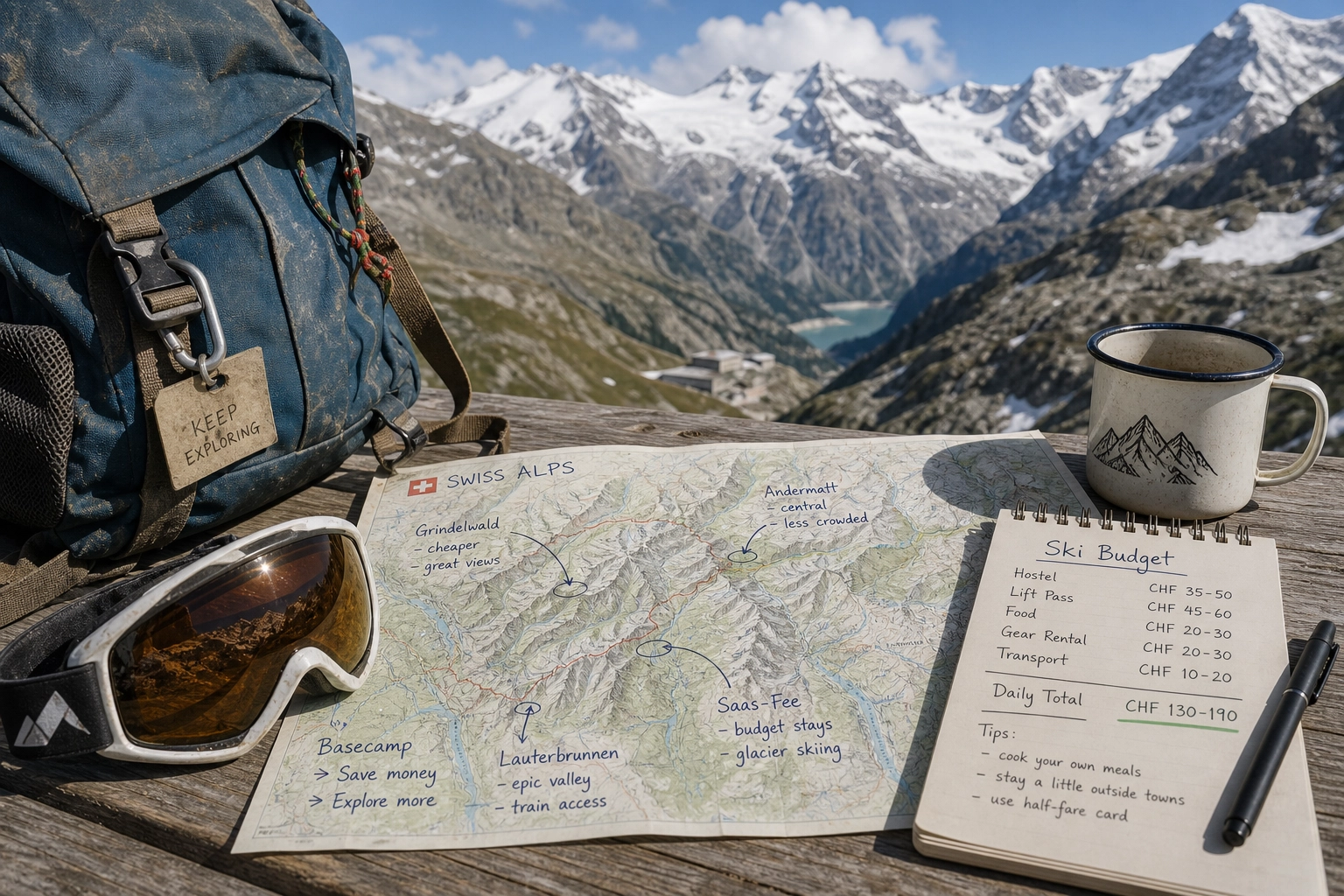
Mention a winter holiday in Switzerland, and the first things that come to mind are usually designer ski suits, five-star luxury chalets, and eye-watering price tags. For decades, the Swiss Alps have been marketed as the playground of the elite. When you look at the glossy brochures for places like St. Moritz or Zermatt, the idea of doing a Swiss ski trip on a backpacker’s budget seems almost laughable.
But the reality on the ground is entirely different. According to the List of ski areas and resorts in Switzerland, the country boasts over 360 distinct ski resorts. While a handful of megacomplexes grab all the international headlines, the vast majority of these mountains are local favorites tucked into quiet valleys, offering world-class snow at a fraction of the cost.
You do not need a luxury budget to experience the best skiing in Europe. You just need a smarter strategy. By skipping the ski-in/ski-out luxury hotels, utilizing valley basecamps, and redefining what an “all-inclusive” vacation looks like, independent travelers, digital nomads, and budget-conscious families can unlock the Swiss Alps.
In this guide, we will break down the mechanics of skiing Switzerland on a budget. We will explore the hidden valley resorts that offer massive terrain access without the premium markup, detail the logistics of gear and transport, and explain how community-driven adventure lodges are changing the landscape of mountain tourism.
The Reality of Skiing in Switzerland (Schweiz) on a Budget
The fundamental mistake most budget travelers make when planning a Swiss ski holiday is aiming for the wrong postal code. In the Alps, you pay a massive premium for altitude and proximity. If you insist on sleeping halfway up the mountain in a famous resort town, your budget will evaporate before you even rent your boots.
To stretch your budget, you have to adopt the “basecamp strategy.” This means staying in a lower-altitude valley town that connects directly to major ski domains via Switzerland’s hyper-efficient public transport or private lodge shuttles.
The Cost Divide: Luxury Hub vs. Basecamp Strategy
Let’s look at a practical breakdown of daily costs when you compare a traditional luxury approach to a backpacker-friendly basecamp strategy.
| Expense Category | Traditional Luxury Resort (e.g., Zermatt / St. Moritz) | Basecamp Adventure Lodge (e.g., Liddes / St. Stephan) |
|---|---|---|
| Accommodation | 250 - 500+ CHF / night (Standard Hotel) | 45 - 85 CHF / night (Hostel/Lodge bed) |
| Dining | 80 - 150 CHF / day (Restaurants) | Included or ~20 CHF (Communal lodge dinners/cooking) |
| Lift Pass | 80 - 100 CHF / day | 45 - 80 CHF (Dynamic pricing / regional passes) |
| Gear Rental | 60 - 80 CHF / day (Resort village prices) | 30 - 40 CHF (Lodge-provided or valley rental) |
| Transport | Expensive private transfers | Included in lodge packages or cheap local buses |
| Daily Average | 500 - 850+ CHF | 150 - 225 CHF |
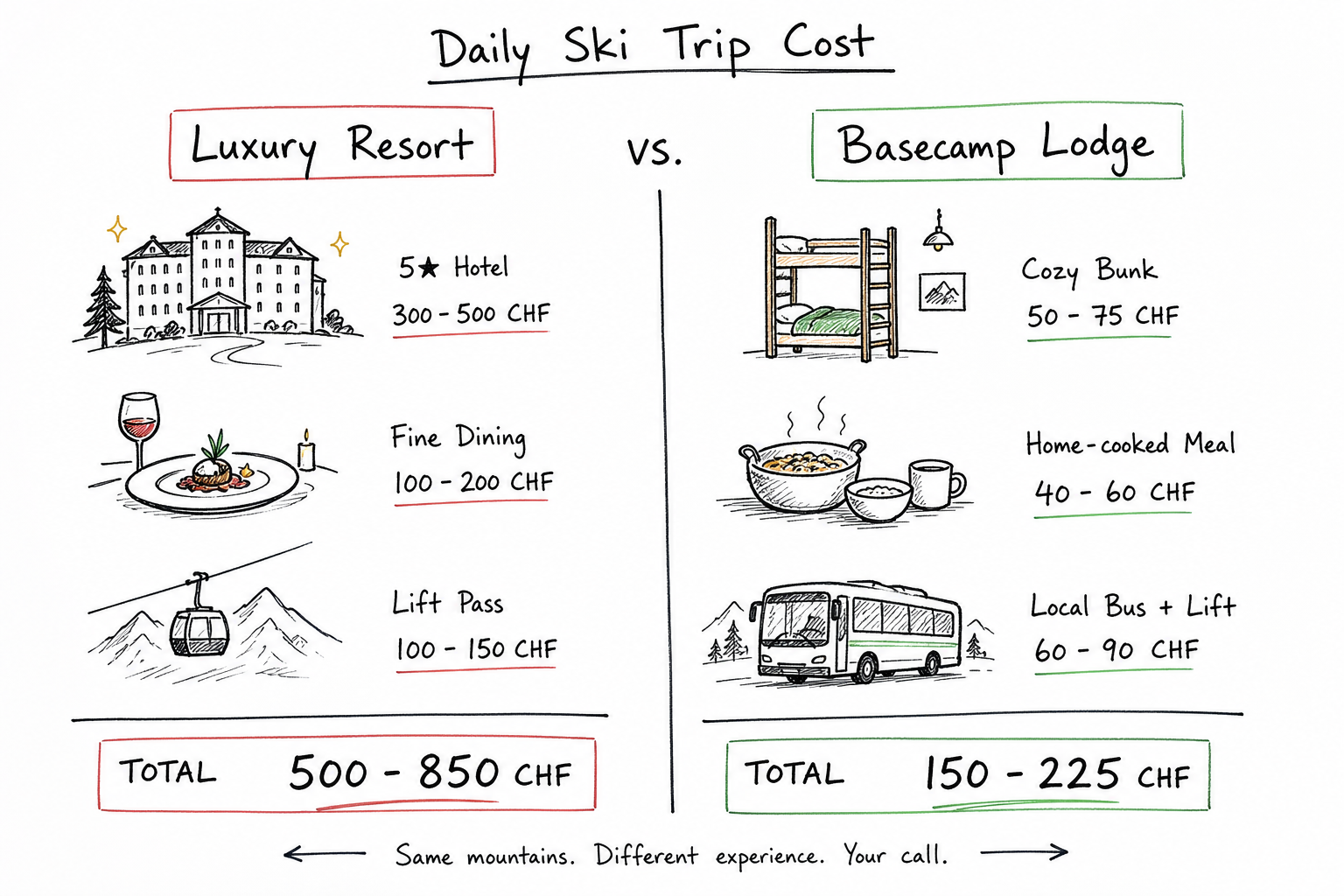
By stepping just a few kilometers away from the main tourist drags, your costs plummet, but the quality of the snow remains exactly the same. You are skiing the exact same peaks as the luxury crowd, just starting your morning slightly differently.
Top Swiss Ski Regions for Budget-Conscious Travelers
When evaluating the Best Ski Resorts in Switzerland, budget travelers should look for regions that offer “backdoor” access. These are quiet, authentic Swiss villages that share a ski domain with a famous, expensive resort.
Here are the top regions and specific basecamp towns that offer incredible value for international backpackers, solo adventurers, and digital nomads.
1. Liddes and the Val de Bagnes (The 4 Vallées Backdoor)
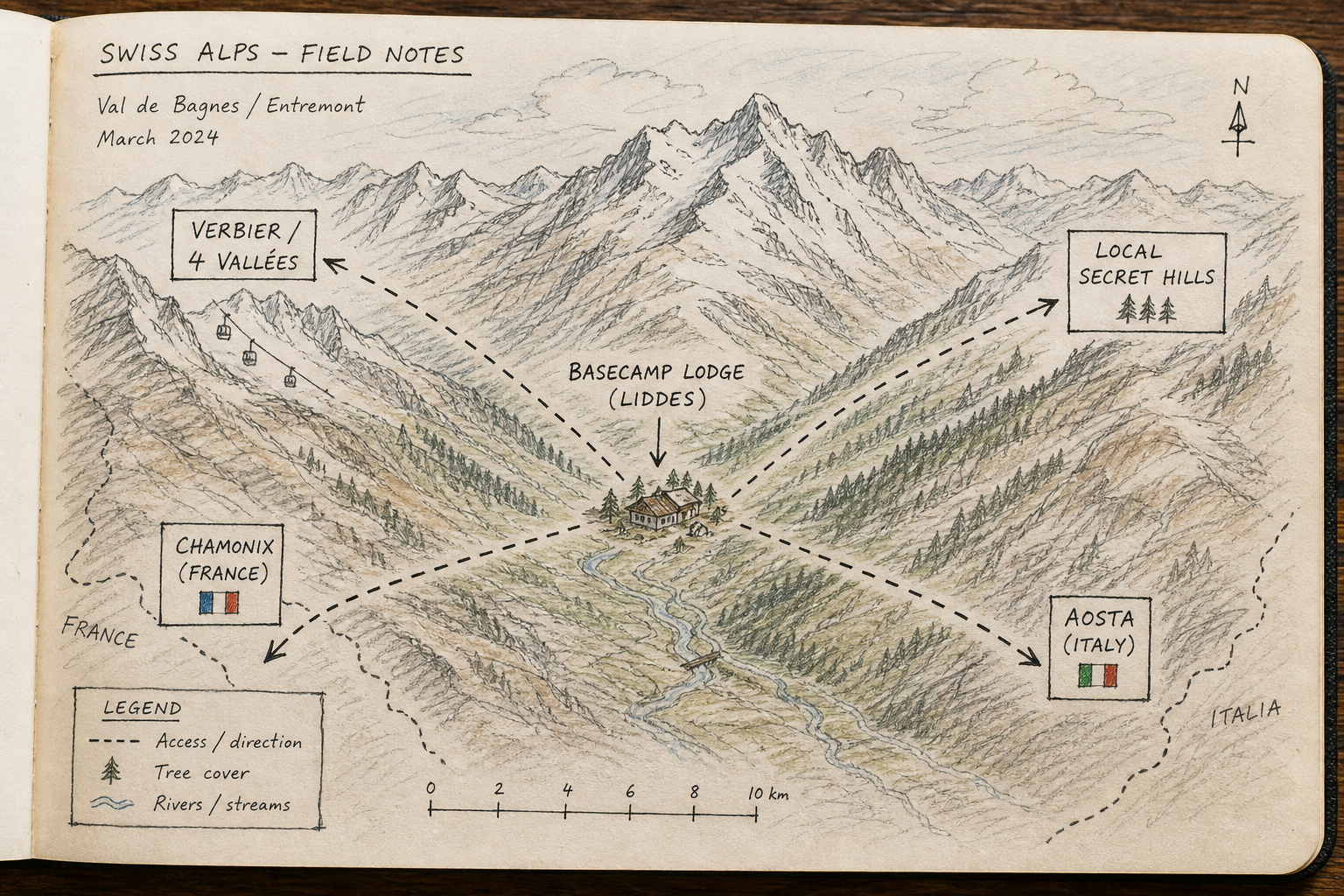
The 4 Vallées is Switzerland’s largest interconnected ski area, famous globally for the resort of Verbier. Verbier is spectacular, but it is notoriously expensive. However, the Val de Bagnes and the nearby Great St. Bernard Pass region (including the village of Liddes) offer a brilliant alternative.
Staying in a community-driven lodge in Liddes gives you strategic access to multiple micro-resorts that are entirely off the international radar, such as Vichères-Liddes and La Fouly. These local hills offer pristine powder, zero lift lines, and highly affordable day passes.
When you want the massive terrain of the 4 Vallées, you simply take a short transport down the valley to the Bruson or Le Châble gondolas, completely bypassing Verbier’s expensive accommodation and dining scene. This region is ideal for advanced skiers looking for untouched freeride terrain and beginners who want quiet, uncrowded slopes to practice on.
2. St. Stephan and the Obersimmental Valley
If you want the classic Bernese Oberland experience without paying Gstaad prices, St. Stephan is your target. Tucked into the Obersimmental valley, this quiet village connects directly into the massive Gstaad ski region (specifically the Zweisimmen/St. Stephan-Saanenmöser sector).
Instead of mingling with celebrities in luxury hotels, backpackers can stay in the valley, wake up to views of traditional Swiss dairy farms, and ride the local gondolas up to 200 kilometers of pristine pistes.
Furthermore, St. Stephan is a short distance from the Adelboden-Lenk ski domain. By basing yourself here, you can chase the best snow conditions across two entirely different, massive ski regions depending on the weather reports, all while maintaining a dirtbag-friendly budget.
3. The Border-Crossing Hack: Aosta (Italy) and Chamonix (France)
One of the most unique aspects of skiing in the Swiss Alps is the proximity to international borders. For long-term backpackers and digital nomads staying in the Val de Bagnes or Liddes region, day-tripping across the border is a major budget hack.
Taking a shuttle through the Great St. Bernard tunnel drops you into the Aosta Valley in Italy. Resorts like Pila or Courmayeur offer incredible skiing, and the cost of an espresso, a mid-mountain pizza, or a pint of beer is a fraction of what you would pay in Switzerland.
Similarly, hopping over the border to Chamonix, France, provides access to iconic Mont Blanc views and world-renowned extreme terrain. Using a Swiss basecamp to mount border-crossing excursions allows you to experience three distinct alpine cultures—and three different price tiers—in a single week.
All-Inclusive Vacations in the Swiss Alps: The Backpacker Way
When people hear “all-inclusive vacations,” they typically picture massive, sterile megacomplexes with buffet lines and wristbands. Platforms like Club Med dominate the luxury end of this market, offering seamless, high-end experiences that cost thousands of dollars per week.
But a new wave of adventure hospitality is redefining the all-inclusive model for the budget-conscious traveler. At places like Ski Hostel, “all-inclusive” means community, convenience, and low stress, rather than excess and luxury.
What a Community-Driven All-Inclusive Looks Like
For a solo traveler or a digital nomad, the logistics of a ski trip can be exhausting. Renting gear, figuring out bus schedules, buying groceries in a notoriously expensive country, and navigating different lift pass systems eats into your holiday time.
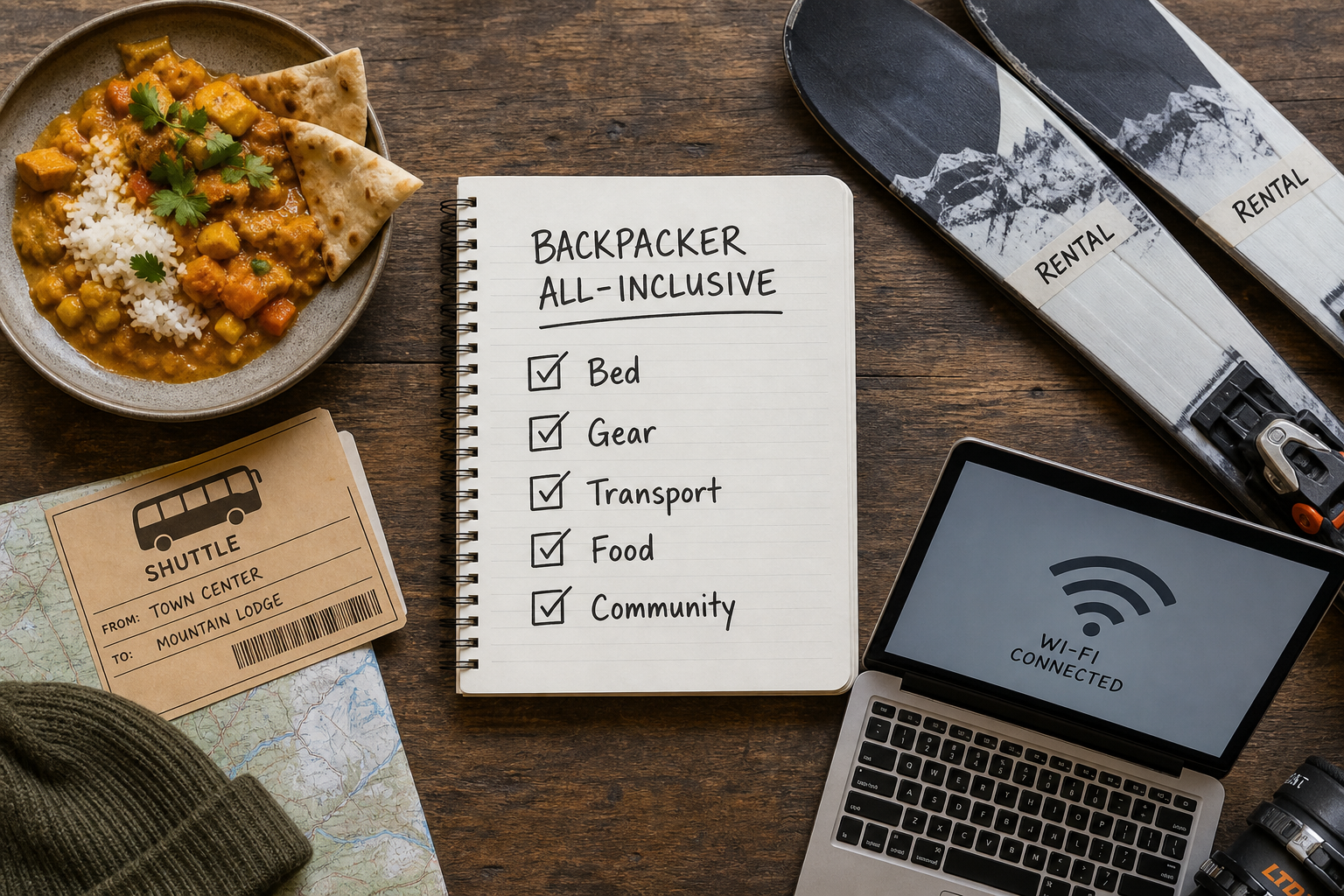
A backpacker-friendly all-inclusive package tackles these pain points directly:
- Gear Included: Instead of waiting in line at a resort rental shop and paying top dollar, community lodges maintain their own fleet of skis, snowboards, and avalanche safety gear. You get fitted in the living room with a beer in hand.
- Managed Logistics: Dedicated morning shuttles transport guests directly to the most appropriate resort for the day’s weather and snow conditions. You aren’t tied to one mountain; the host monitors the reports and takes the group to the best snow.
- Communal Dining: Food is one of the biggest budget killers in Switzerland. Adventure lodges solve this by cooking family-style meals. Imagine coming off the mountain to a home-cooked, Brazilian-influenced feast, shared around a massive wooden table with twenty other international travelers.
- Built-in Community: Solo travel in the winter can be lonely if you’re stuck in an expensive hotel room. Hostels curate a “home away from home” vibe with weekly social itineraries, BBQ nights in the snow, and shared spaces designed for connection.
What To Expect In The Winter: Amenities for the Modern Traveler
The demographic of the budget skier has shifted. It is no longer just college students looking for cheap bunks. Today’s mountain hostels cater heavily to digital nomads, remote workers, and career-break professionals who need specific amenities to sustain longer trips.
High-Speed Wi-Fi and Remote Work
You cannot spend a month skiing the Alps if you cannot jump on a Zoom call. Modern adventure lodges have prioritized enterprise-grade Wi-Fi and dedicated quiet zones. It is incredibly common to see the dining room transform into a coworking space by 3:00 PM as guests return from the slopes to finish their workday.
The Social Atmosphere
Traditional luxury hotels offer privacy, but adventure lodges offer immediate community. You are sharing the lodge with likeminded outdoor enthusiasts. If you need a backcountry touring partner, someone to split a guide with, or just a group to grab a drink with after riding, you will find them at breakfast.
Activities extend far beyond skiing. A good mountain basecamp will organize evening spa runs to local thermal baths, night-sledding excursions, and avalanche safety workshops in the living room.
Strategic Hacks to Stretch Your Winter Holiday Budget
Even with a great basecamp and an all-inclusive hostel package, there are localized strategies you must employ to keep your Swiss ski trip affordable.
1. Leverage Dynamic Ticket Pricing
Many Swiss resorts have abandoned fixed-price lift tickets in favor of airline-style dynamic pricing. If you buy your pass at the window on a sunny Saturday in February, you will pay maximum price. If you buy your pass online three weeks in advance, you can often save up to 40%. Always pre-book your mountain access.
2. The “Magic Pass” and Regional Options
If you are staying for an extended period, look into regional season passes like the Magic Pass. This pass grants access to dozens of mid-sized and smaller resorts across Western Switzerland (including many in the Val de Bagnes and surrounding areas). The catch? It is unbelievably cheap if bought in the spring for the following year, and remains a good deal even into early winter compared to daily tickets.
3. Eat Big at Breakfast, Pack a Lunch
Mountain restaurants in Switzerland are exceptional, but sitting down for a track of raclette and wine at 2,500 meters will cost you a small fortune. To survive on a budget, lean heavily into the hostel breakfast. Pack sandwiches, nuts, and a thermos of hot tea in your backpack. Eat on the chairlift or at a scenic viewpoint. Save your appetite and your francs for the communal dinner back at the lodge.
4. Skip the Ski Train, Take the PostBus
While the famous Swiss trains are scenic, they can be pricey. However, the bright yellow Swiss PostBuses travel deep into every alpine valley, serving even the most remote trailheads and ski lifts. They are highly reliable, timed perfectly with train arrivals, and are often significantly cheaper. Many local tourist taxes (which you pay with your accommodation) actually include free local bus travel.
Frequently Asked Questions
Can you ski Switzerland without renting a car?
Absolutely. Switzerland has arguably the best public transportation system in the world. Trains will take you from Geneva or Zurich airports directly to valley hubs (like Martigny or Zweisimmen). From there, local trains or PostBuses drop you practically at the door of your lodge or the base of the ski lifts. Renting a car is often an unnecessary expense and a hassle when you factor in snow chains and expensive mountain parking.
Is it suitable for beginners to stay at an adventure hostel?
Yes. While adventure lodges attract expert freeriders, they are deeply welcoming to beginners. Staying at a basecamp lodge often means the hosts can point you toward the smaller, cheaper, and less intimidating local hills where beginners can learn in peace without the pressure of a crowded mega-resort.
How much does a one-week ski trip in Switzerland actually cost a backpacker?
If you utilize an all-inclusive adventure lodge package (which covers your bed, breakfast, dinner, gear rental, and local mountain transport), you can easily manage a one-week Swiss ski holiday for under 1,000 CHF, not including your flights. If you hunt for dynamic lift pass deals and avoid drinking in high-end resort bars, you can comfortably execute the trip for a fraction of a standard agency package.
The Real Value of the Swiss Alps
Skiing in Switzerland does not have to be an exclusive, VIP-only experience. The mountains themselves don’t care how much your jacket costs or whether you arrived via helicopter or the local yellow bus.
The snow in the hidden valleys of Liddes, Val de Bagnes, and St. Stephan is just as deep as it is in the luxury resorts. By shifting your mindset from “luxury vacation” to “mountain adventure,” you open up a completely different side of the Alps.
Choosing a community-driven basecamp over a traditional hotel not only saves you money—it actively improves the trip. It removes the stress of logistics, introduces you to a global community of mountain lovers, and gives you a warm, home-cooked landing spot after a long day in the cold. You get the world-class terrain of the Swiss Alps, powered by the spirit of international backpacking.