Plan Your Hiking Holiday in Switzerland (2026 Guide)
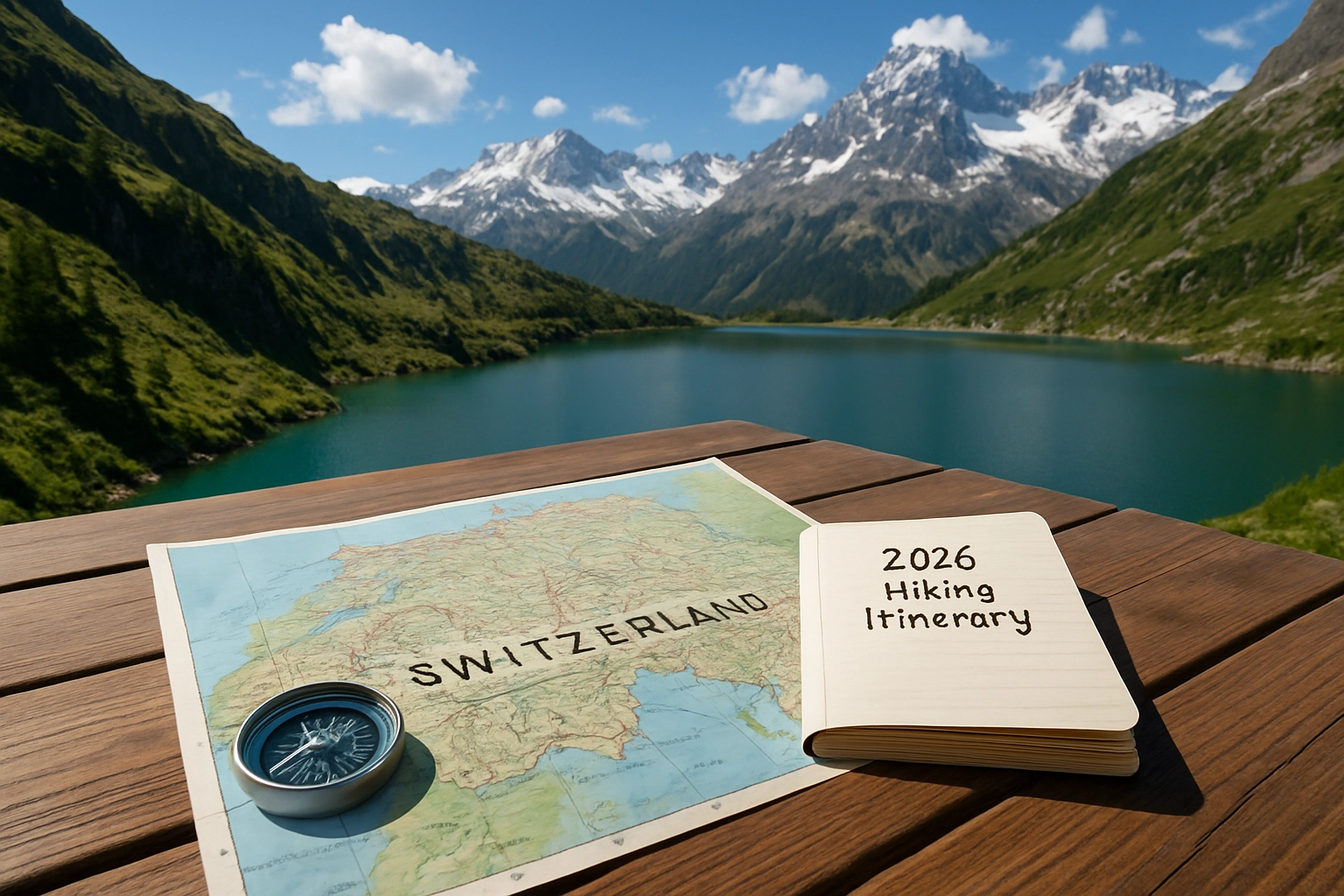
Switzerland is notoriously marketed as a playground for two extremes: luxury travelers willing to spend thousands on alpine resorts, and hardcore mountaineers tackling technical ascents. But if you’re planning a hiking holiday in Switzerland in 2026, you should know there’s a massive, vibrant middle ground.
You don’t need an unlimited budget, and you don’t need to sleep in a crowded, unheated mountain hut every night to experience world-class alpine trails.
By leveraging the country’s flawless transport network and adopting a “basecamp” approach—staying in community-driven adventure lodges rather than traditional hotels—you can access over 65,000 kilometers of marked trails while returning to a warm shower, high-speed Wi-Fi, and a home-cooked meal every evening.
Whether you are a solo backpacker, a digital nomad working from the mountains, or a family seeking an active summer break, this guide covers everything you need to know to plan a hiking holiday in Switzerland, from decoding trail signs to choosing the best region for your skill level.
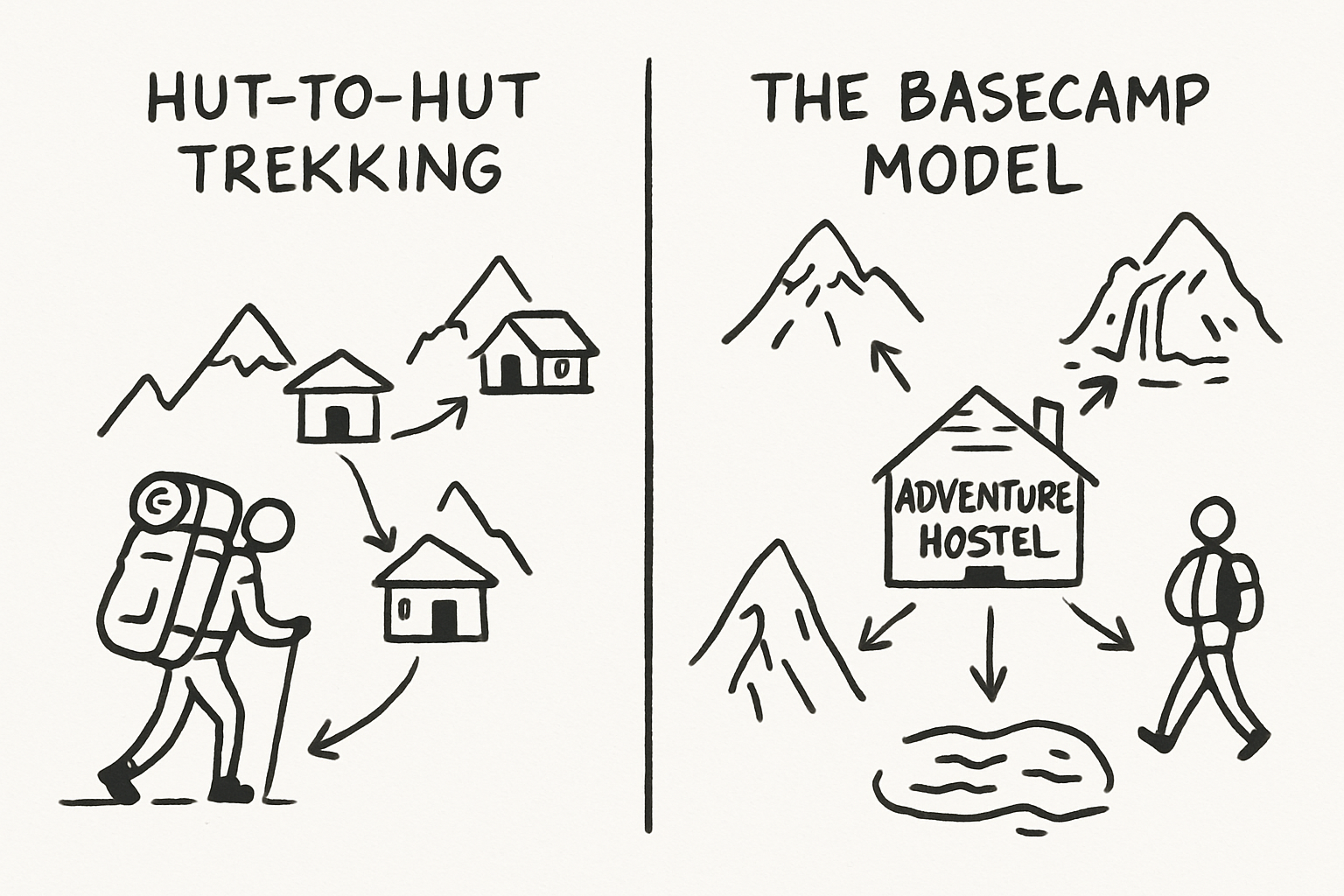
The “Basecamp” Approach vs. Hut-to-Hut Trekking
Before diving into specific regions and routes, it’s crucial to decide how you want to travel. Historically, multi-day hikes in the Swiss Alps meant hut-to-hut trekking. While romantic, carrying a heavy 50-liter backpack over high mountain passes for seven days straight isn’t for everyone. It also requires booking Swiss Alpine Club (SAC) huts months in advance.
Today, the basecamp model is becoming the preferred strategy for budget-conscious hikers and digital nomads.
Instead of moving every day, you establish a central hub—like an adventure lodge in a strategic valley—and use Switzerland’s integrated transport network to tackle different trails each day with only a lightweight daypack.
Advantages of a Communal Adventure Lodge
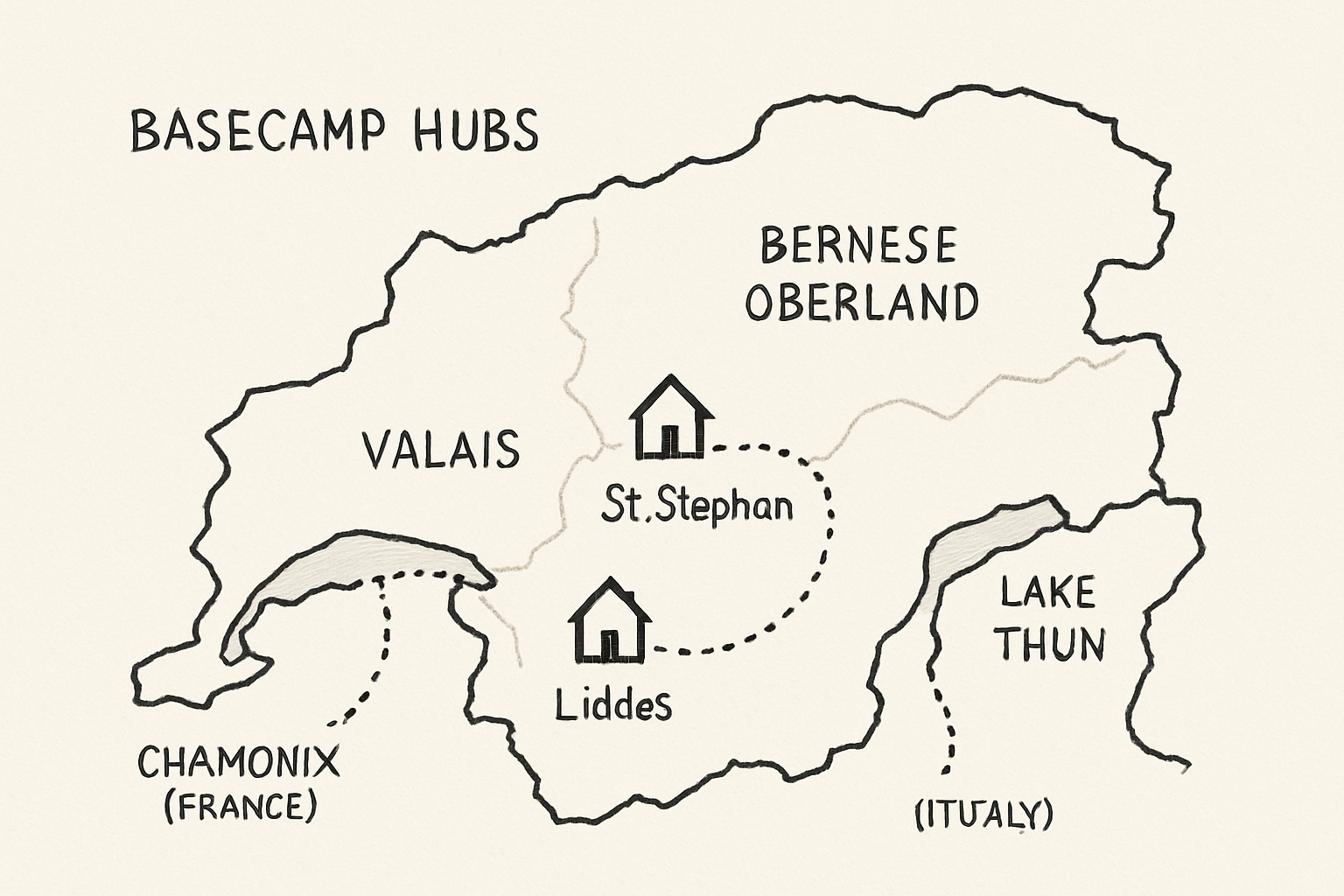
Opting for a community-driven hostel over a traditional hotel or mountain hut completely changes the dynamic of your trip. At places like Ski Hostel, which operates hubs in both the Liddes (Valais) and St. Stephan (Bernese Oberland) regions, the logistics of alpine exploration are heavily streamlined:
- Managed Logistics & Transport: Rather than navigating train schedules to remote trailheads, you can rely on organized hostel transport to various alpine resorts and starting points.
- Gear Rental On-Site: Avoiding the baggage fees of flying with trekking poles, heavy boots, and specialized backpacks by renting high-quality gear directly from your basecamp.
- Built-in Community: Solo travelers can easily find hiking partners over communal dinners or weekend BBQ gatherings.
- Remote Work Infrastructure: Unlike remote alpine huts with zero cell service, modern adventure lodges offer high-speed Wi-Fi, allowing digital nomads to hike in the morning and work in the afternoon.
- Recovery: Returning to a hot shower, a spa night, and hearty, diverse meals (like Brazilian-influenced alpine cuisine) ensures you recover properly for the next day’s elevation gain.
The Most Beautiful Hiking Regions in Switzerland
Switzerland’s topography is incredibly diverse. While the entire country offers excellent hiking, a few key regions stand out for their accessibility, dramatic scenery, and trail variety.
Valais (The High-Altitude Hub)
Located in the southwestern part of the country, the Valais is the undisputed king of high-alpine drama. Home to 45 peaks towering over 4,000 meters—including the Matterhorn—this region is defined by deep valleys, massive glaciers, and sun-drenched vineyards.
Basing yourself in towns like Liddes gives you direct access to the Val de Bagnes and acts as a springboard for some of the most famous border-crossing excursions in Europe. From here, you are uniquely positioned to hike into Aosta, Italy, or Chamonix, France, experiencing three distinct alpine cultures in a single week. The trails here range from gentle bisses (historic irrigation channels) to demanding high-altitude ridge walks.
Bernese Oberland (Iconic Peaks)
The Bernese Oberland is the postcard-perfect Switzerland you’ve seen in movies. Dominated by the imposing Eiger, Mönch, and Jungfrau peaks, this region features lush green meadows, dramatic waterfalls, and classic wooden chalets.
A basecamp in St. Stephan places you perfectly in the Simmental valley. From here, you avoid the heavy tourist crowds of Interlaken while maintaining direct access to world-class trails. The region is highly favored for its diverse routes, from family-friendly valley walks to demanding ascents up the Niesen or Stockhorn.
Central Switzerland
The birthplace of the Swiss Confederation, Central Switzerland revolves around Lake Lucerne. It is slightly lower in elevation than the Valais, making it an excellent choice for early summer hikes when the high passes are still snowbound. The Obwalden High Trail - The Highlights of Central Switzerland 8 Days is a famous route that showcases the region’s deep blue lakes and steep, funicular-accessible peaks like Mount Pilatus and Rigi.
Graubünden & Ticino
For those looking to escape the main tourist corridors, eastern and southern Switzerland offer a completely different vibe. Graubünden is wild, rugged, and culturally distinct (many locals speak Romansh). Ticino, the Italian-speaking canton, trades classic alpine chalets for stone villages, palm trees, and Mediterranean flair.
Our Bestselling Hike Tours & Routes in Switzerland
Whether you are planning self-guided day trips or booking a comprehensive package, these routes represent the pinnacle of walking holidays in Switzerland.
Mont Blanc & Border-Crossing Excursions
The Tour du Mont Blanc (TMB) is arguably the most famous trek in Europe. While the full circuit takes 10-12 days, hikers based in the Swiss Valais can easily tackle the most spectacular Swiss sections as day hikes. Starting from areas near the Great St. Bernard Pass, you can hike across the border into Italy’s Aosta Valley or head west toward the Chamonix valley in France. These border-crossing routes are perfect for international backpackers who want to collect passport stamps (figuratively speaking) on foot.
Hiking Holidays Lake Thun Panorama Trail
For a less technical but visually stunning experience, the Lake Thun Panorama Trail in the Bernese Oberland is unmatched. Characterized by suspension bridges, views of the deep blue lake, and the constant backdrop of the Eiger, Mönch, and Jungfrau, this route is ideal for active families and budget-conscious hikers looking for maximum reward with moderate effort.
Swiss Alpine Bliss: Kesch Trek in Davos
A classic in Graubünden, the Switzerland - Kesch Trek 5 Days is a high-alpine route that navigates past the spectacular Kesch glacier. Known for its rugged isolation, it’s a favorite among experienced hikers who want a pure wilderness experience away from the bustling hubs of Zermatt or Grindelwald.
Hiking Holidays Via Albula & Bernina
Following the route of the UNESCO World Heritage Rhaetian Railway, this trail is a masterclass in alpine engineering and natural beauty. It’s an excellent option for those who want the flexibility of hiking in the morning and taking a scenic red train back to their basecamp in the afternoon.
Decoding Swiss Trail Signage: How Hard Are the Trails?
One of the greatest advantages of hiking holidays in Switzerland is the meticulous trail marking system. However, failing to understand these signs can quickly lead you into terrain above your skill level.
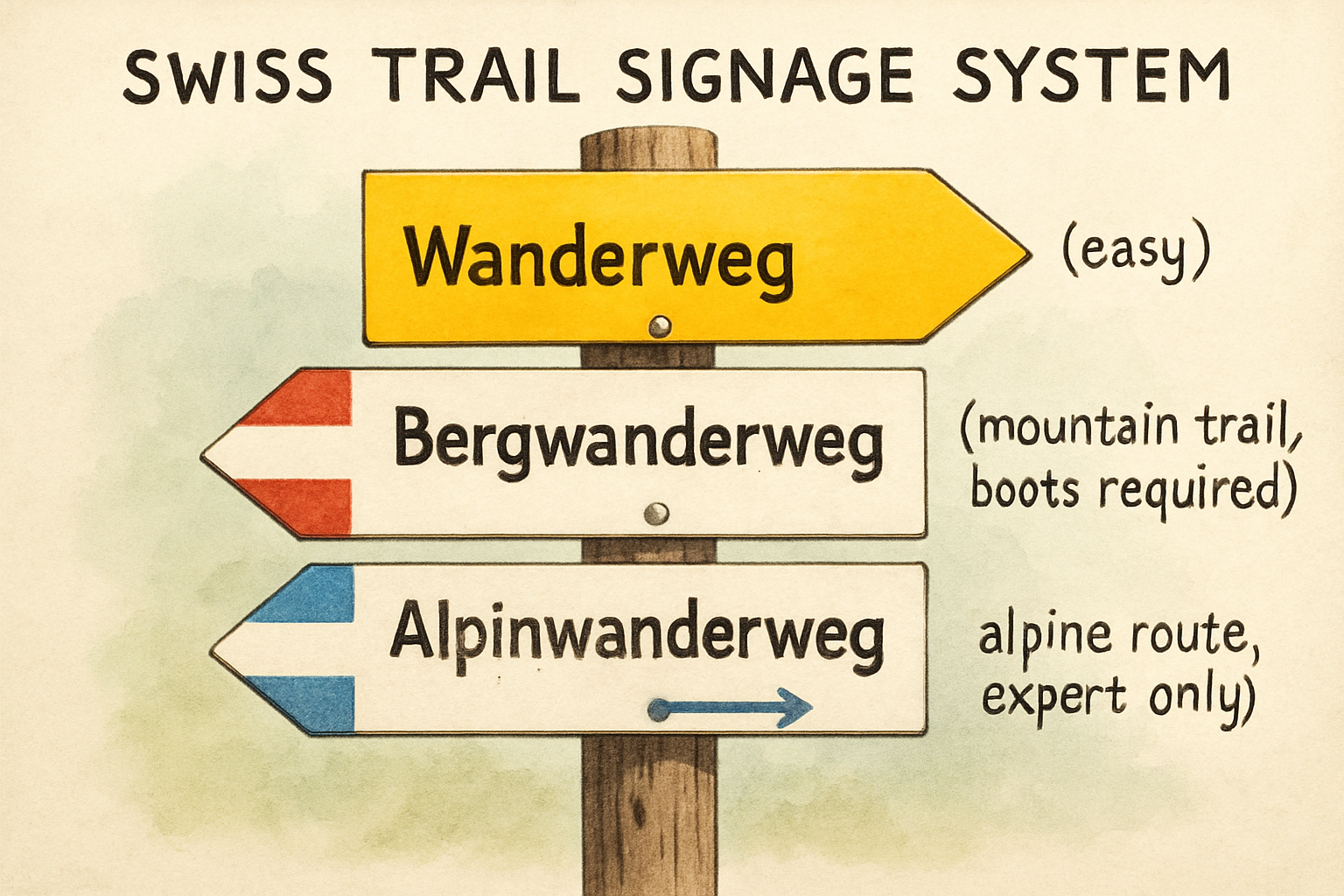
Switzerland classifies its trails into three distinct categories, color-coded for safety:
- Wanderweg (Yellow Signs): These are standard walking paths. They are wide, relatively flat, and often paved or packed gravel. You can walk these in sturdy running shoes. They pose no technical difficulty and are ideal for casual strolls or recovery days.
- Bergwanderweg (Red-White-Red Markers): This is the classic mountain hiking trail. They are steep, narrow, and unpaved. You will encounter roots, rocks, and potentially exposed sections secured with chains or cables. Hiking boots with good ankle support and a treaded sole are mandatory. The majority of the trails you’ll hike from an alpine basecamp fall into this category.
- Alpinwanderweg (Blue-White-Blue Markers): These are alpine routes intended only for highly experienced mountaineers. They cross glaciers, require scrambling over steep rock faces, and often demand technical gear like crampons, ice axes, or climbing harnesses. Do not attempt a blue trail unless you have alpine experience or a professional guide.
A quick note on trail times: Swiss trail signs estimate hiking time, not distance. These times are calculated based on the walking speed of a fit local (roughly 4-5 km/h on flat ground, adjusting for elevation). If you are a beginner, add at least 20-30% to the posted time to account for rests, photos, and altitude adjustment.
Preparing for Your Hike: Logistics & Budgeting
Transport Passes
Swiss public transport is legendary, but single tickets are expensive. If you are doing daily excursions from your hostel, you need a pass.
- Swiss Travel Pass: Offers unlimited travel on trains, buses, and boats, plus free entry to 500+ museums. It’s comprehensive but pricey.
- Swiss Half Fare Card: Costs a flat fee upfront (around 120 CHF) and gives you 50% off all tickets for a month. If you are staying at a basecamp and taking short daily trips to trailheads, this is mathematically the best choice.
- Your Digital Swiss Coupon Pass: Often bundled with tour packages, this digital pass offers 2-for-1 deals on dining, attractions, and mountain railways, making it highly valuable for couples or travel buddies.
Managing the Cost
Switzerland is an expensive destination, but 7 Tips for Hiking in Switzerland (Without the High Cost) can drastically reduce your daily spend.
By opting for an all-inclusive stay at an adventure lodge, your primary costs—accommodation, breakfast, dinner, and gear—are locked in at a budget-friendly rate. Your only daily expenses become lunch (pack a sandwich from the local Coop or Migros supermarket for 5 CHF instead of a 35 CHF mountain-top rösti) and the specific cable car tickets needed for that day’s trailhead.
When is the Best Time to Go Hiking in Switzerland?
Timing your trip is critical. The mountains dictate the rules, and turning up in May expecting to hike high passes will end in disappointment.
| Month | Trail Access & Conditions | Vibe & Crowds |
|---|---|---|
| May | Valley floors only. High passes (above 2000m) are covered in snow. Cable cars are mostly closed for maintenance. | Very quiet. Good for lowland lake hikes, but poor for alpine trekking. |
| June | Mid-elevation trails open. High passes may still hold snowpack. Wildflowers are blooming. | A beautiful transition month. Early season means fewer tourists, but you must be flexible with routes depending on late snowfalls. |
| July & August | Peak season. All high trails, mountain passes, and SAC huts are open. Glacial lakes are thawed. | Bustling with international hikers. High-altitude trails offer relief from valley heat. Basecamps and hostels become highly social hubs. |
| September | The sweet spot. Crisp air, clear skies, and changing colors. Trails are completely clear of snow. | Excellent. The peak summer crowds have left, but all infrastructure is still running. You might catch the *Alpabzug* (cows coming down the mountains). |
| October | High-altitude snowstorms become possible again. Cable cars begin closing mid-month. | Golden autumn colors (especially in the Engadin/Graubünden), but requires careful weather monitoring. |
For a full alpine experience combining border crossings, high-altitude challenges, and warm communal BBQ nights, mid-July through mid-September is the optimal window.
What to Pack for a Swiss Hiking Holiday
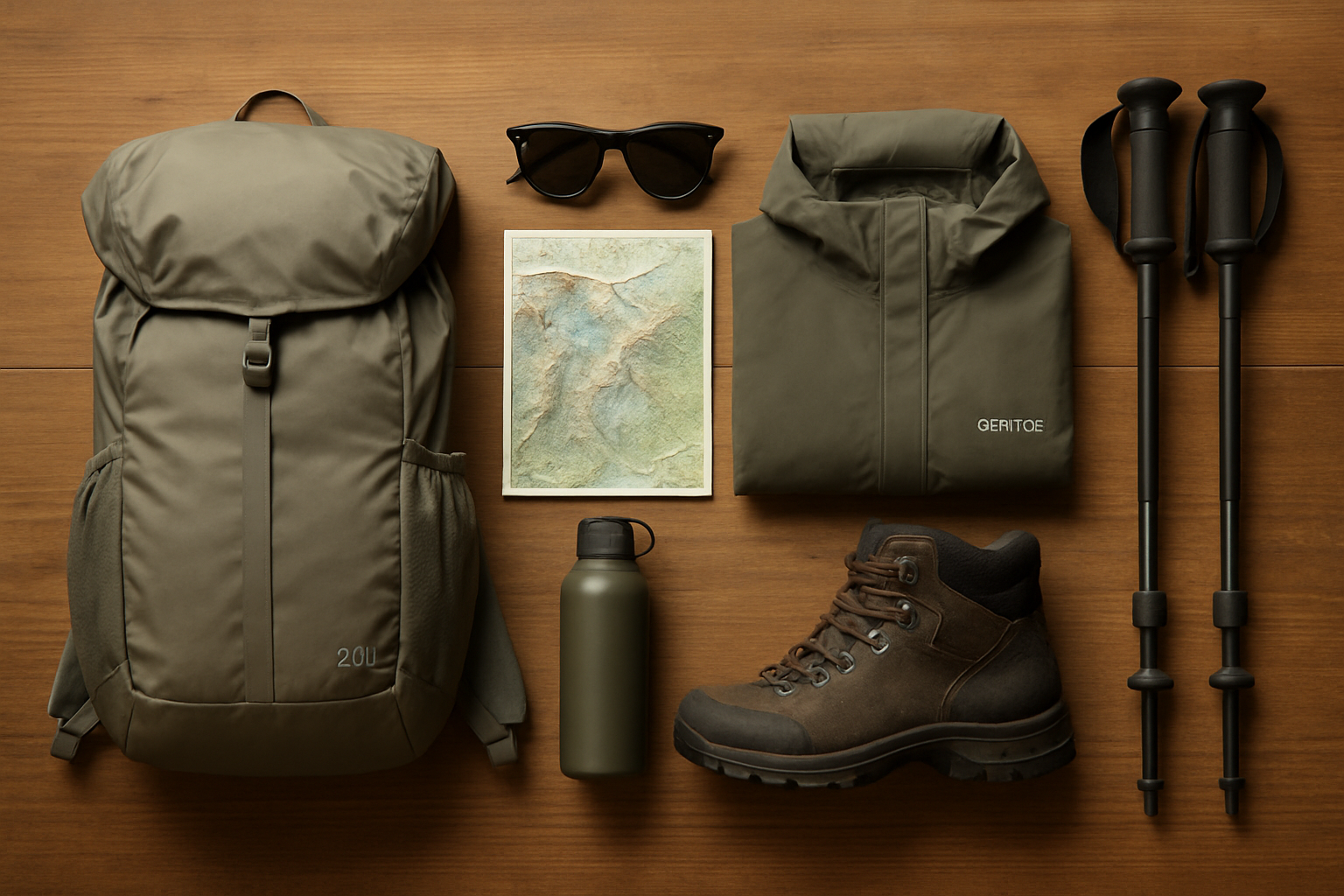
One of the greatest benefits of the basecamp model is that you don’t need to pack your life into a 65L rucksack. Here is your daily packing list for a typical Swiss hike:
- Footwear: Sturdy, waterproof hiking boots (often available for rent at your lodge). Trail runners are fine for yellow trails, but insufficient for red-white trails.
- Layering System: The weather can swing from 25°C in the valley to 5°C on a windy ridge. Pack a moisture-wicking base layer, a fleece mid-layer, and a packable Gore-Tex shell.
- Sun Protection: Alpine sun is brutal. Category 3 or 4 sunglasses, a brimmed hat, and SPF 50 are mandatory.
- Hydration & Nutrition: A 2-liter water bladder or bottles. Water from high mountain streams is generally safe, but there are countless public fountains in villages.
- Trekking Poles: Highly recommended to save your knees on steep, 1,000-meter descents (again, easily rented at a well-equipped hostel).
- Digital Offline Maps: Download the SwitzerlandMobility app. It is the absolute gold standard for offline topographical maps and public transport integration.
Frequently Asked Questions
How physically demanding are Swiss hiking tours?
The beauty of Switzerland is that it scales to your fitness level. If you join a comprehensive summer package at an adventure lodge, the staff will curate a weekly itinerary tailored to the group’s ability. You can choose a flat 8km walk around a lake, or a grueling 1,500m elevation gain ascent to a glacier.
However, you must respect the elevation. Even easy trails require more effort at 2,500 meters above sea level. If you plan on tackling iconic routes like the Switzerland Hiking Tours & Treks, expect to walk 4-6 hours a day on uneven terrain.
What level of physical fitness is required for hiking the Matterhorn Circuit in Switzerland?
The full Tour du Cervin (Matterhorn Circuit) is a serious undertaking, requiring excellent cardiovascular fitness and surefootedness. It involves 8-10 days of continuous hiking with significant daily elevation changes (often 1,000m+ up and down). If you lack this conditioning, opting for a basecamp approach and taking guided day hikes around the Zermatt and Val de Bagnes region is a much safer, equally stunning alternative.
What’s included in Swiss hiking tour packages?
If you book a traditional tour agency, packages usually include hotel stays, breakfast, luggage transfers between hotels, and detailed route notes.
If you book an all-inclusive stay at a community-driven adventure lodge like Ski Hostel, the package is much more holistic. It typically includes your bed, hearty home-cooked breakfasts and dinners (perfect for refueling), gear rental (poles, boots, packs), and organized transport to various alpine trailheads. It’s a “plug-and-play” model—you show up, and the logistics of your adventure are entirely handled by the host and volunteers.
What’s the best time of year for hiking the Swiss Alps around Zermatt?
Because Zermatt is surrounded by 4,000-meter peaks, the hiking season is relatively short. To ensure the trails are clear of snow and the high-altitude cable cars (like the one to the Matterhorn Glacier Paradise) are running, the best time is late July through mid-September.
What type of accommodation can I expect on multi-day hikes in Switzerland?
If you are doing a true multi-day thru-hike, you will stay in SAC (Swiss Alpine Club) huts. These are functional mountain refuges offering dormitory-style beds, communal dinners, and basic washrooms.
If you prefer comfort and community, Switzerland Walking Holidays 2026-2027 trends heavily toward the hub-and-spoke model. By staying in a centralized hostel or lodge, you trade the rustic isolation of a mountain hut for comfortable beds, high-speed Wi-Fi, vibrant international social spaces, and specialized amenities that make recovery a joy rather than a chore.
Final Thoughts on Your 2026 Swiss Adventure
A hiking holiday in Switzerland doesn’t require emptying your savings or subjecting yourself to grueling logistical puzzles. By choosing a community-driven lodge in a strategic valley like the Valais or Bernese Oberland, you combine the rugged adventure of the high Alps with the warmth, affordability, and connection of a shared “home away from home.”
Pack your boots, prepare your layering system, and get ready to experience the most spectacular trail network on earth.