
Looking for a Mountain Bike Group Near Me? Join Our Rides
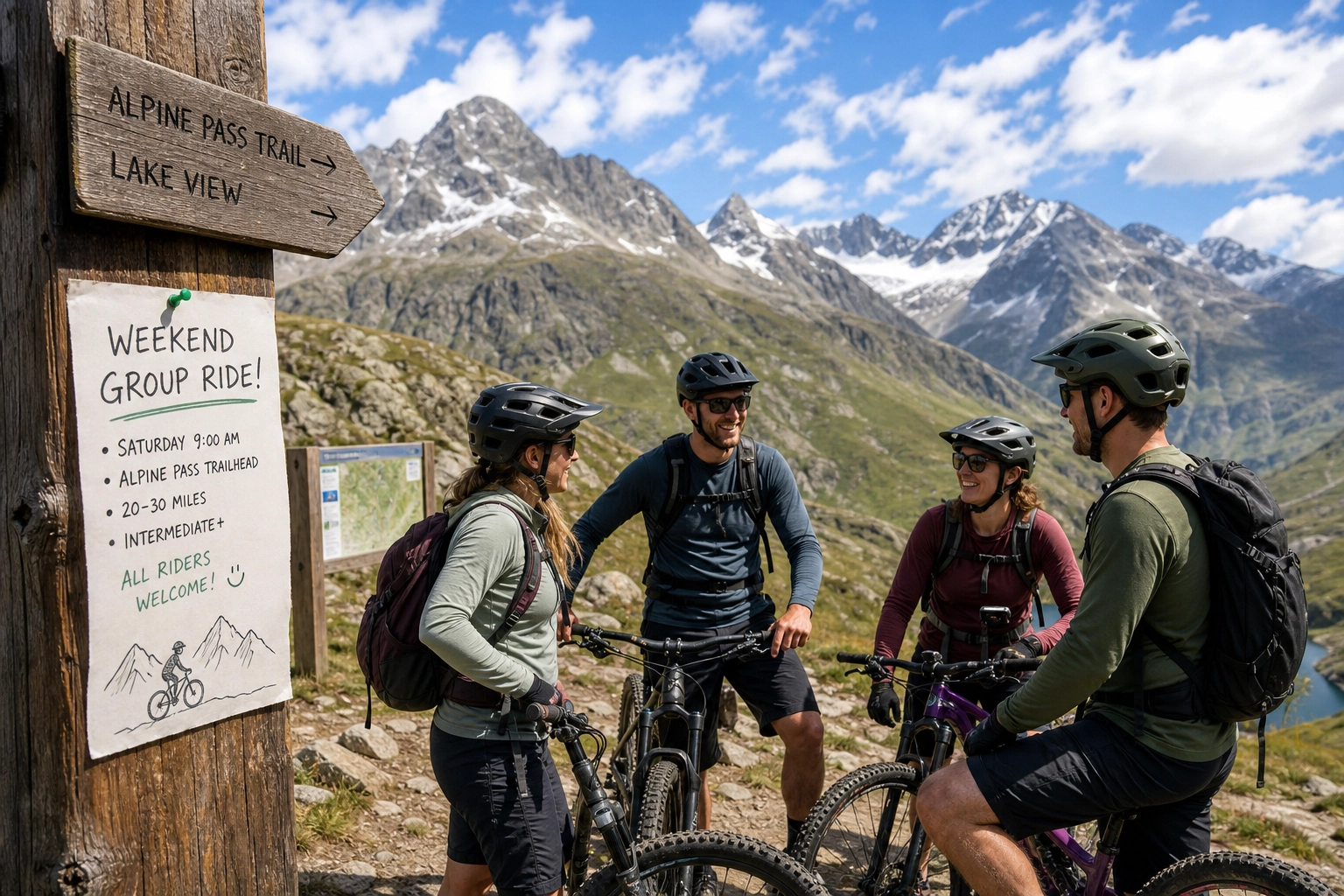
You bought the bike. You watched the suspension setup tutorials. You’ve mastered the local green loops and intermediate blue trails. But eventually, every mountain biker hits a plateau when riding solo. You start looking for a community to help push your pace, point out better lines, and share a post-ride drink.
So, you type “mountain bike group near me” into a search engine.
The results are usually a mixed bag. You might find a local Facebook group that hasn’t seen a new post since 2019. You might stumble upon an elite cross-country racing squad that demands shaved legs and heart rate monitors. Or perhaps you find a casual meetup that spends more time drinking beer in the trailhead parking lot than actually turning pedals. Finding the right mountain bike group—one that matches your skill level, respects your time, and fosters genuine off-bike friendships—is notoriously difficult.
But when you finally lock into a reliable group, it transforms the sport. You progress faster, ride safer, and suddenly, the logistical headaches of route planning disappear.
In this guide, we will break down exactly how to find, evaluate, and integrate into local mountain bike groups in your area. But we’ll also look at a growing trend for solo travelers, digital nomads, and budget-conscious riders: skipping the local search entirely and joining curated, destination-based mountain bike groups at adventure lodges like Ski Hostel in the Swiss Alps.
The Progression Multiplier: Why Riding With a Group Matters
Riding alone offers a wonderful sense of solitude, but riding with a group offers rapid progression. Mountain biking is a highly technical sport, and there is a hard limit to what you can learn from watching YouTube tutorials. You need real-time, on-trail feedback.
The “Tow-In” Effect
Speed and momentum are often your best friends when tackling technical trail features. If you approach a rock drop or a gap jump too slowly, your front wheel dives, and you crash. Judging the correct entry speed is terrifying when you are alone.
When you ride with a group, you get to utilize the “tow-in.” You simply follow a slightly more experienced rider at a safe distance. If they clear the jump, and you match their speed, you will clear the jump. Their momentum dictates yours, removing the mental guesswork from the equation.
Line Choice Osmosis
When you ride the same local trails solo every week, you fall into a rut. You take the exact same line through the rock garden every single time.
Riding behind someone else forces you to look at the trail differently. You watch them take an inside line over a root that you always avoided, only to realize their line carries twice as much speed. Over a two-hour group ride, you absorb dozens of these micro-decisions. Your brain maps alternative routes, making you a more dynamic and adaptable rider.
The Safety Net
Mountain biking happens in remote areas where cell service is often non-existent. If you tear a tire sidewall, snap a derailleur hanger, or worse, suffer an injury, being alone turns a minor inconvenience into a dangerous survival situation.
A group provides an immediate safety net. Not only do you pool resources (someone always has a spare quick link or a CO2 cartridge), but you also have built-in first responders who can hike out for help if the worst happens.
The Hidden Tax of DIY Group Planning
While the benefits of group riding are clear, organizing them locally comes with a hidden tax. Adult friendships are logistically heavy, and organizing a group of mountain bikers often feels like herding cats.
First, there is the “what do you want to do?” conversation. One rider wants to pedal 20 miles of cross-country trails. Another wants to do shuttle laps on heavy enduro bikes. Another only has an hour before they need to get back to their kids.
Then, there is the trailhead wait. The ride is supposed to start at 9:00 AM, but someone forgot their helmet, someone else is still airing up their tires, and you don’t actually hit the dirt until 9:45 AM.
This planning fatigue is exactly why many riders abandon the local group search and start looking for destination mountain bike groups where the logistics are entirely managed for them.
4 Reliable Channels to Find Local MTB Groups
If you are committed to finding a local squad, you have to know where to look. Generic internet searches rarely yield the best results because the most active riding groups are often decentralized.
Here are the four best ways to find local riders who actually hit the dirt regularly:
1. The Local Bike Shop (LBS) Network
Don’t just walk into a bike shop and look at the bulletin board. The real information is in the service department. Mechanics know the local trail scene better than anyone because they fix the bikes that get broken on them.
Buy some chain lube, strike up a conversation with the lead mechanic, and ask about shop rides. Many shops host a “Tuesday Night No-Drop” ride or a “Thursday Morning Dawn Patrol.” These are fantastic, structured environments to meet riders in your area.
2. Trail Advocacy Organizations
Who builds the trails you ride? Most local trail networks are maintained by a chapter of a larger organization (like IMBA in the US or various regional forestry commissions in Europe).
These organizations host monthly “dig days” where volunteers move dirt, clear brush, and rebuild berms. Show up to a dig day. If you spend four hours moving rocks with a shovel alongside a crew of locals, you are virtually guaranteed an invite to their private weekend ride. Sweat equity is the fastest way to earn respect in the local mountain bike community.
3. Strava Sleuthing
Strava isn’t just for tracking your own times; it is a powerful networking tool. Look at the leaderboards for a highly trafficked trail in your area. You aren’t looking for the person in 1st place (they are likely training alone). You are looking for clusters of riders who all posted similar times on the same day.
Click on their profiles and see what Strava “Clubs” they belong to. This will often lead you to active, localized riding groups that you can request to join.
4. Digital Nomads and Expat Forums
If you live in a destination town or are traveling, traditional local groups can be hard to crack. Instead, look at digital nomad networks or expat forums on Reddit and Facebook. These groups are filled with people who are also looking for immediate, low-barrier friendships and outdoor activities.
Evaluating a Local Group: The First-Ride Litmus Test
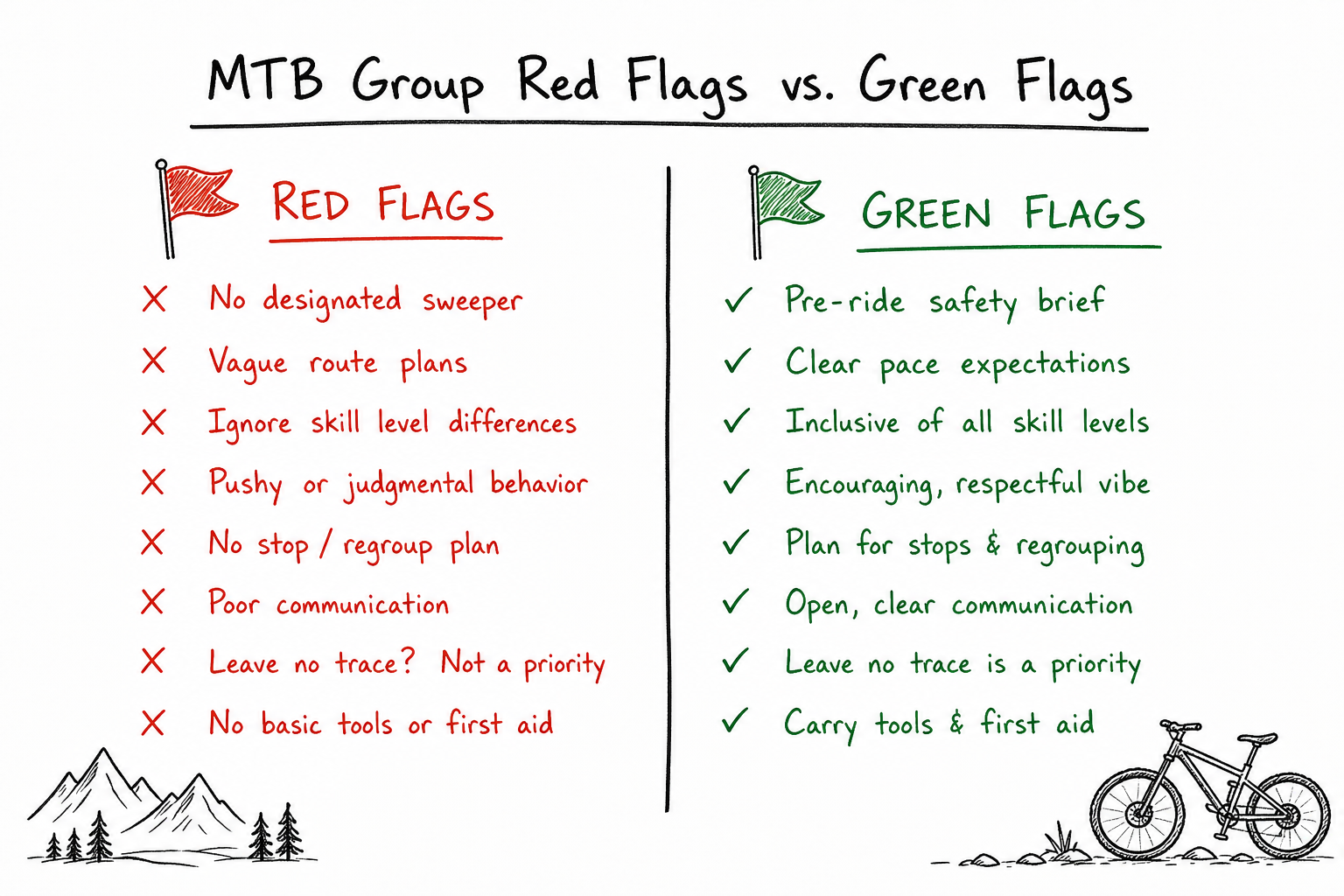
Just because you found a group doesn’t mean it’s the right group. Your first ride with a new squad is a mutual interview. You are assessing their safety, their pace, and their vibe.
Pay close attention to how the group is organized at the trailhead.
The “No-Drop” Philosophy Explained
A “no-drop” ride means that no rider will be left behind to navigate the woods alone. However, the interpretation of “no-drop” varies wildly.
In a poorly managed group, “no-drop” means the fast riders sprint ahead, wait at the top of the climb until the slowest rider arrives, and then immediately drop into the descent before the slow rider has a chance to catch their breath. This is exhausting and demoralizing.
In a well-managed group, “no-drop” means the group utilizes a designated “Ride Leader” (who sets a reasonable pace at the front) and a “Sweeper” (an experienced rider who stays at the very back to help with mechanicals and ensure no one gets lost).
Before committing to a group long-term, use this evaluation matrix to see if they fit your style:
| Group Vibe | Typical Bike Used | Pace & Structure | Red Flag to Watch For |
|---|---|---|---|
| The XC Race Club | 100mm-120mm Short Travel | Fast up, fast down. Minimal stopping. | Anyone criticizing your gear or weight. |
| The Enduro Bros | 160mm-170mm Long Travel | Slow, agonizing climbs. Fast, terrifying descents. | Lack of trail etiquette or yielding to hikers. |
| The Trail Builders | Mixed (Whatever works) | Moderate pace. Stopping to inspect trail features. | Unsolicited pressure to hit dangerous jumps. |
| The Alpine Lodge Crew | Trail/Enduro/E-Bikes | Curated pacing. Dedicated leaders and sweepers. | (Rare, as logistics are managed by pros). |
Destination Riding: The Ultimate “Group Near Me” Hack
Let’s be honest: spending months trying to integrate into a local clique, proving your fitness, and deciphering trail jargon is exhausting. If you are a solo traveler, a backpacker, or a digital nomad, you don’t have time to build a local network from scratch.
This is why an increasing number of riders are bypassing local groups and opting for destination-based community riding.
Instead of searching for a “mountain bike group near me,” why not travel to a place where the community is already built-in, the logistics are entirely handled, and every rider there is looking to make new friends?
This is the core philosophy at Ski Hostel. Located in the heart of the Swiss Alps—with bases in the Liddes and St. Stephan regions—our adventure lodge provides a comprehensive, all-in-one experience that traditional hotels simply cannot match.
The Ski Hostel Approach: Community-Driven Alpine Riding
When you book a stay at a traditional luxury hotel in the mountains, they hand you a trail map and point you toward the door. You are entirely on your own.
Social lodges operate differently. We function as a central hub for outdoor enthusiasts who prioritize mountain adventures and social connection over high-thread-count sheets.
Curated Weekly Itineraries
Unlike a chaotic local Facebook group, our rides are planned with precision. Our hosts and volunteers curate weekly adventure programs based on the skill levels of the guests currently staying at the hostel.
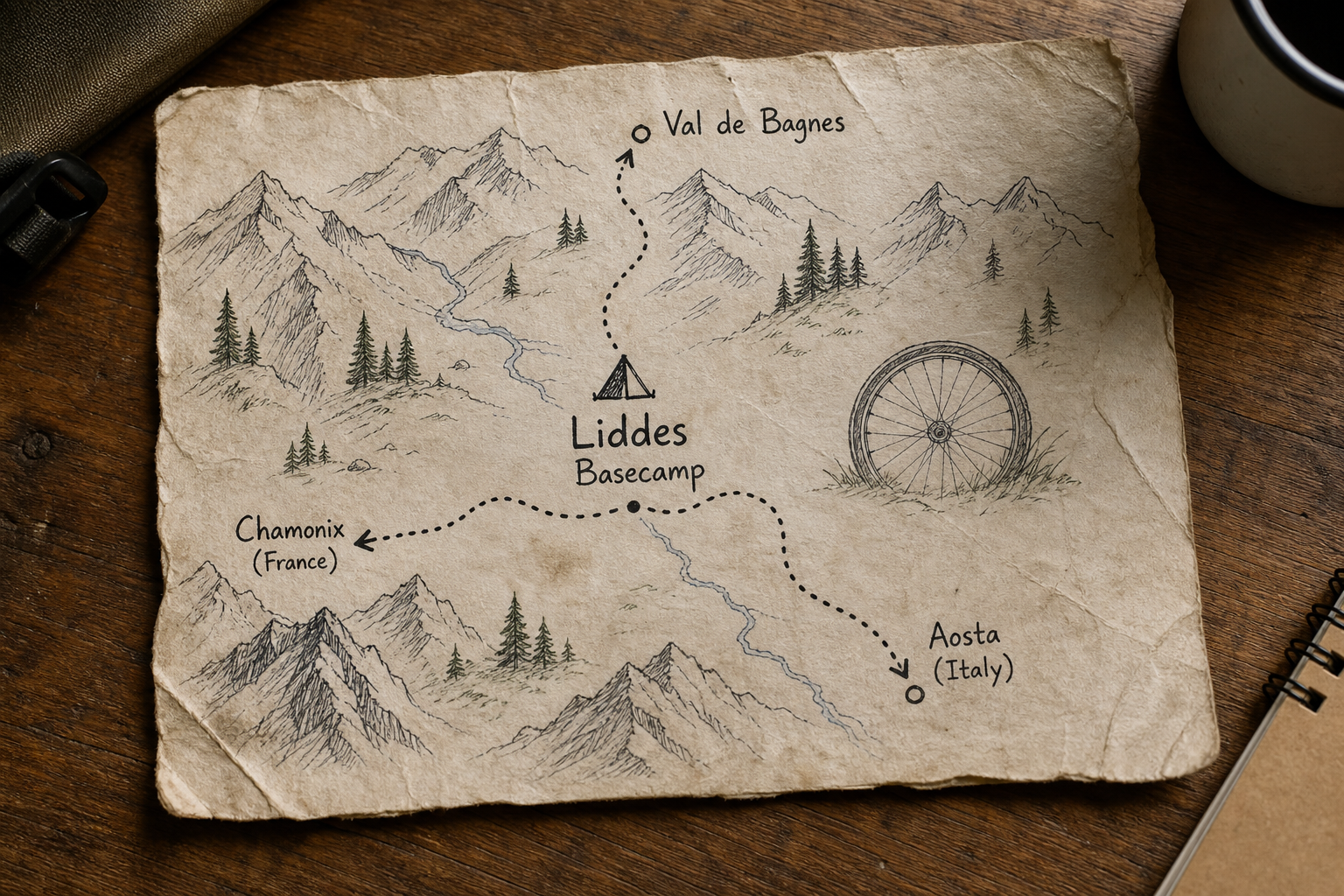
We provide direct access to over 250 kilometers of trails in the Val de Bagnes region. We handle the gear rentals. We manage the transport to various alpine resorts. All you have to do is wake up, eat breakfast, and get on the bike.
Border-Crossing Excursions
One of the most unique aspects of joining an organized alpine group is the ability to execute massive, multi-region rides that would be logistically impossible to do alone.
Because our vans and trailers manage the transport, our groups regularly embark on border-crossing excursions. We ride from the Swiss Alps down into Aosta, Italy, for espresso and pizza, or traverse over toward Chamonix, France, to ride beneath the shadow of Mont Blanc.
Doing this solo requires two rental cars, complex train schedules, and endless map-checking. Doing it with our group requires zero planning on your part.
Navigating Different Skill Levels in a Destination Group
One of the biggest anxieties riders have about joining a destination group is skill mismatch.
“What if I hold everyone up?”
“What if the trails are too easy and I get bored?”
Because we cater to an international audience of backpackers, families, and seasoned mountain bikers, we are experts at splitting the pack.
For Beginners
If you are relatively new to the sport, our volunteers provide guided instruction on the fundamentals. We tackle the flowing, green-graded alpine meadows where you can practice brake control, cornering, and body positioning without the pressure of a ticking clock.
For Experts
For advanced riders seeking high-altitude challenges, we organize groups targeting the steep, technical, and rocky descents that the Swiss Alps are famous for. Because we have multiple guides and volunteers, the expert group can break off and ride the black-graded tech trails, while the beginner group rides the flow trails, and everyone meets up at the same alpine hut for lunch.
This seamless separation and reunification is the hallmark of a professionally managed group ride.
The “Home Away From Home” Atmosphere
The actual riding is only 50% of the group experience. The other 50% happens after the bikes are washed and put away.
Traditional local groups scatter after a ride. Everyone goes back to their respective houses, jobs, and families. When you ride with a destination group at an adventure lodge, the socialization continues.
At Ski Hostel, our guests return from the trails to a vibrant, international community. We host communal dinners featuring Brazilian-influenced cuisine, spa nights to recover tired muscles, and weekend BBQ gatherings. For remote workers, we provide high-speed Wi-Fi, allowing digital nomads to work during the morning and join the group ride in the afternoon.
This is exactly why social lodges beat luxury accommodations when it comes to adventure tourism. The infrastructure is built specifically for your lifestyle.
Unspoken Trail Etiquette for Group Rides
Whether you find a local crew down the street or join us in the Swiss Alps, riding with a dozen other mountain bikers requires a strict adherence to trail etiquette.
If you want to be invited back (or just want to avoid causing a pile-up), memorize these unspoken rules:
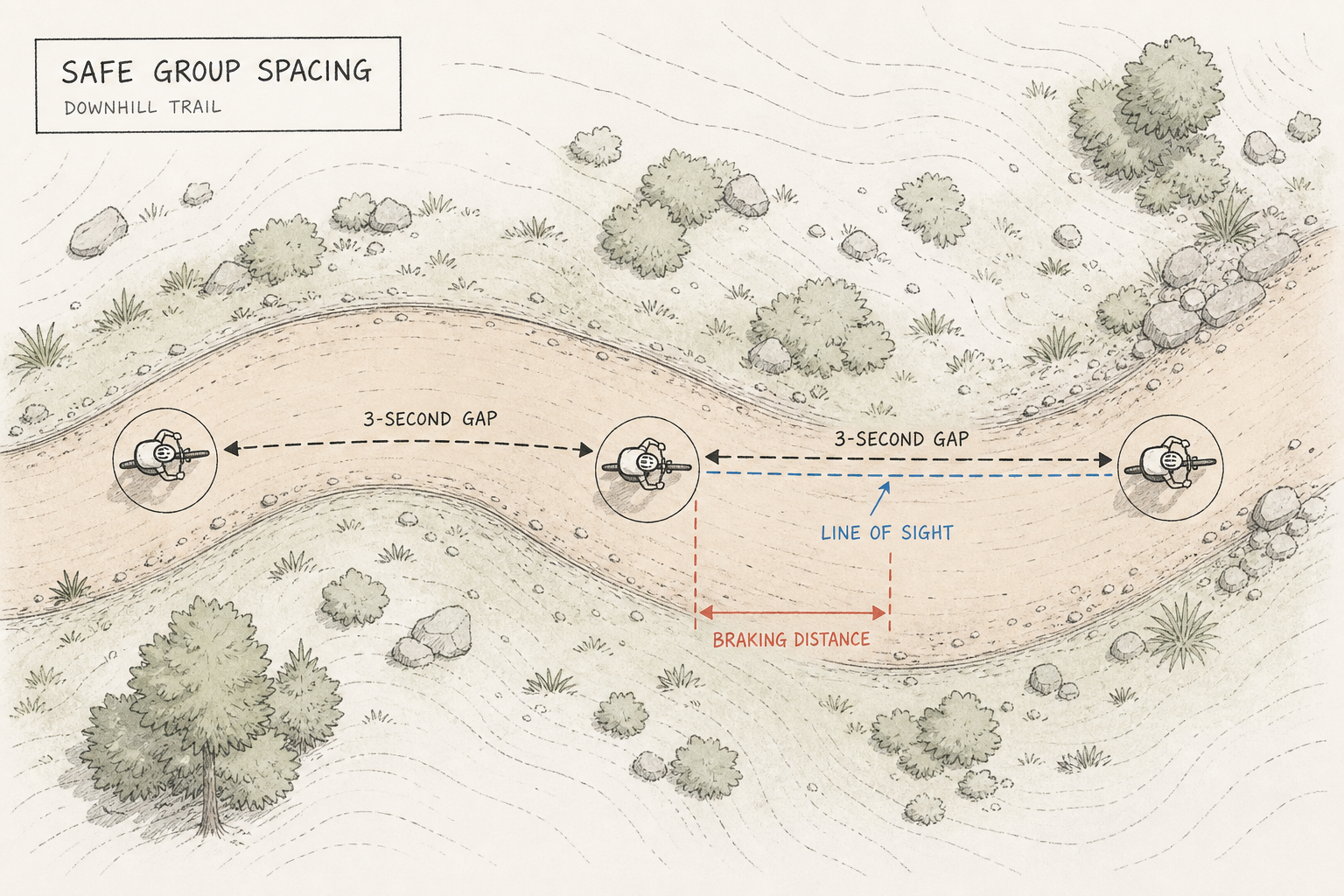
1. The 3-Second Gap
Never tailgate the rider in front of you. If they suddenly grab a fistful of brakes, you will crash into their rear derailleur. On a descent, leave a minimum of a 3-second gap.
This gap serves three purposes:
- It gives you adequate braking distance.
- It gives you an unobstructed line of sight to see trail features.
- It allows the dust cloud kicked up by their tires to settle before you ride through it.
2. Pass the Message
In a group of eight riders, the person at the back has no idea what is happening at the front. It is the responsibility of every rider to “pass the message” down the line.
If the lead rider encounters a hiker, they announce, “Hiker up!” The second rider repeats it, the third rider repeats it, all the way to the back. If the group passes an equestrian or a hiker, the last rider should always call out, “Last rider, you are clear!” so the hiker knows they can resume walking.
3. Clear the Landing
If you crash, or if you simply need to stop and take a drink of water, never stop in the middle of the trail. More importantly, never stop on the blind backside of a jump, drop, or sharp corner. Move your bike completely off the dirt to avoid causing a secondary collision.
4. Be Mechanically Self-Sufficient
Even if you are on a guided alpine tour, you should carry the bare minimum to fix your own bike. Do not rely entirely on the guide or the group leader.
Every rider should carry:
- A spare inner tube (even if you run tubeless)
- A tire lever
- A CO2 inflator or hand pump
- A multi-tool with a chain breaker
- A spare quick-link for your specific chain (11-speed, 12-speed, etc.)
Pre-Trip Prep: Gear and Fitness for the Alps
If you decide to skip the local scene and join an alpine mountain bike group, you need to prepare differently than you would for a lap around your local state park.
Fitness vs. Skill
Many riders worry they don’t have the cardio fitness to ride in the Alps. Here is the reality: modern alpine riding relies heavily on ski lifts, gondolas, and shuttle vans to gain elevation.
While you still need pedaling fitness for undulating traverses, downhill stamina is actually far more important. Your hands, forearms, and core will burn from managing the bike through extended, 3,000-foot descents. To prepare, focus on grip strength, core stability, and practicing the “attack position” on your bike (standing on the pedals with bent elbows and knees).
Packing for Alpine Summers
Mountain weather is notoriously volatile. You can start a ride in a t-shirt at the base of the valley and need a windproof jacket at the 8,000-foot summit.
Layering is critical. Avoid cotton entirely, as it traps sweat and will freeze you on the descents. Bring a packable rain shell, padded liner shorts, and flat-pedal specific shoes with a stiff sole for power transfer. For a comprehensive breakdown of what fits in a budget airline carry-on, check out our Swiss Alps Summer 5-Step Packing Guide.
Overcoming the “Intimidation Factor” for Solo Riders
It is completely normal to feel a wave of imposter syndrome before joining a new mountain bike group. The mountain biking industry has a terrible habit of promoting extreme, Red Bull-style riding, which makes the sport look terrifying to outsiders.
Remember this: 95% of mountain bikers are just normal people who enjoy being in the woods. They aren’t trying to set course records, and they aren’t judging your 5-year-old aluminum frame.
Adventure lodges are particularly excellent at disarming this intimidation factor. Because our guests are international backpackers and solo travelers, everyone arrives in the same boat: alone, eager to meet people, and looking for a shared experience. The shared communal spaces, the family-style dinners, and the inclusive daily briefings are specifically designed to break the ice before you ever put on a helmet.
Frequently Asked Questions
Do I need my own mountain bike to join a group ride?
If you are joining a local group in your hometown, yes, you are generally expected to provide your own equipment. However, if you travel to a destination lodge like Ski Hostel, you do not need your own bike. We offer comprehensive gear rental, including high-end full-suspension bikes and protective gear, ensuring you have the right tool for the alpine terrain.
How do I know if I’m fast enough for a group?
Before joining a local group, ask the organizer for their typical “average speed” or elevation gain per hour. For our alpine groups, speed is rarely an issue because we split riders by ability and use lifts for the major climbs. We also enforce a strict “no-drop” policy with designated sweepers, so you will never be left behind.
What is an e-bike’s place in a group ride?
Electric mountain bikes (e-MTBs) are incredibly popular, especially in the Alps. However, bringing an e-bike to a purely acoustic (pedal-only) local group ride can cause pacing issues on the climbs. Always ask the group leader if e-bikes are welcome. At destination lodges, e-bikes are highly encouraged as they allow riders of different fitness levels to ride together seamlessly.
Can digital nomads realistically ride with a group during the week?
Absolutely. Many local groups host “Dawn Patrol” rides at 6:00 AM or evening “Night Rides” with high-lumen headlights. At Ski Hostel, our high-speed Wi-Fi and flexible itineraries mean digital nomads can easily knock out a few hours of remote work, join the group for a mid-day shuttle lap, and be back online before their evening Zoom calls.
Stop Searching, Start Riding
Typing “mountain bike group near me” into a search bar is the first step toward progressing in the sport, but it doesn’t have to end in frustration. Whether you utilize your local bike shop to find a Thursday night crew, or you decide to skip the hassle and fly to a built-in community, riding with others will fundamentally change how you experience the trail.
If you are tired of coordinating logistics, dealing with mismatched skill levels, and riding solo, pack your bags. The trails in Val de Bagnes are clear, the home-cooked meals are prepped, and your new riding group is waiting for you at the lodge. Join us in the Swiss Alps and experience what mountain biking was always meant to be: a shared adventure.