Find the Right Mountain Bike Group for Alpine Trails
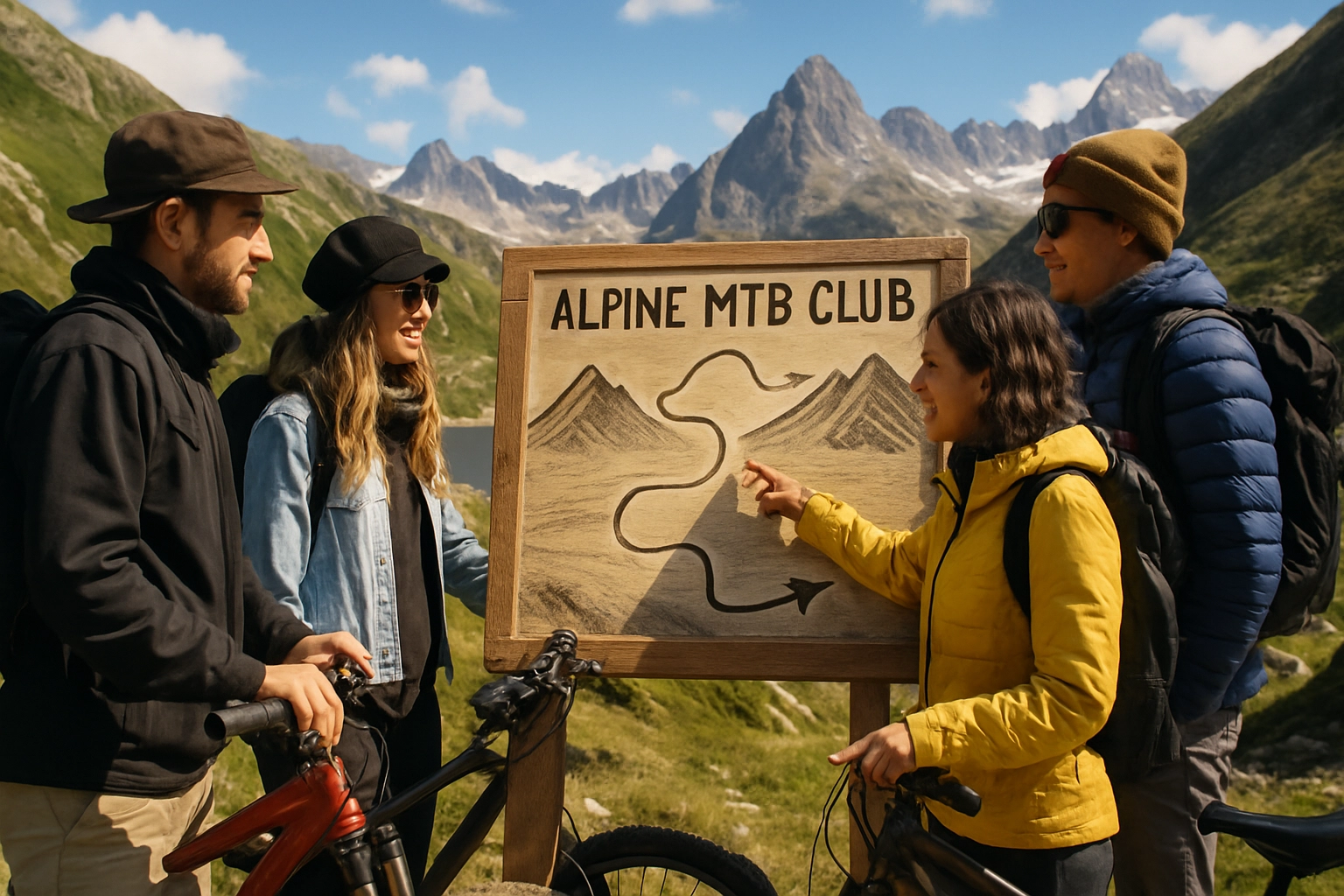
There is a distinct moment on any alpine mountain bike ride when you realize the sheer scale of the environment. You are at 2,500 meters, the air is thin, the trail drops away into a valley of jagged limestone, and your cell service vanished three switchbacks ago. In these environments, riding alone transitions from a peaceful escape to a logistical and safety risk.
Navigating the intricate trail networks of the Swiss Alps, managing shuttle drops across international borders, and dealing with high-altitude mechanical failures requires more than just a good map. It requires a crew.
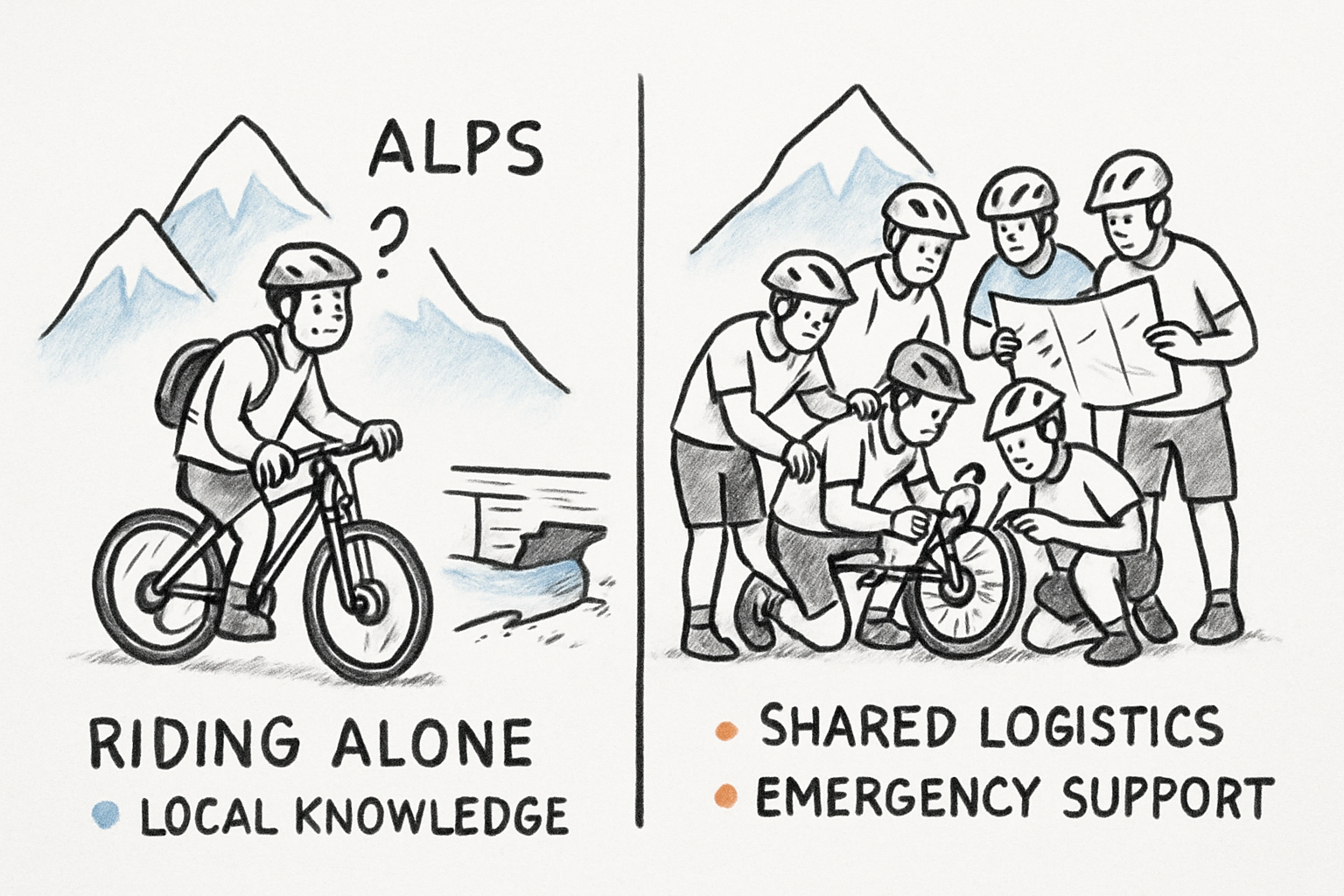
Finding the right mountain bike group is the single highest-leverage decision you can make for an alpine riding trip. The right group provides instant access to localized trail knowledge, shared shuttle logistics, emergency support, and the undeniable energy of shared suffering on a grueling climb. But not all groups are created equal. An enduro racing club will drop a casual rider on the first descent, while a beginner meetup might stick to gravel roads when you want technical singletrack.
Whether you are a solo traveler looking for a riding partner, a digital nomad seeking a weekend crew, or a seasoned rider hunting for high-altitude expert challenges, this guide will show you how to evaluate, find, and integrate into the perfect mountain bike group for your next alpine adventure.
Why You Shouldn’t Ride the Alps Alone
Mountain biking in local woodland trail centers is entirely different from alpine backcountry riding. In the Alps, the stakes are higher, the weather is more volatile, and the descents are longer.
The Local Knowledge Gap
Trail apps are incredibly useful, but they rarely tell the whole story. An app might show a continuous blue trail, but it won’t tell you that a recent rockslide wiped out a critical bridge, or that the local farmers have temporarily fenced off a section for livestock. Local mountain bike groups hold the “dark data” of the trail network—the unmarked gold, the secret connector trails, and the optimal time of day to ride a specific face to avoid hikers.
Logistic Multiplication
Alpine riding often involves complex logistics: cable cars, funiculars, train connections, and private shuttles. Doing this alone is expensive and time-consuming. A mountain bike group inherently shares the logistical burden. Whether it’s organizing a multi-car shuttle drop to access the famous routes near Chamonix or splitting the cost of a van rental to Aosta in Italy, group riding makes point-to-point alpine epics feasible.
Safety in High-Consequence Terrain
A snapped derailleur hanger five miles from the nearest road is an inconvenience at your local park; in the Alps, as the sun drops and temperatures plummet, it’s an emergency. Group riding offers redundant tool kits, shared first-aid supplies, and the physical manpower to carry a broken bike (or rider) out of a ravine.
Types of Mountain Bike Groups
When searching for a mountain bike group, you will generally encounter three distinct formats. Understanding the culture and structure of each is crucial to finding a good fit.
1. Official Mountain Bike Clubs and Trail Alliances
Formal mountain bike clubs are usually non-profit organizations focused on trail advocacy, maintenance, and organized group rides. In the United States, organizations like the Evergreen Mountain Bike Alliance or Silicon Valley Mountain Bikers are prime examples. In Europe, similar regional clubs manage the trail networks and host weekly rides.
- The Vibe: Structured, organized, and deeply tied to local trail stewardship.
- Best For: Riders moving to a new area permanently who want to build a long-term community and give back through trail work.
- Drawbacks: Often require annual membership fees and their ride schedules may not align with a traveler’s short itinerary.
2. Digital Meetups and Facebook Communities
The internet has democratized group riding. Platforms like Meetup.com host thousands of Mountain Biking groups categorized by region and skill level. Similarly, broad digital communities like the MTB Mountain Bike Community on Facebook act as digital bulletin boards where riders post ad-hoc ride invitations.
- The Vibe: Casual, unpredictable, and highly variable.
- Best For: Finding a quick ride this weekend or getting gear advice for a specific region.
- Drawbacks: Skill levels are rarely vetted. A ride advertised as “intermediate” might mean gentle flow trails to one person and steep technical root sections to another.
3. Social Adventure Lodges (The “Built-In” Group)
For travelers, digital nomads, and international backpackers, the traditional model of joining a local club isn’t viable. This is where the social adventure lodge shines. Instead of booking an isolated hotel and trying to piece together a riding group from the internet, you book into a basecamp where the community is built into the accommodation.
At a place like Ski Hostel, located in the heart of the Swiss Alps in the Liddes and St. Stephan regions, the mountain bike group is waiting for you in the communal dining room. These community-driven lodges curate weekly adventure programs, matching riders of similar skill levels for daily excursions.
- The Vibe: Welcoming, international, and deeply communal.
- Best For: Solo travelers, remote workers, and budget-conscious outdoor enthusiasts who want a “home away from home” atmosphere.
- Drawbacks: Availability is limited to the capacity of the lodge.
For a deeper look into why this model is replacing traditional accommodation for outdoor enthusiasts, read our breakdown on why social lodges beat luxury hotels in the Swiss mountains.
Where to Find Your Next MTB Group
If you are planning an alpine trip and need to find a crew, here is a tactical approach to tracking down the right riders.
The Digital Directory Approach
If you prefer formal clubs, start with national directories. Sites like MTB Project’s Club Directory or the Singletracks Mountain Bike Club list allow you to filter registered organizations by region. This is ideal if you are looking for established groups with official liability waivers and set schedules.
The Local Bike Shop (LBS) Network
Never underestimate the power of the local bike shop. In alpine resort towns, the mechanics and shop staff are the gatekeepers to the local riding scene. Drop in, buy some chain lube or brake pads, and ask about shop rides. Most LBSs host “no-drop” evening rides that serve as perfect introductions to the local community.
Booking a Community Basecamp
If you want guaranteed riding partners, skip the directories and book a stay at an adventure hostel. Ski Hostel functions as a central hub for exploring the Val de Bagnes region and iconic peaks like Mont Blanc. Because the logistics, equipment rental, and group itineraries are fully managed by the host and volunteers, you skip the awkward phase of “looking for a group” and jump straight into riding.
What to Look for in an Alpine MTB Group
Showing up to a trailhead with strangers can be intimidating. To ensure you don’t ruin their ride—and they don’t ruin yours—evaluate potential groups against these four criteria.
1. Honest Skill Level Descriptions
The biggest point of friction in group mountain biking is mismatched skill levels. Look for groups that use clear, objective criteria to describe their rides rather than subjective terms like “intermediate.”
- Red Flag: “We’re going for a chill pedal, all levels welcome!”
- Green Flag: “We are riding 15 miles with 2,500 feet of climbing. Expect steep, rocky descents with obligatory drops up to 2 feet. Pace will be moderate on the climbs.”
2. The “No-Drop” Policy
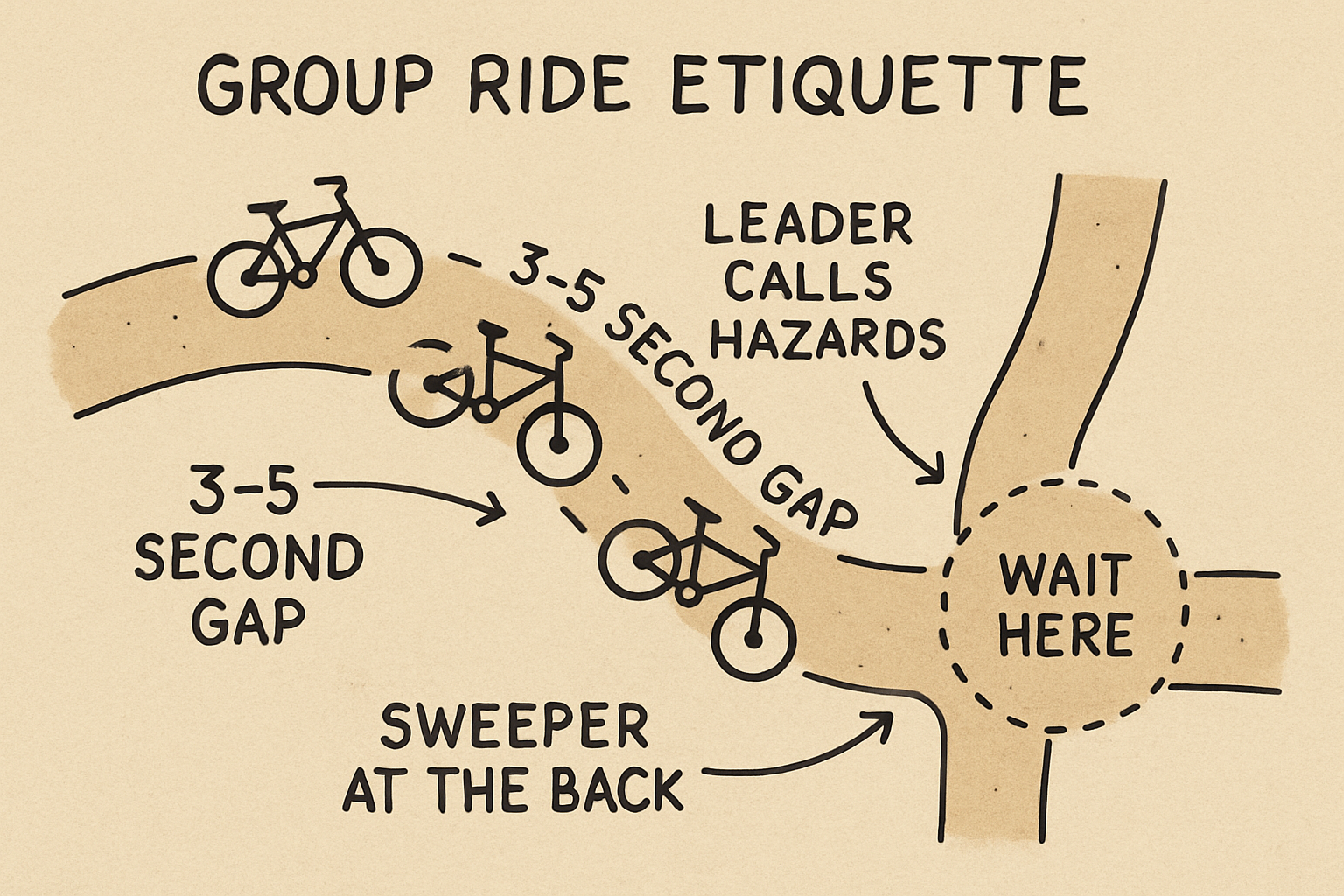
A true “no-drop” ride means the group stops at every major intersection to let the slowest rider catch up, and a designated “sweeper” rides at the very back to ensure no one is left behind with a mechanical issue. In alpine terrain, a strict no-drop policy is non-negotiable for safety.
3. Logistical Support and Infrastructure
Does the group expect you to have your own vehicle for shuttling, or do they organize transport? If you are traveling internationally, finding a group or lodge that provides transport is crucial. Ski Hostel, for example, offers unique border-crossing excursions to famous destinations like Aosta in Italy and Chamonix in France, handling all the complex transport logistics so you can focus on the ride.
4. Post-Ride Culture
Mountain biking is as much about the social connection as it is about the physical exertion. Does the group scatter the moment the ride ends, or do they tailgate? Groups that prioritize communal dinners, BBQ gatherings, and sharing stories over a beer tend to form stronger, safer riding dynamics on the trail.
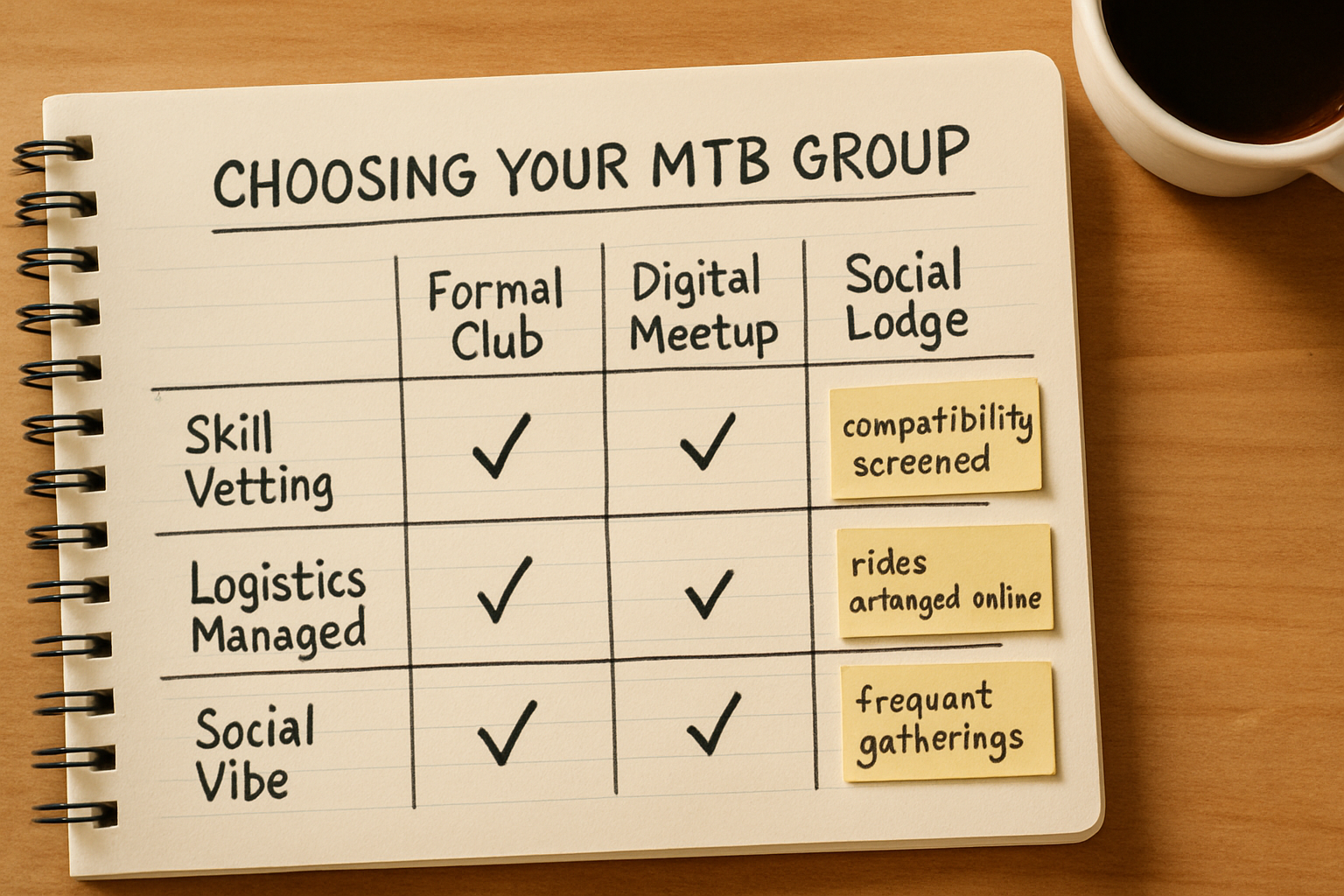
| Feature | Formal MTB Club | Digital Meetup Group | Social Adventure Lodge (e.g., Ski Hostel) |
|---|---|---|---|
| Best For | Locals, long-term residents | Weekend warriors, casual riders | Solo travelers, digital nomads, backpackers |
| Skill Vetting | High (usually categorized) | Low (often unpredictable) | High (curated by hosts/guides) |
| Logistics | Rider's responsibility | Rider's responsibility | Fully managed (shuttles, gear, routes) |
| Social Aspect | Monthly meetings, occasional events | Hit or miss | Daily communal meals, BBQ, spa nights |
| Cost | Annual membership fees | Free / Small donation | Included in accommodation package |
Group Ride Etiquette: How to Be a Good Wheel
Once you find a group, your goal is to be invited back. Group dynamics on a mountain bike require specific etiquette to keep everyone safe and the pace flowing.
1. Communicate Down the Line
If you are riding in a train of five people, the lead rider needs to call out hazards (hikers, massive rocks, washed-out corners). That information must be passed down the line. If the person in front of you yells “Hiker up!”, you yell it to the person behind you.
2. Be Self-Sufficient
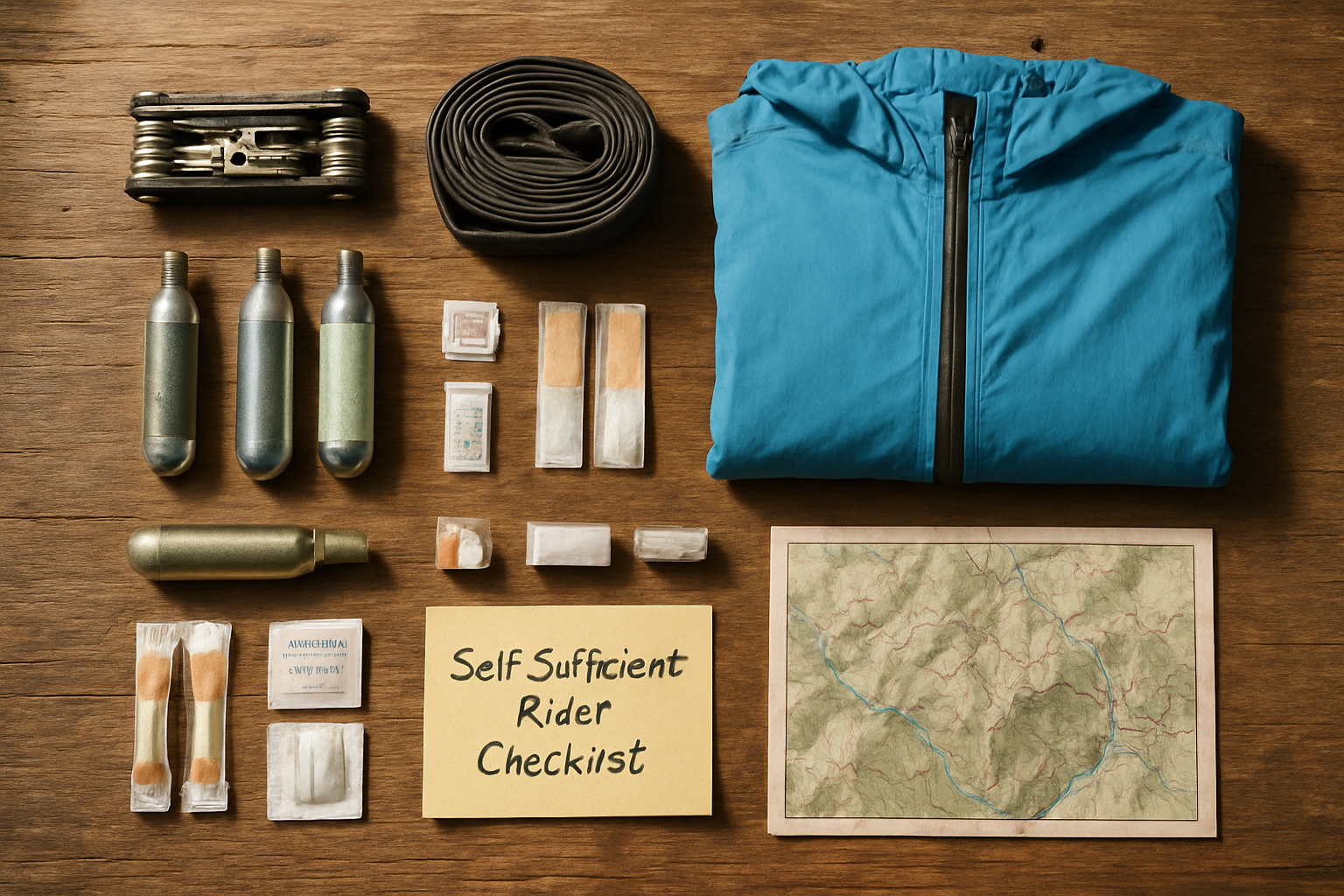
Just because you are in a group doesn’t mean you can rely on others for tools. Bring your own spare tube, pump, multi-tool, and water. For a breakdown of exactly what you need in your pack for high-altitude excursions, check out our Swiss Alps Summer packing guide.
3. Respect the Climb, Space the Descent
On climbs, keep a steady pace and don’t overlap wheels. If the rider in front of you stalls on a technical root, you need space to react. On descents, leave a gap of at least 3-5 seconds between you and the rider ahead. This provides reaction time and keeps you out of their dust cloud.
4. The Intersection Rule
Whenever the trail splits, the leader will stop. If you arrive at an intersection and don’t see the group, stop and wait. Never guess which way they went.
How Ski Hostel Solves the Group Dilemma
For international backpackers and digital nomads, showing up in a new country and trying to integrate into a local riding scene is a daunting task. Ski Hostel was built specifically to solve this problem for adventure travelers.
Located with direct access to over 250 kilometers of trails, the hostel bridges the gap between affordable accommodation and guided mountain tourism. It caters to all skill levels—from beginners looking for guided instruction on flow trails to experts seeking high-altitude challenges near Mont Blanc.
But the true differentiator is the culture. After a massive day descending alpine singletrack, the group doesn’t disperse. Riders return to high-speed Wi-Fi (perfect for remote workers checking in), Brazilian-influenced home-cooked cuisine, and shared spaces designed to foster an international community. It is the ultimate mountain bike group, built seamlessly into your travel itinerary.
(If you are mixing your biking trip with some foot exploration, the same community principles apply. Read our guide on finding your social group for guided hiking in Switzerland.)
Frequently Asked Questions
How do I find local mountain biking events and races?
If you want to transition from casual group rides to local events, directories like ThinkMTB or national cycling federation websites list regional enduros, cross-country races, and mountain bike festivals. Many local clubs also post their event calendars on their Facebook pages.
Do I need to pay to join a mountain bike group?
It depends on the format. Official non-profit clubs usually charge a small annual membership fee (often $30-$50) which goes toward trail maintenance and liability insurance. Meetup groups are generally free, though some organizers ask for a few dollars to cover the platform’s hosting fees. Adventure lodges include the group riding experience as part of their accommodation packages.
Can beginners join alpine mountain bike groups?
Absolutely, provided they join the right group. Alpine terrain is unforgiving, so beginners should look for groups explicitly offering “beginner-friendly” or “introductory” rides. Adventure lodges are uniquely positioned for this, as they often offer guided instruction and gear rental to help newcomers safely transition from flatland trails to mountain environments.
Is it easy to access iconic peaks like Mont Blanc with a group?
Yes, but it requires logistical planning. Mont Blanc and the surrounding valleys span international borders. Going with an organized group or a basecamp that handles the transport (like van shuttles to Chamonix) allows you to experience these massive ranges without the headache of cross-border transit logistics. For more on visiting this area, see our guide on visiting Mont Blanc without the crowd.
Final Thoughts on Finding Your Riding Crew
Mountain biking is inherently a solo physical effort, but it is best experienced as a collective adventure. The highs of conquering a brutal alpine climb and the adrenaline of a fast descent are exponentially better when shared.
Whether you choose to plug into a local trail alliance, roll the dice on a digital meetup, or book a bed at a social adventure lodge, prioritizing community will transform your riding experience. Do your research, ask the right questions about skill levels and logistics, and don’t be afraid to show up to that first ride. The trail will quickly reveal who your people are.