Digital nomad facilities and internet speeds at Hiking Hostel
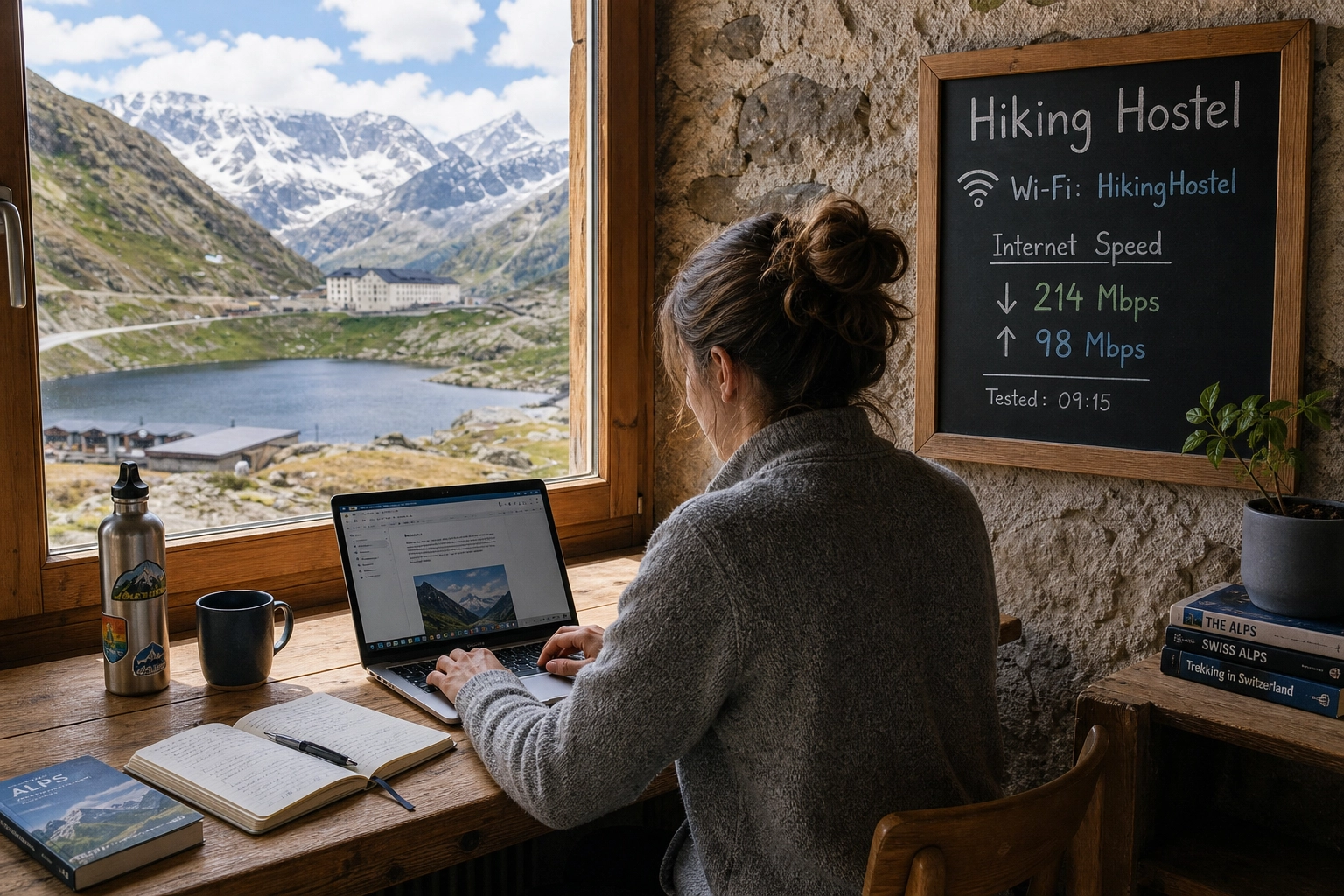
The dream of working remotely from the Swiss Alps often collides with a frustrating reality: dropped Zoom calls, cramped shared spaces, and hostels that prioritize late-night parties over daytime productivity. For remote workers, choosing the wrong accommodation doesn’t just ruin a trip—it jeopardizes their livelihood.
So, is Hiking Hostel suitable for digital nomads?
The short answer is yes, but it depends heavily on your working style, your meeting schedule, and how you integrate your professional obligations with outdoor excursions. Unlike generic urban backpacker hubs where reliable infrastructure can be an afterthought, our bases in Liddes and St. Stephan are structured around active, outdoor-focused travelers. This naturally creates a rhythm that aligns surprisingly well with remote work.
In this guide, we bypass the speculation to provide official connectivity data, workspace infrastructure specifications, and practical routines to help you determine if our week-long Swiss Alps hiking holidays fit your digital nomad lifestyle.
The Realities of Hostel Life for Remote Workers
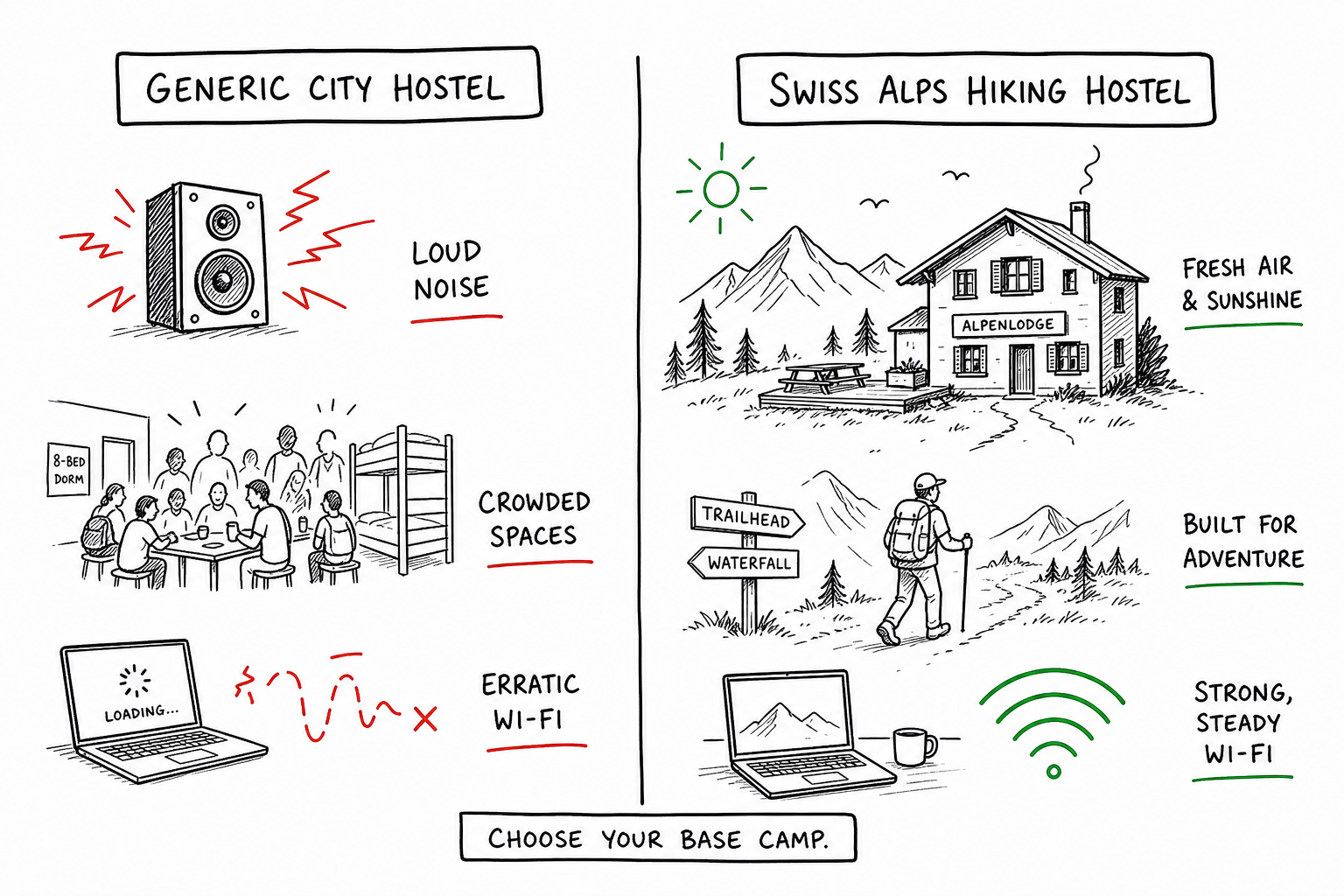
Many remote workers eventually attempt to work from a hostel to save money and meet people. As discussions on Reddit frequently highlight, living in a hostel as a digital nomad comes with a distinct set of challenges. The primary complaints usually revolve around unpredictable noise levels, lack of ergonomic seating, and Wi-Fi that collapses under the weight of fifty guests simultaneously streaming Netflix.
However, a hiking hostel operates on a fundamentally different cadence than a traditional city hostel.
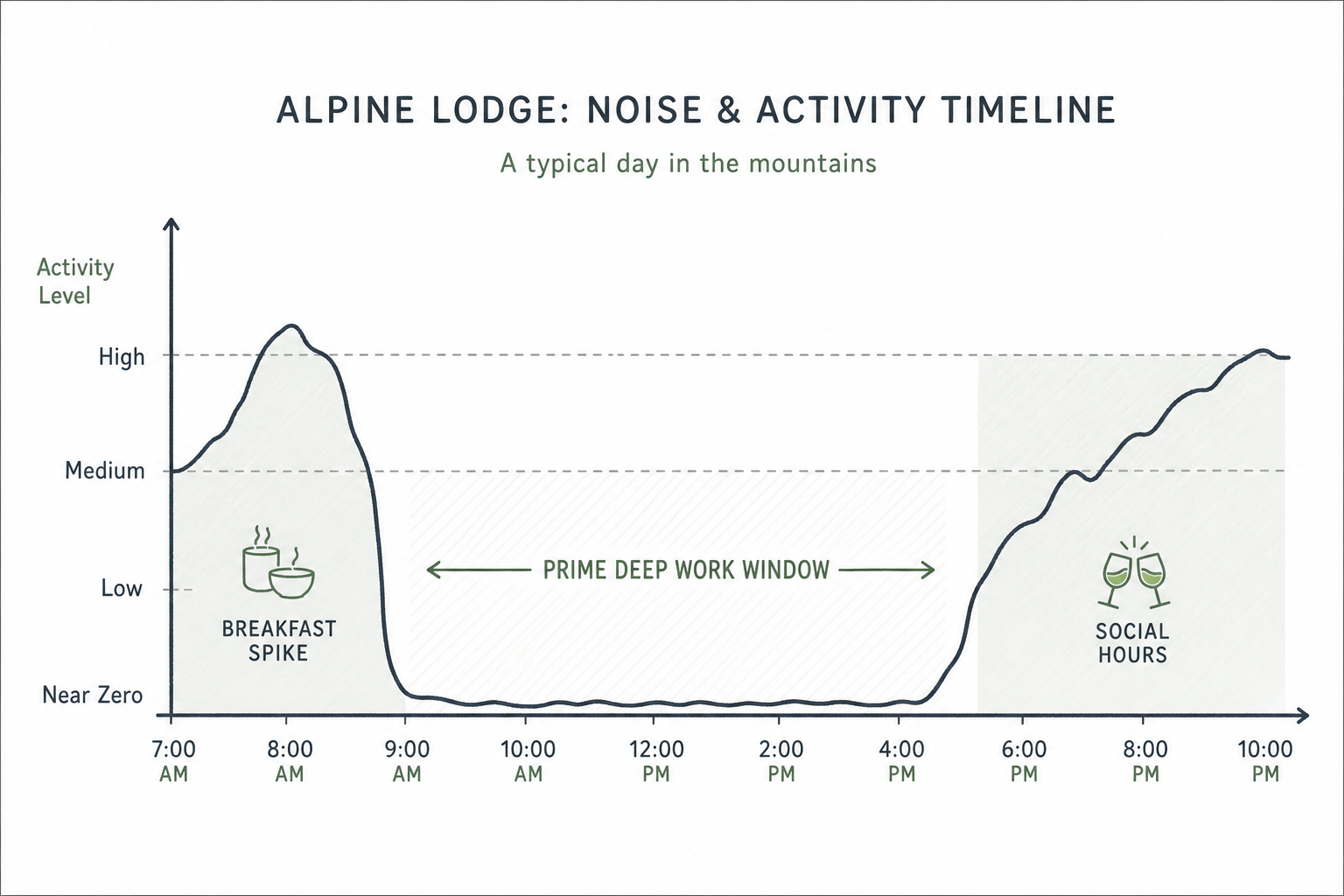
Because our guests are here for organized alpine excursions and daily trail transport, the environment empties out during the day. By 9:00 AM, most hikers are on the trails toward Glacier 3000, Chamonix, or local routes in Valais. This leaves the communal areas quiet, well-lit, and available for focused work until the late afternoon. Furthermore, the inherent physical exhaustion of hiking means the hostel falls quiet early in the evening. You won’t find thumping bass at 2:00 AM; you’ll find travelers resting up for the next day’s ascent.
Official Internet Speeds and Connectivity Data
When your income relies on your connectivity, vague promises of “fast Wi-Fi” aren’t enough. Switzerland boasts some of the best telecommunications infrastructure in Europe, and this extends deep into the Alpine valleys.
At both our Liddes and St. Stephan bases, we prioritize stable, high-bandwidth connections designed to support a house full of modern travelers.
Baseline Wi-Fi Specifications
While exact speeds can fluctuate slightly based on weather conditions or peak evening usage, digital nomads can expect the following baseline metrics at our facilities:
- Download Speed: 50 - 100 Mbps (Sufficient for multiple simultaneous 4K streams, large file downloads, and seamless browsing).
- Upload Speed: 20 - 40 Mbps (More than adequate for HD video conferencing, screen sharing, and uploading large assets to cloud servers).
- Ping/Latency: 15 - 30 ms (Ensures real-time communication on Zoom, Teams, or Slack remains lag-free).
These metrics comfortably exceed the minimum requirements for almost all remote work tasks. Whether you are a software developer pulling Docker images, a designer uploading heavy Figma files, or a project manager on back-to-back video calls, the network is built to handle it.
Cellular Tethering as a Backup
Experienced digital nomads know that relying on a single point of failure is risky. Fortunately, both Liddes and St. Stephan have strong 4G and 5G coverage from major Swiss telecom providers (Swisscom, Sunrise, and Salt).
If you prefer to work entirely off your own network for security reasons, or if you simply want a reliable failover, purchasing a local Swiss SIM card or an eSIM (like Airalo) will provide excellent tethering speeds right from your room or the common areas.
Nomad Infrastructure Specs: Workspaces at Hiking Hostel
Beyond the router, the physical environment dictates how effectively you can work. Hiking Hostel is not a dedicated coworking space with Herman Miller chairs and soundproof phone booths. It is, at its core, an alpine lodge. However, the infrastructure supports comfortable, sustained work if you know how to utilize it.
Communal Dining and Lounge Areas
The primary workspaces are the communal dining tables and lounge areas. Because we provide included meals, these dining spaces are kept meticulously clean and offer expansive, flat surfaces perfect for spreading out a laptop, a mousepad, and a notebook.
- Power Access: Power outlets are distributed throughout the common areas. While you won’t find an outlet built into every single table, bringing a standard 2-meter extension cord guarantees you’ll never run out of battery.
- Lighting: The common areas feature large windows with abundant natural light, reducing eye strain during long daytime work sessions.
- Seating: Expect standard, sturdy wooden dining chairs and softer lounge seating. If you require strict ergonomic lumbar support for 8-hour stretches, a portable ergonomic seat cushion is a highly recommended packing addition.
Quiet Hours and Environmental Noise
The greatest asset for a digital nomad at Hiking Hostel is the daily schedule. Between 9:00 AM and 4:00 PM, the hostel is largely deserted. This is your prime deep-work window. You can easily take unmuted video calls in the common areas without disturbing others or battling background chatter.
Around 4:00 PM to 5:00 PM, the atmosphere shifts. Hikers return from their excursions, airport transfers arrive, and the communal areas transition into social hubs. If you need to work during the evening, you will need noise-canceling headphones, or you can retreat to your accommodation.
Is Your Work Style a Match?
Not all remote jobs are created equal. Determining if Hiking Hostel is suitable for you depends largely on your required timezones and your daily meeting load.
The Asynchronous Worker (Perfect Match)
If you are a freelance writer, graphic designer, coder, or entrepreneur who works asynchronously, Hiking Hostel is an ideal setup. You dictate your own hours. You can join the organized morning transport to a trailhead, hike for four hours, return on the afternoon shuttle, and work from 3:00 PM to 8:00 PM. Alternatively, you can stay back, crush 8 hours of deep work in an empty lodge, and enjoy the included meals without having to cook or clean.
The Flexible Synchronous Worker (Strong Match)
If you have a few daily meetings but control your calendar, you can easily make this work. You can block out your mornings for guided excursions to places like Aosta or Interlaken, and stack your Zoom calls in the late afternoon. Because we handle the logistics of the trip—including daily trail transport and food—you reclaim hours of your day that would otherwise be spent planning, navigating, and grocery shopping.
The Strict 9-to-5 Video Caller (Requires Compromise)
If your job requires you to be on camera, highly responsive, and in a perfectly quiet room from 9:00 AM to 5:00 PM CET, you will miss out on the core value of the Hiking Hostel experience. While the internet and daytime quiet hours will support your work perfectly, you won’t be able to join the daytime hiking excursions. You will be paying for daily trail transport and excursions that you cannot attend.
For remote workers seeking advice on balancing rigid schedules, discussions on Reddit often point out that working primarily from hostels requires flexibility. If your job offers zero flexibility, booking a dedicated week-long hiking package might be frustrating, as you’ll watch your new friends head off to Mont Blanc while you open spreadsheets.
The Advantage of “Done-For-You” Logistics
One of the hidden drains on a digital nomad’s productivity is decision fatigue. When you move to a new town, you spend the first few days figuring out the grocery store, the transport system, the safest hiking trails, and where to get a decent cup of coffee.
Hiking Hostel eliminates this friction entirely. We are designed for budget-conscious outdoor travelers who want a social, guided alpine experience without planning logistics themselves.
For a digital nomad, this means:
- Zero Meal Planning: Breakfast and dinner are provided. You don’t lose two hours a day walking to a supermarket, cooking in a shared kitchen, and doing dishes.
- Zero Transit Friction: We provide airport transfers and daily trail transport. You step out the door and the logistics are handled.
- Built-in Community: Remote work can be incredibly isolating. By joining a week-long program, you instantly plug into a community of solo travelers and backpackers. You have immediate companions for dinner and weekend excursions. (For more on the social benefits of group travel, read our guide on Guided Hiking in Switzerland: Finding Your Social Group).
When your basic survival and entertainment logistics are fully automated, you free up massive amounts of mental bandwidth to focus on your work.
Packing for the Alpine Digital Nomad
Combining outdoor gear with mobile office technology requires a strategic approach to packing. You need to be light enough to remain a backpacker, but equipped enough to do your job.
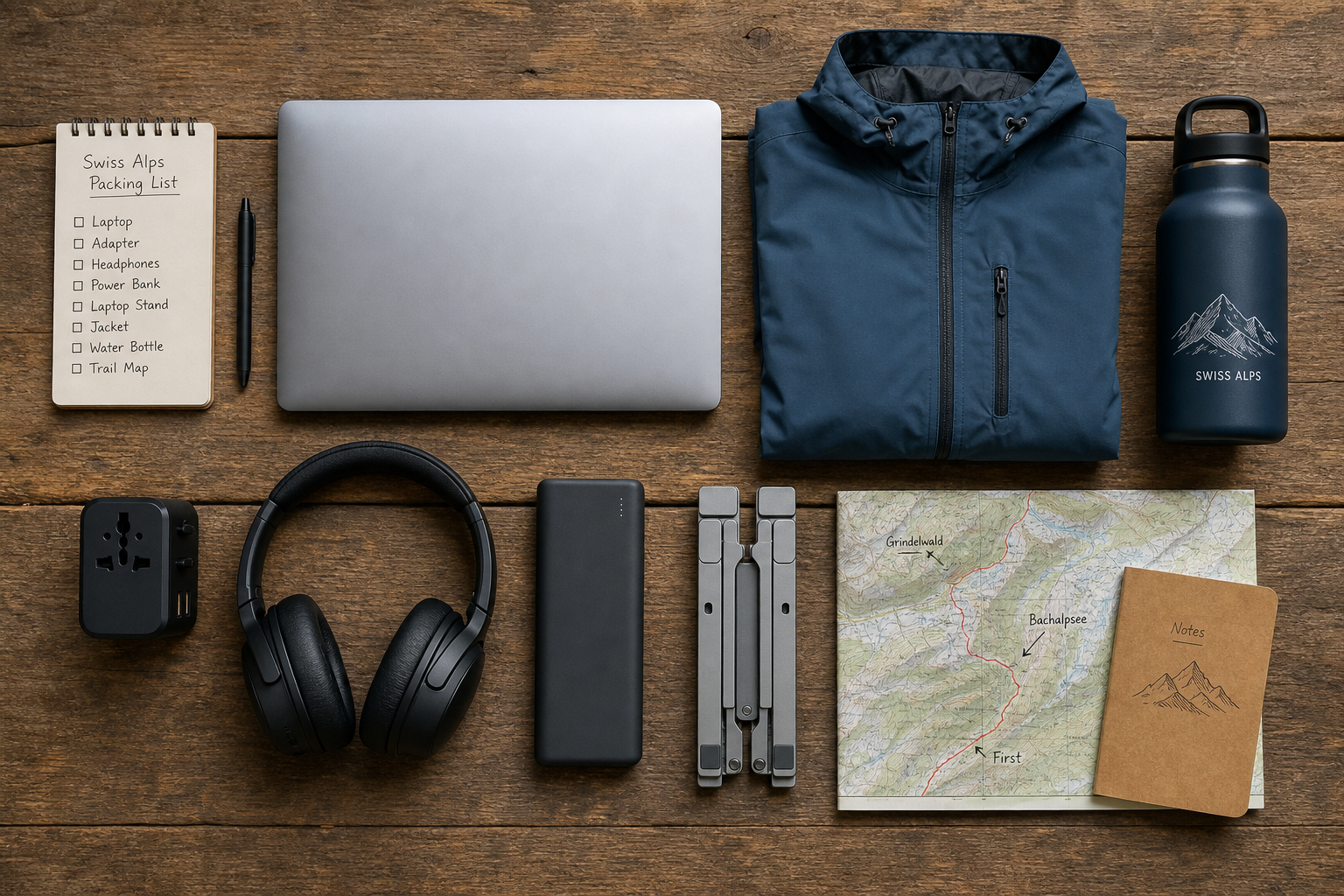
While our Swiss Alps Summer: A Simple 5-Step Packing Guide covers the hiking essentials, digital nomads should add the following technical gear to their checklist:
- Universal Travel Adapter with USB-C PD: Swiss outlets (Type J) are unique. Ensure your adapter can handle your laptop’s wattage requirements.
- Noise-Canceling Headphones: Absolutely critical for working in the common areas during the bustling evening hours.
- Portable Power Bank (20,000mAh+): Useful if you decide to take your work outside to the patio or on a lighter trail day where you might work from a mountain café.
- Laptop Stand and Wireless Mouse: Since you will be working at dining tables, elevating your screen will save your neck over the course of a week.
- Dry Bag: If you bring your laptop on a day trip to a nearby town or a low-intensity hike, a lightweight dry bag inside your daypack protects your expensive hardware from sudden alpine rain showers.
Designing Your Work-Hike Routine
To make the most of your week-long summer hiking holiday, you need a routine. Here is an example of how successful digital nomads structure their days at Hiking Hostel to balance career demands with the Swiss Alps experience.
Scenario A: The Morning Hiker (Afternoon Work)
- 7:30 AM: Included breakfast in the communal dining room.
- 8:30 AM: Catch the daily trail transport to a local trailhead in Valais or St. Stephan.
- 9:00 AM - 1:00 PM: Hike, enjoy the scenery, and eat a packed lunch on the mountain.
- 2:00 PM: Return to the hostel via the afternoon transport.
- 2:30 PM - 7:00 PM: Deep work in the hostel common area (or your room). Take advantage of the quiet lodge before the rest of the hikers return.
- 7:00 PM: Included communal dinner. Socialize, swap trail stories, and relax.
Scenario B: The Morning Worker (Afternoon Explorer)
- 7:30 AM: Included breakfast.
- 8:00 AM - 1:00 PM: Deep work in the nearly empty hostel. Excellent time for focus and complex tasks.
- 1:00 PM: Eat lunch.
- 1:30 PM - 5:30 PM: Take a shorter, independent hike departing directly from Liddes or St. Stephan, or utilize local postal buses to reach nearby attractions.
- 7:00 PM: Included communal dinner.
By intentionally scheduling your work blocks around the natural flow of the hostel, you ensure you never feel like you’re missing out on the alpine experience, nor falling behind on your deadlines.
Evaluating Base Locations: Liddes vs. St. Stephan
Hiking Hostel operates core trips based around two distinct locations: Liddes and St. Stephan. Both are equipped for remote workers, but they offer slightly different atmospheres.
Liddes (Valais)
Located on the road to the Great St. Bernard Pass, Liddes is a traditional, quiet Swiss village. It is an excellent base for accessing the Mont Blanc massif and Aosta.
- Nomad Vibe: Very tranquil. There are fewer external distractions (like bustling bars or large shopping centers). It is ideal for deep, uninterrupted work. The internet is highly stable, and the views from the workspace are incredibly motivating.
- Excursions: Proximity to Chamonix and Aosta means full-day excursions are spectacular, though they will require you to take a full day off from synchronous work. Read more about accessing these areas in our post: Mountain Mont Blanc: 7 Ways to Visit Without the Crowd.
St. Stephan (Bernese Oberland)
Nestled in the Simmental valley, St. Stephan provides quick access to the world-famous regions around Gstaad, Glacier 3000, and Interlaken.
- Nomad Vibe: Slightly more connected to regional transit networks. If you need to step out to a café for a change of scenery, the nearby larger villages offer more options.
- Excursions: Excellent for half-day trips, making it slightly easier to balance a heavy work week with outdoor exploration.
Overcoming Common Remote Work Challenges in the Mountains
Even with great Wi-Fi and structured logistics, working from the Alps requires adaptability. Here are a few edge cases and how to manage them:
Challenge 1: The FOMO (Fear Of Missing Out)
When the group boards the van for a full-day trip to Glacier 3000 and you have a quarterly review meeting, it hurts.
Solution: Accept that you cannot do everything. Choose a week where your workload is slightly lighter, or front-load your hours before you arrive. Commit to 2-3 major excursions and let the others go.
Challenge 2: Video Call Backgrounds and Noise
While daytime is quiet, a random hiker might walk behind you during a call, or the kitchen staff might start prepping dinner.
Solution: Always use virtual backgrounds on Zoom/Teams. Invest in a headset with a directional boom mic (like a Jabra or Poly) rather than relying on standard AirPods. These mics physically block out background clatter.
Challenge 3: Ergonomic Fatigue
Working from dining chairs for 7 days straight can trigger back pain, especially when combined with strenuous mountain hiking.
Solution: Break your work into 90-minute blocks. Use the outdoor spaces to stand and stretch. Consider packing a lightweight, foldable laptop stand to keep your screen at eye level.
How Hiking Hostel Compares to Traditional Options
When budgeting for a “workcation” in the Swiss Alps, digital nomads typically weigh three options: luxury hotels, Airbnbs, or hostels.
As we discuss in Hotels in Swiss Mountains? Why Social Lodges Beat Luxury, standard hotels in Switzerland are prohibitively expensive for most solo travelers, often lacking communal workspaces entirely. You end up working from your bed.
Airbnbs provide privacy and good workspaces, but they completely isolate you. You have to cook all your own meals, navigate local transit alone, and you miss out on the camaraderie of shared outdoor experiences.
Hiking Hostel strikes the perfect middle ground for the budget-conscious remote worker. You get the community, the automated logistics, and the robust internet infrastructure at a fraction of the cost of a private chalet.
Final Verdict: Is It Right For You?
Hiking Hostel is a highly suitable environment for digital nomads, provided you understand the rhythm of an alpine lodge. We provide the essential infrastructure—fast, reliable Wi-Fi, abundant power, and clean, bright communal workspaces.
More importantly, by wrapping your accommodation, meals, and daily trail transport into one package, we remove the logistical friction that usually drains a digital nomad’s time and energy.
If you are a flexible remote worker looking to hike the Swiss Alps without pausing your career, bringing your laptop to Liddes or St. Stephan is not just feasible; it is one of the most efficient ways to experience the mountains on a budget. Pack your hiking boots, your noise-canceling headphones, and your laptop—the Alps are calling, and the Wi-Fi is ready.