Swiss Ski Resorts Map: Find 3 Hidden Gems for 2026
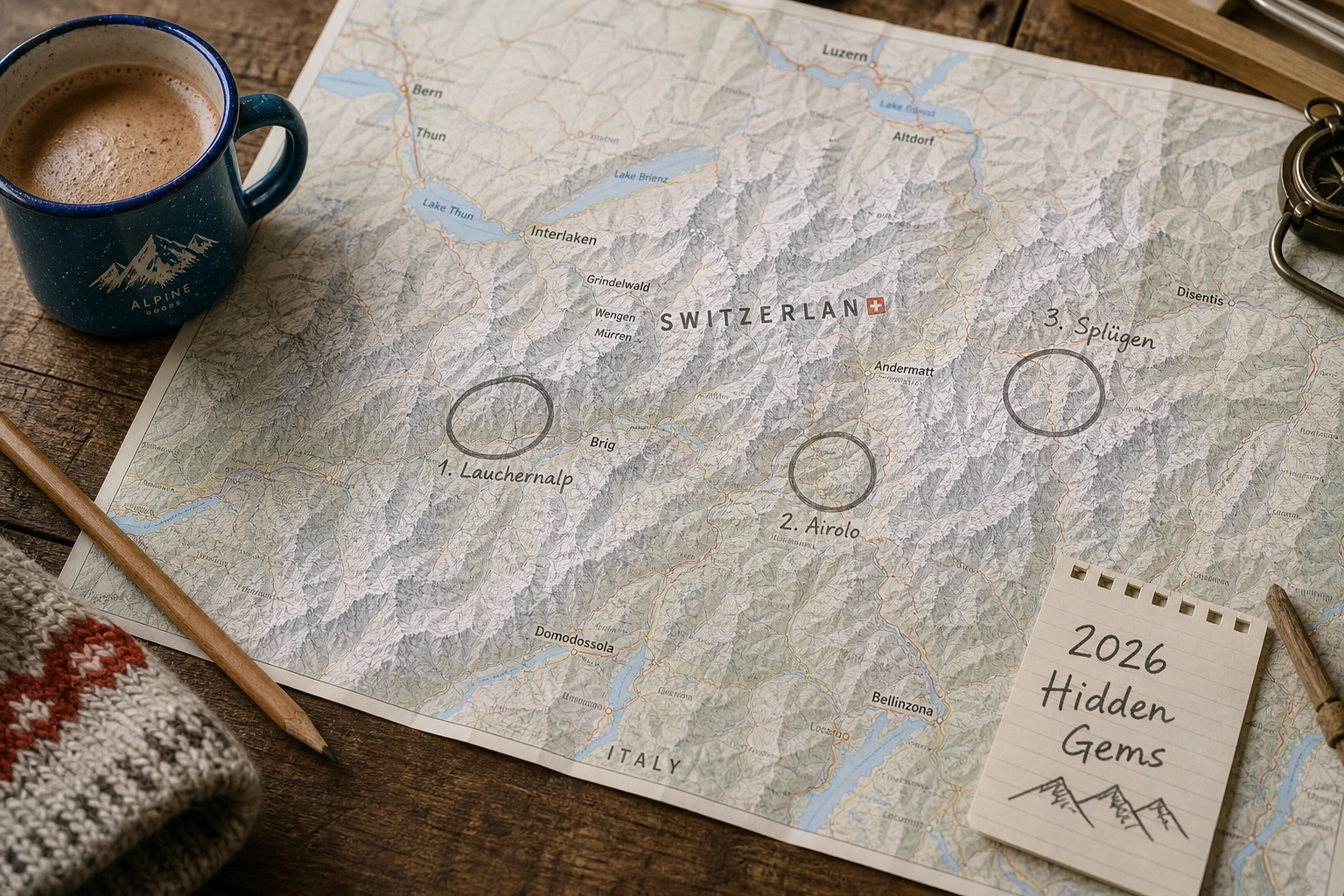
Open any comprehensive digital map of Switzerland’s ski areas, and you are immediately hit with a chaotic spiderweb of red, blue, and black lines. With over 300 distinct winter resorts crammed into a country smaller than Lake Michigan, deciding where to ski can feel like throwing a dart at a topographical board.
Most travelers stare at a Map of Switzerland Ski Resort Locations, panic, and default to the names they recognize: Zermatt, St. Moritz, or Grindelwald. The result? They pay 100+ CHF per day for lift tickets, stand in 45-minute gondola queues, and spend their evenings in soulless resort towns drinking incredibly expensive beer.
But if you know how to read a Swiss ski resorts map like a local, a completely different reality opens up. By looking past the massive interconnected resort blobs and focusing on the quiet, unlinked valley roads, you can find world-class terrain at half the price, with zero crowds.
For 2026, we are bypassing the mega-resorts. Whether you are a digital nomad logging morning hours on high-speed Wi-Fi, a solo backpacker looking for community, or a budget-conscious rider chasing deep powder, this guide will show you how to decode the map and locate the Alps’ best-kept secrets.
Why Standard Ski Maps Lie to Budget Travelers
When you view an interactive platform to research the Best ski resorts in Switzerland, the map interface inherently favors the giants. Large resorts pay for premium placements, and their massive network of 50+ lifts dominates the visual space.
Standard ski maps create a psychological trap for the budget traveler in three specific ways:
- The “More Lifts Equals Better Skiing” Myth: Maps emphasize quantity over quality. A mega-resort might boast 80 lifts, but 60 of them are flat transit chairs moving crowds between distinct zones. A hidden gem might only have 4 lifts, but if they are stacked vertically, providing 1,500 meters of continuous fall-line descent, you actually get more time skiing and less time sitting.
- The Horizontal Distortion: Ski maps are notoriously terrible at displaying vertical drop. A trail might look incredibly long on a 2D map but actually be a flat, exhausting cat-track. Conversely, a short line on the map might represent a plunging, world-class freeride face.
- The Base Village Illusion: High-gloss maps center the luxury hotels and Michelin-star restaurants at the base, making it look like the only place to stay. They rarely show the quiet farming villages just 15 minutes down the valley road where communal lodges and affordable hostels operate.
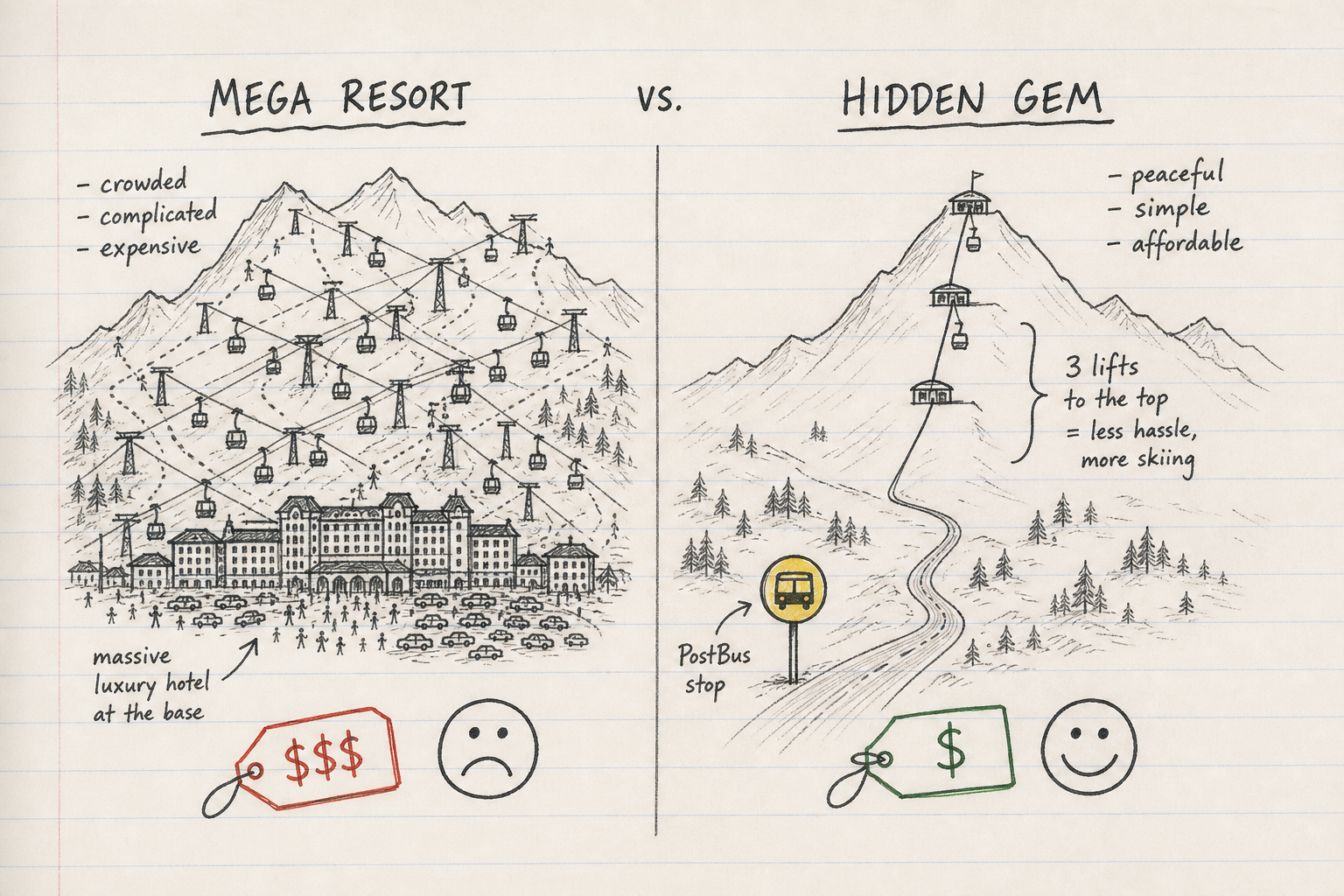
To break free from the expensive tourist track, you have to stop looking at the red lines (the pistes) and start looking at the negative space. The best resorts for budget travelers are often located at the physical end of a valley, requiring a deliberate journey via the PostBus rather than a direct high-speed train connection.
How to Read a Swiss Ski Resorts Map Like a Local
Before we dive into the specific hidden gems for 2026, you need to understand the methodology behind finding them. If you are a solo traveler or a family trying to figure out Which Swiss Ski Resort Fits a Backpacker’s Budget?, use these three map-reading rules.
1. Look for “Backdoor” Connections
Many famous, expensive ski areas are actually connected to smaller, working-class farming villages on the opposite side of the mountain. You do not need to stay in the luxury resort to ski its terrain.
If you trace the lift networks on a detailed map, look for the quiet valleys that share a ridgeline with a mega-resort. By basing yourself in the obscure village, you pay budget prices for accommodation and food, but you ride the exact same powder as the billionaires staying across the peak.
2. Hunt for T-Bars (Surface Lifts)
This sounds counterintuitive. Most vacationers hate T-bars. But for the dedicated rider, a T-bar is the ultimate crowd-control device. Tour buses and luxury travelers avoid resorts with surface lifts. When you scan a map and see a ski area serviced primarily by one gondola and three upper-mountain T-bars, you have found a local’s paradise. The snow stays untracked for days after a storm, and the lift tickets are drastically cheaper.
3. Track the Magic Pass Coverage
The “Magic Pass” is an annual consortium ski pass that covers over 80 independent, mid-sized ski areas across Switzerland. Mega-resorts like Zermatt and Verbier are not on it. Instead, it covers the exact type of hidden gems we love. When looking at a Switzerland Ski Resorts Map, mentally filter the locations to highlight only Magic Pass resorts. It immediately narrows your focus to community-driven, affordable mountains.
The 3 Hidden Gem Ski Resorts for 2026
Using the criteria above, we have isolated three spectacular hidden gems for the upcoming 2026 season. These mountains offer the terrain, the snowfall, and the authentic alpine atmosphere without the devastating price tag.
1. St. Stephan (The Lenk-Simmental Region)
Located in the Bernese Oberland, St. Stephan is the textbook definition of a backdoor connection. If you look at a macro map of Switzerland, your eyes will naturally gravitate toward the famous, glitzy resort of Gstaad.
What the map doesn’t immediately tell you is that the quiet, unassuming village of St. Stephan connects directly into the Gstaad-Saanenmöser ski network via a single, strategic lift.
Why it’s a 2026 Hidden Gem:
Instead of paying Gstaad prices for food and lodging, you can base yourself in the Simmental valley. The vibe here is entirely different. You are surrounded by traditional dairy farms, timber chalets, and local families.
- The Terrain: By taking the local gondola up from St. Stephan, you gain immediate access to over 105 kilometers of rolling blue and red pistes, plus excellent tree skiing during storm cycles.
- The Vibe: Unpretentious, quiet, and deeply rooted in Swiss farming culture.
- The Basecamp: Ski Hostel operates a lodge in this specific region, offering all-inclusive packages with home-cooked meals (often featuring Brazilian-influenced cuisine) and organized group rides. It acts as the perfect communal hub for solo travelers wanting to explore the Simmental valley without the isolation of a standard hotel.
2. Bruson / Vichères (Val de Bagnes & Liddes)
If you look at the Ski resorts Swiss Alps map in the Valais canton, Verbier dominates the screen. It is the freeride capital of Europe, but a single beer will cost you double digits, and the lift lines on a powder day are legendary.
Look directly across the valley from Verbier. You will see a smaller cluster of lifts belonging to Bruson, and slightly further up the road, the micro-resort of Vichères near Liddes.
Why it’s a 2026 Hidden Gem:
Bruson is connected to the Verbier lift system via a valley-spanning gondola, but 90% of the tourists never bother to cross over. Bruson offers world-class, steep tree skiing that holds fresh snow for a week after a storm.
Meanwhile, Vichères (Liddes) is entirely independent. It is a true local’s hill with sweeping, uncrowded runs facing Mont Blanc.
- The Terrain: Exceptional glades in Bruson; wide-open, sunny groomers and safe off-piste in Vichères-Liddes.
- The Vibe: Pure backcountry enthusiasm. You will share the lift with mountain guides on their day off rather than influencers in designer snowsuits.
- The Basecamp: The Liddes area is the heart of the Ski Hostel community. With high-speed Wi-Fi for remote workers and direct transport to these hidden trailheads, you get a “home away from home” atmosphere. Plus, the location serves as a gateway for cross-border excursions.
3. Evolène (Val d’Hérens)
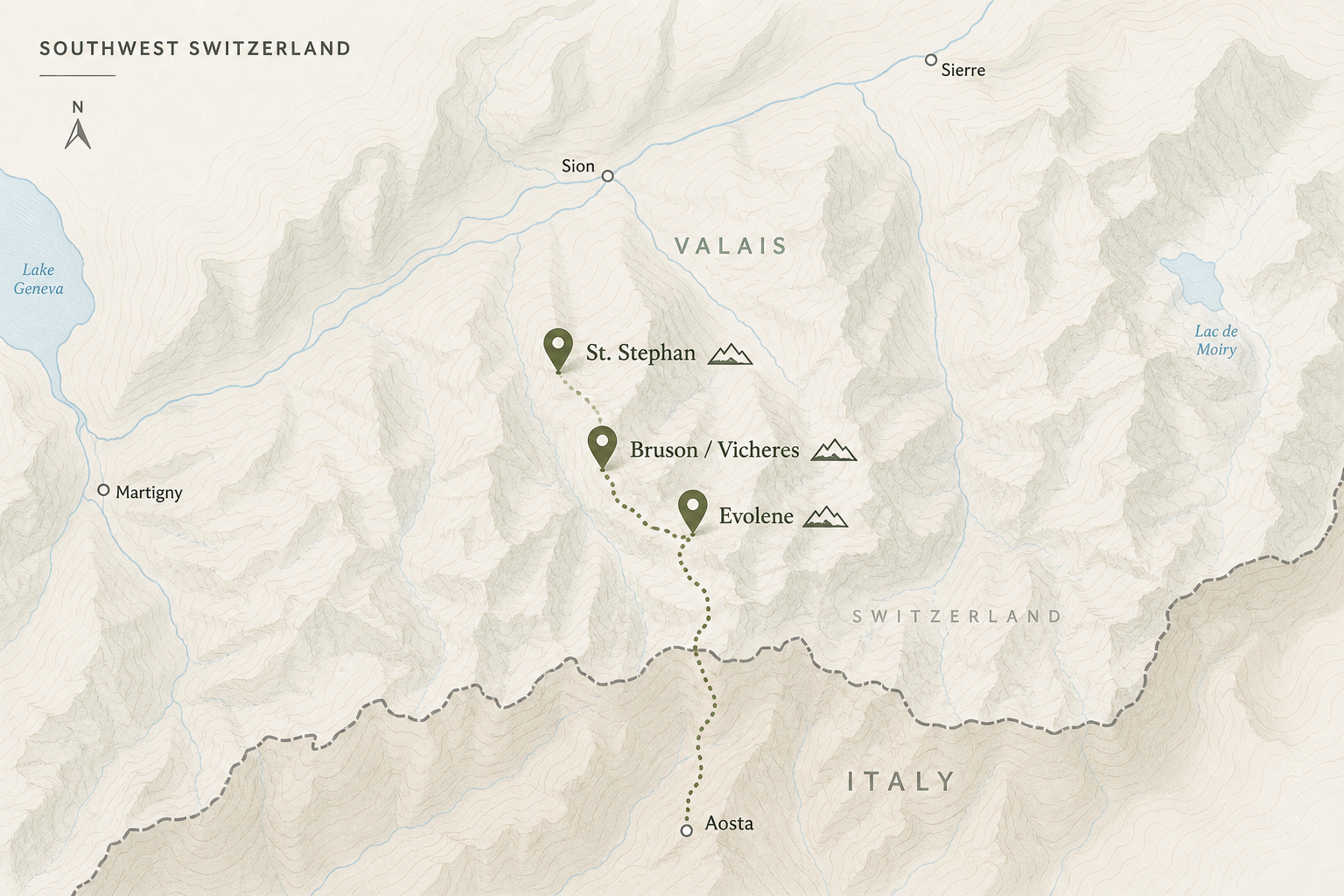
Tucked away in a dead-end valley south of Sion, Evolène represents ski tourism as it existed 40 years ago. On a digital map, the Val d’Hérens looks like a blank space surrounded by towering peaks. You have to actively zoom in to find the thin red lines denoting the ski lifts.
Why it’s a 2026 Hidden Gem:
Evolène is fiercely traditional. The locals still speak a distinct dialect, and the architecture is immaculately preserved. The ski area itself is small on paper but massive in reality, offering towering vertical drops and lift-accessed freeride terrain that rivals Chamonix—but with literally zero lift lines.
- The Terrain: A handful of lifts service a massive vertical drop. The runs are steep, sustained, and largely ungroomed off the sides. It is a playground for advanced riders and budget-conscious powder hounds.
- The Vibe: Raw, authentic, and slightly wild. You are truly out in the high alpine.
- The Cost: Lift tickets are a fraction of the cost of nearby mega-resorts like the 4 Vallées.
Integrating Cross-Border Map Routes
One of the biggest mistakes travelers make when looking at a map of Switzerland is treating the national border as an impenetrable wall. The Alps do not care about geopolitical lines, and neither should your itinerary.
When basing yourself in Southwestern Switzerland (particularly around the Liddes / Val de Bagnes region), the map opens up internationally. You are physically closer to major Italian and French resorts than you are to many Swiss ones.
- Aosta, Italy: Just through the Great St. Bernard tunnel, the Aosta Valley offers incredible skiing at Pila, Courmayeur, and La Thuile. The food gets cheaper, the coffee gets vastly better, and the lift tickets drop in price. Organized border-crossing excursions are a core part of the adventure lodge experience, allowing you to ski Italy for the day and be back in Switzerland for dinner.
- Chamonix, France: Located just over the Col de la Forclaz. While Chamonix is famous, approaching it as a day trip from a quiet Swiss basecamp allows you to experience the dramatic terrain without paying Chamonix accommodation rates. If you want to know how to navigate this iconic peak effectively, check out our guide on the Mountain Mont Blanc: 7 Ways to Visit Without the Crowd.
Budget Breakdown: Hidden Gems vs. Mega-Resorts
To truly understand why studying the map pays off, we need to look at the hard math. This isn’t just about saving a few Francs; it is about fundamentally changing the duration and quality of your trip.
| Expense Category | Zermatt / Verbier (Mega-Resort) | St. Stephan / Liddes (Hidden Gem) |
|---|---|---|
| Day Lift Ticket | 85 - 100+ CHF | 40 - 55 CHF (Or use Magic Pass) |
| On-Mountain Lunch | 35 CHF (Basic burger/fries) | 18 CHF (Local Rösti at a farm hut) |
| Accommodation | 150 - 300+ CHF (Basic hotel) | 50 - 80 CHF (Social lodge / hostel) |
| Crowd Density | High (Expect 20-min lift queues) | Very Low (Ski straight onto the lift) |
| Powder Lifespan | Tracked out by 11:00 AM | Untracked for 3 to 5 days |
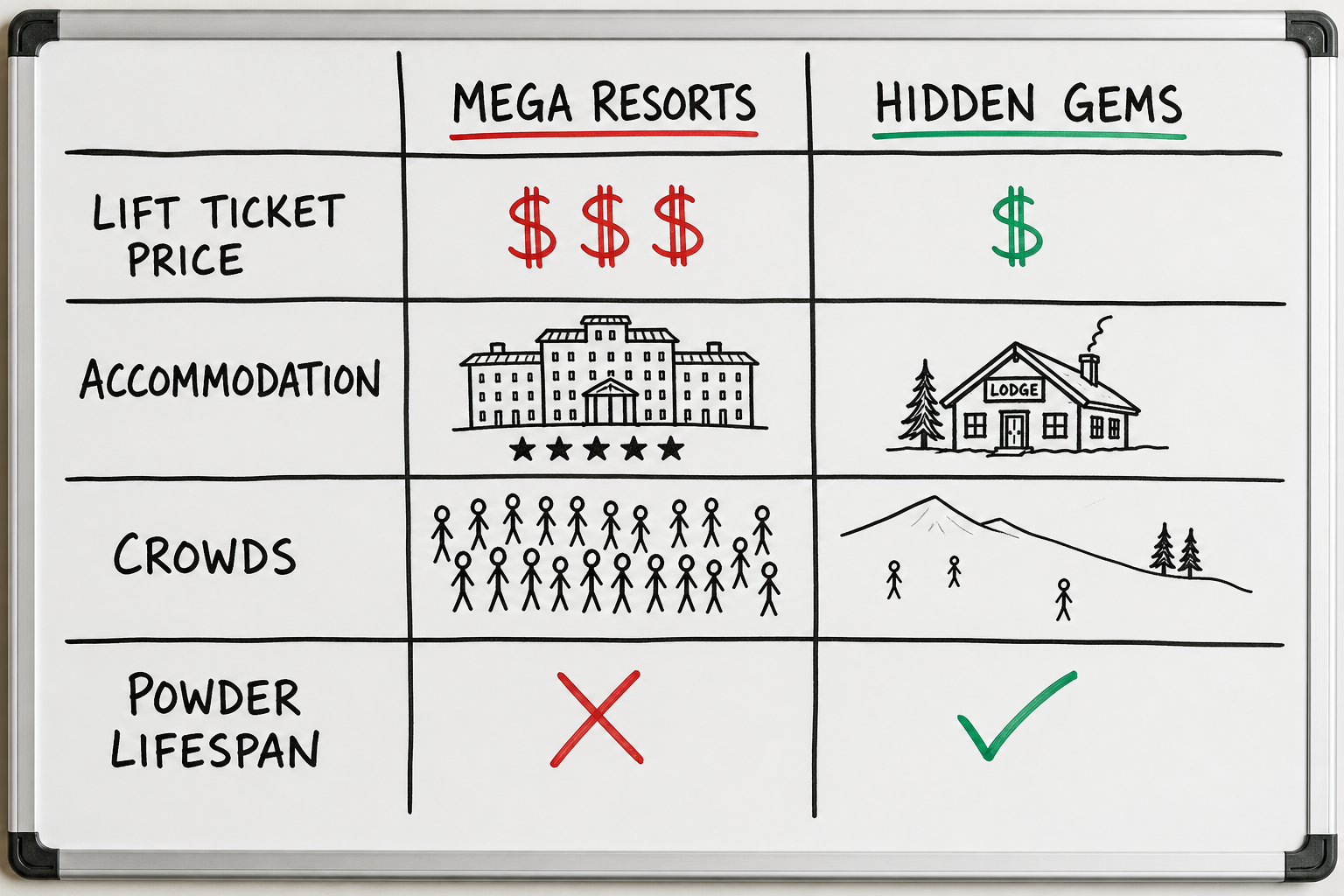
By choosing the hidden gem side of the map, a digital nomad or budget backpacker can effectively ski for a full week on the same budget that would last just three days at a mega-resort.
Where to Basecamp: Why Social Lodges Beat Luxury
Identifying the right resort on the map is only half the battle. The other half is figuring out where to sleep. Standard maps heavily promote massive hotels that isolate guests in private rooms. For solo travelers, backpackers, and digital nomads, this isolation ruins the mountain experience.
Communal adventure lodges fundamentally change how you interact with the terrain. When you stay in a place designed to foster an international community, logistics become shared.
Instead of paying 40 CHF for a solo taxi to the trailhead, you jump into the hostel’s transport van. Instead of eating a lonely, expensive fondue in a quiet restaurant, you share a massive communal dinner—perhaps a rich, home-cooked Brazilian stew—while swapping route beta with fellow riders.
If you are on the fence about accommodation styles, we highly recommend reading Hotels in Swiss Mountains? Why Social Lodges Beat Luxury to understand the financial and social benefits of community-driven stays.
The Importance of High-Speed Wi-Fi in the Alps
Historically, choosing a “hidden gem” meant accepting terrible infrastructure. In 2026, that is no longer the case. A modern ski hostel in a quiet valley like Liddes or St. Stephan provides high-speed Wi-Fi specifically tailored for remote workers.
You can easily wake up, drink local espresso, handle Zoom calls and emails from a cozy common room, and then hit the slopes by 1:00 PM when the sun softens the snow. Because the hidden gems have no lift lines, a 3-hour afternoon session yields more vertical feet than a full 8-hour day battling crowds at a major resort.
Navigating Logistics: Transport and Gear
Using the map effectively also means understanding Swiss logistics. The public transit network here is arguably the best in the world, but it requires a bit of planning.
The PostBus is Your Best Friend
While the bright red SBB trains are famous, the yellow PostBuses (PostAuto) are the real heroes of budget alpine travel. They service the steep, winding valley roads that trains cannot reach. When looking at your ski map, find the bus icon. If a resort relies on a PostBus connection, it will inherently have fewer crowds.
Gear Rental vs. Bringing Your Own
If you are traveling across Europe, hauling a bulky snowboard or heavy skis is exhausting. Look for basecamps that offer in-house gear rental. When logistics, equipment, and group itineraries are fully managed by your host and local volunteers, you eliminate the friction of mountain travel. You can arrive with just a backpack, get fitted for gear in the basement, and be on the mountain the next morning.
(Note: If you are arriving early in the season or transitioning into warmer months, you might want to review our 7 Tips for Hiking in Switzerland (Without the High Cost) to make the most of the 250+ kilometers of trails accessible directly from our lodges.)
Making Sense of the Map: 3 Practical Steps for Your 2026 Trip
To synthesize everything into a practical strategy, follow this 3-step checklist when planning your 2026 Swiss ski trip:
- Ignore the Center, Scan the Edges: Pull up a comprehensive map like the ones updated by Snowpak. Ignore the massive interconnected webs in the center. Scan the edges of the valleys for isolated red lines. That is where the value lives.
- Verify the Basecamp: Once you find a quiet resort (like Bruson, Vichères, or St. Stephan), check the accommodation landscape. Are there communal lodges nearby? Does the hostel handle transport to the lifts? If yes, you have found a viable hub.
- Check Cross-Border Potential: Can you reach Italy or France within 60 minutes? If the map shows a tunnel or pass nearby, your itinerary just doubled in value without adding to your accommodation costs.
FAQs on Navigating Swiss Ski Maps
Are hidden gem resorts safe for beginners?
Yes. While some (like Evolène) cater to advanced riders, places like St. Stephan and Vichères are fantastic for beginners. Because there are fewer crowds, beginners have wide-open pistes to practice on without the fear of high-speed collisions. Furthermore, community lodges often arrange guided instruction for all skill levels.
How accurate are the snow reports on digital maps?
Digital maps from major aggregators are generally accurate for base-depth, but they lack micro-climate nuance. A hidden gem like Bruson might report only “good” snow, but because it is heavily forested and north-facing, the snow preservation is often spectacular. Local knowledge at the hostel breakfast table will always beat an app.
Is the Magic Pass worth it for a one-week trip?
If you buy it early in the pre-season (spring/summer), it is absolutely worth it for a one-week trip. If you wait until mid-winter, daily tickets at hidden gems are still cheap enough that paying out-of-pocket remains highly budget-friendly.
Switzerland does not have to be an exclusive playground for the ultra-wealthy. By changing how you read the ski resorts map, leaning into community-driven accommodation, and embracing the quiet valley roads, the majestic terrain of the Swiss Alps becomes fully accessible to the everyday adventurer.