Mont Blanc Mountain Huts: What to Expect and How to Book
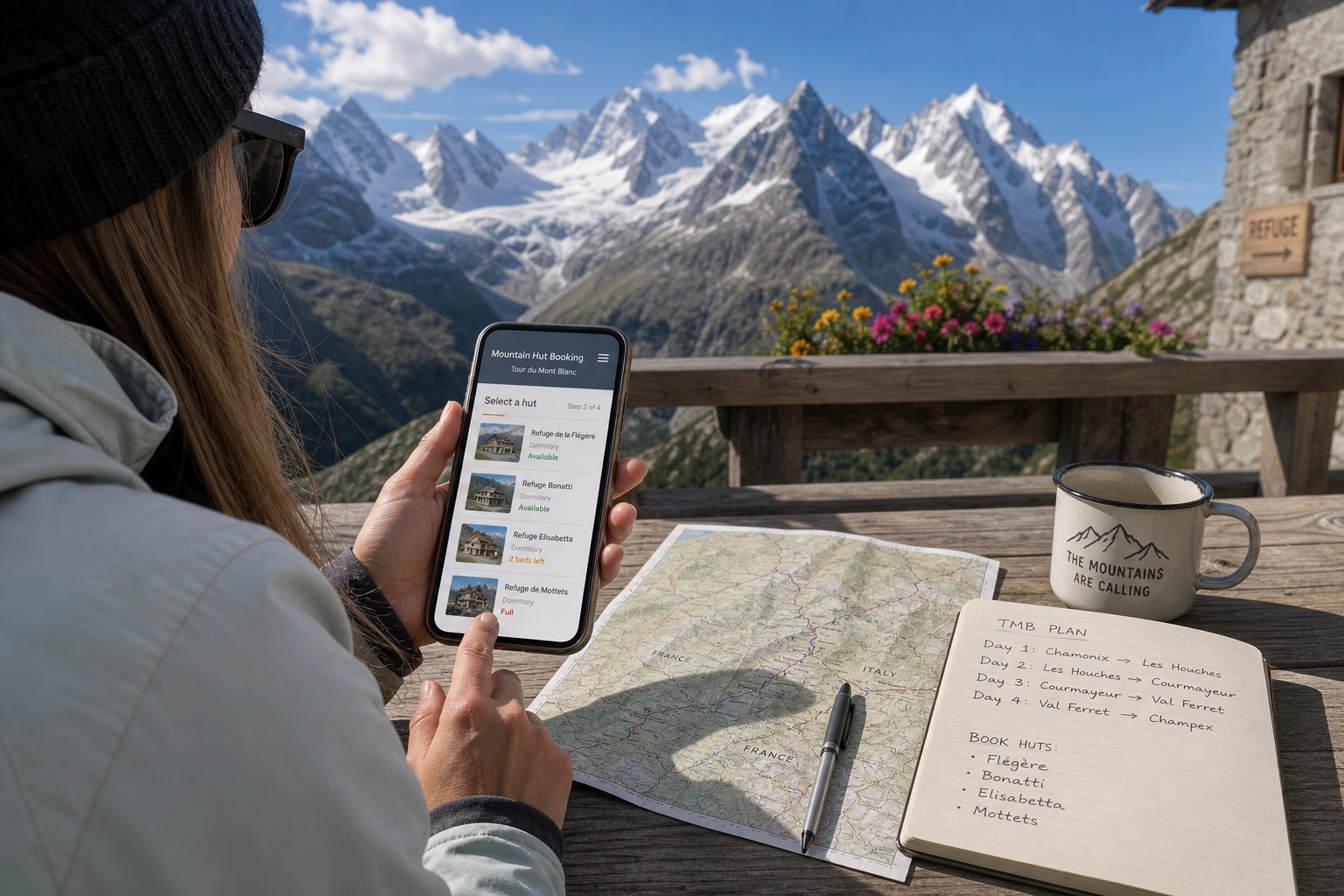
There is a distinct moment on the Tour du Mont Blanc (TMB) when the romantic idea of alpine hiking collides with reality. It usually happens around 5:00 PM on your first day. You’ve just spent eight hours navigating steep cols, your legs feel like lead, and you finally spot a stone building clinging to the side of a mountain.
You walk inside, expecting a quiet retreat. Instead, you are hit with a wall of humid air, the smell of drying wool socks, the clatter of heavy ceramic plates, and a chorus of languages echoing across long wooden tables. Welcome to the Mont Blanc mountain hut system.
Mountain huts—known as refuges in France, rifugios in Italy, and cabanes in Switzerland—are the lifeblood of the Mont Blanc massif. They are not hotels. They are highly efficient, high-altitude shelters designed to feed and house dozens (sometimes hundreds) of hikers every single night during the short summer window.
If you are planning an excursion around Mont Blanc, understanding how these huts operate, what to pack for them, and crucially, how to book them before they sell out, is the difference between an unforgettable adventure and a logistical nightmare.
Whether you are a solo traveler, a budget-conscious backpacker, or a digital nomad seeking a temporary disconnect, this guide covers everything you need to know about Mont Blanc’s high-altitude accommodations. And if you prefer a centralized basecamp with high-speed Wi-Fi and a warmer, more curated community vibe, we will also show you how our own Ski Hostel serves as the perfect launchpad for your Mont Blanc excursions.
What to Expect Inside a Mont Blanc Mountain Hut
The first rule of mountain huts is to leave your valley expectations at the door—quite literally, as you will be required to take off your hiking boots in the mudroom before entering the living quarters.
While some modern huts have undergone renovations that inch them closer to boutique mountain hostels, the vast majority prioritize utility over luxury.
The Boot Room (La Salle Hors Sac)
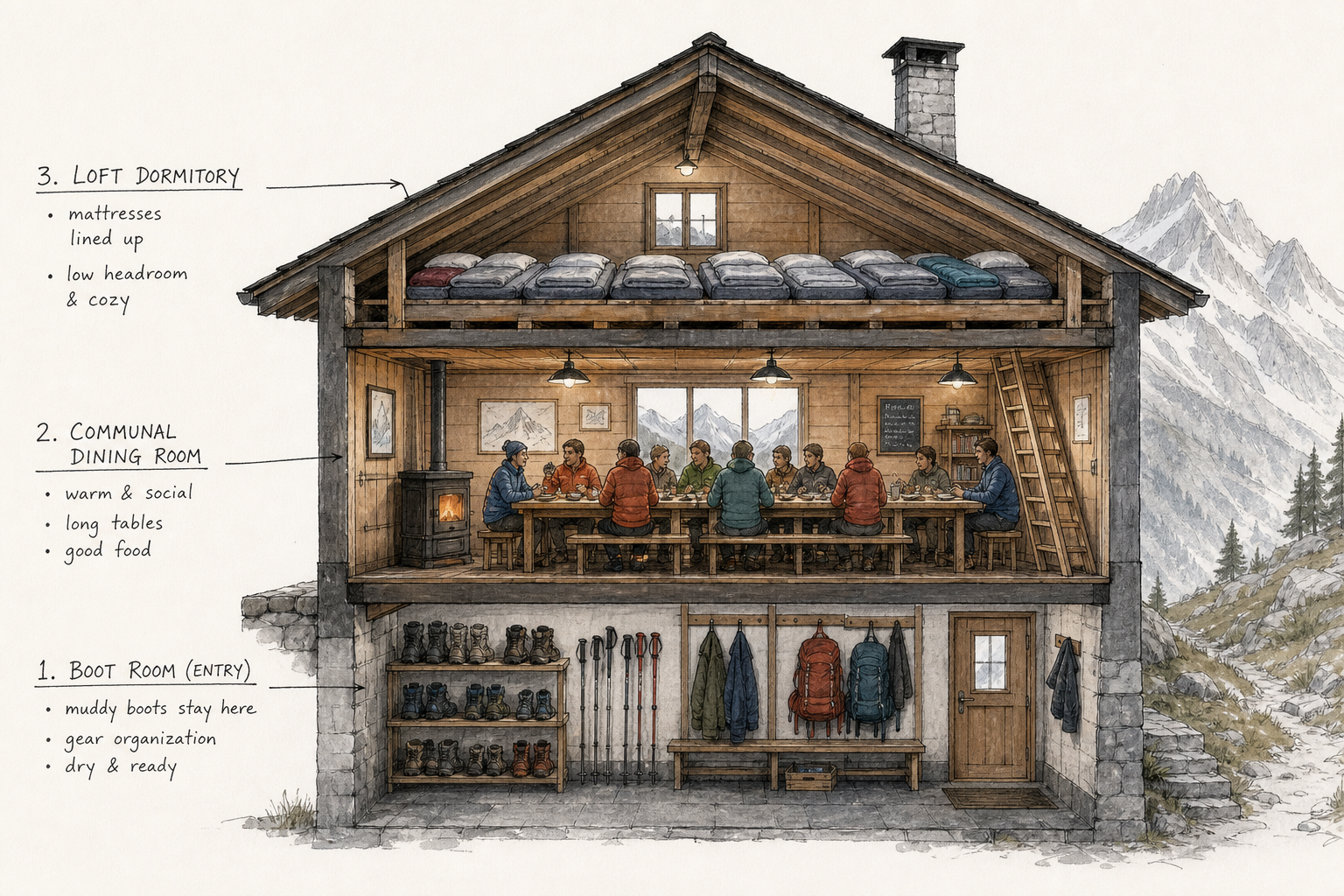
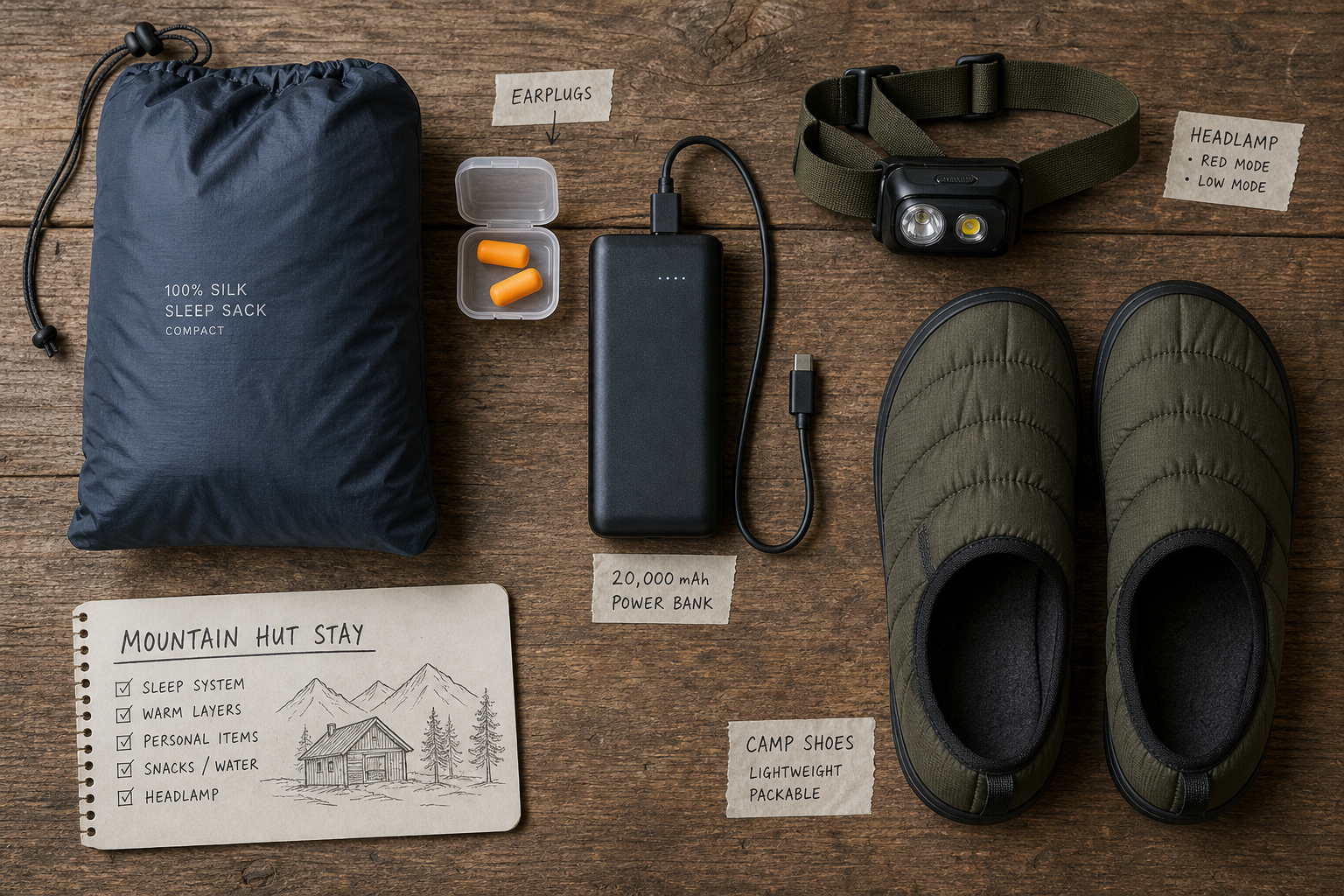
Your first stop in any hut is the boot room. This is a designated, usually unheated area where hikers deposit their muddy boots, wet rain gear, and trekking poles. You will swap your boots for a pair of “hut shoes.” Most huts provide a massive bin of communal rubber clogs (like Crocs) in various sizes, but many hikers prefer to bring their own lightweight sandals for hygiene and comfort.
Dormitory Sleeping Arrangements
If you are picturing a private room with a fluffy duvet, you might need to adjust your lens. The vast majority of Mont Blanc mountain huts operate on a dormitory system.
- Capacity: Dorms range from intimate 4-bed rooms to massive 40-bed lofts where mattresses are lined up edge-to-edge on long wooden platforms.
- Bedding: The hut provides a mattress, a pillow, and heavy wool blankets (or sometimes duvets). However, for hygiene reasons, you are strictly required to bring your own sleep sack (a lightweight silk or cotton sleeping bag liner).
- The Sleep Experience: You are sharing a room with hikers who are exhausted, potentially snoring, and operating on different schedules. Earplugs and a comfortable eye mask are non-negotiable items for your pack.
The Demi-Pension (Half-Board) Experience
Food is where the Mont Blanc mountain huts truly shine. Because you are hiking long distances burning thousands of calories, the huts serve hearty, high-energy meals. Most hikers book the demi-pension (half-board) rate, which includes your bed, a three-course dinner, and breakfast the next morning.
Dinners are communal affairs, served at a set time (usually 7:00 PM). You will sit at long tables with strangers, passing massive bowls of food back and forth. This is the heart of the hut experience—sharing stories with international backpackers, comparing blisters, and debating route choices.
Breakfasts are notoriously simple across the Alps: expect sliced bread, butter, jam, sometimes a piece of local cheese, and bowls of instant coffee or tea. It is designed to be eaten quickly so hikers can get on the trail by 7:00 AM.
Showers, Toilets, and Electricity
Water and electricity are precious resources at 2,000 meters above sea level.
- Showers: Most huts now have hot showers, but they are highly regulated. You typically purchase a jeton (token) from the warden, which grants you 3 to 5 minutes of hot water. Once the timer stops, the water turns freezing. Some older or more remote huts only have cold water, or no showers at all.
- Toilets: While flush toilets are becoming the norm, don’t be surprised to encounter traditional squat toilets in older Italian or French refuges.
- Charging: Plugs are scarce. You might find a single power strip in the dining room meant to be shared by 50 people. If you are a digital nomad or rely on your phone for GPS, you must bring a high-capacity power bank. Do not expect to charge your devices fully at the huts.
If the idea of rationing 3 minutes of hot water stresses you out, it might be worth reading our guide on Hotels in Swiss Mountains? Why Social Lodges Beat Luxury to see why blending hut nights with valley lodge stays provides the best of both worlds.
The Cultural Divide: French, Italian, and Swiss Huts
The Tour du Mont Blanc crosses three international borders. As you hike through France, Italy, and Switzerland, the language changes, the currency fluctuates (Euros to Swiss Francs), and the flavor of the mountain huts shifts dramatically.
Here is a breakdown of how the accommodations differ by territory.
French Refuges: Classic Alpine Charm
French huts are often the most rustic and traditional. They lean heavily into classic Savoyard culture, meaning dinner will almost certainly involve immense quantities of cheese, potatoes, and pork.
- Vibe: Lively, slightly chaotic, and deeply steeped in mountaineering history.
- Food: Expect dishes like tartiflette, rich beef stews, and thick slices of rustic bread.
- Notable Huts:
- Refuge des Mottets: Famous for its incredible food and the occasional live accordion music played by the staff after dinner.
- Refuge de la Balme: A classic, simple refuge nestled at the base of the Col du Bonhomme.
- Auberge du Truc: A highly traditional, bare-bones refuge that feels entirely disconnected from the modern world.
- Gîte Michel Fagot: Located in Les Houches, this is a popular first or last stop for many hikers.
Italian Rifugios: The Culinary High Point
Ask any veteran TMB hiker which country has the best huts, and the answer is almost always Italy. The Italians bring their culinary prowess straight up the mountain.
- Vibe: Warm, loud, and incredibly welcoming. The coffee is unmatched.
- Food: Real espresso from actual espresso machines, multi-course dinners featuring fresh pasta, risotto, and excellent local Aosta Valley wines.
- Notable Huts:
- Rifugio Maison Vieille: Known for its wildly eclectic decor and spectacular pasta dishes.
- Rifugio G. Bertone: Offers one of the best panoramic views of the Mont Blanc massif, paired with phenomenal hospitality.
- Rifugio Monte Bianco - Cai Uget: A larger, more institutional hut with great access to the Veny Valley.
Swiss Cabanes: Clean, Efficient, and Pricey
When you cross the Col Ferret into Switzerland, the huts reflect classic Swiss precision. They are generally cleaner, more organized, and slightly more expensive than their French and Italian counterparts.
- Vibe: Orderly, quiet, and highly efficient.
- Food: Hearty, simple, and filling. Expect a lot of rösti (pan-fried shredded potatoes), sausages, and excellent alpine cheeses.
- Notable Huts:
- Auberge Mont-Blanc: A large, historic building offering a mix of dorms and private rooms.
- Relais d’Arpette: A beautiful stop for those taking the challenging Fenêtre d’Arpette variant.
- Gîte de la Fouly: A great valley-level stop with excellent facilities.
If you want to read more about navigating the Swiss side of the Alps, check out our guide on How to Plan Hut to Hut Hiking in Switzerland (7 Tips).
The Booking Process: How to Secure Your Beds
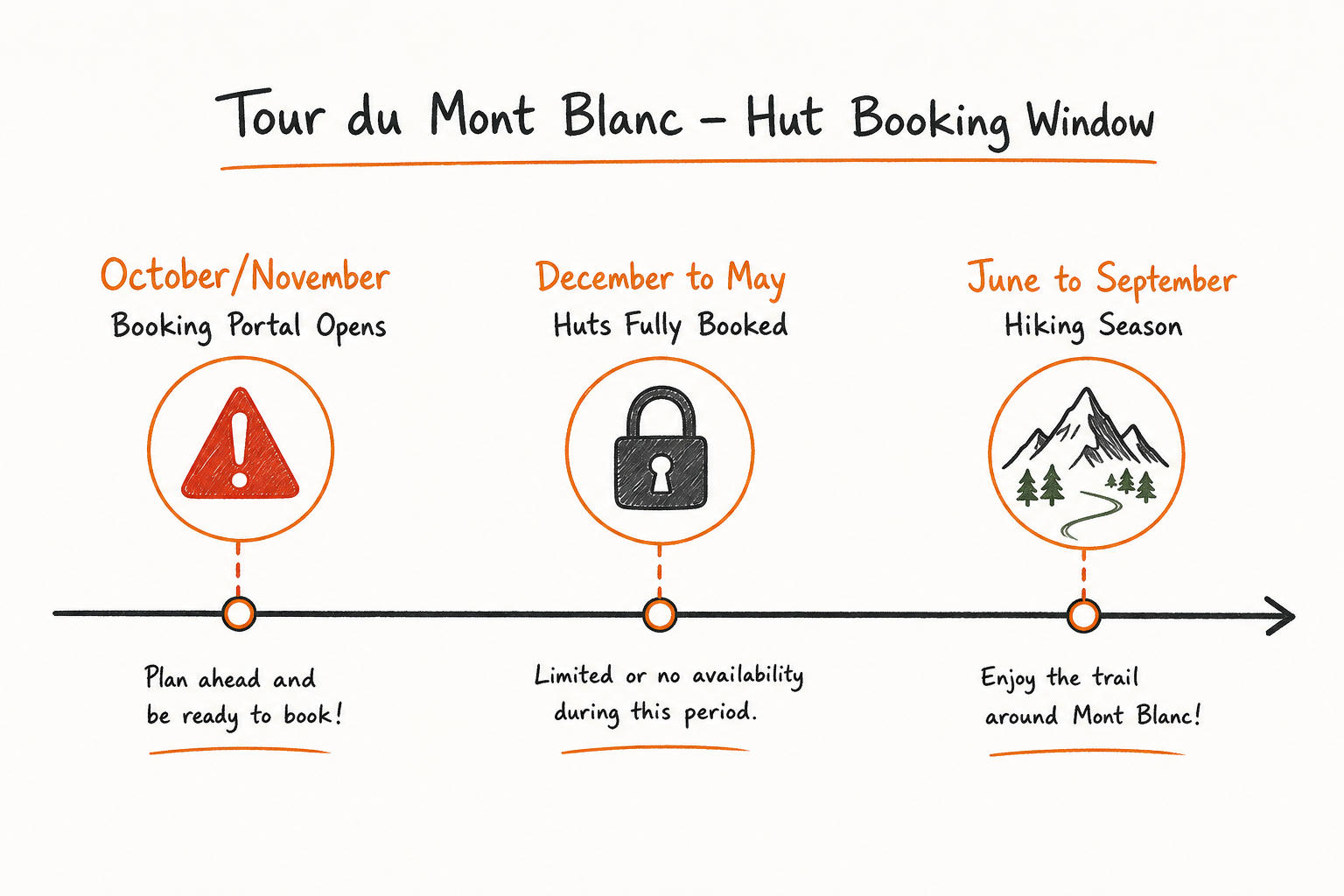
Booking Mont Blanc mountain huts is notoriously stressful. The hiking season is painfully short—running primarily from mid-June to mid-September—and demand massively outstrips supply. If you attempt to book your huts in May for a July hike, you will likely find nothing but fully booked calendars.
According to an excellent breakdown by Tour du Mont Blanc Hike, planning your itinerary and booking early is the single most critical step of your trip.
The MonTourDuMontBlanc Portal
The central hub for reserving accommodations is the official website: www.montourdumontblanc.com. This portal allows you to map your route, check real-time availability across dozens of huts, and book them all in a single transaction.
Here is how to master the portal:
- Create an Account Early: Do this before booking day so you aren’t wasting time typing in your details when beds are disappearing.
- Use the Map Feature: The site allows you to visualize the route. You can click on specific regions to filter your search.
- Understand the Quirks: The website can be buggy, especially on opening day when traffic spikes. Be patient, refresh often, and double-check your dates before hitting confirm.
- Have a Backup Plan: If your preferred hut is full, look for accommodations in the valley below. You can often hike down to a town (like Les Contamines or Courmayeur), stay in a hotel, and take a bus or hike back up the next morning.
The Booking Timeline
Do not wait until spring. The booking portal typically opens in late October or early November for the following summer.
For example, if you want to hike in July 2027, you need to be sitting at your computer, credit card in hand, in November 2026. The most popular huts (like Refuge des Mottets or Rifugio Bonatti) will sell out their entire summer inventory for peak dates within 48 hours of the portal opening.
Independent Huts
Not every hut is on the central portal. Some private lodges and smaller refuges handle their own bookings via their personal websites, email, or even phone.
If you find a gap in your itinerary on the portal, don’t panic. Search for independent accommodations nearby. For instance, according to the Saint-Gervais Mont-Blanc Tourism site, several localized huts require direct contact to secure a bed.
Ski Hostel: Your Basecamp for Mont Blanc Excursions
Committing to a full 10-to-12 day hut-to-hut trek isn’t for everyone. The logistics are heavy, the pack is heavy, and the lack of privacy can wear on you.
This is where Ski Hostel comes in. Located in the heart of the Swiss Alps in the Liddes and St. Stephan regions, we serve as the ultimate hub for travelers who want to experience the majesty of the Mont Blanc massif without sacrificing comfort, community, or high-speed Wi-Fi.
Instead of stressing over the intense booking race for remote huts, many of our guests use our lodge as a permanent basecamp. From here, we organize unique border-crossing excursions into Italy and France.
The “Hub and Spoke” Adventure Model
Our approach is simple: you sleep in a comfortable bed, eat amazing home-cooked meals (featuring our signature Brazilian-influenced cuisine), and we handle the logistics of getting you to the best trails in the region.
- Day Trips to Chamonix: We regularly run transport to the French side of Mont Blanc, allowing you to hike iconic sections of the TMB—like Lac Blanc—as a day trip before returning to the hostel for a communal BBQ.
- Aosta Valley Excursions: Want a taste of Italian Rifugio food without the overnight commitment? We arrange trips across the border. (Read more in our article: Skiing in the Italian Alps? Try This Aosta Day Trip for winter equivalents).
- Pre- and Post-Trek Stays: If you are doing the full TMB, Ski Hostel is the perfect place to acclimatize, organize your gear, and connect with other hikers before you set off. After your trek, our spa nights are exactly what your battered feet will need.
We cater to solo travelers, digital nomads who need to work between hikes, and backpackers looking for a “home away from home.” We take the stress out of alpine logistics.
For more on how to navigate the region efficiently, check out Mountain Mont Blanc: 7 Ways to Visit Without the Crowd.
Unwritten Rules of Hut Etiquette
Living in close quarters with 50 tired strangers requires a certain level of grace and unwritten etiquette. If you want to avoid angry glares from veteran mountaineers, follow these rules:
- No Boots Past the Mudroom: We mentioned it before, but it bears repeating. Wearing muddy hiking boots into the dining room or dorms is the ultimate alpine sin.
- Pack Quietly: Do not rustle plastic bags in the dorm room at 5:00 AM. Unpack your sleep sack and toiletries before quiet hours. If you need to leave early, pack your bag in the hallway, not in the dark while others are sleeping.
- Respect the Silence: Most huts enforce a strict “lights out” and quiet time around 10:00 PM. Hikers are tired; respect the curfew.
- Fold Your Blankets: In the morning, fold the heavy wool blankets exactly as you found them. It is a sign of respect for the hut wardens, who work incredibly hard to turn over the rooms for the next batch of hikers.
- Bring Cash: While many huts now accept cards, high-altitude card machines rely on satellite connections, which go down frequently during storms. Always carry enough Euros and Swiss Francs to cover your stay and meals.
Frequently Asked Questions About Mont Blanc Huts
The central booking portal and regional tourism boards receive thousands of identical questions every year. According to the official Autour du Mont-Blanc FAQ, here are the most common issues hikers face.
I booked huts but did not receive a confirmation. What should I do?
First, check your spam folder. The automated emails from the booking portal often get flagged by aggressive filters. If you still cannot find it, log back into your account on montourdumontblanc.com. You can view all confirmed reservations in your dashboard. If a reservation says “Pending,” the payment may not have cleared, or the hut warden needs to manually approve it. If all else fails, email the hut directly with your reservation number.
I made a mistake with my dates and/or I would like to change the dates of my booking.
Changing dates is incredibly difficult due to the sheer volume of bookings. You cannot simply “slide” a booking forward a day if the hut is already full. You will need to log into the portal, search for availability on your new dates, and if available, cancel your old booking and make a new one. Be highly meticulous when selecting your dates the first time.
I would like to cancel my booking. Do I get a refund?
Cancellation policies vary wildly from hut to hut. Most require a non-refundable deposit (often around 30% of the total stay) at the time of booking. If you cancel well in advance, you simply lose the deposit. If you cancel at the last minute (usually within 48 to 72 hours of your arrival), many huts reserve the right to charge your card for the full amount of the stay. Always read the specific terms on your confirmation email.
I would like to hike the Tour du Mont Blanc with my dog. Are they allowed in huts?
Generally, no. The vast majority of mountain huts in France, Italy, and Switzerland strictly prohibit dogs inside the sleeping and dining areas due to hygiene regulations and the high density of hikers. A few scattered huts may allow a dog to sleep in a designated outdoor shed or the boot room, but relying on this is risky. Furthermore, sections of the TMB pass through protected nature reserves (like the Aiguilles Rouges) where dogs are legally banned, even on a leash.
I would like to book for next summer. When can I do this?
As mentioned earlier, the booking portal for the TMB typically opens in October or November for the upcoming summer season. Set a calendar alert. Do not wait until January.
I would like to book a hut that does not appear on the website “montourdumontblanc.com”.
If a hut is not on the portal, you must contact them directly. Use Google to find their official website. Many independent huts have their own booking engines, while older ones might require you to send an email or even make a phone call.
Alternatives If the Huts are Fully Booked
If you missed the booking window, your Mont Blanc dreams are not over. You just need to get creative.
- Drop Down into the Valleys: The TMB route frequently crosses high mountain passes but also drops into deep valleys. Towns like Les Contamines (France), Courmayeur (Italy), and Champex-Lac (Switzerland) have plenty of hotels, guesthouses, and hostels that do not sell out as quickly as the high-altitude refuges.
- Use Public Transport: You can hike a section, take a local bus back to a central town (like Chamonix), sleep in a comfortable bed, and take the bus back to the trail the next morning.
- Stay at a Social Lodge: Base yourself at a community-focused lodge like Ski Hostel. We offer direct access to over 250 kilometers of trails. You can explore the breathtaking Val de Bagnes region, which offers scenery matching the TMB, without the immense crowds. Check out 7 Tips for Hiking in Switzerland (Without the High Cost) to see how basing yourself at our lodge saves money.
- Camping: Wild camping (bivouacking) is heavily restricted and highly regulated across the three countries. You generally can only set up a small tent from dusk to dawn, and only in very specific, high-altitude areas. If you plan to camp, thoroughly research the local laws for France, Italy, and Switzerland, as fines for illegal camping are steep.
The Final Ascent
Sleeping in a Mont Blanc mountain hut is a rite of passage. It strips away the comforts of modern life and replaces them with something much more primal and rewarding: the shared camaraderie of people pushing their physical limits in one of the most beautiful environments on earth.
Yes, the dorms can be loud. Yes, the showers are timed. But when you are sitting on the stone patio of an Italian Rifugio, drinking a cold beer, watching the sunset turn the granite spires of the Mont Blanc massif a deep shade of pink, none of that matters.
Plan meticulously, book your beds in November, pack a good set of earplugs, and embrace the chaos. The mountain awaits.