Ultimate Swiss Alps hiking packing list for one week
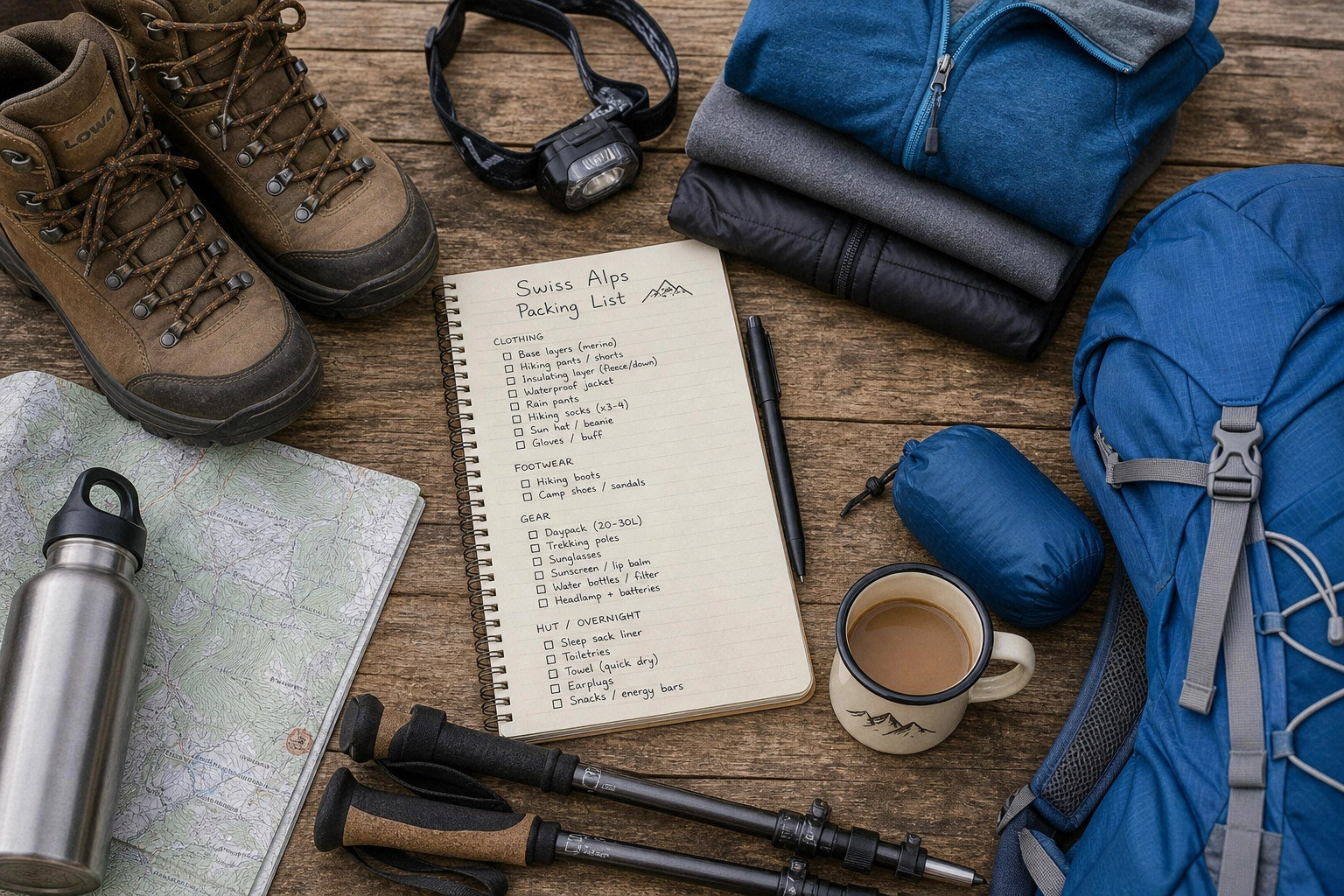
Stepping off the cable car at 2,400 meters in the Swiss Valais on a bright July morning feels incredible. The sun warms your face, alpine wildflowers carpet the slopes, and towering peaks line the horizon. Three hours later, a dark cloud rolls over the mountain pass, the wind spikes, and temperatures drop from 22°C (72°F) down to 4°C (39°F) with cold rain turn into sleet.
This dramatic swing in conditions is standard for alpine environments. If your pack is filled with heavy cotton hoodies and extra jeans, you will end up shivering, soaked, and hauling unnecessary weight up 1,000 meters of vertical ascent. On the other hand, if you follow a streamlined packing system designed specifically for the Alps, you can handle high-altitude weather shifts comfortably while keeping your pack light.
Whether you are joining a social group based in a mountain lodge in Liddes or St. Stephan, taking day trips from a trail hub, or embarking on overnight hut stays, this guide covers everything you need for a seven-day Swiss Alps hiking holiday. You will learn how to build a flexible layering system, select the right footwear, pack for communal hostel living, and avoid the common gear mistakes that burden budget travelers.
The Core Alpine Layering System
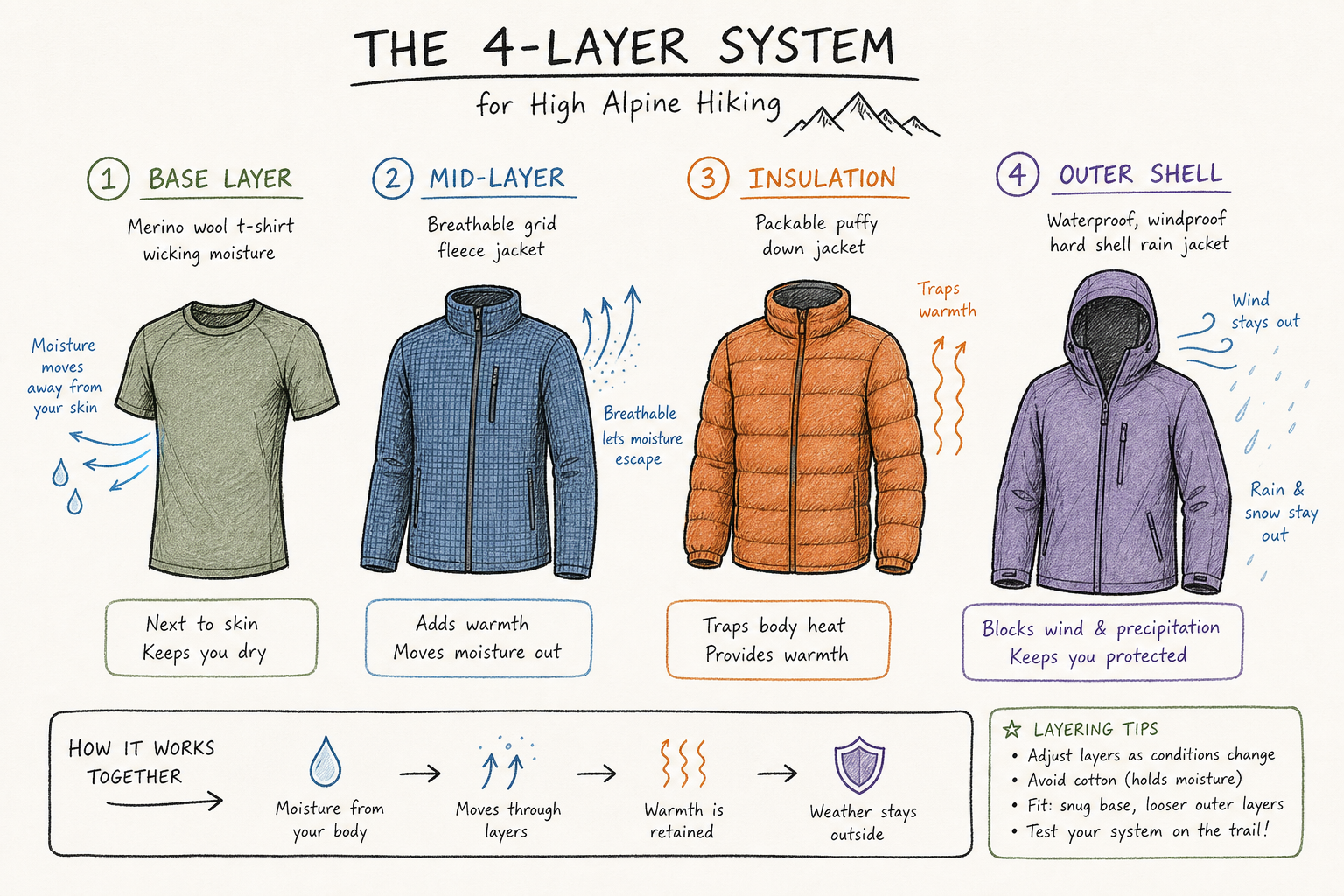
When hiking in the Swiss Alps, your clothing needs to function as an adaptable system rather than a collection of standalone outfits. Mountain weather changes rapidly, and high physical exertion on steep ascents generates significant body heat, followed quickly by cooling when you stop at a summit or ridge.
According to clothing guidelines from trail experts at KÜHL, choosing lightweight, moisture-wicking, and fast-drying fabrics is the most reliable way to stay warm and comfortable. Cotton is a liability in the mountains because it absorbs sweat, holds moisture against your skin, and takes hours to dry, drastically increasing your risk of hypothermia when temperature drops.
1. Base Layers: Moisture Management
Your base layer touches your skin directly. Its main job is pulling sweat away from your body so you remain dry during intense climbs.
- Merino Wool vs. Synthetics: Merino wool naturally resists odors, making it ideal for a week-long trip where you want to re-wear tops without unpleasant smells. Synthetic fabrics (polyester or nylon) dry slightly faster and cost less, but retain odor quickly.
- Quantity for 7 Days: Pack 3 short-sleeve base layer t-shirts and 1 long-sleeve base layer top. You do not need 7 separate shirts if you utilize quick merino fabrics or mid-week hostel laundry.
- Sun Protection: A lightweight, synthetic sun hoody (UPF 50+) is one of the best pieces of modern gear for high-altitude trekking, shielding your neck and arms from intense alpine radiation.
2. Mid-Layers: Trapping Warmth
Mid-layers trap air warmed by your body while remaining breathable enough to let vapor escape during motion.
- Fleece Jacket or Grid Fleece: A lightweight grid fleece (around 200–250g) offers an ideal warmth-to-weight ratio. It breathes well when walking against cool winds.
- Active Insulation: Alternatively, a lightweight breathable softshell jacket works exceptionally well on exposed ridges where you need light wind resistance without overheating.
3. Insulation Layer: Mountain Summit Protection
Whenever you pause for lunch at a mountain pass (Col) or wait for a regional train after your hike, your heart rate slows down and temperature drops rapidly.
- Packable Puffy Jacket: Carry a lightweight down jacket or synthetic insulated jacket. It should compress down to the size of a water bottle and weigh under 400 grams.
- Down vs. Synthetic: Down offers superior warmth for its weight and packs down smaller, but synthetic insulation retains warmth even if damp from unexpected condensation or humidity.
4. Outer Shell: Wind and Rain Defense
Your rain shell is your insurance policy against sudden alpine storms, driving rain, and gale-force ridge winds.
- Hard Shell Jacket: Look for a dedicated 2.5-layer or 3-layer waterproof jacket with a minimum 15,000mm hydrostatic head rating and taped seams. Ponchos or cheap plastic rain capes flap aggressively in high winds and fail on technical trails.
- Pit Zips: Pit zippers under the arms are extremely valuable. They allow heat to vent while climbing in warm rain without exposing your core.
- Rain Pants: A pair of lightweight waterproof rain pants (with side zippers for easy pull-on over boots) is mandatory gear for high alpine trekking.
| Layer | Recommended Material | Primary Function | Quantity for 7 Days |
|---|---|---|---|
| Base Layer (Shorts/Tees) | Merino Wool or Polyester | Sweat wicking & climate control | 3 Short-sleeve, 1 Long-sleeve |
| Mid-Layer | Grid Fleece or Microfleece | Trapping body heat while moving | 1–2 Jackets |
| Insulation | Down (800-fill) or Synthetic Puffy | Static warmth during rest stops | 1 Packable Jacket |
| Outer Shell | 3-Layer Waterproof (Gore-Tex / Pertex) | Blocking wind, rain, and snow | 1 Jacket, 1 Pair Rain Pants |
| Trekking Pants | Nylon-Spandex Stretch Blend | Mobility, durability, quick-drying | 2 Pairs (or 1 Convertible) |
Footwear & Socks: Protecting Your Feet on Technical Trails
Swiss hiking trails are graded from T1 (flat yellow-marked walking paths) to T6 (difficult alpine routes). Most week-long hiking itineraries explore T2 (mountain hiking) and T3 (challenging mountain hiking) trails, featuring exposed rocks, gravel scree, steep switchbacks, and wooden steps.
Hiking Boots vs. Trail Running Shoes
One of the most frequent debates among alpine hikers is whether to bring heavy leather boots or nimble trail running shoes.
- Mid-Cut Hiking Boots: Recommended if you carry a heavy pack (over 10 kg), have weak ankles, or plan to cross steep snow fields and loose gravel scree. Look for models with sticky Vibram soles and a waterproof membrane.
- Trail Runners: Ideal for fast, budget-conscious day hikers carrying light 20L-30L packs. They are lightweight, agile, dry rapidly if soaked, and significantly reduce leg fatigue over long vertical ascents.
- What to Avoid: Low-top casual sneakers, tennis shoes, or running shoes with smooth road treads. They lack traction on damp rock and wet grass, creating slip hazards.
The Merino Sock System
Your footwear is only as good as the socks inside them. Friction from damp, ill-fitting socks causes painful blisters that ruin a hiking holiday.
- Quantity: Bring 3–4 pairs of dedicated mid-weight merino wool hiking socks.
- Cushioning: Choose socks with targeted density in the heel and toe box.
- Fit: Ensure socks fit snugly without bunching up inside the boot.
- Blister Prevention Kit: Pack a small roll of Leukotape or zinc-oxide tape, several Compeed hydrocolloid blister plasters, and antiseptic wipes. Apply tape at the very first sign of friction before a hot spot develops into an open blister.
Camp & Hostel Footwear
After walking 15 to 20 kilometers, taking off your trail boots is essential for foot recovery. In Swiss mountain huts and hostels, dirty outdoor boots are strictly prohibited past the entryway boot room (Schuhraum).
- Lodge / Hostel Slides: Pack lightweight flip-flops, Crocs, or EVA slides. They weigh almost nothing, dry quickly after communal showers, and provide comfortable relaxation around the lodge fire or dining hall.
Backpack Selection & Daily Trail Carry
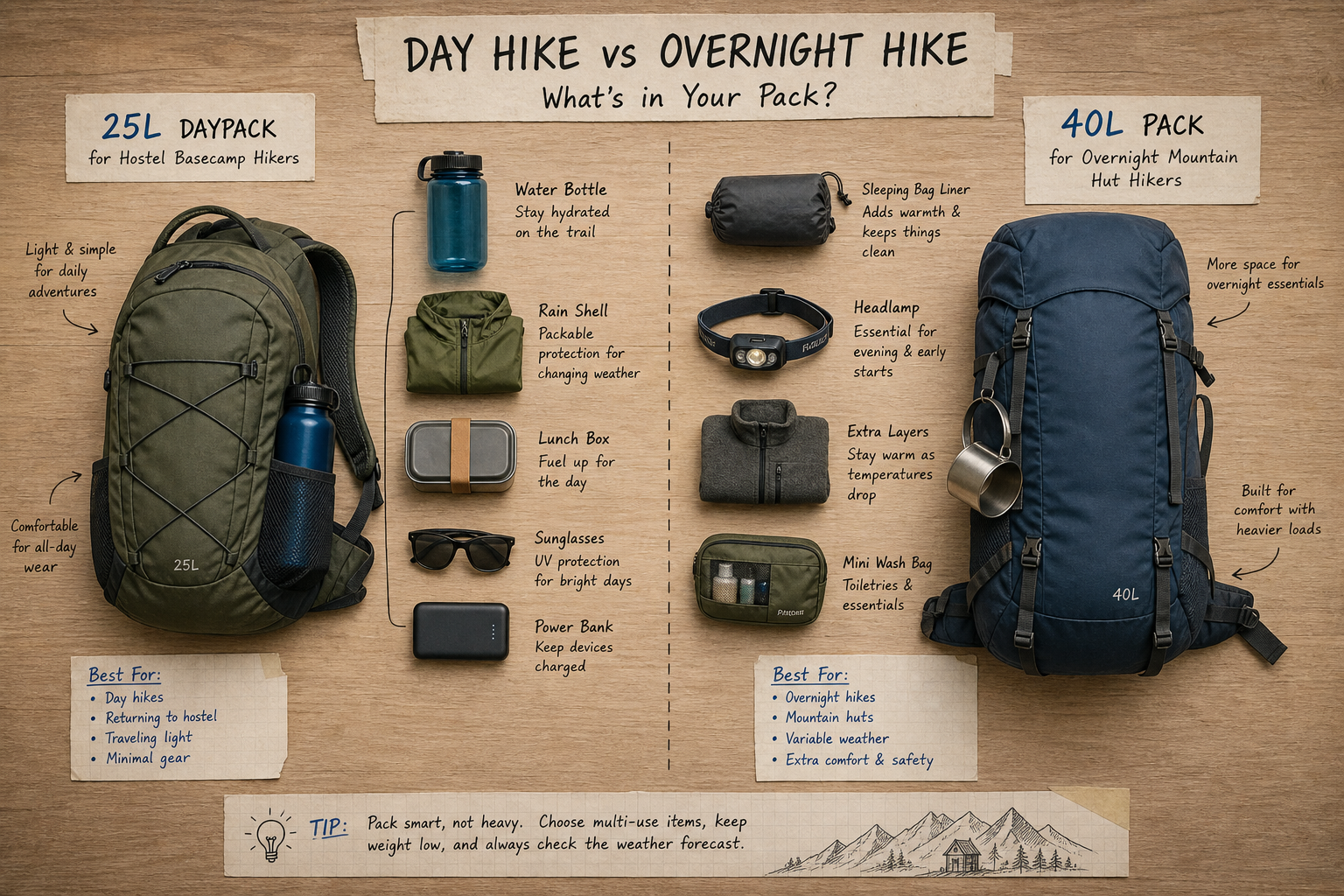
Choosing the right pack capacity depends on your accommodation style. If you stay in a central social hub like a hiking hostel and head out on day trips, your daily load will be significantly lighter than someone carrying full camping gear.
Basecamp Day Hikes (20L – 30L Pack)
When your main luggage stays at your hostel room in Liddes or St. Stephan, a high-quality 20L to 30L daypack is all you need on the trail. Your daily load will typically include your water layers, lunch, trail snacks, first aid kit, and camera, keeping your total trail pack weight around 4–6 kg (9–13 lbs).
Key features to look for in a daypack:
- Ergonomic hip belt to transfer load weight off your shoulders.
- Breathable mesh back panel to minimize sweat build-up.
- External stretch mesh pockets for quick water bottle access.
- Integrated rain cover stored in a bottom zipper compartment.
Multi-Day Hut-to-Hut Hikes (35L – 50L Pack)
If your week includes overnight stays in remote SAC (Schweizer Alpen-Club) huts, you need additional capacity for a sleeping bag liner, extra layers, communal cabin clothes, and emergency gear.
According to packing insights from Alpenwild, multi-day hikers in the Alps generally prefer packs like the Osprey Kestrel 48 or similar 40-50L options that balance load stability with lower base weight. If you are planning an extended traverse, review our detailed guide on how to plan hut to hut hiking in Switzerland.
Pack Organization & Waterproofing
Mountain rain storms can easily penetrate pack zippers. Do not rely solely on an external rain cover, which can blow off in strong winds. Use dry sacks or lightweight dry bags inside your backpack to keep your clothing, sleep liner, and electronics dry.
Technical Gear, Trekking Poles, and Electronics
Having the right accessories on trail makes long climbing days safer and far more manageable.
Why Trekking Poles are Non-Negotiable
If you ask veteran alpine guides for a single recommendation, it is almost always trekking poles. Walking down a steep 1,200-meter descent from an alpine pass puts intense impact stress on your knees and quadriceps.
- Knee Relief: Telescopic trekking poles reduce joint strain on downhill sections by up to 25%.
- Balance & Traction: They provide stability when crossing slick wooden bridges, loose scree fields, or early summer snow patches.
- Specifications: Choose 3-section adjustable aluminum or carbon poles with quick-flick lever locks and comfortable cork or EVA foam grips.
Hydration & Trail Snacks
Swiss tap water is clean, safe, and easily accessible in villages and public fountains marked Trinkwasser / Eau potable. However, once you trek above the tree line, natural streams may run near livestock grazing areas, so water treatment is necessary.
- Water Capacity: Carry 2 to 2.5 liters of water capacity using a combination of a 1.5L hydration bladder inside your pack and a 1L wide-mouth water bottle in an external pocket.
- Electrolytes: Add hydration tablets or powder mixes to your bottle. High elevation and constant breathing accelerate dehydration.
- Trail Snacks: Swiss grocery stores like Coop and Migros stock fantastic budget trail snacks. Pack mixed nuts (Studentenfutter), dried fruit, high-calorie chocolate bars, and flapjacks for quick mid-hike energy.
Tech, Power, and Navigation
- Smartphone & Navigation Apps: Download offline mapping apps before setting out. The official Swisstopo app offers detailed topographic maps of Switzerland for free. Apps like Komoot and AllTrails are also popular.
- Power Bank: Cold mountain temperatures drain phone batteries rapidly. Pack a compact 10,000mAh to 20,000mAh external battery bank and charging cables.
- Swiss Plug Adapter: Switzerland uses Type J electrical outlets. While some European two-pin plugs (Type C) fit into Swiss sockets, grounded three-pin plugs from the UK, US, or EU require a dedicated Swiss adapter.
- Sun & UV Gear: Solar radiation increases significantly at higher elevations. Bring UV Category 3 or 4 sunglasses, UPF lip balm, a wide-brimmed sun hat, and high-SPF mineral sunscreen.
Accommodation-Specific Packing: Hostels vs. Mountain Huts
Packing for a week in the Alps depends on where you sleep each night. Staying in a centralized social hostel offers creature comforts and communal amenities, while staying in an SAC mountain hut requires minimalist gear.
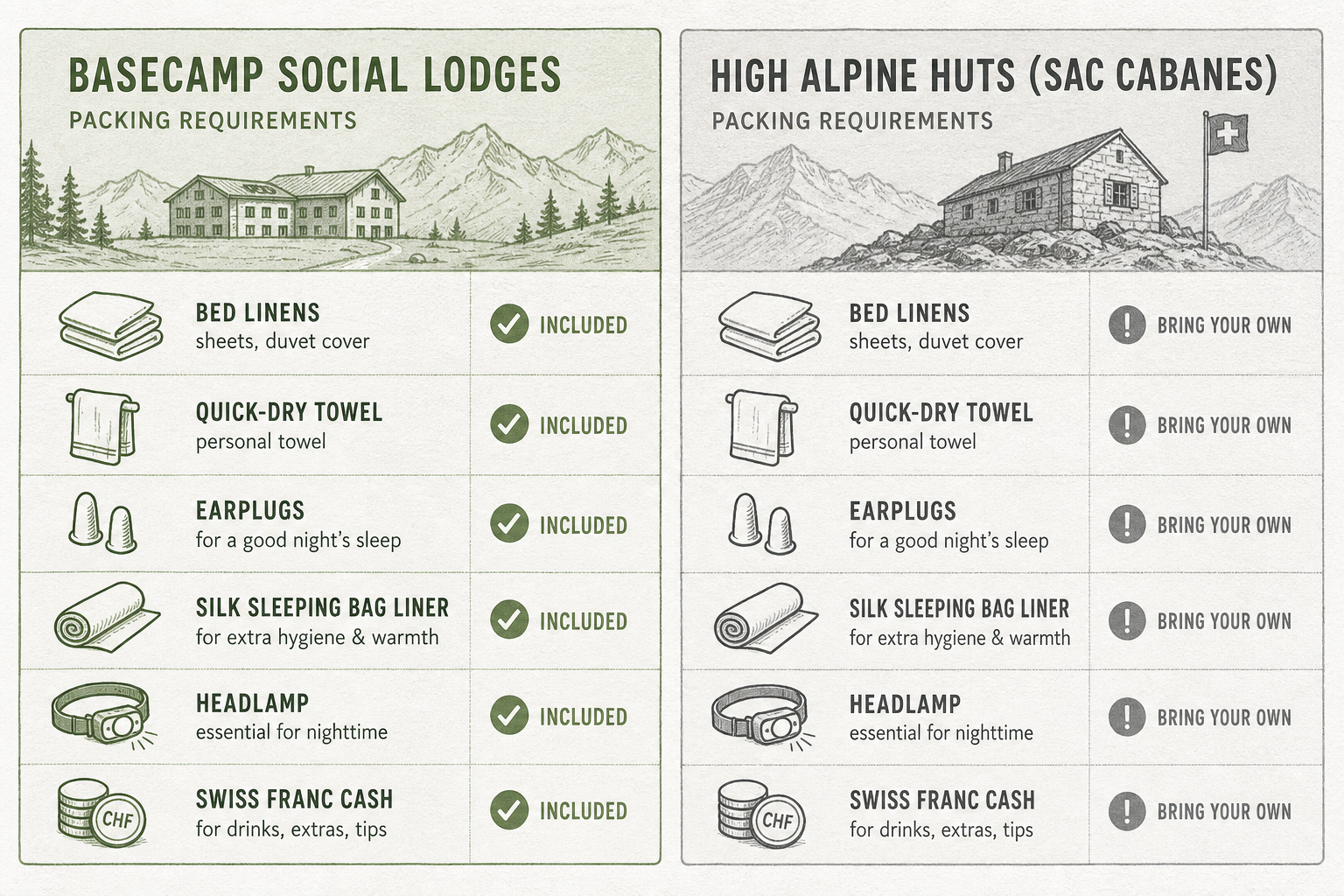
Staying in a Hiking Hostel or Basecamp Lodge
Social hostels tailored for budget hikers—such as organized basecamp hostels in Valais near Mont Blanc or Bernese Oberland—provide modern conveniences that simplify your packing list.
- Communal Laundry: Access to washing machines and drying racks means you can bring fewer clothes and wash a load mid-week.
- Towels & Bedding: Hostels usually provide bed linens, but packing a quick-drying microfibre towel saves rental fees.
- Hostel Lockers: Bring a small brass combination padlock to secure your passport, laptop, and valuables in locker storage while out on daily hikes.
- Social Comfort: Casual leisure clothes (sweatpants, t-shirts, comfy socks) make evening group dinners, board games, and relaxing by the lounge fire much more enjoyable. To explore why social lodges offer a superior experience over expensive traditional hotels, read our article on why social lodges beat luxury mountain hotels.
Staying in an SAC Mountain Hut (Cabane)
High-altitude alpine huts offer incredible mountain scenery, but operating off-grid means resources like running water and electricity are limited.
- Hüttenschlafsack (Sleeping Bag Liner): Mandatory in all Swiss huts. Huts provide heavy wool blankets or duvets, but guests must supply a lightweight silk or cotton liner for hygiene.
- Headlamp: Essential for navigating unlit bunkrooms at night without waking fellow hikers. Look for a headlamp with a red-light mode.
- Earplugs & Eye Mask: Dormitory bunkrooms accommodate 8 to 20 people. High-earplug NR ratings are essential for a quiet night’s sleep.
- Cash in Swiss Francs (CHF): While many mountain huts now accept card payments, remote locations frequently experience terminal offline issues. Carry CHF 50–100 in cash for snacks, drinks, or emergency stays.
- Minimal Toiletries: Water is scarce in high alpine huts, so showers are rare or require paid coins for 2 minutes of warm water. Bring biodegradable wet wipes, a travel toothbrush, mini toothpaste, and hand sanitizer.
| Item / Requirement | Hostel / Basecamp Lodge | SAC Mountain Hut (*Cabane*) |
|---|---|---|
| Bedding | Linens provided | Silk/Cotton Sleeping Bag Liner mandatory |
| Towels | Microfibre travel towel recommended | Small compact towel / wet wipes |
| Footwear | Slide sandals / comfortable sneakers | Hut slippers provided (boot room entry only) |
| Power Access | Multiple wall sockets in rooms/lounges | Very limited charging stations; bring power bank |
| Payment | Cards and digital pay accepted | Cash in CHF strongly advised |
| Laundry | On-site washers, soap, drying racks | No laundry facilities |
Complete 7-Day Swiss Alps Master Packing Checklist
Use this comprehensive checklist to organize your bags before departing. Keep your total packed weight (excluding wear-on clothes) under 8–10 kg for basecamp day hiking, or 6–8 kg for hut-to-hut trekking.
1. Trail Clothing (The Layering System)
- [ ] 3 Short-sleeve wicking base layer shirts (merino wool or synthetic)
- [ ] 1 Long-sleeve sun hoody or lightweight base layer top
- [ ] 1 Grid fleece jacket or mid-layer sweater
- [ ] 1 Lightweight packable down or synthetic insulated jacket
- [ ] 1 Waterproof, windproof hard shell rain jacket (pit zips recommended)
- [ ] 1 Pair lightweight waterproof rain pants
- [ ] 2 Pairs durable quick-dry stretch hiking pants (or 1 pair pants + 1 pair trail shorts)
- [ ] 4 Pairs merino wool hiking socks
- [ ] 4 Pairs moisture-wicking synthetic or merino athletic underwear
- [ ] 2 Sports bras (for female hikers)
- [ ] 1 Lightweight fleece beanie or warm headband
- [ ] 1 Pair lightweight windproof gloves or liner gloves
- [ ] 1 Sun hat or baseball cap
2. Footwear & Trail Gear
- [ ] Sturdy mid-cut hiking boots or high-traction trail running shoes
- [ ] Lightweight camp slides, Crocs, or sandals for evening indoor use
- [ ] 20L to 30L daypack (for basecamp day hikes) OR 35L to 45L pack (for hut stays)
- [ ] Integrated or standalone backpack rain cover
- [ ] 1 Pair 3-section adjustable trekking poles with rubber tips
- [ ] 1.5L to 2.0L hydration reservoir or two 1-liter reusable water bottles
- [ ] Lightweight dry bags or zip-seal sacks for gear organization
3. Personal Care, Hygiene & First Aid
- [ ] Pocket blister kit (Leukotape, Compeed plasters, antiseptic wipes)
- [ ] Small personal first aid kit (ibuprofen, antihistamines, band-aids, tweezers for ticks)
- [ ] SPF 50+ broad-spectrum sunscreen & UPF lip balm
- [ ] Compact microfibre travel towel
- [ ] Travel-size toilet kit (solid shampoo bar, mini toothpaste, toothbrush, deodorant)
- [ ] Biodegradable wet wipes & small hand sanitizer bottle
- [ ] High-attenuation foam earplugs & contoured sleep eye mask
- [ ] Silk or cotton sleeping bag liner (mandatory for mountain hut stays)
4. Electronics & Hardware
- [ ] Smartphone with pre-downloaded offline maps (Swisstopo, Komoot)
- [ ] Portable power bank (10,000mAh to 20,000mAh)
- [ ] Swiss Type J power adapter plug
- [ ] Compact headlamp with fresh batteries or USB charging cable
- [ ] Small brass combination padlock for hostel storage lockers
- [ ] UV Category 3 or 4 polarising sunglasses
5. Essential Documents & Money
- [ ] Passport / ID card and secure digital copies
- [ ] Credit/debit cards with zero foreign transaction fees
- [ ] CHF 50–100 cash in banknotes and coins for remote alpine huts and self-serve milk stands
- [ ] Travel insurance policy documentation covering high-altitude mountain search & rescue
- [ ] Swiss Half Fare Card or Swiss Travel Pass paperwork (if using train/bus networks)
Seasonal Adjustments & Alpine Weather Realities
The summer hiking season in the Swiss Alps generally runs from mid-June through late September. However, trails vary depending on the month you choose.
Alpine Season Conditions Overview:

June (Early Summer):
- Snow patches remaining above 2,200m
- High waterfalls & lush green valleys
- Cooler mountain pass temperatures
- Recommended Gear: Gaiters, warm liner gloves, microspikes

July – August (Peak Summer):
- Warmest trail conditions (18°C to 28°C in valleys)
- Afternoon thunderstorms common around mountain ridges
- High alpine passes fully open
- Recommended Gear: Light sun hoody, reliable rain shell, hydration tabs

September (Autumn Trail Season):
- Crisp blue sky days & golden larch foliage
- Cooler morning starts (near 0°C at altitude)
- Lighter trail traffic
- Recommended Gear: Thermal base layer, warmer insulated jacket, fleece beanie
Early Summer (June)
Late winter snow often lingers on northern mountain slopes and passes above 2,200 meters into early July. If hiking in June, consider bringing lightweight trail gaiters to keep slush out of your boots, along with lightweight microspikes for safe snowpack crossings.
High Summer (July & August)
Valley temperatures can comfortably reach 25°C to 28°C, making daily climbs feel hot. However, afternoon convective heat frequently triggers rapid thunderstorm activity over alpine peaks around mid-afternoon. Start your hikes early (by 7:00 AM or 8:00 AM) so you cross exposed ridges and high passes before storm clouds develop.
Early Autumn (September)
September brings settled weather, clear blue skies, and comfortable hiking conditions. However, daylight hours shorten and morning temperatures at high elevation can drop near freezing. Pack extra thermal base layers, a warmer fleece, and dependable gloves.
Smart Packing Hacks for Budget Hikers
Hiking in Switzerland can be surprisingly affordable when you manage your gear and logistics effectively. For broader advice on saving money on trail transport, cable cars, and grocery runs, see our article on 7 tips for hiking in Switzerland without the high cost.
1. Leverage Mid-Week Hostel Laundry
Rather than carrying 7 complete changes of clothes, pack enough trail apparel for 3 to 4 days and utilize laundry facilities mid-week. Hostels offer washing machines and drying areas, allowing you to cut clothing bulk and backpack weight in half.
2. Buy Trail Provisions at Local Supermarkets
Avoid purchasing expensive energy gels and packaged snacks at summit gift shops or high-altitude restaurants. Stop by local Coop or Migros supermarkets in valley towns before your hike. Stock up on crusty Swiss bread, local cheeses (Gruyère or Raclette), cured meats, nuts, and chocolate to build a delicious summit picnic for a fraction of the cost.
3. Share Group Gear
If traveling with friends or joining an organized group through a social hiking lodge, coordinate gear sharing. You only need one shared sunblock tube, one blister first aid kit, and one power bank per pair of hikers, saving both space and pack weight.
If you want to combine memorable trail days with effortless logistics, social group trips hosted by Hiking Hostel offer organized week-long hiking packages based out of vibrant lodges in Liddes and St. Stephan. These trips feature daily trail transport, group excursions across Valais, and guided outings to places like Mont Blanc trails and Aosta mountain day trips—making it easy to focus on your trek while enjoying great company.
Frequently Asked Questions
Do I need heavy mountaineering boots for Swiss day hikes?
No. Heavy steel-shanked mountaineering boots are unnecessary unless you are doing glacier crossings or technical alpine climbing. Standard T1–T3 mountain trails are well suited for mid-cut hiking boots or high-traction trail running shoes with aggressive lug soles.
Are sleeping bag liners mandatory in Swiss mountain huts?
Yes. Swiss Alpine Club (SAC) huts require every overnight guest to use a sleeping bag liner (Hüttenschlafsack) for hygiene. Huts supply duvets and pillows, but do not wash heavy blankets between daily guests.
How much water should I carry on trail each day?
Plan to carry between 2 and 2.5 liters of water daily. While public fountains in villages offer pure drinking water, natural streams high above the tree line require filtering due to alpine cattle grazing.
What plug adapter do I need for Switzerland?
Switzerland uses Type J wall outlets. Standard European two-pin plugs (Type C) will fit into non-grounded Swiss sockets, but grounded three-pin plugs from other regions require a dedicated Type J adapter.
Ready to Hit the Trail?
Packing for a week in the Swiss Alps does not require carrying a heavy, oversized backpack. By focusing on a high-performance 4-layer clothing system, broken-in footwear, and lightweight gear tailored to your accommodation style, you can trek comfortably through high alpine terrain.
Pack smart, keep your load light, and get ready to experience some of the most spectacular mountain scenery in Europe.