3 Social Hiking Trips in Switzerland to Join Solo
Solo travel in the Swiss Alps usually goes one of two ways.
In the first scenario, you spend your days entirely alone, carrying a heavy pack from hut to hut, hoping the weather holds and trying to translate trail markers. In the second, you pay a steep premium for a highly formalized luxury tour where the itinerary is rigid and the atmosphere feels more like a corporate retreat than a mountain adventure.
Neither option is ideal for the modern solo traveler, digital nomad, or backpacker who wants the thrill of the Alps combined with genuine human connection.
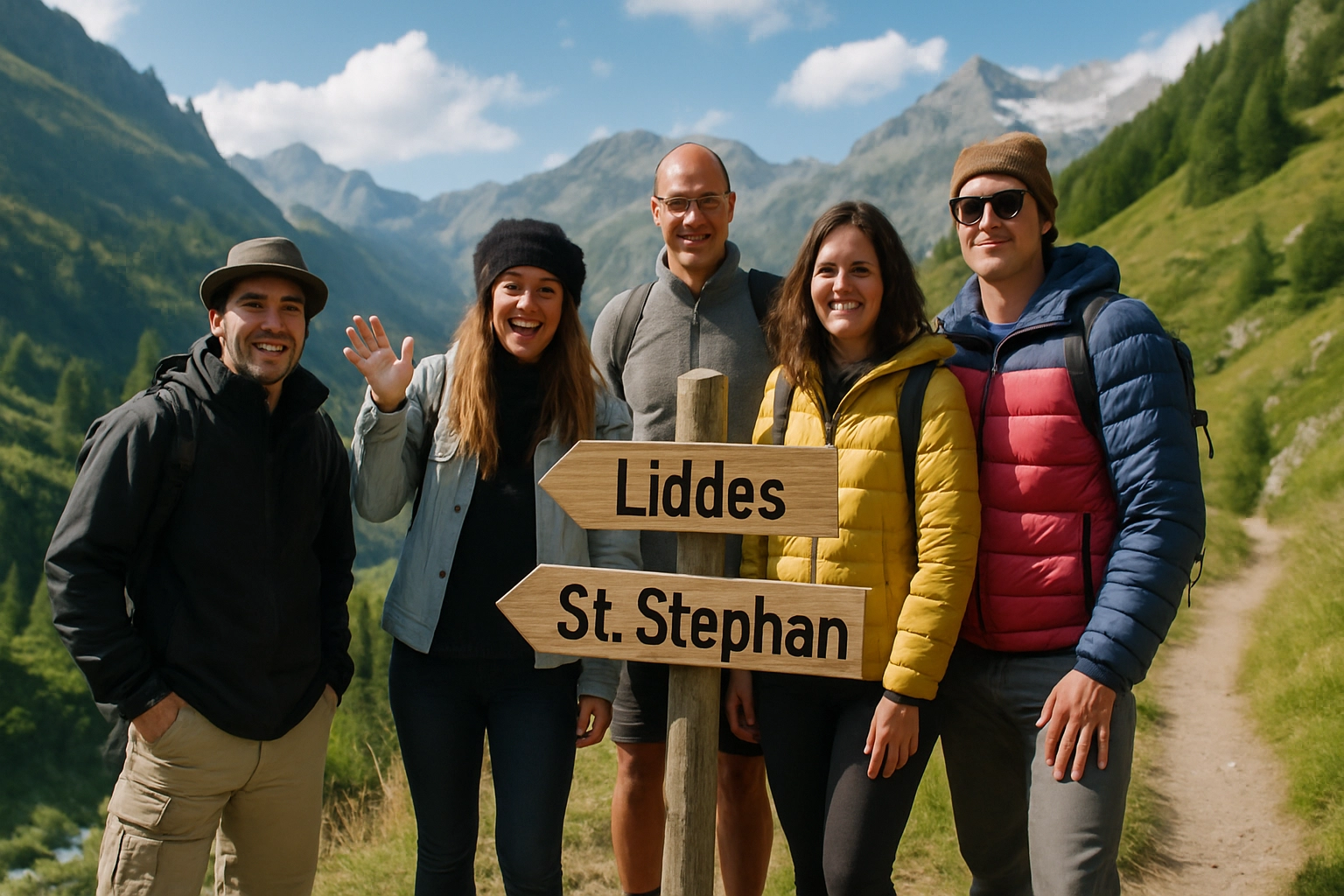
The alternative is the “basecamp” model: staying at a community-driven adventure lodge where the logistics, transport, and route planning are handled for you, leaving you free to focus on the hiking and the people you meet along the way. This is the exact philosophy behind places like Ski Hostel, which operates out of Liddes and St. Stephan. By treating a single lodge as your home away from home, you can join daily guided excursions, tackle border-crossing routes, and return in time for a communal dinner.
If you are planning to visit the Alps alone but want a shared experience, here are three social hiking trips in Switzerland perfectly suited for solo travelers joining a group.
The Problem with Traditional Point-to-Point Solo Treks
Before detailing the routes, it helps to understand why the traditional approach to hiking the Alps can be frustrating for solo travelers.
Standard multi-day treks—like the famous Haute Route—require you to pack up your entire life every morning and move to the next accommodation. If you encounter a blister, bad weather, or simply exhaustion, you have no choice but to keep moving because your bed for the night is in the next valley.
Furthermore, the traditional tour market is heavily skewed toward high-end luxury. While top-tier operators like Alpenwild offer incredible deluxe trekking experiences, they often come with a price tag that alienates budget-conscious backpackers and remote workers. Standard walking tours frequently prioritize luxury hotels over communal, campfire-style camaraderie.
By contrast, a hub-and-spoke model changes the dynamic entirely.
The Hub-and-Spoke Advantage
When you base yourself in a social lodge in the Val de Bagnes region or the Simmental valley, you unpack exactly once. You have a reliable bed, high-speed Wi-Fi if you need to catch up on work, and a community of like-minded travelers to swap stories with over home-cooked meals.
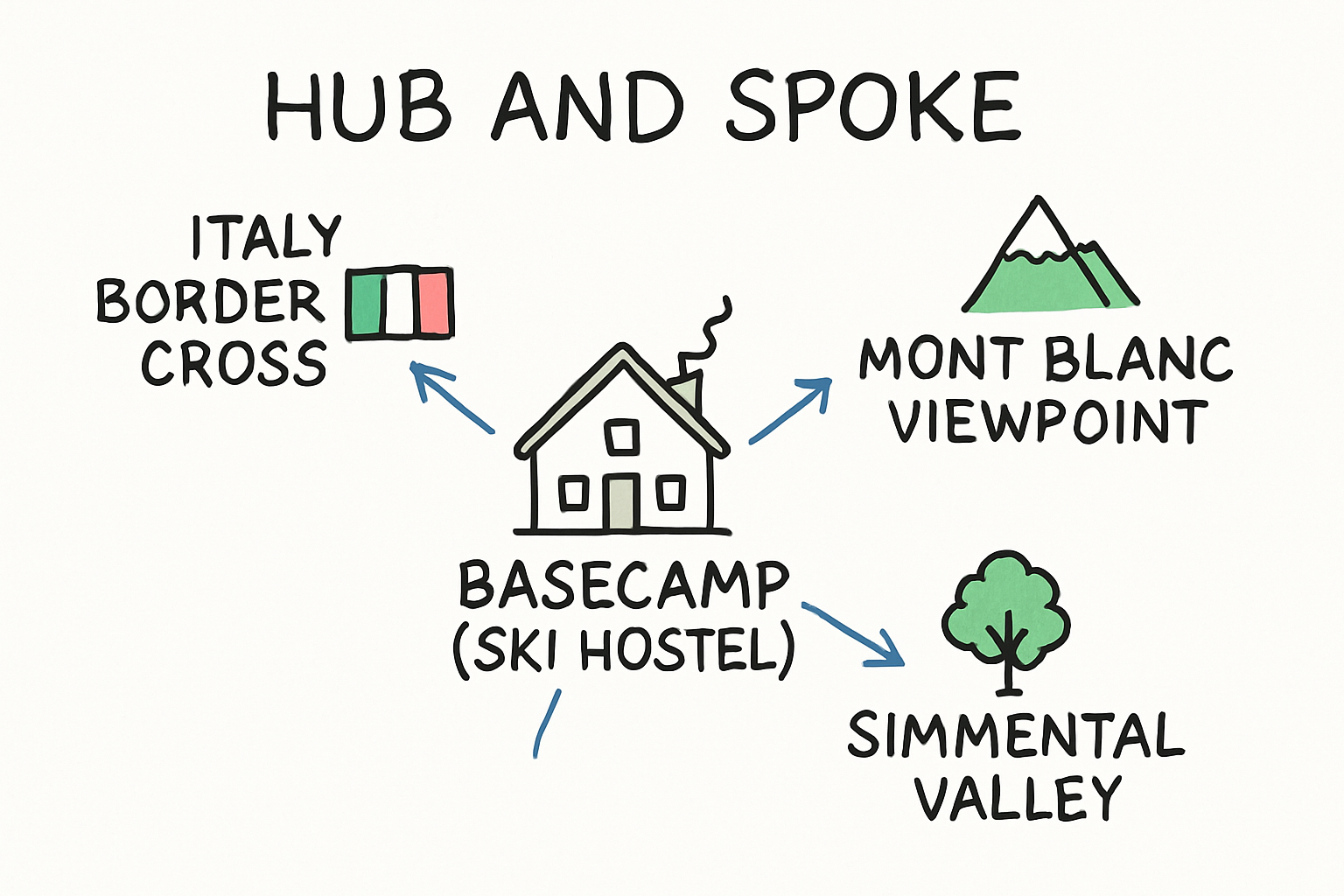
Because the host and volunteers manage the transport to various trailheads, you can tackle entirely different micro-climates and geographies each day. One morning you might be hiking a local pine forest trail; the next, you are riding a shared shuttle to an international border pass. If you want to learn more about how this model saves money, read our guide on 7 Tips for Hiking in Switzerland (Without the High Cost).
Here are three distinct, group-friendly itineraries you can experience using this basecamp approach.
Trip 1: The Three-Country Explorer (Val de Bagnes to Aosta)
One of the most unique aspects of hiking from a southern Swiss basecamp like Liddes is your proximity to international borders. You do not have to spend a week walking to reach Italy; a short, organized transport drops you right at the edge of the frontier.
This trip is a favorite for solo travelers because the shared goal of crossing into another country naturally bonds a group.
The Route Experience
The excursion typically begins after a communal breakfast at the hostel. The group takes a shared shuttle up toward the Great St. Bernard Pass. At over 2,400 meters (about 8,000 feet), the air is noticeably thinner, and the landscape shifts from lush green valleys to stark, dramatic alpine rock.
From the pass, the hiking route descends into the Aosta Valley in Italy. This is a moderate hike that requires steady footing, as the descent can be tough on the knees, but it does not demand technical climbing skills. A professional guide leads the way, managing the pace so that both seasoned hikers and fit beginners can stay together comfortably.
As you walk, the stark Swiss peaks gradually give way to Italian alpine pastures. The architecture of the isolated huts changes, and the trail markers shift from Swiss precision to Italian styling.
The Social Dynamic
Border-crossing hikes are inherently conversational. As the group navigates the descent into Italy, the shared anticipation of Italian food becomes a running joke.
The highlight of this specific trip is the payoff. After a few hours of descending through alpine meadows, the group arrives in a local Aosta village. Instead of a sterile hotel buffet, the reward is authentic, wood-fired Italian pizza and local wine, enjoyed at a long communal table before the transport van takes everyone back to the Swiss basecamp.
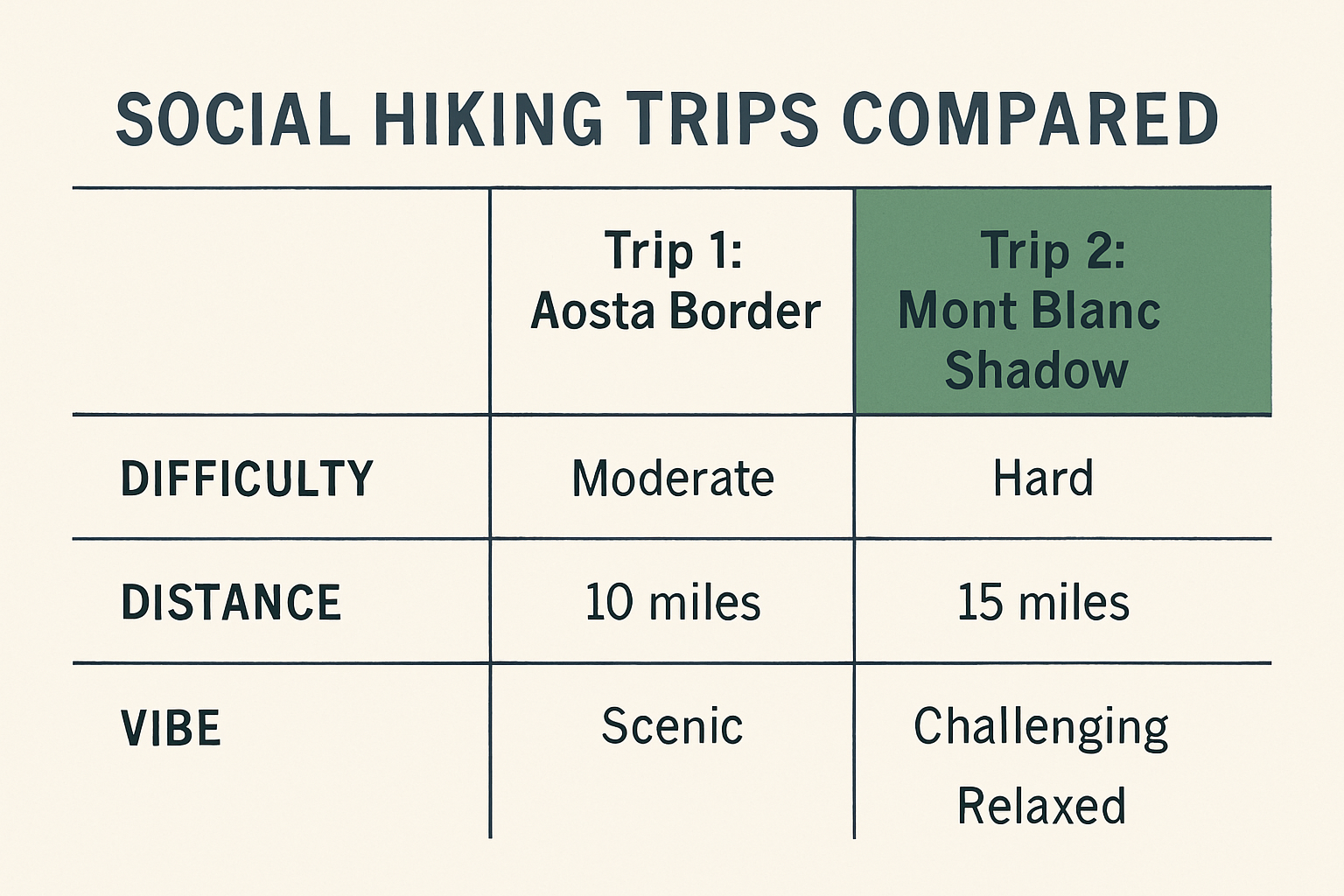
Trip 1 Specifications:
- Difficulty: Moderate (Heavy descent, rocky terrain at the top).
- Distance: 12–15 kilometers depending on the specific drop-off point.
- Vibe: Exploratory, goal-oriented, culturally diverse.
- Best For: Hikers who want a distinct “journey” feel and love a food-focused reward at the finish line.
For more ideas on how to find these kinds of groups, check out our piece on Guided Hiking in Switzerland: Finding Your Social Group.
Trip 2: The Mont Blanc Shadow (Liddes to Chamonix)
Mont Blanc is the highest peak in Western Europe, and its surrounding trails are notoriously crowded. Solo travelers often avoid the Tour du Mont Blanc (TMB) during peak summer because booking the necessary refuges requires military-level planning months in advance.
However, a social group trip originating from the Swiss side bypasses the logistical nightmare entirely.
The Route Experience
Operating out of the Liddes area, this excursion transports the group toward the French border. The hike focuses on the trails that look at Mont Blanc rather than the congested paths leading directly to its standard base camps.
This is a high-altitude day trip. The group traverses ridgelines that offer panoramic views of the Mont Blanc massif, including its sprawling glaciers and jagged aiguilles (needles). The terrain here is challenging—expect steep ascents, rocky switchbacks, and areas where you might need to use your hands for balance.
Because the group returns to the lodge in the evening, you tackle this formidable terrain with only a lightweight daypack. Not carrying a 40-liter backpack over a 1,000-meter vertical ascent is a massive advantage.
The Social Dynamic
Hard hikes build fast friendships. When a trail is steep and the air is thin, ego drops away quickly. You will likely find yourself pulling a fellow traveler up a rocky step, or accepting a handful of trail mix from a digital nomad you met at breakfast.
This trip usually ends with the group returning to the lodge physically exhausted but highly energized. This is the perfect evening for the lodge’s spa night or a relaxed communal dinner where everyone compares photos of the glaciers. The shared adversity creates a bond that you simply do not get when sitting alone in a luxury hotel room.
Trip 2 Specifications:
- Difficulty: Strenuous (High altitude, significant vertical gain).
- Distance: 14–18 kilometers.
- Vibe: Challenging, awe-inspiring, team-building.
- Best For: Fit travelers looking for iconic views without the hassle of multi-day logistical planning.
If you want to read more about navigating this specific region, see Mountain Mont Blanc: 7 Ways to Visit Without the Crowd and 5 Best Hiking Trails in Switzerland Near Mont Blanc.
Trip 3: The Alpine Valley Traverse (St. Stephan & The Simmental)
Not every day in the Alps needs to be a grueling, high-altitude sufferfest. Sometimes the most memorable trips are the ones that allow you to walk shoulder-to-shoulder with a new friend, talking for hours as you pass through postcard-perfect Swiss scenery.
The St. Stephan region, located in the Bernese Oberland, offers exactly this.
The Route Experience
This trip is a classic Swiss valley traverse. Starting directly from the St. Stephan basecamp or a short train ride away, the group heads into the Simmental valley. The trail follows winding rivers, passes cascading waterfalls, and cuts through dense, sweet-smelling pine forests.
The altitude here is lower, meaning the air is thicker and the paths are generally wider and softer—often dirt or crushed gravel rather than jagged shale. You will pass traditional wooden chalets with flower boxes spilling over the balconies, and you will almost certainly have to navigate around herds of cows wearing the iconic Swiss bells.
The Social Dynamic
Because the terrain is more forgiving, this hike is incredibly social. The group tends to spread out and cluster, allowing you to walk and talk with different people throughout the day. It is the perfect environment for a solo traveler or a digital nomad looking to network in an organic, low-pressure setting.
The day often includes a stop at a local alpine dairy where the group can pool some cash to buy fresh mountain cheese directly from the farmer.
The capstone of this trip is the return to the lodge. Because the hike leaves plenty of energy in the tank, the evening transitions seamlessly into a lodge-hosted BBQ. At Ski Hostel, this might feature a Brazilian-influenced grill, mixing international culinary styles with the crisp Swiss mountain air.
Trip 3 Specifications:
- Difficulty: Easy to Moderate (Rolling hills, well-maintained paths).
- Distance: 10–14 kilometers.
- Vibe: Relaxed, conversational, culturally immersive.
- Best For: Active recovery days, networking, and experiencing the “classic” Swiss aesthetic.
Curious about why this accommodation style is superior to traditional stays? Read Hotels in Swiss Mountains? Why Social Lodges Beat Luxury.
The Logistics: How Basecamp Hiking Works for Solo Travelers
Understanding the daily rhythm of a community-driven adventure lodge helps clarify why it works so well for solo travelers. When you strip away the stress of planning, you have more mental energy for the actual experience.
Here is what a typical day looks like on one of these social hiking trips:
07:30 - The Communal Breakfast
Unlike a hotel where you sit at an isolated two-top table, lodge breakfasts are served family-style. You sit down with the people you will be hiking with. The host runs through the day’s weather forecast, reviews the route, and assigns groups based on skill level and preference.
08:30 - Gear Check and Transport
If you forgot your trekking poles or need a heavier rain jacket, this is when you visit the lodge’s gear rental wall. Once everyone is equipped, the group piles into the shared vans. The drive to the trailhead (whether it is the Italian border or a nearby valley) serves as a great icebreaker.
09:30 to 15:30 - On the Trail
The guide manages the pace, ensuring no one is left behind and no one is pushing dangerously fast. Stops are coordinated at scenic overlooks for photos and packed lunches. Because the guide knows the trail intimately, they also know exactly where to find the best water sources and the cleanest alpine bathrooms.
16:30 - Return and Wind Down
Returning to the lodge means shedding muddy boots in a dedicated drying room, taking a hot shower, and grabbing a drink. If you are a digital nomad, this is a common time to log into the high-speed Wi-Fi to clear emails before dinner.
19:00 - The Shared Evening
The core of the social experience happens here. Whether it is a home-cooked Brazilian stew, a BBQ, or a spa night, the evening is designed to keep people out of their rooms and in the communal spaces.
Packing for a Social Basecamp Trip
Because you are not carrying all your gear on your back every day, your packing list changes significantly. You need a reliable daypack, but your main luggage stays safely in your room.
Your Daily Trail Kit:
- 20 to 30-Liter Daypack: Big enough for extra layers, water, and lunch.
- Layered Clothing: The Alps are notorious for sudden weather changes. A sweat-wicking base layer, a fleece mid-layer, and a waterproof shell are mandatory.
- Footwear: Sturdy, broken-in hiking boots. While trail runners are popular, the rocky descents on the border-crossing trips require good ankle support.
- Hydration: At least 2 liters of water capacity.
- Sun Protection: Altitude means stronger UV rays. Sunglasses, sunscreen, and a hat are non-negotiable.
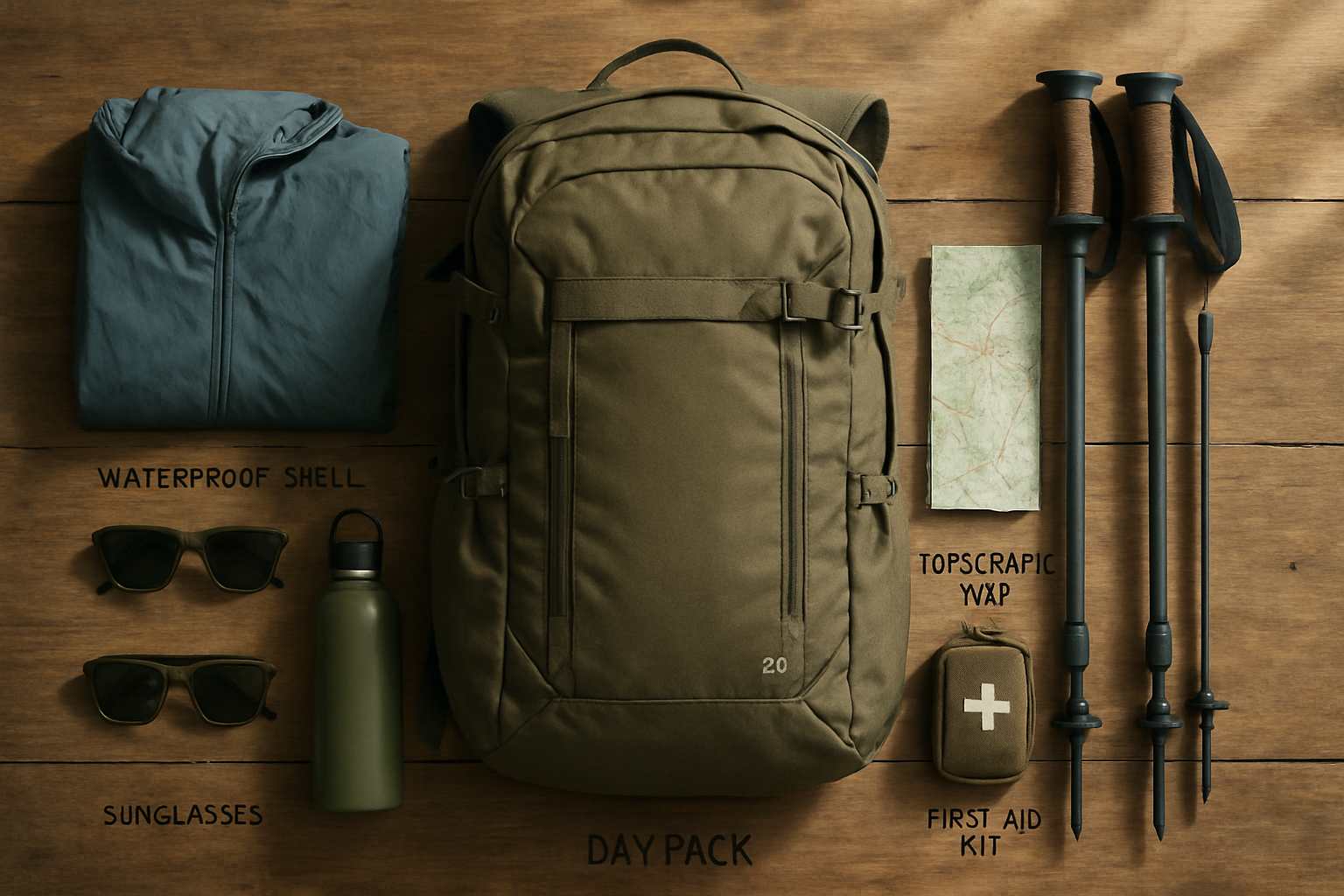
For a deeper dive into exactly what to bring, read our Swiss Alps Summer: A Simple 5-Step Packing Guide.
The Psychology of Solo Travel in the Alps
It is worth addressing the mental barrier of booking a solo trip to the mountains. Many people hesitate because they fear feeling out of place or out of shape compared to the rest of the group.
Social lodges are explicitly designed to neutralize this fear. The demographic is heavily weighted toward people traveling alone, meaning everyone is looking to make friends. The atmosphere is egalitarian; nobody cares what your job title is back home, only whether you have an extra blister pad they can borrow.
Furthermore, because the lodge offers different tiers of activity—from grueling glacier views to relaxed valley walks—you are never forced into a hike that exceeds your physical capabilities. You can push your limits one day and take a rest day the next, staying behind to read on the deck or work remotely.
Frequently Asked Questions
Is it safe to hike solo in Switzerland?
Switzerland has an incredibly well-maintained and clearly marked trail network. However, alpine weather changes rapidly, and cell service can drop in deep valleys. Hiking as a solo traveler but within an organized group from a social lodge is the safest possible approach. You get the independence of solo travel with the safety net of professional guidance and group numbers.
What fitness level do I need to join these trips?
You do not need to be an elite mountaineer. Because a basecamp model offers multiple daily options, there are routes for varying fitness levels. The Alpine Valley Traverse (Trip 3) is suitable for anyone capable of walking a few hours on uneven terrain. The Mont Blanc Shadow (Trip 2) requires a higher baseline of cardiovascular fitness. Honesty about your fitness level with the lodge host ensures you are placed in the right group.
Do I need to speak French or German?
No. The Swiss Alps feature a mix of French, German, and Italian speakers depending on the specific canton. However, international social lodges operate primarily in English. Your guides, hosts, and fellow travelers will use English as the common denominator, making it incredibly easy to connect regardless of where you are from.
Can I rent gear or do I need to fly with it?
One of the main benefits of a dedicated adventure lodge is the availability of gear rental. While you should bring your own well-broken-in hiking boots for comfort, items like trekking poles, specialized rain shells, and even daypacks can often be rented on-site, saving you baggage fees on your flight.
Rethinking the Swiss Alpine Experience
You do not have to choose between total isolation and a sterile luxury tour. By utilizing a basecamp model in regions like Liddes or St. Stephan, you can experience the absolute best hiking the Swiss Alps have to offer while building a network of international friends.
Whether you are crossing the border into Aosta for pizza, challenging yourself on a high-altitude rocky ridge looking at Mont Blanc, or simply strolling through a green valley discussing life with a fellow solo traveler, the social aspect elevates the entire journey. You get the mountains, the challenge, and the community, all without breaking the bank or managing complex daily logistics yourself.
Pack a day bag, leave your luggage in your room, and let the group energy carry you up the trail.