How to Book Mountain Huts on the Tour du Mont Blanc
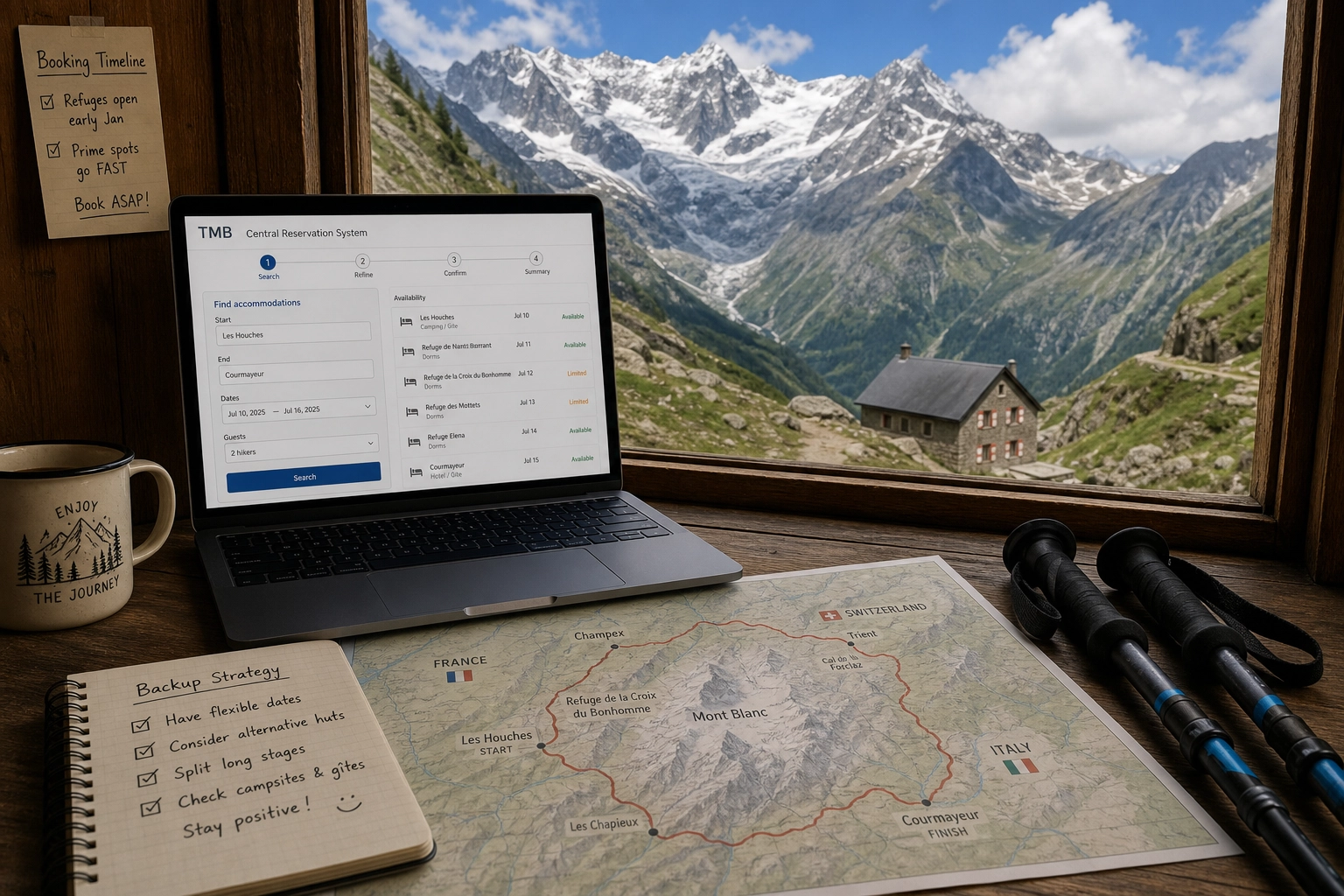
Picture this: you have trained for six months, broken in your hiking boots, meticulously weighed your backpack, and requested three weeks of vacation time. You sit down at your computer, ready to finalize your Tour du Mont Blanc (TMB) itinerary, only to discover that every mountain hut along the 170-kilometer route is completely sold out.
This is the painful reality for thousands of hikers every year. The Tour du Mont Blanc is not just a physical challenge; it is a logistical gauntlet.
Unlike wilderness backpacking where you can simply pitch a tent wherever you tire out, the TMB passes through heavily protected alpine reserves across France, Italy, and Switzerland. Strict bivouac regulations mean you rely almost entirely on the network of high alpine refuges and valley gîtes. Because the hiking season is incredibly short—essentially late June to early September—the competition for these beds is fierce.
Booking TMB huts requires a mix of strategic planning, understanding decentralized reservation systems, and impeccable timing. Whether you are attempting the classic 11-day circuit, looking for a truncated adventure, or planning a hub-and-spoke basecamp strategy from a lodge like Ski Hostel, this guide breaks down exactly how to secure your accommodations before the masses beat you to it.
Understanding the TMB Accommodation System
Before you can book your nights, you need to understand exactly what you are booking. TMB accommodations are not standard hotels, and the terminology can be confusing for first-time alpine hikers.
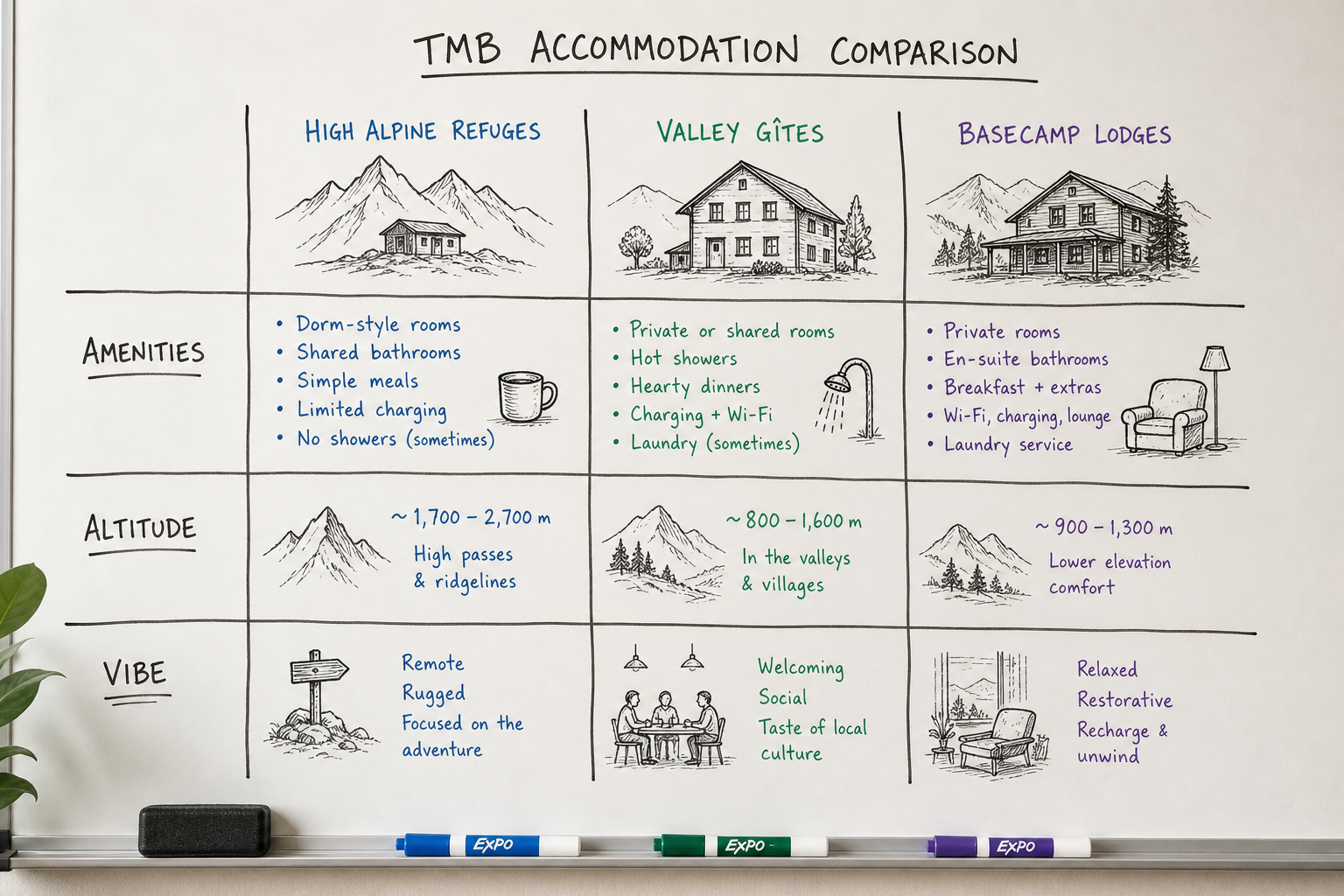
High Mountain Huts (Refuges/Rifugi/Cabanes)
High mountain huts are situated at elevation, often miles from the nearest road. In France, they are called refuges; in Italy, rifugi; and in Switzerland, cabanes.
These structures exist primarily to shelter mountaineers and hikers. Do not expect luxury. You are paying for the location, the warmth, and the sheer logistical miracle of having a hot meal served at 2,500 meters above sea level.
What to expect in a high mountain hut:
- Dormitory Sleeping: Most beds are in communal dorms ranging from 4 to 20 beds. You will sleep shoulder-to-shoulder with strangers on wooden bunks.
- Limited Electricity: Power is generated by solar panels or small turbines. Outlets for charging phones are rare and highly contested.
- Basic Facilities: Toilets are often composting or squat-style. Showers, if they exist, run on purchased tokens (usually 3 to 5 Euros for three minutes of lukewarm water). In drought years, showers are shut off completely.
- Unbeatable Ambiance: You get to watch the sunset over glaciers, disconnected from the valley below, sharing stories with international trekkers.
Valley Accommodations (Gîtes d’Étape & Auberges)
Because the TMB dips into valleys between high mountain passes, you will spend roughly half your nights in towns like Les Contamines, Courmayeur, and Champex-Lac. Here, you will stay in gîtes d’étape (hostel-style hiker lodgings) or small auberges.
What to expect in valley lodgings:
- More Comfort: Private rooms (doubles or quads) are often available alongside smaller dorms.
- Reliable Amenities: Plentiful hot water, flush toilets, and consistent electricity.
- Proximity to Services: Access to pharmacies, ATMs, gear shops, and bakeries.
The “Demi-Pension” (Half-Board) Standard
When booking TMB huts, you will almost exclusively book a demi-pension or half-board rate. This is the lifeblood of the alpine hut system. The rate covers your bed, a multi-course dinner that evening, and breakfast the next morning.
Do not try to book “bed only” to save money. Huts operate on razor-thin margins, flying their food in by helicopter or packing it up on mules. The communal dinner—served at a strict, non-negotiable time, usually 7:00 PM—is where the magic of the TMB happens. You will be assigned a seat, pass massive bowls of pasta or tartiflette down long wooden tables, and bond with your fellow hikers.
You can also usually add a panier repas (packed lunch) to your reservation for an additional 10-15 Euros. This is highly recommended, as it saves you from carrying days’ worth of heavy provisions in your pack.
The Booking Timeline: When Do TMB Huts Open?
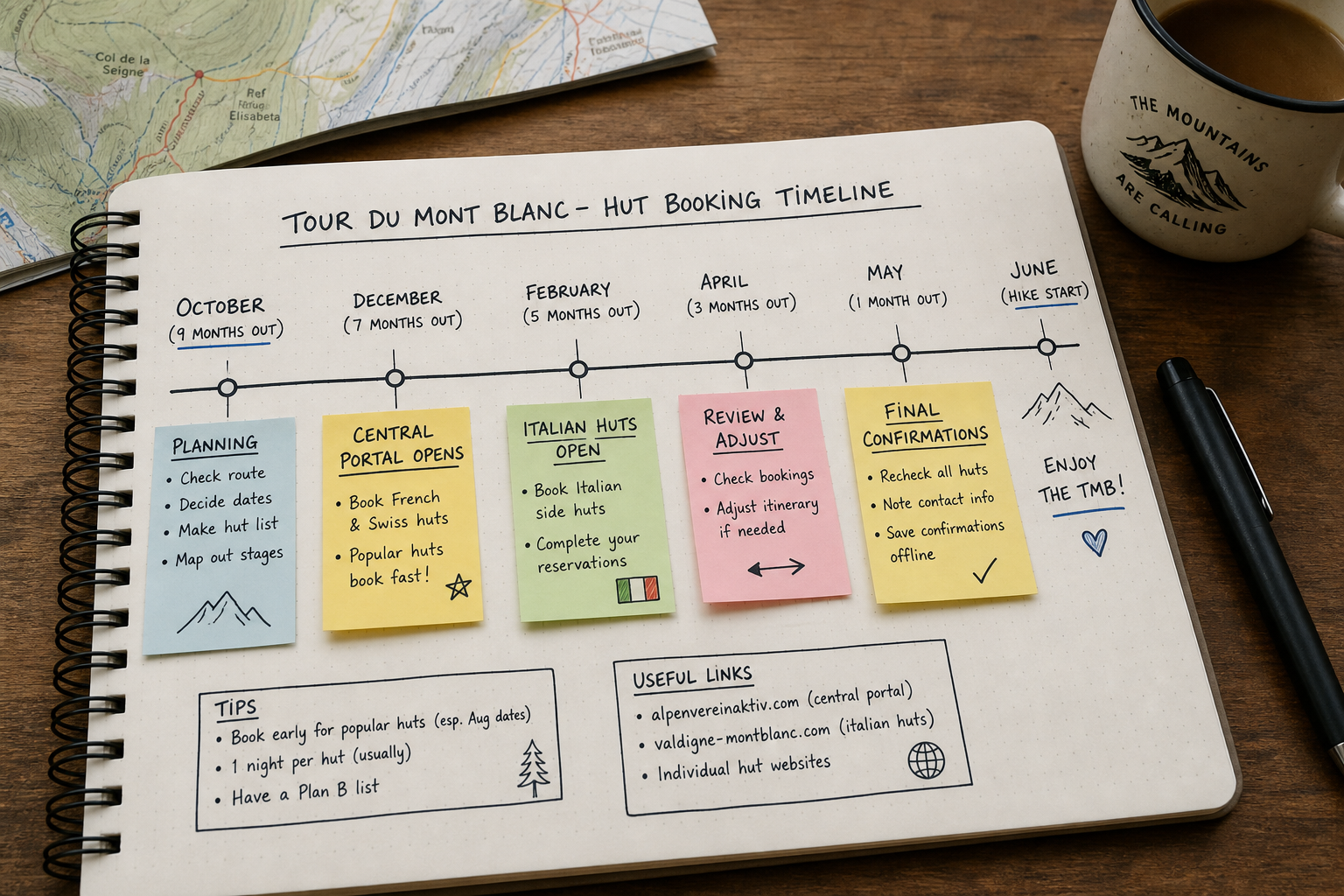
The single biggest mistake hikers make is assuming they can book their TMB huts in the spring. If you wait until April to plan a July hike, you will find nothing but disjointed, unworkable gaps in your itinerary.
The booking window is not a single date; it is a staggered, multi-month process.
The October/November Wave
The centralized booking portal for the Tour du Mont Blanc (MonTourDuMontBlanc.com) typically opens its reservation system in the late fall of the preceding year. This means for a hike in summer 2027, the portal will open around October or November 2026.
During this wave, a large percentage of the French and Swiss huts release their inventory. The moment the portal goes live, popular bottlenecks like the Refuge de la Croix du Bonhomme and Refuge des Mottets sell out of private rooms and small dorms within hours. Larger dorms take a few weeks to fill up for peak dates (mid-July to mid-August).
The January/February Wave
Many independent huts, particularly on the Italian side, do not use the central portal. Huts like the legendary Rifugio Bonatti or Rifugio Elisabetta manage their own bespoke booking systems via email or private websites.
These independent operators often wait until after the New Year—usually January or February—to open their books. You must monitor their individual websites carefully. When they open, you must act decisively, as Italian huts are renowned for their incredible food and are consequently in massive demand.
Step-by-Step: How to Secure Your Tour du Mont Blanc Huts
Approaching your TMB bookings systematically prevents overlapping dates, stranded nights, and geographical impossibilities. Follow this proven sequence.
Step 1: Draft Your Ideal Itinerary (and Two Backup Plans)
Do not log into the booking portal without a plan. You need to know exactly which stage you intend to hike on which date. The classic TMB is broken into 11 stages, traditionally walked counter-clockwise starting from Les Houches.
Map out your estimated hiking speed. Are you walking 15 kilometers a day or 25? Map your dates sequentially. Once you have “Plan A” written out, create “Plan B” (perhaps walking clockwise instead, which flips your dates) and “Plan C” (adding rest days to shift bottleneck dates).
Step 2: Create Your Central Portal Account Early
Go to the official MonTourDuMontBlanc website a week before reservations officially open. Create your user account, input your contact details, and familiarize yourself with the interface. The site functions like a shopping cart; you add sequential dates and huts to your “basket” before checking out.
Step 3: Book the Bottleneck Huts First
When the portal opens, do not book chronologically. Book strategically.
Identify the “bottleneck” huts—the high alpine refuges where there are no alternative accommodations for miles. If you miss a bed in Les Contamines, you can easily find a hotel. If you miss a bed at Refuge de la Croix du Bonhomme at 2,443 meters, your only alternative is walking an additional 5 hours over a mountain pass in the dark. Secure the high-altitude, remote huts first, then fill in the valley gaps.
Step 4: Contact the Independent Huts
Once your core skeleton is booked on the central portal, immediately draft emails to the independent huts. Keep your emails incredibly concise. English is widely understood, but keeping it simple avoids translation errors.
Format your request clearly:
- Name: Jane Doe
- Date of Arrival: 14 July
- Date of Departure: 15 July
- Number of Hikers: 2
- Accommodation: Dormitory, Demi-Pension (Half-Board)
Step 5: Pay Deposits and Print Confirmations
Most huts require a deposit—typically 30% to 50% of the total cost—to secure the bed. The central portal takes credit cards. Independent huts may require a direct bank transfer (IBAN) or a PayPal payment.
Once paid, print every single confirmation. Do not rely on your phone. Cell service is practically nonexistent at high elevations, and if a hut warden cannot find your name in their ledger, handing them a physical piece of paper proving your deposit is your only defense against sleeping outside.
Stage-by-Stage: A Breakdown of Key TMB Huts
To help you draft that itinerary, here is a breakdown of the most notable huts organized by the three countries you will cross. Knowing how to plan hut to hut hiking in Switzerland and its neighboring borders makes the logistical puzzle much easier to solve.
The French Huts (Stages 1, 2, 9, 10, 11)
The French side features the start and end of the classic route. It is characterized by dramatic glacier views and heavily trafficked trails.
- Refuge de Miage (Stage 1 variant): Set in an impossibly green valley beneath the Dômes de Miage. It is a stunning, slightly off-route alternative to staying in Les Contamines.
- Refuge de la Croix du Bonhomme (Stage 2): A notorious bottleneck. It sits high on a desolate, windy pass. The amenities are incredibly basic, the dorms are cramped, but the location is geographically vital for breaking up the long march to Italy.
- Refuge des Mottets (Stage 2/3): Located at the bottom of the Vallée des Glaciers. Famous for its hearty beef stew and the hut warden who occasionally plays the accordion after dinner.
- Refuge du Lac Blanc (Stage 10): Arguably the most photographed hut on the entire circuit. It sits beside an alpine lake that perfectly reflects the Mont Blanc massif. It sells out instantly and is notoriously difficult to communicate with. For a quieter French experience, check out our guide on the Mountain Mont Blanc: 7 Ways to Visit Without the Crowd.
The Italian Huts (Stages 3, 4, 5, 6)
Crossing the Col de la Seigne into Italy brings a distinct shift. The mountains feel steeper, the espresso gets dramatically better, and the food becomes a highlight of the trip.
- Rifugio Elisabetta (Stage 3): Perched fiercely on a rocky spur overlooking the Combal wetland. It feels like a mountaineer’s fortress. Facilities are tight, and the dining room is loud, chaotic, and wonderful.
- Rifugio Maison Vieille (Stage 4): Located high above Courmayeur. The eccentric host, Giacomo, is legendary, as is the roaring fire and the immense plates of fresh pasta.
- Rifugio Bonatti (Stage 5): The crown jewel of TMB huts. Named after the famous alpinist Walter Bonatti, this stone lodge offers stunning views of the Grandes Jorasses, fantastic multi-course dinners, and surprisingly comfortable dorms. If you fall in love with the Italian side of the massif, you might want to consider returning in winter—Skiing in the Italian Alps? Try This Aosta Day Trip covers how accessible this region is year-round.
The Swiss Huts (Stages 6, 7, 8)
The Swiss section introduces pastoral landscapes, immaculate trails, and a slight increase in price. The efficiency and cleanliness of Swiss huts are unparalleled.
- La Peule (Stage 6): The first stop after crossing the Grand Col Ferret into Switzerland. It is a working dairy farm, meaning the cheese served at dinner was likely made in the room next door.
- Relais d’Arpette (Stage 8): A crucial staging ground if you are taking the challenging Fenêtre d’Arpette variant. It offers a great mix of private rooms and dorms, plus a fantastic outdoor terrace.
- Cabane d’Orny (Variant): Not on the standard TMB, but an incredible detour for fit hikers. It sits at 2,831 meters beside a glacier.
What to Do When TMB Huts Are Fully Booked (Plan B)
If you missed the booking window, do not panic. The TMB is not closed to you. You simply have to pivot your strategy.
The Basecamp Strategy
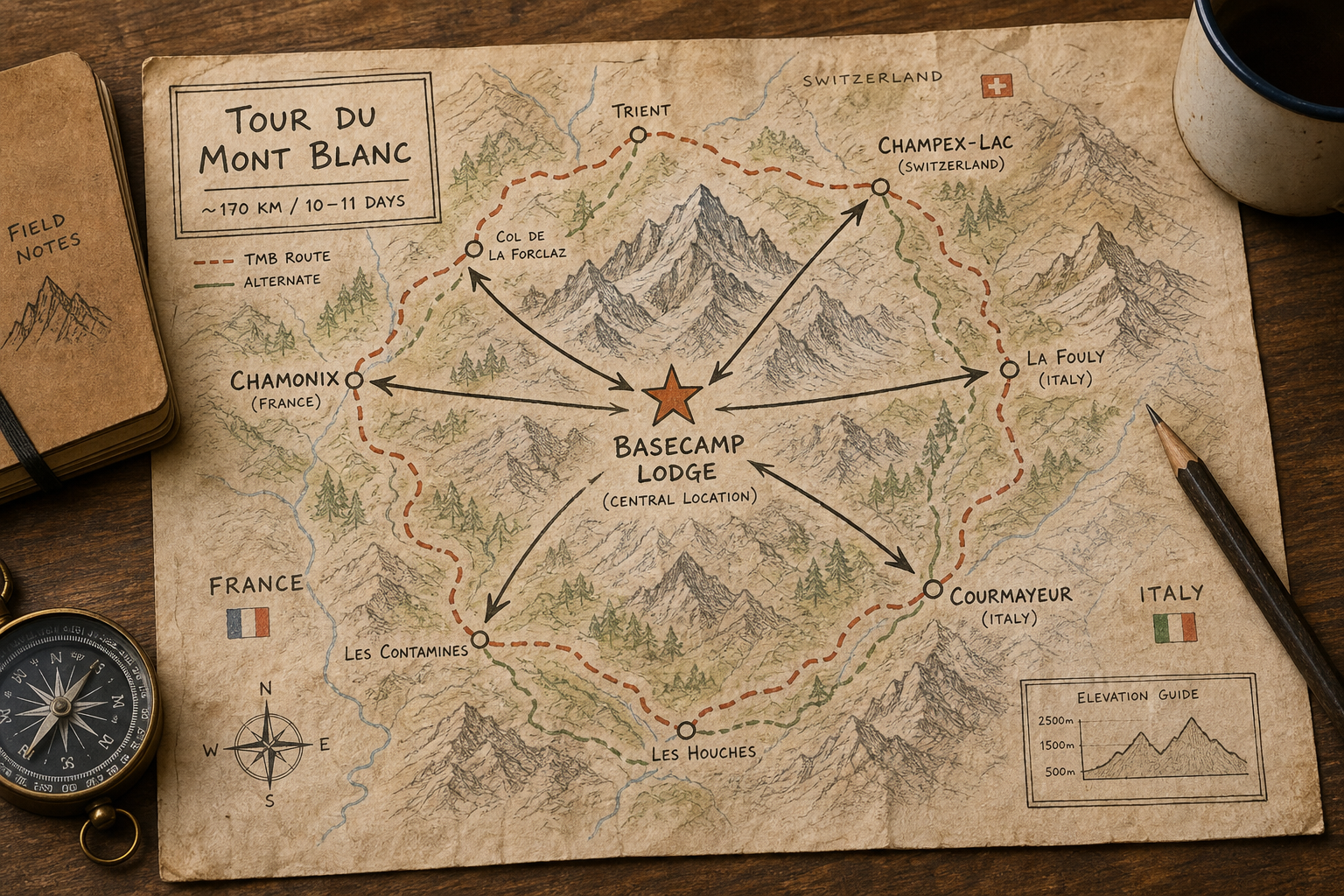
Instead of stressing over securing eleven consecutive nights of moving accommodation, many modern hikers use a basecamp model. By booking a single stay at a specialized alpine lodge, you can utilize public transport and shuttles to hike the TMB in large sections without carrying a heavy pack.
At Ski Hostel, located strategically in the Swiss Alps (Liddes), we serve as a hub for exactly this type of adventure. You sleep in the same comfortable bed every night, enjoy home-cooked meals tailored to hikers, and use regional transit to knock out the Val Ferret and Champex-Lac stages of the TMB. It is the ultimate hack for budget-conscious hikers who want the social atmosphere of a refuge without the logistical nightmare of booking them. To understand why this model is gaining popularity, read Hotels in Swiss Mountains? Why Social Lodges Beat Luxury.
Valley Hopping via Bus
If high mountain refuges are full, look to the valleys. The TMB route is well-connected by local bus networks. If Rifugio Bonatti is full, you can hike past it, walk down into the Val Ferret, catch a local bus into Courmayeur for the night, and take the bus back up the next morning to resume your hike exactly where you left off.
Join a Guided Group
Guided hiking companies secure allocations of hut beds years in advance. If you are entirely locked out of the system, joining a guided or self-guided package is a guaranteed way to get a bed. Aside from securing the route, these groups provide tremendous camaraderie. For tips on navigating group dynamics, check out Guided Hiking in Switzerland: Finding Your Social Group.
Mountain Hut Etiquette and Rules of the Trail
Securing your bed is only half the battle. Surviving hut life without irritating the wardens—or your fellow hikers—requires knowing the unwritten rules of the Alps.
1. The Mandatory “Sac à Viande”
You cannot sleep in a mountain hut bed without a sleeping bag liner, known locally as a sac à viande (meat bag). Huts provide heavy wool blankets or duvets, but they do not wash them between guests. For hygiene reasons, a silk or cotton liner is strictly mandatory. If you show up without one, you will be forced to buy a cheap, overpriced one at the reception desk.
2. Boots Off in the Mudroom
Never, under any circumstances, wear your hiking boots past the front door of a mountain hut. Every refuge has a dedicated mudroom (often smelling intensely of damp wool). You leave your boots and trekking poles here. Huts provide communal “hut shoes” (usually a massive bin of mismatched Crocs or rubber clogs) for you to wear indoors.
3. Cash is Still King
While the valleys accept Apple Pay and credit cards, the high alpine huts often rely on erratic satellite internet to process card payments. When the weather rolls in, the card machines go down. Always carry physical cash. You will need Euros for the French and Italian stages, and Swiss Francs (CHF) for the Swiss stages. Pack enough to cover your outstanding half-board balances, a few beers, and shower tokens.
4. Pack Impeccably
Hut dormitories are cramped. If you bring a massive, disorganized 65-liter backpack, you will annoy everyone around you as you dig around for your toothbrush at 5:00 AM. Adopt an ultralight, modular packing system using packing cubes. To dial in your kit, review our Swiss Alps Summer: A Simple 5-Step Packing Guide.
Frequently Asked Questions About TMB Accommodations
Can you camp next to the mountain huts?
Bivouac rules vary wildly by country. In France, bivouacking is generally allowed from dusk till dawn (7 PM to 7 AM) if you are more than a 1-hour walk from the road, and many French huts allow you to pitch a tent nearby for a small fee (which lets you use their toilets). In Italy, it is strictly forbidden below 2,500 meters. In Switzerland, it is largely illegal in the TMB regions. Wild camping is not a reliable “Plan B” unless you strictly research the local municipal laws for every single stage.
How do I handle dietary restrictions in high huts?
Vegetarianism is widely understood and accommodated; you just need to note it on your reservation. However, strict vegan, celiac, or highly specific allergy diets are incredibly difficult for high alpine huts to manage safely. They cook one massive meal in a tiny kitchen. If your dietary needs are strict, you must carry substantial supplemental food or stick to valley accommodations where restaurants offer menus.
Do the huts provide drinking water?
Yes, but with caveats. Most huts have a potable water tap where you can fill your bladders for free. However, some high huts (like Lac Blanc) do not have guaranteed safe tap water and will force you to buy expensive bottled water. Always carry a lightweight water filter like a Sawyer Squeeze or BeFree so you can safely filter water from alpine streams and avoid paying 6 Euros for a plastic bottle.
What happens if I get injured or severely delayed?
If you realize you are not going to make it to your booked hut—due to injury, severe weather, or exhaustion—you must call them or have a passing hiker relay a message. If you simply do not show up, hut wardens may trigger mountain rescue services, assuming you are lost or injured on the trail.
Managing the TMB Logistics with Ease
Booking mountain huts on the Tour du Mont Blanc is a competitive, occasionally frustrating process that requires diligence and adaptability. The key is starting early, understanding the half-board culture, and remaining flexible when your first-choice refuge inevitably flashes a “Complet” (Full) sign.
If the idea of fighting a buggy centralized portal nine months in advance saps the joy out of your impending adventure, remember that traditional hut-to-hut hiking is not the only way to experience the Mont Blanc massif. By utilizing social lodges and regional basecamps like Ski Hostel in the surrounding Swiss Alps, you can trade the logistical stress for an organized, community-driven mountain experience, keeping the focus entirely on the incredible trails ahead of you.