Swiss Alps hiking packing list for a one week summer trip
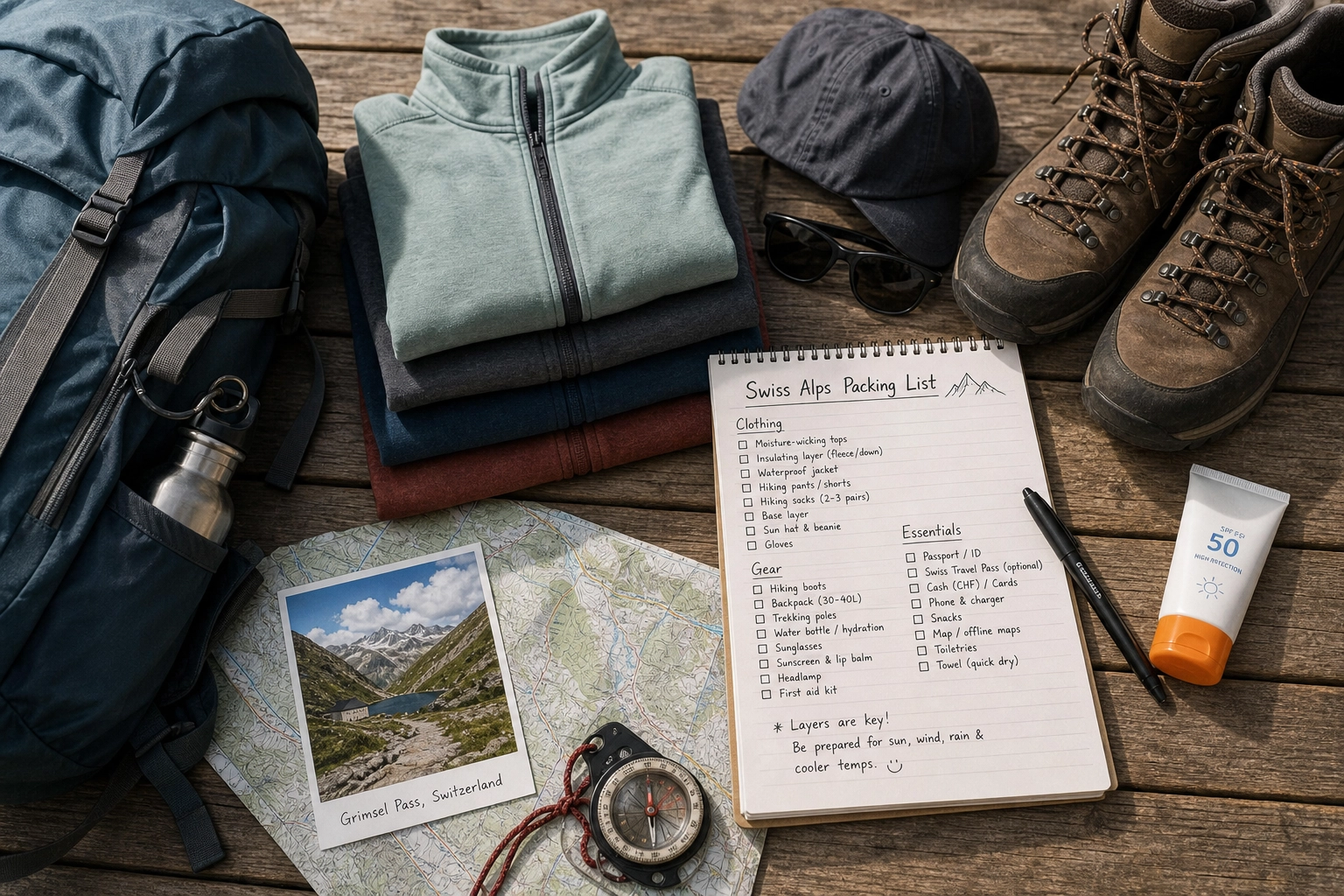
Arriving in the Swiss Alps with a massive, overstuffed suitcase is a common rite of passage for first-time visitors. So is shivering on a ridgeline in July because you assumed “summer” meant shorts and t-shirts.
Packing for a one-week hiking holiday in Switzerland requires a specific strategy. You are not traversing the wilderness for months, so you don’t need heavy expedition gear. However, mountain environments are notoriously unpredictable. You might start your morning in the warm, sun-drenched valleys of Valais, ascend into a freezing fog by noon, and finish the day eating fondue in a cozy hostel.
This guide breaks down exactly what to pack for a one-week Swiss Alps hiking holiday based out of a central lodge or hostel. When your accommodation, meals, and daily trail transport are taken care of, you can focus on carrying only what keeps you safe, comfortable, and ready to socialize when the hiking is done.
The Reality of Swiss Alps Summer Weather
The most important concept to grasp before putting a single item in your bag is microclimates.
Mountain weather changes rapidly. It can turn from blazing sunshine to intense rain or even snow within hours 5. You can easily experience all four seasons in a single day 3.
Furthermore, altitude dictates temperature. A reliable rule of thumb in the Alps is that the temperature drops by about 1°C for every 100 meters of elevation gained. If it is a pleasant 25°C (77°F) in the valley at 500 meters, it could be a brisk 10°C (50°F) at a pass sitting at 2,000 meters—and that is before factoring in wind chill.
Because weather changes so quickly in mountain environments 4, your packing list must be built entirely around adaptable layers rather than bulky, single-purpose items.
The “Basecamp” Luggage Strategy
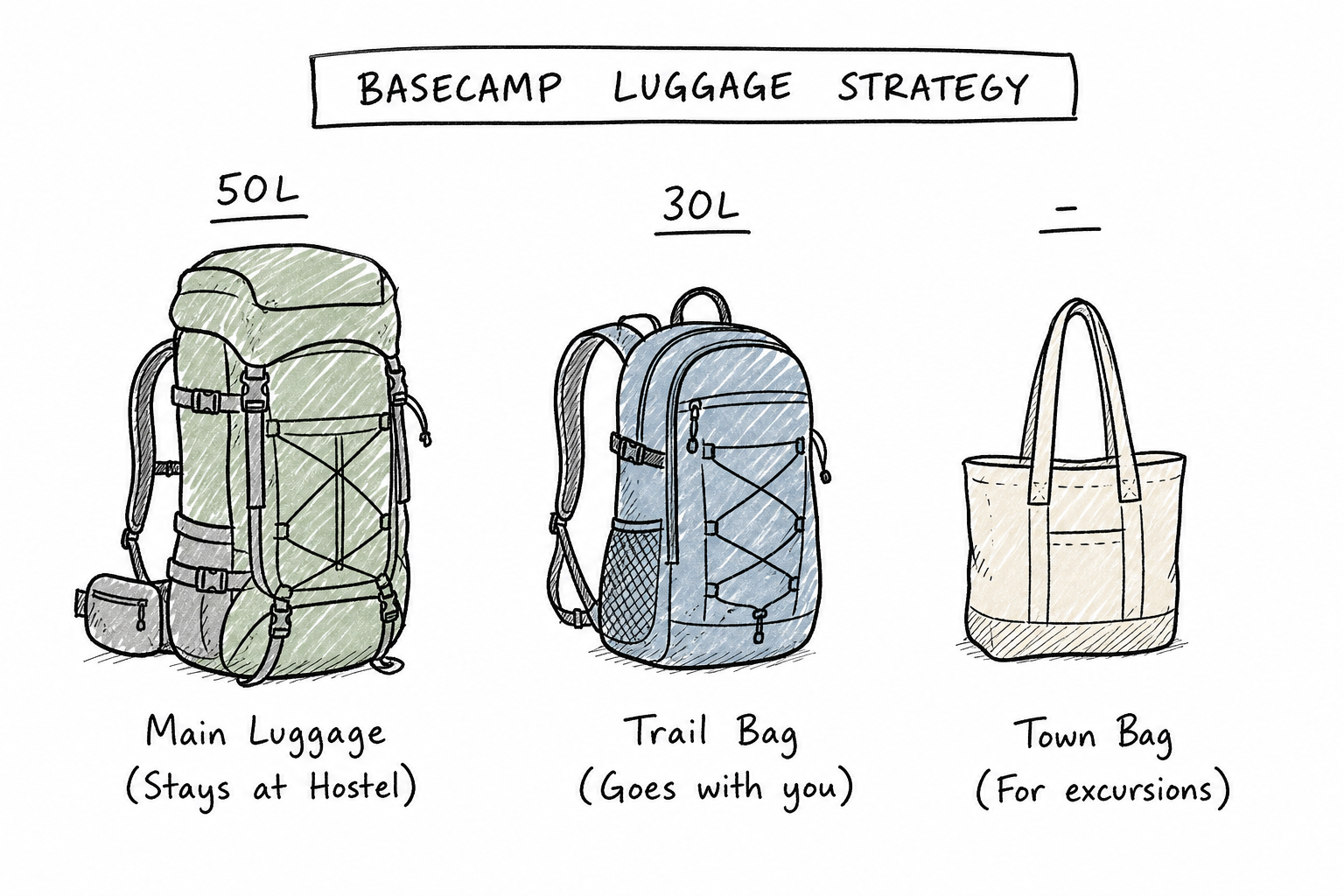
When booking organized Guided Hiking in Switzerland: Finding Your Social Group, you generally follow a “basecamp” model. You will sleep in the same hostel or lodge (such as in Liddes or St. Stephan) and take daily transport to different trailheads.
This completely changes your packing needs compared to a through-hike. You do not need to carry your life on your back. Instead, you need a two-bag system.
1. The Main Luggage (Stays at the Hostel)
Since you are utilizing hostel accommodation and airport transfers, you can bring a standard travel backpack (45-60L) or a medium-sized rolling duffel. This bag will hold your evening clothes, toiletries, extra shoes, and tech gear. It stays at your accommodation.
2. The Trail Daypack (Goes with you)
This is your workhorse. For a full-day hike in the Alps, a 25L to 35L daypack is ideal. It needs enough capacity to hold your rain gear, extra warm layers, 2 liters of water, packed lunch, and snacks. Look for a pack with a hip belt to distribute weight and a breathable mesh back panel to reduce sweat during steep ascents.
Core Hiking Gear: The Essentials
Let’s start with the gear you will use every single day on the trail. Getting these items right is the difference between a trip spent enjoying views of Mont Blanc and a trip spent managing blisters.
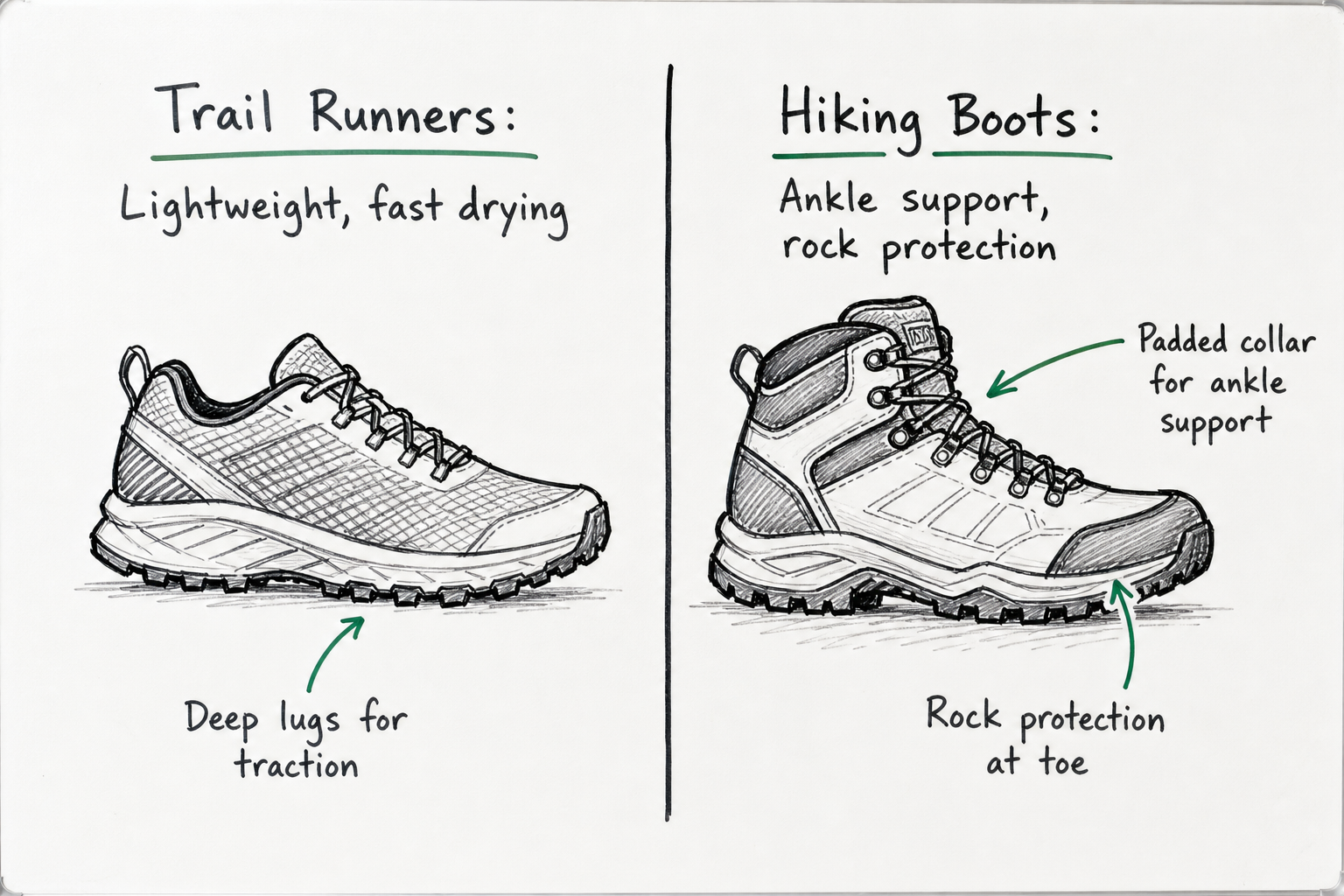
Footwear: Boots vs. Trail Runners
The terrain in regions like Valais and the Bernese Oberland ranges from smooth dirt paths to jagged, rocky scree fields.
- Mid-Cut Hiking Boots: Best if you are prone to ankle rolls, are carrying a heavier daypack, or anticipate hiking through lingering snow patches in early summer. They offer superior protection against sharp rocks.
- Trail Running Shoes: Increasingly popular among backpackers and budget-conscious hikers. They are lighter, dry faster than waterproof boots if water overtops them, and require zero break-in time. If you choose trail runners, ensure they have deep lugs (tread) and a rock plate in the sole.
Whichever you choose, ensure they are broken in before you arrive in Switzerland.
Trekking Poles
Though not strictly mandatory, the vast majority of hikers use trekking poles, and you’ll see them used on day hikes throughout the Alps 2.
The descents in the Swiss Alps are famously long and punishing on the knees. A descent of 1,000 vertical meters over a few kilometers is standard. Trekking poles transfer up to 20% of that impact to your upper body. Look for lightweight aluminum or carbon fiber poles that collapse small enough to strap to your daypack during flat sections or transit.
Hydration System
You need capacity for at least 1.5 to 2 liters of water per day. While there are often mountain huts and fountains to refill along the way, some high-altitude ridgeline trails are completely dry.
- Water Bladder (Hydration Reservoir): Excellent for drinking continuously without stopping.
- Hard-sided Bottles (e.g., Nalgene): Easier to refill at public fountains and practically indestructible.
The Alpine Layering System (Clothing)
To master Swiss Alps Summer: A Simple 5-Step Packing Guide, you must adopt the three-layer system. Avoid cotton entirely for your trail clothes; once cotton gets wet from sweat or rain, it stays wet, leading to rapid heat loss.
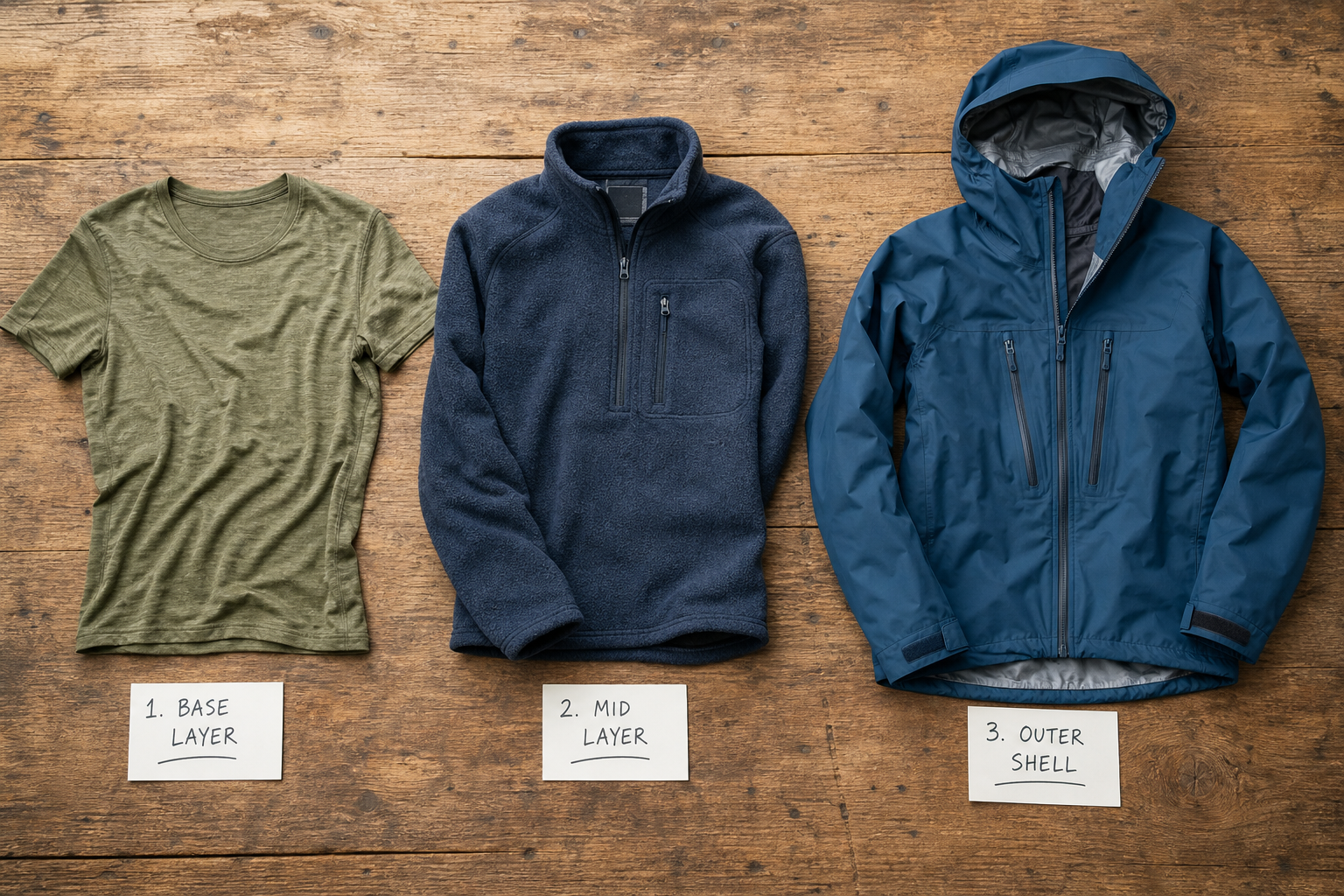
1. The Base Layer (Moisture Management)
Your base layer sits against your skin. Its job is to pull sweat away from your body so you don’t freeze when you stop moving at a breezy mountain pass.
- T-shirts (2-3): Merino wool is the gold standard because it regulates temperature well and naturally resists odors, meaning you can wear one shirt for multiple days without offending your hiking group. Synthetic athletic shirts work well but will need washing more often.
- Long-sleeve base layer (1): Pack one lightweight long-sleeve top for sun protection on exposed glaciers or for chilly morning starts.
2. The Mid Layer (Insulation)
This layer traps body heat.
- Fleece Jacket or Pullover (1): A lightweight grid fleece is highly breathable and perfect for hiking in cool weather.
- Puffy Jacket (1): A compressible down or synthetic insulated jacket. You won’t hike in this, but you will pull it out the moment you stop for lunch at an alpine lake or if you take a high-altitude excursion like Glacier 3000.
3. The Outer Shell (Weather Protection)
Your defense against wind and rain.
- Hardshell Rain Jacket (1): This must be fully waterproof and windproof, not just “water-resistant.” Look for taped seams and a good hood.
- Rain Pants (1 pair): Often overlooked, but when a summer thunderstorm rolls over a high pass, rain pants prevent freezing wind from sapping your body heat.
Lower Body & Trail Accessories
Hiking Pants and Shorts
- Hiking Pants (1 pair): Choose a lightweight, synthetic, quick-drying pair with some stretch (elastane/spandex).
- Hiking Shorts (1 pair): For the hot days in the valley.
- Convertible Pants: If you don’t mind the aesthetic, zip-off pants are incredibly practical for the Alps, allowing you to adapt to temperature swings without finding a place to change.
Socks
Pack 3 pairs of quick-drying socks to keep your feet dry and blister-free 1. Merino wool blends are ideal. Never wear cotton socks on the trail.
Sun and Wind Protection
The UV index at 2,500 meters is significantly stronger than at sea level.
- Sunglasses: Look for Category 3 or 4 lenses, especially if your itinerary involves crossing snowfields or glaciers.
- Sun Hat: A lightweight cap or wide-brimmed hat.
- Warm Beanie and Lightweight Gloves: Yes, even in July. If you take a cable car up to a peak above 3,000 meters, you will be grateful for gloves.
Hostel Life and Evening Wear
After a grueling 15-kilometer hike with massive elevation gain, the first thing you will want to do is shower and put on clean, soft clothes.
Staying in a social lodge is a highlight of organized trips. You want clothes that are comfortable for eating dinner, playing board games in the common room, or walking to a local village pub. If you are wondering about the vibe, read Hotels in Swiss Mountains? Why Social Lodges Beat Luxury.
Evening Packing List:
- Comfortable Pants (1-2 pairs): Joggers, leggings, or soft jeans.
- Casual Shirts (2-3): Cotton is perfectly fine here.
- Warm Sweater/Hoodie (1): Mountain villages get chilly at night, even in August.
- Camp Shoes / Hostel Slippers: Flip-flops or lightweight slip-on shoes (like Crocs) are mandatory. Hiking boots are generally not allowed in the sleeping areas of Swiss hostels and huts.
- Sleepwear: Comfortable clothes for sleeping in dorms or private rooms.
- Earplugs and Eye Mask: Essential for shared accommodation to ensure a good night’s sleep regardless of snoring roommates or early sunrises.
- Microfiber Towel: While many lodges provide towels, a quick-dry travel towel is great as a backup or for impromptu swims in alpine lakes.
Packing for Excursions and Travel Days
A one-week itinerary often includes dedicated excursion days. You might take a day trip to explore the mountaineering history of Chamonix, or perhaps you will cross the border for some Italian culture. If your itinerary includes Italy, you can get a sense of the terrain in Skiing in the Italian Alps? Try This Aosta Day Trip.
For these days, you are a tourist rather than a hiker.
- Town Shoes: A pair of comfortable, casual sneakers for walking on cobblestone streets.
- A Packable Tote or Small Bag: You don’t always want to carry your technical 35L hiking backpack when wandering through Interlaken or Aosta. A small, packable canvas tote or lightweight sling bag is perfect for carrying your wallet, phone, and a water bottle through town.
- Swimsuit: Crucial if your hostel has a sauna, or if you plan to jump into a glacial lake or visit the thermal baths in nearby towns.
Tech and Digital Nomad Gear
Many hikers today are combining remote work with outdoor adventure. If you are a digital nomad, you’ll need to keep your gear safe from trail dust and moisture while remaining connected.
The Power Situation
Switzerland uses a unique power outlet: the Type J plug. Standard European two-prong plugs (Type C) will usually fit into a Type J socket, but larger European plugs (Type E/F) will not. Always pack a dedicated Swiss adapter.
Tech Checklist
- Smartphone: Pre-loaded with offline maps (like Swisstopo, which is free and incredibly detailed).
- Power Bank (10,000mAh minimum): Cold temperatures at altitude can drain your phone battery incredibly fast. If you are relying on your phone for photos and navigation, a power bank is non-negotiable.
- Universal Travel Adapter: Ensuring it explicitly mentions compatibility with Switzerland (Type J).
- E-reader or Book: For relaxing evenings at the hostel.
- Laptop & Waterproof Sleeve: If you must work, ensure your laptop is protected inside a dry bag or waterproof sleeve during transit days.
First Aid and Toiletries
While your guide (if you are on a guided hike) will carry a comprehensive group first aid kit, you are responsible for your personal care and blister management.
- Blister Kit: Compeed or similar hydrocolloid blister plasters, plus athletic tape. Do not wait for a blister to form; tape your known hot spots before the hike begins.
- Sunscreen and Lip Balm (SPF 30+): The mountain sun is brutal. Reapply frequently.
- Personal Medications: Bring enough for the week, plus a few days extra.
- Basic Painkillers: Ibuprofen or paracetamol for muscle soreness.
- Toiletries: Travel-sized shampoo, soap, toothbrush, toothpaste, and deodorant. Keep it minimal to save weight in your main luggage.
What Not to Pack for a Swiss Summer Hike
Keeping your packing light doesn’t just save your back; it helps you navigate trains and buses effortlessly. Mastering this is part of our 7 Tips for Hiking in Switzerland (Without the High Cost).
Here is what you should leave at home:
- Heavy Mountaineering Gear: Unless you have booked a specific technical glacier course, you do not need crampons, ice axes, or heavy rigid mountaineering boots.
- Camping Equipment: Since you are staying in a hostel, leave the sleeping bag, sleeping pad, tent, and cooking stove at home.
- Too Many Clothes: You do not need a fresh outfit for every day. Focus on merino wool and items you can wear multiple times.
- Massive Backpacks: Carrying a 65L pack on a day hike near the 5 Best Hiking Trails in Switzerland Near Mont Blanc will only slow you down and exhaust you.
- Denim for Hiking: Never hike in jeans. They restrict movement and take days to dry if it rains.
The Complete One-Week Packing Checklist
Use this matrix to check off items as you pack. This assumes a 7-day trip where you will do laundry once or re-wear merino wool items.
| Category | Item | Quantity | Notes |
|---|---|---|---|
| Luggage | Main Travel Bag | 1 | Stays at the hostel. |
| Daypack (25-35L) | 1 | With hip belt and rain cover. | |
| Footwear | Hiking Boots / Trail Runners | 1 pair | Broken in, good traction. |
| Hostel/Camp Shoes | 1 pair | Flip-flops or Crocs. | |
| Town Sneakers | 1 pair | For excursion days. | |
| Trail Clothes | Moisture-wicking T-shirts | 3 | Merino wool preferred. |
| Long-sleeve Base Layer | 1 | For sun/cold protection. | |
| Fleece Mid-layer | 1 | Breathable insulation. | |
| Puffy Jacket (Down/Synthetic) | 1 | For static breaks. | |
| Waterproof Rain Jacket | 1 | Must be hardshell. | |
| Hiking Pants/Shorts | 2 pairs | Quick-drying synthetic. | |
| Waterproof Rain Pants | 1 pair | For sudden storms. | |
| Hiking Socks | 3 pairs | Merino wool, no cotton. | |
| Accessories | Trekking Poles | 1 pair | Collapsible. |
| Water Bottles/Bladder | 1.5-2L | Essential for hydration. | |
| Sunglasses | 1 pair | Category 3/4. | |
| Sun Hat & Warm Beanie | 1 of each | Adapt to the altitude. | |
| Lightweight Gloves | 1 pair | For high peaks/cable cars. | |
| Hostel Wear | Casual Pants/Jeans | 1-2 pairs | For evening relaxation. |
| Casual Shirts | 2-3 | Cotton is fine here. | |
| Warm Sweater/Hoodie | 1 | For cool mountain evenings. | |
| Underwear & Sleepwear | 7 days | Standard needs. | |
| Earplugs & Eye Mask | 1 set | For shared dorms. | |
| Toiletries | Sunscreen & Lip Balm (SPF) | 1 each | High altitude sun protection. |
| Blister Kit / Plasters | 1 kit | Compeed + athletic tape. | |
| Basic Toiletries | 1 kit | Travel-sized. | |
| Tech/Other | Swiss Travel Adapter | 1 | Type J plug is required. |
| Power Bank | 1 | High capacity (10,000mAh+). | |
| Swimsuit | 1 | For lakes or saunas. |
Frequently Asked Questions
Do I need a sleeping bag for a hostel hiking holiday?
No. If you are staying in a standard Swiss hostel or lodge on a basecamp-style trip, bedding and linens are provided. You only need a sleeping bag liner if you are doing remote hut-to-hut treks high in the alpine.
Can I wash clothes during the week?
Most Swiss hostels and mountain lodges have a drying room (often a boiler room) where you can hang wet gear. Many also offer coin-operated laundry facilities. Bringing a small amount of travel laundry detergent allows you to wash socks and base layers in the sink, saving considerable space in your luggage.
How cold does it get in the Swiss Alps in summer?
In the valleys (e.g., Sion, Interlaken), summer temperatures can easily reach 25°C to 30°C (77-86°F). However, at 2,500 meters, average daytime temperatures hover around 10°C to 15°C (50-59°F). At night, or during a storm, temperatures at altitude can drop near freezing. This is why packing a puffy jacket and a warm hat is required even in July.
Are trekking poles really necessary?
While not strictly required, they are highly recommended. The Swiss Alps feature sustained, steep gradients. Trekking poles save your knees on long descents, provide stability on rocky trails, and help establish a rhythm on steep climbs.
What type of plug adapter do I need for Switzerland?
Switzerland uses the Type J plug. While the standard flat European two-prong plug (Type C) will usually fit into a Swiss socket, the round, thicker European plugs (Type E/F) will not. It is highly recommended to buy a specific Type J adapter before you arrive.
Packing for a one-week Swiss Alps hiking holiday doesn’t have to be complicated. By utilizing a basecamp luggage strategy, relying on the three-layer clothing system, and prioritizing foot care, you can handle whatever the mountains throw at you. Pack smart, keep your daypack light, and you’ll be perfectly prepared to enjoy the alpine trails and the social hostel evenings that follow. Keep this checklist handy, and you won’t end up carrying a heavy, oversized bag up a mountain side.