
Swiss Alps Resorts: Summer Activities for Digital Nomads
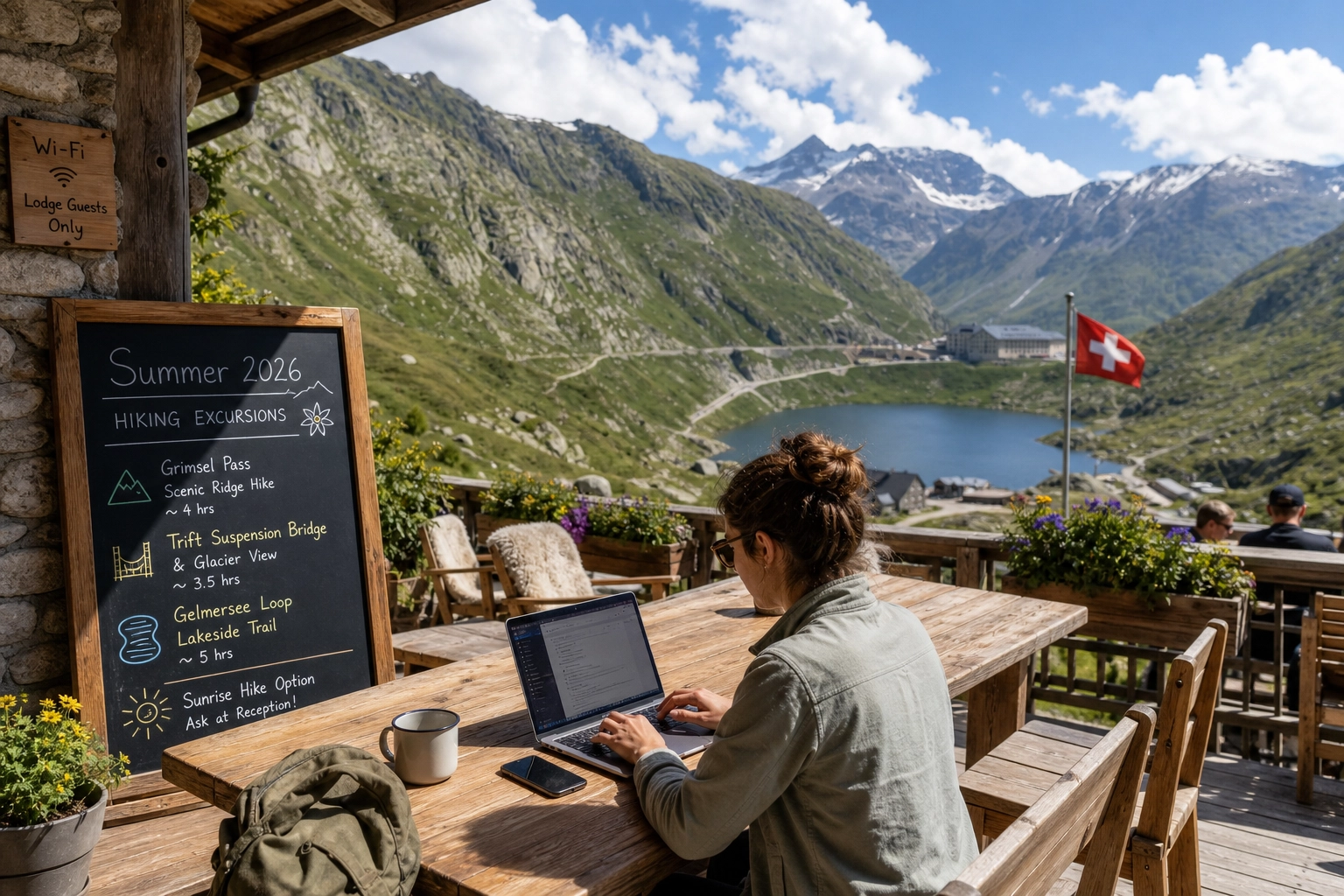
The Swiss Alps in summer often conjure a very specific set of images: opulent lakeside retreats, quiet wellness spas, and perfectly manicured luxury suites that cost north of $500 a night. For decades, the traditional resort industry in Switzerland has catered almost exclusively to two demographics: wealthy vacationers seeking brief, high-end escapes, and traditional retirees looking for scenic tranquility.
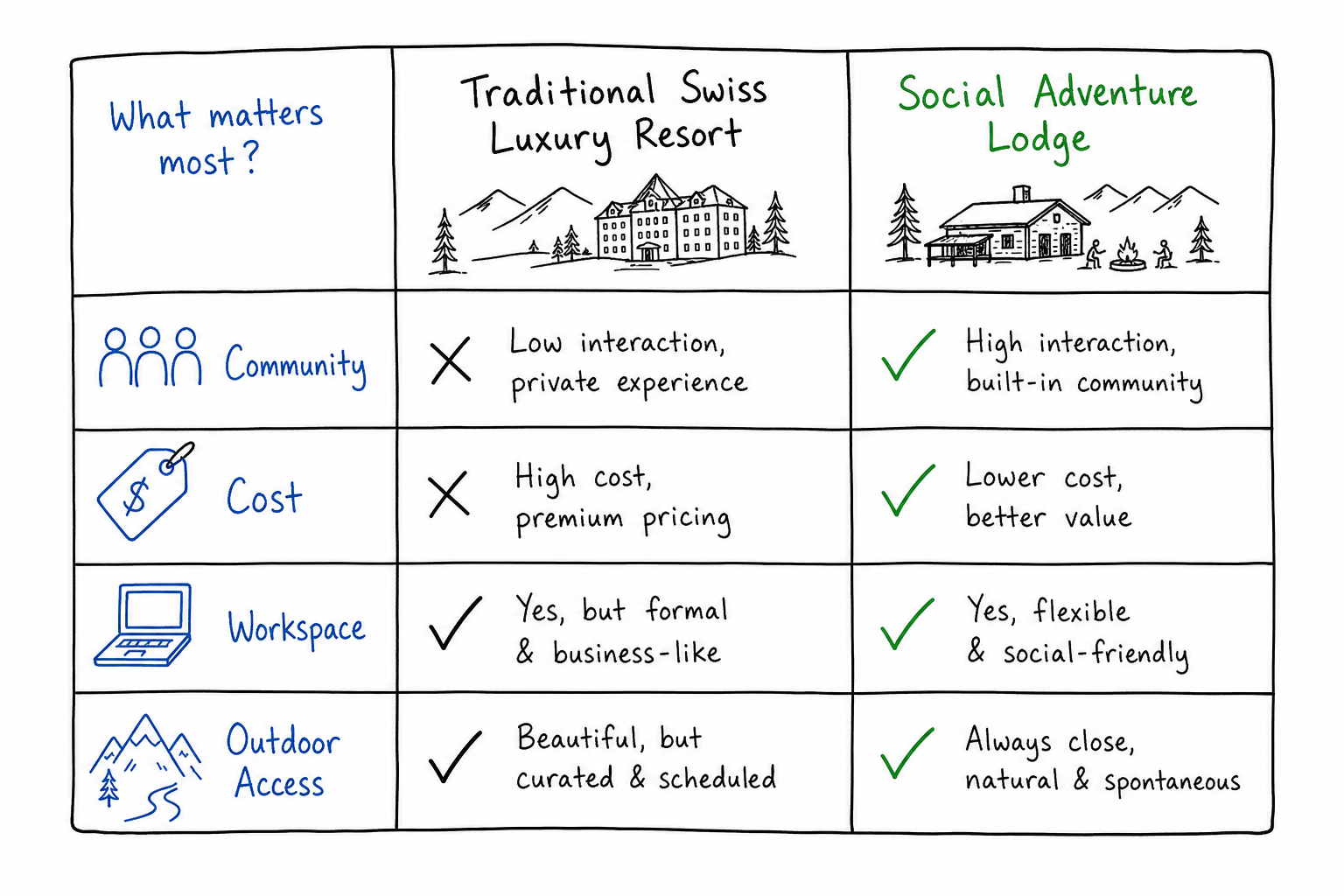
But for the modern digital nomad, this standard hospitality model is fundamentally broken.
If you are a remote worker, a solo traveler, or a budget-conscious backpacker looking to spend a month in the mountains, you do not want a lonely, sterile luxury suite. You need robust high-speed Wi-Fi to run Zoom calls, immediate access to rugged outdoor trails, and—most importantly—a community of like-minded adventurers to share a beer with after a grueling 15-kilometer hike. You need a basecamp that understands the delicate balance between deep work and high-altitude play.
As remote work continues to evolve heading into Summer 2026, a new category of mountain hospitality has emerged: the social adventure lodge. These community-driven hubs, located in strategic valleys rather than overhyped tourist centers, are redefining what it means to spend a summer in the Swiss Alps.
This comprehensive guide explores why traditional resorts fail the working traveler, how social lodges provide a superior alternative, and exactly how to structure your summer activities, logistics, and budget for a season in the mountains.
The Digital Nomad’s Dilemma: Where Traditional Resorts Fail
When you search for summer accommodation in the Swiss Alps, standard booking platforms flood you with traditional hotels. These luxury resorts boast infinity pools, turn-down service, and private balconies overlooking pristine valleys.
While objectively beautiful, they harbor hidden friction points for the long-term, working traveler.
The Isolation Trap
Standard resorts are designed for privacy. Guests retreat to their rooms after dinner, and communal spaces are usually quiet, formal lounges where striking up a conversation with a stranger feels intrusive. For a solo digital nomad spending weeks in a foreign country, this environment quickly leads to profound isolation. You might be surrounded by the most breathtaking scenery on earth, but you are experiencing it entirely alone.
The Friction of Logistics
Traditional hospitality stops at the front door. If you want to go mountain biking, you must find a local shop, navigate rental deposits, figure out the trail map, and handle transport to the trailhead yourself. If you want to hike, you are guessing which routes match your skill level and hoping the weather holds. Managing these logistics consumes hours of time—time that a remote worker simply does not have to spare between meetings and deadlines.
Prohibitive Long-Term Costs
Switzerland is notoriously expensive. A standard resort room easily consumes a monthly rental budget in less than a week. Add the cost of eating out at traditional Swiss restaurants—where a basic dinner and a drink can easily exceed 40 CHF—and the financial math of a month-long stay becomes impossible for the average remote worker or backpacker.
To understand why this model is rapidly falling out of favor with modern remote workers, you can read more about Hotels in Swiss Mountains? Why Social Lodges Beat Luxury.
Enter the Social Adventure Lodge: A New Standard for Summer
To solve the nomad dilemma, the “adventure lodge” model strips away the unnecessary formalities of luxury resorts and replaces them with highly functional, community-driven systems. Places like Ski Hostel represent a paradigm shift in mountain tourism, operating as hybrid co-working spaces, communal homes, and guided expedition hubs.
The “Home Away From Home” Blueprint
At a social lodge, the atmosphere is deliberately engineered to break down barriers. Instead of a formal dining room with separate tables, guests eat family-style. Instead of a sterile lobby, the main floor functions as a massive, shared living room.
This environment is particularly critical for international backpackers and solo travelers. You might arrive knowing no one, but by the first evening, you are sharing a home-cooked meal—often featuring unique, culturally diverse menus like Brazilian-influenced cuisine—with software engineers, freelance designers, and fellow mountain enthusiasts.
Managed Logistics and All-Inclusive Systems
The defining differentiator of a dedicated adventure lodge is the outright elimination of logistical friction. For a digital nomad, time is the ultimate currency.
In a managed lodge setting, the host and volunteers handle the heavy lifting:
- Gear Provision: High-quality mountain bikes, helmets, and hiking poles are available on-site. There is no need to visit third-party rental shops.
- Curated Itineraries: Instead of spending your evening researching trails on Reddit or AllTrails, you simply check the lodge’s whiteboard for the next day’s guided hike or ride.
- Transport Logistics: Private shuttles transport groups directly to trailheads or neighboring resorts, bypassing the complex web of public bus schedules.
By bundling accommodation, food, gear, and guidance, the lodge allows remote workers to log off their laptops at 3:00 PM and instantly transition into an organized mountain adventure.
Strategic Alpine Hubs: Beyond the Tourist Traps
Location strategy is critical when planning a summer workcation. If you base yourself in hyper-popular areas like downtown Zermatt or Interlaken, you will fight massive crowds for a seat at a cafe, and you will pay an extreme premium for basic groceries.
The smart play is to position yourself in secondary valleys that offer identical terrain, vastly superior community integration, and direct transport links to the major peaks.
Val de Bagnes, Liddes, and St. Stephan
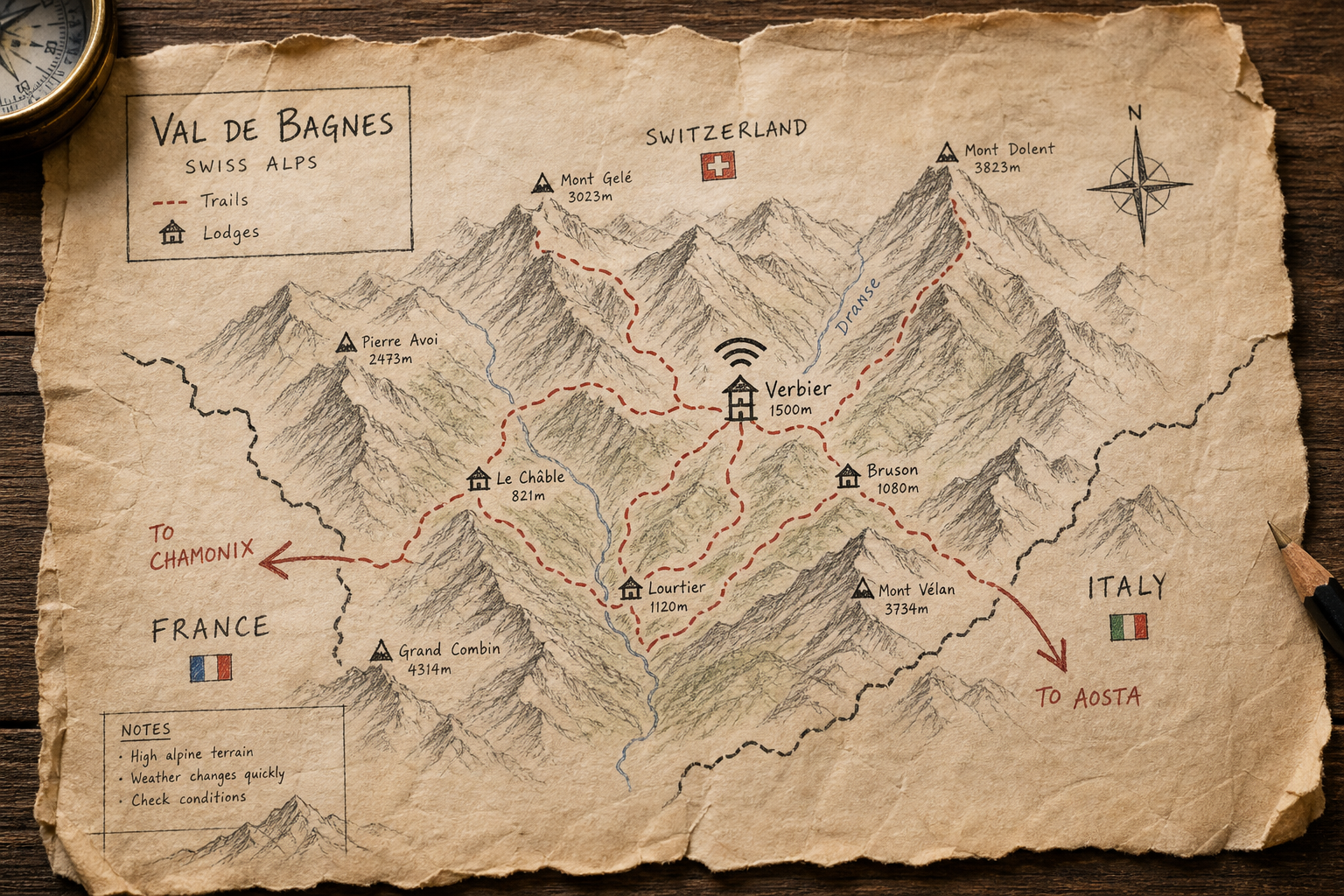
The Val de Bagnes region, along with towns like Liddes and St. Stephan, represent the strategic “sweet spot” for remote workers.
These regions offer direct access to over 250 kilometers of marked trails, ranging from gentle alpine meadow walks to aggressive, high-altitude ridgelines. Because these areas are slightly removed from the primary mass-tourism circuits, the trails remain relatively quiet even in the peak months of July and August. You get the raw, untouched beauty of the Swiss Alps without the overwhelming foot traffic.
Furthermore, these regions maintain robust digital infrastructure. You are deep in the mountains, but you are not disconnected from the grid.
The Advantage of Border Hopping
One of the most underutilized strategies for summer in the Swiss Alps is leveraging the proximity to international borders. When you base yourself in the Val de Bagnes or Liddes, you are uniquely positioned to execute cross-border day trips.
Instead of staying strictly within Swiss territory, a well-placed adventure lodge will organize weekly excursions into neighboring countries. You can spend Monday working and hiking in Switzerland, and on Wednesday, cross over to check out Mountain Mont Blanc: 7 Ways to Visit Without the Crowd in Chamonix, France.
Similarly, hopping across the Great St. Bernard Pass drops you directly into the Aosta Valley in Italy. While many associate this route with winter sports, it is equally spectacular in the summer for high-speed trail running and authentic Italian pizza. For context on the route, you can read about how it works during the snow season in Skiing in the Italian Alps? Try This Aosta Day Trip, though the summer logistics follow the exact same convenient path.
Designing the Alpine Nomad’s Daily Schedule
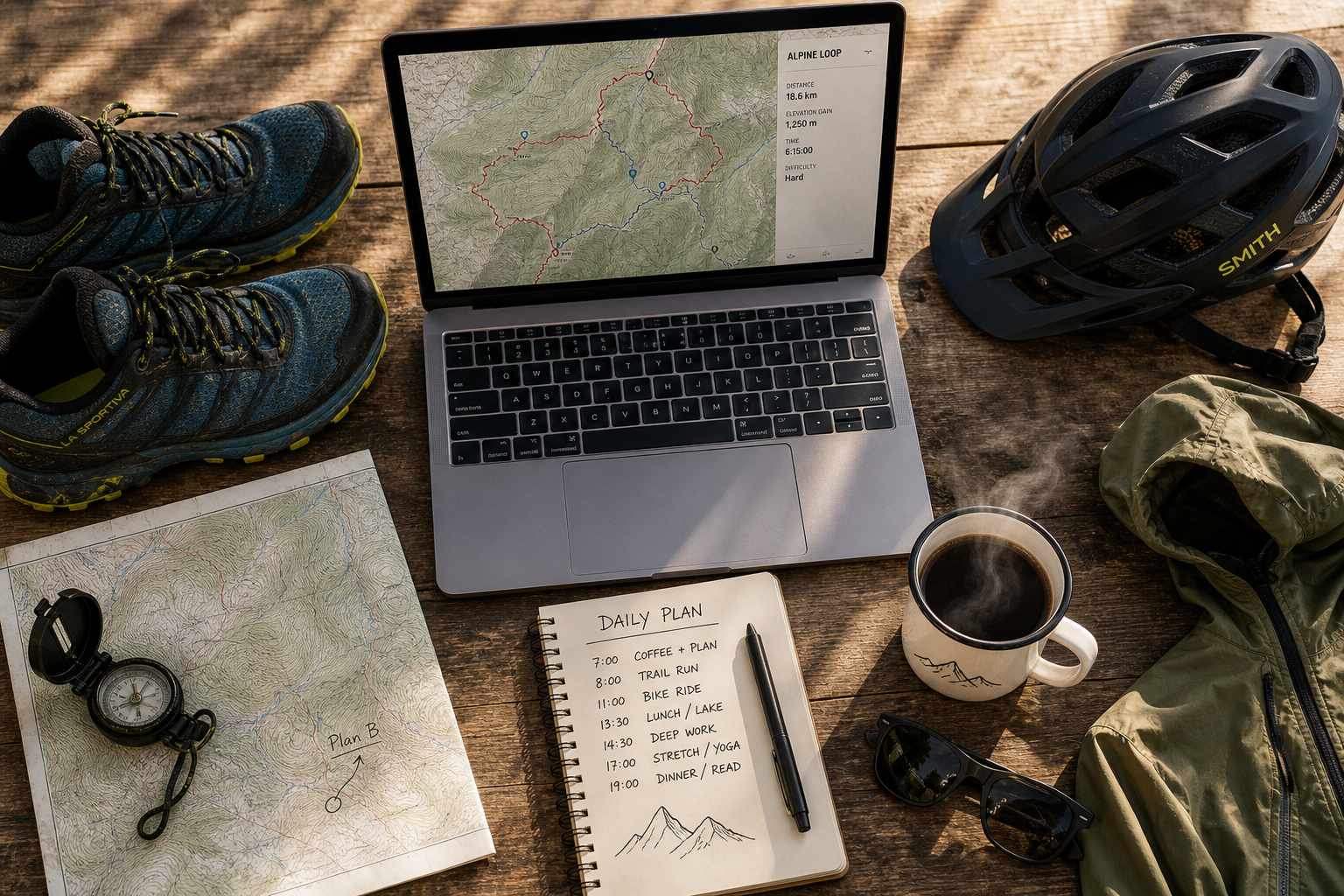
How do you actually balance a full-time remote job with the demands of exploring the Swiss Alps? The secret lies in strict time-blocking and leaning entirely on the lodge’s organized activities.
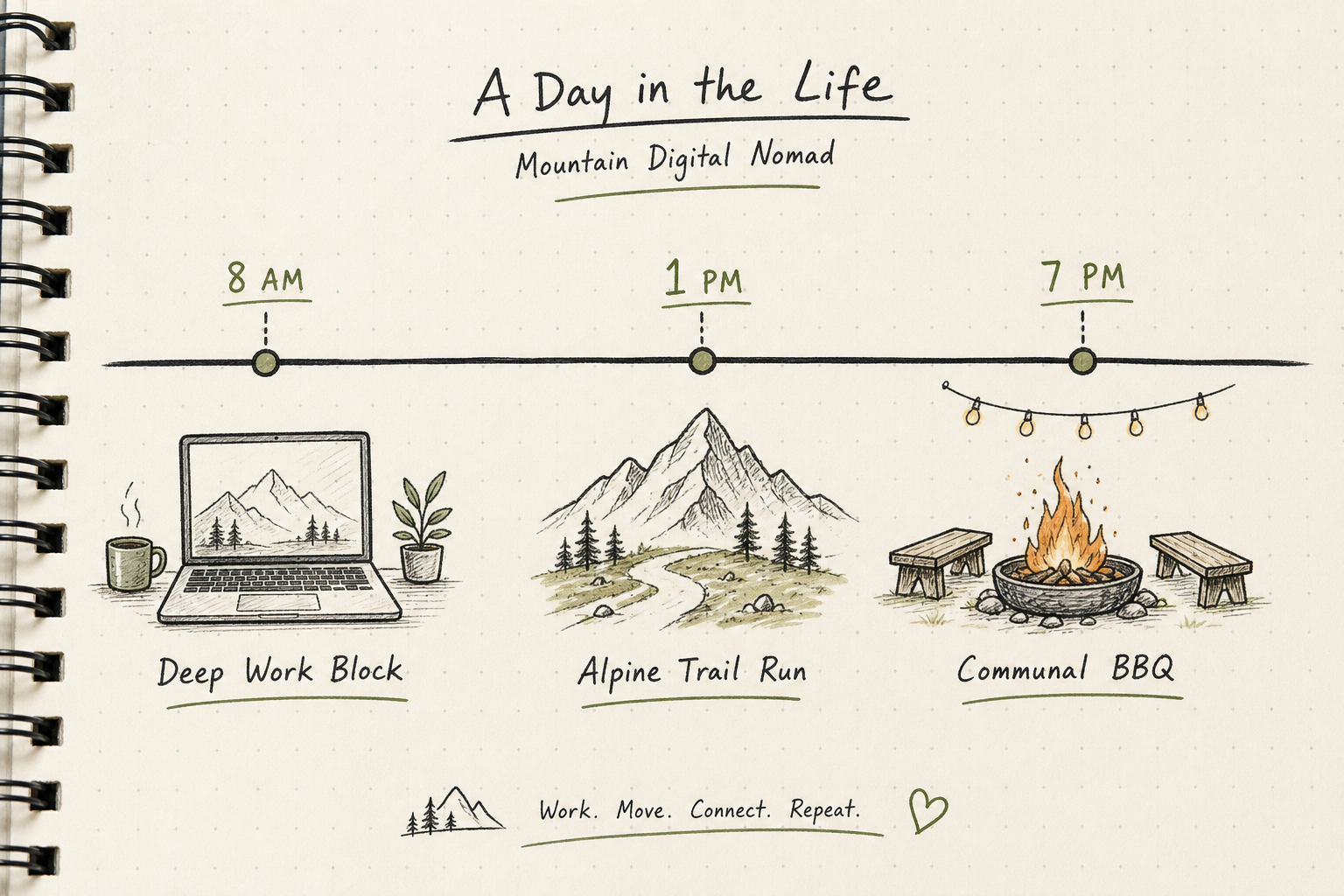
Here is what a highly optimized, dual-purpose day looks like in Summer 2026:
- 6:30 AM – 7:30 AM: Wake up and utilize the lodge’s high-speed Wi-Fi for uninterrupted deep work or catching up on async communication before the rest of the house wakes up.
- 7:30 AM – 8:30 AM: Communal breakfast. This is where you finalize the afternoon’s trail plans with the host and other guests.
- 8:30 AM – 1:00 PM: Core working hours. Whether you are coding, writing, or taking client calls, this is your dedicated sprint.
- 1:00 PM – 5:00 PM: The Activity Block. The laptops close. You grab the lodge’s shuttle to the trailhead for a 4-hour guided hike or mountain bike descent.
- 5:30 PM – 7:00 PM: Recovery. A hot shower, a session in the lodge spa, or an hour answering final emails on the terrace.
- 7:30 PM onwards: Communal dinner, BBQ, and social events. The evening is entirely dedicated to community connection.
Summer Activities Built for the Remote Worker’s Schedule
When evaluating a basecamp, the quality and accessibility of its summer activities dictate the success of the trip. A social lodge excels by curating activities that fit neatly into a half-day window, allowing you to work your required hours without sacrificing the adventure.
High-Altitude Guided Hiking
Hiking in Switzerland is legendary, but traversing high-altitude routes solo can be intimidating and potentially dangerous if the weather shifts.
The adventure lodge model solves this through professional-led guidance. Whether you are a complete beginner looking to understand trail markers, or an expert seeking aggressive vertical gains, the lodge groups guests by skill level. This eliminates the anxiety of route finding. You simply follow the guide, take in the views of glaciers and alpine lakes, and chat with your fellow hikers.
Social hiking transforms a standard physical challenge into a profound networking event. It is incredibly common for remote workers to solve complex business problems or form new professional partnerships while ascending a 3,000-meter peak. For tips on integrating into these groups, check out Guided Hiking in Switzerland: Finding Your Social Group.
Mountain Biking Without the Friction
The Swiss Alps feature some of the most aggressive and well-maintained mountain biking infrastructure in the world. However, biking as a nomadic traveler is usually a nightmare. Flying with a bike is expensive and risky, and daily rentals eat into your budget fast.
Adventure lodges bypass this by keeping a fleet of well-maintained mountain bikes on-site for guest use. The region offers everything from winding, paved valley paths for easy pedaling to terrifying, root-heavy single-track descents for adrenaline junkies. Because the lodge organizes group rides, you never have to worry about taking a wrong turn down a dead-end trail.
If you are unsure how to match your skill level to the local terrain, reading up on how to Find the Right Mountain Bike Group for Alpine Trails can help you set expectations before you arrive.
The After-Hours: Recovery and Community
The physical toll of hiking and biking at altitude is real. Traditional resorts offer expensive, isolated spa treatments. A community lodge offers a fundamentally different recovery experience.
Evenings are structured around communal recovery. This might look like a group stretching session on the deck, firing up an outdoor wood-fired hot tub, or simply gathering around a massive outdoor BBQ pit. These shared recovery rituals are where the true “home away from home” atmosphere solidifies. You aren’t just resting your legs; you are trading stories, swapping travel hacks, and building friendships that often outlast the summer.
The Infrastructure of Alpine Remote Work
One of the most persistent myths about the Swiss Alps is that you have to choose between spectacular scenery and a stable internet connection. In the past, going to the mountains meant accepting spotty 3G and constant dropouts.
Today, that is entirely false—provided you choose the right basecamp.
Wi-Fi and Redundancy
A dedicated digital nomad lodge understands that Wi-Fi is not an amenity; it is critical infrastructure. The best lodges invest heavily in enterprise-grade routers and broad bandwidth to ensure that twenty guests can simultaneously run video calls without a single frame drop.
However, professional remote workers know that redundancy is key. The Swiss telecom network (primarily Swisscom) is exceptionally strong, even at high altitudes. If the lodge’s main line experiences a rare outage due to a summer thunderstorm, tethering to a local eSIM on a 5G or 4G LTE network provides immediate backup. You can confidently take a client call while staring at the Matterhorn from a valley terrace.
Workspace Ergonomics
Working from a hotel bed is terrible for your posture and your productivity. Social lodges address this by providing dedicated shared spaces. Large communal dining tables double as massive co-working desks during the day. Plentiful power outlets, natural light, and endless coffee ensure that your productivity remains as high as it would be in a downtown London office.
The Economics of Spending Summer in the Swiss Alps
How do you afford a month in one of the world’s most expensive countries? The answer lies in avoiding the trap of a la carte spending.
The Hidden Costs of Solo Travel
If you book a standard Airbnb or hotel in Switzerland, your nightly rate is only the beginning. You will pay individually for:
- Groceries (which are notoriously expensive).
- Restaurant meals (CHF 30-50 per basic meal).
- Train and bus tickets to trailheads.
- Gear rentals (CHF 40-80 per day for a mountain bike).
- Guided tours.
When you add these up, a “cheap” CHF 100/night room quickly balloons into a CHF 250/day lifestyle.
The All-Inclusive Math
This is why budget-conscious hikers and backpackers flock to the adventure lodge model. By offering comprehensive summer packages that include home-cooked meals, accommodation, gear, and guided transport, your daily burn rate becomes fixed and predictable.
You pay upfront for the experience, and suddenly, you aren’t calculating the cost of every single sandwich or bus ride. The communal purchasing power of the lodge dramatically drives down the cost of food and transport, passing those savings directly to the traveler. For a detailed breakdown of general summer packing that saves you money on the ground, review the Swiss Alps Summer: A Simple 5-Step Packing Guide.
Actionable Implementation: Preparing for Your Trip
If you are convinced that a social mountain lodge is your ideal basecamp for Summer 2026, proper preparation will ensure you hit the ground running the moment you arrive.
1. Optimize Your Tech Setup
Do not rely solely on the lodge’s hardware. Bring a high-quality laptop stand, an ergonomic travel mouse, and noise-canceling headphones. While the lodge provides the bandwidth and the desk space, controlling your immediate ergonomic environment prevents burnout during long work blocks.
2. Pack for Layered Altitude
Summer in the valleys can mean 25°C (77°F) and brilliant sunshine, but the moment you take a shuttle to 2,500 meters, the temperature can drop to 10°C (50°F) with harsh winds. You do not need to pack heavy winter gear, but you must pack a modular layering system: a moisture-wicking base layer, a light fleece mid-layer, and a reliable Gore-Tex shell.
3. Embrace the Social Contract
The most important thing you can bring to an adventure lodge isn’t physical gear; it is the right mindset. These environments thrive on participation. If there is a communal BBQ, help chop the vegetables. If someone is struggling on the final kilometer of a trail, stay back and encourage them. The return on investment for being a good community member in these spaces is immeasurable.
Frequently Asked Questions
Can I actually rely on mountain internet for heavy video rendering or Zoom calls?
Yes. Dedicated digital nomad lodges prioritize bandwidth. While standard alpine huts may only have satellite internet, valley-based adventure hubs use high-speed broadband perfectly capable of handling standard remote work tasks, including continuous video conferencing.
Do I need to be an expert hiker to stay at an adventure lodge?
Absolutely not. A key benefit of managed logistics is that guides can tailor the daily itineraries to the group’s skill level. Whether you want a flat, scenic walk around an alpine lake or a technical scramble up a ridgeline, the community accommodates all levels.
How far in advance should I book for Summer 2026?
Because social lodges limit their capacity to maintain a tight-knit community feel, beds sell out much faster than massive 300-room luxury resorts. For the peak months of July and August, you should secure your spot at least three to four months in advance.
Are families welcome at these digital nomad hubs?
Yes, many adventure lodges cater to families who want an active, communal mountain experience rather than a sterile hotel stay. The shared spaces and group activities provide a fantastic environment for kids to socialize while parents work or hike.
Final Thoughts on the Alpine Remote Work Experience
Spending a summer in the Swiss Alps no longer requires a choice between isolating luxury and grueling logistical planning. By positioning yourself in a social adventure lodge, you gain the ultimate hybrid experience.
You secure the infrastructure necessary to excel at your remote job, alongside immediate access to world-class hiking, mountain biking, and cross-border explorations. Most importantly, you surround yourself with a diverse, international community of backpackers, nomads, and outdoor enthusiasts who turn a simple summer trip into a profound shared adventure. The mountains are spectacular on their own, but they are infinitely better when you have the right people to share them with.