
All-inclusive Swiss Alps hiking holidays
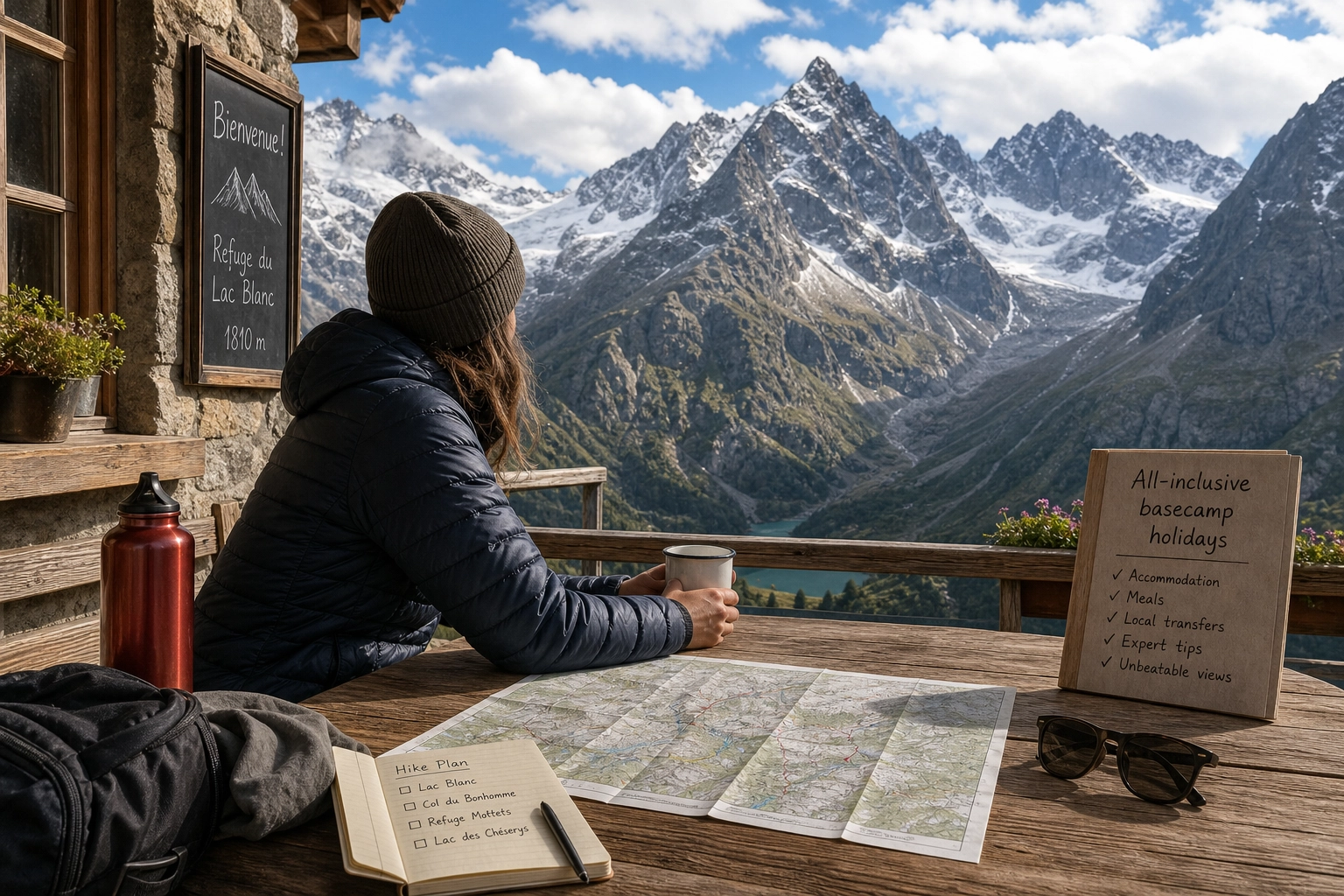
Switzerland is arguably the hiking capital of the world. With roughly 65,000 kilometers of marked trails, towering glaciated peaks, and iconic routes that wind through alpine meadows, it is a bucket-list destination for outdoor enthusiasts. For solo travelers, backpackers, and digital nomads, the initial instinct when planning a trip is usually to search for the best hiking hostels in Switzerland for solo backpackers.
The traditional approach involves booking a bunk in a popular mountain town, buying a train pass, and piecing together day hikes. It is a rite of passage, but it is also exceptionally expensive, logistically complex, and heavily reliant on chance when it comes to meeting like-minded hiking partners.
Today, a new model is changing how solo adventurers experience the Alps: all-inclusive Swiss Alps hiking holidays. By combining the social, unpretentious atmosphere of a backpacker hostel with the seamless logistics of a guided group tour, these week-long basecamp experiences eliminate the friction of alpine travel.
If you are a solo traveler or budget-conscious hiker trying to figure out how to navigate the Swiss Alps without going broke or spending half your trip looking at train schedules, this guide breaks down exactly why an all-inclusive basecamp holiday is the ultimate alternative to traditional hostel hopping.
The Reality of Solo Backpacking in the Swiss Alps
Before diving into the benefits of an all-inclusive package, it helps to understand the landscape of traditional independent travel in Switzerland.
When solo backpackers research their first trip to the Alps, they typically look for highly rated mountain hostels. Switzerland is notorious for its high cost of living, but as noted by popular solo travel resources, while everything else in Switzerland is pricey, the hiking itself is free (source). This drives budget travelers directly toward hostel accommodations to offset the high costs of food and transport.
The Allure of Traditional Swiss Hiking Hostels
If you browse Orbitz’s hostel directory or read through top rankings of Switzerland backpacker hostels, you will find some spectacular properties. Independent hostels in the Jungfrau region (like Interlaken, Lauterbrunnen, and Gimmelwald), Zermatt, and Graubünden offer incredible views, cheap dorm beds, and access to world-class scenery.
For decades, solo travelers have relied on these isolated, exotic mountain hostels to meet fellow adventurers (source). The DIY method looks like this:
- Book a dorm bed in a popular hiking hub for 3–5 nights.
- Buy a Swiss Travel Pass or Half-Fare card to mitigate the cost of regional transport.
- Shop at local grocery stores (Coop or Migros) to avoid $30 restaurant burgers.
- Cook in the communal kitchen alongside twenty other backpackers.
- Try to find hiking partners over a beer in the common room the night before a trek.
The Hidden Logistics Trap
While the DIY hostel approach works, it comes with significant friction that rarely makes it into Instagram reels.
First, there is the transportation puzzle. Switzerland’s public transit network (the SBB) is world-class, but getting to the best trailheads often requires a train, a connecting PostBus, and sometimes an expensive cable car. Navigating these timetables takes hours of planning. Miss the last bus down from a remote valley, and you are looking at a very long walk or a very expensive taxi.
Second, there is the social gamble. You might ask in online groups how to meet fellow hikers (source), but the reality of hostel life is transient. The group of people you hit it off with on Tuesday might be catching a train to Italy on Wednesday. Finding people who match your fitness level, want to hike the same trails, and are willing to wake up at 6:00 AM is surprisingly difficult.
Finally, there is the kitchen bottleneck. After a grueling 15-kilometer hike with 1,000 meters of elevation gain, the last thing you want to do is wait 45 minutes for a free burner in a cramped hostel kitchen to boil pasta.
For more insight on why the traditional luxury or standard hotel route isn’t ideal either, check out our guide on Hotels in Swiss Mountains? Why Social Lodges Beat Luxury.
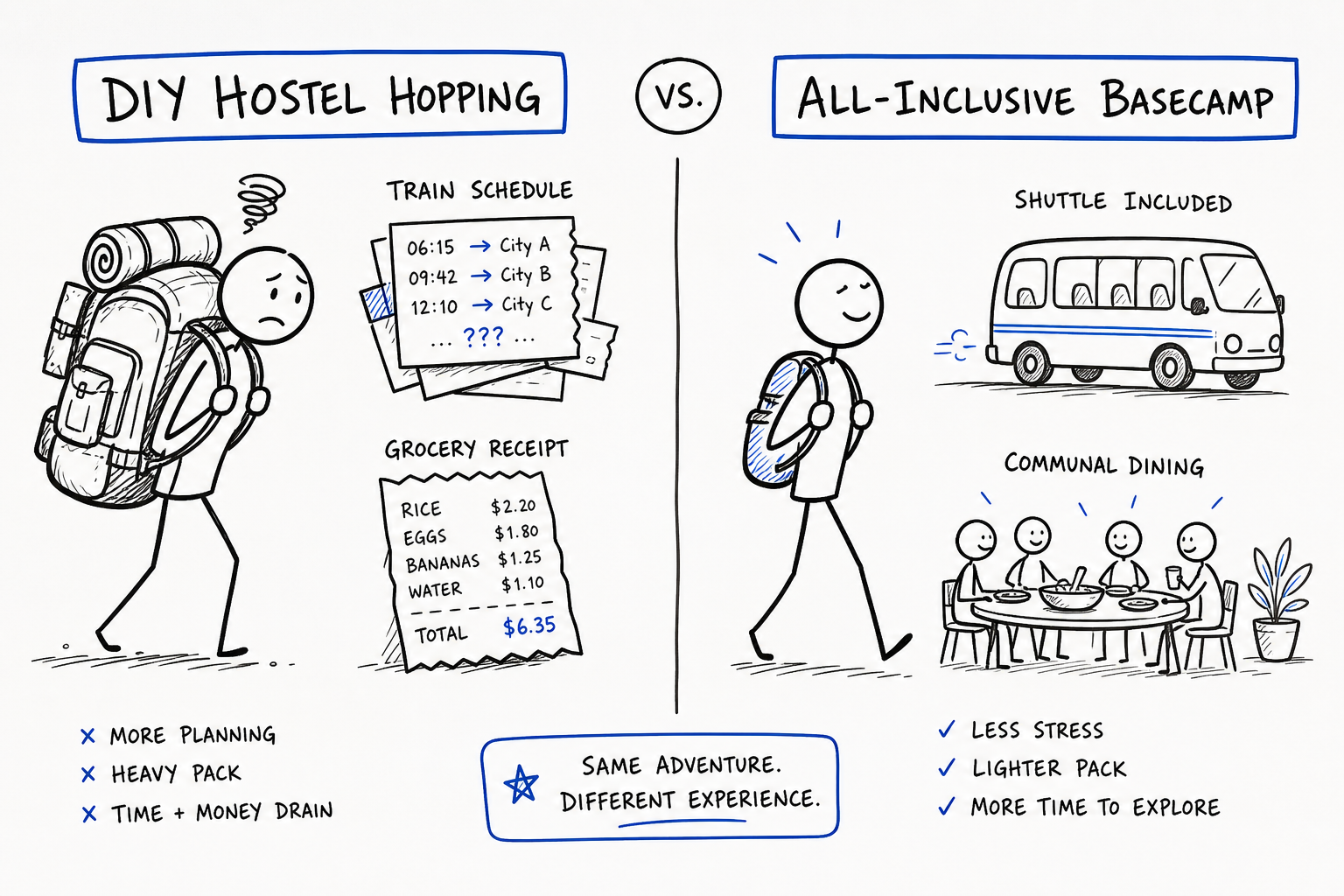
The Solution: All-Inclusive Hostel Basecamps
Recognizing the gap between expensive luxury guided tours and chaotic DIY hostel hopping, Hiking Hostel developed a model tailored specifically for solo travelers, digital nomads, and budget-conscious hikers: the all-inclusive hiking holiday.
Instead of moving from town to town with a heavy backpack, you arrive at a dedicated basecamp lodge—either in Liddes (Valais) or St. Stephan (Obersimmental). For a full week, the logistics are entirely handled for you, leaving you free to focus purely on the hiking and the social experience.
What an All-Inclusive Package Actually Includes
When we say “all-inclusive” for backpackers and hikers, we aren’t talking about poolside cabanas and unlimited cocktails. We are talking about all-inclusive adventure logistics:
- Hostel-Style Accommodation: Comfortable, unpretentious dorms and private rooms designed for rest and recovery.
- All Meals Provided: Communal breakfasts, hearty packed lunches for the trail (built from a morning buffet), and family-style dinners prepared for the group. No grocery shopping, no waiting for a stove.
- Airport Transfers: Seamless transit from major Swiss airports directly to the basecamp.
- Daily Trail Transport: Private shuttles to and from the trailheads. No deciphering PostBus schedules or worrying about missing the last connection.
- Organized Excursions: Guided access to world-class regions without the stress of route-finding.
This model effectively takes the best parts of hostel life (affordability, community, laid-back atmosphere) and removes the worst parts (planning fatigue, hidden costs, transient loneliness).
A Day in the Life: Basecamp vs. DIY Hostel Hopping
To truly understand the value of an organized hiking holiday, it helps to compare a typical day on the trail under both travel styles.
The DIY Backpacker Morning
06:30 AM: Wake up in a mixed dorm. Try to quietly pack your daypack in the dark.
07:00 AM: Head to the kitchen. Realize someone took your milk from the communal fridge. Eat dry cereal.
07:45 AM: Walk to the train station. Buy a ticket to the trailhead (35 CHF).
08:30 AM: Wait for the connecting PostBus.
09:15 AM: Finally start hiking.
The All-Inclusive Basecamp Morning
07:00 AM: Wake up and head to the dining room. Coffee is already brewing.
07:30 AM: Sit down for a hearty communal breakfast with your hiking cohort. Discuss today’s route with the guides.
08:00 AM: Build your custom packed lunch from the provided sandwich and snack buffet.
08:30 AM: Step outside, jump into the private shuttle with your group.
09:00 AM: Arrive directly at the trailhead, energized and ready to hike.
Cost Comparison: Uncovering the Hidden Fees of the Alps
Switzerland is notoriously expensive. Budget travelers often think booking a $45/night dorm bed is the key to keeping costs down. However, the incidental costs of hiking in the Alps add up aggressively.
Here is a realistic breakdown of a 7-day DIY trip compared to an all-inclusive holiday package.
The DIY Alpine Budget (7 Days)
- Hostel Bed (7 nights): ~350 CHF
- Swiss Travel Pass (8-day): 389 CHF (or paying out of pocket for daily regional transit, which often exceeds this).
- Cable Cars / Gondolas (not fully covered by passes): ~100 CHF
- Groceries & Trail Snacks (Cooking yourself): ~150 CHF
- Dining Out (Just 2 modest dinners/beers): ~80 CHF
- Airport Train Transfer: ~60 CHF
- Total Estimated DIY Cost: ~1,129 CHF (And this involves doing all your own cooking, cleaning, and planning).
The All-Inclusive Value
With an all-inclusive package, the upfront price covers your bed, breakfast, packed lunches, dinners, airport transfers, daily shuttles, and guided expertise. You know exactly what the week will cost before you even board your flight. The only money you need to spend locally is on an occasional post-hike beer at a mountain hut.
For more strategies on managing a Swiss budget, read our guide on 7 Tips for Hiking in Switzerland (Without the High Cost).
Top Regions and Excursions for Our Solo Hiking Cohorts
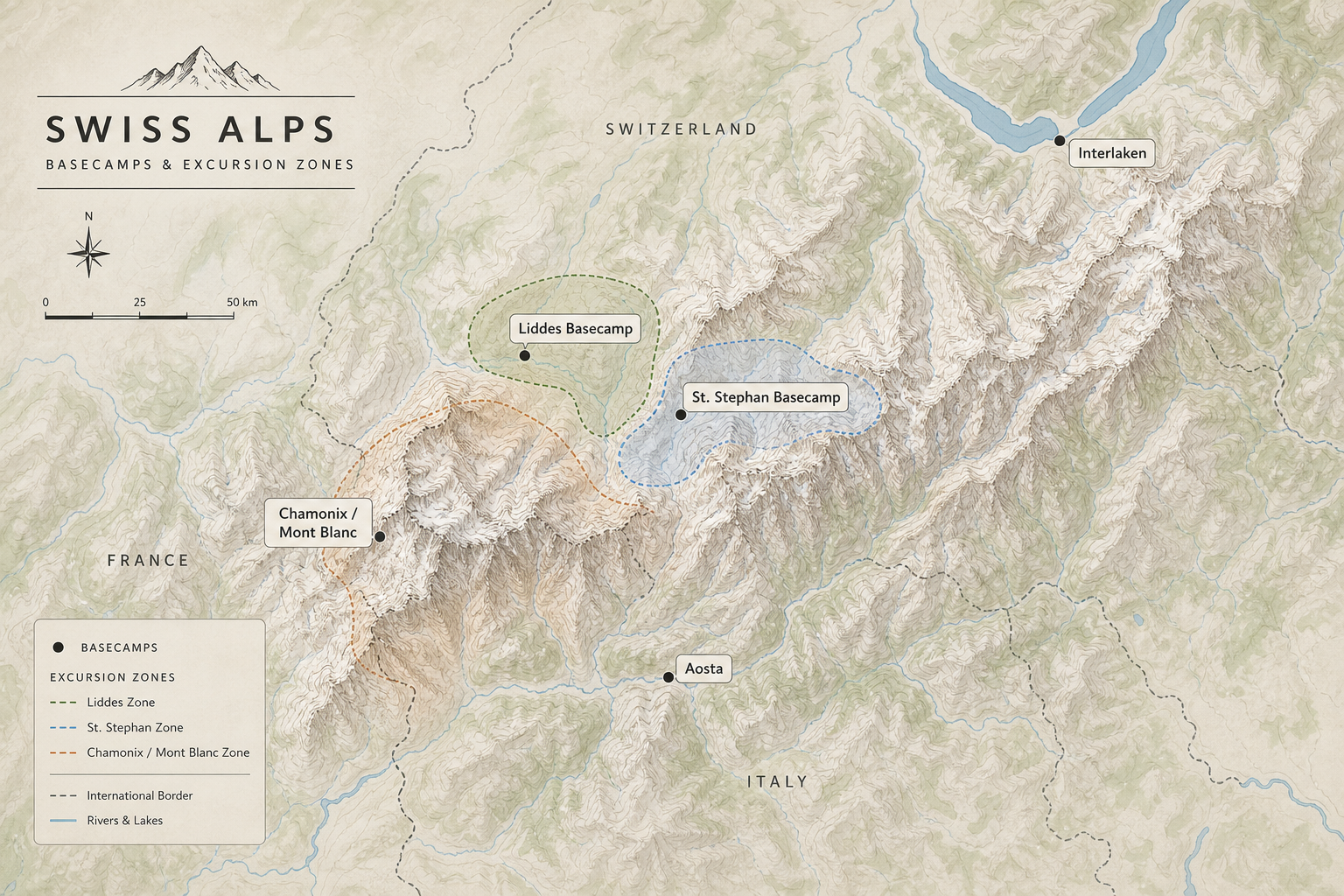
Rather than basing you in the overcrowded tourist hubs, our core trips operate out of strategic basecamps in Liddes and St. Stephan. From these locations, we launch daily excursions into some of the most spectacular, varied terrain in Europe.
Basecamp Liddes: The Heart of the Valais
Located on the road to the Great St. Bernard Pass, Liddes is a traditional Swiss mountain village surrounded by jagged peaks and deep valleys.
- Trail Style: Expect rugged alpine terrain, ancient smuggling routes, and views of the highest peaks in the Pennine Alps.
- Highlights: Hiking sections of the Tour du Mont Blanc, exploring the Val Ferret, and accessing high-altitude mountain lakes.
Basecamp St. Stephan: The Gateway to the Bernese Oberland
Nestled in the Obersimmental valley, St. Stephan offers a distinctly different flavor of Switzerland. Here, you will find rolling green pastures, traditional wooden chalets, and dramatic limestone cliffs.
- Trail Style: Sweeping panoramic trails, deep gorges, and classic Swiss postcard scenery.
- Highlights: Proximity to the famous Glacier 3000, the high-society trails around Gstaad, and easy access into the greater Bernese Oberland.
World-Class Excursions
Because we control the transport logistics, an all-inclusive week allows you to cross borders and regions seamlessly. Depending on your chosen week and basecamp, excursions include:
- Chamonix and Mont Blanc (France): Cross the border to hike in the shadow of Western Europe’s highest peak. For a deep dive into avoiding the massive tourist numbers here, read Mountain Mont Blanc: 7 Ways to Visit Without the Crowd and check out our favorite routes in 5 Best Hiking Trails in Switzerland Near Mont Blanc.
- Aosta Valley (Italy): Experience the Italian side of the Alps. The culture, food, and trail architecture shift dramatically just a few kilometers south of the border. (While we also run winter trips here—see Skiing in the Italian Alps? Try This Aosta Day Trip—the summer hiking is unparalleled).
- Interlaken and the Jungfrau Region: Access the iconic views of the Eiger, Mönch, and Jungfrau without having to pay the premium to sleep in the overcrowded valley below.
- Glacier 3000 / Gstaad: Experience year-round ice and high-altitude suspension bridges before descending into pristine alpine valleys.
The Power of the “Instant Cohort” for Solo Travelers
The most significant advantage of an all-inclusive hiking holiday isn’t the free sandwiches or the shuttle bus—it is the community.
Solo travel can be incredibly lonely, especially in a quiet Swiss village after the sun goes down. In a traditional hostel, you might meet a great group of people, only to realize they are leaving the next morning. You are constantly repeating the “Where are you from? How long are you traveling?” introductory conversation.
When you book a week-long package at Hiking Hostel, you arrive alongside 10 to 20 other solo travelers, backpackers, and digital nomads. You share meals together, you sweat up mountain passes together, and you celebrate with a beer at the end of the day together.
By day two, the awkward small talk is over. By day seven, you have formed tight bonds that only the shared adversity and awe of mountain travel can create. You get the independence of booking a solo trip, with the immediate, built-in social safety net of a group.
If you are nervous about joining a group as a solo traveler, we break down the social dynamics further in Guided Hiking in Switzerland: Finding Your Social Group.
How to Pack for a Basecamp Hiking Holiday
One massive benefit of the basecamp model is that you don’t have to carry all your belongings on your back every day. Traditional hut-to-hut hiking or hostel-hopping requires meticulous packing to keep your backpack weight under 10kg.
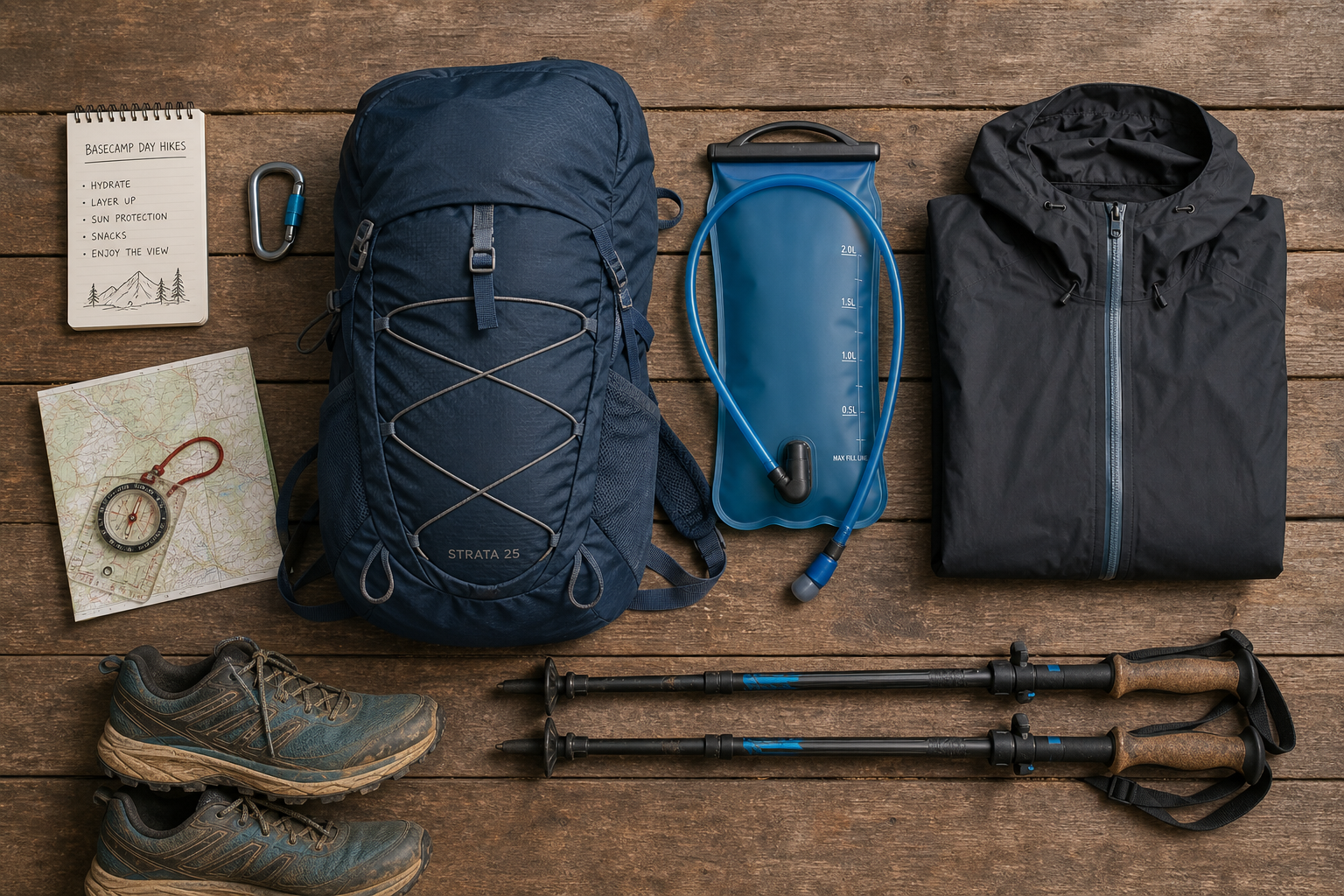
With our model, you only carry a daypack on the trail. Your main luggage stays safe in your room at the basecamp. This fundamentally changes how you pack.
The Basecamp Packing Strategy
- Luggage: Bring a standard suitcase or large duffel for the basecamp, plus a comfortable 20–30L daypack for the trail.
- Footwear: Sturdy, broken-in trail running shoes or hiking boots. You also have the luxury of bringing comfortable “camp shoes” (like Crocs or soft sneakers) for the evenings.
- Clothing: Embrace the layer system. A moisture-wicking base layer, an insulating mid-layer (fleece), and a waterproof/windproof outer shell. Because you return to basecamp every night, you don’t need to stress as much about washing clothes in a sink.
- Hydration & Sun Protection: A 2-liter water bladder, high-SPF sunscreen, and sunglasses are non-negotiable at Swiss altitudes.
For a comprehensive, printable checklist, visit our Swiss Alps Summer: A Simple 5-Step Packing Guide.
Decision Criteria: Is an All-Inclusive Hostel Right for You?
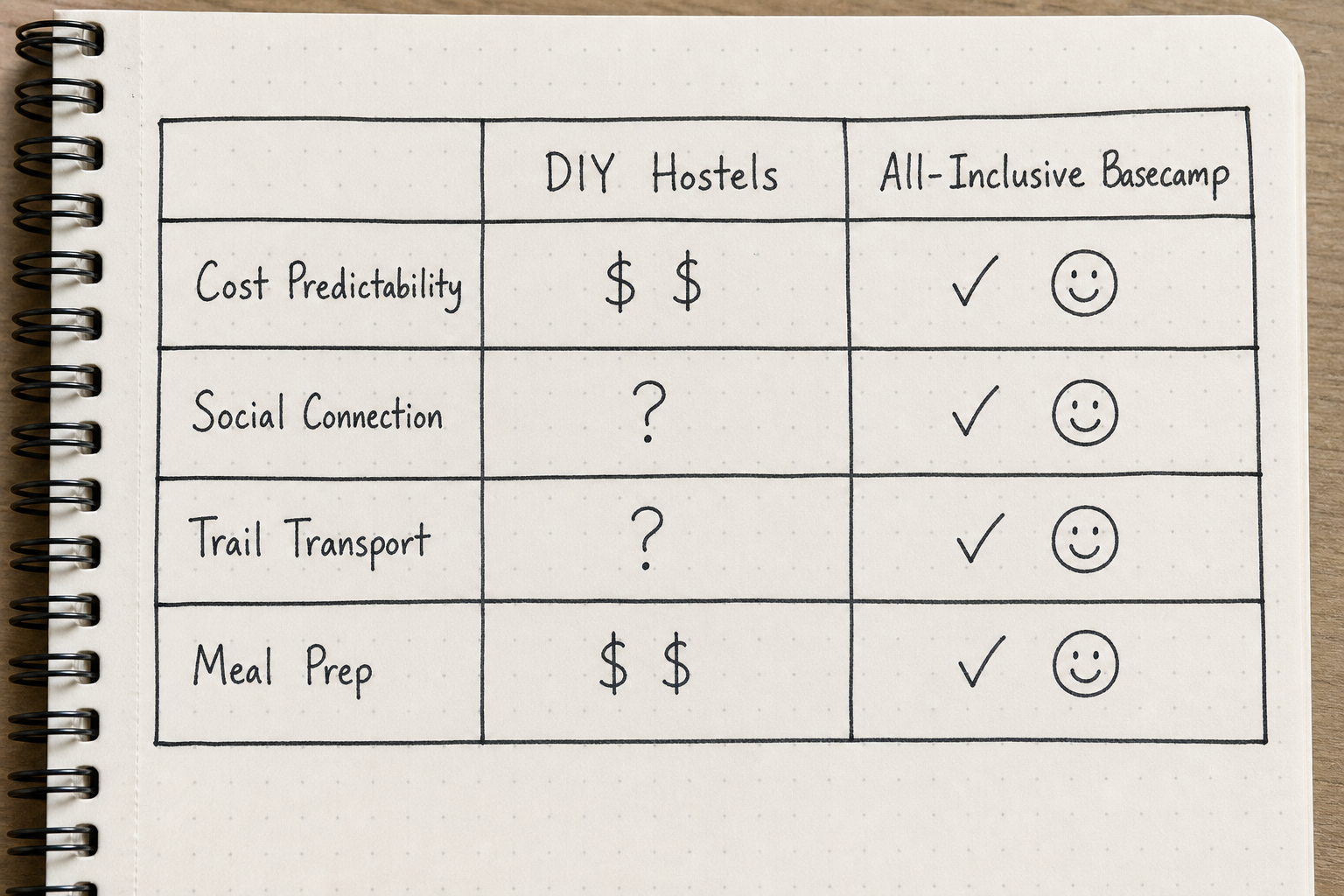
If you are still weighing whether to book independent hostels or join a Hiking Hostel week, consider this simple breakdown:
Choose the DIY Independent Route if:
- You have unlimited time and don’t mind spending half your day on logistics.
- You thrive on extreme spontaneity and want to change cities every 48 hours.
- You are traveling with an established group of friends and have your own rental car.
- You genuinely enjoy cooking your own meals after a 20-kilometer hike.
Choose an All-Inclusive Basecamp Holiday if:
- You are traveling solo and want guaranteed hiking partners.
- You are on a fixed budget and want to avoid the surprise costs of Swiss transport and dining.
- You want to maximize your time actually hiking, rather than staring at SBB train timetables.
- You love the social vibe of hostels but prefer a more structured, purposeful community of outdoor enthusiasts.
- You want local expertise to guide you to the best trails based on that day’s specific weather conditions.
Frequently Asked Questions (FAQs)
Is it safe to hike alone in the Swiss Alps?
While the trails in Switzerland are impeccably marked and maintained, hiking entirely alone always carries inherent risks, especially in unpredictable alpine weather. Joining an organized hostel holiday completely mitigates this risk. You hike with a group and experienced guides who understand the local microclimates, terrain ratings, and emergency protocols.
Do I need to be an elite athlete to join?
Not at all. Our groups consist of regular people who love the outdoors. However, you should be in good cardiovascular condition and comfortable walking for 4 to 6 hours a day on uneven, occasionally steep terrain. Because we use private transport, we can often tailor the drop-off points to accommodate different energy levels.
What if I work remotely? Is there time for digital nomads to work?
Yes! Many of our guests are digital nomads. While the core of the day is spent on the trail, the late afternoons and evenings at the basecamp provide plenty of downtime. Our hostels are equipped with Wi-Fi, allowing you to catch up on emails or projects before communal dinners.
Are the rooms private or dorm-style?
We offer a mix of accommodations to suit different budgets and comfort levels. You can opt for a shared dorm to maximize your budget and the social experience, or book a private room if you prefer quiet recovery time at night.
Rethink the Swiss Alps Backpacking Experience
Searching for the best hiking hostels in Switzerland for solo backpackers is a great first step, but it often leads down a rabbit hole of complicated logistics, expensive train tickets, and the sheer exhaustion of managing a trip entirely on your own.
An all-inclusive Swiss Alps hiking holiday flips the script. By handling the accommodation, the food, the transport, and the trail planning, Hiking Hostel allows you to focus purely on what you came to Switzerland to do: hike incredible mountains and connect with people who share your passion for the outdoors.
You don’t have to choose between the fun of a backpacker hostel and the ease of a guided tour. You can have both. Pack your daypack, lace up your boots, and let the basecamp take care of the rest.