Liddes vs St. Stephan: choosing the right Swiss Alps hiking base
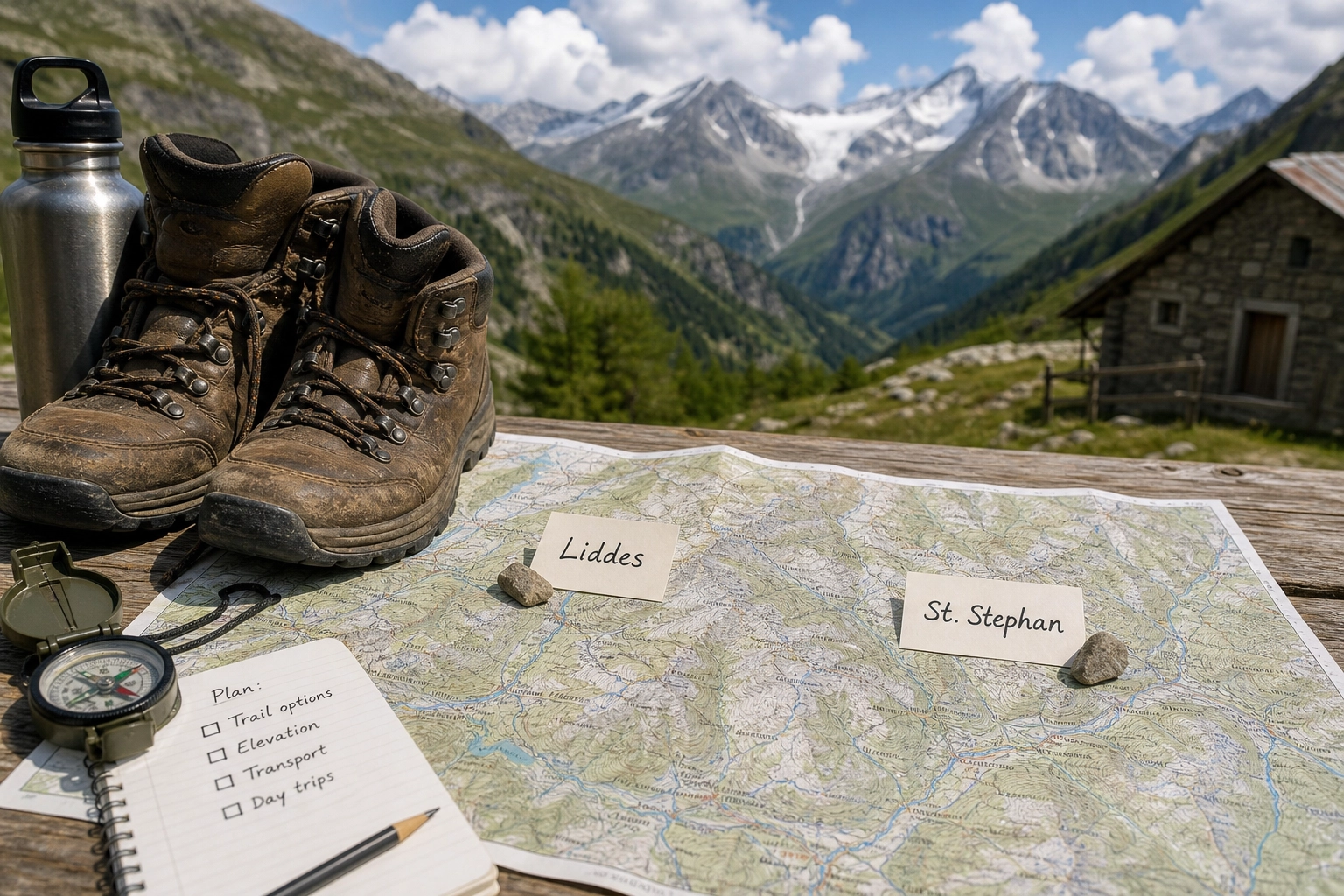
Choosing a base for a hiking holiday in Switzerland often comes down to a fundamental choice: do you want high-altitude, craggy mountain wilderness, or sweeping green ridges with postcard-perfect alpine meadows?
Switzerland’s terrain varies dramatically from valley to valley. Settling in the wrong hub can mean spending hours on trains every morning or tackling trails that feel too steep—or too tame—for what you actually wanted out of your trip. Two of the most rewarding base villages for independent and group hikers alike are Liddes, tucked into the rugged Valais canton near the Italian border, and St. Stephan, set in the green Bernese Oberland along the Simmental valley.
While both villages sit in quiet, authentic alpine settings away from high-end tourist traps, they offer completely different hiking environments, terrain challenges, and day-trip possibilities. Liddes serves as a gateway to high passes, dramatic glaciers, and cross-border excursions into Italy and France. St. Stephan puts you in the middle of smooth ridge trajectories, limestone massifs, famous Bernese Oberland highlights, and easy rail connections.
This guide breaks down trail profiles, daily logistics, mountain scenery, day trips, and fitness demands for both bases so you can select the right destination for your summer in the Swiss Alps.
Liddes vs St. Stephan: quick comparison matrix
If you want a fast comparison before examining specific trails, this matrix highlights how Liddes and St. Stephan differ across core travel factors.
| Feature / Factor | Liddes (Valais) | St. Stephan (Bernese Oberland) |
|---|---|---|
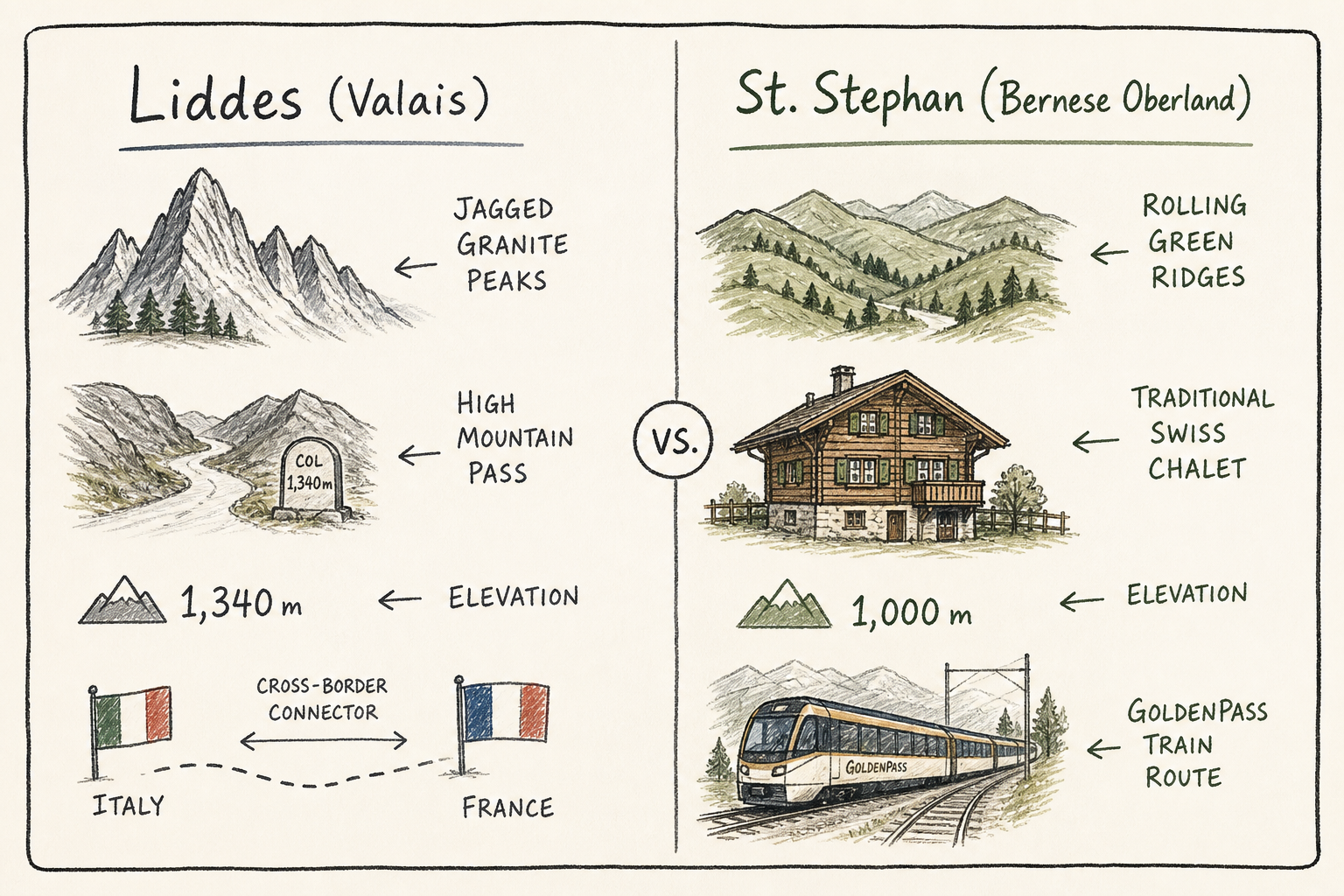
| Primary Landscape | High-alpine, rocky passes, dramatic glaciers, steep cirques | Rolling alpine pastures, green ridge walks, limestone crags |
| Regional Canton | Valais (French-speaking) | Bern / Simmental (German-speaking) |
| Elevation Range | ~1,340m base village up to 2,800m+ passes | ~1,000m base village up to 2,400m ridges |
| Trail Character | Technical singletracks, scree fields, steep mountain cols | Flowy ridge paths, wide balcony trails, lush valley loops |
| Key Nearby Peaks / Massifs | Grand Combin, Mont Blanc massif, Mont Rogneux | Wildstrubel, Stockhorn, Spillgerten, Rinderberg |
| Standout Day Excursions | Aosta Valley (Italy), Chamonix (France), Verbier | Gstaad, Glacier 3000, Interlaken, Lake Thun & Brienz |
| Village Vibe | Rustic, historic Valais stone chalets, quiet mountain pass atmosphere | Traditional Bernese wooden chalets, peaceful agricultural valley |
| Best For | Hikers seeking rugged terrain, high altitude, and cross-border trips | Hikers wanting iconic Swiss green views, accessible ridges, and smooth transit |
Base 1: Liddes (Valais) – High-alpine wilderness and cross-border trails
Liddes sits in the Val d’Entremont, a high valley in the Valais canton along the historic route leading to the Great St. Bernard Pass. At an elevation of approximately 1,340 meters, this French-speaking village offers immediate access to serious high-mountain terrain without the dense crowds found in commercial resort hubs like Zermatt.
                  ┌─────────────────────────────────────────┐
                  │              LIDDES BASE                │
                  │        (Val d'Entremont / Valais)       │
                  └────────────────────┬────────────────────┘
                                       │
         ┌─────────────────────────────┼─────────────────────────────┐
         ▼                             ▼                             ▼
┌──────────────────┐          ┌──────────────────┐          ┌──────────────────┐
│ HIGH-PASS TRAILS │          │ NATURE RESERVES  │          │ EXCURSION HUBS   │
├──────────────────┤          ├──────────────────┤          ├──────────────────┤
│ Névé de la Rousse│          │ Combe de l'A     │          │ Aosta (Italy)    │
│ Col de Mille     │          │ Tour du St Bernard│         │ Chamonix (France)│
│ Mont Rogneux     │          │ Tsissette Refuge │          │ Grand Combin     │
└──────────────────┘          └──────────────────┘          └──────────────────┘
High-altitude scenery and terrain character
The hiking around Liddes is defined by big vertical gain, exposed high-mountain cols, and raw glacial landscapes. You are surrounded by the Grand Combin massif (4,314m) and the eastern edges of the Mont Blanc range. Trails here quickly climb past the treeline into glacial basins and rocky moraines, offering sweeping views across deep Valais valleys.
Because Liddes sits in a drier microclimate characteristic of the upper Rhône catchment, high routes often open up earlier in the summer season than equivalent passes in the Bernese Alps, though late-season snow patches remain on high cols like Col du Névé de la Rousse through July.
Top trails around Liddes
Local routes out of Liddes appeal to hikers who enjoy steady uphill grinding and wild mountain solitude according to trail data on Komoot.
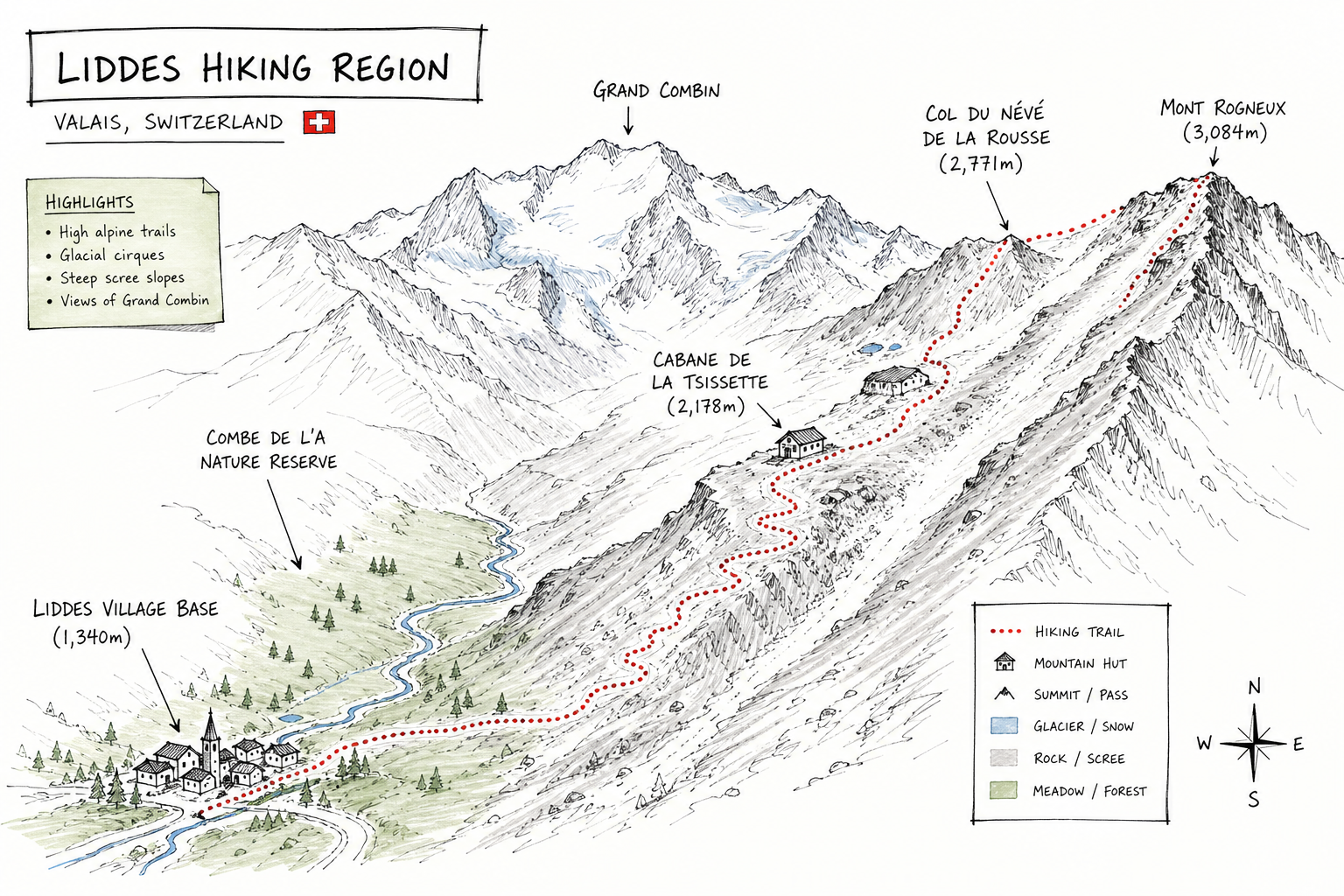
- Vichères to Col du Névé de la Rousse (2,771m): Starting near the quiet ski station of Vichères-Liddes, this demanding 22-kilometer loop ascends through pine forest into the high basin of Tsissette before climbing a steep scree trail to the Névé de la Rousse pass as detailed on AllTrails. The summit offers stark, high-altitude panoramas toward Mont Velan and the Mont Blanc massif.
- Combe de l’A Nature Reserve & Cabane de la Tsissette: A protected valley extending behind Liddes, the Combe de l’A is famous for red deer sightings, alpine flora, and golden eagles. The trail to Cabane de la Tsissette (2,010m) is an approachable day hike, with options to extend higher into the pass towards Lac de Moulin.
- Col de Mille & Mont Rogneux (3,084m): Traversing from Liddes toward the Bagnes valley, this climb leads to Cabane du Col de Mille, positioned directly on the ridge separating the Entremont and Bagnes valleys. Experienced hikers can push up the rocky ridge of Mont Rogneux for 360-degree views of the Valais 4,000-meter peaks.
Iconic day excursions from Liddes
One of Liddes’ distinct advantages is its location near border passes, enabling straightforward cross-border trips:
- Aosta Valley, Italy: A short drive up through the Great St. Bernard Pass brings you into the Italian Aosta region. You can spend the morning hiking under the shadows of Mont Blanc’s southern face and the afternoon exploring Roman ruins and eating pasta in Aosta’s historic center. If you want to sample southern exposure on a day off, exploring an Aosta day trip from the Swiss border adds international flavor to your week.
- Chamonix & Mont Blanc (France): Located less than an hour away via the Col de la Forclaz, Chamonix offers access to world-famous trails like the Grand Balcon Sud and iconic viewpoints near Lac Blanc. You can easily spend a day tackling routes near the base of Mont Blanc before returning to quiet Liddes in the evening. Check out our guide on hiking trails near Mont Blanc for local route ideas.
Base 2: St. Stephan (Bernese Oberland) – Panoramas, green ridges, and classic Swiss valleys
Set in the upper Simmental valley between Zweisimmen and Lenk, St. Stephan is a quintessentially Swiss village in the Bernese Oberland. Nestled at roughly 1,000 meters above sea level, St. Stephan is surrounded by lush alpine pastures, traditional timber farmhouses with carved facades, and towering limestone peaks.
                  ┌─────────────────────────────────────────┐
                  │            ST. STEPHAN BASE             │
                  │      (Simmental / Bernese Oberland)     │
                  └────────────────────┬────────────────────┘
                                       │
         ┌─────────────────────────────┼─────────────────────────────┐
         ▼                             ▼                             ▼
┌──────────────────┐          ┌──────────────────┐          ┌──────────────────┐
│  RIDGE PANORAMAS │          │  VALLEY SPRINGS  │          │ EXCURSION HUBS   │
├──────────────────┤          ├──────────────────┤          ├──────────────────┤
│ Grimmifurggi Pass│          │ Simmen Falls     │          │ Gstaad           │
│ Rinderberg Ridge │          │ Iffigenalp Basin │          │ Glacier 3000     │
│ Horneggli Balcony│          │ Wildstrubel Streams        │ Interlaken Lakes │
└──────────────────┘          └──────────────────┘          └──────────────────┘
Green pastures, ridge walks, and open valley scenery
Where Liddes feels rugged and granite-dominated, St. Stephan is bright, green, and sweeping. The mountains here feature long, walkable ridges that offer continuous panoramic views without requiring technical hands-on scrambling.
The Simmental is known for its wide valley floor, cascading waterfalls, and direct trail links into neighbor regions like the Diemtigtal nature park and the Saanenland (Gstaad region). While nearby massifs like the Wildstrubel rise well above 3,200 meters, the core walking terrain around St. Stephan consists of high alpine meadows, pine forests, and smooth ridge traverses as documented by local Komoot guides.
Top trails around St. Stephan
Routes around St. Stephan showcase the iconic landscape features of the Bernese Alps: wide-open balcony views, alpine dairy farms selling fresh cheese, and crystal-clear mountain streams.
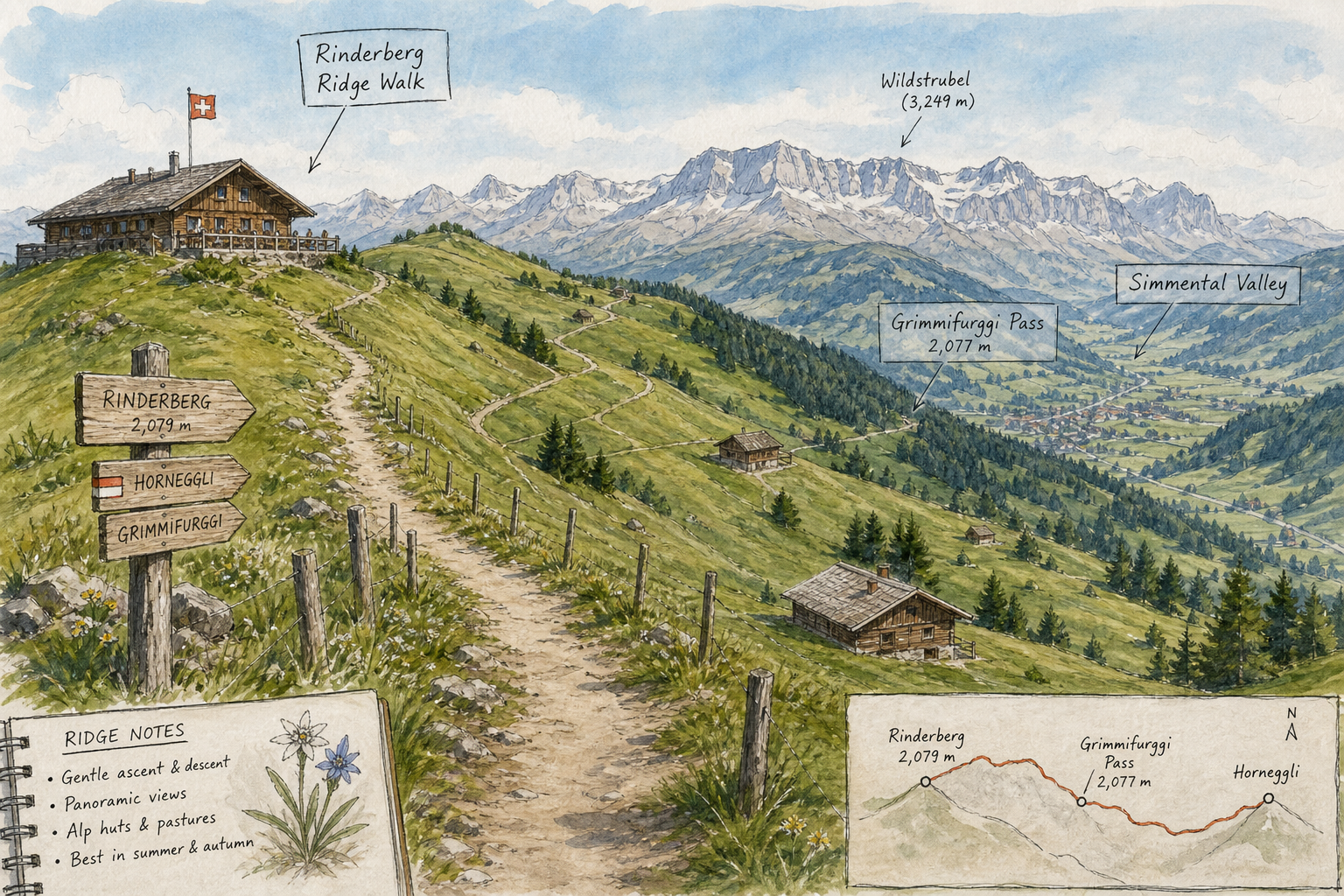
- Grimmifurggi Pass Loop: A classic 19-kilometer circuit starting from Matten or St. Stephan that climbs through alpine pastures into the high saddle of Grimmifurggi (2,022m). This pass connects the Simmental with the protected Diemtigtal valley, flanked by the jagged peaks of the Spillgerten massif as highlighted in AllTrails area routes.
- Rinderberg to Horneggli Ridge Walk: Taking a gondola up from nearby Zweisimmen to Rinderberg (2,079m) places you on a ridge path that glides across Hornberg down to Horneggli above Gstaad. The entire trail delivers continuous views of the Bernese and Valais Alps on the horizon.
- Lenk to Iffigenalp & Simmen Falls: A short jump up the valley brings you to Lenk, where trails wind along the roaring Seven Fountains (Rezliberg spring), the source of the Simme river, before climbing toward the high mountain amphitheater of Iffigenalp and the raw limestone plateaus of the Wildstrubel hut.
Iconic day excursions from St. Stephan
St. Stephan’s position on the GoldenPass railway route makes regional exploring seamless:
- Gstaad & Glacier 3000: Just 20 to 30 minutes away by train or shuttle, Gstaad offers classic Bernese architecture, while Glacier 3000 provides year-round glacier walking, a suspension peak-to-peak bridge, and high-altitude summit vistas over 24 four-thousand-meter peaks.
- Interlaken, Lake Thun & Lake Brienz: Heading north down the Simmental rail line brings you directly to Spiez on Lake Thun. From there, you can easily take a lake ferry, visit Interlaken, or head into the Lauterbrunnen and Grindelwald valleys for iconic views of the Eiger, Mönch, and Jungfrau.
Detailed comparison: trail difficulty, elevation, and terrain
Choosing between these bases often comes down to your personal fitness level, mountain experience, and technical preferences. The table below illustrates how a typical day on the trail differs between Liddes and St. Stephan.
| Technical & Physical Profile | Liddes (Valais) | St. Stephan (Bernese Oberland) |
|---|---|---|
| Average Daily Elevation Gain | 900m – 1,400m+ | 600m – 1,100m |
| Underfoot Conditions | Scree, loose rock, steep switchbacks, moraine paths | Grass paths, smooth dirt singletracks, packed gravel tracks |
| Exposure Level | Moderate to high on cols, narrow ridge passes | Low to moderate on balcony routes and wide ridge passes |
| Signposted Difficulty (Swiss Scale) | Predominantly T2 (Mountain Hike) to T3 (Difficult Mountain Hike) | Predominantly T1 (Hiking Trail) to T2 (Mountain Hike) |
| Average Daily Distance | 12km – 22km | 10km – 18km |
| Trail Infrastructure | Rustic mountain huts (Cabanes), minimal cable car shortcuts | Frequent mountain restaurants, well-maintained cable car links |
                       TERRAIN PROFILE COMPARISON

  LIDDES (Valais)
  Elevation
    3,000m ┌──────────────────────────────────────────────────┐
           │                                      ▲ Mont      │
    2,500m │                       ▲ Col du Névé  │ Rogneux   │
           │                       │ de la Rousse │           │
    2,000m │        ▲ Cabane Tsissette            │           │
           │       /                              │           │
    1,340m └──────┴───────────────────────────────┴───────────┘
           Characteristics: Steep gains, scree, raw rock, high cols

  ST. STEPHAN (Bernese Oberland)
  Elevation
    2,500m ┌──────────────────────────────────────────────────┐
           │                         ▲ Grimmifurggi           │
    2,000m │         ▲ Rinderberg    │ Pass                   │
           │        / Ridge          │                        │
    1,500m │       /                 │                        │
           │      /                  │                        │
    1,000m └─────┴───────────────────┴────────────────────────┘
           Characteristics: Flowy ridge traverses, lush alpine pastures
Ground feel and mountain terrain
In Liddes, you will spend more time using trekking poles for balance on loose scree fields, navigating high cols, and ascending steep glacial valleys. The trails require steady footwork and comfort with vertical gain. Early in the summer (June through early July), crossing high passes out of Liddes may require negotiating lingering snow slopes.
In St. Stephan, trails generally feature smoother gradients. You walk along rolling ridge paths, through pine forests, and across manicured alpine pastures where cows graze during the summer Alpabfahrt season. The underfooting is generally forgiving, making it ideal if you want continuous panoramic scenery without constantly scanning your feet for loose rock.
Myth-busting: “Is St. Stephan too easy?” or “Is Liddes too dangerous?”
A common misconception among hikers looking at Swiss trip discussions such as those on Reddit’s r/hiking is that the Bernese Oberland lacks challenge, or that Valais hiking is strictly reserved for mountaineers.
Both assumptions are incorrect:
- St. Stephan is not just gentle walks: You can easily link multiple ridge passes—such as crossing from St. Stephan over the Grimmifurggi into Diemtigtal and returning via Seehorn—to log over 1,500 meters of vertical climb in a single day.
- Liddes is accessible to everyday hikers: While the high passes are rugged, lower valley trails through the Combe de l’A reserve or forested walks along the Bisse de Rieu (historic water channels) provide moderate routes that require no technical mountaineering experience.
Daily logistics, transport, and mountain accommodation
Your choice between Liddes and St. Stephan also dictates how you travel each day, how much you spend on cable cars, and where you return each evening.
                  ┌─────────────────────────────────────────┐
                  │          LOGISTICAL EVALUATION          │
                  └────────────────────┬────────────────────┘
                                       │
         ┌─────────────────────────────┴─────────────────────────────┐
         ▼                                                           ▼
┌──────────────────────────────────┐        ┌──────────────────────────────────┐
│             LIDDES               │        │           ST. STEPHAN            │
├──────────────────────────────────┤        ├──────────────────────────────────┤
│ • Valais PostBus regional pass   │        │ • MOB GoldenPass railway access  │
│ • Minimal cable car dependency   │        │ • Easy regional cable car connections
│ • Quiet French-speaking village  │        │ • German-speaking Simmental vibe │
│ • Direct access to Italy / France│        │ • Direct lines to Interlaken/Gstaad
└──────────────────────────────────┘        └──────────────────────────────────┘
Rail and bus transport
St. Stephan sits directly on the Montreux Oberland Bernois (MOB) railway line, part of the GoldenPass express network. This gives you direct, low-friction rail travel to Spiez, Interlaken, Gstaad, and Montreux without needing a car. Trains run reliably every hour through the valley floor.
Liddes relies primarily on the PostBus network connected to the rail hub at Sembrancher or Martigny. While the Swiss PostBus system is punctual and efficient, reaching some higher trailhead starting points require checking seasonal weekend timetables carefully if you are traveling entirely on public transport.
If you are planning an independent trip, learning how to structure transit, pass options, and trail days effectively can prevent unnecessary spending; review our guide on 7 tips for hiking in Switzerland without high costs for detailed budget strategies.
Mountain huts vs home-base accommodation
Both regions offer access to high-altitude Swiss Alpine Club (SAC) huts—such as Cabane de Mille near Liddes or the Wildstrubel Hut above Lenk—which are popular for multi-day traverses. If you prefer long hut-to-hut routes over a single base, check our practical guide on how to plan hut-to-hut hiking in Switzerland.
However, if you prefer returning to a comfortable bed, hot showers, fresh food, and laundry facilities every night, establishing a stationary base in Liddes or St. Stephan is significantly more practical. Traditional hotels in Swiss mountain towns can be expensive and isolating, which is why choosing a social lodge or community-focused hostel base has become popular among backpackers, solo hikers, and digital nomads. You can read more about why social mountain lodges beat luxury hotels when traveling in the Alps.
Packing considerations for Valais vs Bernese Oberland
While general summer packing principles apply across Switzerland, subtle weather differences between the southern Valais and the Bernese Oberland impact what you should carry in your daypack.
                      PACKING SYSTEMS BY REGION

  LIDDES (High Valais)                    ST. STEPHAN (Bernese Oberland)
  ┌──────────────────────────────┐        ┌──────────────────────────────┐
  │ • Stiffer B1/B2 trekking boots│       │ • Sturdy trail runners / boots│
  │ • Windproof outer shell layer│        │ • Packable lightweight rain jacket
  │ • Sun hoodie + glacier glasses│       │ • Hydration bladder + flask  │
  │ • Warm mid-layer (2,500m+ wind)│      │ • Lightweight trekking poles │
  └──────────────────────────────┘        └──────────────────────────────┘
Weather patterns and microclimates
- Liddes (Valais): Valais is sheltered by high mountain chains to both the north and south, creating a dryer microclimate with more sunny days per season. However, because trails rapidly climb above 2,500 meters, wind exposure on high passes can bring sudden drops in temperature. Glacier glasses, sun protection, and a warm, windproof outer layer are required even on bright July afternoons.
- St. Stephan (Simmental): The Bernese Oberland experiences slightly higher rainfall than Valais, keeping its meadows lush and green throughout August. Afternoon thunderstorms can pass over the ridge tops rapidly. A reliable waterproof jacket, dry sacks for electronics, and lightweight trekking poles for grassy descents are personal essentials.
For a full checklist of clothing layers, trail gear, and electronics, see our complete Swiss Alps summer 5-step packing guide.
Four traveler scenarios: which base fits you best?
To narrow down your decision, find the profile below that best describes your ideal trip.
                           DECISION FLOWCHART

             What is your main priority for the trip?
                                │
        ┌───────────────────────┴───────────────────────┐
        ▼                                               ▼
  High altitude, raw rock,                     Green ridges, famous
 cross-border day trips                        Swiss valleys & lakes
        │                                               │
        ▼                                               ▼
  Choose LIDDES                               Choose ST. STEPHAN
  (Valais Region)                             (Bernese Oberland)
Scenario A: The Solo Backpacker seeking dramatic peaks and cross-border adventure
- Your Profile: You want big views, high altitude, physical challenge, and the chance to visit Italy or France on a day trip.
- Your Pick: Liddes.
- Why: Liddes provides direct access to high mountain passes, dramatic terrain, and day trips through the Great St. Bernard Pass to Aosta or over to Chamonix.
Scenario B: The Postcard Photographer wanting classic Swiss meadows and open ridges
- Your Profile: You picture Switzerland as rolling green hills, wooden farmhouses, cowbells, and clear ridge paths overlooking turquoise alpine lakes.
- Your Pick: St. Stephan.
- Why: St. Stephan sits right in the classic Bernese Oberland scenery. Routes like the Grimmifurggi Pass loop and Rinderberg ridge walk offer picturesque vistas around every turn.
Scenario C: The Digital Nomad balancing remote work and flexible outdoor days
- Your Profile: You need reliable Wi-Fi, a comfortable social lodge setup, and trail options ranging from short 2-hour afternoon walks to full 20-kilometer weekend loops.
- Your Pick: St. Stephan (or Liddes with guided transport).
- Why: St. Stephan’s train links make half-day trips simple. However, both bases work well if your accommodation handles meal prep and transportation logistics so you can focus on work during non-hiking hours.
Scenario D: The Budget-Conscious Hiker who hates logistical friction
- Your Profile: You want to avoid spending money on high hotel rates, expensive rental cars, or unpredictable cable car tickets, while meeting other like-minded hikers.
- Your Pick: Either base via an all-inclusive organized hostel week.
- Why: Booking an organized base week with hosted accommodations removes the stress of planning daily transit, allowing you to focus on hiking regardless of which region you select.
A real-world hiking day: Liddes vs St. Stephan
To illustrate how a stay at each base feels in practice, consider these two detailed day-in-the-life scenarios from actual hiking weeks.
                   A TYPICAL DAY ON THE TRAIL

  LIDDES (High Mountain Challenge)
  07:30 - Breakfast with group at hostel base in Liddes
  08:30 - Short van drop-off to Vichères trailhead
  09:00 - Steady ascent through pine forest up Combe de l'A
  12:30 - Lunch at Col du Névé de la Rousse (2,771m) overlooking Grand Combin
  15:30 - Descend via Tsissette Hut for a cold local Valais drink
  17:00 - Return to base for group dinner and trip planning

  ST. STEPHAN (Panoramics & Ridges)
  07:30 - Breakfast overlooking the green Simmental valley
  08:45 - Hop on the local train to Zweisimmen / Rinderberg cable car
  09:30 - Begin ridge walk across Hornberg toward Horneggli
  12:30 - Picnic lunch on an open grassy crest facing the Wildstrubel
  15:00 - Descend to Gstaad for gelato and historic town walk
  17:30 - Train ride back to St. Stephan base for a outdoor evening BBQ
A day in Liddes: High cols and mountain solitude
Your morning starts in Liddes with breakfast at your lodge base while checking weather reports over the Grand Combin massif. By 8:30 AM, you arrive at the trailhead in Vichères.
The climb begins immediately along an alpine stream before opening into the vast nature reserve of the Combe de l’A. As you pass 2,000 meters, trees give way to rocky slopes and high alpine meadows where marmots call across the valley. You stop for lunch at the high cross of Col du Névé de la Rousse at 2,771 meters, surrounded by granite crags and sweeping views toward Mont Velan.
Descending via Cabane de la Tsissette, you stop for a cold drink at the hut terrace before walking back down into Liddes by late afternoon. You spend the evening sharing stories over a family-style meal with fellow hikers.
A day in St. Stephan: Panoramic balcony paths and alpine valleys
Your day starts with coffee looking across the green pastures of the Simmental valley. By 8:45 AM, you take a quick 10-minute train ride to Zweisimmen and ride the gondola up to Rinderberg.
Stepping off at 2,079 meters, you begin walking along a grassy mountain crest. The trail glides gently downhill toward Horneggli, offering 360-degree views of limestone crags and the snow-capped Wildstrubel in the distance. Along the trail, you pass traditional mountain dairies where local farmers make Hobelkäse over wood fires.
After a picnic lunch on an open grassy ridge, you descend into the village of Gstaad for afternoon gelato before taking the train back to St. Stephan. In the early evening, you join your lodge housemates on the terrace for an outdoor BBQ as the evening sun glows red on the surrounding mountain cliffs.
How Hiking Hostel makes both bases accessible
Planning an alpine hiking holiday independently in Switzerland often requires managing complex train passes, high accommodation costs, unpredictable restaurant bills, and mountain trail navigation.
At Hiking Hostel, we remove that friction by offering week-long summer hiking holidays based out of both Liddes and St. Stephan.
┌─────────────────────────────────────────────────────────────────────────┐
│                      THE HIKING HOSTEL PACKAGE                          │
├─────────────────────────────────────────────────────────────────────────┤
│  ✔ Social Hostel Accommodation  │  ✔ Home-Cooked Meals Included         │
│  ✔ Daily Trailhead Transport    │  ✔ Geneva Airport Transfers           │
│  ✔ Organized Day Excursions     │  ✔ Built for Solo Hikers & Groups    │
└─────────────────────────────────────────────────────────────────────────┘
Our packages are designed specifically for solo travelers, backpackers, digital nomads, and outdoor enthusiasts who want a social experience without the stress of logistics:
- Social Hostel Lodging: Stay in relaxed, lodge-style accommodation where you can cook, relax, and socialize with fellow hikers from around the world.
- Full Meal Support: Enjoy breakfasts, packed trail lunches, and shared family-style dinners cooked fresh every evening.
- Daily Trailhead Transport: Skip timetable checks and expensive cable car links. We provide daily shuttle transport directly to and from the best trailheads in the region.
- Airport Transfers Included: Enjoy hassle-free pick-up and drop-off from Geneva Airport directly to your base hostel in Liddes or St. Stephan.
- Curated Excursions: In addition to daily hikes, our base weeks include organized day trips—such as visiting Aosta (Italy) or Chamonix from Liddes, or exploring Glacier 3000 and Interlaken from St. Stephan.
If you are traveling solo and want to meet a built-in group of trail partners, explore how our trips foster a supportive atmosphere in our guide to finding your social group through guided hiking in Switzerland.
Frequently asked questions
Can I combine both Liddes and St. Stephan in a two-week trip?
Yes. Combining both bases gives you a complete overview of the Swiss Alps. You can spend your first week in Liddes tackling high-altitude Valais passes, cross-border trips into Aosta, and rugged alpine trails. For your second week, head north to St. Stephan to enjoy the green balcony trails of the Simmental, panoramic ridge walks, and excursions across the Bernese Oberland.
What is the best month for hiking in Liddes vs St. Stephan?
July and August offer optimal weather for both bases, with open mountain huts, accessible high passes, and long daylight hours. Liddes’ drier Valais microclimate means lower valley trails open in June, though high passes above 2,500 meters (like Col du Névé de la Rousse) retain snow patches until early July. St. Stephan’s lower-elevation ridge walks are fully accessible from mid-June through late September.
Do I need technical mountaineering gear for hikes around Liddes?
No standard hiking routes around Liddes require crampons, ice axes, or ropes during the peak summer season (July through September). A sturdy pair of ankle-high trekking boots, adjustable trekking poles, and warm windproof layers are sufficient for navigating the high-alpine passes and scree trails in the region.
How do non-hiking day trips compare between Liddes and St. Stephan?
Liddes excels at international cross-border excursions, offering access to Italian food and culture in the Aosta Valley, as well as classic French alpine vibes in Chamonix. St. Stephan shines at iconic Swiss sightseeing, positioning you near Gstaad, Glacier 3000, Interlaken, and the mountain lakes of Thun and Brienz.
Choosing your Swiss base
                      FINAL CHOICE CHECKLIST

  PICK LIDDES IF YOU WANT:                PICK ST. STEPHAN IF YOU WANT:
  [ ] High altitude, rocky terrain       [ ] Green pastures & open ridges
  [ ] Solitude on rugged mountain passes [ ] Iconic postcard Swiss landscapes
  [ ] Trips to Italy (Aosta) & France    [ ] Seamless GoldenPass train links
  [ ] Wild Valais nature reserves        [ ] Trips to Gstaad & Interlaken
Whether you choose the high-alpine granite environment of Liddes or the panoramic green ridges of St. Stephan, both bases represent some of the finest mountain walking in Switzerland far away from commercialized mass tourism.
If you want rugged alpine passes, glacier views, and cross-border mountain culture, pack your boots for Liddes. If you want flowy ridge walks, lush valleys, and seamless access to iconic Bernese destinations, reserve your week in St. Stephan.
Explore our upcoming summer weeks at Hiking Hostel to secure your spot, meet fellow outdoor travelers, and let us take care of your accommodation, meals, and trail transport in the Swiss Alps.