
Planning Swiss solo hiking trips guide
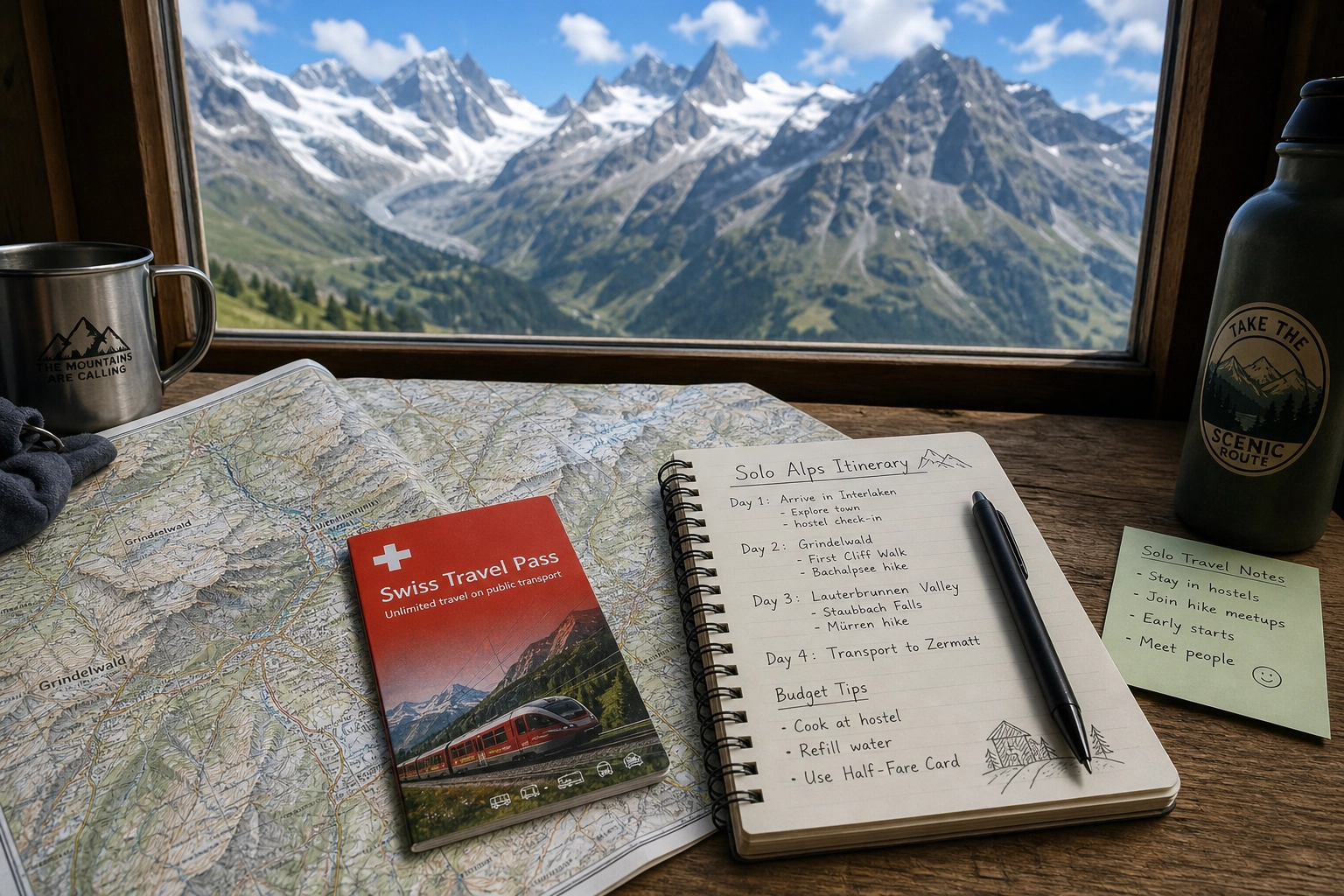
Staring at the SBB train app while trying to calculate the cost of three different cable cars and a post bus just to reach a single trailhead is a rite of passage for solo hikers in Switzerland. The Swiss Alps offer some of the most spectacular alpine infrastructure in the world, but navigating it alone—while balancing a backpacker budget and trying to find a hiking partner for a tricky ascent—can feel like a full-time logistics job.
Switzerland is notoriously expensive, and traditional hotels in mountain resort towns are often geared toward luxury tourists or families, leaving solo backpackers isolated. If your goal is spectacular hiking by day and swapping trail notes over cheap beers with other travelers by night, your accommodation choice dictates your entire trip.
This guide breaks down exactly how to structure a solo hiking trip in the Swiss Alps, reviewing the best independent mountain hostels, detailing transport and budgeting logistics, and exploring structured social basecamp alternatives for those who want to skip the planning phase entirely.
Why Switzerland is the Ultimate (But Challenging) Solo Hiking Destination
The appeal of hiking in Switzerland is obvious: towering glaciated peaks, pristine alpine lakes, and a trail network so well-maintained you can set your watch by the hiking time estimates on the yellow trail signs.
However, solo backpackers face three distinct challenges:
- The Cost of Altitude: Getting up into the mountains often requires funiculars, gondolas, or cogwheel trains. A single return trip on a mountain railway can easily eclipse your daily food budget.
- The Logistics Puzzle: Connecting a mainline train to a valley bus, and then to a cable car, requires meticulous timing. Miss the last gondola down, and you are facing a grueling three-hour descent in the dark.
- The Social Gap: While you can read up on hiking in Switzerland to manage costs, the trail itself can be isolating. Many solo travelers prefer to hike challenging routes with a partner for safety, but finding someone with the same pace, budget, and route preference in a standard hotel is nearly impossible.
This is why finding the right basecamp is critical. You need a place that acts as a natural hub for outdoor-minded travelers.
What Makes a Hiking Hostel Stand Out for Solo Travelers?
Not all hostels are created equal. A city hostel in Zurich is built for pub crawls and sightseeing. A true mountain hostel is built around alpine practicalities. When evaluating where to stay, look for these specific operational details.
Strategic Location and Trail Access
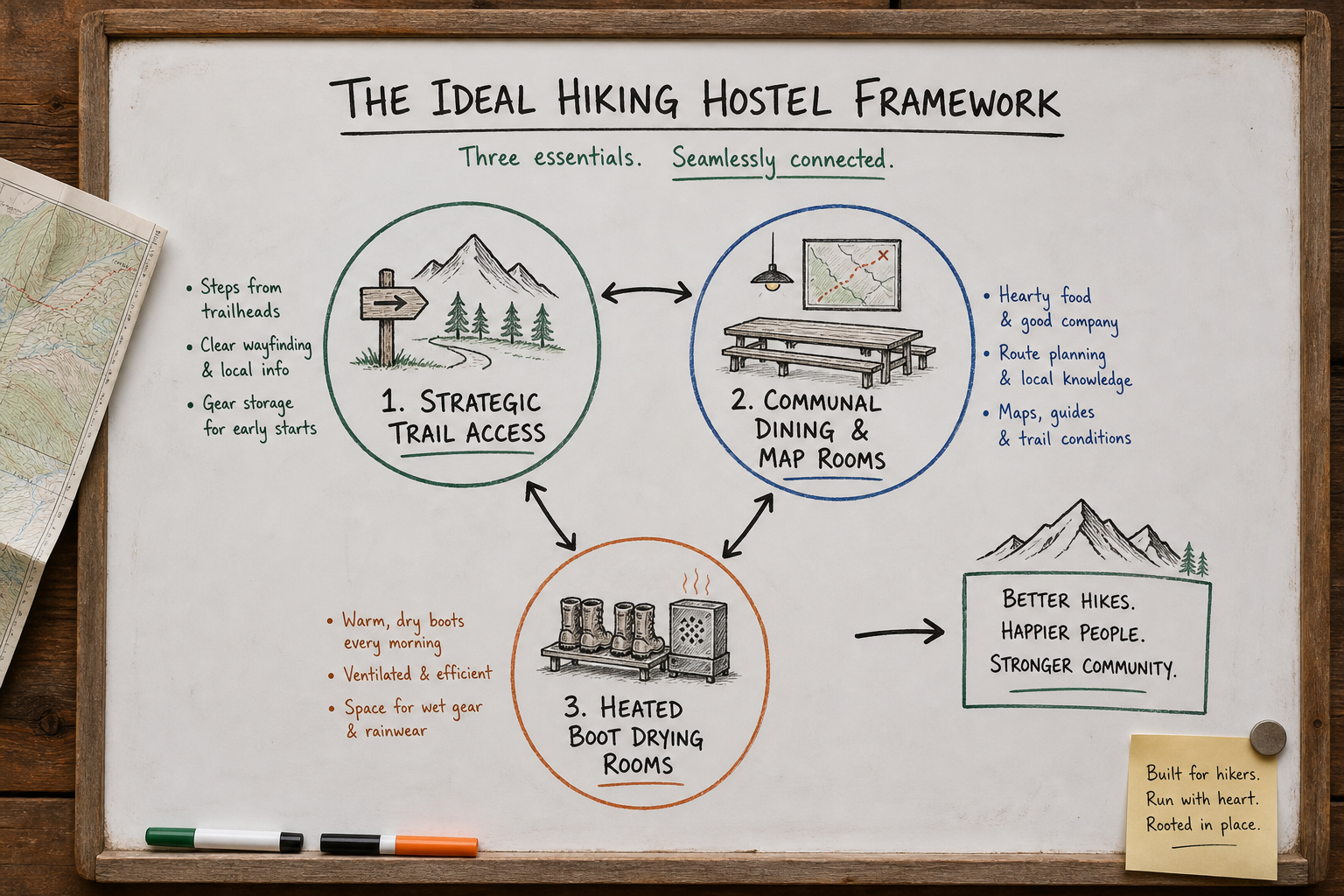
The best hiking hostels sit above the valley floor or immediately adjacent to major transport hubs. If you have to take a 45-minute bus ride just to reach the start of your hike, you lose valuable morning hours before the afternoon clouds roll in. Proximity allows you to walk straight out the front door and onto the trail, drastically reducing your reliance on expensive local transport.
The Social Infrastructure
A good mountain hostel forces interaction in the best way possible. Look for properties with large communal kitchens, family-style dining tables, and map rooms. The most valuable resource in the Alps isn’t a guidebook; it’s the hiker who just walked the route you are planning for tomorrow. If you are debating hotels in Swiss mountains, remember that social lodges provide real-time trail intelligence that luxury properties simply cannot match.
Drying Rooms and Boot Storage
Summer thunderstorms are a frequent occurrence in the Alps. A hostel without a dedicated, heated drying room for boots and waterproof layers means you will be putting on damp gear the next morning. Furthermore, communal boot rooms keep the dormitories smelling infinitely better and prevent mud from being tracked into sleeping areas.
Early Breakfasts
Alpine hiking requires early starts. A hostel that doesn’t serve breakfast until 8:30 AM is completely out of touch with hikers’ needs. The best spots offer breakfast starting at 6:00 AM or provide “early bird” packed lunches for those tackling major ascents.
4 Best Hiking Hostels in Switzerland for Solo Backpackers
If you are building your own independent itinerary, the Bernese Oberland remains the epicenter of Swiss backpacker culture. Here is a breakdown of the hostels that consistently deliver the best mix of trail access, affordability, and social atmosphere.
1. Mountain Hostel Gimmelwald (Bernese Alps)
Perched on the edge of a cliff in a tiny, car-free village, the Mountain Hostel Gimmelwald is arguably the most famous hiking hostel in the country.
The Vibe:
Originally built in 1563, this rustic chalet has maintained a legendary communal atmosphere. It has gained a massive following online, with travelers consistently mentioning how easy it is to meet people despite the remote location. According to recent reports, travelers will journey hundreds of miles involving planes, trains, buses, and cable cars just to reach this specific, highly social lodge (The US Sun).
Trail Access:
You can walk directly out of the hostel and begin ascents toward the Tanzbödeli, the Northface Trail, or up into the Sefinental valley.
Pros & Cons:
- Pros: Unbeatable scenery, forced socialization (everyone hangs out in the main room or outside facing the Jungfrau massif), authentic alpine feel.
- Cons: You must bring all your groceries up from the valley floor (Interlaken or Lauterbrunnen), as the local options are limited. The cable car to reach it adds to your transit budget.
2. Valley Hostel, Lauterbrunnen
Located in the valley of 72 waterfalls, this hostel acts as the perfect compromise for hikers who want easy transport connections without sacrificing the mountain atmosphere.
The Vibe:
It receives consistently high ratings from backpackers for offering the best balance of budget, location, and a social atmosphere (Hostelworld). It consists of several traditional wooden chalets spread across a grassy lawn, providing plenty of outdoor space to relax after a long hike.
Trail Access:
From here, you are a short walk from Staubbach Falls and the steep, switchback trails leading up to Wengen or Mürren. It is an excellent staging ground for longer, multi-day routes in the Jungfrau region.
Pros & Cons:
- Pros: Incredible transport links right out the door, large and clean communal kitchens, immediate access to grocery stores.
- Cons: The valley floor is deep, meaning it gets direct sunlight later in the morning and loses it earlier in the evening compared to higher-altitude locations.
3. Backpackers Villa Sonnenhof, Interlaken
Interlaken is the commercial hub of the region, sitting between Lake Thun and Lake Brienz. Backpackers Villa Sonnenhof is an institution in the Swiss travel scene.
The Vibe:
This is a larger, more polished operation. Why solo travelers love it: it boasts massive common areas, highly organized activities, and excellent transport connections. If you want to paraglide, canyon, or find partners for a rigorous hike, the notice boards here are always full.
Trail Access:
While you aren’t high in the alpine zone, you have immediate access to the Harder Kulm ascent, stunning lake trails, and you are only a 20-minute train ride from the dramatic alpine trailheads of Lauterbrunnen and Grindelwald.
Pros & Cons:
- Pros: Free access to local public transport and swimming pools, incredible facilities, very easy to meet groups.
- Cons: Interlaken can feel very tourist-heavy and commercial. You lack the quiet, secluded mountain feel.
4. Grindelwald Youth Hostel
Positioned on a sunny terrace above the main village of Grindelwald, this hostel looks directly at the imposing North Face of the Eiger.
The Vibe:
It is slightly more structured than independent backpacker spots, appealing to a mix of solo travelers, budget-conscious outdoor enthusiasts, and small groups.
Trail Access:
Perfect if hiking is your absolute top priority. Nearby routes include the First Cliff Walk, the hike to the stunning Bachalpsee, and the world-famous Eiger Trail, which traces the base of the massive rock wall.
Pros & Cons:
- Pros: Unobstructed views of the Eiger, quiet location above the town noise, excellent breakfast.
- Cons: The walk up from the Grindelwald train station is a steep 20-minute climb—something to consider when arriving with a heavy pack.
Swiss Solo Hiking Logistics: Transport, Food, and Gear
Booking a bed is only step one. Surviving a week in Switzerland without draining your bank account requires a strict logistical framework.
Navigating the Swiss Travel System
The Swiss Federal Railways (SBB) and the network of PostBuses, funiculars, and cable cars are brilliantly integrated but wildly expensive if you buy standard point-to-point tickets.
The Swiss Travel Pass vs. Half Fare Card:
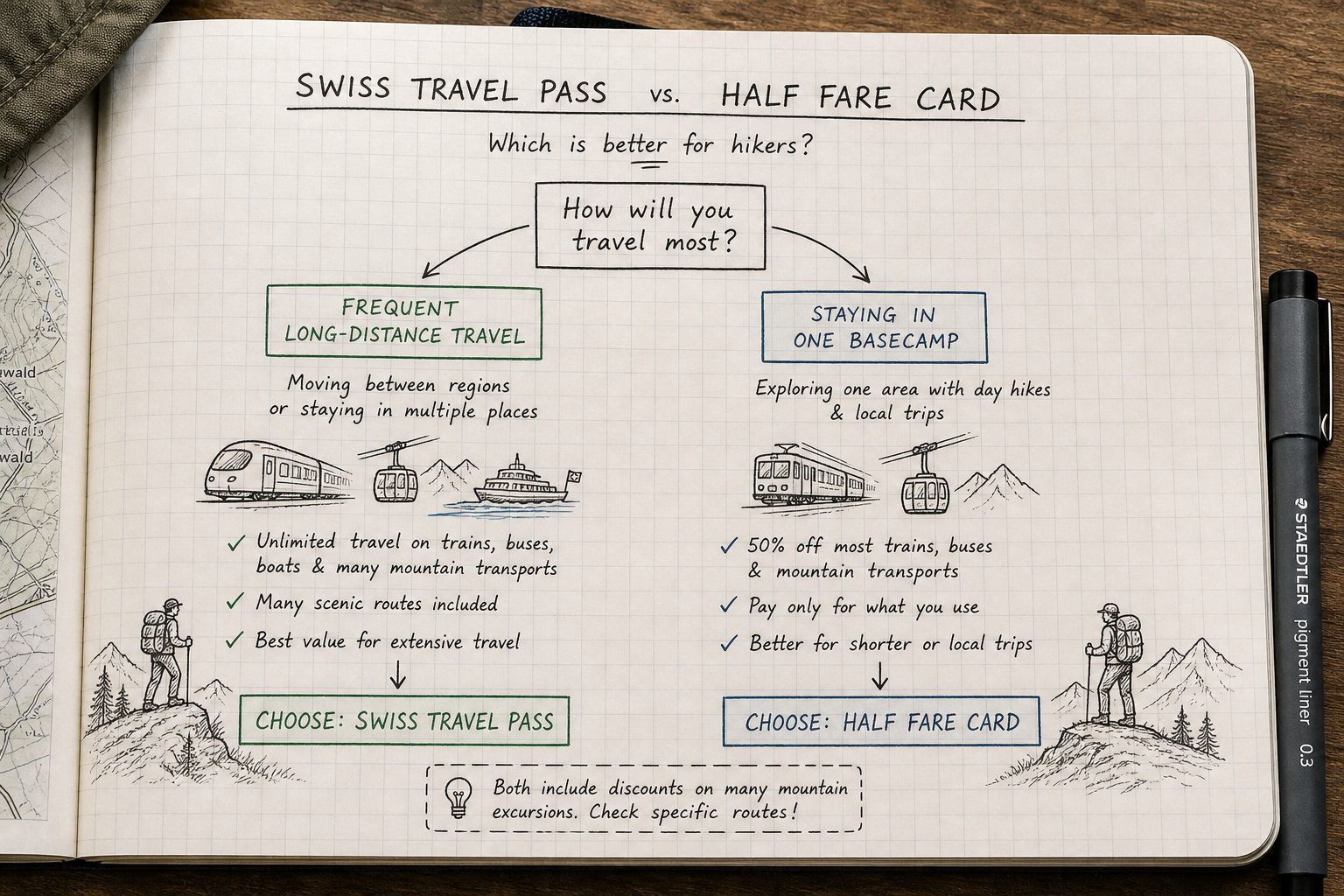
For most solo hikers, the Swiss Half Fare Card (usually valid for a month) pays for itself within three days. It gives you 50% off trains, buses, and most mountain cable cars.
The Swiss Travel Pass offers unlimited travel on trains and buses, but only provides 50% (or sometimes 25%) off the high-altitude cable cars that hikers actually need. If you plan to pick a basecamp and hike locally rather than taking cross-country trains every day, the Half Fare Card is almost always the more economical choice.
Supersaver Tickets:
If you download the SBB Mobile app, look for “Supersaver” tickets. These are heavily discounted point-to-point tickets that tie you to a specific train time. They are excellent for your initial transfer from Zurich or Geneva airports to your mountain base.
Eating on a Backpacker Budget
Eating out at restaurants in the Swiss Alps will instantly destroy a solo traveler’s budget. A standard plate of Rösti (a potato dish) or a basic pizza can cost 25 to 30 CHF, and a pint of beer is often 8 CHF or more.
The Supermarket Strategy:
Coop and Migros are the two dominant supermarket chains. To survive, you will need to utilize hostel kitchens.
- Breakfast: Buy oats, local yogurt, and fruit.
- Lunch: Pick up fresh bread, local Appenzeller or Gruyère cheese, and dried meats. Almost every Swiss supermarket has a bakery section that sells half-loaves of excellent bread for a couple of francs.
- Dinner: Pasta, rice, and simple vegetable dishes are the standard hostel fare.
Pro-tip for solo travelers: When cooking in a hostel, look for other solo travelers cooking the same cheap pasta. Offering to pool ingredients (you buy the sauce, they buy the pasta) is the easiest way to make a hiking partner for the next day.
Packing Essentials for the Alps
Swiss summer weather is volatile. You can start a hike in a t-shirt at 20°C and find yourself in a sleet storm at 2,500 meters three hours later. If you are refining your gear list, our Swiss Alps summer packing guide covers the 5-step layering system in detail.
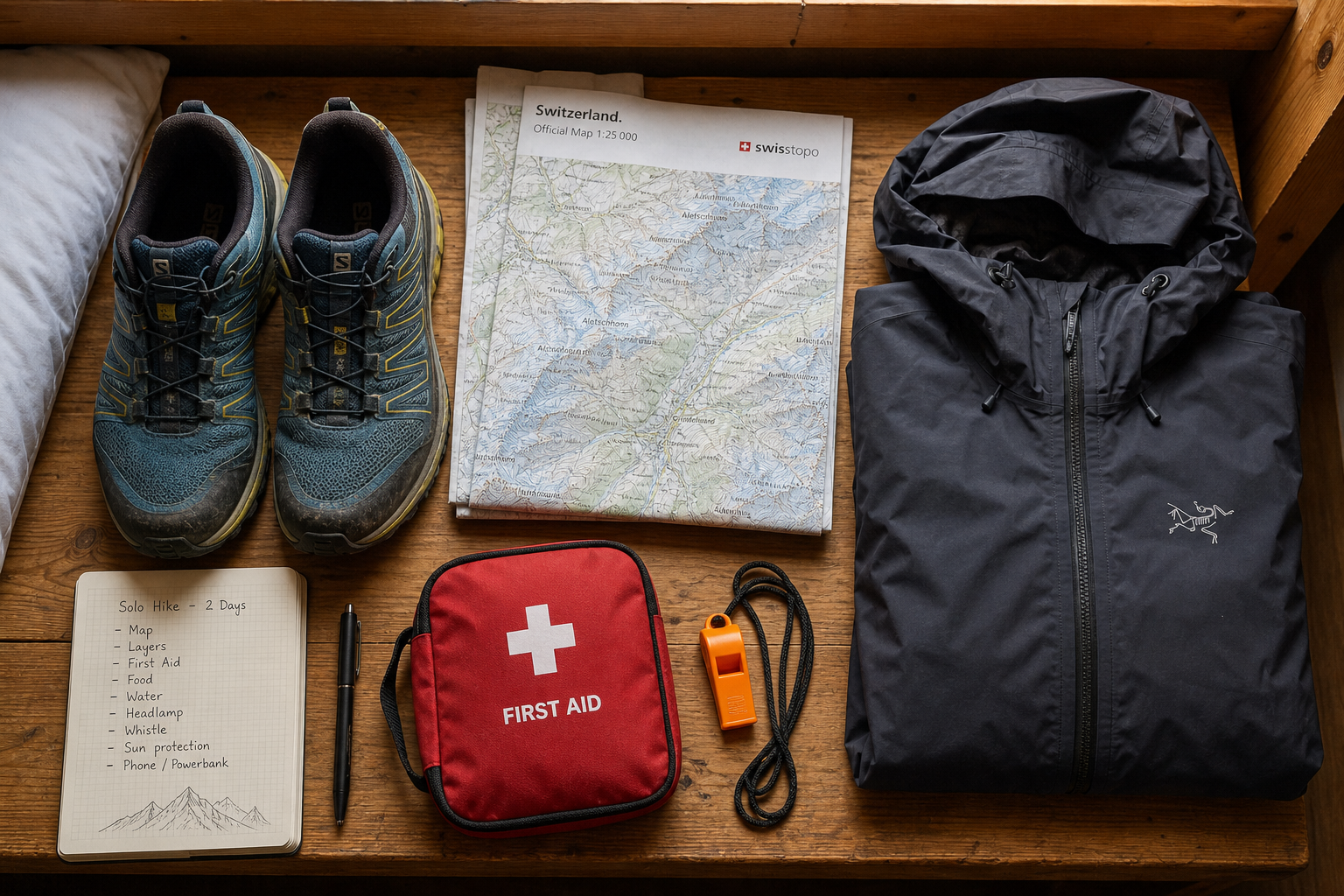
For a solo hiker, you must be entirely self-sufficient. Key non-negotiables include:
- Sturdy, broken-in trail runners or hiking boots: The terrain is rocky, steep, and often slick with glacial runoff.
- A quality hard-shell rain jacket: Do not rely on cheap ponchos; alpine winds will shred them.
- Physical topographic maps or offline GPS: Download the SwissTopo app. It is free, highly detailed, and works offline. Do not rely on Google Maps for alpine trails.
- A whistle and first aid kit: When hiking alone, a sprained ankle on a quiet trail is a serious situation.
The Logistics-Free Alternative: Social Hiking Holidays
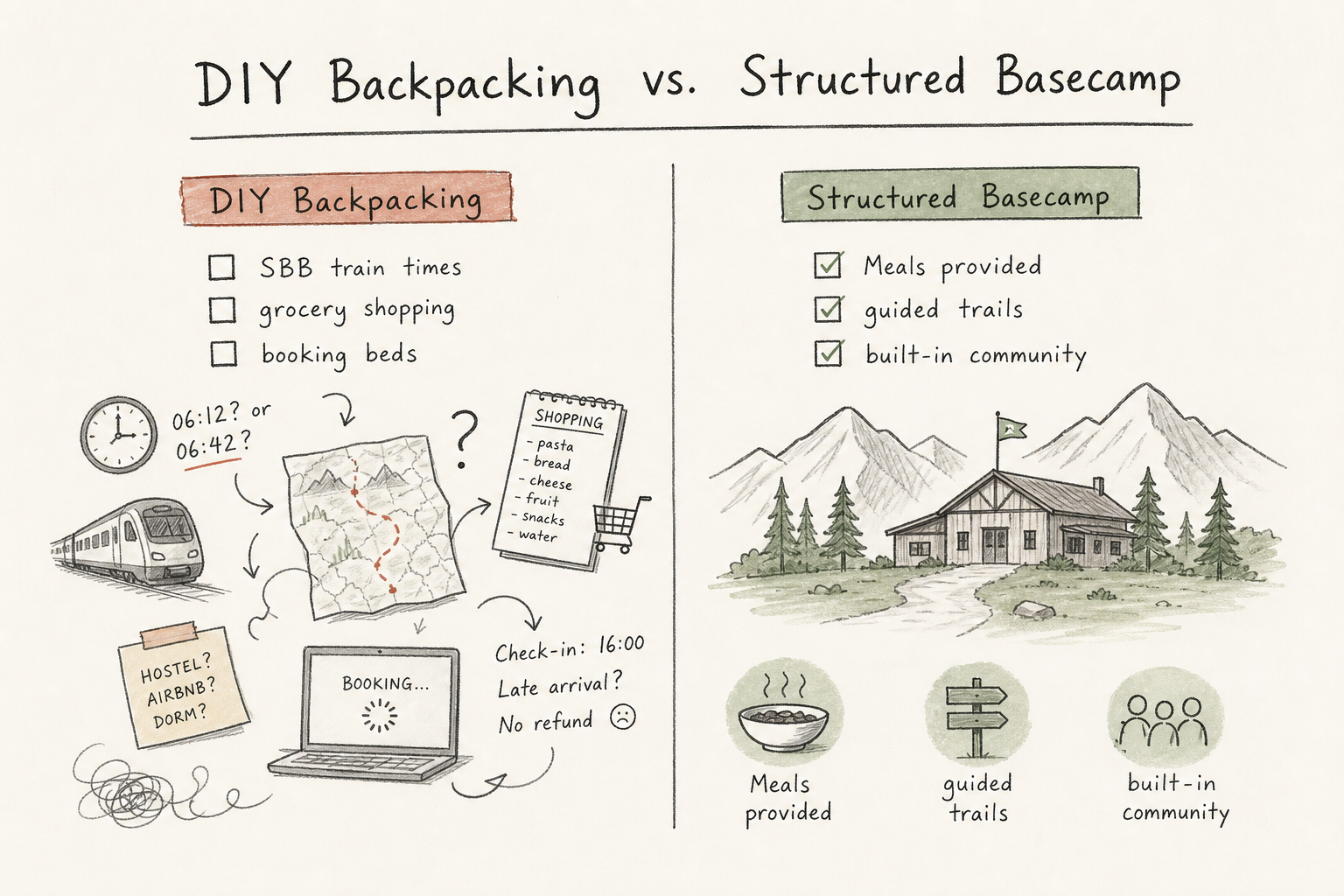
For many solo backpackers, digital nomads, and young professionals, piecing together this puzzle—booking hostels, calculating train fares, hauling groceries up mountains, and hoping to find a reliable trail partner—is exhausting. You want the community of a hostel and the rugged independence of alpine hiking, without spending 15 hours on a spreadsheet before your trip.
This is where structured social alpine experiences change the game. If you are struggling to find a social group, booking a dedicated week-long hiking holiday solves the logistics instantly.
How a Structured Basecamp Works
Hiking Hostel offers week-long summer hiking holidays specifically designed for solo travelers, backpackers, and budget-conscious outdoor enthusiasts. Instead of bouncing between crowded tourist hubs, the experience is centralized in authentic mountain environments, primarily utilizing basecamps in Liddes and St. Stephan.
Here is how this model replaces the DIY logistical headache:
- Accommodation & Community Included: You get a bed in a dedicated hostel environment surrounded exclusively by other hikers on the exact same trip. The social atmosphere is built-in. You don’t have to worry about sharing a room with people coming back from a nightclub at 3 AM.
- Zero Meal Planning: Breakfasts, packed trail lunches, and communal dinners are provided. You never have to step foot in a busy supermarket or calculate the price of pasta.
- Transport Solved: Airport transfers and daily transport to the trailheads are organized. You bypass the complex SBB timetable and the expensive local gondola fees.
- Guided Excursions: You get the benefit of local knowledge. The guides know the current trail conditions, weather patterns, and the hidden routes that don’t show up on popular online trail apps.
Exploring Liddes, St. Stephan, and Beyond
By operating out of core locations like Liddes (in the Valais region near the St. Bernard Pass) and St. Stephan (in the Simmental valley), the trips avoid the heavy commercial traffic of places like Interlaken, offering a more pristine alpine experience.
- Liddes: Situated on the historic route to Italy, this area offers access to dramatic high-altitude landscapes, rugged peaks, and deep, quiet valleys. It is prime territory for spotting marmots, ibex, and enjoying uninterrupted views of glaciated peaks.
- St. Stephan: Located in the Bernese Oberland but tucked away from the main tourist drag, this area provides access to lush green alpine meadows, traditional dairy farms, and spectacular ridgeline hikes.
While some travelers prefer the constant movement of hut to hut hiking in Switzerland, basecamping in Liddes or St. Stephan means you only carry a light daypack each day, returning to a hot shower, a warm meal, and your main luggage every night.
Day Excursions: Expanding Your Alpine Footprint
One of the main benefits of a structured hiking holiday is the ability to easily access distant regions that would be a logistical nightmare to reach via public transport for just one day.
Hiking Hostel packages typically include organized excursions to some of the most iconic landscapes in the Alps:
- Aosta, Italy: Cross the border to experience the Italian side of the Alps. The terrain shifts, the culture changes, and the espresso gets significantly cheaper. It’s a fantastic cultural contrast to the Swiss valleys.
- Chamonix and Mont Blanc: Standing in the shadow of Western Europe’s highest peak is awe-inspiring. Navigating to the best hiking trails near Mont Blanc from a Swiss basecamp usually involves multiple trains and buses, but a dedicated transfer makes it a seamless day trip. If you want to experience Mountain Mont Blanc without the stress of local traffic, organized transport is key.
- Glacier 3000 / Gstaad: Experience year-round ice and high-alpine suspension bridges before descending into the upscale, traditional chalet village of Gstaad for a stark architectural contrast.
These excursions allow solo travelers to cover a massive geographic area—experiencing French, Italian, and Swiss alpine cultures—in a single week without packing and unpacking their bags once.
Frequently Asked Questions About Solo Hiking in Switzerland
Is it safe to hike alone in the Swiss Alps?
Yes, but it requires common sense. The Swiss trail system is arguably the safest and best-marked in the world.
Trails are color-coded:
- Yellow: Wide, easy walking paths. Running shoes are fine.
- Red-White-Red: Mountain trails. Expect steep, rocky terrain. Boots required.
- Blue-White-Blue: Alpine routes. These may require using hands to scramble, crossing snowfields, or navigating exposed ridges with fixed cables. Solo hikers should avoid these unless highly experienced.
Always tell your hostel reception where you are going, download offline maps, and check the MeteoSwiss app for afternoon thunderstorms, which are notoriously fast and violent in the summer.
Do I need to book Swiss hostels in advance?
Absolutely. The window for prime summer hiking in the Swiss Alps is short—roughly late June through mid-September. The best hiking hostels in places like Gimmelwald or Lauterbrunnen sell out months in advance for the peak July and August weeks. If you wait until you arrive, you will likely be forced into expensive hotels down in the cities.
Can I join groups if I travel solo?
If you book independently, you will need to rely on your social skills in hostel kitchens to find trail partners. It is very common, but never guaranteed. If finding a group is a priority, booking an organized hiking holiday ensures you are immediately integrated into a group of 10 to 15 like-minded solo travelers and backpackers for the entire week.
Whether you choose to brave the SBB timetables and piece together a DIY trip through the Bernese Oberland, or opt for the seamless community of an organized basecamp in Liddes, the Swiss Alps reward those who prepare. Pack your waterproofs, invest in good boots, and choose a basecamp that connects you with the mountain community.