Swiss Ski Resort Verbier: Save Big Staying in Liddes
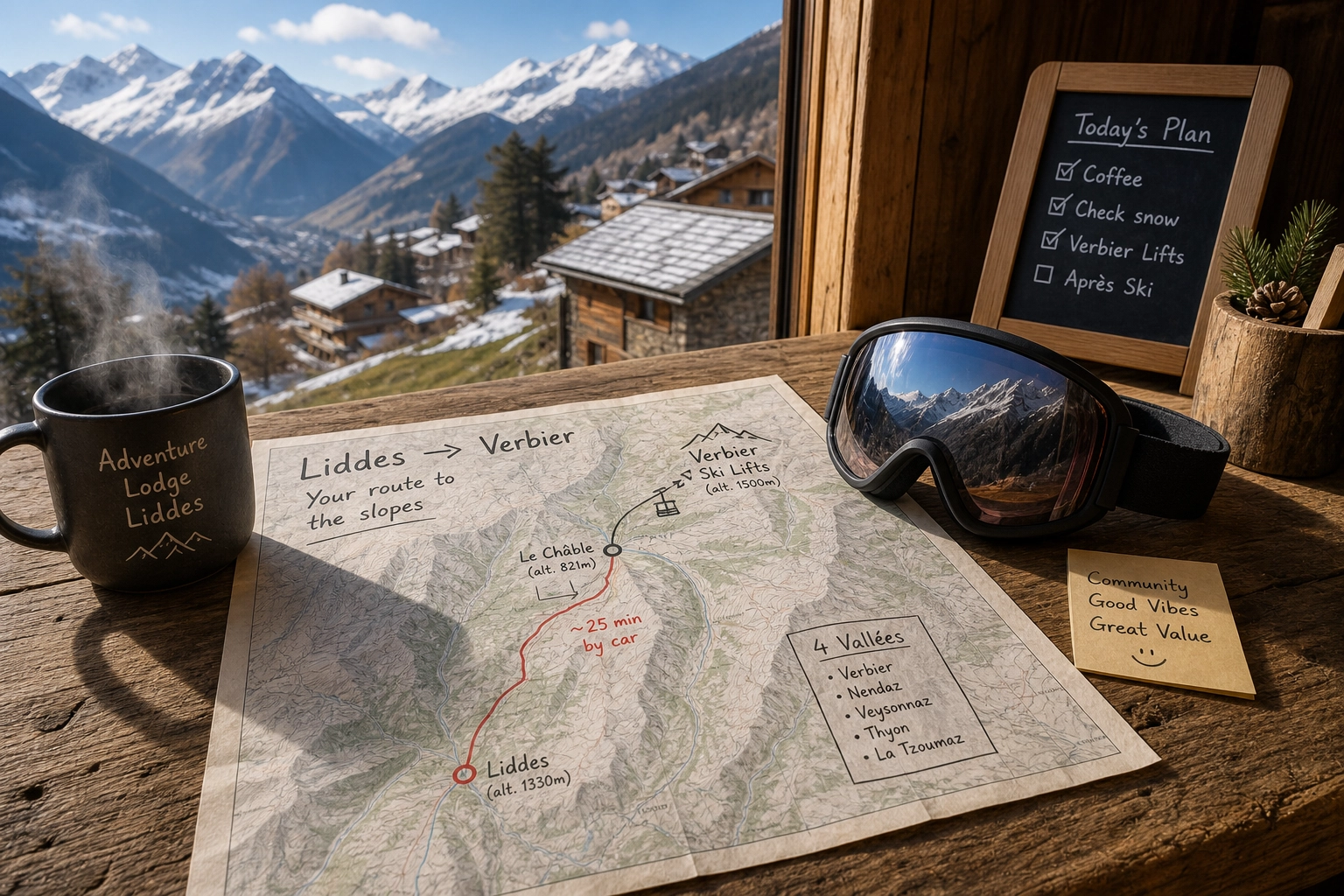
Verbier commands a legendary status in the ski world. Perched on a sun-drenched plateau in the Swiss Alps, it offers gateway access to the 4 Vallées—Switzerland’s largest ski area, boasting 410 kilometers of linked pistes and some of the most formidable lift-accessed freeride terrain on the planet. But Verbier is equally famous for something else: eye-watering prices.
Between the Michelin-starred dining, the exclusive chalets, and the legendary après-ski scene, a week in Verbier can easily deplete a year’s vacation budget. According to high-end travel publications like Travel + Leisure, Verbier is a playground for royalty and celebrities.
But what if you just want to ski world-class powder, connect with like-minded mountain enthusiasts, and not worry about a €15 hot chocolate?
The secret to hacking Verbier is simple: don’t stay in Verbier.
By basing yourself slightly down the valley in the quiet, authentic alpine village of Liddes, you can experience the exact same mountains, snow, and terrain for a fraction of the cost. At Ski Hostel, our community-driven adventure lodge in Liddes, we’ve built a system that allows budget-conscious hikers, digital nomads, and solo travelers to ski the 4 Vallées during the day and return to a warm, social, and affordable “home away from home” at night.
Here is exactly how to pull off a budget-friendly, high-adventure ski trip to the Swiss ski resort of Verbier.
The Financial Reality of Verbier
To understand why Liddes is such a strategic basecamp, you have to look at the sheer economics of the region. Verbier is structured around luxury hospitality. If you want to know Which Swiss Ski Resort Fits a Backpacker’s Budget?, the answer is rarely a resort town with a central plaza lined with designer boutiques.
The “Verbier Premium”
Everything within the town limits of Verbier carries a premium. Because the village sits at 1,500 meters and is constrained by mountain geography, real estate is hyper-competitive. This trickles down to visitors in the form of high nightly rates, expensive supermarket goods, and costly dining.
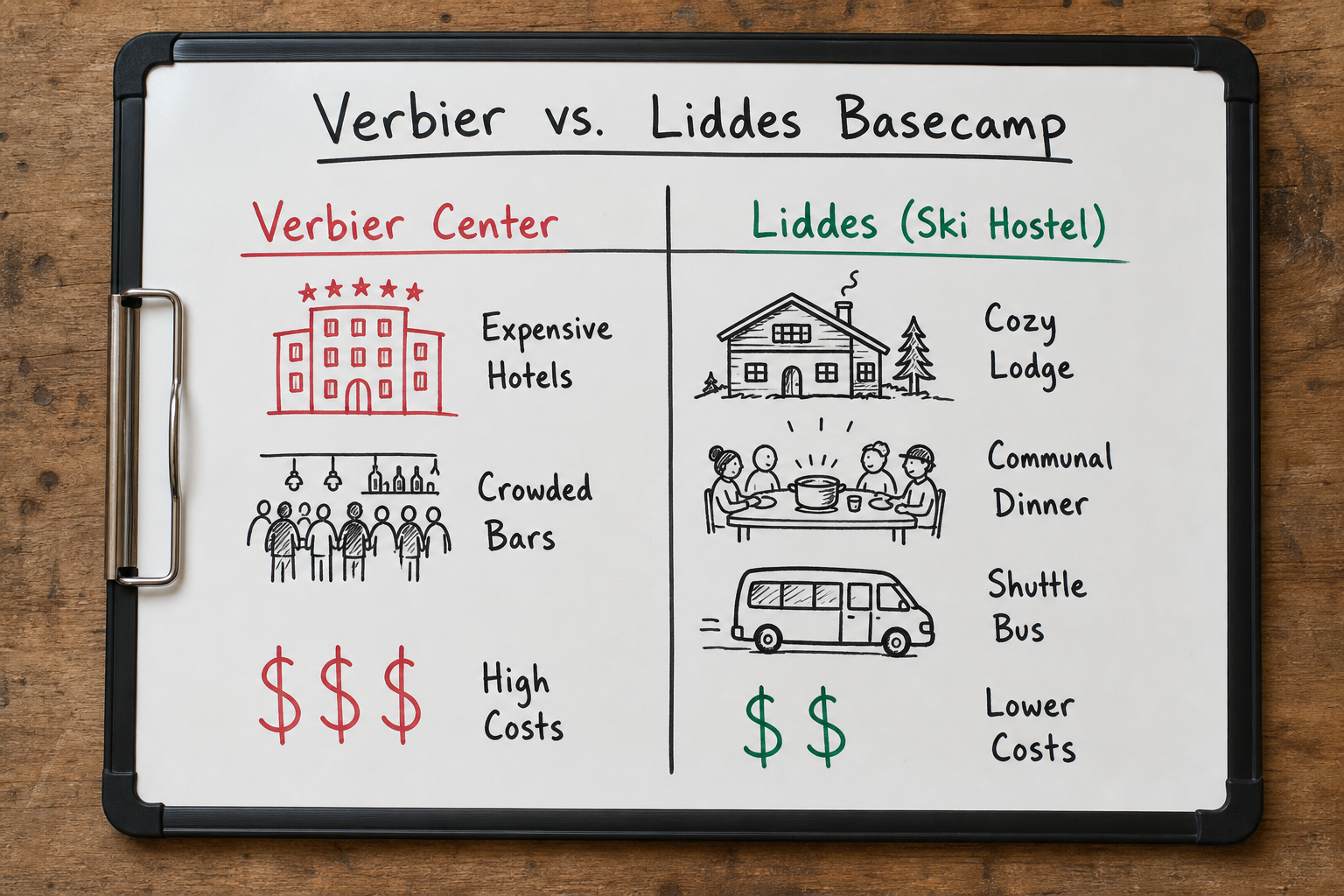
If you stay in the center of Verbier, you are paying for the privilege of walking out of your hotel directly into the après-ski bars. For luxury seekers, that convenience is worth the price tag. But for outdoor enthusiasts whose primary goal is first tracks on Mont Fort, that premium is unnecessary.
The Liddes Advantage
Liddes is a traditional Swiss farming and transit village situated on the route toward the Great St. Bernard Pass. It lacks the booming nightclubs of Verbier, but it possesses exactly what adventure travelers actually need:
- Affordable Real Estate: Which translates to dramatically lower accommodation costs for guests.
- Strategic Location: It sits just a short drive from Le Châble.
- Community Atmosphere: Because it’s not a bustling resort town, the focus shifts inward to the community you build at the lodge.
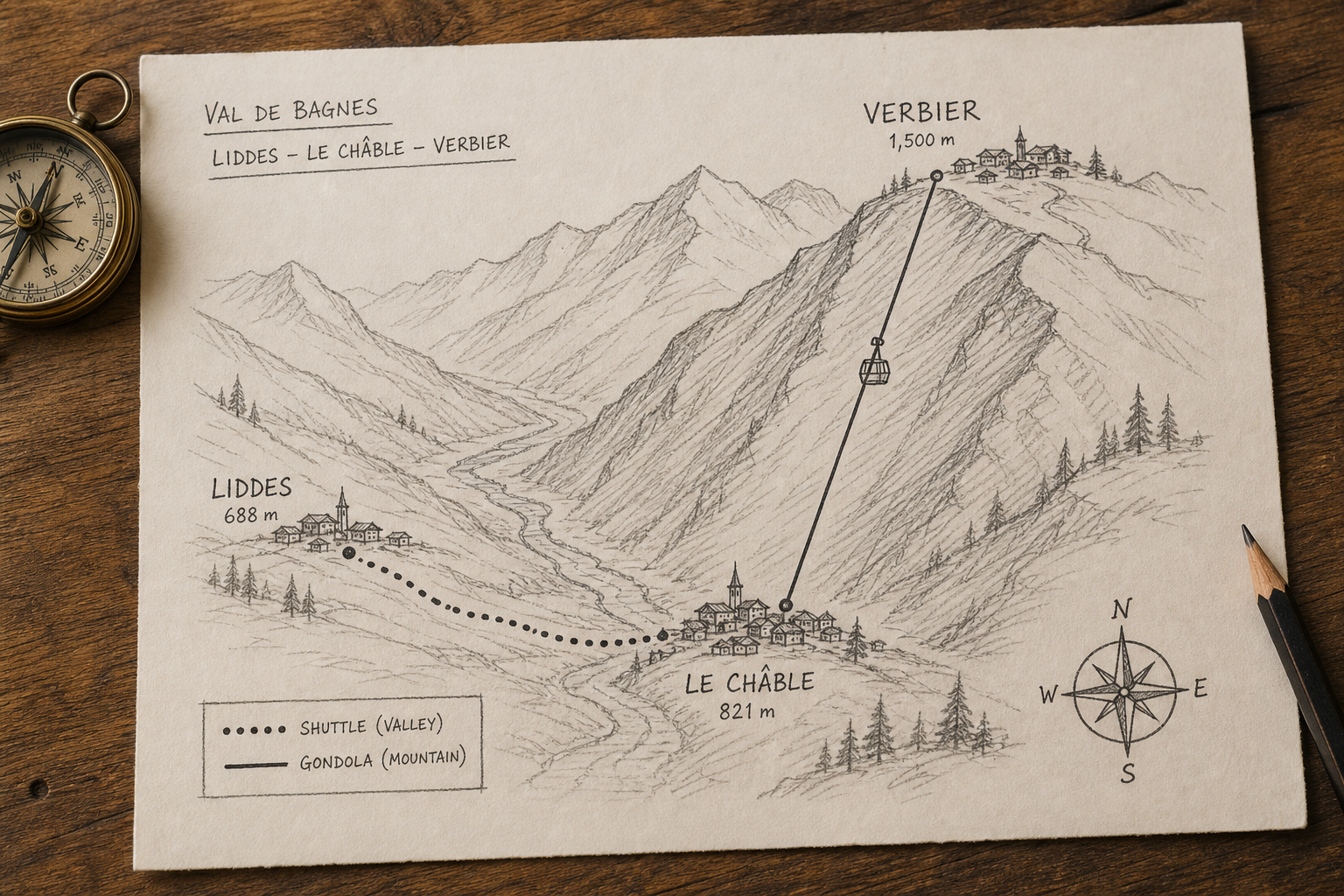
Le Châble is the valley floor town located directly below Verbier. From Le Châble, a high-speed gondola whisks you straight up into the heart of the Verbier ski area (Les Ruinettes) in minutes. In fact, many locals argue that starting your day in Le Châble is superior to starting in Verbier, as you bypass the morning traffic jams in the upper village.
At Ski Hostel, we handle the logistics. Our all-inclusive stays feature scheduled transport to Le Châble, meaning you get the ski access of a local without the logistical headache of navigating Swiss mountain roads in winter.
Navigating the 4 Vallées on a Budget
The 4 Vallées is a massive interconnected network encompassing Verbier, La Tzoumaz, Nendaz, Veysonnaz, and Thyon. Because of its size, buying a lift pass requires a bit of strategy.
Sector Passes vs. Full Area Passes
You don’t necessarily need the full 4 Vallées pass every single day, especially if you are a beginner or intermediate skier. You can save significantly by purchasing sector-specific passes depending on the day’s itinerary.
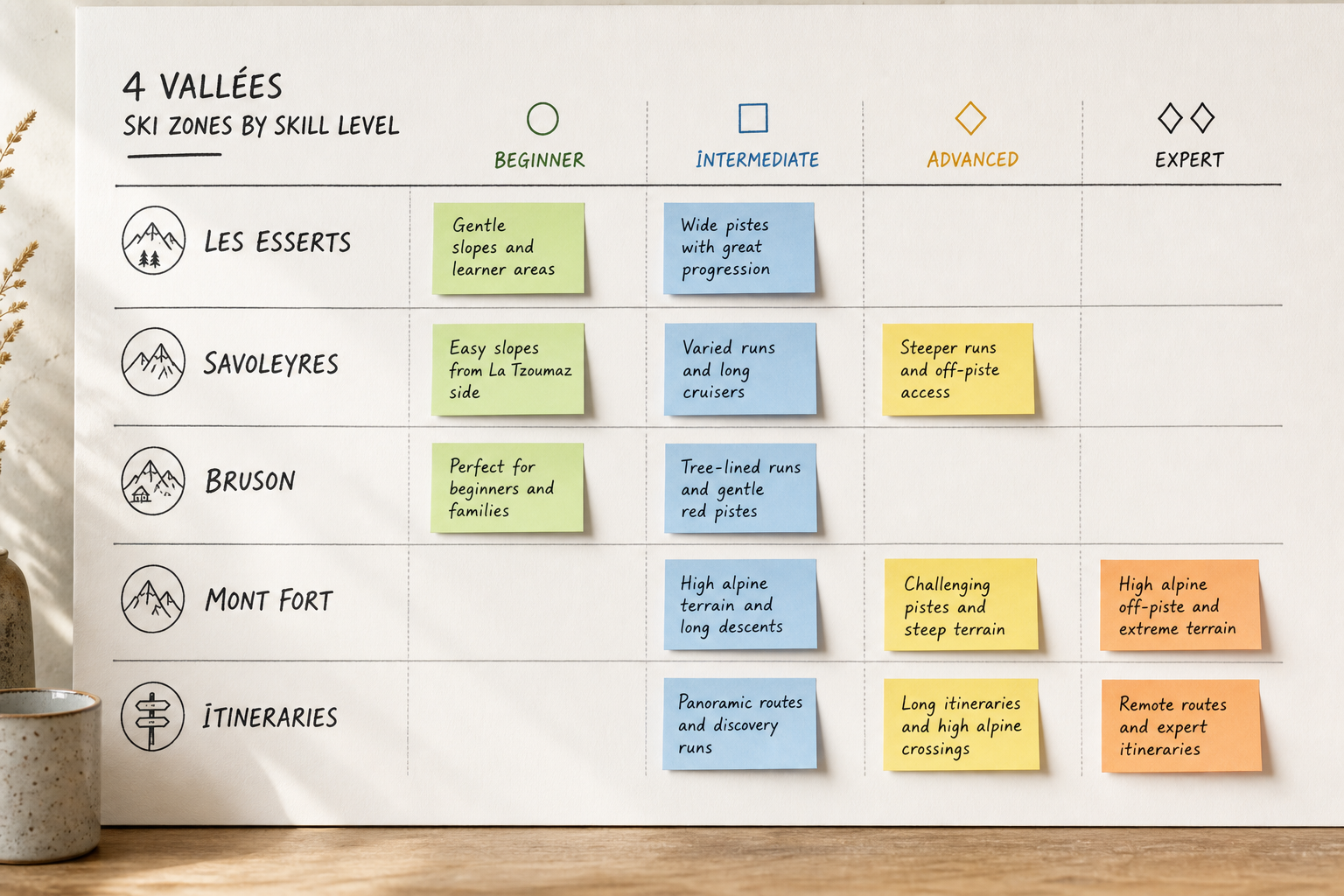
- Verbier Sector Only: Covers Verbier, Savoleyres, and La Tzoumaz. This is more than enough terrain for 80% of skiers for a 3-to-4 day trip.
- Bruson Sector: Located directly across the valley from Verbier (also accessed via gondola from Le Châble), Bruson is the locals’ best-kept secret. When Verbier is tracked out or crowded, Bruson offers quiet, tree-lined pistes and spectacular powder stashes at a lower ticket price.
- Full 4 Vallées: Required if you want to ski the famous Mont Fort glacier (3,330m) or complete the full circuit over to Veysonnaz. Reserve this for clear, sunny days when you want to cover massive distances.
Always check the official Verbier 4 Vallées website for dynamic pricing. Buying lift passes weeks in advance online often yields discounts of up to 15% compared to walking up to the ticket window in Le Châble.
Why Social Lodges Beat Luxury Hotels
The traditional ski holiday model isolates you. You check into a hotel room, eat at your private table, and maybe nod to a stranger on the chairlift. For solo travelers, digital nomads, and international backpackers, this model is not only expensive—it’s lonely.
This is a topic we’ve covered extensively in Hotels in Swiss Mountains? Why Social Lodges Beat Luxury. The modern mountain traveler prioritizes connection and shared experiences over high-thread-count sheets.
The Ski Hostel Ecosystem
When you base yourself in Liddes at a community-driven lodge, the “après-ski” looks completely different.
Instead of paying €20 for a cocktail in a crowded bar, our guests return to the hostel for a curated weekly adventure program. This includes:
- Communal Dinners: The cornerstone of the lodge experience. We specialize in Brazilian-influenced cuisine—think hearty, slow-cooked stews (Feijoada) that perfectly replenish the calories burned navigating mogul fields.
- Gear Management: Renting skis in Verbier is notoriously expensive. We offer onsite gear rental, eliminating the need to queue at rental shops in town. Our volunteers help ensure your bindings are set and your boots fit before you even leave the lodge.
- Instant Ski Buddies: The 4 Vallées is vast and can be intimidating. At breakfast, guests naturally form groups based on skill level. Experts team up to tackle the Tortin itinerary, while intermediates group together for the wide, sunny blues of Savoleyres.
- High-Speed Wi-Fi for Nomads: The digital nomad lifestyle doesn’t stop for powder days. Our shared spaces are designed with remote workers in mind, allowing you to answer emails over coffee, catch the midday gondola for three hours of skiing, and be back online for US east coast hours in the evening.
A Breakdown of Verbier’s Ski Terrain
Verbier is often billed as an expert’s paradise. Publications like Powderhounds consistently rank it as one of the premier freeride destinations globally. However, the mountain is diverse enough to accommodate everyone if you know where to look.
For the Experts: The Itineraries
Verbier’s greatest asset is its “itineraries.” These are marked on the piste map with yellow lines. They are avalanche-controlled and patrolled, but they are not groomed. This provides a safe, accessible backcountry experience without requiring touring gear.
- Mont Gelé: A cable car takes you to a solitary peak at 3,023m. There are no pistes down, only steep, challenging itineraries. It’s a rite of passage for advanced skiers.
- Tortin: Famous for its massive moguls. On a powder day, it’s a dream; a week after a storm, it’s a quad-burning test of endurance.
- Col des Mines: A relatively accessible freeride run that funnels you beautifully back toward the main lift system.
Safety Note: Even though itineraries are controlled, the broader off-piste terrain in Verbier is serious high-alpine terrain. If you are venturing off the marked yellow routes, you must have avalanche gear (beacon, shovel, probe) and the knowledge to use it, or hire a local mountain guide.
For Intermediates: Cruising the Blues and Reds
If you prefer carving on corduroy, the Savoleyres area is your best bet. It is south-facing, meaning it catches the sun early, and features wide, rolling blue and red runs perfect for building confidence.
Alternatively, take the connection over to La Tzoumaz on the north-facing slopes. Because it sits in the shade longer, the snow quality here remains cold, grippy, and pristine long after the main Verbier bowls have turned to slush on warm spring afternoons.
For Beginners: Les Esserts
While Verbier isn’t the most beginner-friendly resort in Europe, it does have dedicated learning zones. Les Esserts is the primary beginner area, situated slightly apart from the main mountain traffic. It’s an excellent place to master the snowplow before graduating to the higher-altitude blue runs at Lac des Vaux.
Beyond Downhill: Winter Hiking and Exploring
Not everyone in your group may want to ski, and that’s perfectly fine. The Val de Bagnes region is a spectacular winter playground even without skis attached to your feet.
Switzerland maintains an incredible network of prepared winter walking trails. These are machine-groomed paths that weave through the snow-covered forests and alpine meadows, allowing you to explore the mountains with nothing more than a good pair of waterproof boots.
We highly recommend the winter trail from Les Ruinettes to La Chaux. It runs relatively flat along the mountainside at 2,200 meters, offering panoramic views of the Combin massif. It’s a great way to meet up with the skiers in your group for lunch at an on-mountain restaurant.
For more comprehensive tips on exploring the Swiss backcountry on foot, our guide to 7 Tips for Hiking in Switzerland (Without the High Cost) applies just as much to winter walking as it does to summer trails.
Border-Crossing Excursions: Italy and France
One of the greatest geographical advantages of staying in Liddes is its proximity to international borders. We are not just a base camp for Verbier; we are a hub for a multi-country alpine experience.
Aosta, Italy (The Food and Tree Skiing Run)
Just a short drive up the pass and through the Great St. Bernard Tunnel lies the Aosta Valley in Italy. The ski resorts here, such as Pila and Courmayeur, offer a completely different vibe than Verbier.
Skiing in Italy generally means quieter pistes, excellent tree skiing, and food that is dramatically cheaper and often vastly superior to standard Swiss mountain fare. A day trip to Aosta for cheap espresso, incredible pizza, and a change of scenery is a staple of our weekly adventure programs.
Chamonix, France (The Shadow of Mont Blanc)
In the opposite direction, about an hour’s drive away, sits Chamonix, France. Known as the birthplace of extreme skiing, seeing the glaciers spilling down from Mont Blanc is an awe-inspiring experience.
If you are interested in exploring this area without getting caught in the massive tourist bottlenecks, read our guide on Mountain Mont Blanc: 7 Ways to Visit Without the Crowd. We regularly organize day excursions to Chamonix for our guests, handling the cross-border transport logistics so you can focus on the views.
Packing for a Swiss Winter Adventure
Packing for a ski trip can quickly result in oversized luggage fees. The key to staying mobile and budget-conscious is layering and utilizing lodge resources.
While our Swiss Alps Summer: A Simple 5-Step Packing Guide focuses on warm-weather gear, the core philosophy of “modular packing” remains identical for winter.
What we provide at Ski Hostel:
- Skis, snowboards, boots, and poles (available for rental).
- Bed linens and warm blankets.
- Communal cooking ingredients and all heavy meals.
- Hairdryers and basic amenities.
What you absolutely must bring:
- A high-quality waterproof shell: Don’t buy a heavy, insulated ski jacket. Buy a waterproof shell and layer underneath it with fleece and merino wool. This allows you to adjust to the temperature.
- Merino wool base layers: Cotton is your enemy in the mountains. Merino wool regulates temperature and doesn’t hold odors, meaning you can pack fewer sets.
- Proper ski socks: Pack 3-4 pairs of thin, wool-blend ski socks. Thick socks actually make your feet colder by restricting blood flow in your boots.
- Sun protection: UV rays reflect off the snow and are incredibly intense at 3,000 meters. Goggles for skiing, sunglasses for après, and high-SPF sunscreen are non-negotiable.
The Digital Nomad Schedule
For those working on the road, balancing a full-time job with a full-price ski pass is a tough financial pill to swallow. This is where the Liddes ecosystem truly shines.
Because you aren’t paying a premium to stay directly on the slopes, you don’t feel the pressure to ski from first chair to last call every single day.
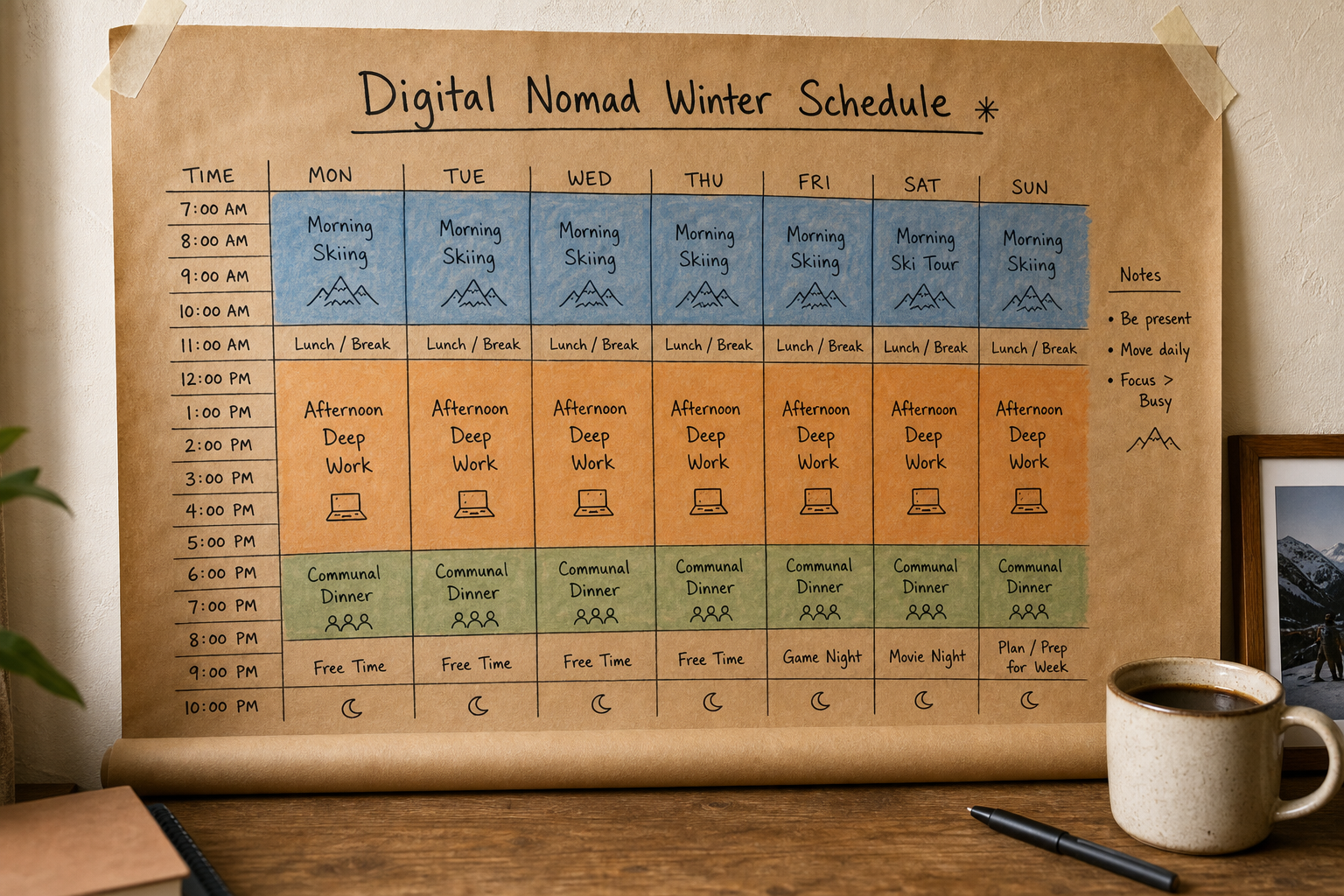
A typical digital nomad day at Ski Hostel:
- 7:30 AM: Breakfast at the lodge, check the official Verbier webcam and lift status.
- 8:15 AM: Catch the hostel transport down to the Le Châble gondola.
- 9:00 AM - 1:00 PM: Ski the 4 Vallées during the best snow conditions of the day.
- 1:30 PM: Return to the lodge.
- 2:00 PM - 7:00 PM: Log onto the high-speed Wi-Fi. The communal spaces are quiet in the afternoon, providing an excellent environment for deep work or Zoom calls (perfectly aligned with the start of the US East Coast workday).
- 7:30 PM: Close the laptop and join the communal dinner.
This balance is virtually impossible to achieve in a crowded, noisy, €300-a-night hotel in the center of Verbier.
Frequently Asked Questions About Skiing Verbier
Is Verbier good for beginners?
Verbier is undeniably geared toward intermediate and advanced skiers. However, absolute beginners can easily spend 2-3 days learning at Les Esserts or La Tzoumaz. If you are a beginner looking for guidance, we recommend reading up on Guided Hiking in Switzerland: Finding Your Social Group—the same principles of finding patient, group-based instruction apply to our winter ski excursions.
When is the best time to ski Verbier?
- January: Coldest snow, quietest pistes, best powder, but shorter days.
- February: Peak season. Excellent coverage but highly crowded due to European school holidays. We recommend skiing the Bruson sector during this time to avoid queues.
- March: The sweet spot. Longer days, warmer temperatures, and the legendary spring skiing (corn snow) conditions begin.
Do I need a car?
If you are staying at Ski Hostel in Liddes, no. We provide transport to the major lift stations. If you were staying independently in a remote village, a car with snow chains would be essential, but our all-in-one logistics remove that requirement.
Can I do hut-to-hut ski touring near Verbier?
Yes. The region is famous for the Haute Route, a multi-day ski tour from Chamonix to Zermatt that passes right through the Verbier region. If you enjoy summer trekking (as outlined in our guide How to Plan Hut to Hut Hiking in Switzerland (7 Tips)), winter ski touring is the ultimate evolution. However, this requires specialized touring gear, avalanche training, and ideally, a local guide.
The Smart Way to Ski the Alps
Verbier’s reputation as an exclusive, luxury-only playground is well-earned, but it isn’t the whole story. The mountains themselves don’t care how much you paid for your hotel room. The snow on Mont Gelé feels the same whether you arrived via a private helicopter or the morning shuttle from Liddes.
By prioritizing community, shared logistics, and strategic location over in-town luxury, you can unlock one of the world’s greatest ski regions on a backpacker’s budget.
The next time you are planning a winter escape, look past the crowded resort centers. Base yourself in the valley, lean into the social atmosphere of an adventure lodge, and spend your saved cash on what really matters: more days on the mountain.
If you want to experience the 4 Vallées with an international community of mountain lovers, explore our winter packages at Ski Hostel and start planning your season.