
Best months to hike the Swiss Alps for social travelers
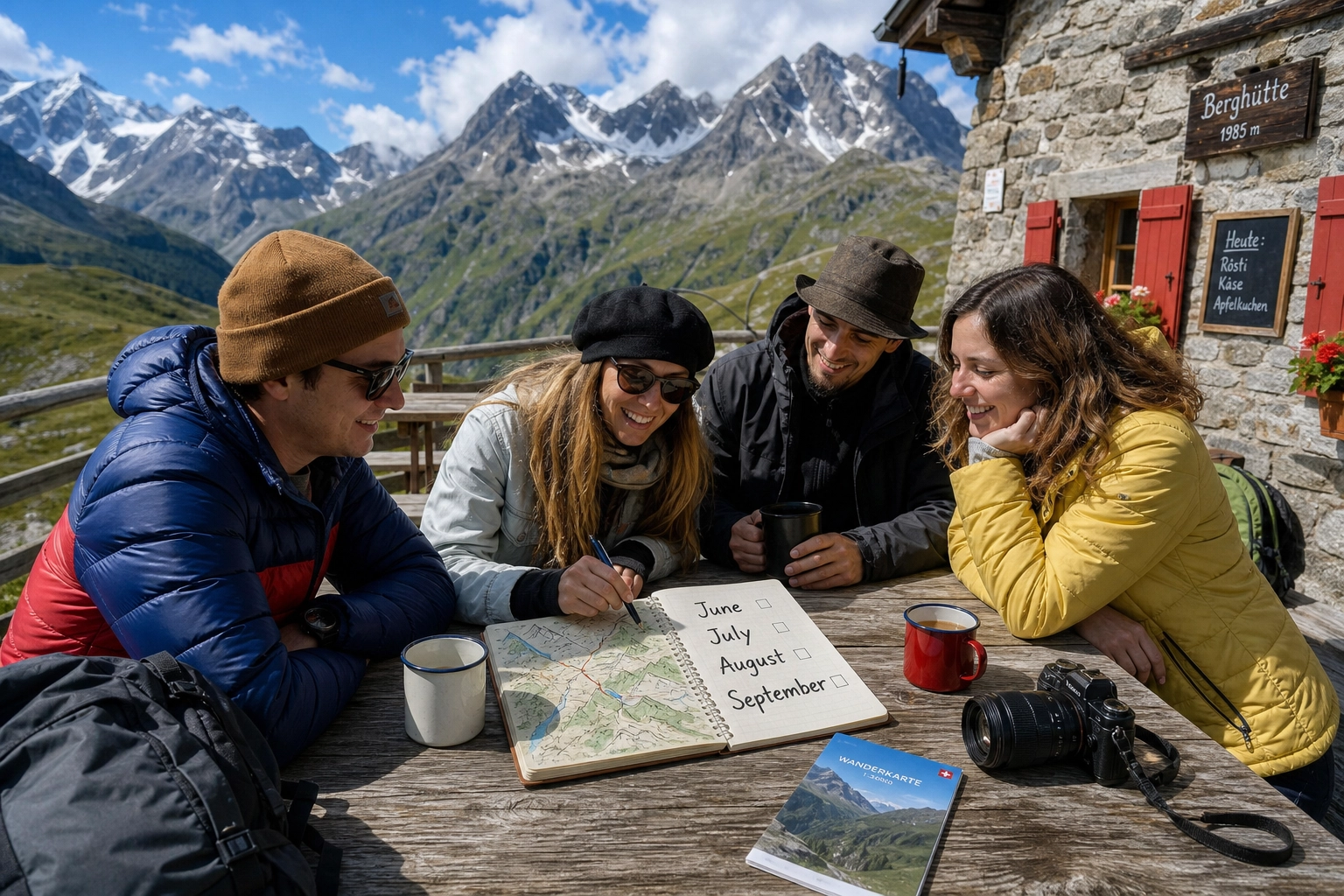
Choosing the exact week for an alpine hiking trip in Switzerland often feels like solving a weather puzzle. Pick the wrong week in early June, and you might find your high-altitude pass blocked under two meters of lingering snowpack. Book too late in October, and cable cars shut down for seasonal maintenance while early blizzards sweep across the peaks.
For solo hikers, backpackers, and digital nomads, timing is not just about temperature or rainfall. It dictates the entire energy of your trip. The month you choose determines whether you are walking empty, misty trails and sharing quiet evenings around a hostel woodstove, or tackling sun-baked pass crossings alongside fellow outdoor enthusiasts from around the world.
The core alpine season runs from late June through late September. Outside this four-month window, high-altitude trails above 2,000 meters remain snowbound or inaccessible due to closed mountain infrastructure. Within this window, each month delivers a distinct atmosphere, temperature profile, and set of logistical tradeoffs.
The Swiss Alpine Calendar at a Glance
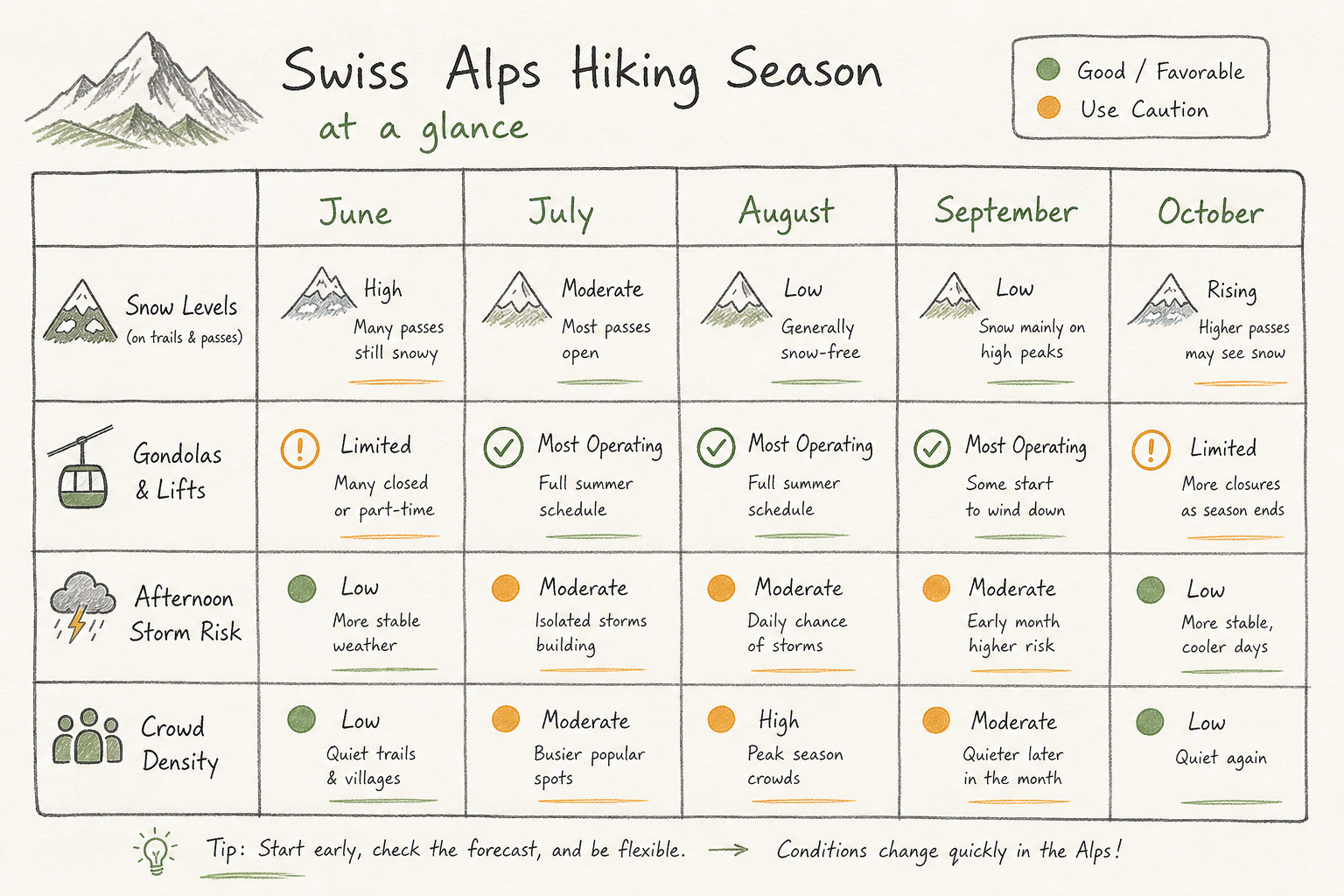
Navigating the seasonal shifts of the Valais and Bernese Alps requires looking at trail conditions, mountain transport operational dates, and accommodation dynamics together.
| Month | High Pass Trails (>2,200m) | Gondolas & Cable Cars | Afternoon Weather Stability | Social Vibe & Lodge Energy | Trail Crowds | Overall Value for Money |
|---|---|---|---|---|---|---|
| Late June | Snow patches remaining; microspikes recommended | Opening phase (80% operational) | High; occasional rain showers | Energetic reopening phase | Low to Moderate | High (Pre-peak rates) |
| July | Fully open and clear | 100% operational | Moderate; afternoon heat storms | Peak social hub, vibrant hostel groups | Moderate to High | Good (Strong package value) |
| August | Fully open; dry conditions | 100% operational | Moderate; warm valley bottoms | High international mix, lively towns | High (European peak holidays) | Moderate |
| September | Clear; autumn colors starting | 100% operational until late Sept | Very High; stable high-pressure windows | Relaxed, digital nomad friendly | Low to Moderate | Excellent |
| Early Oct | First snow risk on high summits | Closing for inter-season maintenance | High, but shorter daylight | Quiet; intimate small-group feel | Very Low | High |
Late June: Wildflowers, Roaring Waterfalls, and Early-Season Energy
If your vision of Switzerland includes electric-green valleys, alpine pastures covered in purple gentians and buttercups, and waterfalls thundering with fresh snowmelt, late June offers an unmatched visual spectacle.
Trail Conditions and High-Pass Realities
Late June represents the transition from late spring to high summer in the Valais and Bernese Oberland. On valley floors and mid-elevation trails (between 1,200 and 2,000 meters), trails are clear, dry, and lush. Above 2,200 meters, winter snowpack lingers on northern slopes and narrow mountain col crossings.
Hikers tackling high-level routes during June must remain flexible. You may encounter firm snow fields over high passes that require sturdy trekking boots, trekking poles, or light traction microspikes. Trail crews work through June clearing major footpaths, but high-altitude footbridges over glacial streams are sometimes reinstalled late in the month.
Daylight and Daily Rhythm
June features the longest days of the calendar year in Central Europe, with natural light lingering past 9:30 PM. This massive daylight window provides a huge safety margin for full-day mountain excursions. If an afternoon descent takes longer than planned, you still have hours of clear daylight remaining.
The Social Dynamics of Early Summer
June draws proactive outdoor travelers, photographers, and season-starter backpackers. Because high-altitude luxury hotels often remain quiet until July, social hostels and mountain lodges serve as early activity hubs. You will find travelers gathering around communal tables to compare snow conditions over high passes or planning joint day trips down lower valleys.
If you want to keep trip expenses manageable during the early season, read our guide on 7 Tips for Hiking in Switzerland (Without the High Cost) to stretch your budget further across Swiss rail networks and mountain huts.
July and August: Peak Summer and Complete Alpine Access
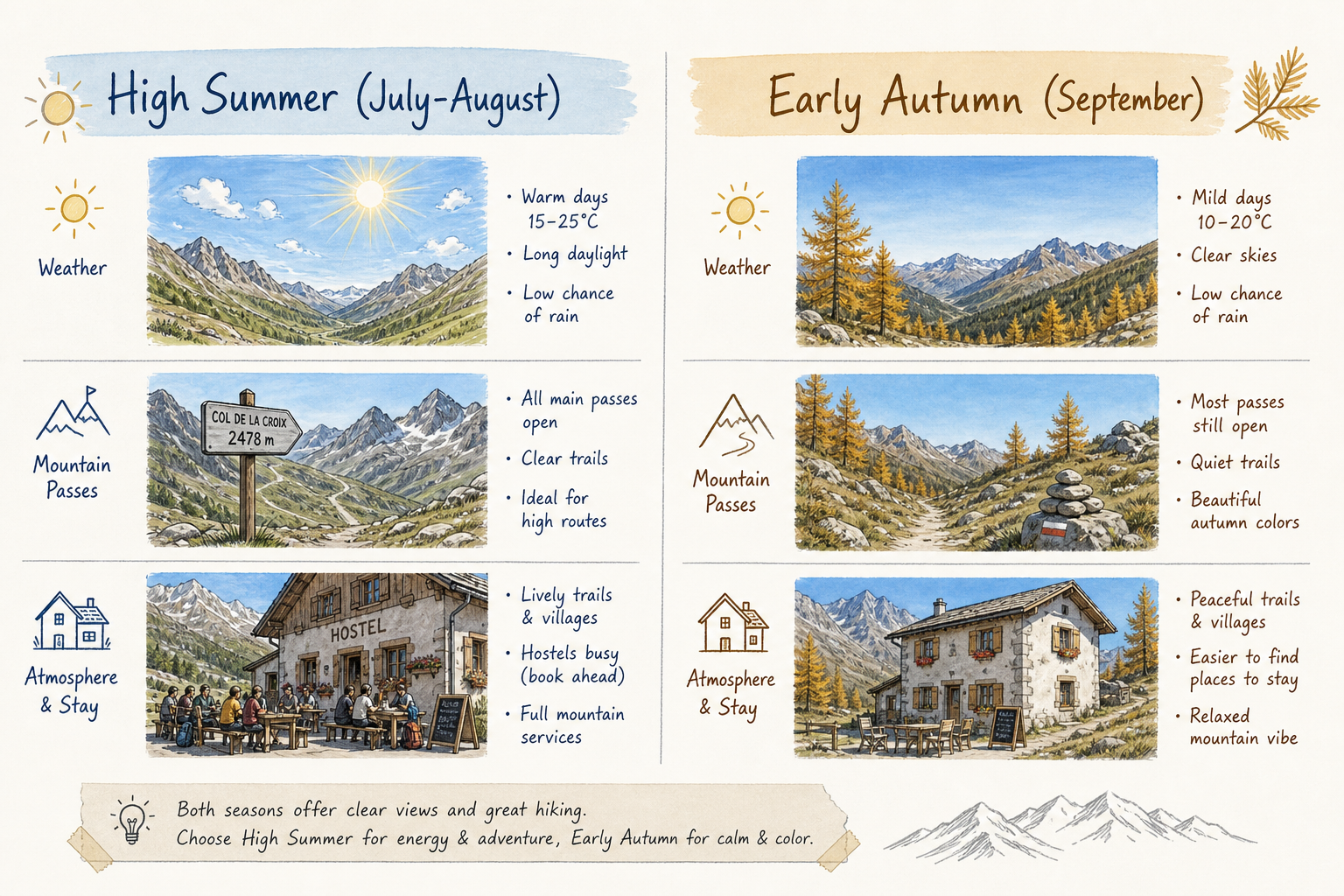
July and August form the backbone of the traditional Swiss hiking season. During these two months, snow recedes from even the highest non-glaciated passes, every mountain railway and cable car operates on a full summer schedule, and alpine huts across Switzerland, France, and Italy are fully staffed.
July: High-Altitude Paradise
By early July, high-elevation passes like the Grand St Bernard area near the Valais border become clear and accessible. Glacial lakes thaw into deep turquoise blue, and high alpine meadows reach peak flora density.
- High-Pass Access: Routes crossing 2,500 meters or higher are fully open without winter snowpack barriers.
- Cable Car Infrastructure: Every regional lift—from small village gondolas in Valais to major cable spans like Glacier 3000—operates at full daily frequency.
- Atmosphere: Energetic and communal. Group hiking packages draw solo travelers seeking structured daily routes and shared evening dinners.
August: Warm Lakes and Vibrant Mountain Hubs
August brings the warmest average air temperatures of the year to the Swiss Alps. Lower elevation valley towns experience warm summer weather, while trails above 1,800 meters offer comfortable hiking temperatures between 15°C and 22°C.
During August, trail culture reaches its international peak. Hikers from across Europe, North America, and beyond converge on classic alpine hubs. Day trips to regional icons—such as visiting Chamonix and Mont Blanc, exploring the Italian side of the massif in Aosta, or taking a scenic excursion through Interlaken—are lively and full of activity.
The Trade-offs of Peak Summer
While July and August offer absolute reliability for trail access, they present specific challenges for budget-conscious and solo travelers:
- Accommodation Surcharges: Traditional Swiss hotels routinely mark up room rates by 40% to 70% during July and August, often applying single-occupancy penalties to solo travelers. Choosing a social hostel or an organized group basecamp helps bypass these individual markups. Learn why communal alpine bases outperform single hotel stays in our breakdown: Hotels in Swiss Mountains? Why Social Lodges Beat Luxury.
- Afternoon Convection Thunderstorms: Warm summer air rising off valley floors creates localized convective clouds that can form swift afternoon thunderstorms by 2:00 PM or 3:00 PM. High-altitude hikers must adopt an early-bird schedule, leaving by 7:30 AM to finish pass crossings before late afternoon weather builds up.
- Popular Trail Density: Famous sights experience steady foot traffic between 10:00 AM and 3:00 PM when day-tourists arrive. Navigating these areas with an organized group or exploring lesser-known Valais side valleys allows you to experience prime scenery without crowded trails. For lower-traffic trail recommendations near major massifs, check out Mountain Mont Blanc: 7 Ways to Visit Without the Crowd.
September to Early October: Clear Skies and Golden Larches
For experienced hikers and digital nomads looking for stable conditions, September is widely considered the premier month for an alpine hiking week.
Stable Atmospheric Conditions
As summer heat wanes, the atmosphere over the Alps stabilizes significantly. The risk of sudden convective afternoon thunderstorms drops dramatically compared to July and August. September routinely brings long stretches of dry, crisp weather with deep blue skies and high visibility extending to distant peaks.
Transforming Landscapes
By mid-September, lower temperatures trigger autumn transformations across alpine valleys. In regions like Valais, vast forests of European larch trees turn brilliant shades of gold and amber against snow-dusted high peaks.
Seasonal Shift Checklist: September Alpine Hiking
[ ] Pack additional thermal mid-layers (mornings drop to 2°C - 6°C at elevation)
[ ] Confirm cable car operational end-dates (some village lifts close late September)
[ ] Verify daylight hours (sun sets around 7:15 PM by late September)
[ ] Pack a high-output headlamp for early starts or delayed descents
[ ] Carry an insulated thermos for warm tea on wind-exposed ridges
Social Atmosphere for Remote Workers and Solo Travelers
September attracts a distinct demographic of hikers. European school holidays have concluded, reducing family crowds on primary trails. The social atmosphere shifts toward digital nomads working remotely, remote workers on extended trips, and solo hikers who prefer tranquil trails and focused evening conversations around communal hostel tables.
Hostels in mountain hubs like Liddes and St. Stephan maintain active social schedules while providing quieter common areas during daytime hours for remote working before or after trail outings.
The Alpine Weather Reality: Elevation, Microclimates, and Timing
Understanding Swiss mountain weather requires recognizing how elevation and topography dictate conditions regardless of the calendar month.
The Temperature Elevation Gradient
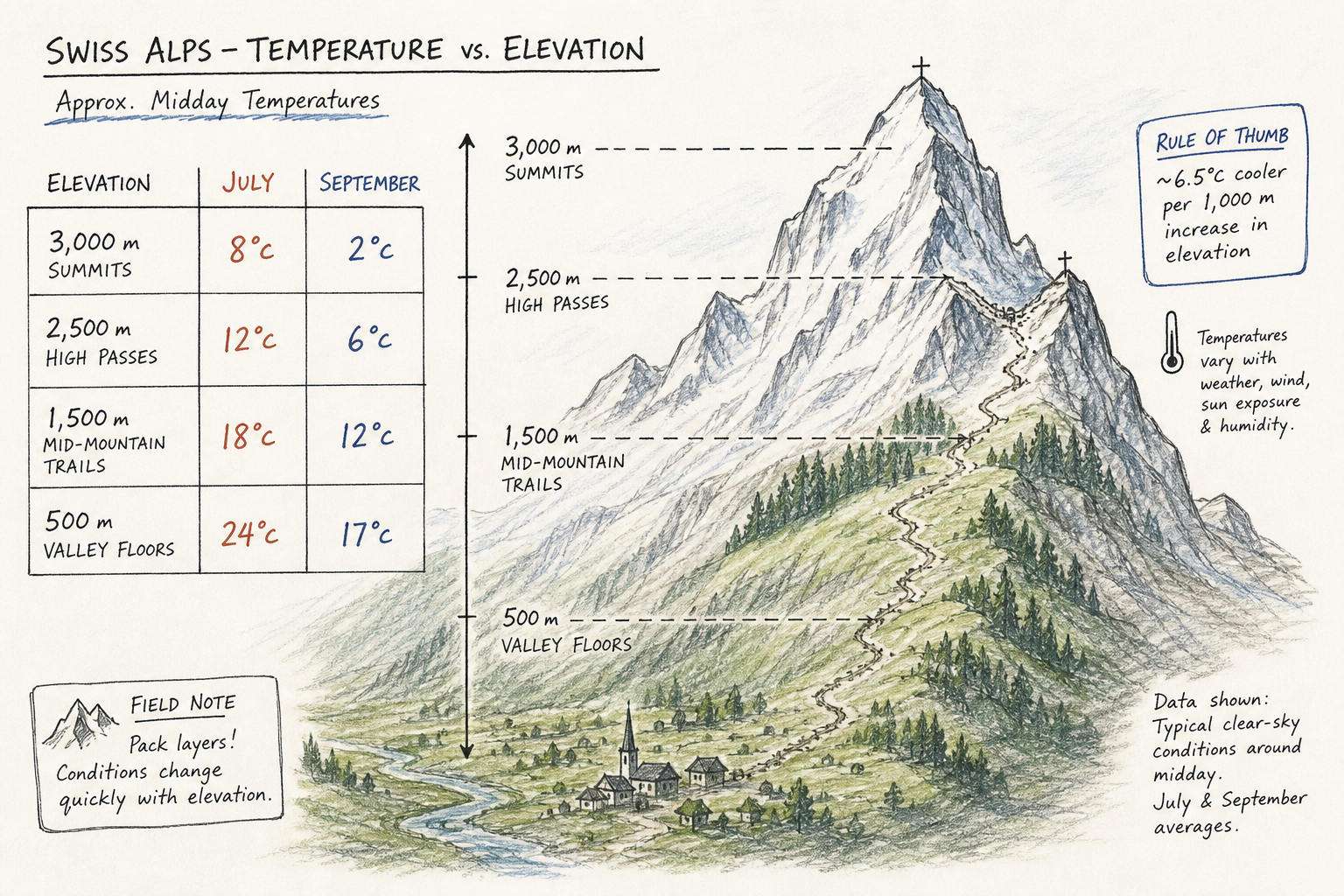
For every 1,000 meters of elevation gained, the ambient air temperature drops by approximately 6.5°C (3.5°F). A warm 25°C summer afternoon in Martigny or Montreux translates to a crisp 12°C on a 2,000-meter alpine pass, with wind-chill factors making it feel even cooler on exposed ridges.
| Elevation (Meters) | Typical July Temp (Midday) | Typical Sept Temp (Midday) | Early Morning Start Temp | Required Base Clothing |
|---|---|---|---|---|
| 500m (Valley Floor) | 26°C – 30°C | 20°C – 24°C | 14°C – 18°C | Lightweight short-sleeve shirt |
| 1,500m (Mid-Mountain) | 18°C – 22°C | 12°C – 16°C | 8°C – 11°C | Breathable long-sleeve synthetic layer |
| 2,500m (High Pass) | 10°C – 14°C | 4°C – 8°C | 0°C – 4°C | Windproof fleece + softshell jacket |
| 3,000m+ (Glacier Level) | 4°C – 8°C | -2°C – 3°C | -5°C – 0°C | Insulated down jacket, gloves, beanie |
Microclimates and Valais Protection
The Canton of Valais benefits from a unique geographic shield. Flanked by high mountain massifs to both the north (Bernese Alps) and south (Pennine Alps), the main Rhone valley and its lateral side valleys (such as the Grand St Bernard valley near Liddes) experience a dry microclimate with high annual sunshine hours.
This rain-shadow effect makes Valais one of the most reliable regions in Switzerland for hiking during early shoulder seasons (June) and late autumn (October), when neighboring northern regions may receive heavier precipitation.
To ensure your gear matches these shifting high-altitude demands regardless of the month you select, review our practical guide: Swiss Alps Summer: A Simple 5-Step Packing Guide.
Myth-Busting Alpine Summer Expectations
Misconceptions about alpine climate lead to poorly timed trips, wrong gear choices, or missed trail opportunities.
Myth 1: “Mountain passes are warm and snow-free by late spring”
Many travelers assume that warm May and early June temperatures in lowland European cities mean alpine trails are fully accessible. In reality, high-altitude alpine passes above 2,300 meters accumulate metres of packed winter snow that melt slowly through June. Assuming high pass routes are wide open in early June often leads to unexpected detours or hazardous turn-backs.
Myth 2: “Gondolas and mountain trains run non-stop from May through October”
Swiss transport infrastructure operates on strict seasonal windows. Between the winter ski shutdown (late April) and the summer launch (mid-June), many cable cars close completely for mechanical overhauls. A similar shutdown occurs between mid-October and early December. Always verify operating schedules for specific cable lifts when planning mid-June or October trips.
Myth 3: “Organized group basecamps isolate you from authentic Swiss mountain culture”
Some independent backpackers worry that joining a social hostel basecamp package limits their local experience. In reality, staying at a social hub with daily private trail transfers gives you direct access to hidden trailheads in local valleys that are difficult to reach via public post-buses. You spend less time coordinating bus schedules and more time hiking authentic trails alongside an engaged international group.
If you are evaluating group trip structures to find the right personal fit, read Guided Hiking in Switzerland: Finding Your Social Group.
Budgeting for a Swiss Alpine Hiking Week by Season
Switzerland is known for higher baseline costs, but choosing the right month and lodging model dramatically impacts total trip expenditure.
Independent Travel vs. Social Basecamp Package Costs
When planning a week-long hiking trip independently in high summer, individual expenses accumulate fast:
- Swiss Rail & PostBus Travel: CHF 150 – CHF 300 per week (even with regional discount passes).
- Individual Mountain Cable Cars: CHF 35 – CHF 85 per round trip.
- Traditional Hotel Nightly Rates: CHF 160 – CHF 280 per night for a single room.
- Dining Out (Dinner & Lunch): CHF 45 – CHF 80 per day.
By contrast, booking a week-long package at a social basecamp—such as Hiking Hostel’s summer setups in Liddes or St. Stephan—consolidates hostel accommodation, daily trail transfers, hearty group breakfasts, packed trail lunches, communal dinners, and airport connections into a single transparent price. This model eliminates the “solo traveler tax” while creating an instant community of hiking partners.
Cost Comparison Breakdown (Estimated 7-Day Trip)
---------------------------------------------------------------------
Expense Category        Independent Solo (High Summer)   Social Basecamp Package
---------------------------------------------------------------------
Lodging                 CHF 1,120 (Single Hotel)         Included in Package
Food & Dining           CHF 420 (Restaurants)            Included (Breakfast, Lunch, Dinners)
Local Trail Transport   CHF 280 (Lifts & Buses)          Included (Private Minibus & Passes)
Airport Transfers       CHF 120 (Train round-trip)       Included (Organized pick-up)
---------------------------------------------------------------------
Estimated Total         CHF 1,940+                       Significantly Lower / Fixed Cost
For travelers interested in combining multi-day mountain overnight stays with a social basecamp setup, check out our field guide: How to Plan Hut to Hut Hiking in Switzerland (7 Tips).
Scenario: A Social Hiking Week from Valais to the Bernese Oberland
To see how seasonal selection shapes a real week in Switzerland, consider the experience of two solo travelers visiting our basecamps:
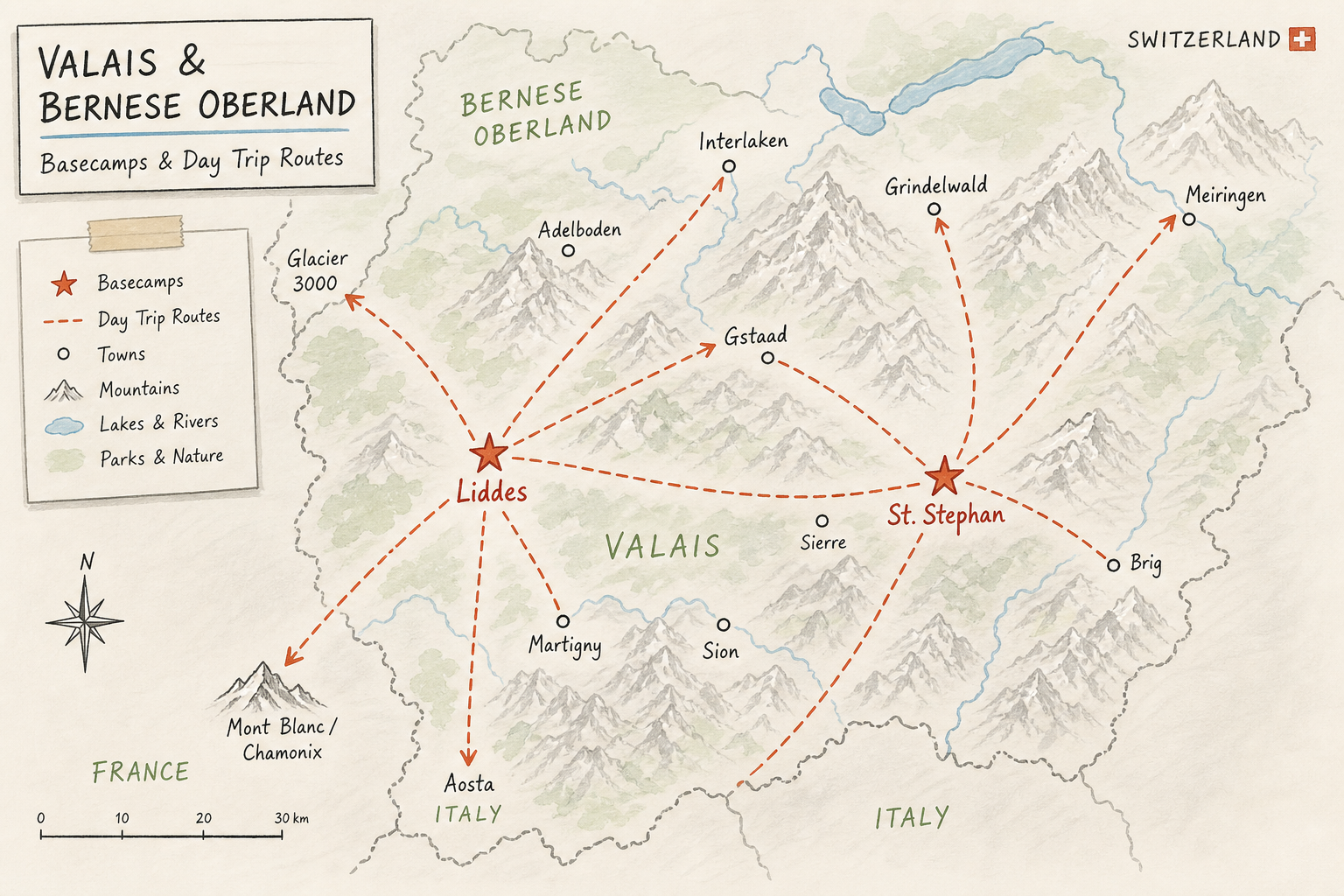
Case Scenario: Alex’s July Experience (High Summer Energy)
Alex, a 28-year-old solo traveler from Canada, booked a mid-July hiking week based out of Liddes in Valais.
- Day 1–2: Arrives via airport transfer. Meets a group of eight other solo hikers from five countries over dinner. The next morning, the group takes a short minibus transfer to the trailhead for a high pass circuit near the Grand St Bernard area. The high pass is completely clear of snow, and temperatures at 2,400 meters sit at a comfortable 16°C.
- Day 3–4: Alex joins a group day excursion across the French border to Chamonix. They hike the Balcon Sud trail with unobstructed views of Mont Blanc, returning to Liddes for a group fondue night.
- Day 5–7: Takes on local day routes in the lateral valleys of Valais, including scenic sections near the Champex-Lac alpine loop, ending the week with an optional day trip down to Aosta in Italy for authentic pizza and historical sightseeing.
The Takeaway: July provided Alex with complete high-altitude pass access, vibrant social energy, and warm evening gatherings outdoors.
Case Scenario: Maya’s September Experience (Stable Weather & Remote Work balance)
Maya, a 34-year-old remote graphic designer from Germany, selected the third week of September based out of St. Stephan in the Bernese Oberland.
- Day 1–2: Arrives in crisp autumn weather. Spends early mornings answering emails in the hostel lounge before joining four other guests for day hikes across the Simmental and nearby Gstaad ridges.
- Day 3–4: The weather remains perfectly stable—clear blue skies without afternoon cloud build-up. The group tackles a sustained summit trail near Glacier 3000, taking in views that extend to the Matterhorn and Mont Blanc.
- Day 5–7: Maya hikes past golden larch forests in the nearby valleys, enjoying quiet trails without tourist crowds. Evenings are spent sharing wine and home-cooked meals by the hostel fireplace.
The Takeaway: September offered Maya crystal-clear skies, zero afternoon storm anxiety, lower trail density, and an ideal balance between deep day hikes and quiet remote work hours.
If you are interested in expanding your day trips into neighboring valleys across borders during your week, check out our destination guide: Skiing in the Italian Alps? Try This Aosta Day Trip (which highlights why Aosta is equally compelling as a summer excursion).
Which Month Fits Your Hiking Style?
To select the ideal week for your Swiss Alps adventure, match your primary travel priorities against this decision matrix:
+-----------------------------------------------------------------------------+
| IF YOUR PRIMARY GOAL IS:        | YOUR BEST HIKING WINDOW IS:               |
+---------------------------------+-------------------------------------------+
| Wildflowers, roaring waterfalls,| LATE JUNE                                 |
| empty early-season trails       | (Be ready for snow patches on high passes)|

+---------------------------------+-------------------------------------------+
| High alpine pass crossings,     | JULY to AUGUST                            |
| lake swimming, maximum daylight | (Book early; adopt early morning starts)  |

+---------------------------------+-------------------------------------------+
| Stable blue skies, quiet trails,| SEPTEMBER                                 |
| autumn foliage, remote work balance| (Pack extra thermal layers for mornings) |

+---------------------------------+-------------------------------------------+
| Maximum financial savings,      | LATE JUNE or LATE SEPTEMBER               |
| relaxed basecamp social vibe    | (Combine shoulder rates with group base)  |

+---------------------------------+-------------------------------------------+
Frequently Asked Questions
What is the absolute best month for a solo hiker joining a group?
July and early August offer the highest density of solo travelers and organized group departures. If you want a lively, high-energy environment where it is effortless to find trail partners every morning, high summer is ideal. If you prefer smaller group sizes and quieter evenings, September is ideal.
Can you hike in the Swiss Alps in May or November?
May and November represent the “inter-season” months in the Alps. In May, high trails remain deeply snowbound from winter, while valley trails can be muddy from snowmelt. Gondolas and mountain huts are largely closed for maintenance. In November, early winter snowstorms cover high ground, and summer lifts have shut before ski season begins. For a dedicated hiking week, avoid May and November in favor of late June through late September.
What clothes should I pack for a July vs. September hiking week?
In July, prioritize lightweight, breathable trail clothing, sun protection (hat, UV sunglasses, high-SPF sunscreen), and a packable waterproof jacket for short afternoon rain showers. In September, add thermal fleece layers, a compact lightweight down jacket, thin gloves, and a warm beanie for cool high-altitude ridge stops and chilly morning trail starts.
How far in advance should I book a social hiking week?
Because social hostels and guided group basecamps have limited bed capacity compared to large commercial hotels, summer hiking weeks between July and August frequently fill up 3 to 5 months in advance. September weeks often have slightly more flexible late availability, but pre-booking by late spring is strongly recommended to secure your preferred dates and airport transfer slots.
Plan Your Swiss Alpine Hiking Week
Whether you choose the lush wildflower slopes of late June, the high-altitude energy of peak July and August, or the golden, clear trails of September, a week in the Swiss Alps offers an unforgettable mountain experience.
By staying at a dedicated basecamp with organized trail logistics, daily transfers, and shared communal dinners, you remove the stress of navigating Swiss transit schedules and solo hotel costs. You can focus entirely on what matters most: exploring world-class trails across Valais and the Bernese Oberland alongside a welcoming community of fellow outdoor enthusiasts.
Explore our upcoming summer week packages in Liddes and St. Stephan, and choose the perfect month for your alpine journey.
For specific regional route inspiration around our Valais basecamp, explore our guide on the 5 Best Hiking Trails in Switzerland Near Mont Blanc.