
Hiking Hostel vs Alpenwild comparison
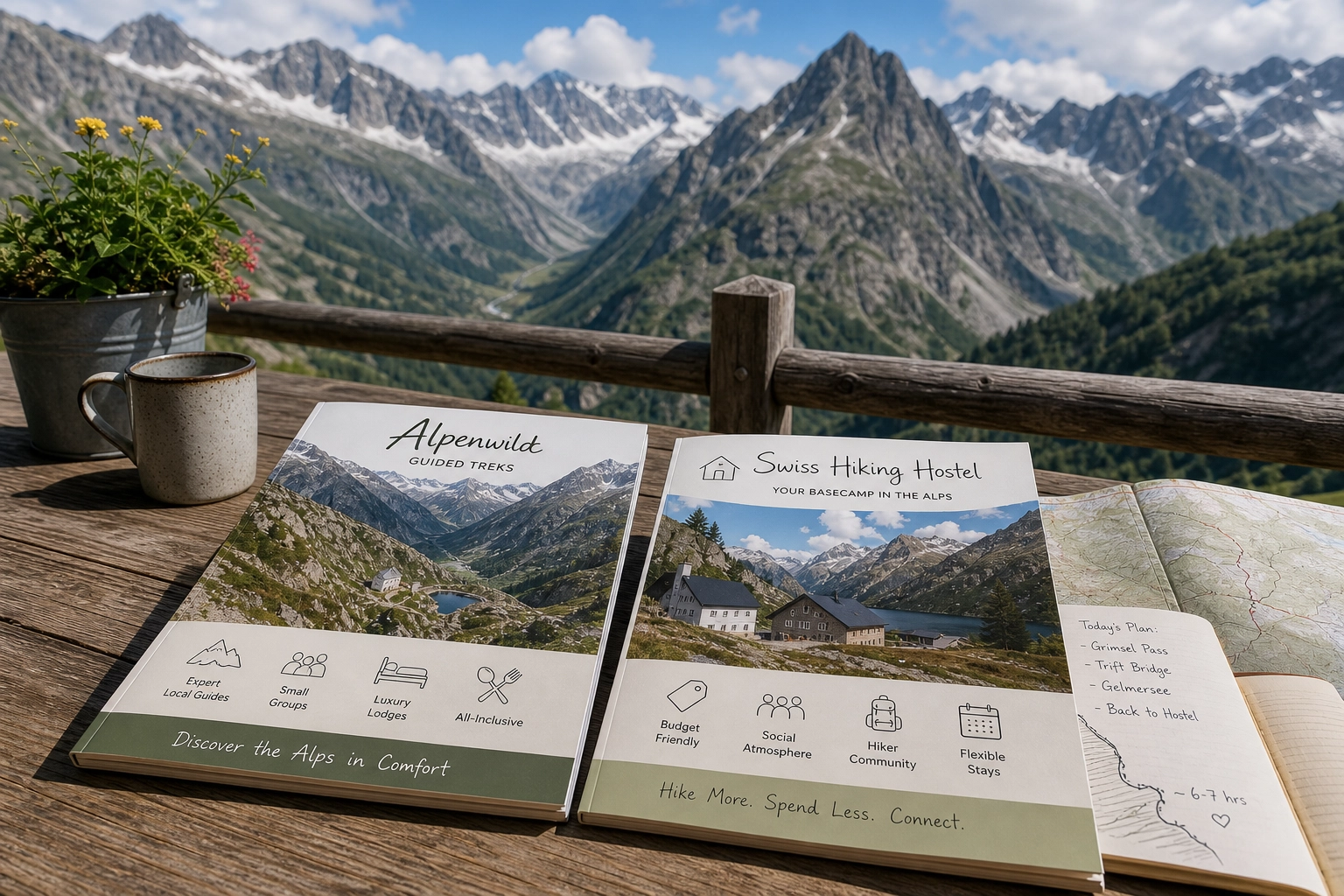
Booking a hiking trip in the Swiss Alps usually leads to a rude awakening. You map out a brilliant itinerary, calculate the cost of trains, mountain hotels, and meals, and quickly realize the trip is going to cost the equivalent of a used car.
The logistical friction of Switzerland is legendary. Public transport is immaculate but notoriously expensive. Alpine mountain huts book up six months in advance. Basic valley hotels routinely charge premium rates simply because they have a view of a notable peak.
To bypass the headaches of piecing a trip together, many travelers look for organized hiking trips with accommodation included. But when you search for these packages, the market is heavily skewed toward high-end, luxury operators.
If you want an organized trip where logistics are handled, you generally face a choice between two entirely different philosophies: the premium, traditional point-to-point trek (represented by industry giants like Alpenwild) and the budget-friendly, social basecamp model (pioneered by operators like Hiking Hostel).
This guide breaks down how to find the best affordable Swiss Alps hiking trips with accommodation included, comparing top operators, logistical models, and the reality of what you get for your money.
The Reality of Organized Swiss Alps Hiking Trips
Before comparing specific operators, it helps to understand why Swiss hiking packages are structured the way they are.
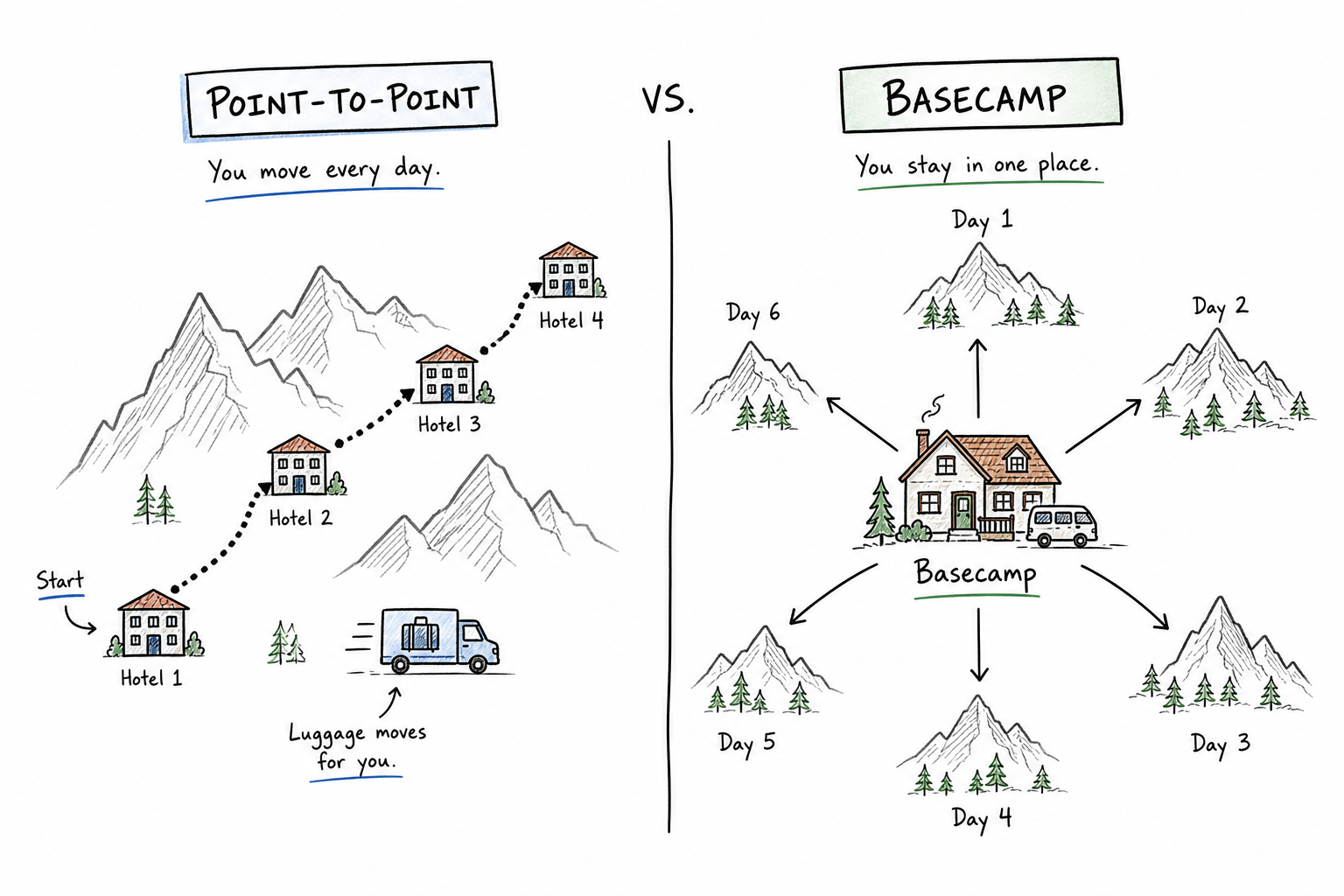
Switzerland’s geography consists of deep, steep valleys separated by towering mountain passes. Historically, completing a multi-day hike meant walking over a pass and sleeping in the next valley, moving linearly from point A to point B. This is the traditional “haute route” or point-to-point model.
While romantic, point-to-point hiking introduces immense logistical overhead:
- Luggage transfers: Moving a suitcase by road from Zermatt to Chamonix while you walk over the mountains is incredibly expensive.
- Inflexible bookings: You must sleep in a specific hotel on a specific night, regardless of weather.
- Premium lodging monopolies: Small valley towns have limited accommodation, allowing hoteliers to charge a premium.
To offer a more accessible, affordable alternative, a different model emerged: the basecamp model. Instead of moving your luggage every day, you sleep in the same central location (a hostel or lodge) for the entire week. A dedicated shuttle drops you at a different trailhead each morning and picks you up in the afternoon.
Let’s look at how these two distinct models play out by comparing Alpenwild and Hiking Hostel.
Alpenwild Overview: The Premium Guided Experience
Alpenwild is one of the most prominent names in Swiss active travel. They focus on premium, highly curated, and fully catered experiences.
Their flagship trips, such as the “Best of the Swiss Alps” or the Via Alpina 1, are designed for travelers who want to hike hard during the day but return to luxury in the evening.
The Alpenwild Model
Alpenwild operates primarily on the point-to-point model. You walk a section of a long-distance trail, arrive in a new village, and check into a pre-booked boutique hotel or upscale inn.
Key features of their approach:
- Luggage Transfer: You hike with a daypack. A logistics team drives your main luggage to your next hotel.
- Accommodation: Boutique hotels, historic inns, and occasionally high-end mountain huts. You get private rooms, fine linens, and quiet spaces.
- Dining: Dinners are typically multi-course affairs featuring regional gastronomy, often served in the hotel’s private dining room.
- Guiding: Trips are often fully guided by certified alpine professionals who handle navigation and provide historical context.
The Tradeoffs
The Alpenwild experience is undeniably beautiful, but it comes with specific constraints.
The primary constraint is price. A week-long trip with Alpenwild is a significant financial investment, easily running thousands of dollars per person. It caters to a demographic with high disposable income who prioritize comfort over budget.
Second is the rigidity of the itinerary. Because boutique hotels are booked months in advance, you have to hike the scheduled route regardless of the weather. If it’s pouring rain or a pass is obscured by fog, you still have to make it to the next valley because that is where your luggage and bed are waiting.
Third is the social dynamic. Alpenwild trips tend to attract couples, retirees, and older professionals. While groups bond over the trek, the evenings are often quieter, with guests retreating to private rooms rather than socializing in common areas.
Hiking Hostel Overview: The Social Basecamp Model
Hiking Hostel was built specifically for solo travelers, backpackers, digital nomads, and budget-conscious outdoor enthusiasts. The core philosophy is that you shouldn’t have to spend a fortune to access world-class alpine trails without the hassle of planning.
Instead of moving every day, Hiking Hostel operates week-long summer hiking holidays from central bases, primarily in Liddes (Valais) and St. Stephan.
The Basecamp Model
Hiking Hostel eliminates the cost of daily luggage transfers and premium boutique hotels by using a “hub and spoke” approach. You stay at a comfortable, social hostel for the entire week.
Key features of their approach:
- Fixed Accommodation: You unpack once. The hostels feature comfortable dormitory-style or private rooms designed for hikers.
- Daily Trail Transport: Private shuttles take you to the best trailheads each morning. This allows the itinerary to access iconic areas—such as Aosta, Chamonix/Mont Blanc, Interlaken, and Glacier 3000—without needing to sleep in those overpriced tourist hubs.
- Included Meals: Breakfasts and dinners are cooked at the hostel, keeping food costs highly predictable and affordable.
- Airport Transfers: The logistical headache of getting from Geneva or Zurich to the mountains is handled by the operator.
The Tradeoffs
The primary tradeoff is privacy and luxury. You are staying in a hostel environment. While comfortable and clean, you will likely be sharing sleeping quarters and bathrooms unless you book a private room upgrade.
You also won’t experience the linear feeling of crossing an entire mountain range on foot. You are doing spectacular day hikes rather than a continuous trek.
However, the basecamp model introduces massive flexibility. If a massive storm hits the Mont Blanc massif, the guides don’t force you to hike in the freezing rain. Instead, the shuttle simply drives the group to a valley with better weather, or organizes an alternative excursion.
If you want to know why this setup is gaining popularity among younger crowds, read about Hotels in Swiss Mountains? Why Social Lodges Beat Luxury to understand the shift in traveler preferences.
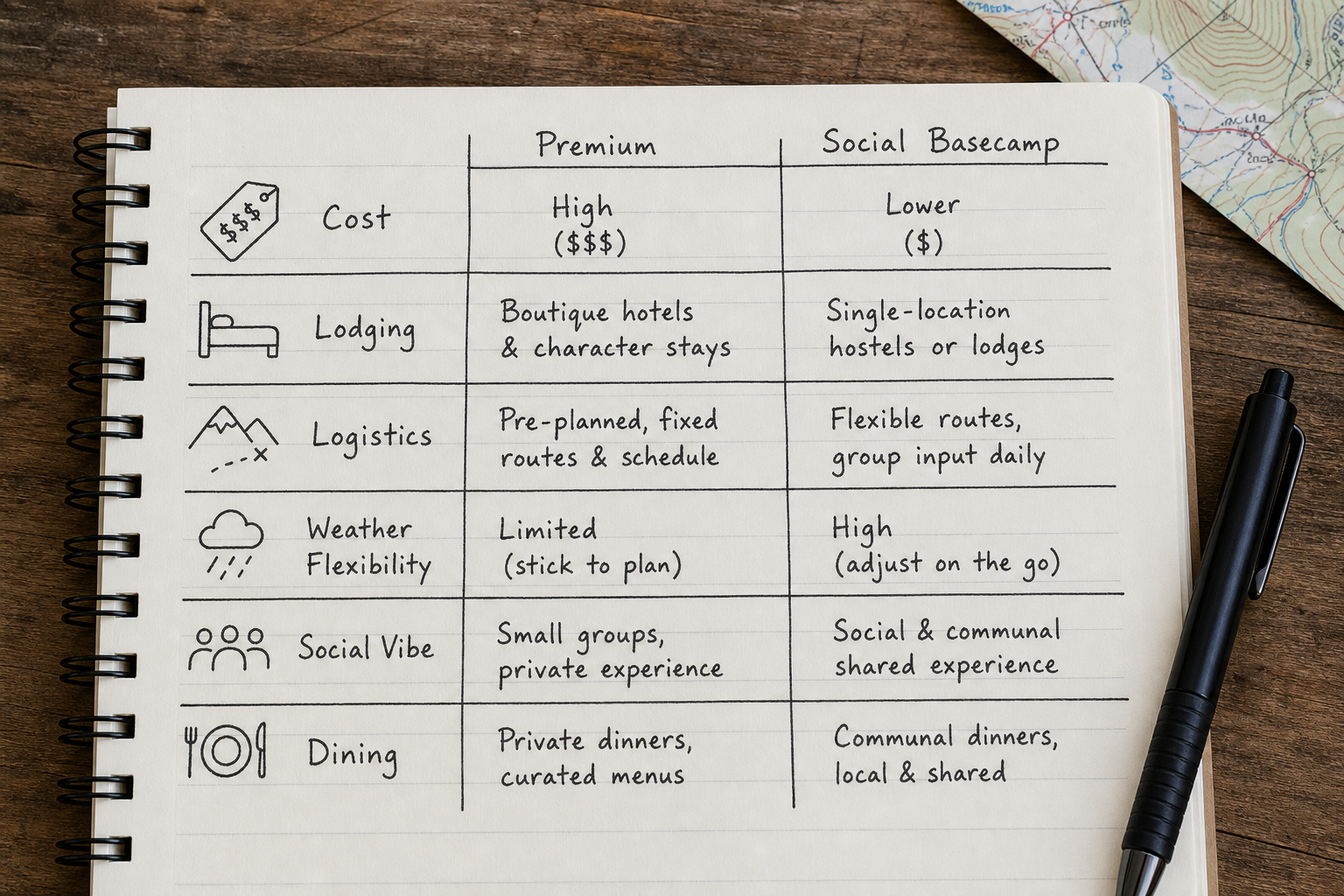
Head-to-Head Comparison: Hiking Hostel vs. Alpenwild
Choosing between these two operators isn’t about finding which one is “better”; it’s about matching the operating model to your budget, travel style, and social preferences.
1. Pricing and Financial Predictability
Alpenwild: Premium pricing. Expect to pay premium rates typical of luxury guided tours. While meals and lodging are included, the baseline cost requires saving up. The inclusion of boutique hotels and complex luggage logistics heavily inflates the price.
Hiking Hostel: Budget-friendly. By utilizing hostel accommodation and cooking meals in-house, the price drops dramatically. The package is built so that once you land at the airport, you barely need to open your wallet. This financial predictability is why it ranks high among the 7 Tips for Hiking in Switzerland (Without the High Cost).
2. Logistics and Transport
Alpenwild: Complex background logistics. Your luggage moves invisibly behind the scenes. You rely on a mix of walking, trains, and cable cars, all coordinated by the guide. You don’t have to plan, but you are locked into the track.
Hiking Hostel: Centralized transport. You board a van or minibus at the hostel after breakfast. The drive to the trailhead acts as a scenic buffer and a chance to brief the group. After the hike, the van is waiting. You can leave spare layers, swimsuits, or alternative shoes in the van—something impossible on a point-to-point trek.
3. Route Flexibility and Weather
Alpenwild: Highly rigid. If you are scheduled to cross the Gemmi Pass on Tuesday, you cross it on Tuesday. If it is raining, you put on your Gore-Tex and suffer through it.
Hiking Hostel: Highly adaptable. The itinerary is built around the week’s weather. If the Chamonix excursion looks wet, the group can pivot to the Italian side. For example, staying in Liddes allows easy access to Italy through the Great St. Bernard tunnel. A miserable day in Switzerland can easily be swapped for sunshine and pizza just over the border.
4. The Social Environment
Alpenwild: Formal and polite. Groups tend to be smaller. Dinners are quiet. It is an excellent environment for couples wanting a shared but private experience.
Hiking Hostel: Highly communal. The hostel environment is designed to foster friendships. You eat together at long tables, share trail stories over beers, and often end up making plans with the same people for future trips. It is optimized for solo travelers and digital nomads. For a deeper look at this dynamic, check out Guided Hiking in Switzerland: Finding Your Social Group.
Reviewing the Broader Market: Other Operators
While Alpenwild and Hiking Hostel represent the two ends of the spectrum (Premium Point-to-Point vs Affordable Social Basecamp), there are other operators in the Swiss hiking space worth understanding.
Depending on your specific goals, these alternatives might fit the bill.
AlpsAdventures
Based at the foot of the Swiss Alps, AlpsAdventures is highly specialized in shorter-duration guided treks, most notably 4-day, 3-night tours on the Tour du Mont Blanc (TMB).
They sit in a middle ground regarding price and luxury. They don’t aim for the absolute luxury of Alpenwild, focusing instead on clean, comfortable, standard accommodation and solid guiding. They are an excellent choice if you only have a few days and are dead-set on experiencing a specific section of the TMB.
Hut to Hut Hiking Switzerland
If you want an immersive, rugged alpine experience, Hut to Hut Hiking Switzerland specializes strictly in booking itineraries that string together high-altitude alpine refuges (huts).
They take the friction out of booking (which is notoriously difficult, as huts often require phone calls or bank transfers in Swiss Francs). This is a pure hiking experience—no luggage transfers, no valley hotels. You carry everything you need for the week in a 40-liter backpack and sleep in high-altitude dormitories.
If this rugged, traditional style appeals to you, read up on How to Plan Hut to Hut Hiking in Switzerland (7 Tips) to understand the packing and fitness requirements.
MyMountains and Alpinehikers
Operators like MyMountains and Alpinehikers specialize in customized, self-guided itineraries.
If you want the point-to-point experience but don’t want to pay for a guide to walk with you, these companies will design a route, book the hotels, organize the luggage transfers, and provide you with a GPS track and map. You hike at your own pace, alone. This is ideal for experienced hikers who just don’t want to deal with administrative booking tasks, though it still carries the high costs associated with luggage logistics and standard hotel rates.
The Geography of Your Basecamp: Liddes vs St. Stephan
If you choose the affordable basecamp model with an operator like Hiking Hostel, your experience is heavily dictated by the location of the basecamp. Let’s look at the two primary hubs: Liddes and St. Stephan.
Liddes (Valais Region)
Liddes is a quiet, authentic village situated on the route up to the Great St. Bernard Pass. It isn’t a massive resort town filled with souvenir shops; it is a working alpine village that provides strategic access to three distinct regions.
From a base in Liddes, daily transport can easily reach:
- The Mont Blanc Massif: You can hike the eastern flanks of the Mont Blanc range without dealing with the crowds and exorbitant prices of staying in Chamonix. (See our guide on Mountain Mont Blanc: 7 Ways to Visit Without the Crowd).
- Val de Bagnes (Verbier): Access to high-altitude panoramic trails overlooking the Rhone Valley.
- Aosta Valley (Italy): By driving just 20 minutes through the St. Bernard tunnel, you swap Swiss alpine scenery for Italian culture. This is a massive advantage. If weather is poor in Switzerland, Italy often has sun. Plus, you get Italian coffee and pizza post-hike. (For a winter perspective on this cross-border advantage, check out Skiing in the Italian Alps? Try This Aosta Day Trip).
St. Stephan (Bernese Oberland)
St. Stephan is located in the Simmental valley, providing access to the classic, postcard-perfect Swiss scenery of the Bernese Oberland.
From a base in St. Stephan, excursions typically include:
- Glacier 3000 / Gstaad: Hiking beneath dramatic glaciated peaks in an area famous for high-society resorts, but doing it on a backpacker budget.
- Interlaken and the Jungfrau Region: Accessing the trails beneath the Eiger, Mönch, and Jungfrau without paying Interlaken hotel prices.
- Lenk: Spectacular waterfall hikes and wild, uncrowded valleys.
By staying in quiet hubs like Liddes or St. Stephan, you cut the cost of your accommodation in half, while the included daily van transport ensures you still hike the famous, must-see trails.
Packing for Different Trip Models
The type of trip you book drastically alters what you need to pack.
Packing for a Point-to-Point Trip (Alpenwild or Self-Guided)
If you are using luggage transfer, you need a highly organized dual-bag system.
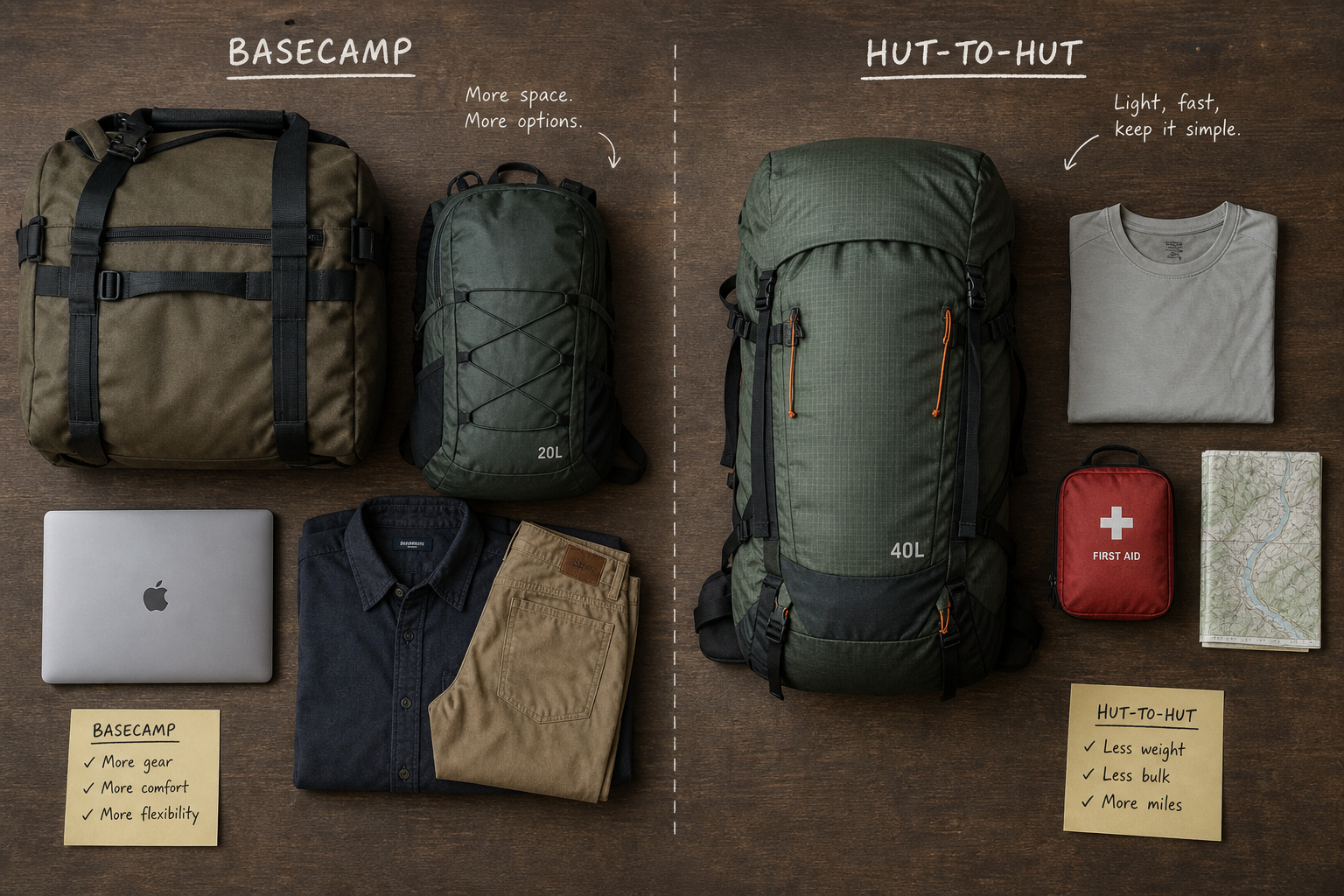
- Daypack (20-30L): Contains your waterproofs, extra layers, water, snacks, camera, and first aid kit. You carry this all day.
- Duffel Bag: Contains your evening wear, toiletries, town shoes, and spare clothes. This must be packed and left in the hotel lobby by 8:00 AM every morning for the logistics team.
If you are doing an unassisted point-to-point (like Hut to Hut Hiking), you carry everything. Every single ounce matters. You will likely wear the same shirt for three days and wash socks in the sink.
Packing for a Basecamp Trip (Hiking Hostel)
The basecamp model is incredibly forgiving. Because you are sleeping in the same bed for seven nights, you can bring a standard suitcase or large backpack.
- Daypack: You only carry what you need for that specific hike.
- Van Storage: You can leave a heavy jacket, a book, or a change of shoes in the transport van while you hike.
- Basecamp: You can unpack into a closet. You can bring a laptop (great for digital nomads). You can bring heavier toiletries or specific dietary snacks without worrying about carrying them up a mountain.
For a detailed breakdown of exactly what goes into your bag, review our Swiss Alps Summer: A Simple 5-Step Packing Guide.
Making Your Decision: Which Trip is Right for You?
To summarize the comparison, here is a breakdown of who should book which type of trip.
Choose a Premium Operator (Alpenwild) if:
- Budget is not a concern: You are comfortable spending premium rates for luxury and privacy.
- You require boutique accommodation: A private room with high-end linens and en-suite bathrooms is mandatory for your comfort.
- You want a continuous journey: You love the psychology of leaving one valley on foot and arriving in another.
- You prefer a quieter demographic: You are traveling with a spouse and want a peaceful, intimate environment in the evenings.
Choose an Affordable Basecamp Operator (Hiking Hostel) if:
- You are a solo traveler or backpacker: You want a built-in social group to hike and eat with.
- You are budget-conscious: You want a transparent, all-inclusive price that covers meals, transport, and a bed without surprise Swiss fees.
- You value flexibility over rigidity: You want guides who will alter the day’s plan based on weather, swapping a rainy Swiss hike for a sunny Italian trail.
- You hate logistical planning: You want airport transfers, daily van drops, and meals completely handled so you can just focus on walking.
The “Hidden Costs” to Watch Out For
When comparing packages that claim “accommodation included,” you must read the fine print. The Swiss Alps are famous for hidden costs that can derail a budget.
1. Transport to the Start Point
Many self-guided and premium tours start in remote villages. They include the hotel, but they do not include the train ticket from Zurich or Geneva to get there. A round-trip train ticket in Switzerland can easily cost over 150 CHF. Look for packages that include airport transfers or have clear, simple rendezvous points.
2. Cable Cars and Funiculars
Point-to-point itineraries often rely on cable cars to bypass steep, forested sections of the valley. If these are not included in your tour price, you might be paying 30-50 CHF per day just to get to the trailhead.
3. Food and Drinks
Does “meals included” mean just breakfast? In Switzerland, a basic dinner at a restaurant will cost 35-50 CHF per person, excluding alcohol. If a package only offers B&B (Bed & Breakfast), add at least 500 CHF to your weekly budget for dinners alone.
Basecamp models that cook communal dinners at the hostel inherently protect you from this massive variable expense.
Final Thoughts on Swiss Hiking Packages
Hiking in the Swiss Alps does not have to be a logistical nightmare, nor does it require a luxury budget.
The industry has long been dominated by high-end operators catering to wealthy tourists who want boutique hotels and luggage porters. However, the rise of the social basecamp model proves that you can experience the best trails near Mont Blanc, Interlaken, and the Valais region for a fraction of the cost.
By trading a boutique hotel for a comfortable hostel bed, and swapping linear point-to-point hikes for flexible van-supported daily excursions, you gain financial predictability, bad-weather contingencies, and a vibrant community of like-minded hikers.
FAQs on Affordable Swiss Hiking Trips
Do affordable packages like Hiking Hostel still access the famous trails?
Yes. Because the basecamps (Liddes or St. Stephan) use daily van transport, they can access world-famous regions. For example, staying in Liddes provides direct access to some of the 5 Best Hiking Trails in Switzerland Near Mont Blanc, without paying Chamonix hotel rates.
Are meals included in basecamp hostel trips?
Generally, yes. To keep costs low and predictable, operators like Hiking Hostel provide breakfast and cook communal dinners at the hostel. You are typically only responsible for buying your own trail snacks or lunch on the mountain.
What happens if the weather is terrible?
This is the main advantage of the basecamp model. In a point-to-point trek, you must hike to your next hotel regardless of rain. In a basecamp model, if the weather is bad, the van can drive the group to a valley with better weather, or organize a cultural excursion, thermal bath visit, or rest day.
Can I bring a laptop on a hiking holiday?
If you book a basecamp trip, yes. You can leave your laptop safely in your room or a locker at the hostel while you hike. If you book a point-to-point trip with Alpenwild or a self-guided operator, your laptop will be handled by luggage transfer services daily, which increases the risk of damage or loss.
Do I need a high level of fitness for these trips?
Basecamp trips are highly adaptable. If you are tired, you can opt out of a day’s hike and relax at the lodge. Point-to-point trips require a baseline fitness level because you must complete the daily mileage to reach your bed for the night. Always check the daily elevation gain and mileage with the operator before booking.