
Hiking Hostel vs Gimmelwald comparison
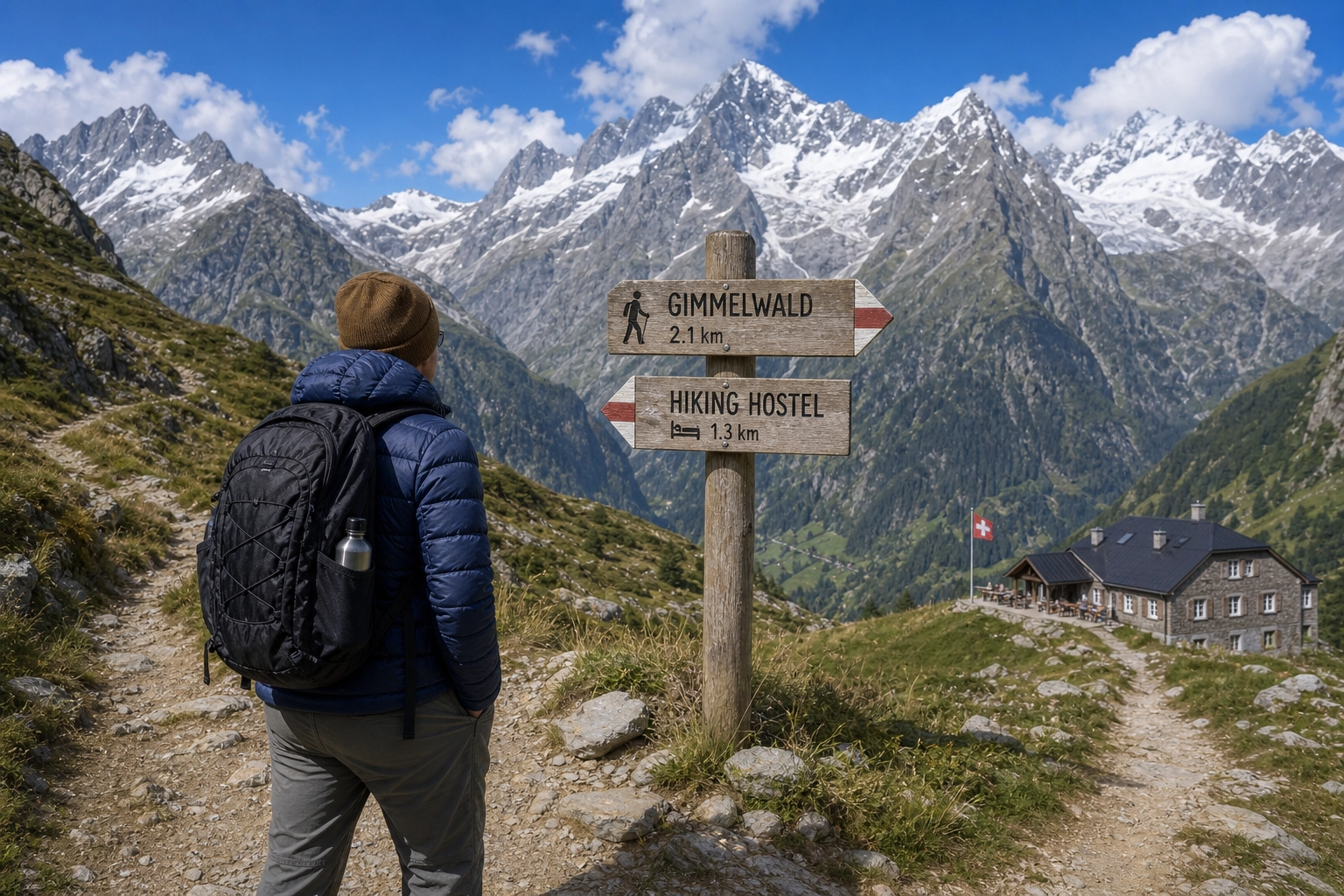
For a solo traveler, the Swiss Alps present a unique contradiction. On one hand, the trail networks are immaculate, the scenery is unparalleled, and the region is widely considered one of the safest places on earth to explore alone. On the other hand, the logistics of navigating mountain transport, absorbing notoriously high food and accommodation costs, and finding a reliable trail partner matching your pace can turn a dream trip into a stressful, spreadsheet-heavy ordeal.
When searching for the best hiking hostels in Switzerland for solo backpackers, most travelers quickly discover two entirely different approaches to an Alpine holiday.
The first is the traditional, do-it-yourself (DIY) hostel route. You book a bed in a famous mountain lodge—most notably the legendary Mountain Hostel Gimmelwald in the Bernese Oberland—and handle your own meals, transport, and daily trail planning.
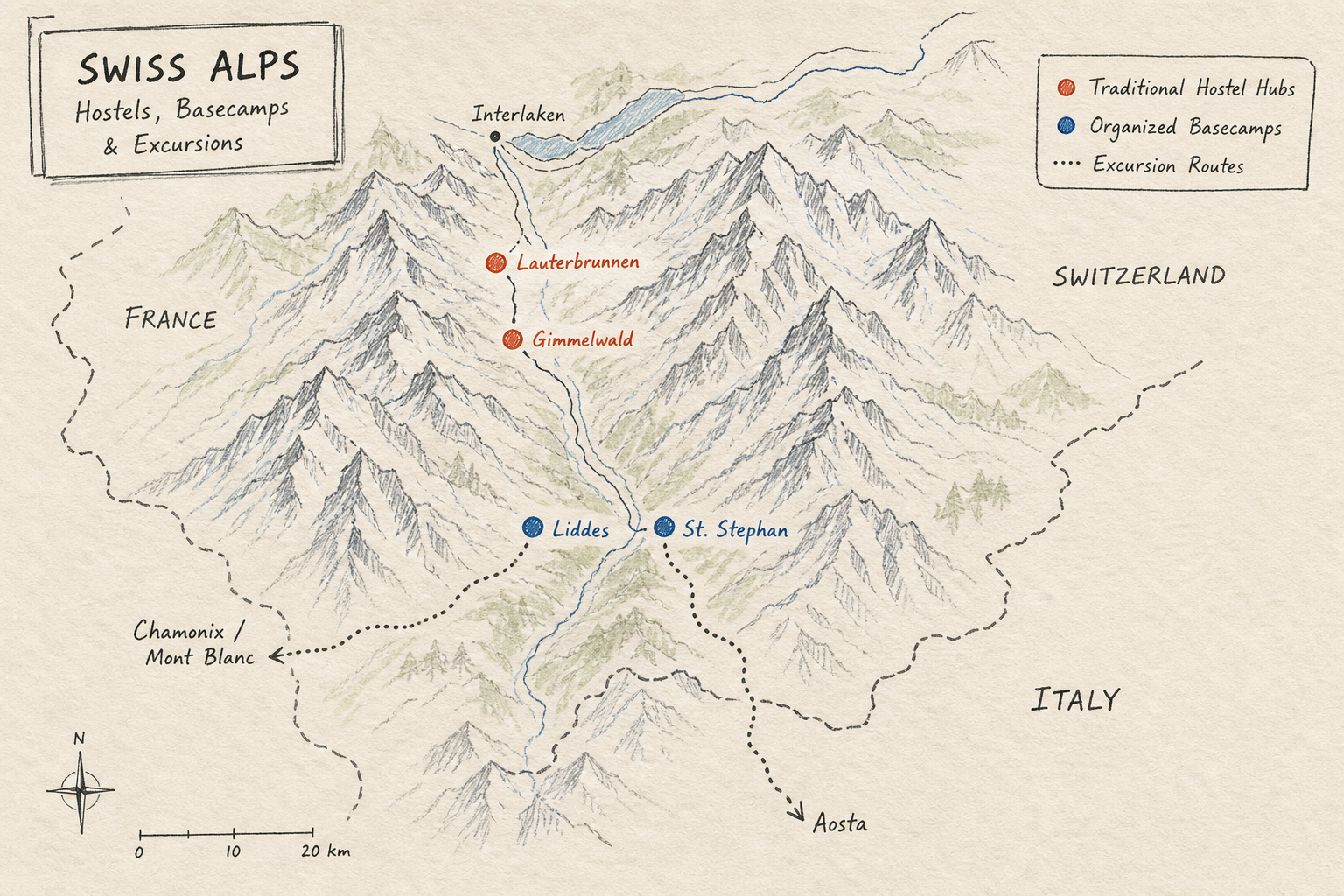
The second is the organized basecamp model, exemplified by Hiking Hostel in regions like Liddes and St. Stephan. This approach bundles accommodation, meals, airport transfers, trail transport, and organized group excursions into a single week-long package designed specifically for solo travelers, digital nomads, and budget-conscious hikers who want the social experience of a hostel without the logistical friction.
This guide breaks down the core differences between the traditional DIY route and the organized basecamp model. By comparing Gimmelwald and Hiking Hostel head-to-head, alongside other notable Swiss youth hostels, you can determine exactly which style of travel fits your budget, social preferences, and hiking goals.
The Solo Backpacker’s Dilemma in the Swiss Alps
Before comparing specific locations, it helps to understand why traveling solo in the Swiss mountains is uniquely challenging compared to backpacking through Southeast Asia or Central America.
Switzerland is hyper-efficient, but that efficiency comes with a steep learning curve and a high price tag. A typical day for a solo backpacker in a traditional Swiss hostel involves:
- Navigating the SBB Timetable: Figuring out which combination of trains, postbuses, and cable cars are required to reach a trailhead.
- Managing Transport Costs: Deciding between the Swiss Travel Pass, the Half Fare Card, or regional passes (like the Berner Oberland Pass), while calculating whether a single gondola ride will unexpectedly cost 40 CHF.
- Meal Planning: Because Swiss restaurants are expensive (a simple dinner can easily exceed 30 CHF), backpackers rely heavily on grocery stores like Coop or Migros. This means planning shopping trips around limited mountain store hours, carrying groceries onto cable cars, and cooking in crowded communal hostel kitchens.
- Finding Trail Partners: Approaching strangers in the common room to see if they want to hike the same trail, at the same pace, with the same start time.
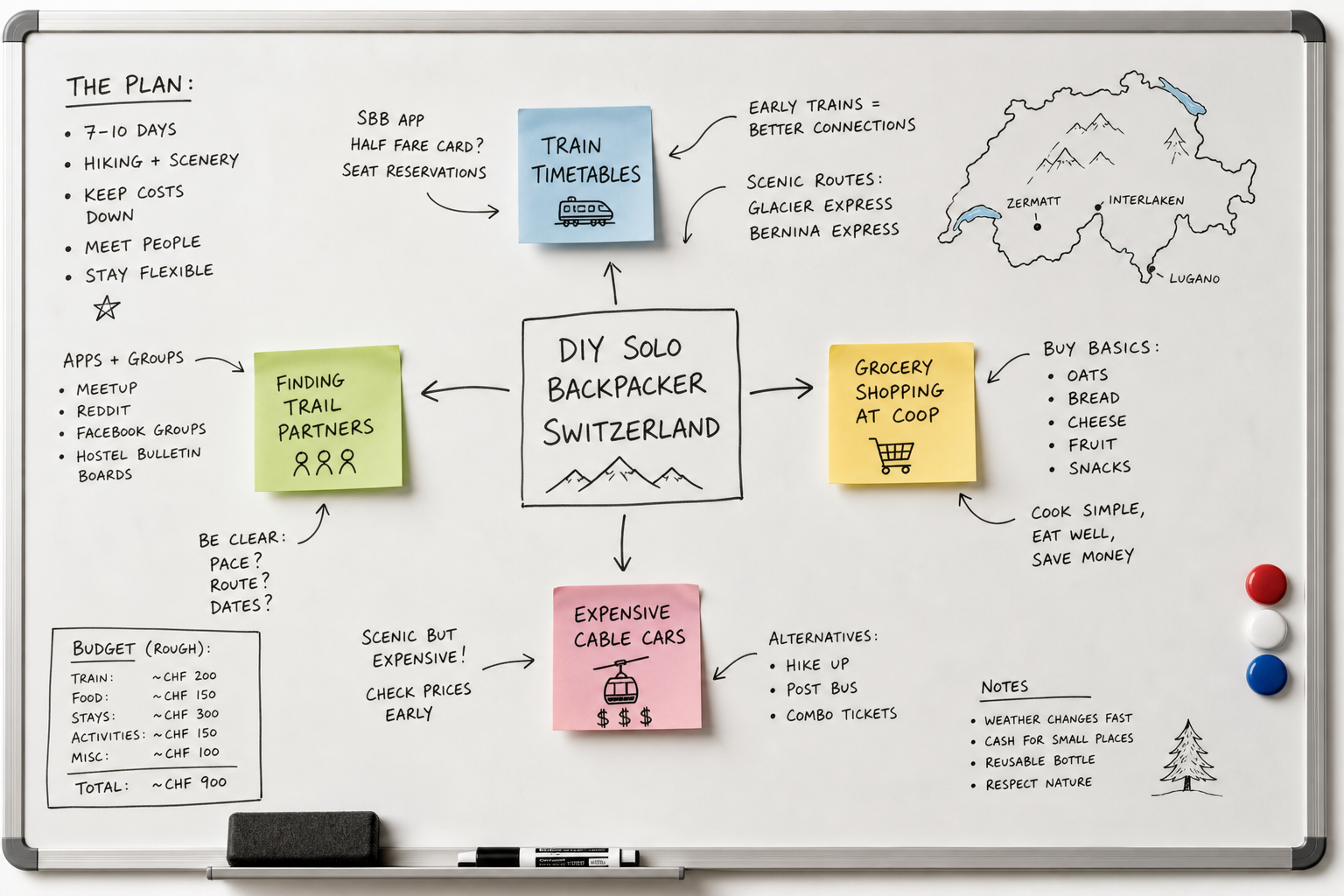
For many, this daily hustle is part of the backpacking adventure. For others, it detracts from the actual hiking experience. If you have limited vacation days, spending your evenings cross-referencing weather apps with funicular schedules can feel like a second job.
This logistical reality is what divides the Swiss hostel landscape into two categories: transient DIY bases and structured social hubs.
Traditional Swiss Alpine Hostels: The DIY Approach
Traditional youth hostels in Switzerland serve as a bed for the night and a place to cook. They offer high flexibility, allowing you to stay for two nights or two weeks, change your plans based on the weather, and travel entirely on your own schedule.
The TikTok-Famous Mountain Hostel Gimmelwald
When discussing the best hiking hostels in Switzerland for solo backpackers, Mountain Hostel Gimmelwald is almost always the first name mentioned. Located in a tiny, car-free village clinging to the edge of the Lauterbrunnen Valley, it has achieved legendary status in the backpacking community.
The Experience
Built in 1563 and recently renovated, the building exudes historic Alpine charm. Because Gimmelwald is only accessible by cable car (or a steep hike up from Stechelberg), arriving feels like stepping away from civilization. As one American traveler noted after completing a 500-mile journey by plane, train, bus, and cable car to reach it, the remote location is central to its appeal. The hostel offers a highly communal atmosphere with dorm-style accommodations, shared dinners, and travelers constantly swapping trail advice over local beer.
Trail Access
From the front door of the hostel, you can walk directly onto world-class trails. Popular routes include the Northface Trail, the hike up to Tanzbödeli, or the trek toward Mürren and the Schilthorn. It is heavily biased toward hikers and nature lovers; if you want nightlife, you are in the wrong village.
The Challenges for Solo Travelers
- Booking Friction: Because of its viral fame and limited capacity, you often need to book beds months in advance. Spontaneous travel is nearly impossible during the summer peak.
- Self-Catering Logistics: There is no major grocery store in Gimmelwald. You must buy your groceries down in the valley (Lauterbrunnen or Interlaken) and haul them up the cable car, then compete for stove space in the communal kitchen during peak dinner hours.
- Transient Crowds: While the vibe is friendly, the crowd changes daily. You might meet a great hiking partner on Tuesday, only for them to check out on Wednesday.
Other Notable DIY Hostels
If Gimmelwald is booked, solo travelers usually default to other hubs in the Bernese Oberland or Valais regions.
Valley Hostel (Lauterbrunnen)
Often cited on platforms like Hostelworld as the best balance of budget, location, and social atmosphere. Situated on the valley floor, it offers immediate access to the train station and the postbus network. You are minutes away from the Staubbach Falls and the cogwheel trains up to Wengen. However, it feels more like a busy transit hub than a secluded mountain retreat.
Backpackers Villa Sonnenhof (Interlaken)
Interlaken is the adrenaline capital of Switzerland. Backpackers Villa is a classic, large-scale European youth hostel. It offers excellent common areas and organized activities like paragliding and canyoning. As noted in discussions on femaletravels subreddits, it provides great transport connections, but it lacks the “high alpine” feeling since it is located between two lakes rather than up in the peaks.
Grindelwald Youth Hostel
Part of the official Swiss Youth Hostels network, this location is excellent for accessing the Eiger Trail, the First Cliff Walk, and Bachalpsee. According to Switzerland Tourism, it is one of the top youth hostels along popular hiking routes. However, Grindelwald itself is highly commercialized and crowded with day-trippers.
If you prefer this traditional DIY style, learning how to plan hut to hut hiking in Switzerland can help you string together several of these locations for a multi-day trek.
The Organized Basecamp: The Hiking Hostel Model
For many solo backpackers, digital nomads, and small groups, the DIY hostel model requires too much administrative work. If you are taking a week off from work, you might want to spend your energy actually hiking, rather than staring at train timetables and cooking pasta in a crowded kitchen.
This is where the organized basecamp model comes in. Hiking Hostel was built specifically to solve the logistical headaches of the Swiss Alps while retaining the social, communal spirit that makes hosteling great.
How the Hiking Hostel Model Works
Instead of booking a bed for a random number of nights and figuring out the rest yourself, Hiking Hostel offers week-long summer hiking holidays. The package includes:
- Hostel Accommodation: Comfortable, authentic Alpine lodging based around specific hubs like Liddes (in the Valais region) and St. Stephan.
- Full Catering: Breakfasts, packed trail lunches, and communal dinners are provided. You don’t need to haul groceries up a mountain or cook after an eight-hour hike.
- Logistics Handled: Airport transfers are included, and private daily trail transport drops you directly at the trailheads.
- Organized Excursions: Beyond the immediate valley, the week includes guided trips to iconic destinations. From the Liddes base, excursions might include Aosta, Italy, or Chamonix/Mont Blanc in France. From St. Stephan, trips often feature Interlaken or Glacier 3000.
The Social Advantage for Solo Travelers
The most significant difference between a traditional hostel and a Hiking Hostel week is the social dynamic. In a DIY hostel, you are surrounded by people on completely different schedules. One person is sleeping off jetlag, another is leaving at 4:00 AM to summit a peak, and a third is just there to party.
At an organized basecamp, everyone arrives on the same day and stays for the entire week. You share breakfast, ride to the trailhead together, hike the same general routes, and return to eat dinner at the same table. This creates a cohesive group dynamic reminiscent of a summer camp for adults. It entirely removes the anxiety of having to find a new hiking partner every single morning.
If you have previously struggled to find travel companions who share your interests, this model naturally curates a group of like-minded outdoor enthusiasts. For more on this dynamic, you can read about finding your social group for guided hiking in Switzerland.
Exploring the Regions: Valais vs. Bernese Oberland
While Gimmelwald and Lauterbrunnen sit in the Bernese Oberland (dominated by the Eiger, Mönch, and Jungfrau), Hiking Hostel focuses heavily on regions like the Valais (Liddes) and the Simmental Valley (St. Stephan).
The Valais region offers a distinct advantage: weather. It is statistically the driest and sunniest canton in Switzerland. Furthermore, basing yourself in Liddes provides strategic access to international borders. You aren’t just hiking in Switzerland; you are positioned on the historic Great St Bernard Pass. This allows for day excursions that traditional hostels simply cannot facilitate without massive personal expense.
For example, cross-border hiking and sightseeing become seamless. You can explore mountain Mont Blanc without the crowds on a Tuesday, and on Wednesday, hop over the border for pizza and exploring. If you are curious about Italian excursions, you might even consider a day trip to Aosta (which is just as spectacular in summer as it is during ski season).
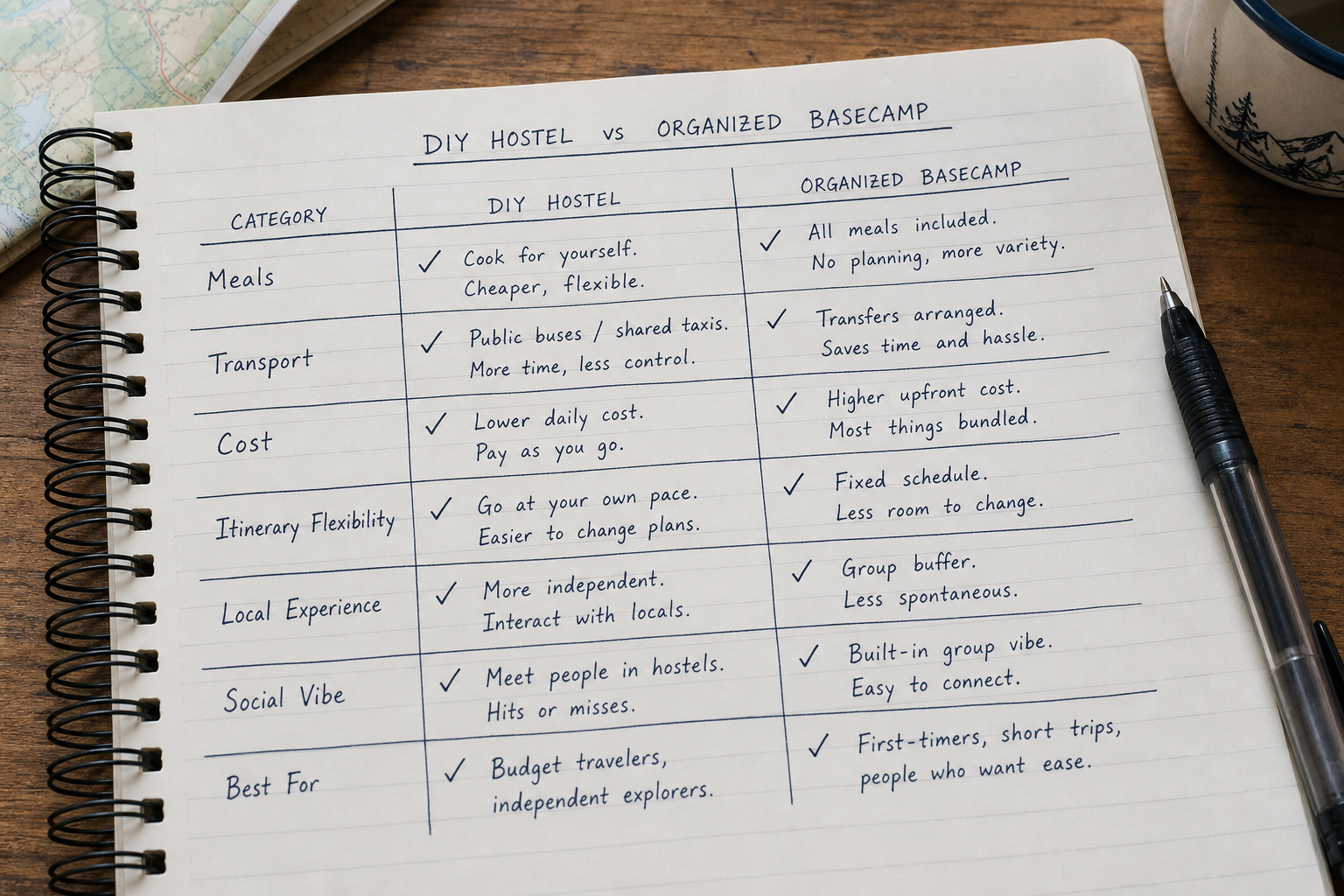
Hiking Hostel vs Gimmelwald: Head-to-Head Comparison
To make the clearest decision for your solo backpacking trip, let’s compare the Mountain Hostel Gimmelwald experience with the organized week at Hiking Hostel across several core criteria.
1. Cost Predictability
Gimmelwald (DIY):
A dorm bed might cost roughly 45 to 60 CHF per night depending on the season. However, your actual daily spend is highly variable. You must factor in the cable car ride from Stechelberg (if you don’t hike up), grocery runs in Lauterbrunnen (20-30 CHF per day for basic self-catering), and any mountain transport (trains, gondolas) you use to reach higher trailheads, which can easily add 30-80 CHF daily even with a discount card.
Verdict: Looks cheaper upfront, but hidden transport and food costs add up fast. It requires strict budget discipline. For strategies to manage this, review our 7 tips for hiking in Switzerland without the high cost.
Hiking Hostel (Organized):
You pay a single flat rate for the week. Because accommodation, daily meals (breakfast, packed lunch, catered dinner), airport transfers, and daily trailhead transport are included, your wallet mostly stays in your backpack. The only extra expenses are personal snacks, beers at the bar, or optional extreme activities (like paragliding).
Verdict: Highly predictable. You know exactly what the week will cost before you board your flight to Geneva or Zurich.
2. The Social Experience
Gimmelwald (DIY):
Legendary, but transient. You will absolutely meet people in the common room over a shared fondue pot or a local Rugenbräu beer. However, the interactions are often fleeting. You might spend an amazing day hiking with someone, only to say goodbye the next morning when their itinerary takes them to Zermatt.
Hiking Hostel (Organized):
Deep and cohesive. Because the package is built for solo travelers, backpackers, and digital nomads arriving for a set week, you form a true cohort. You spend seven days with the same core group, sharing the physical challenges of the trail and the evening relaxation at the lodge. It is social without being forced. As we discuss in our post on why social lodges beat luxury hotels in the Swiss mountains, shared experiences build better memories than high-end isolation.
3. Logistical Effort
Gimmelwald (DIY):
High effort. You must monitor the SBB app, figure out connecting times for postbuses and cable cars, ensure you don’t miss the last gondola down the mountain, and coordinate grocery store hours. If you want to hike in a neighboring valley, you have to navigate the public transit system to get there.
Hiking Hostel (Organized):
Zero effort. You wake up, eat breakfast, grab your packed lunch, and jump into the private transport. The guides and hosts have already checked the local weather, monitored the trail conditions, and selected the best route for the day. If a trail is washed out, they already have a backup plan. You just have to walk.
4. Trail Variety and Excursions
Gimmelwald (DIY):
Incredible local access. You can walk out the door and be on a world-class trail in two minutes. However, you are largely confined to the Lauterbrunnen valley and its immediate surroundings unless you want to pay exorbitant train fares to reach other regions.
Hiking Hostel (Organized):
Regional diversity. Because daily private transport is included, the basecamp model allows you to hike in completely different geographical zones throughout the week. A stay in Liddes means you can hike local Valais trails one day, visit the best hiking trails in Switzerland near Mont Blanc the next, and explore the Italian side of the Alps later in the week.
Summary Comparison Table
| Feature | DIY Mountain Hostel (e.g., Gimmelwald) | Organized Basecamp (e.g., Hiking Hostel) |
|---|---|---|
| Best For | Highly independent, flexible travelers | Solo travelers wanting community & zero logistics |
| Pricing Model | Pay-as-you-go (Bed, Food, Transport) | All-inclusive weekly package |
| Meals | Self-catering (cook your own) | Fully catered (Breakfast, Lunch, Dinner) |
| Transport | Public SBB trains & expensive cable cars | Included airport transfers & daily trail shuttles |
| Social Vibe | Friendly but transient (daily turnover) | Cohesive group (week-long cohort) |
| Trail Access | Walk out the door to local trails | Driven to diverse regional trailheads daily |
| Planning Effort | High (routing, cooking, timetables) | Minimal (show up and hike) |
3 Mistakes Solo Hikers Make When Booking Swiss Hostels
Regardless of whether you choose a DIY hostel in Lauterbrunnen or an organized basecamp in St. Stephan, solo travelers routinely make a few critical errors when planning a Swiss Alpine summer.
1. Underestimating the “Hidden” Daily Costs
Many backpackers budget exclusively for their hostel bed and their flight. They find a cheap 40 CHF dorm bed and assume Switzerland is affordable. They fail to realize that a single return ticket on a scenic cable car (like the Schilthorn or Jungfraujoch) can cost well over 100 CHF. Even standard postbus rides to trailheads add up. By day three, many solo travelers find themselves skipping incredible hikes simply because they can’t justify the transit fare to reach the start of the trail.
2. Overpacking for the Mountains
Hauling a massive 70-liter backpack onto a crowded Swiss train, then dragging it onto a cable car, and finally walking a mile uphill to your hostel is a miserable experience. Because weather in the Alps changes rapidly, hikers tend to panic-pack. The reality is that whether you are staying in a DIY hostel or an organized basecamp, laundry facilities are usually available. Focus on a smart layering system. We highly recommend reviewing our simple 5-step packing guide for a Swiss Alps summer to streamline your gear.
3. Assuming You Will Always Find a Trail Partner
In a traditional hostel, finding someone to hike with requires the stars to align. You need to find someone who:
- Wants to do the exact same trail you want to do.
- Wants to wake up at the exact same time.
- Has the same fitness level and hiking pace.
- Is willing to split the cost of the required transport.
If you are a fast hiker, getting stuck with a slow group can be frustrating. If you are a slow hiker, struggling to keep up with trail runners can ruin your day. The organized basecamp model mitigates this by grouping people naturally; with a larger cohort heading to the same area, sub-groups organically form based on pace and ambition.
Which Route is Right for Your Solo Trip?
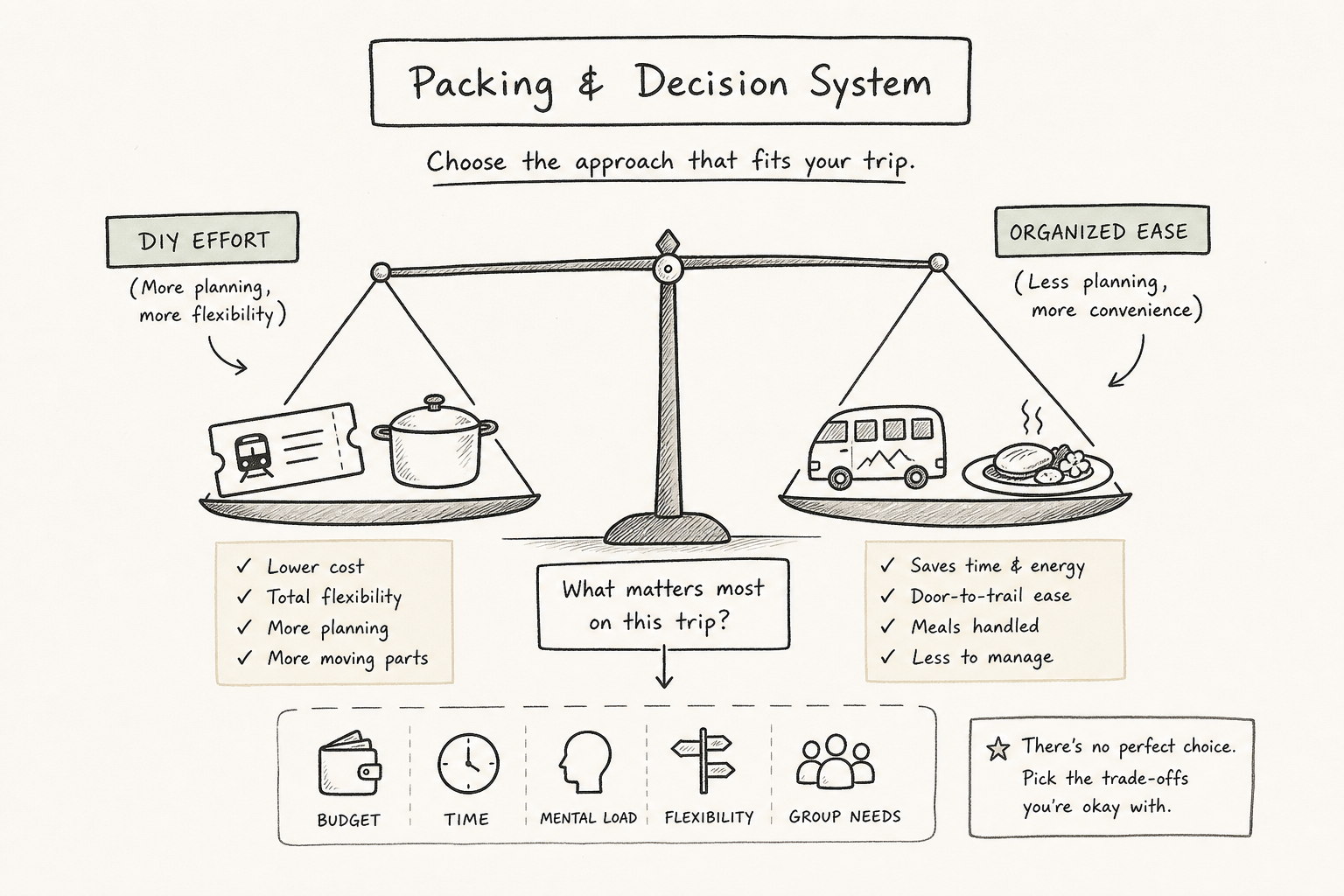
Choosing between the traditional DIY hostel and an organized hiking holiday comes down to your personal travel philosophy and what you value most during your time off.
Choose a traditional DIY hostel (like Gimmelwald) if:
- You have an open-ended itinerary and are traveling for months, not weeks.
- You genuinely enjoy the process of travel planning, studying maps, and cooking meals with ingredients you found in a foreign grocery store.
- You prefer the flexibility to wake up at noon and do nothing if you feel like it.
- You are okay with hiking entirely alone if you can’t find a partner in the common room.
Choose an organized basecamp (like Hiking Hostel) if:
- You are a busy professional, digital nomad, or solo traveler with a fixed 1-2 week vacation window.
- You want a guaranteed social experience with a consistent group of friends.
- You want to hike spectacular, varied trails (including excursions to Chamonix or Glacier 3000) without ever looking at a train timetable.
- You want to eat a hot, catered meal at the end of a long hiking day instead of waiting in line to boil pasta.
- You prefer knowing the total cost of your trip upfront, without worrying about surprise transport fees.
FAQs about Backpacking and Hiking Hostels in Switzerland
Is it safe to hike solo in the Swiss Alps?
Yes, Switzerland has incredibly well-maintained and clearly marked trail systems. The iconic yellow diamond signs dictate route times with impressive accuracy. However, mountain weather is highly unpredictable, and cell service can drop in deep valleys. While physical safety is high, solo hikers must be vigilant about weather forecasts. Hiking within an organized group or at least logging your route with a hostel host is always recommended.
How far in advance do I need to book Swiss mountain hostels?
For famous DIY spots like Mountain Hostel Gimmelwald or Backpackers Villa in Interlaken, you should book at least 3 to 4 months in advance for the peak summer season (July and August). The same applies to organized weeks at Hiking Hostel; because packages are limited to small groups to maintain a good social dynamic, prime mid-summer weeks sell out quickly.
Can I really do the Alps on a backpacker budget?
It is possible, but “budget” in Switzerland means something different than “budget” elsewhere. A tight DIY backpacker budget in the Alps is still roughly 100-120 CHF per day (bed, grocery store food, minimal transport). Utilizing resources like travel planning discussions on Reddit’s solotravel communities can help identify free trails. However, many find that an all-inclusive basecamp package ultimately provides better value because it bundles expensive logistical elements (like daily shuttles and large meals) into a single, highly discounted rate.
Do I need to be an expert mountaineer to stay at these hostels?
Not at all. Both traditional hostels and organized basecamps cater to a wide range of abilities. Trails in regions like Valais, St. Stephan, and the Bernese Oberland range from flat, paved panoramic walks to intense alpine ascents. The advantage of a guided or organized basecamp is that the staff can recommend or provide transport to the exact trail that matches your fitness level on any given day.
Final Thoughts: Maximizing Your Swiss Alps Experience
The title of “best hiking hostel in Switzerland for solo backpackers” is subjective. If you crave absolute freedom, historic isolation, and the raw backpacker hustle, fighting for a bed at Mountain Hostel Gimmelwald is a rite of passage you will never forget. It offers a glimpse into the traditional alpine culture that has drawn wanderers to the Bernese Oberland for decades.
But if your goal is to maximize your time on the trail, eliminate the stress of Swiss transport logistics, and build genuine connections with a consistent group of fellow solo travelers, the organized basecamp model is unmatched. By handling the friction of accommodation, catering, and daily trail shuttles, a week at Hiking Hostel allows you to focus entirely on the reason you came to Switzerland in the first place: the mountains.
Whether you are exploring the rugged trails of Liddes, taking an excursion to Mont Blanc, or sharing stories over a catered dinner in St. Stephan, removing the logistical burden often results in a vastly superior holiday. Choose the style that fits your energy, pack your layers, and the spectacular trails of the Swiss Alps will handle the rest.