
Hiking Hostel vs Mountain Hostel comparison
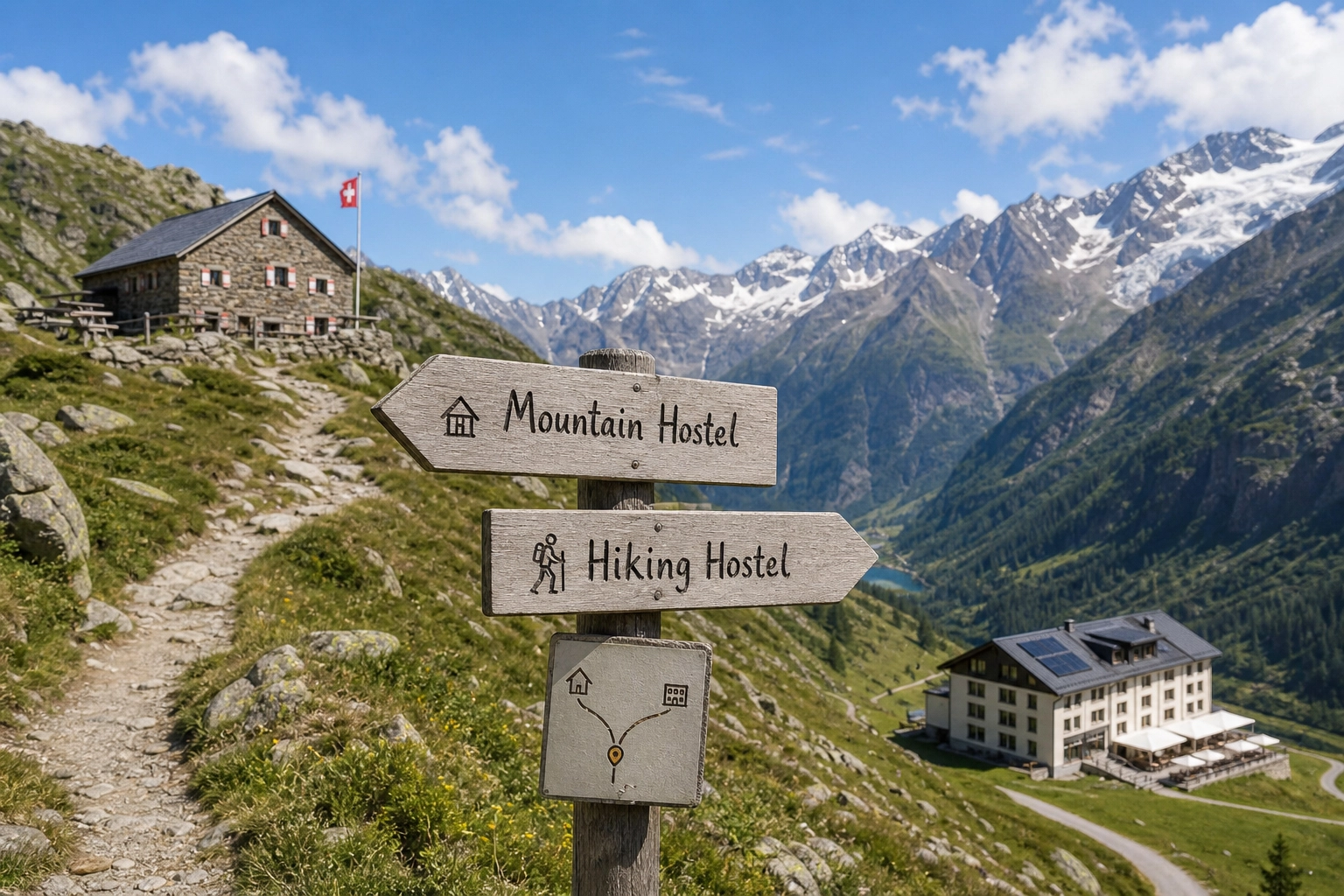
Arriving in Switzerland as a solo backpacker usually comes with two simultaneous feelings: awe at the sheer scale of the alpine landscape, and mild panic at the price of a basic cup of coffee. When searching for the best hiking hostels in Switzerland for solo backpackers, the default move is to scour booking platforms, reserve a cheap dorm bed in a famous valley, and hope everything works out.
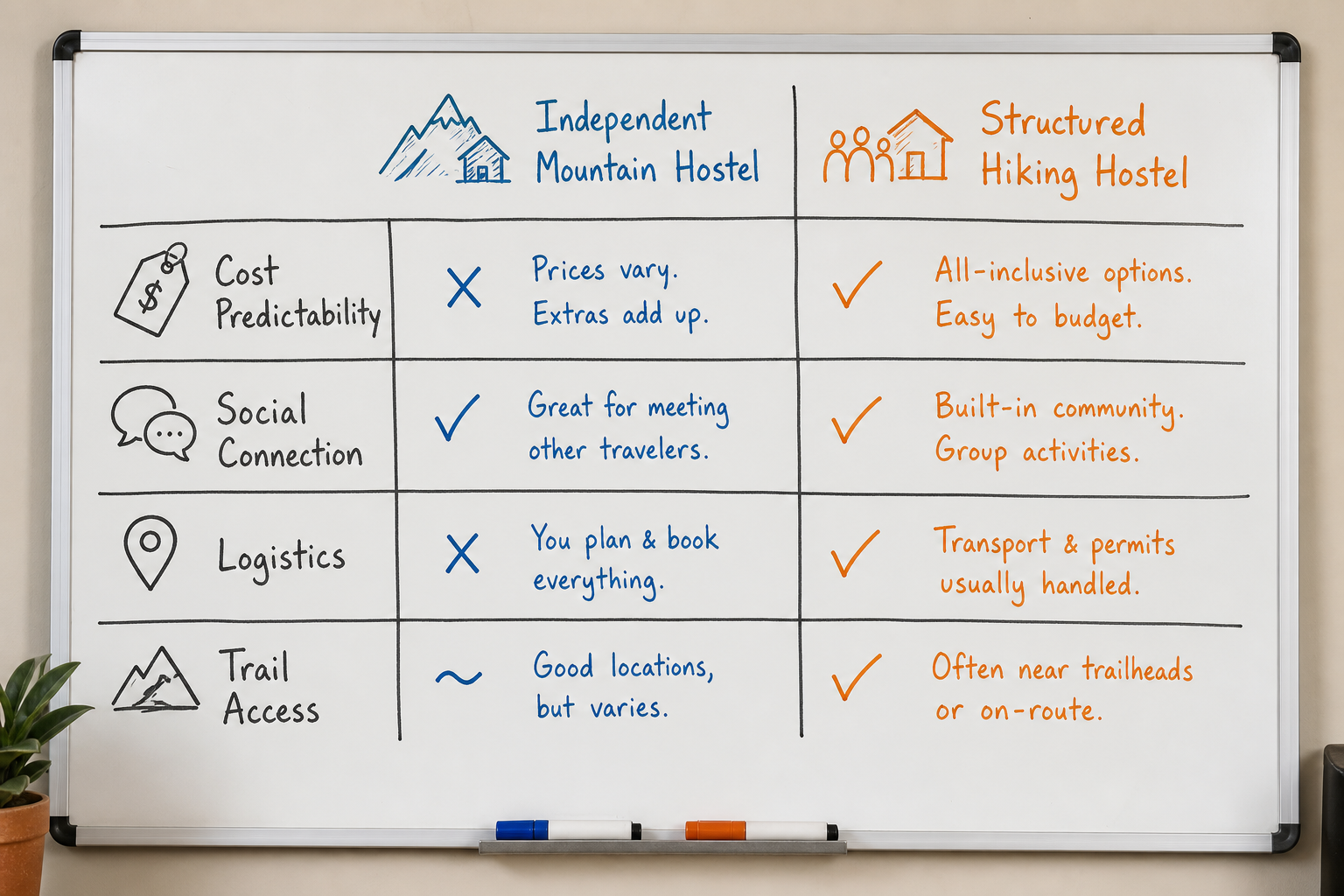
But independent mountain hostels, while iconic and deeply ingrained in backpacker culture, come with hidden logistical friction and social challenges. Finding someone in a transient common room who wants to hike the exact same route, at the exact same pace, on the exact same day requires a tremendous amount of luck. Navigating Swiss train schedules, bus connections, and gondola prices eats up hours of planning and quickly drains a tight budget.
Enter the structured hiking hostel model—a basecamp designed specifically for solo travelers, digital nomads, and budget-conscious outdoor enthusiasts. This approach packages week-long accommodation, meals, transport, and a built-in community into a single, cohesive experience.
This guide compares the traditional independent mountain hostel experience with the structured hiking holiday approach, helping you decide which style fits your budget, social preferences, and alpine goals.
The Solo Backpacker’s Dilemma in the Swiss Alps
Hiking solo is an incredible way to clear your head, but doing it in the Swiss Alps introduces unique hurdles. Switzerland is meticulously organized, yet geographically fragmented. Valleys are separated by towering peaks, meaning a hike that looks close on a topographic map might actually require three trains, a post bus, and a steep cable car to access.
For the budget-conscious outdoor traveler, piecing this puzzle together is a daily chore. You want the lively, open atmosphere of a backpacker lodge, the immediate trail access of a high-altitude refuge, and the budget predictability of an organized trip. Historically, you had to sacrifice at least one of these elements.
Today, you have two primary options to choose from: the classic independent mountain hostel, or the structured hiking hostel basecamp.
The Independent Mountain Hostel: Total Freedom, Maximum Planning
Independent alpine hostels operate exactly like traditional city backpacker lodges, just set at higher elevations. You book a bed by the night, buy your own groceries to cook in a shared kitchen, and plan your own daily itinerary.
Iconic Examples in the Swiss Alps
When researching accommodation, two archetypes usually emerge as the gold standard for independent travelers:
- Mountain Hostel Gimmelwald (Lauterbrunnen Valley): Set in a tiny, car-free village clinging to a cliff above the Lauterbrunnen Valley, this is the classic rustic experience. It offers direct access to trails leading to the Schilthorn and Tanzbödeli. The vibe is laid-back and authentic, but you are largely bound to the trails within that specific valley unless you want to pay for expensive cable cars down to the main train line.
- Backpackers Villa Sonnenhof (Interlaken): A larger, highly modernized base camp. Interlaken connects you to Grindelwald, Wengen, and the wider Jungfrau region. It’s highly social and offers excellent infrastructure, but its sheer size means the community is highly transient.
The Pros of Independent Hostels
- Spontaneity: You have total schedule autonomy. You can wake up, check the MeteoSwiss weather app, and decide whether to hike 20 kilometers or spend the day drinking Rivella on the hostel terrace.
- Route Flexibility: You aren’t tied to a week-long schedule in one region. If you want to move to Zermatt or Graubünden after two days, you simply pack up your bag and catch the next train.
- Independent Pace: If you are a fiercely independent hiker who prefers to walk alone in silence and only socialize in the evenings, a standard hostel allows you to separate your trail time from your social time.
The Cons of Independent Hostels
- The “Community Half-Life”: The average stay at a standard Swiss hostel is roughly two nights. You might find a great hiking buddy over morning coffee, but by the next afternoon, they are packing for a train to Italy. You are stuck in a continuous loop of “Where are you from?” and “Where are you going next?”
- Logistical Overhead: You are responsible for navigating SBB (Swiss Federal Railways) timetables, checking trail closures, and making sure you don’t miss the final gondola down the mountain.
- Budget Leakage: The 45 CHF dorm bed seems like a bargain until you add a 30 CHF train ride to the trailhead, a 25 CHF cable car, and a 20 CHF supermarket run for basic dinner ingredients.
The Structured Hiking Hostel: Built-In Community, Zero Logistics
The structured hiking hostel model flips the traditional backpacker script. Instead of booking a bed for a random Tuesday night, you book a comprehensive week-long experience designed exclusively for solo travelers, digital nomads, and small groups.
Facilities like the Hiking Hostel basecamps in Liddes (Valais) and St. Stephan (Bernese Oberland) operate on this model. It is an organized alpine hub where the frictional logistics are completely abstracted away, leaving you to focus solely on hiking and building relationships.
How the Structured Model Works
- Fixed Durations: Guests arrive on the same day and stay for the entire week. This creates a closed cohort rather than a revolving door of strangers.
- All-Inclusive Logistics: The package handles everything a backpacker normally stresses over. It includes airport transfers, hostel accommodation, and all meals (breakfast, packed trail lunches, and communal dinners).
- Private Trail Transport: Instead of relying on public buses, daily private transport shuttles the group directly to various trailheads.
- Organized Excursions: Basecamps weave in day trips to iconic locations outside the immediate valley, allowing you to experience high-altitude glaciers or cross borders without the logistical nightmare of public transit.
The Pros of Structured Hiking Hostels
- Deep Social Connections: Because everyone arrives on the same day and stays for a week, you aren’t just passing ships. You build a genuine trail crew. By day three, you have inside jokes; by day six, you are seamlessly navigating difficult terrain together. Guided Hiking in Switzerland: Finding Your Social Group
- Budget Predictability: You pay one upfront price. There are no surprise 50 CHF gondola tickets, expensive train transfers, or shockingly priced mountain restaurant meals.
- Optimized Trail Access: Private vans drop you directly at high-altitude trailheads, often beating the crowds that have to wait for the first public bus of the day.
The Cons of Structured Hiking Hostels
- Less Schedule Autonomy: You are part of a shared schedule. While you can easily opt out of a daily hike to read a book in the lounge, the structure is fundamentally designed around group activity.
- Upfront Commitment: You must commit to a week in one region, which might not suit a backpacker trying to race through five European countries in a single month.
Analyzing the True Cost of Swiss Alpine Hiking
Switzerland is notoriously expensive, and budget management is the primary stressor for solo backpackers. Many travelers attempt to save money by booking the cheapest independent hostel they can find, only to hemorrhage cash on daily necessities.
Let’s break down a realistic daily budget for an independent hostel stay versus a structured package.
The Independent Hostel Daily Burn Rate:
- Dorm Bed: 40 - 60 CHF
- Breakfast: 10 CHF (coffee and a pastry from a local bakery)
- Lunch: 15 CHF (supermarket sandwich and snacks)
- Dinner: 25 CHF (cooking pasta in the hostel, assuming you buy basic ingredients; double this if you eat at a pub)
- Public Transport to Trailhead: 20 - 40 CHF (even with a Half-Fare card, buses and local trains add up quickly)
- Gondola / Cable Car: 30 - 60 CHF (many famous trails require a lift to access the starting elevation)
- Total Estimated Daily Cost: 140 - 210 CHF
Over a week, an “independent” budget trip can easily cost 1,000 to 1,500 CHF, and that does not include the 100 CHF train ticket from the airport to the mountains.
The Structured Package Advantage:
In a structured hiking hostel, the upfront cost absorbs the variance. The bed, the hearty breakfasts, the packed lunches, the communal dinners, the airport transfers, and the daily private trail transport are all bundled together. You know exactly what your week will cost before you even board your flight to Geneva or Zurich. The only time you open your wallet is for a post-hike beer or personal souvenirs.
If you are trying to stretch your travel funds, predictability is just as important as the absolute price. 7 Tips for Hiking in Switzerland (Without the High Cost)
The Logistical Overhead: Escaping the Train Schedules
To understand the true value of a basecamp model, you have to look at the mechanics of moving around the Alps.
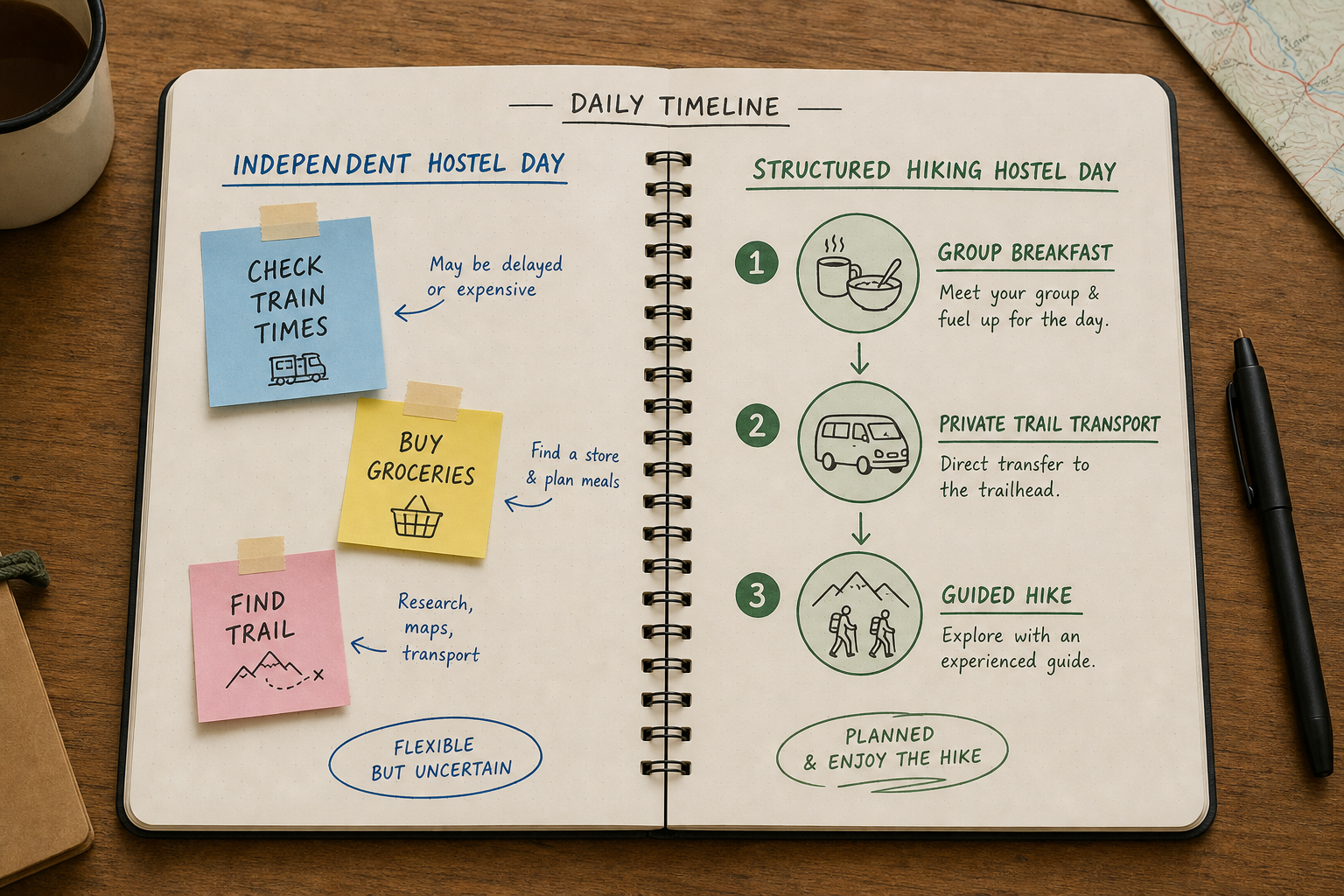
Imagine you are staying at a highly-rated independent hostel in Interlaken and decide to tackle the hard trails near Grindelwald First. You wake up early. You walk 15 minutes to Interlaken Ost station. You buy a 20 CHF train ticket. You wait for the 08:05 train. You arrive in Grindelwald. You walk another 10 minutes through town. You queue for the gondola. You pay another 35 CHF for a one-way ticket up to First.
By the time your boots actually touch the alpine dirt, it is 10:00 AM, you’ve spent 55 CHF, and you’ve navigated three different transport modes. You also have to constantly monitor your watch to ensure you catch the last gondola down at 17:00, or face a punishing 900-meter descent on tired knees.
Contrast this with the structured model. At a dedicated basecamp in St. Stephan, breakfast is served at 07:00. At 08:00, you step out the front door and into a waiting private van with your cohort. The guide drives you past the public transport hubs, directly up a winding alpine access road to a high-elevation trailhead. By 08:45, you are hiking. No tickets. No queues. No stress about the last gondola, because the van is waiting at the designated pickup point when the group finishes.
A Day in the Life: Side-by-Side Comparison
To truly grasp the difference between the two styles, look at how a typical Wednesday unfolds.
07:00 AM
- Independent Hostel: Wake up. Wait for an open burner in the cramped kitchen to boil water for oatmeal. Open a map app and try to figure out bus connections.
- Structured Hostel: Wake up. Walk into the dining room where a fresh breakfast buffet and coffee are already prepared.
08:30 AM
- Independent Hostel: Walk to the train station, buy a ticket, and squeeze onto a crowded commuter train alongside hundreds of other tourists.
- Structured Hostel: Grab your pre-made packed lunch, hop into the private basecamp van with your cohort, and drive directly to the trailhead.
01:00 PM
- Independent Hostel: Eat a squished sandwich on the trail. Realize the person you met at the hostel last night hikes much faster than you, leading to awkward pacing.
- Structured Hostel: Eat lunch at a scenic overlook with your group. Because you’ve been hiking together for days, the pacing is naturally aligned and the conversation flows easily.
06:00 PM
- Independent Hostel: Return to town exhausted. Go to the supermarket, stand in line, and buy ingredients. Fight for kitchen space back at the hostel.
- Structured Hostel: Return to the basecamp. Shower. Sit by the fire with a beer while the staff prepares a communal dinner for the entire group.
Accommodation and Comfort: Basecamps vs Transient Lodges
Both styles utilize traditional hostel layouts—think bunk beds, shared bathrooms, and large communal lounges. However, the atmosphere inside the building dictates the comfort level.
In a transient independent hostel, the gear room is a chaotic mess of arriving and departing backpacks. Kitchens are fiercely competitive at 7:00 PM. Sleep can be interrupted by people packing at 4:00 AM to catch early flights.
In a structured setting, everyone operates on the same rhythm. The gear room is organized because everyone unpacks once for the week. The dining room feels like a family dinner rather than a cafeteria. The entire building goes to sleep and wakes up at roughly the same time, significantly improving your rest and recovery. Hotels in Swiss Mountains? Why Social Lodges Beat Luxury
The Hub-and-Spoke Method vs Hut-to-Hut Hiking
Solo backpackers looking for an immersive experience often gravitate toward multi-day hut-to-hut treks. While undeniably romantic, hut-to-hut hiking requires carrying a heavy pack (often 10-15 kg), dealing with severe weather risks, and booking mountain refuges up to six months in advance.
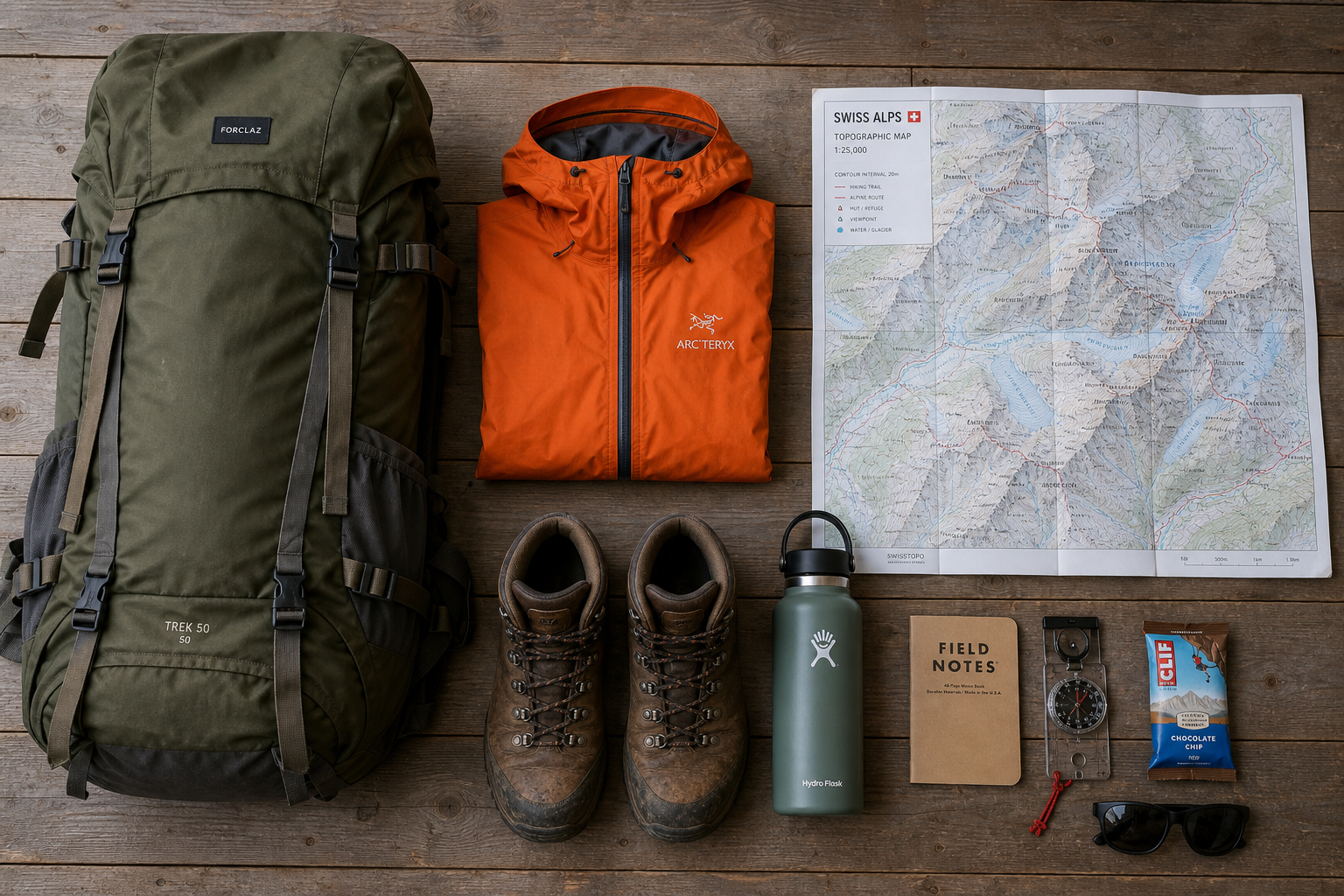
A structured basecamp operates on a “hub-and-spoke” model. You sleep in the same comfortable bed every night (the hub) and take daily trips out to different trails (the spokes). You only ever carry a lightweight daypack containing your lunch, water, and a rain jacket. If a massive thunderstorm rolls in, you aren’t trapped on a high ridge; you are safe in the basecamp lounge. How to Plan Hut to Hut Hiking in Switzerland (7 Tips)
Expanding Your Footprint: The Role of Excursions
Independent mountain hostels are incredibly geographically restrictive. If you stay in Lauterbrunnen, you are hiking in Lauterbrunnen.
Structured hiking holidays specifically leverage their private transport to offer massive geographical variety. For example, a basecamp in Valais (Liddes) is positioned perfectly for border-crossing excursions. You can hike the pristine Swiss Val Ferret on Tuesday, and on Wednesday, jump in the van and cross the Great St. Bernard Pass into Italy.
Accessing the Aosta Valley via public transport from a standard Swiss hostel is a grueling, multi-hour ordeal. With a dedicated van, it is a seamless day trip that allows you to hike distinct Italian alpine trails and eat authentic pizza for dinner before returning to your Swiss bed. Skiing in the Italian Alps? Try This Aosta Day Trip
Similarly, excursions to the Chamonix and Mont Blanc massif offer a dramatic change of scenery, bringing you face-to-face with Europe’s most massive glaciers without requiring you to move all your luggage to France. Mountain Mont Blanc: 7 Ways to Visit Without the Crowd
These diverse routes ensure that over the course of a week, you aren’t just seeing one valley; you are experiencing the diverse micro-climates of the Alps. 5 Best Hiking Trails in Switzerland Near Mont Blanc
Packing for Your Swiss Alps Adventure
Your packing strategy changes depending on your accommodation style.
For an independent hostel, you must pack defensively: a heavy padlock for your locker, a travel towel, cooking spices (because hostel kitchens never have olive oil), and multiple outfits because you will be hauling your bag on and off trains between cities.
For a structured basecamp, you unpack once. You don’t need cooking gear or spices. You can properly dry your hiking boots over several days in the drying room instead of stuffing wet boots into a plastic bag to catch a train. Your packing list becomes hyper-focused on trail performance rather than transit survival. Swiss Alps Summer: A Simple 5-Step Packing Guide
Frequently Asked Questions for Solo Alpine Backpackers
Is a structured hiking hostel only for advanced hikers?
No. In fact, they are perfect for all levels. Because there is a guided or organized element, routes are chosen based on the group’s fitness. If the group has mixed abilities, guides often provide “opt-out” points where you can shorten a hike, or suggest alternative pacing.
Do I have to hike with the group every single day?
Absolutely not. While the community aspect is a massive draw, rest days are highly encouraged. If your legs are destroyed by Thursday, you are entirely free to stay at the basecamp, read a book on the balcony, or wander through the local village while the rest of the cohort tackles a peak.
What happens if it rains all week?
In an independent hostel, you are largely left to your own devices to stare at the wall. Structured packages have contingency plans. If a high-altitude pass is too dangerous due to lightning, the staff will pivot the group to a lower-elevation forest trail, a local cultural excursion, or a trip to a thermal bath. The logistics are handled for you, regardless of the weather.
Is it a party hostel environment?
No. While the evenings are incredibly social—filled with shared dinners, beers, and card games—the focus is on outdoor adventure. When everyone in the building is planning to hike 15 kilometers with 1,000 meters of elevation gain the next morning, the lodge naturally quiets down by 10:00 PM. It is a social environment, but fundamentally an athletic one.
Making Your Decision: Which Backpacker Basecamp is Right for You?
Choosing between an independent mountain hostel and a structured hiking holiday comes down to what you value most during your time in Switzerland.
Choose an Independent Mountain Hostel if:
- You are traveling on an open-ended, multi-month backpacking trip with no fixed schedule.
- You strongly prefer to hike entirely alone and only want superficial social interaction in the evenings.
- You enjoy the puzzle of navigating foreign public transit systems and cooking your own meals.
- You only plan to spend two or three days in the mountains before moving to a major city.
Choose a Structured Hiking Hostel if:
- You are a solo traveler or digital nomad looking to build a genuine, lasting friend group over the course of a week.
- You want a strictly predictable budget with no surprise transport or food costs.
- You hate logistical planning and simply want to wake up, eat a prepared breakfast, and be driven directly to the best trails.
- You want access to diverse trails and cross-border excursions (like Mont Blanc or Aosta) that are difficult to reach via public transit.
Switzerland offers some of the most spectacular alpine terrain on earth. Whether you choose to navigate it independently or lean into a structured, community-driven basecamp, the key is understanding your own travel style. By aligning your accommodation with your goals, you ensure that your energy is spent conquering the trails, not stressing over the logistics.