Solo hiking Swiss Alps guide
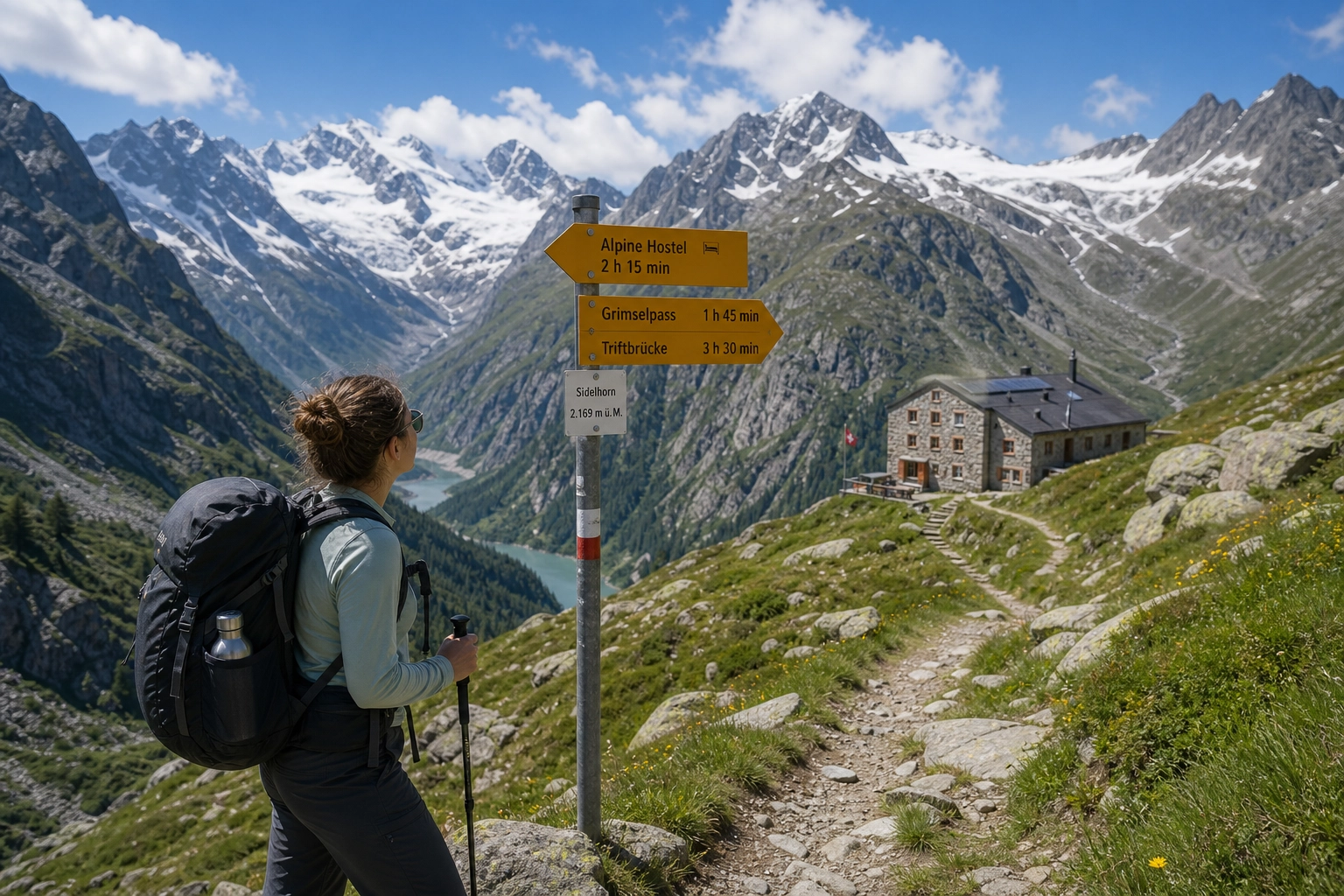
Hiking solo in Switzerland is an incredible experience, but let’s be honest—Swiss prices can easily drain a backpacker’s wallet, and navigating alpine logistics alone can feel overwhelming. You have arguably the best trail infrastructure in the world at your feet, complete with yellow signposts timing your every step, but ending the day in an isolating, overpriced hotel room quickly diminishes the magic of an alpine adventure.
The secret to pulling off a successful solo trip in the Swiss Alps doesn’t lie in carrying a heavier tent or eating instant noodles on a park bench. It lies in choosing the right basecamp. Staying at the right hiking hostels not only keeps your budget intact, but it also hooks you up with a built-in community of fellow solo hikers to hit the trails with.
Whether you are a digital nomad looking for a weekend summit, a budget-conscious backpacker, or just someone who prefers the flexibility of solo travel with the safety net of a group, finding the right social lodge changes everything.
Why Hiking Hostels Are the Solo Backpacker’s Best Asset
The traditional image of a hostel—noisy bunk beds and late-night pub crawls—rarely applies to Swiss mountain lodges. Alpine hostels are purpose-built for early risers.
When you check into a true hiking hostel, you are surrounded by people whose primary goal is to catch the first cable car or hike to a glacier before the afternoon clouds roll in. This environment creates immediate common ground. You can walk into a communal kitchen, ask a stranger about the snow conditions on a specific pass, and suddenly have a hiking partner for the next three days.
Beyond the social aspect, these lodges offer practical amenities that standard hotels overlook. You will find drying rooms for wet boots, early breakfast shifts that align with alpine starts, and staff who actually know the local trail conditions. If you are debating accommodation styles, Hotels in Swiss Mountains? Why Social Lodges Beat Luxury breaks down exactly why the communal atmosphere yields a better overall trip.
Top Hiking Hostels in the Swiss Alps for Solo Travelers
The absolute best hiking hostels in Switzerland for solo travelers are strategically located near the country’s most legendary trailheads. Here is a breakdown of top-tier basecamps where community, trail access, and affordability intersect.
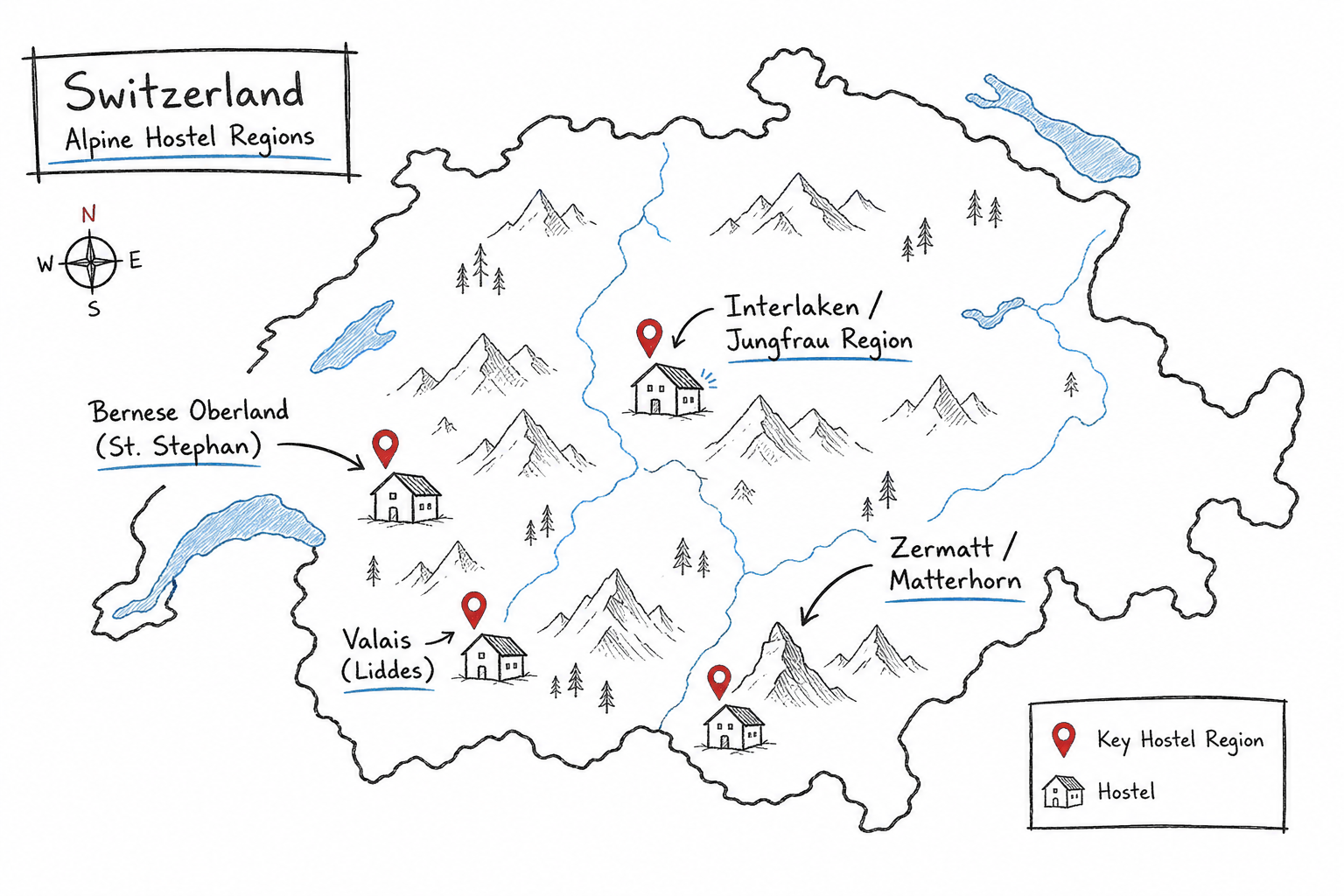
1. Mountain Hostel Gimmelwald (Lauterbrunnen Valley)
If you want to wake up, step outside, and immediately be surrounded by towering, snow-capped peaks, this is your spot. Located in a tiny, car-free alpine village cliffside above the Lauterbrunnen Valley, it feels like an authentic mountain refuge but with a highly social, laid-back backpacker vibe.
- Why it’s great for solo travelers: The communal lounge and outdoor deck are legendary for mingling. Everyone here is an outdoor enthusiast, so finding a hiking buddy for the day over morning coffee is effortless. The isolation of the village forces guests to interact rather than dispersing into a busy town.
- Trail Access: Direct access to trails leading up to the Schilthorn, Tanzbödeli, and Rotstockhütte. You can literally start hiking the moment you walk out the front door.
- The Catch: It is heavily booked in the summer. You need to secure a bed months in advance.
2. Backpackers Villa Sonnenhof (Interlaken)
Interlaken is the ultimate logistical hub for the Jungfrau Region. While it’s a larger hostel in a bustling town, Backpackers Villa consistently wins awards for being exceptionally welcoming to solo travelers without crossing into rowdy “party hostel” territory.
- Why it’s great for solo travelers: They offer brilliant free perks that bring people together, including a massive communal kitchen, a free breakfast buffet, and free entry to the local public pools. The staff are regional experts and will help you map out complex day hikes using the local transport network.
- Trail Access: You are a quick train ride away from world-class trailheads in Grindelwald, Lauterbrunnen, and Harder Kulm.
- The Catch: You aren’t waking up in the mountains; you are waking up in a town that requires a train ride to reach the high alpine trails.
3. Zermatt Youth Hostel (Matterhorn Region)
Seeing the Matterhorn is usually at the top of every backpacker’s Swiss itinerary. Zermatt is notoriously expensive, making this youth hostel a critical lifeline for budget-conscious solo travelers.
- Why it’s great for solo travelers: It offers half-board options (breakfast and dinner included), which is a massive money-saver in a town where a basic restaurant dinner can easily cost 40 CHF. Dining in the communal hall naturally leads to conversations with other hikers about the day’s routes.
- Trail Access: Walking distance to the Gornergrat railway and trails leading to the Hörnli Hut (Matterhorn basecamp) or the Five Lakes Walk.
- The Catch: It feels a bit more institutional and less “rustic” than smaller independent lodges.
4. Basecamps in Liddes & St. Stephan (Valais & Bernese Oberland)
For solo travelers who want to escape the heavy tourist traffic of Zermatt and Interlaken, regions like the St. Bernard Pass area (Liddes) and the Simmental valley (St. Stephan) offer incredible hiking without the crowds.
- Why it’s great for solo travelers: These areas attract serious hikers and trail runners. When you stay in these quieter valleys, the social scene is hyper-focused on the outdoors. Basecamps here often organize group hikes, taking the pressure off you to navigate complex routes alone.
- Trail Access: Liddes offers incredible access to the Tour des Combins and cross-border trails toward Aosta. St. Stephan puts you in prime position for exploring Glacier 3000, Gstaad, and the raw beauty of the Bernese Oberland.
- The Catch: Public transport schedules can be less frequent than in major hubs, requiring more precise planning.
How to Choose the Right Alpine Hostel
Not all hostels are created equal, especially when your primary goal is mountain sports. When vetting a hostel for your solo hiking trip, look beyond the price per night and evaluate its practical infrastructure.
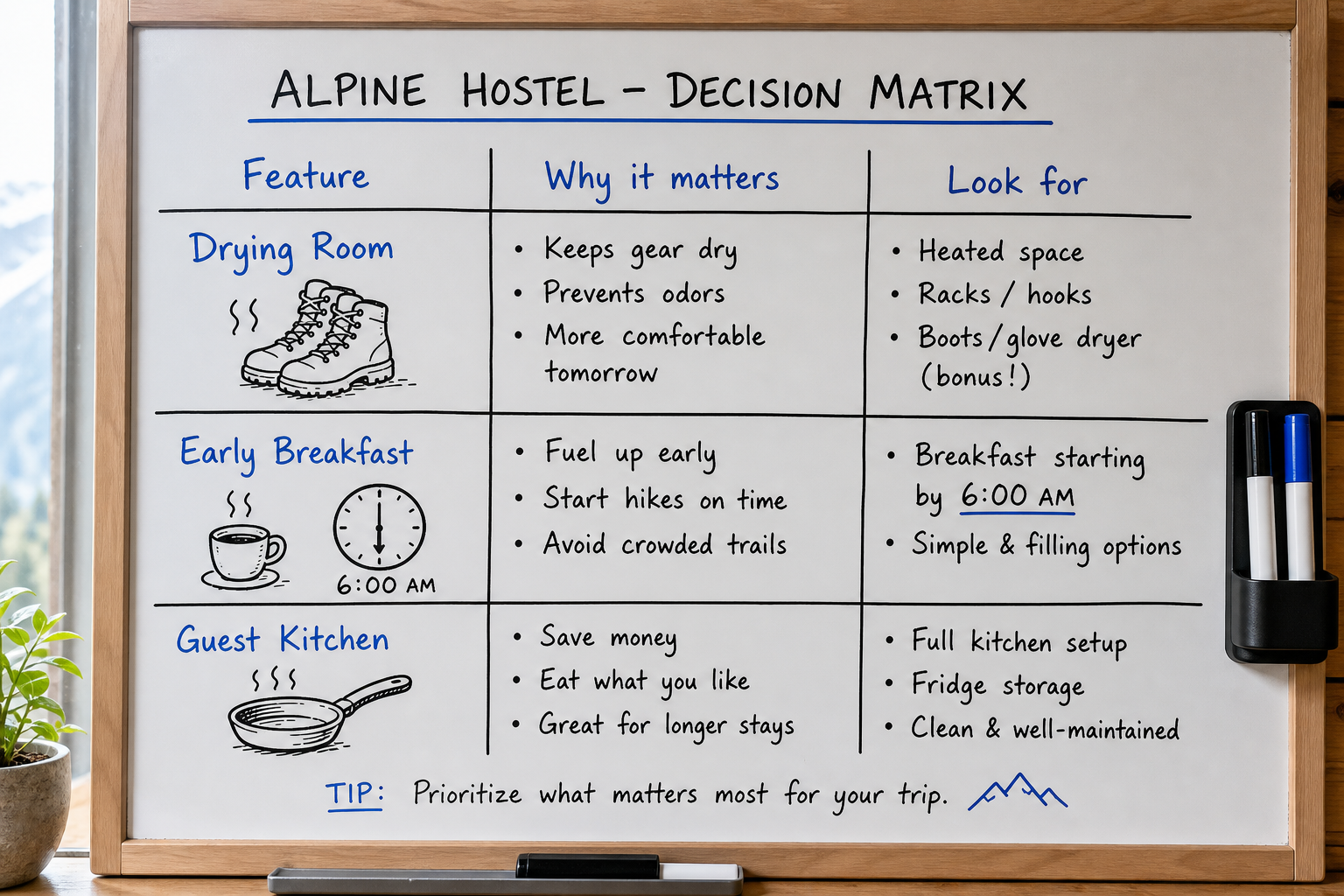
The Alpine Hostel Checklist:
- Drying Facilities: Does the hostel have a heated boot room or drying rack? Hiking in the Alps often means afternoon thunderstorms. Starting the next day with wet boots is a guaranteed way to ruin your trip.
- Breakfast Timing: Swiss summer hiking requires early starts to beat the heat and the afternoon clouds. If breakfast doesn’t start until 8:00 AM, you are losing valuable trail time. Look for hostels that offer breakfast at 6:30 AM or provide “to-go” breakfast bags.
- Kitchen Access: Eating out in Switzerland will destroy a backpacker budget. Ensure the hostel has a fully equipped guest kitchen.
- Proximity to Transit: In Switzerland, the train or post bus is your trailhead shuttle. A cheaper hostel that requires a 30-minute uphill walk from the train station will cost you time and energy every single day.
- Guest Demographics: Read the reviews. Are people mentioning pub crawls and late-night noise, or are they talking about trail advice and quiet hours?
Navigating Swiss Prices as a Solo Backpacker
The biggest barrier to solo travel in the Swiss Alps is the cost. However, with strategic planning, you can experience the same trails as luxury travelers for a fraction of the price. If you want a deep dive into budget strategies, our guide on 7 Tips for Hiking in Switzerland (Without the High Cost) covers everything from transit hacks to food sourcing.
Here are the non-negotiable budget rules for solo hikers:
- The Half-Fare Card: If you are staying in Switzerland for more than a few days and taking trains or cable cars, buy the Swiss Half-Fare Card. It costs roughly 120 CHF and gives you 50% off almost all public transport, including many expensive mountain cable cars. It pays for itself very quickly.
- Supermarket Lunches: Coop and Migros are your best friends. Buy fresh bread, local cheese, cured meats, and fruit in the morning. A mountain hut lunch will cost 25-35 CHF; a supermarket picnic costs 8 CHF and tastes better when eaten on a peak.
- Tap Water: Never buy bottled water. Swiss tap water is alpine spring water. Carry a reusable bottle and fill up at the numerous public fountains in villages (unless marked Kein Trinkwasser).
Building Your Solo Hiking Itinerary (and Finding a Group)
As a solo backpacker, you have two main options for how you structure your hikes: radial day hikes from a central hostel, or hut-to-hut trekking.
Radial Day Hiking
Using one or two hostels as a basecamp and doing day trips is the most flexible and cost-effective method. You don’t have to carry a heavy backpack, you can easily alter your plans if the weather turns bad, and you have a consistent social base to return to every night. From a base in the Valais or near Mont Blanc, you can tackle some of the most stunning routes in Europe. Check out the 5 Best Hiking Trails in Switzerland Near Mont Blanc to see what a week of day hikes can look like.
Hut-to-Hut Trekking
If you want to spend multiple days high in the alpine without returning to the valley, hut-to-hut hiking is the way to go. You sleep in mountain refuges (SAC huts) and eat communal dinners with other hikers. It is an incredibly social experience for a solo traveler, as you often end up hiking the same route alongside the same group of people for several days. However, it requires meticulous advance booking and a higher budget. Read How to Plan Hut to Hut Hiking in Switzerland (7 Tips) if this is your goal.
Bridging the Gap: Finding People to Hike With
Even if you prefer hiking alone, certain routes are safer and more enjoyable with a group—especially those involving glacier crossings or exposed ridges.
How do you find a group when traveling solo?
- The Hostel Breakfast Strategy: Sit at a communal table and ask open-ended questions about people’s route plans. “What trail are you tackling today?” is the easiest icebreaker.
- Trailhead Convergence: Start early. You will often naturally fall into pace with other solo hikers on the trail.
- Join a Guided Week: If you want the social aspect guaranteed without the awkwardness of networking, joining an organized hiking week is the ultimate hack. Learn more about how these dynamics work in Guided Hiking in Switzerland: Finding Your Social Group.
Essential Gear for the Solo Alpine Backpacker
When you are solo, you don’t have anyone to share the load with. You can’t split the weight of a first aid kit, sunscreen, or emergency shelter. Therefore, your packing system must be ruthless.
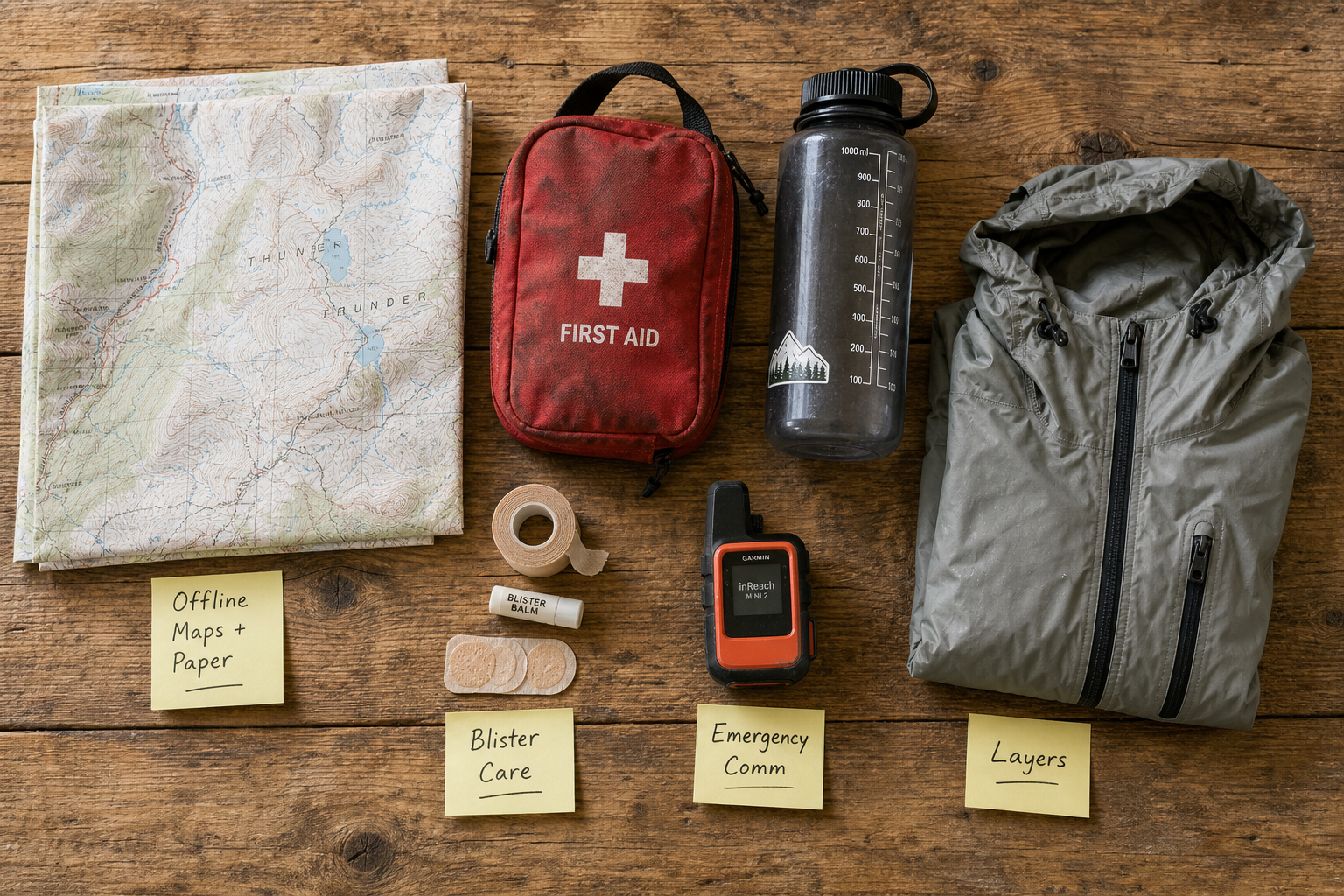
Switzerland in the summer can be 30°C (86°F) in the valley and snowing at the summit on the exact same day. Layering is critical. For a complete checklist, review Swiss Alps Summer: A Simple 5-Step Packing Guide, but keep these solo-specific priorities in mind:
- Reliable Navigation: Do not rely solely on your phone battery. Download offline maps via apps like SwitzerlandMobility or SwissTopo, but always carry a paper map and know how to read it. A dead battery on a poorly marked alpine trail is a serious solo hazard.
- Emergency Communication: Consider a satellite messenger (like a Garmin inReach) if you plan to hike less popular routes. While Swiss cell service is generally excellent, dead zones exist in deep valleys.
- Comprehensive First Aid: Include blister care (Compeed), a cohesive bandage for sprains, and a survival blanket.
The “Done-for-You” Alternative: Social Hiking Weeks
Let’s face it: planning a solo trip to Switzerland is practically a part-time job. Between mapping out the SBB train schedules, trying to secure a bed in a booked-out hostel, budgeting for expensive mountain food, and trying to find reliable hiking partners, the logistics can burn you out before you even reach the Alps.
This is why many solo travelers, digital nomads, and small groups are pivoting to organized week-long summer hiking holidays.
At Hiking Hostel, we built our packages specifically to solve the solo traveler’s dilemma. We provide the authentic, social hostel accommodation you want, but we strip away all the logistical headaches. Our basecamps in Liddes and St. Stephan serve as your home for the week.
Instead of stressing over bus schedules and supermarket runs, your trip includes:
- Hostel Accommodation: Social, comfortable, and geared entirely toward hikers.
- All Meals: Hearty breakfasts to start your day, packed lunches for the trail, and communal dinners where you can swap stories with your new hiking group.
- Logistics Handled: Airport transfers and daily transport to the best trailheads are included.
- Organized Excursions: We don’t just stay in one valley. We organize excursions to iconic locations like Aosta in Italy (perfect if you read about our Skiing in the Italian Alps? Try This Aosta Day Trip and want to see it in summer), Chamonix/Mont Blanc, Interlaken, and Glacier 3000/Gstaad. You get to see the famous sights without figuring out the complex cross-border transit yourself. Check out Mountain Mont Blanc: 7 Ways to Visit Without the Crowd to see how we approach these popular zones differently.
It is the perfect hybrid: you get the independent, budget-conscious, social vibe of a backpacking trip, but with the seamless execution of a guided tour. You simply show up, lace your boots, and walk with a ready-made community.
Frequently Asked Questions
Is it safe to hike alone in the Swiss Alps?
Yes, Switzerland is generally very safe for solo hikers. The trails are exceptionally well-marked, and popular routes are well-trafficked, meaning help is rarely far away. However, alpine weather changes rapidly. Always check the MeteoSwiss app for weather alerts, stay on marked trails, and inform your hostel staff of your intended route before you leave for the day.
Do I need to book Swiss mountain hostels far in advance?
Absolutely. Summer in the Alps (July and August) is peak season. Popular hostels in places like Grindelwald, Lauterbrunnen, and Zermatt will book out months in advance. If you are traveling spontaneously, you will have much better luck looking at lesser-known valleys or booking a structured week-long package where the accommodation is pre-secured for you.
Are there female-only dorms in Swiss alpine hostels?
Most established hiking hostels and youth hostels in Switzerland offer the option of female-only dorms. However, space is limited, so you must select this option during the booking process. Mountain huts (SAC huts) high on the trails, by contrast, are almost always mixed-gender, large-capacity dormitories.
Final Thoughts
Hiking the Swiss Alps solo does not mean you have to be alone, nor does it mean you have to empty your bank account. By choosing the right hiking hostels, leveraging transport passes, and prioritizing communal spaces, you can experience the majesty of the Alps while building a network of global friends. And if the planning gets too heavy, remember that social, organized hiking weeks are standing by to offer you the ultimate alpine basecamp experience.