Solo hiking tours in Switzerland
Booking a solo trip to the Swiss Alps often ends in immediate sticker shock. You look up a modest mountain hotel and see a punitive single supplement. Then you start mapping out the daily logistics: syncing SBB train schedules with remote PostBus routes, factoring in the cost of high-altitude cable cars, and trying to string together day hikes that don’t leave you stranded in a valley at dusk. Very quickly, what was supposed to be a peaceful escape into nature turns into a part-time job in logistical planning.
This friction is exactly why guided hiking holidays are the sweet spot for solo travelers. You get the independence of traveling alone, the safety of local expertise, and the cost-sharing benefits of a group. According to recent trends, solo travel is shifting away from pure isolation toward organized, communal experiences. As Kiplinger notes, solo trips are rapidly evolving into a massive industry, driven by travelers who want the empowerment of solo exploration without sacrificing comfort, safety, or community.
If you are a solo traveler, backpacker, or digital nomad heading to Switzerland, choosing the right tour operator dictates your entire experience. A mismatch can leave you paying luxury prices for an atmosphere you don’t enjoy, or struggling to keep up with an overly aggressive trekking itinerary.
Here is how to navigate the landscape of Swiss alpine tours, what to look for as a solo hiker, and which operators deliver the best experience for your budget and travel style.
What to Look for in a Solo-Friendly Hiking Tour
Not all group tours are designed for solo travelers. Many are built for couples and simply tolerate solo bookings by charging heavy fees. When evaluating an operator, look past the beautiful itinerary photos and examine the underlying structure of the trip.
The Single Supplement Trap
The single supplement is the hidden tax of solo travel. Because most European alpine hotels price rooms based on double occupancy, tour operators pass the cost of an unshared room directly to you. This can inflate the base cost of your trip by 20 to 50 percent.
Solo-friendly operators handle this in one of two ways. They either facilitate room-sharing with another solo traveler of the same gender to eliminate the fee, or they utilize alternative accommodation models—like social mountain lodges or hostels—where single supplements simply do not exist.
Social Dynamics and Group Size
When you travel alone, your tour group becomes your temporary community. The size and demographic of that group matter immensely. Large bus-tour formats (25+ people) often feel impersonal, while ultra-small groups (4-6 people) carry the risk of personality clashes with no room to branch out. The ideal group size for a solo hiker is typically between 8 and 15 people.
It is also worth considering the accommodation’s social layout. Traditional luxury hotels encourage guests to retreat to their private rooms after dinner. If you want a more communal atmosphere, look for operators that utilize social lodging. As discussed in Hotels in Swiss Mountains? Why Social Lodges Beat Luxury, shared communal spaces foster much better organic connections for independent travelers.
Trail Transport and Logistics
Switzerland possesses the best public transportation network in the world, but navigating it daily from a remote trailhead is exhausting. A good guided tour removes this friction completely.
Check what logistical support is included in the package. Does the operator provide daily trail transport? Do they cover airport transfers upon arrival? Getting from Geneva or Zurich airport to a remote alpine village often requires three train changes and a bus ride. An operator that picks you up at the airport significantly reduces arrival anxiety for a solo flyer.
Top Guided Hiking Holidays in Switzerland for Solo Travelers
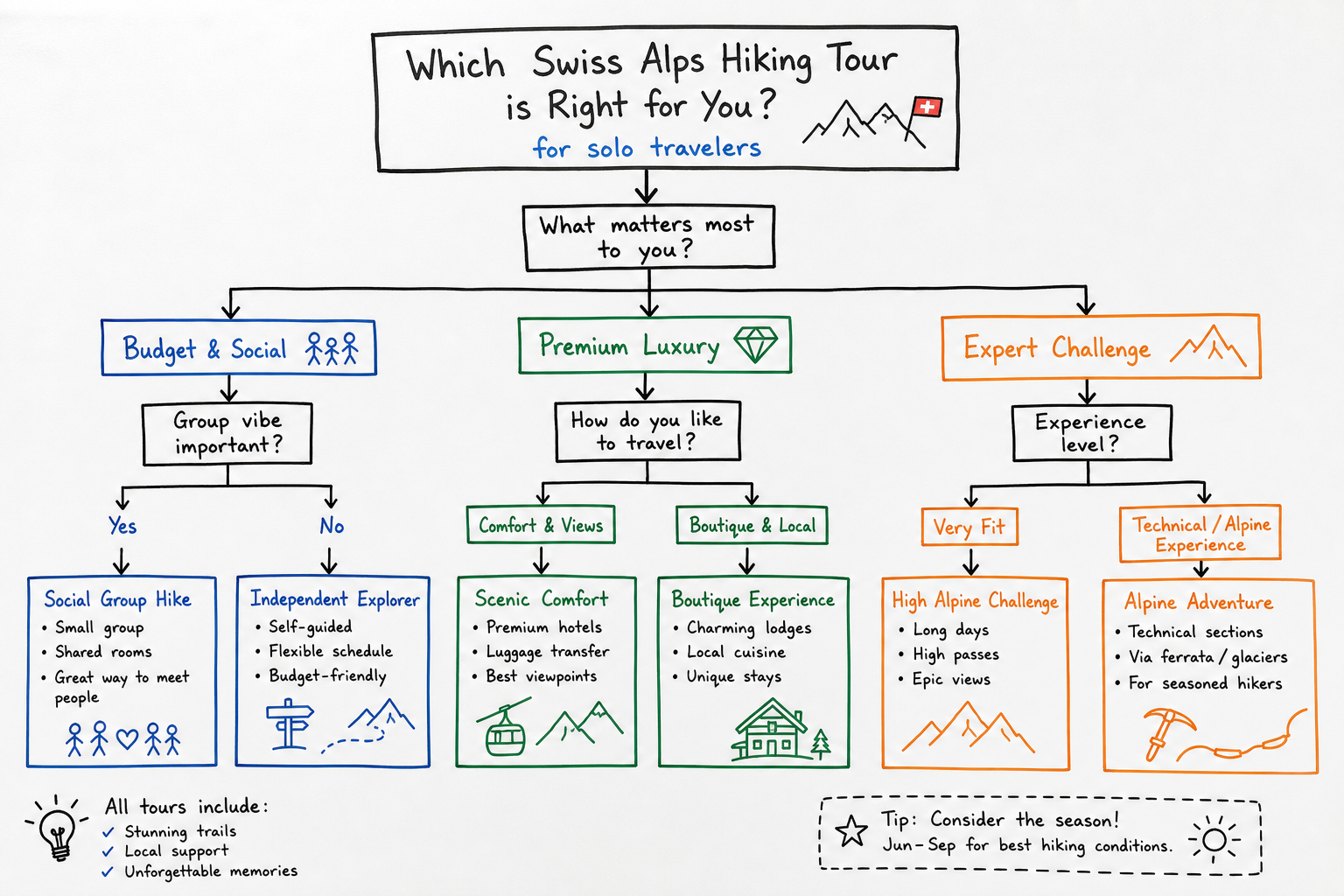
The Swiss market features highly specialized operators. To find the right fit, you need to match your personal travel style—whether that is budget-conscious and social, or premium and luxurious—with the operator’s core competency.
1. Hiking Hostel: Best for Budget-Conscious, Social Travelers
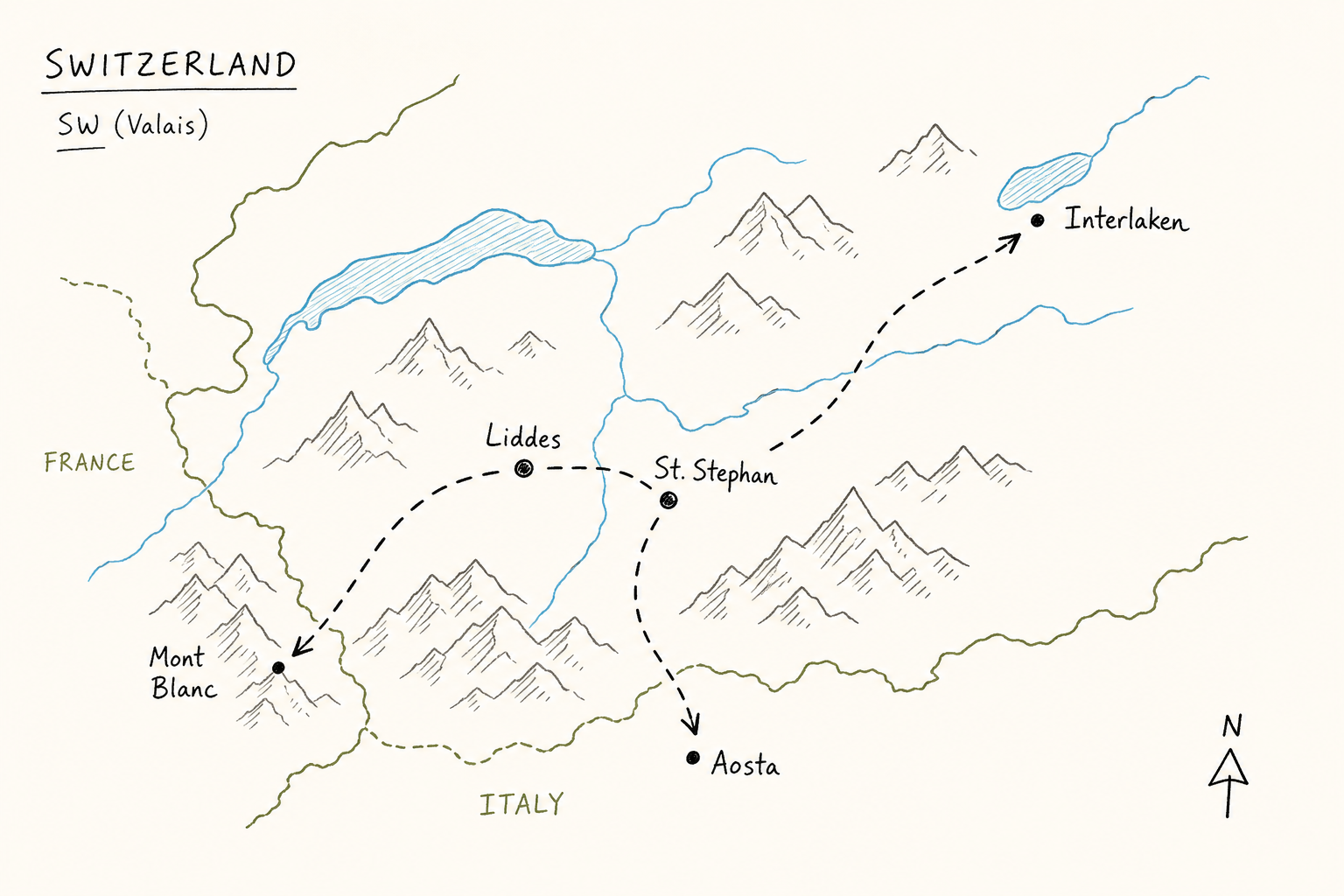
For backpackers, digital nomads, and solo travelers who prioritize community and budget over luxury, Hiking Hostel offers a highly distinct model. Instead of moving between expensive hotels every night, they run week-long summer hiking holidays based out of specific alpine hubs—primarily around Liddes and St. Stephan.
By utilizing comfortable hostel accommodation, they eliminate the dreaded single supplement entirely. The package is built as a complete logistical ecosystem for solo travelers: meals, airport transfers, and daily trail transport are all included. This means you do not have to buy expensive half-fare railway cards or coordinate evening dinner reservations.
The basecamp model allows for incredible regional flexibility. From the Valais and Bernese Oberland hubs, the organized excursions push out to iconic locations, including Aosta, Chamonix, Interlaken, and Glacier 3000/Gstaad. You get the experience of high-altitude alpine hiking and cross-border day trips—detailed further in Mountain Mont Blanc: 7 Ways to Visit Without the Crowd—without the logistical headache of planning it yourself.
2. Alpenwild: Best for Premium Guided Hiking
If you have a higher budget and prefer a premium, culturally immersive experience, Alpenwild is a dominant force in the Swiss Alps. They specialize in luxury guided tours with a strong emphasis on regional gastronomy, high-end mountain hotels, and exceptional local guides.
Alpenwild is famous for their carefully curated itineraries in the Jungfrau region, Zermatt, and their supported variations of the Haute Route. While they attract many couples and affluent retirees, solo travelers are common on their trips. You will likely pay a single supplement for a private room, but the level of service, detailed cultural education, and premium rail transport make it a top choice for those seeking a highly polished experience.
3. Alpine Adventure: Best for Classic Small Groups
Operating since the 1970s, Alpine Adventure offers classic small-group guided tours across diverse Swiss regions, including the Bernese Oberland and the Engadine. They focus on maintaining intimate group sizes and utilizing reliable, comfortable family-run inns.
Their itineraries often provide different daily distance options, which is a great stress-reliever for solo travelers who might be unsure of their exact fitness level compared to a group. They are highly transparent about trail difficulty and are known for fostering a supportive, low-pressure group dynamic on the trail.
4. Ryder-Walker: Best for Expert Trekking
For solo travelers who are highly fit and want to tackle strenuous, technical, or remote routes, Ryder-Walker is an exceptional operator. They lean toward challenging treks, point-to-point inn-to-inn routes, and boutique accommodations.
Their Swiss itineraries often cover the Matterhorn region and the more rugged passes of the Engadine. If you are an experienced hiker who wants to be pushed physically during the day but still have a comfortable bed and a gourmet meal at night, Ryder-Walker attracts a very capable, adventurous demographic of solo trekkers.
5. Haute Route Tours: Best for the Iconic Challenge
The trek from Chamonix to Zermatt is a bucket-list achievement. Haute Route specialists focus almost entirely on this challenging point-to-point journey. Because the route traverses high mountain passes and requires staying in remote alpine club huts, going guided is highly recommended for solo travelers to manage safety and navigation in unpredictable weather.
This option is less about leisurely socializing and more about shared suffering and triumph. The camaraderie built among a group of solo hikers conquering a multi-day high-altitude trek is intense and deeply rewarding.
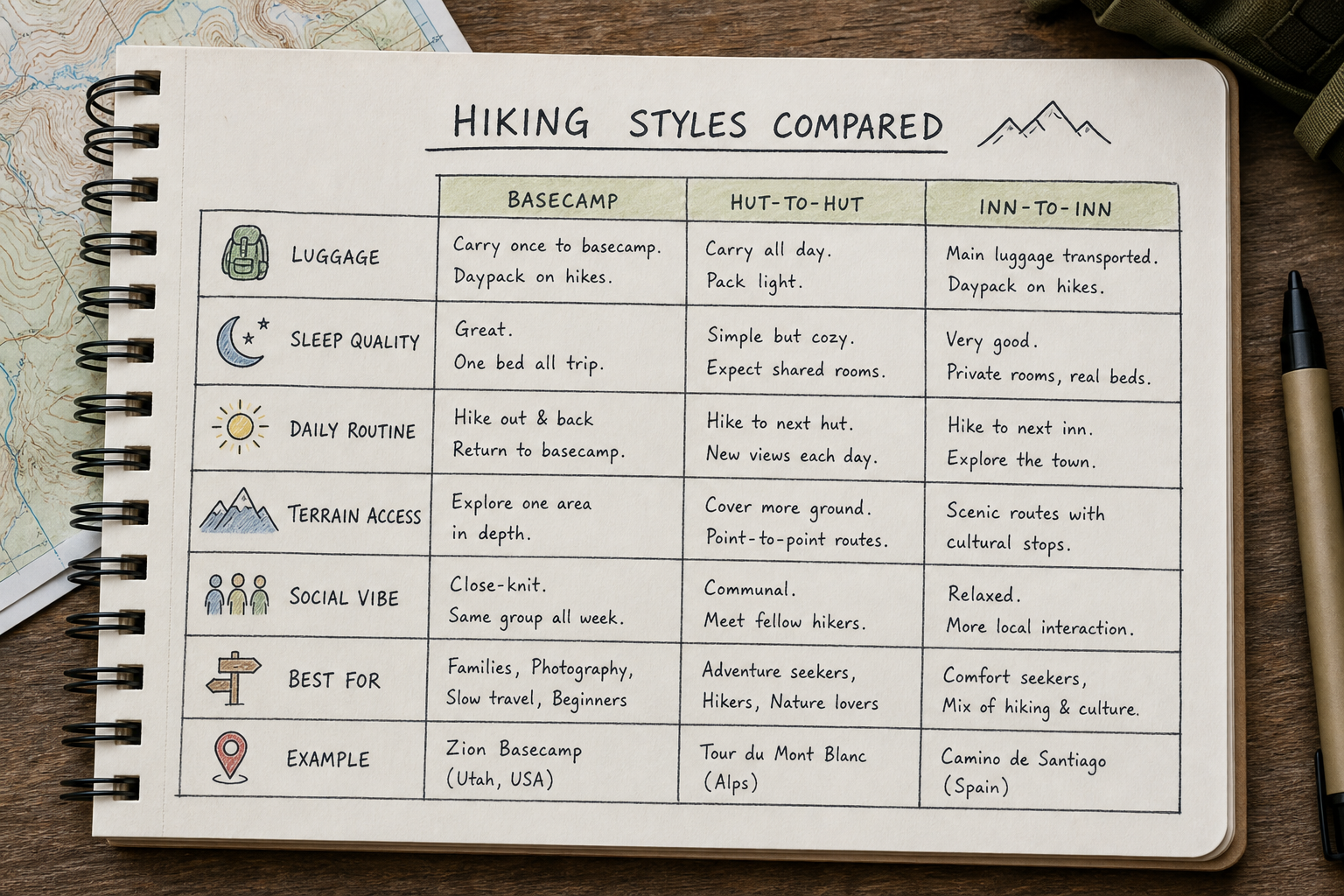
Comparing Trip Styles: Basecamp vs. Hut-to-Hut vs. Inn-to-Inn
Beyond choosing an operator, you must choose a trip format. How you hike and where you sleep dictates the physical toll of the week.
The Basecamp Model (Unpack Once)
In a basecamp model, you stay in one location for the entire week and take daily transport to different trailheads. This is the format utilized by Hiking Hostel in locations like Liddes and St. Stephan.
Pros for solo travelers:
- Flexibility: If you wake up with blisters on day four, you can simply stay back at the lodge, read a book, and rejoin the group for dinner. You aren’t forcing the group to wait for you.
- Less to carry: You only hike with a light daypack. Your main luggage stays in your room.
- Community building: Returning to the same communal spaces every evening builds stronger social bonds than checking in and out of different hotels.
Hut-to-Hut Trekking (The Alpine Immersion)
Hut-to-Hut hiking involves staying in remote, high-altitude alpine club cabins. You carry everything you need for multiple days on your back.
Pros for solo travelers:
- True wilderness: You experience sunrise and sunset high in the mountains, long after the cable cars have taken the day-trippers down.
- Shared experience: Everyone sleeps in dormitory-style bunks and eats family-style meals, forcing immediate socialization.
For a deeper look into preparing for this specific style, review How to Plan Hut to Hut Hiking in Switzerland (7 Tips).
Inn-to-Inn Hiking (Moving Daily with Comfort)
This format moves you from village to village every day, but instead of rustic huts, you stay in valley hotels. Operators usually transport your heavy luggage ahead to the next hotel, so you only carry a daypack.
Pros for solo travelers:
- Sense of journey: You get the satisfaction of walking across a map point-to-point.
- Comfort: Private rooms and private bathrooms every night.
- The catch: This format almost always incurs heavy single supplements, as you are booking a new hotel room every single night.
Popular Regions for Guided Solo Hikes
Switzerland is culturally and geographically diverse. The region you choose will dictate the language spoken, the style of the mountains, and the type of trails you walk.
The Valais Region (Liddes & Zermatt)
The Valais is home to the highest peaks in the Swiss Alps, including the Matterhorn. It is rugged, dramatic, and features deep valleys.
A basecamp in a town like Liddes provides strategic access to some of the most impressive terrain in Europe. From here, guided excursions can easily push toward the Mont Blanc massif. The trail networks here are extensive, and the proximity to the French and Italian borders allows for fascinating day trips. To explore route ideas in this area, see the 5 Best Hiking Trails in Switzerland Near Mont Blanc.
The Bernese Oberland (St. Stephan & Interlaken)
If you picture classic Switzerland—green rolling meadows, ringing cowbells, wooden chalets, and massive glaciated peaks in the background—you are picturing the Bernese Oberland.
Basing out of St. Stephan or the broader Interlaken area provides immediate access to the Eiger, Mönch, and Jungfrau mountains. The trails here range from flat, paved panoramic walks to severe alpine ascents. It is an ideal region for solo travelers who want a mix of high-alpine scenery and traditional Swiss culture.
Cross-Border Excursions (Aosta & Chamonix)
One of the unique benefits of hiking near the Swiss border is the ability to walk or drive into neighboring countries for the day. Organized tours based in southwestern Switzerland frequently include excursions into Chamonix, France, or Aosta, Italy. Experiencing the sudden shift in food, architecture, and language mid-trip is highly rewarding. For an example of how accessible these regions are, see Skiing in the Italian Alps? Try This Aosta Day Trip (the geographical proximity applies just as beautifully in the summer hiking season).
Packing for a Guided Alpine Week
Packing for a solo guided tour is different from packing for an independent backpacking trip. Because your tour operator is handling the emergency gear, group first aid, and navigation, you can afford to pack significantly lighter.
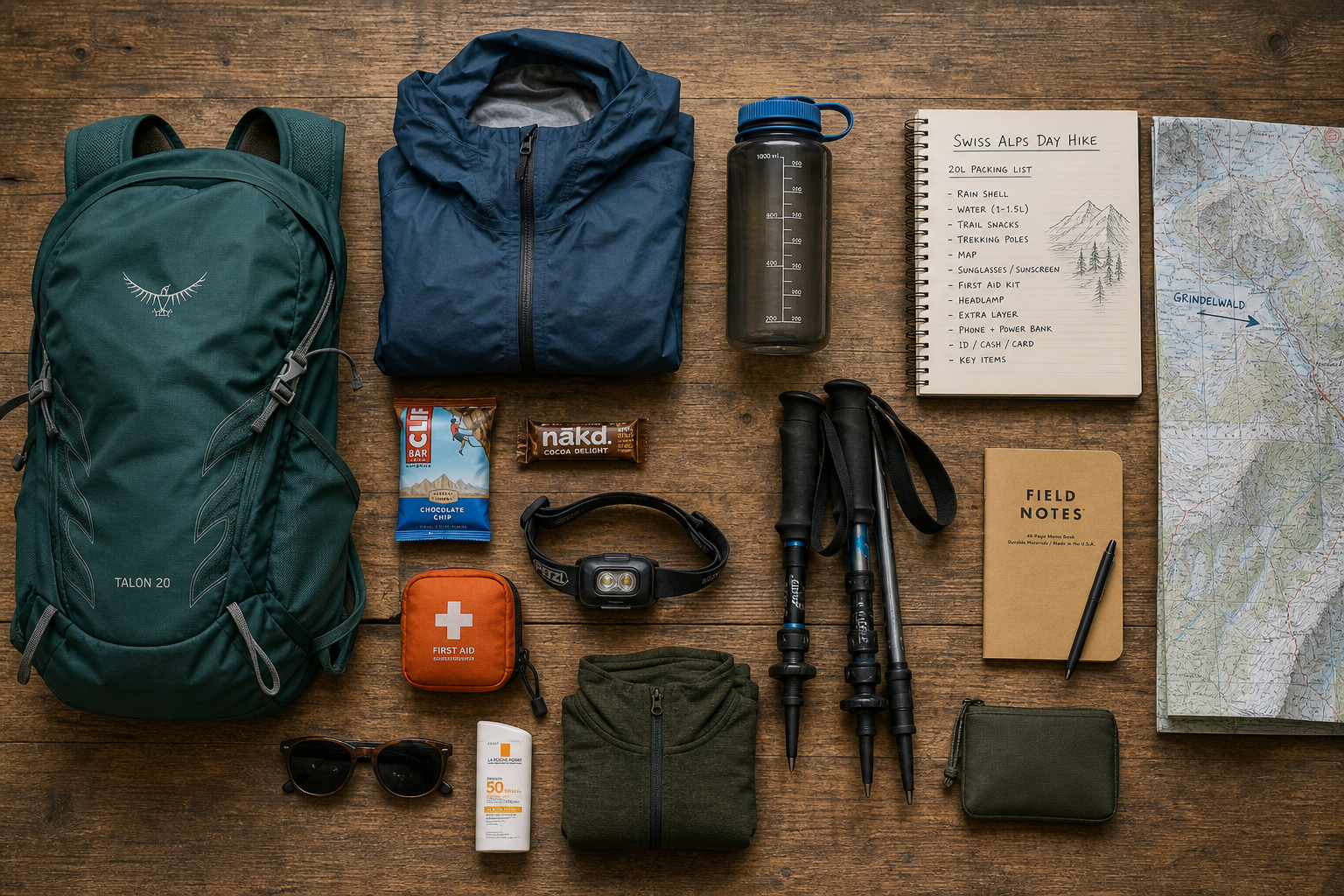
If you are on a basecamp or inn-to-inn tour where luggage is transported, your daily trail pack only needs to be around 20 liters. Focus entirely on personal comfort and layering.
The weather in the Swiss Alps can swing from a sweltering 25°C (77°F) in the valley to a freezing rainstorm on a mountain pass within two hours. A proper layering system is non-negotiable. You need a moisture-wicking base layer, an insulating mid-layer (like a fleece or lightweight puffer), and a high-quality waterproof shell.
Trekking poles are highly recommended to save your knees on the steep Swiss descents. For a detailed breakdown of exactly what to put in your bag, reference the Swiss Alps Summer: A Simple 5-Step Packing Guide.
Budgeting: What Does a Solo Trek Actually Cost?
If you attempt to replicate a guided tour itinerary on your own, the costs accumulate rapidly. Switzerland consistently ranks as one of the most expensive countries in the world.
Consider a typical day for an independent solo hiker:
- Mid-range hotel room (single occupancy): CHF 120 - 180
- Breakfast at a café: CHF 15 - 25
- Trailhead transport (trains/PostBus/cable cars): CHF 40 - 80
- Dinner at a restaurant: CHF 35 - 60
You are easily spending CHF 210 to CHF 345 per day before you even consider the time spent planning. For more strategies on managing these baseline costs, read 7 Tips for Hiking in Switzerland (Without the High Cost).
By contrast, an all-inclusive guided package built for solo travelers consolidates these expenses. A budget-conscious option like Hiking Hostel wraps accommodation, large meals, local transport, and airport transfers into one fixed price. You know exactly what the week will cost before you board your flight, protecting you from the daily attrition of high Swiss prices.
Group Dynamics: Finding Your Tribe on the Trail
The primary reason solo travelers join guided tours isn’t just safety—it is the desire for shared experiences. However, the culture of the group dictates how enjoyable that experience will be.
If you are a digital nomad in your thirties, joining a luxury tour populated mostly by retired couples might feel isolating. Conversely, if you are looking for quiet reflection, joining a highly energetic backpacker group might be exhausting.
Before booking, ask the operator about their typical demographic. Are they seeing mostly solo travelers or large friend groups? An operator that heavily markets to solo travelers will naturally curate a more welcoming, inclusive environment. For a deeper dive into evaluating the social aspects of a tour, read Guided Hiking in Switzerland: Finding Your Social Group.
Frequently Asked Questions
Is it safe to hike alone in Switzerland?
Yes, Switzerland has exceptionally well-marked trails, frequent signage with estimated walking times, and reliable mobile reception in most valleys. However, weather changes rapidly at altitude, and minor injuries (like a sprained ankle) can become serious emergencies if you are completely isolated. Joining a guided group mitigates these risks completely.
Will I be the only solo traveler in a guided group?
It is highly unlikely. Solo travel to the Alps has surged, and on operators that cater specifically to budget-conscious and social demographics, solo travelers frequently make up 50 percent or more of the group.
What happens if the group pace is too fast for me?
This is the most common anxiety for solo hikers. If you are concerned about fitness, prioritize an operator that uses the “basecamp” model. If you are struggling, you can opt out of a challenging day trip and explore the local village instead. Operators that specialize in small groups are also much more adept at managing different paces without making anyone feel left behind.
Booking a solo hiking holiday in Switzerland does not have to be an exercise in logistical frustration or financial strain. By selecting an operator that aligns with your desired social dynamic, handles the complex mountain transport, and respects your budget, you can focus entirely on the incredible alpine trails in front of you.