Top hiking hostels for solo travelers
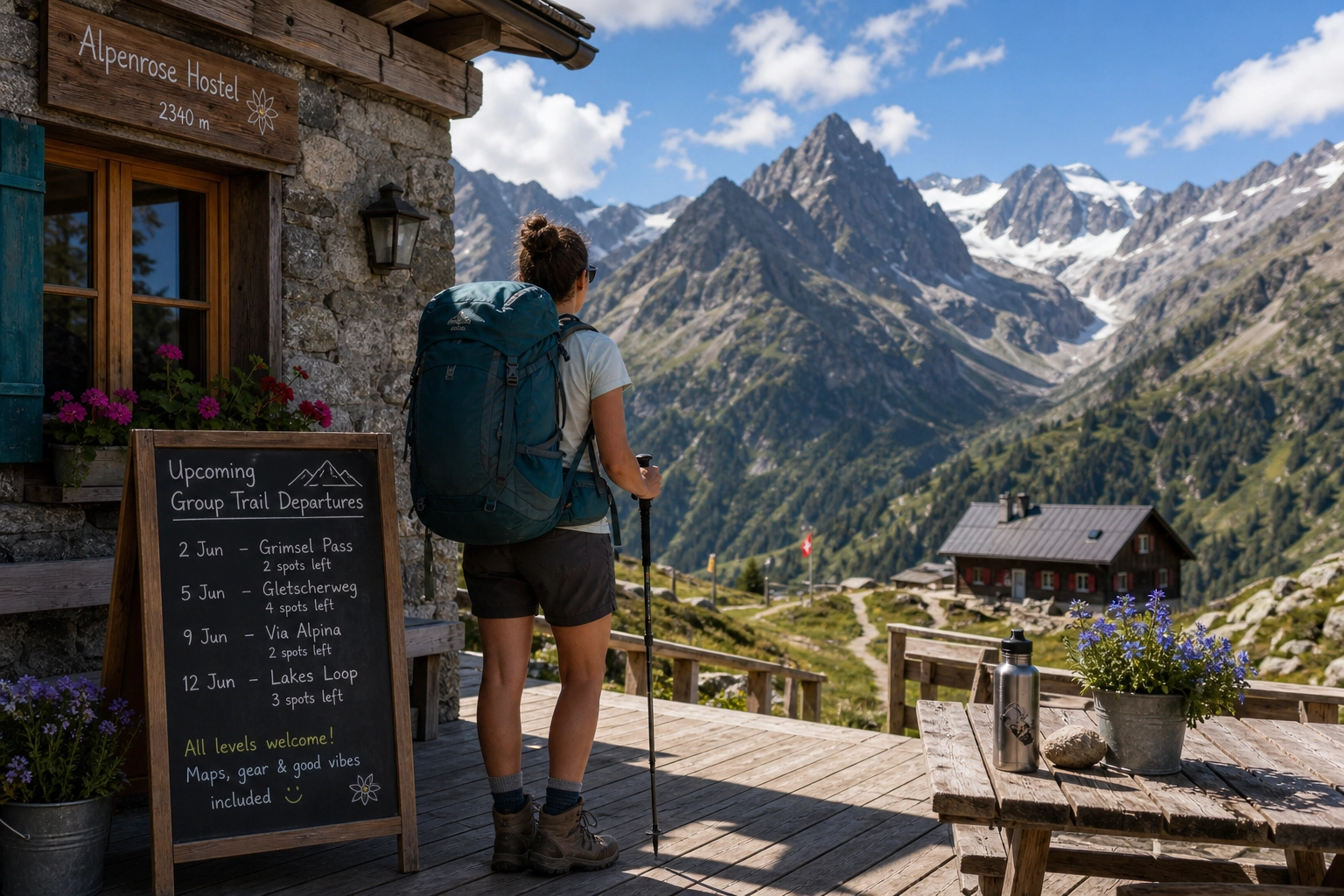
Planning a solo backpacking trip to the Swiss Alps usually hits two massive speed bumps: the legendary price tag, and the sheer complexity of connecting mountain trains to remote trailheads. If your goal is spectacular hiking by day and meeting other travelers over a local beer at night, a traditional hotel won’t serve you well.
Hotels isolate you in private rooms and often drain your entire travel budget in a matter of days. To find trail partners, get local route advice, and keep costs manageable, you need a social alpine basecamp.
Whether you are looking for an independent, remote mountain lodge accessible only by cable car, or a fully organized week-long hiking holiday that handles all the logistics for you, Switzerland’s hostel ecosystem has evolved perfectly for outdoor travelers.
Here is a detailed breakdown of the best hiking hostels in Switzerland for solo backpackers, how they differ in logistics, and how to choose the right base for your alpine summer.
Why Solo Hikers Should Skip the Hotel
When traveling alone in the mountains, accommodation is about more than just a bed. It is your primary infrastructure for safety, logistics, and socialization.
If you want a deeper dive into this dynamic, you can read more on Hotels in Swiss Mountains? Why Social Lodges Beat Luxury. For solo backpackers, mountain hostels offer three distinct advantages over traditional hotels:
- The Drying Room: If you get caught in an afternoon alpine thunderstorm, a hotel room is a terrible place to dry hiking boots and waterproof shells. Dedicated mountain hostels have heated drying rooms designed to get your gear ready for 7 AM the next morning.
- The Trail Hub: Hostel common rooms and communal kitchens are natural networking events. You will overhear trail conditions, learn which gondolas are closed for maintenance, and easily find a group to split a taxi to a remote trailhead.
- Financial Sustainability: Switzerland is notoriously expensive. By opting for a hostel bed—whether a DIY dorm or an all-inclusive week package—you save capital for what actually matters: gondola passes, mountain railway tickets, and a celebratory fondue dinner.
The 5 Best Hiking Hostels in Switzerland for Solo Backpackers
Depending on your appetite for planning, navigating the SBB train app, and cooking your own meals, your ideal basecamp will vary. Here are the standout options for solo hikers.
1. Mountain Hostel Gimmelwald (Bernese Oberland)
Best for: The authentic, remote alpine experience and independent hikers.
Perched in a car-free village on the edge of a cliff, the Mountain Hostel Gimmelwald is the quintessential Swiss backpacking experience. Originally built in 1563, it has gained a massive reputation for its unparalleled location and vibrant communal atmosphere.
To get there, you literally cannot drive. It requires taking a sequence of trains, a postbus to Stechelberg, and finally a cable car up the mountain. Travelers often travel hundreds of miles just to reach this TikTok-famous hostel because the views are that spectacular.
The Hiking:
You can walk straight out the front door onto world-class trails. The Northface Trail, the steep ascent to the Tanzbödeli, and routes toward Mürren and the Schilthorn are instantly accessible.
The Vibe:
Highly social. You’ll find travelers swapping route maps over shared dinners, live music in the evenings, and people booking tandem paragliding flights together. It is rustic, tightly packed, and deeply charming. Just remember to book well in advance, as its fame means it sells out quickly in peak summer.
2. Hiking Hostel (Liddes & St. Stephan)
Best for: Solo travelers who want an organized, highly social, logistics-free week of hiking.
If you are a solo traveler, digital nomad, or budget-conscious hiker who wants a social alpine experience without the mental fatigue of planning daily logistics, Hiking Hostel offers a uniquely structured solution.
Instead of just selling you a bed for the night, Hiking Hostel provides week-long summer hiking holidays built specifically for solo travelers and small groups. Operating out of basecamps in Liddes (Valais) and St. Stephan, the experience is fully organized.
The Package:
Your week includes hostel accommodation, all meals, airport transfers, and—crucially—daily trail transport. Instead of navigating complicated Swiss bus schedules, the hostel’s private transport drops you at the best trailheads and picks you up at the end of the day.
The Hiking & Excursions:
The routes are spectacular, moving through the Valais region with organized excursions to iconic destinations. You can hike the trails near Mountain Mont Blanc: 7 Ways to Visit Without the Crowd, or take day excursions to Interlaken, Aosta, and Glacier 3000/Gstaad.
The Vibe:
Because everyone arrives for a week-long block, the social cohesion is unmatched. You aren’t just sharing a dorm room for one night with passing strangers; you are forming a cohesive trail family for the week. For more on this dynamic, check out Guided Hiking in Switzerland: Finding Your Social Group.
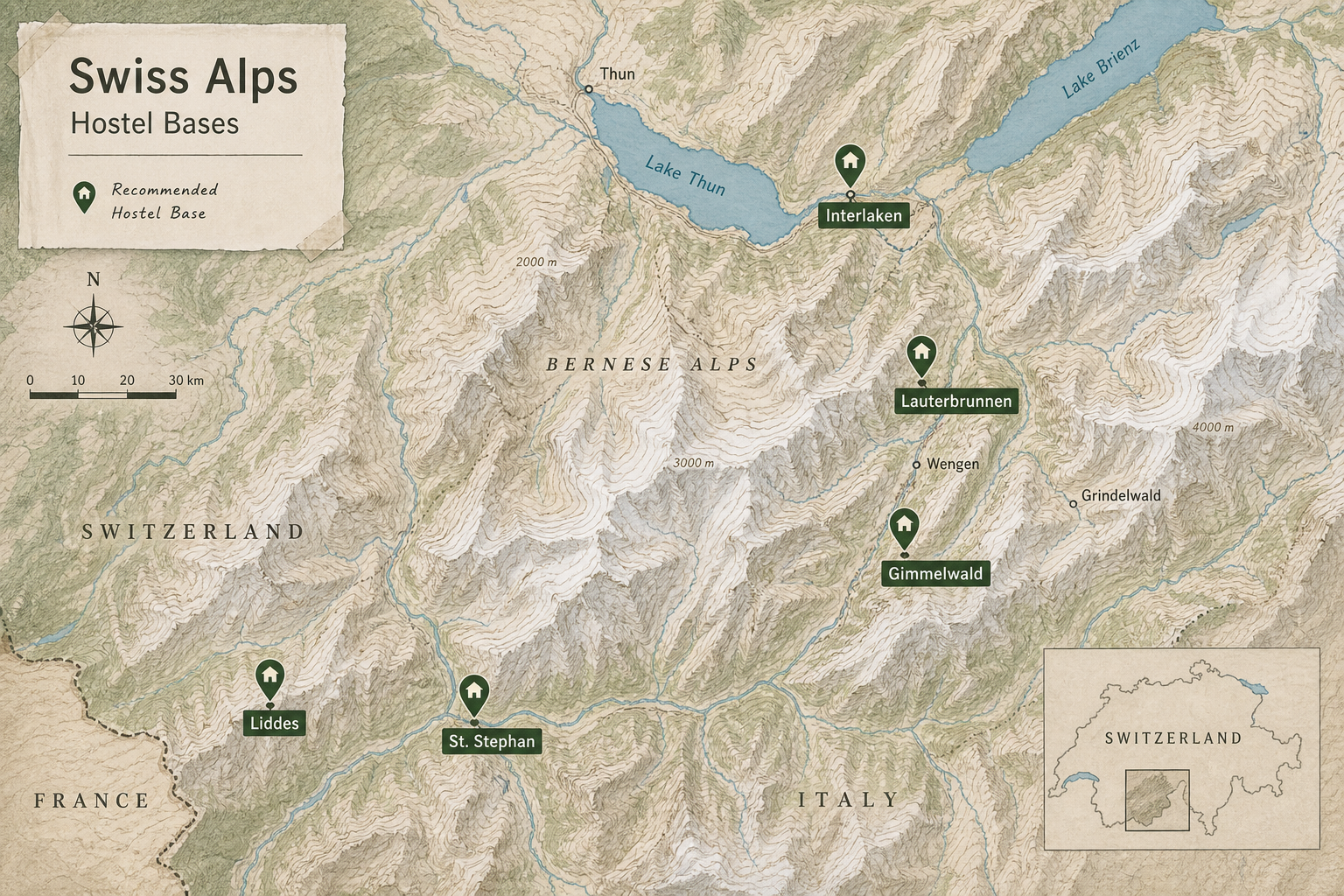
3. Valley Hostel, Lauterbrunnen
Best for: The ultimate hub-and-spoke location for independent explorers.
Located in the valley of 72 waterfalls, the Valley Hostel is arguably the most strategically placed budget accommodation in the Jungfrau region. It strikes the perfect balance of budget, central location, and backpacker atmosphere, consistently earning top ratings from travelers on Hostelworld.
The Hiking:
Lauterbrunnen sits on the valley floor. From the hostel, you are just minutes away from the train to Wengen, the cable car to Grütschalp (towards Mürren), or the postbus to Stechelberg. It is the perfect base if you want to explore different sides of the valley on alternating days.
The Vibe:
Expect a massive mix of international backpackers. The communal kitchens are large but busy. You will meet everyone from hardcore alpinists with ice axes to casual sightseers. It’s highly functional, clean, and incredibly convenient, though slightly more transient than a remote mountain lodge.
4. Backpackers Villa Sonnenhof, Interlaken
Best for: Digital nomads, first-time solo travelers, and activity junkies.
Interlaken is the adventure sports capital of Switzerland. Backpackers Villa Sonnenhof is an institution in the Swiss backpacker circuit. While it is located in a busy town rather than a quiet alpine village, its infrastructure is unbeatable.
The Hiking:
From Interlaken, you have excellent transport connections to both Lake Thun and Lake Brienz for stunning ridge hikes like the Hardergrat, as well as easy train access up into the Grindelwald and Lauterbrunnen valleys.
The Vibe:
This hostel is large, professionally run, and packed with amenities. They have organized activities, making it incredibly easy to find partners for hiking, canyoning, or skydiving. If you need strong Wi-Fi to work for a few days before hitting the trails, this is a highly reliable base.
5. Grindelwald Youth Hostel
Best for: Direct access to the Eiger and structured, classic youth hostel amenities.
Part of the official Swiss Youth Hostel network, this property in Grindelwald offers some of the most dramatic views of the Eiger North Face directly from its terrace. It is consistently highlighted as one of the best youth hostels along popular Swiss hiking routes.
The Hiking:
Grindelwald is a hiker’s playground. You are perfectly positioned for the Eiger Trail, the First Cliff Walk, and the hike to the stunning Bachalpsee. Having the mountain railway right in town means you can gain elevation quickly.
The Vibe:
Swiss Youth Hostels tend to attract a slightly broader demographic, including families and school groups, alongside solo backpackers. It is quieter and less party-focused than Interlaken, offering an excellent breakfast and a peaceful environment to recover after a massive day on the trails.
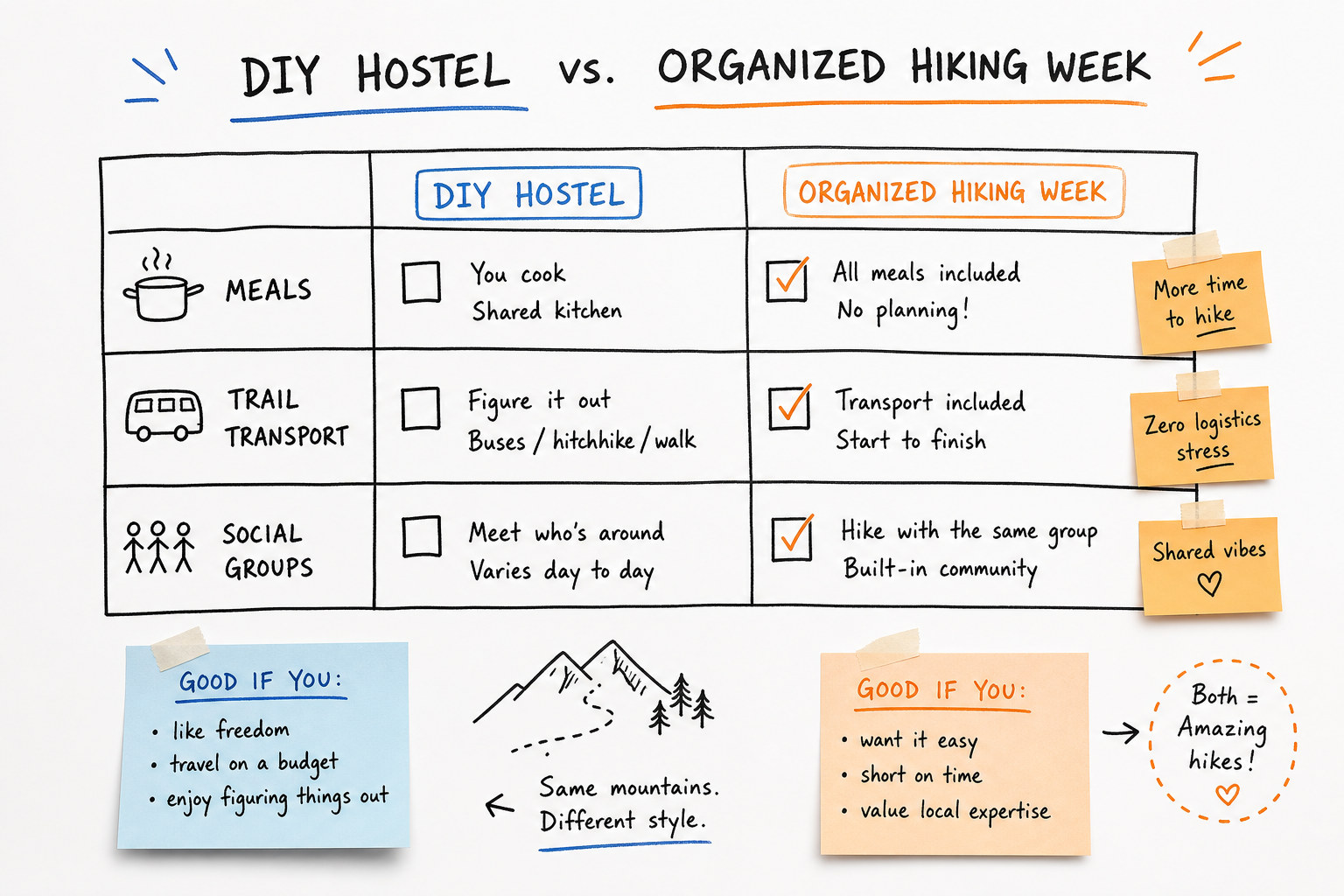
DIY vs. Organized Basecamps: A Decision Framework
As a solo traveler, the biggest decision you have to make is how much logistical friction you are willing to tolerate.
The DIY Independent Hostel Route (e.g., Valley Hostel, Gimmelwald)
- Pros: Total freedom over your daily schedule. You can pivot your plans instantly based on the weather or who you meet at breakfast.
- Cons: You must plan every train connection, buy groceries at expensive Swiss supermarkets, cook your own meals after exhausting hikes, and navigate the sometimes overwhelming SBB network alone.
The Organized Week-Long Basecamp (e.g., Hiking Hostel)
- Pros: Zero logistical stress. Meals, airport transfers, and daily trail drop-offs are handled. You get built-in social groups of like-minded solo travelers. You can access incredible day excursions to places like Chamonix without needing a rental car.
- Cons: Less flexibility to change valleys mid-week. You are committing to a specific region (like Valais) for the duration of your stay.
Broadening Your Radius: Day Trips from Your Base
One of the advantages of staying in a well-connected hostel base is the ability to cross borders or experience drastically different landscapes on a day trip.
If you base yourself in the Valais region (such as Liddes), you aren’t just limited to Swiss trails. Because of the strategic location near the borders, organized excursions can easily take you to the Italian or French Alps for a day.
For example, if you want a change of scenery and culture, you can easily hop over the border. Discover how accessible this is by reading Skiing in the Italian Alps? Try This Aosta Day Trip (the route logic applies just as beautifully in the summer for hiking and Italian espresso).
Similarly, access to the Mont Blanc massif is highly sought after. Staying in a Swiss basecamp allows you to visit the region without paying Chamonix prices. You can explore some of the 5 Best Hiking Trails in Switzerland Near Mont Blanc while keeping your reliable hostel bed waiting for you back in Switzerland.
Managing the Costs of Solo Hiking in Switzerland
Let’s address the elephant in the room: the Swiss Franc.
Solo travel in Switzerland is expensive because you cannot split the cost of accommodation or rental cars. However, it is entirely possible to have a spectacular trip on a backpacker budget if you deploy a few key strategies.
- Leverage the Half-Fare Card: If you are traveling independently, immediately buy the Swiss Half-Fare Card. It cuts the cost of almost all trains, buses, and gondolas by 50%. It usually pays for itself within three days.
- Look for All-Inclusive Packages: Paradoxically, booking a guided/organized hostel week can sometimes be cheaper than DIY. When you factor in the cost of three Swiss restaurant meals a day, daily gondola tickets, and train fares, an all-inclusive package that handles food and trail transport is often a highly competitive budget choice.
- Avoid High-Altitude Grocery Shopping: If you are cooking for yourself, buy your groceries in larger valley towns (like Interlaken or Visp) at Coop or Migros before heading up to remote mountain hostels like Gimmelwald.
For a deeper dive into stretching your franc, read our guide: 7 Tips for Hiking in Switzerland (Without the High Cost).
Packing for a Hostel-Based Alps Trip
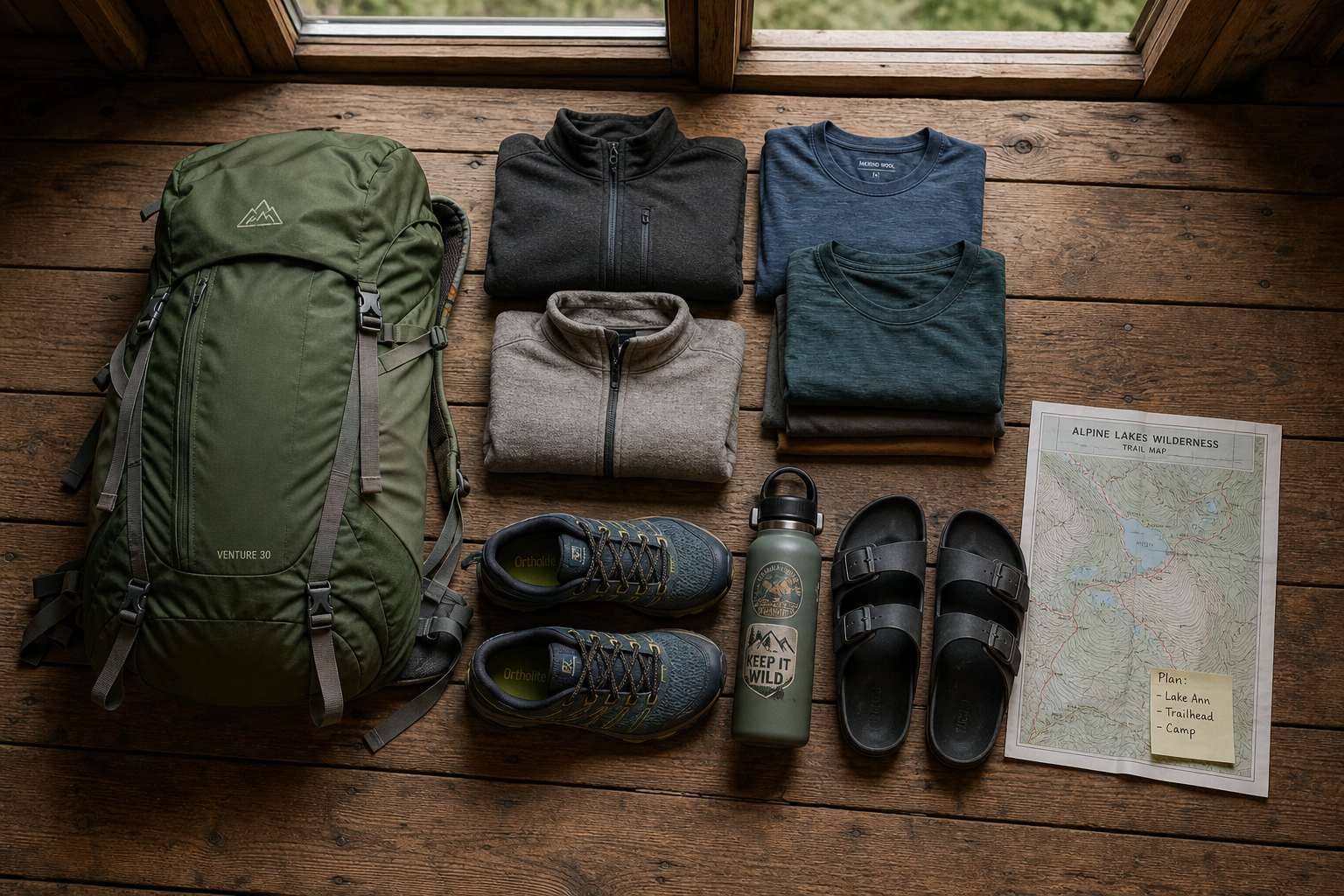
Packing for a hostel requires a slightly different approach than packing for a hotel or a multi-day wilderness trek. You need gear for severe alpine weather, but you also need comfortable communal clothing for relaxing in the common room.
Here is a quick overview of a successful packing strategy for an alpine hostel base:
- The Sleep System: Most Swiss hostels provide bedding, but bringing a lightweight silk sleeping liner is a great hygienic backup. Bring earplugs and an eye mask—dorm rooms operate on varied schedules.
- The Trail Kit: A 30-liter daypack is ideal. You need space for a waterproof hardshell, a mid-layer fleece, a basic first aid kit, a water bottle, and your lunch.
- The Hostel Wear: Bring a dedicated set of “clean clothes” that never see the trail. Soft sweatpants, a comfortable hoodie, and slip-on sandals or Crocs for walking around the hostel are essential after a day in stiff hiking boots.
For a complete checklist, you can refer to our Swiss Alps Summer: A Simple 5-Step Packing Guide.
What About Hut-to-Hut Hiking?
Many solo backpackers wonder if they should skip the valley hostels and just hike from mountain hut (Cabane/Hütte) to mountain hut.
Hut-to-hut hiking is a magnificent experience, but it requires much more rigorous planning. Huts book out months in advance, they offer fewer amenities (showers are rare), and you must carry all your gear with you every day.
A valley basecamp hostel allows you to hike with a light daypack, enjoy a hot shower every night, and pivot your plans if a massive storm rolls in. If you do want to experience the high-altitude huts, many backpackers use a valley hostel as their primary base, leave their main luggage in the luggage room, and do a 2-day mini-trek to a hut and back.
If you want to incorporate this into your trip, read How to Plan Hut to Hut Hiking in Switzerland (7 Tips).
Frequently Asked Questions
Is it safe to hike alone in the Swiss Alps?
Yes, Switzerland has some of the best-marked and maintained trails in the world. However, alpine weather changes rapidly. Always tell your hostel reception which trail you are taking, stick to marked yellow or red-and-white signs, and turn back if weather deteriorates. Better yet, use the hostel common room to find a hiking partner.
Do I need a car to reach these hiking hostels?
Absolutely not. The Swiss public transport network is legendary. In fact, many of the best hostels (like Gimmelwald) are physically impossible to reach by car. For organized options like Hiking Hostel, airport transfers from major hubs are often included, removing the transport headache entirely.
Are Swiss hostels only for young backpackers?
No. Unlike party hostels in major European cities, mountain hostels in Switzerland attract a highly diverse demographic. You will find 20-something backpackers, 40-something digital nomads, and 60-something seasoned alpinists. The shared culture is a love for the mountains, not cheap shots at the bar.
Final Thoughts
Choosing the right basecamp can make or break your solo trip to the Swiss Alps. If you want the classic, rugged, DIY experience where you cook your own meals and navigate the train network, independent spots like Mountain Hostel Gimmelwald or Valley Hostel Lauterbrunnen are phenomenal choices.
But if you want the social atmosphere of a backpacker hostel without the exhausting daily logistics—if you want to wake up, eat breakfast, get dropped off at an incredible trailhead, and return to a prepared dinner with a group of new friends—an organized week with a dedicated provider is the ultimate hack for solo travelers.
Whichever route you choose, the Swiss Alps reward those who step out of the isolated hotel bubble and embrace the communal alpine spirit.