Best group hiking trips near Mont Blanc for social travelers
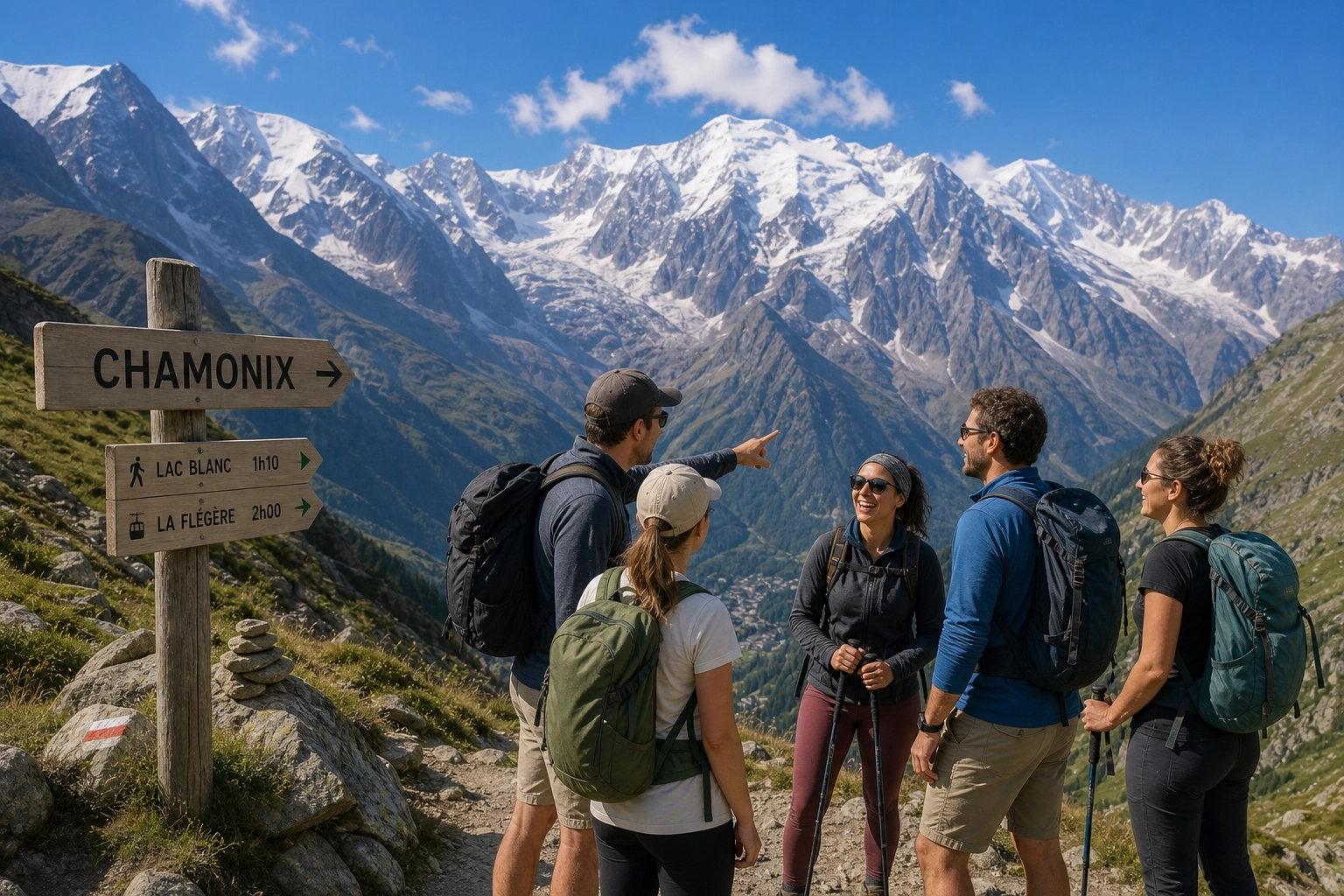
Booking a guided trek around the Mont Blanc massif often feels like choosing between two extreme options. On one side are luxury outfitters charging upwards of €3,500 per week for private hotel tours. On the other side are solo, self-guided point-to-point slogs where you haul a 14-kilogram pack between crowded dormitories, hoping you will strike up a conversation over dinner.
If you are a solo traveler, backpacker, or digital nomad seeking high-altitude views and a genuine sense of community, neither extreme is ideal. High-end guided trips often group you with closed social circles or older couples, while solo hut-to-hut treks can surprisingly be lonely when everyone retires early to recover from grueling vertical gains.
The Chamonix valley and the surrounding Valais region in Switzerland offer a wider variety of group hiking setups than most travelers realize. The key to finding the best group hiking trips near Mont Blanc and Chamonix lies in matching your budget, your preferred social style, and your tolerance for daily packing logistics.
1. Comparing Group Hiking Models Around Mont Blanc
Before selecting a specific trail, you must decide how you want to move through the Alps. Group hiking near Chamonix generally falls into three operational structures: classic point-to-point hut treks, high-end hotel-to-hotel guided tours, and fixed-base social lodge trips.
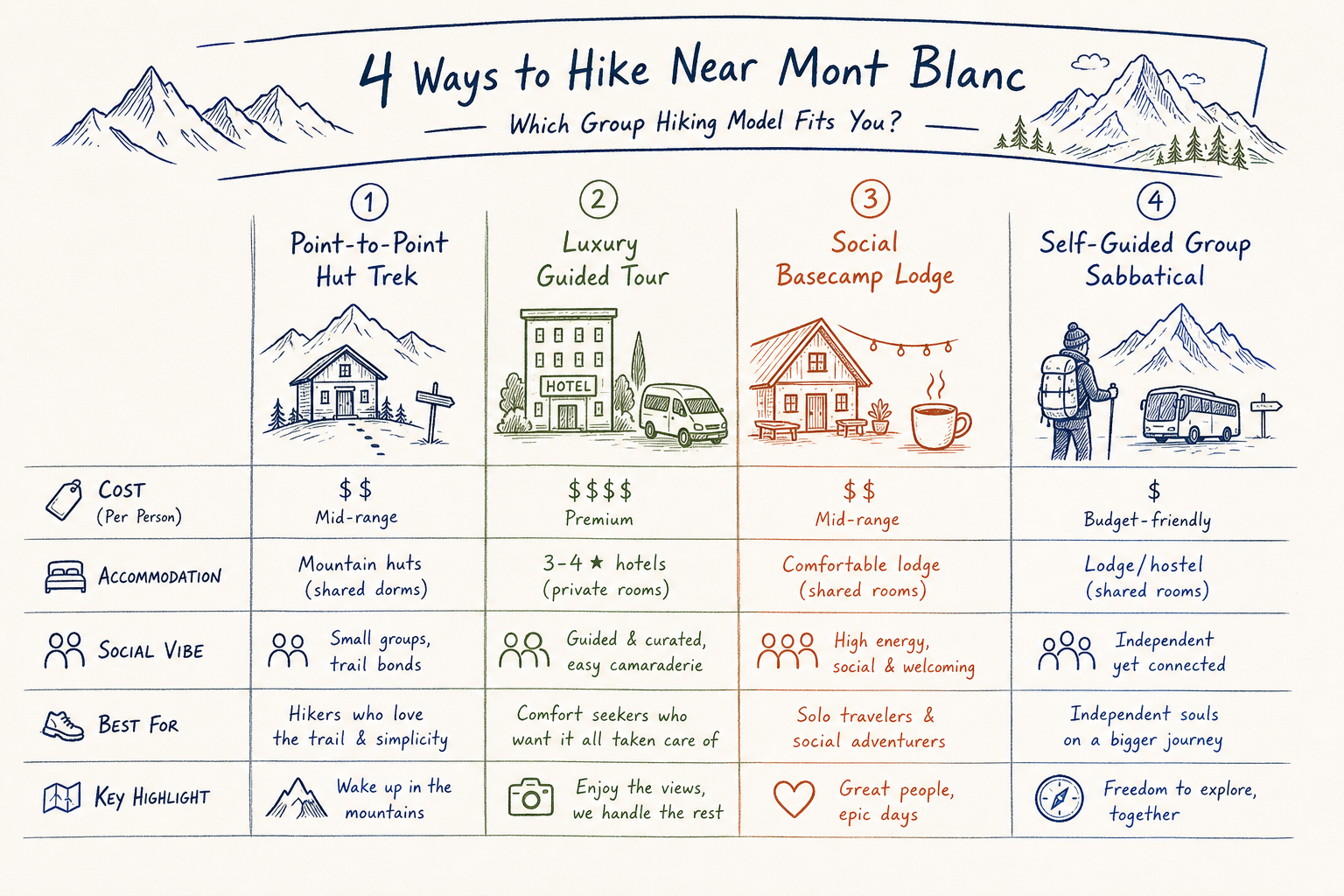
Each structure changes your daily schedule, overall spend, and group dynamics.
| Hike Model | Average Cost / Week | Accommodation Type | Daily Luggage Handling | Group Social Vibe |
|---|---|---|---|---|
| Classic TMB Circuit (Point-to-Point) | €1,200 – €1,800 | Mountain Huts (Refuges) | Carried on your back (or paid transport) | Shared dorms; mixed fatigue levels |
| Luxury Guided Tour | €3,000 – €5,000+ | 3/4-Star Valley Hotels | Van transfer daily | Private, quiet, often older demographics |
| Social Basecamp Lodge | €800 – €1,400 | Social Hostel / Alpine Lodge | Left in your private/dorm room | Highly social; communal dinners, solo-friendly |
| Self-Guided Group Sabbatical | €900 – €1,300 | Mix of Hostels & Huts | Self-managed public transit | Variable; requires high group self-organization |
The Point-to-Point Reality: Hut-to-Hut Group Treks
The classic 170-kilometer Tour du Mont Blanc (TMB) encircles the massif through France, Italy, and Switzerland. Joining a classic guided group trek, such as the 9-day classic TMB route, promises shared achievements across iconic high passes like Col du Balme and Grand Col Ferret.
However, moving to a new refuge every night introduces hidden friction for social travelers:
- Strict bedtimes: Mountain huts enforce quiet hours around 9:00 PM to accommodate early alpine starts.
- Limited downtime: You spend your late afternoons washing socks in cold sinks and repacking your bag rather than relaxing with hiking mates.
- Rigid pace: If a group member struggles with elevation gain, the whole itinerary gets delayed.
If you are set on multi-day hut routes, read our guide on how to plan hut to hut hiking in switzerland to understand the logistics of booking mountain refuges.
The Luxury Escorted Model
Commercial mountain agencies in Chamonix run high-end packages, such as the luxury Tour du Mont Blanc. These itineraries move participants between valley hotels with luggage vans meeting you at each stop.
While comfortable, these trips cater primarily to private family groups or couples. Solo hikers often report feeling like an outsider at dinner tables dominated by preexisting travel pairings. The high cost also pushes out budget-conscious outdoor enthusiasts and younger solo travelers.
The Fixed-Base Social Lodge Alternative
An increasingly popular option for backpackers and digital nomads is staying at a dedicated social lodge or hostel situated in the Swiss Valais or upper Mont Blanc region. Instead of moving beds every night, you unpack once in a social hub—like a hostel in Liddes or St. Stephan—and take daily group trail transports to iconic trailheads in Chamonix, Aosta, and the Swiss Valais.
This approach offers clear benefits for social travelers:
- Consistent community: You cook, eat, and unwind with the same group every evening without dormitory turnover.
- Flexibility: On days when your legs need a rest, you can take a town day or work remotely without falling behind a moving expedition group.
- Lower cost: Eliminating complex luggage-shuttle logistics keeps weekly costs manageable.
For an inside look at how communal living compares to traditional mountain stays, see our breakdown of why social lodges beat luxury hotels in Swiss mountains.
2. Top Group Hiking Itineraries and Routes Near Chamonix
Whether you join an organized multi-day trek or coordinate day trips from a base lodge, specific trails around Mont Blanc offer better group dynamics than others. Here are five top-tier group hiking options near Chamonix and the western Swiss border.
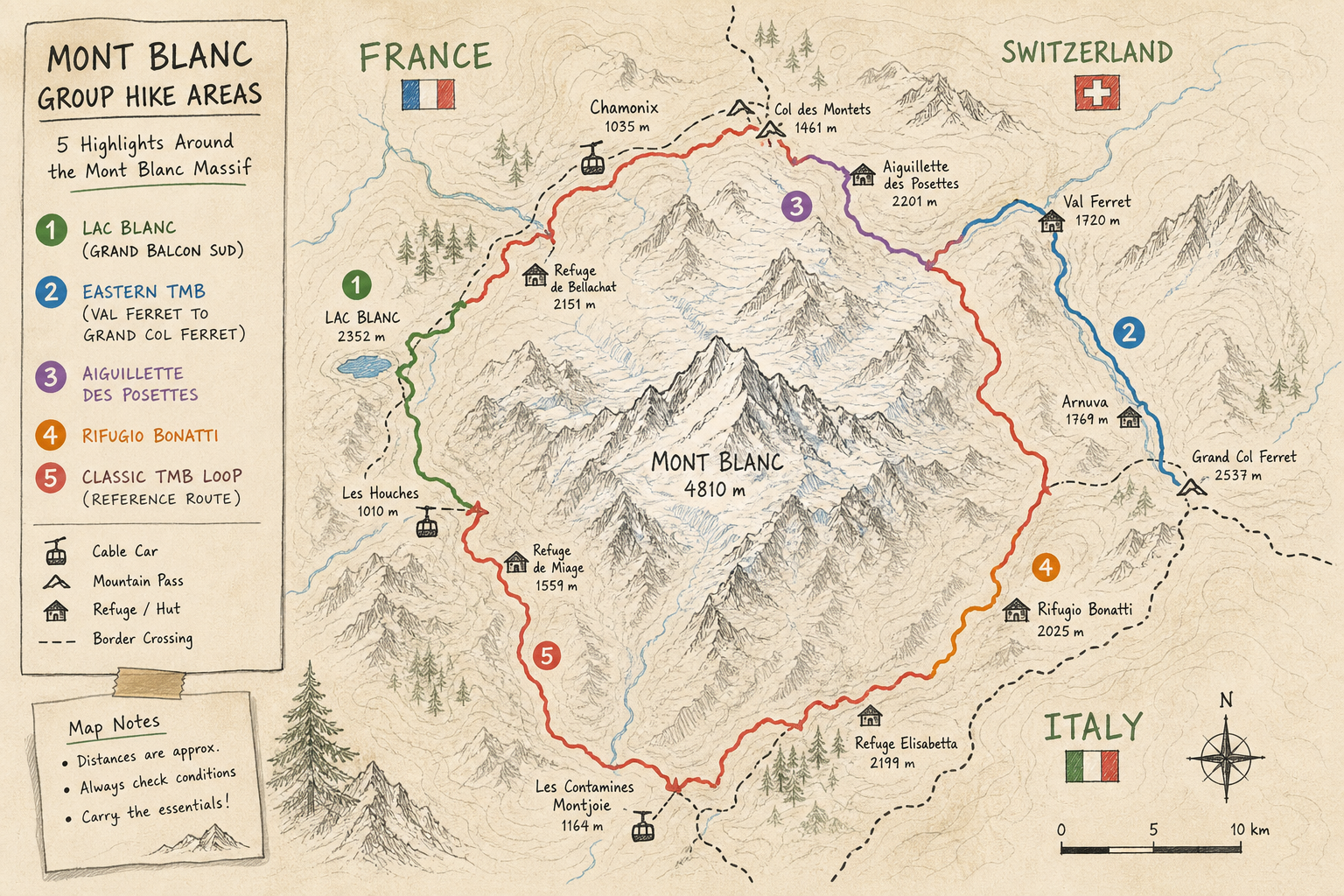
1. Lac Blanc and the Grand Balcon Sud
- Distance: 10.5 km round-trip (loop from La Flégère)
- Elevation Gain: ~550 m
- Difficulty: Moderate
- Social Factor: High
If you want the quintessential Mont Blanc panorama without extreme technical demands, the Grand Balcon Sud to Lac Blanc is hard to beat. Starting from the La Flégère cable car above Chamonix, the trail contours along the northern wall of the valley, facing the Mont Blanc massif, the Bossons Glacier, and the Aiguille du Midi directly across the gulf.
Because the path is wide and clear, groups can comfortably hike side by side for large stretches. The final climb involves gentle rock staircases and wooden ladders that serve as great team-building spots. At the top, Lac Blanc reflects the surrounding peaks, providing an ideal lunch stop where groups naturally gather on the rocky shoreline.
2. The Eastern TMB: Val Ferret to Grand Col Ferret
- Distance: 14 km (one-way border pass)
- Elevation Gain: ~850 m
- Difficulty: Challenging
- Social Factor: Very High
The eastern section of the Tour du Mont Blanc connects La Fouly in the Swiss Val Ferret across the border into Italy. Detailed guides, like the 6-day eastern TMB overview, showcase how this path offers lush green valleys backed by jagged granite walls.
Hiking this section in a group gives you a classic high-mountain pass experience without the dense crowds found on the French side of Chamonix. The ascent to Grand Col Ferret (2,537 m) is steady and scenic. Standing at the pass with one foot in Switzerland and one in Italy creates an unforgettable shared photo moment before your group descends toward Refugio Elena for espresso and polenta.
If you are deciding which border trails to prioritize during your trip, explore our list of the 5 best hiking trails in Switzerland near Mont Blanc.
[La Fouly (Switzerland) / 1,600m]
        │
        ▼ (Steady climb through alpine meadows)
[Alpage de Peule / 2,071m] ─── (Stop for local Valais cheese)
        │
        ▼ (Switchbacks over alpine scree)
[Grand Col Ferret / 2,537m] ── (Swiss / Italian Border Photo Point)
        │
        ▼ (Panoramic descent with Mont Dolent glacier view)
[Rifugio Elena (Italy) / 2,061m] ── (Group espresso & lunch break)
3. Aiguillette des Posettes and Col du Balme
- Distance: 12 km loop
- Elevation Gain: ~800 m
- Difficulty: Moderate to Hard
- Social Factor: High
Located at the northern end of the Chamonix valley, near the Swiss border at Le Tour, Aiguillette des Posettes offers a ridge hike with 360-degree views. The trail follows a narrow, cresting ridge toward Col du Balme, giving your group continuous views of both the Chamonix valley on one side and the Swiss Trient valley on the other.
This trail features variable terrain, including forest switchbacks, exposed granite ridges, and open alpine meadows. It gives groups of varying fitness levels clear milestones to meet up, rest, and regroup.
For travelers who prefer comprehensive trail guides, tools like The Hiking Club’s Chamonix index detail elevation profiles for this entire network.
4. Val Ferret to Rifugio Bonatti (Italian Side)
- Distance: 12 km contour path
- Elevation Gain: ~450 m
- Difficulty: Easy to Moderate
- Social Factor: Very High
Located just through the Mont Blanc Tunnel in Courmayeur, Italy, the Italian Val Ferret section is widely considered the single most rewarding day walk along the entire TMB circuit. The trail ascends briefly from Planpincieux before leveling out into a high contour path above the valley floor.
Directly across the valley, the massive southern faces of Mont Blanc, the Grandes Jorasses, and the Glacier de Miage loom overhead. Because the trail maintains a level profile for miles, your group can walk comfortably while chatting, taking photos, and stopping at Rifugio Bonatti for lunch.
This cross-border option highlights why staying near the Swiss-Italian border works so well. For a winter or summer variation into Italy, see our guide on the Aosta valley day trip from the Swiss border.
5. All-Women and Specialized Solo Group Treks
- Focus: Inclusive social environment, confidence building
- Location: Chamonix & Valais region
- Difficulty: Moderate
For female solo travelers, all-women group hikes around Chamonix have surged in popularity. As highlighted in community vlogs on all-women Chamonix group hiking trips, these itineraries focus heavily on supportive group dynamics, non-competitive pacing, and outdoor skill-building.
Whether organized as a full multi-day tour or a series of day excursions hosted by a social hostel, all-women and solo-focused group trips remove the fear of being “the slow one” in a pack. They create an encouraging space where people can build mountain confidence together.
3. Basecamp Hostels vs. Moving Point-to-Point: Logistics Breakdown
A common myth among alpine hikers is that you must trek point-to-point and sleep in a new mountain hut every night to truly experience Mont Blanc. While moving daily sounds romantic on paper, the physical and administrative reality can turn a social holiday into an exhausting chore.
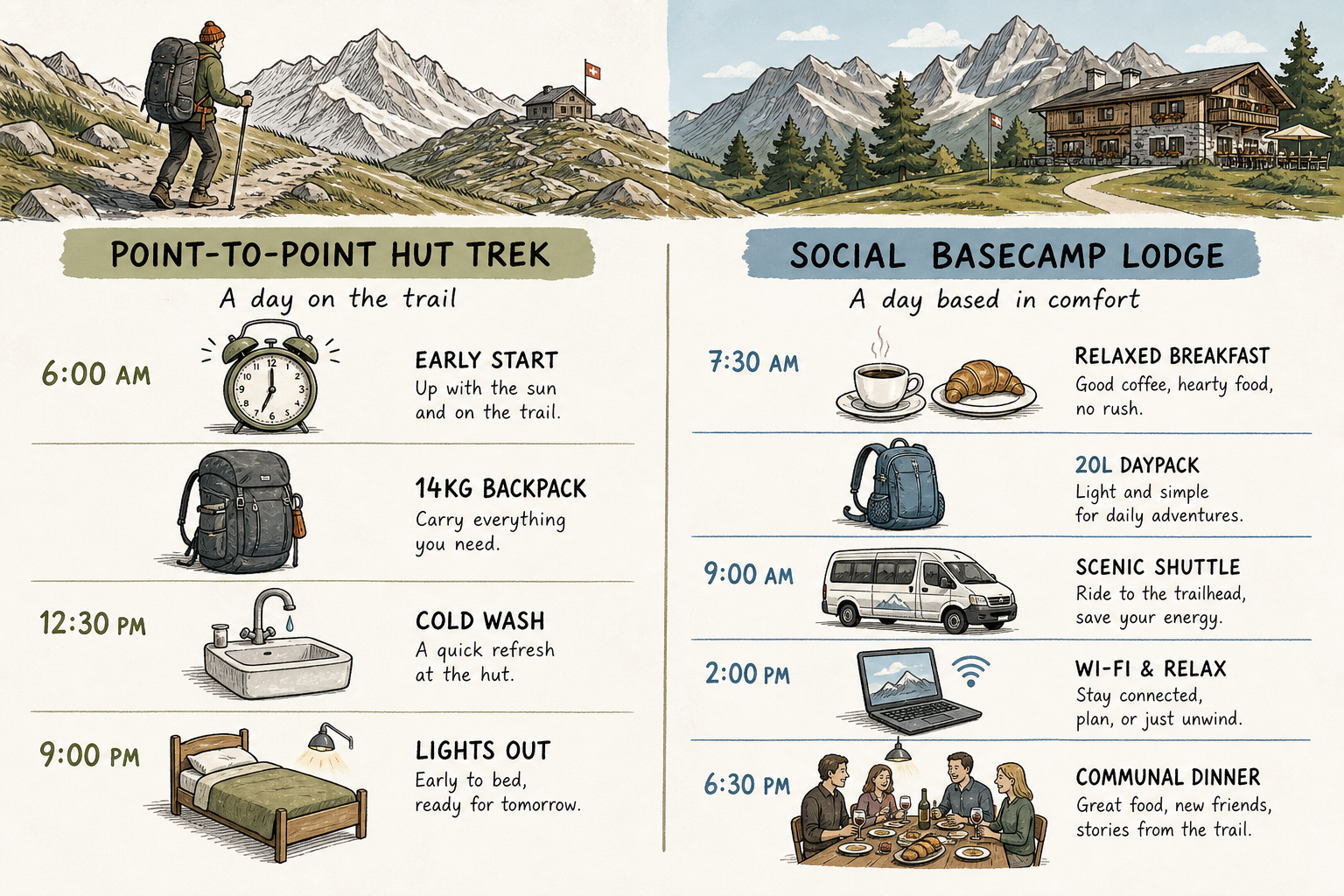
Here is how daily life compares between a moving point-to-point trek and a fixed-base social hostel experience:
Daily Schedule Breakdown
Scenario A: Point-to-Point Hut Trek
- 06:00 AM: Wake up in a 12-person dorm to alarms. Pack all belongings into your mountain pack.
- 07:00 AM: Eat a standard alpine breakfast (bread, jam, quick coffee).
- 08:00 AM: Set off carrying your full 12–14 kg load over a high pass.
- 01:00 PM: Eat packed sandwich while watching the clock to ensure you reach the next hut before dinner.
- 04:30 PM: Arrive at the refuge, queue for showers, hang damp gear in shared drying rooms.
- 07:00 PM: Eat communal dinner at fixed tables.
- 09:00 PM: Quiet hours begin; pack up for the morning.
Scenario B: Social Basecamp Lodge (e.g., Hiking Hostel)
- 07:30 AM: Wake up in your fixed room without needing to pack your main luggage.
- 08:15 AM: Group breakfast with hot coffee and fresh local produce in the lodge lounge.
- 09:15 AM: Board private trail shuttle or local train to the day’s selected trailhead (Chamonix, Val Ferret, or Aosta).
- 10:00 AM to 04:00 PM: Hike the day’s route carrying only a lightweight 20L daypack (water, jacket, lunch).
- 05:00 PM: Return to the lodge, shower, squeeze in a few hours of remote work or chill on the sun deck.
- 07:30 PM: Enjoy a relaxed, multi-course communal dinner cooked at the hostel.
- 09:00 PM+: Board games, conversations, or star-gazing without mandatory quiet hour cutoffs.
For solo travelers who need to keep costs predictable while avoiding logistical head-aches, taking a structured group holiday that handles trail transport from a single base camp is often the smartest move. Learn more about matching your travel style in our post on finding your social group through guided hiking in Switzerland.
4. The Budget Reality: Hidden Costs of Mont Blanc Group Trips
When evaluating group hiking trips near Mont Blanc and Chamonix, upfront sticker prices rarely tell the whole story. Small extras—such as gondola tickets, luggage transfers, local transit passes, and dinner beverages—can add hundreds of Euros to your final spend.
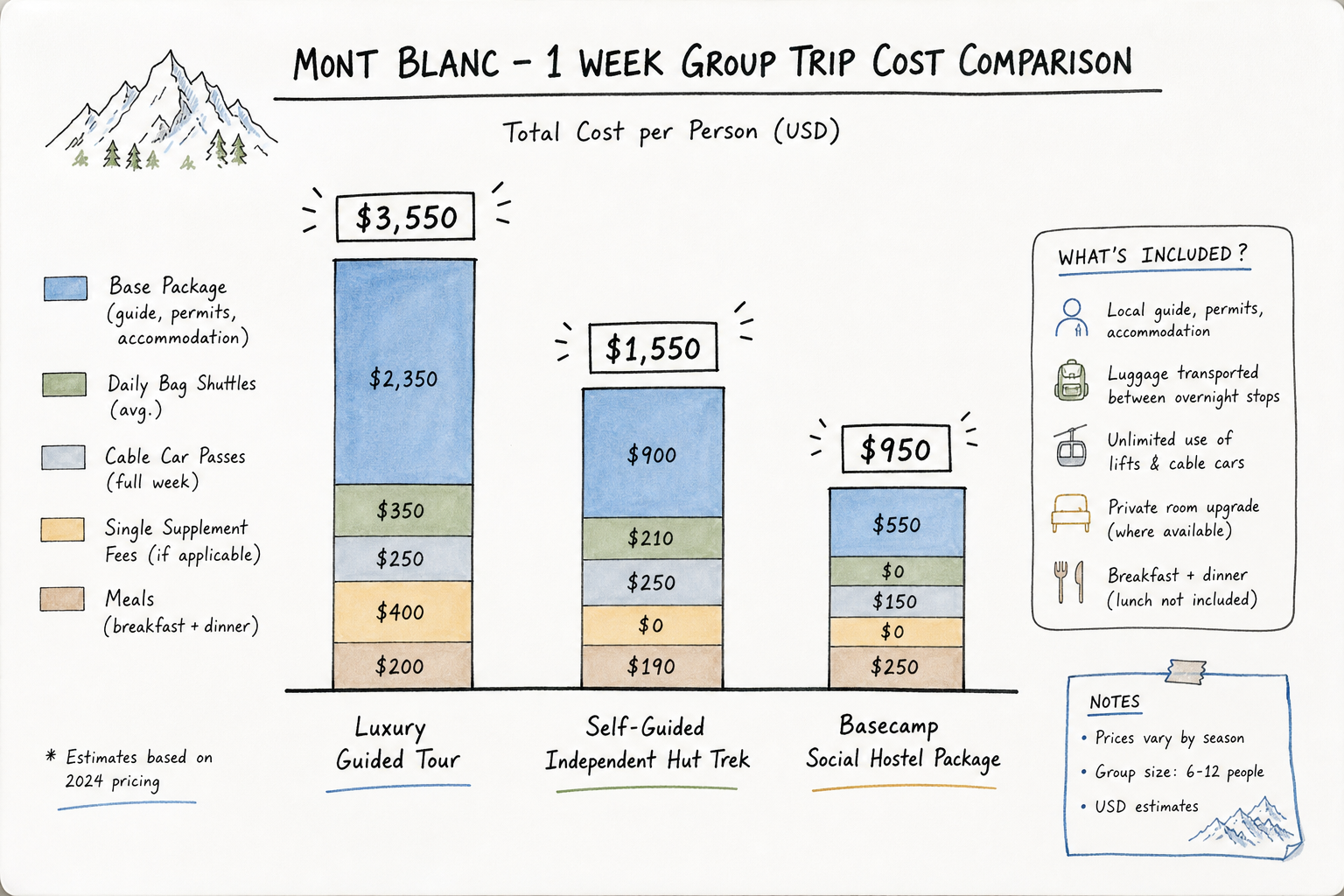
TYPICAL BUDGET BREAKDOWN (1-WEEK MONT BLANC GROUP TRIP)

[Luxury Tour (€3,800)]
  ├── Base Tour Fee: €3,400
  ├── Single Supplement Fee: €300
  └── Cable Cars & Transfers: Included

[Self-Guided Independent Hut-to-Hut (€1,450)]
  ├── Hut Nights & Half Board: €650
  ├── Daily Bag Shuttles (€35/day): €245
  ├── Cable Cars & Chamonix Lift Passes: €180
  ├── Airport Transfers (GVA ↔ Chamonix): €110
  └── Meals, Drinks & Emergency Transit: €265

[Basecamp Social Hostel Package (€1,150)]
  ├── Week Package (Stay, Meals, Transfers): €950
  ├── Cable Car / Regional Passes: €120
  └── Personal Extras & Town Drinks: €80
Cost Nuances to Keep in Mind
- The Single Supplement Trap: If you travel solo and join a hotel-based guided tour, agencies frequently charge a “single supplement” fee (€200–€500) if they cannot pair you with a roommate. Social hostels do not penalize solo travelers for booking single bunk spaces.
- Lift Pass Expenses: Many top trails around Chamonix (such as Lac Blanc or Plan de l’Aiguille) rely on cable cars to gain initial elevation. Individual lift tickets cost between €25 and €70 round-trip. Check whether your group package includes regional transport cards.
- Food and Drink Spikes in Chamonix: Restaurant meals in downtown Chamonix are pricey. A basic lunch in town can easily run €25–€30 per person. Fixed-base hostels that include breakfast, trail lunches, and home-cooked family dinners save you significant cash.
If budget management is your top priority when visiting the Swiss-French Alps, check out our guide on 7 tips for hiking in Switzerland without the high cost.
5. Practical Framework: How to Choose Your Mont Blanc Hiking Group
To ensure you end up on a trip that fits your physical fitness, budget, and social expectations, run your potential options through this four-step decision framework:
Step 1: Honest Physical Self-Assessment
Alpine hiking is steep. Elevation gains of 800 to 1,200 meters per day are common around Chamonix. Ask yourself:
- Can I handle back-to-back days of high elevation gain carrying a heavy pack, or would I perform better with a daypack?
- How does my knees handle steep, rocky 1,000-meter technical descents?
If you are unsure of your stamina on multi-day climbs, choosing a basecamp group allows you to scale your daily efforts or take an active recovery day without ditching the trip.
Step 2: Define Your Social Needs
Are you looking for quiet solitary reflection in nature, or do you want to share beers, board games, and group meals with international travelers?
- For Quiet/Private Hikers: Look for small private tours or self-guided routes with single-room hotel bookings.
- For Solos & Digital Nomads: Look for organized backpacker weeks, all-women groups, or social hostel basecamps that emphasize communal dining and shared living spaces.
Step 3: Verify the Logistics and Gear Requirements
Before paying a deposit, check what gear is required and what is supplied:
- Will you need to carry sleep sheets, heavy sleeping bags, or multi-day hiking boots?
- Is trail transport included, or are you expected to navigate complex Swiss and French regional bus schedules on your own?
When packing for high-altitude trail weeks, review our quick 5-step summer packing guide for the Swiss Alps to avoid overpacking.
Step 4: Evaluate the Route Flexibility
Weather in the Mont Blanc massif changes quickly. High passes can close due to summer snowstorms or heavy thunder clouds.
- On a fixed point-to-point trek, bad weather forces groups to march through downpours to reach their reserved hut before dark.
- On a basecamp model, guides can easily pivot the group’s transport to a sunny valley in Italy or a lower forest trail in the Swiss Valais.
6. Real-World Scenario: A Week with a Social Basecamp Group
To see how a social group trek near Mont Blanc unfolds, consider the experience of Elena, a 29-year-old digital nomad from Toronto.
Elena wanted to hike near Chamonix and experience the Swiss Alps, but she was traveling solo and didn’t want to navigate complex logistics alone. She debated booking a standard point-to-point TMB trek, but hesitated at the thought of carrying a 14kg backpack all week while needing to log a few hours of work for clients.
Instead, she booked a week-long summer social hiking package based out of a hostel in the Swiss Valais (Liddes), just across the border from Chamonix.
DAY-BY-DAY GROUP ROUTE FLOW

[Monday: Welcome & Warm-Up]
   └── Morning: Arrive via Geneva Airport transfer.
   └── Afternoon: Introductory trail walk above Val de Bagnes.
   └── Evening: Communal raclette dinner at the hostel lodge.

[Wednesday: The Mont Blanc Day Trip]
   └── 08:30 AM: Van transport across the French border to Le Tour / Chamonix.
   └── 10:00 AM: Group ascent to Col du Balme overlooking Mont Blanc peak.
   └── 04:00 PM: Coffee and gelato in downtown Chamonix.
   └── 07:00 PM: Return to Swiss base camp for dinner & lounge chill.

[Friday: Cross-Border Italian Trail]
   └── Morning: Scenic drive through Grand St. Bernard Pass into Aosta Valley.
   └── Midday: Vineyard and high meadow hike near Courmayeur.
   └── Afternoon: Pizza and espresso stop in Aosta town square.
By choosing a social hostel base, Elena got the best of both worlds:
- She hiked iconic trails near Mont Blanc, Val Ferret, and Aosta alongside an instant group of international friends.
- She hiked light every day using a small daypack, avoiding joint strain.
- She returned each evening to a hot shower, home-cooked group dinners, fast Wi-Fi, and a comfortable bed without repacking her suitcase daily.
7. Myth-Busting: Misconceptions About Group Hiking near Mont Blanc
Myth 1: “You have to stay in Chamonix town to hike Mont Blanc trails.”
Reality: Chamonix town is often overcrowded and expensive during peak summer months (July and August). Staying just across the border in the Swiss Valais (e.g., Liddes or Orsières) gives you peaceful mornings, lower accommodation costs, and easy road/rail access to Chamonix, Courmayeur, and the Valais peaks.
For tips on dodging trail traffic, read our guide on 7 ways to visit Mountain Mont Blanc without the crowds.
Myth 2: “Group hiking trips mean you have to hike at someone else’s pace all day.”
Reality: On well-organized group trips—especially basecamp hostel stays or professional guided tours—hikers naturally separate into small pairs or mini-groups on trail ascents. The whole group meets up at clear regrouping points like trail junctions, mountain huts, or pass summits. You get to hike at your natural rhythm without feeling rushed.
Myth 3: “Hut-to-hut is the only authentic alpine experience.”
Reality: Sleeping in a high-altitude hut is fun for a night or two, but spending six straight nights in noisy 16-bed dorms with limited showers can wear down even seasoned travelers. Combining scenic day treks across France, Switzerland, and Italy with comfortable lodge nights gives you an authentic, high-value mountain holiday without the fatigue.
8. Frequently Asked Questions
What is the best month for group hiking near Mont Blanc and Chamonix?
The core alpine summer season runs from mid-June through mid-September. July and August offer warm weather and snow-free high passes, though trails around Chamonix can be busy. Late June and early September bring fewer crowds, pleasant hiking temperatures, and vibrant seasonal foliage, though high pass weather can be cooler.
How fit do I need to be for a group hiking week near Mont Blanc?
Most group itineraries require a moderate to solid level of cardio fitness. You should be comfortable walking 10 to 15 kilometers per day with elevation gains ranging from 500 to 1,000 meters. If you choose a basecamp trip with daypacks, the physical burden is significantly lower than carrying multi-day heavy packs.
Can I travel solo and join a group trip easily?
Yes. Group alpine hiking trips are popular among solo travelers. Choosing a hostel-based trip or an open-enrollment guided trek ensures you are surrounded by other independent travelers. Communal breakfasts, dinner tables, and shared transport make forming friendships natural.
What if I want to ride mountain bikes instead of hiking on rest days?
The Chamonix Valley and Swiss Valais feature extensive, world-class mountain biking networks. Many social travelers split their week between high-altitude hiking and singletrack riding. If you want to explore off-road biking options during your alpine week, see our guide on finding the right mountain bike group for alpine trails.
What gear do I need for daily group hikes?
For day hikes around Mont Blanc, you need sturdy, worn-in hiking boots or trail running shoes with good lugged soles, a 20 to 30-liter daypack, waterproof rain jackets, warm mid-layers (fleece or lightweight down), a refillable water bladder or bottles, sun protection, and trekking poles.
Plan Your Mont Blanc Group Adventure
Finding the right group hiking trip near Mont Blanc and Chamonix comes down to knowing what kind of experience you want. If you thrive on moving heavy gear over high passes every day and don’t mind early hut lights-out times, a classic point-to-point TMB trek is a timeless bucket-list challenge.
If you prefer budget-friendly comfort, zero daily packing stress, and a vibrant community of fellow backpackers and solo travelers, booking a fixed-base social lodge in the surrounding Swiss Alps is hard to beat. You will spend your days exploring high-alpine ridges across France, Switzerland, and Italy, and your evenings unwinding over good food with genuine friends.
Whichever setup you choose, respect the terrain, double-check your daily elevation profiles, and gear up for one of the most stunning mountain landscapes in the world.