
Best Val de Bagnes hiking tours for international solo travelers
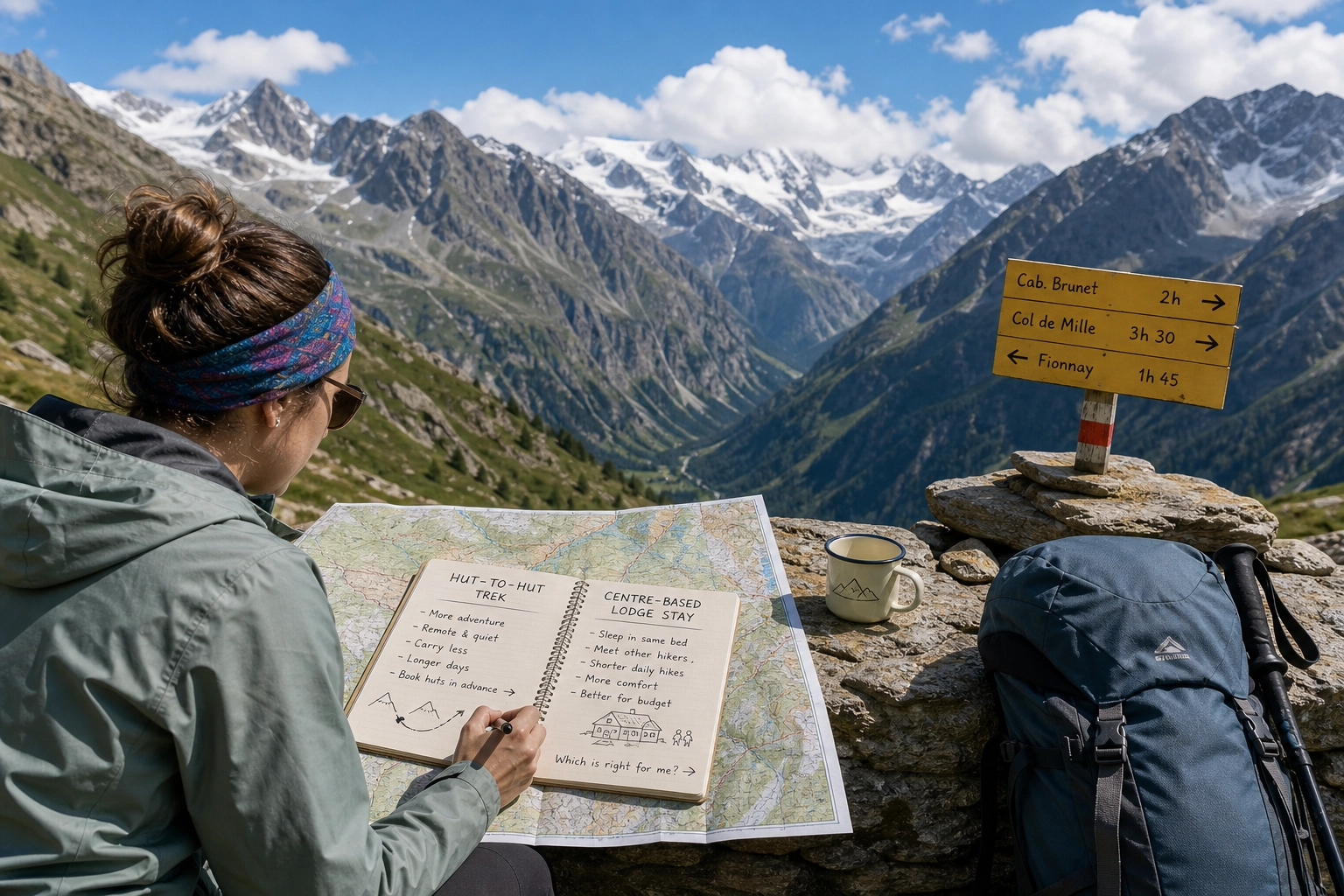
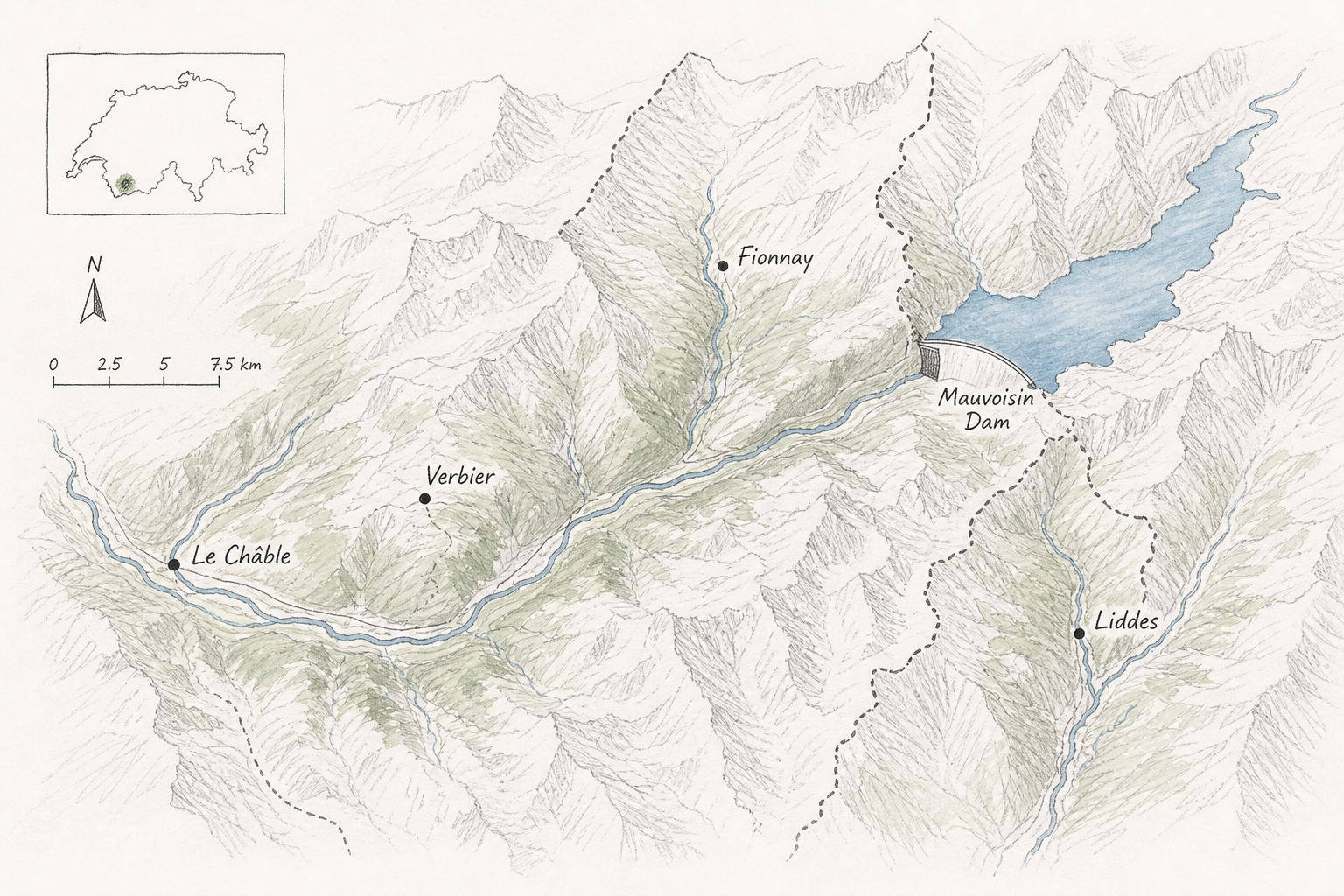
The train from Martigny snakes its way into Le Châble, and suddenly, the landscape shifts. Above you sits Verbier, world-famous for its winter glitz and luxury chalets. But look deeper into the valley, past the cable cars and into the rugged terrain toward Fionnay and the massive Mauvoisin Dam, and you find the real draw for summer adventurers: the Val de Bagnes.
For international solo travelers, navigating this corner of the Swiss Alps is a masterclass in compromise. If you want to hike the legendary multi-day routes beneath the Grand Combin massif, you usually face a stark choice: hire an expensive private guide, or spend months piecing together a complex puzzle of postal buses, non-refundable mountain hut deposits, and steep daily food costs.
Fortunately, those aren’t the only options. By rethinking how you structure your alpine trip—shifting from strict point-to-point trekking to a centre-based social model—you can access the best trails in Val de Bagnes without breaking your budget or hiking entirely alone.
Here is exactly how to navigate, plan, and choose the best hiking routes and tour formats in the Val de Bagnes region.
The Geography of Val de Bagnes
Val de Bagnes is one of the largest municipalities in Switzerland by sheer area. It begins at the valley floor in Le Châble (820m), rises steeply to the ski resort of Verbier (1,500m), and extends deep into a remote alpine environment that culminates at the summit of the Grand Combin (4,314m).
Much of the upper valley is protected as the Haut Val de Bagnes Nature Reserve, the second-largest nature reserve in Switzerland. This means pristine trail conditions, strict environmental protections, and a high likelihood of spotting wildlife.
Because the valley is a dead end for vehicle traffic (the road ends at the Mauvoisin Dam), it lacks the heavy through-traffic found in other Swiss valleys. The deeper you go, the quieter it gets.
Standout Day Hikes and Trail Sections
Whether you are visiting for a day or spending a week in the region, several trails stand out as mandatory additions to your itinerary.
Sentier des Chamois (The Chamois Trail)
Arguably the most famous day hike in the region, the Sentier des Chamois is a classic, wildlife-rich trail known for its high concentration of alpine animals.
- Route: Most hikers start by taking the cable car from Verbier to La Chaux. From there, the trail traverses a high alpine balcony before dropping down to the Cabane de Louvie, and eventually descending into the village of Fionnay.
- Stats: Roughly 14km, with +400m of ascent and a punishing -900m descent.
- Why it matters: It offers panoramic, unobstructed views of the Grand Combin massif. If you hike quietly in the early morning, you will almost certainly spot ibex, marmots, and the agile chamois that give the trail its name.
Lac de Louvie
If you prefer a steep, direct challenge rather than a long traverse, the hike up to Lac de Louvie from Fionnay is exceptional. The trail climbs sharply through tight switchbacks, gaining over 750 meters of elevation in just a few kilometers.
At the top, you are rewarded with an emerald-green alpine lake surrounded by jagged peaks. The Cabane de Louvie sits right on the water’s edge, serving fantastic local apricot tarts (a specialty of the Valais region).
The Mauvoisin Dam to Cabane de Chanrion
At the very end of the Val de Bagnes sits the Mauvoisin Dam, the highest arch dam in Europe (250 meters tall). Hiking across the top of this concrete behemoth is dizzying.
The trail continues past the reservoir, leading deep into a harsh, glaciated landscape toward the Cabane de Chanrion. This remote corner feels distinctly different from the green pastures of Verbier; it is raw, rocky, and heavily influenced by the retreating glaciers above.
Epic Multi-Day Treks Intersecting the Valley
Val de Bagnes is a critical junction for several legendary multi-day treks. While solo hikers can attempt these independently, the logistics require serious advance planning.
The Tour des Combins (TDC)
While the Tour du Mont Blanc gets all the international hype, the Tour des Combins offers a quieter, wilder alternative. This is a 100-km hike that takes 5 to 7 days to complete, straddling the border between Switzerland and Italy.
The route passes directly through the upper reaches of the Val de Bagnes, connecting high-altitude refuges like the Cabane Panossière (famous for its suspension bridge over the Corbassière Glacier) and the Cabane de Mille.
The Haute Route (Val de Bagnes Stages)
The Walker’s Haute Route runs from Chamonix to Zermatt and cuts right across the Val de Bagnes. For many trekkers, day four of the itinerary involves leaving the valley floor and tackling the exhausting climb from Le Châble to Cabane de Mont Fort.
This section tests endurance. You leave the relatively low elevation of Le Châble and climb aggressively up through the Verbier ski infrastructure to reach the rugged terrain near Mont Fort.
Pro Tip: Many independent hikers burn out on this specific ascent. If you are planning a route through this area, factor in the heat of the lower valley during July and August. Start your ascent before 7:00 AM.
The Logistics Trap for Solo Hikers in Switzerland
Switzerland boasts arguably the best public transportation and trail infrastructure in the world. However, that precision comes with a steep price tag and rigid structures that can trap unwary solo travelers.
If you want to hike 5-day routes beneath the Grand Combin, you have to navigate the following hurdles:
- The Hut Booking Race: Swiss mountain huts (cabanes) are small, highly regulated, and immensely popular. For a July hike, you often need to book your bed in February. If bad weather hits and you cannot safely reach the hut, you lose your non-refundable deposit.
- The Half-Board Cost: A night in a hut with half-board (dinner and breakfast) typically costs between 75 and 90 CHF per night. Add in lunch, snacks, and transport, and a solo hiker can easily spend 150 CHF per day.
- Transport Schedules: While the Swiss rail network (SBB) is incredible, the bright yellow PostBuses that service remote trailheads in the Val de Bagnes run on strict, sometimes infrequent schedules. Miss the 16:30 bus down from Fionnay, and you might be walking an extra 10 kilometers on tarmac.
For more context on managing these costs, read our guide on 7 Tips for Hiking in Switzerland (Without the High Cost).
Evaluating Guided Tours vs. Centre-Based Hubs
When planning a trip to the Valais region, solo travelers generally fall into three categories: strictly independent, traditionally guided, or centre-based.
The Independent Hut-to-Hut Approach
You carry everything you need for a week on your back. You handle all navigation, weather checks, bookings, and food.
- Pros: Complete autonomy.
- Cons: Heavy pack weight, high financial risk if weather turns bad, and a potentially isolating experience if you don’t speak French or German.
If you are set on this path, preparation is everything. Review our breakdown on How to Plan Hut to Hut Hiking in Switzerland (7 Tips).
The Centre-Based Social Hub (The Smart Compromise)
For solo travelers, digital nomads, and backpackers who want the social dynamic of a group without the stifling rigidity (or price tag) of a luxury guided tour, a centre-based hub is the optimal choice.
This is exactly how we operate at Hiking Hostel.
Rather than moving your heavy backpack to a new bed every night, you base yourself in our hostel in Liddes. Liddes sits in the Val d’Entremont, the valley immediately adjacent to Val de Bagnes. (In fact, you can literally hike between the two valleys over the Col de Mille).
Our week-long summer hiking holidays are built specifically for budget-conscious outdoor travelers. The package includes:
- Hostel accommodation (unpack once).
- All meals (cutting out expensive Swiss restaurant costs).
- Airport transfers.
- Daily trail transport (we drive you to the best trailheads, bypassing complicated bus schedules).
- Organized excursions with a built-in group of likeminded international travelers.
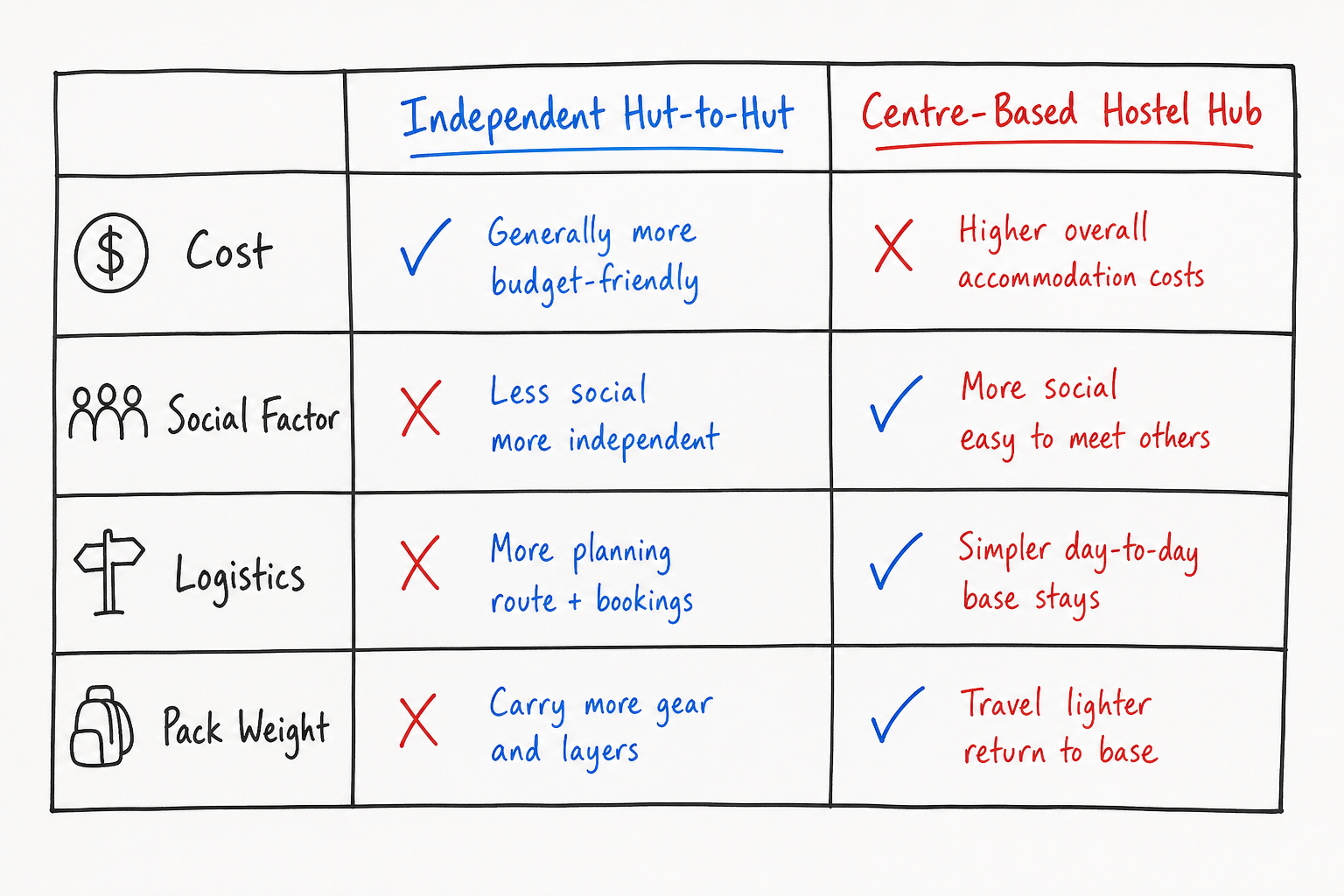
This format eliminates the logistical friction. You get a social, guided alpine experience, but you return to a comfortable bed, a hot shower, and a hearty group dinner every evening. For a deeper look at why this format works so well, check out Hotels in Swiss Mountains? Why Social Lodges Beat Luxury and Guided Hiking in Switzerland: Finding Your Social Group.
A Typical Week-Long Itinerary Based Near Val de Bagnes
If you utilize a centre-based model in Liddes, your week opens up dramatically. Because you aren’t forced to walk in a continuous line, you can cherry-pick the best weather windows for the best hikes.
Here is what a typical organized week looks like:
- Day 1: Arrival & Briefing. Airport transfer to the lodge. Meet your fellow solo travelers over dinner. Review the trail maps for the week.
- Day 2: Val de Bagnes Highlights. We take the transport into the neighboring valley. You tackle the Sentier des Chamois, hiking high above Verbier and descending into Fionnay, before catching the transport back for dinner.
- Day 3: Mont Blanc Excursion. Because you aren’t locked into a hut-to-hut route, we cross the border for a day trip to the Chamonix valley. See the glaciers up close without staying in the overcrowded town. (Read more: Mountain Mont Blanc: 7 Ways to Visit Without the Crowd or 5 Best Hiking Trails in Switzerland Near Mont Blanc).
- Day 4: Local Liddes Trails. A slightly easier day exploring the Val d’Entremont, perhaps hiking up to the Cabane de Mille which overlooks both valleys.
- Day 5: Aosta Valley Excursion. A quick drive through the Great St Bernard Pass drops you into Italy for a distinct change in culture, food, and trail scenery. (Read more about this region: Skiing in the Italian Alps? Try This Aosta Day Trip).
- Day 6: The High Alpine Push. A final, challenging group hike to a glacial lake or a high pass to cap off the week.
- Day 7: Departure. Airport transfers and goodbyes.
Packing for an Alpine Summer in Val de Bagnes
The weather in the Valais region can swing wildly. A sunny 25°C (77°F) morning in the valley can turn into a violent thunderstorm with near-freezing temperatures on a mountain pass by 2:00 PM.
Because you are dealing with significant elevation changes, layering is critical. Bring moisture-wicking and breathable materials that dry quickly when you transition from a sweaty ascent to a cold, windy ridgeline. Avoid cotton entirely.
The Non-Negotiable Gear List:
- Sturdy Trail Footwear: The trails here are rocky and technical. Flimsy sneakers will not survive the descent into Fionnay.
- Hardshell Jacket: A fully waterproof, taped-seam jacket.
- Trekking Poles: Essential for saving your knees on 1,000-meter descents.
- Sun Protection: The UV index at 2,500 meters is severe. Bring a brimmed hat, category 3 or 4 sunglasses, and SPF 50.
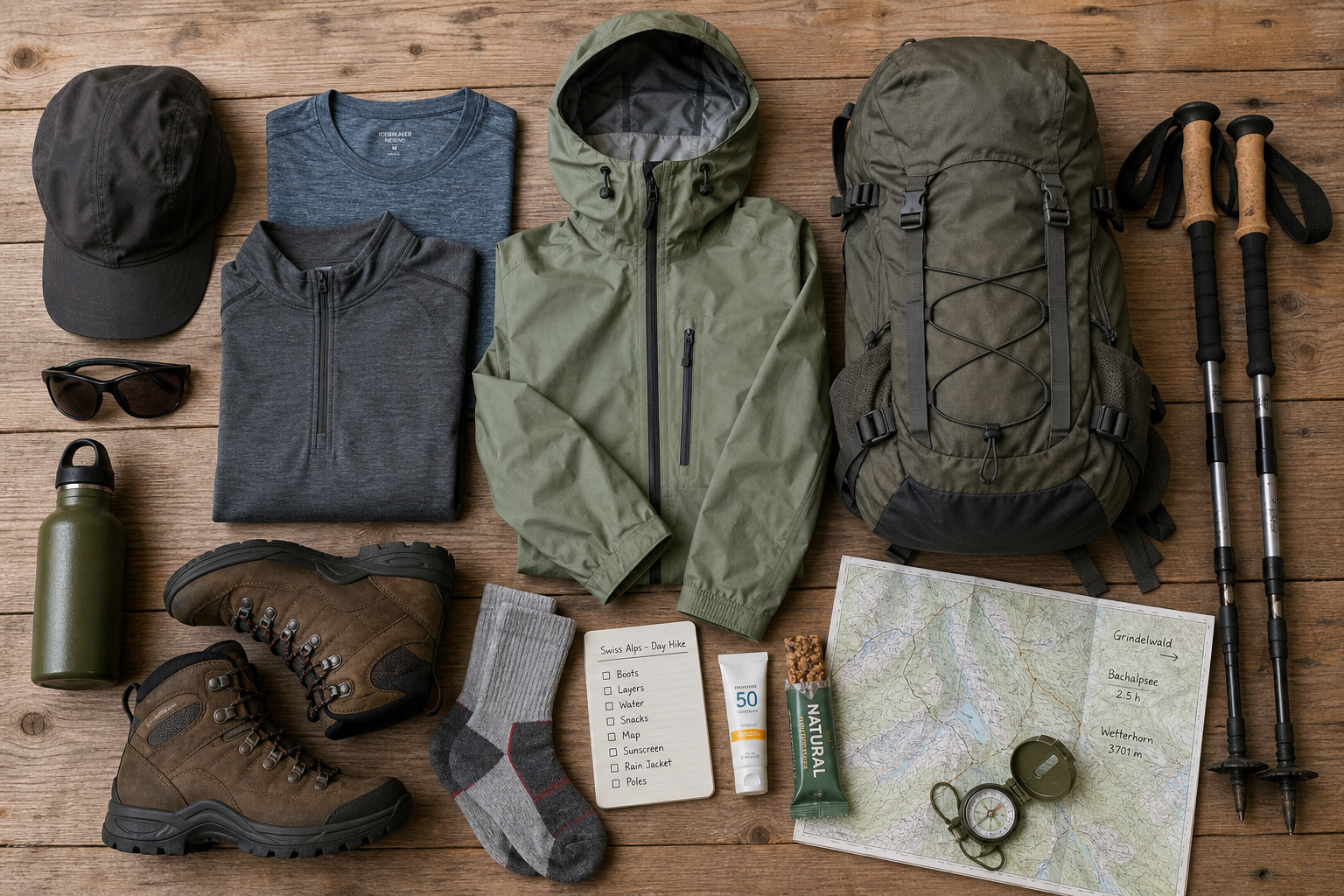
If you are packing for a centre-based trip where you don’t have to carry your overnight gear on the trail, your daypack only needs to weigh 4-5 kg. For a comprehensive packing checklist, read Swiss Alps Summer: A Simple 5-Step Packing Guide.
Decoding Swiss Trail Markings
One of the biggest advantages for international travelers in Switzerland is the standardized trail marking system. Understanding it is crucial for your safety in the Val de Bagnes.
| Sign Color | Trail Type | What it means for you |
|---|---|---|
| Yellow | Wanderweg (Walking Path) | Generally flat or gently sloping. Paved or wide dirt paths. Normal athletic shoes are fine. |
| Red-White-Red | Bergwanderweg (Mountain Trail) | Steep, uneven, and often exposed. Requires sturdy hiking boots, sure-footedness, and basic mountain awareness. Most trails in Val de Bagnes fall into this category. |
| Blue-White-Blue | Alpinwanderweg (Alpine Route) | Highly technical. May require crossing glaciers, scrambling over loose rock, or using fixed cables. Do not attempt without alpine experience. |
Choosing Your Alpine Path
The Val de Bagnes is too spectacular to miss simply because the logistics are intimidating. While independent hut-to-hut trekking offers a pure, solitary challenge, it comes with high costs, heavy backpacks, and rigid schedules.
For most international solo travelers, backpackers, and digital nomads, a centre-based week is the sweet spot. By utilizing a base like Hiking Hostel in Liddes, you bypass the logistical nightmare, guarantee a social atmosphere, and secure reliable daily transport to the best trailheads in the Valais. You get the rugged beauty of the Alps, exactly the way you want to experience them, with none of the administrative friction.
Frequently Asked Questions
When is the best time to hike in Val de Bagnes?
The prime hiking season runs from early July to mid-September. In June, you will often still find impassable snow on trails above 2,400 meters, requiring specialized gear. By late September, many mountain huts begin to close for the season, and autumn snowstorms become a real threat.
Do I need to be an expert hiker to visit?
No, but you do need a reasonable baseline of fitness. The Swiss Alps are steep. Even “moderate” trails often involve 500+ meters of elevation gain. If you choose a centre-based hiking holiday, you can opt for easier valley trails on days when you feel fatigued, which is impossible on a strict hut-to-hut route.
How do I get to the Val de Bagnes region?
If traveling independently, you take a major Swiss train (SBB) to Martigny, transfer to the regional Saint-Bernard Express train to Le Châble, and then rely on PostBuses to reach Verbier or Fionnay. If you book a package with Hiking Hostel, airport transfers from major hubs are included, bypassing this public transport chain.
Can I bring my mountain bike?
Yes, the area around Verbier and Val de Bagnes is world-renowned for mountain biking, offering both downhill parks and cross-country trails. If you prefer two wheels, read our guide on how to Find the Right Mountain Bike Group for Alpine Trails.