Best Swiss Alps hiking tours for digital nomads
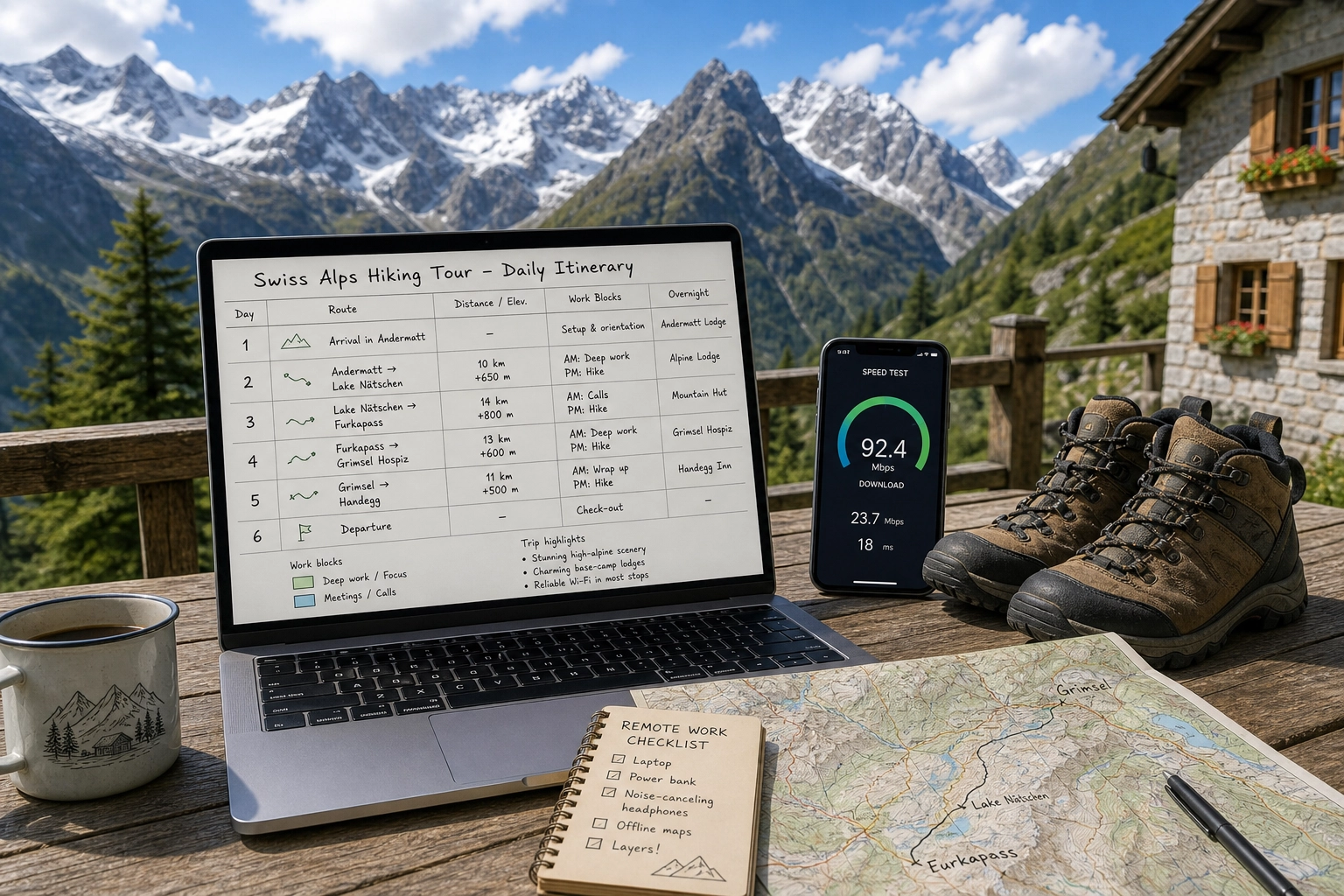
Trying to answer a Slack message while balancing on a narrow ridge in the Valais Alps rarely ends well. Most digital nomads who dream of spending a summer working from the Swiss Alps encounter a harsh paradox: Switzerland has some of the world’s most advanced infrastructure, yet pairing daily multi-hour alpine hikes with high-bandwidth remote work is surprisingly tricky.
Standard tour operators design itineraries for retirees or total off-grid vacationers. They move you from one high-altitude hotel to another every night, pack your days with rigid 8-hour trail itineraries, and leave you with weak, shared mountain Wi-Fi that drops the moment three people stream a video. On the other end of the spectrum, booking remote Airbnb chalets on your own often results in isolation, exorbitant local transport costs, and hours wasted figuring out bus schedules instead of working or hiking.
If you want to spend your mornings ascending alpine passes and your afternoons shipping code, managing clients, or handling video calls, you need a tour structure designed around modern remote work realities. This guide breaks down how high-speed connectivity works in the Swiss mountains, evaluates the main tour formats and operators, and explains how to structure a seamless work-and-hike week in the Swiss Alps.
The Remote Work Reality in the Swiss Alps: Connectivity vs. Alpine Terrain
Switzerland boasts excellent 4G and 5G cellular coverage, even on many mountain peaks. Swisscom and Sunrise have installed base stations on ski lifts and summits across the country. However, cellular strength on a trail does not automatically translate to a productive remote work setup.
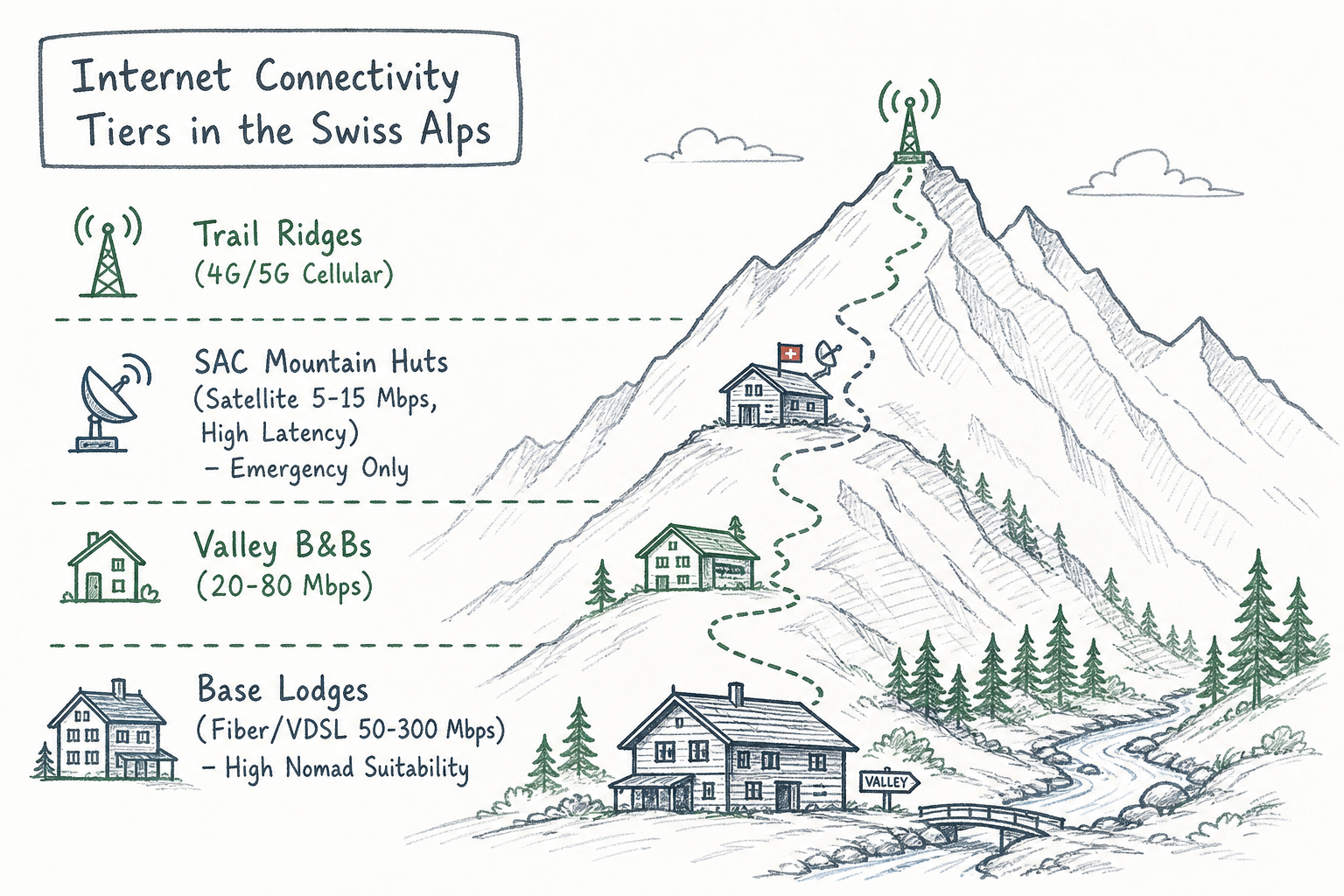
Understanding the difference between trail connectivity and workspace reliability is essential before booking any alpine hiking tour.
+-----------------------------------------------------------------------------------+
|                            SWISS ALPINE CONNECTIVITY MATRIX                        |
+--------------------------+---------------------------------+----------------------+
| Location Type            | Typical Speeds & Stability      | Nomad Suitability    |
+--------------------------+---------------------------------+----------------------+
| Base Lodges & Hostels    | Fiber / High-Speed VDSL         | High                 |
| (Liddes, St. Stephan)    | (50-300 Mbps, Low Latency)      | (Calls, Async, Dev)  |

+--------------------------+---------------------------------+----------------------+
| Valley Village B&Bs      | Standard Wi-Fi / 5G             | Medium-High          |
| (Wengen, Silvaplana)     | (20-80 Mbps, Variable)          | (Async Work, Email)  |

+--------------------------+---------------------------------+----------------------+
| High Mountain Huts       | Satellite (Starlink) / 3G Spotty| Low                  |
| (SAC Huts above 2,000m)  | (5-15 Mbps, Severe Latency)     | (Emergency Only)     |

+--------------------------+---------------------------------+----------------------+
| Active Trail / Ridges    | 4G/5G Cellular                  | Minimal              |
| (Mid-Hike)               | (Variable, Weather Dependent)   | (Text Chat, Emergency|

+--------------------------+---------------------------------+----------------------+
Local Wi-Fi vs. eSIMs and Mobile Hotspots
While mobile data coverage across Swiss valleys is strong, relying solely on phone tethering for heavy remote work is risky. Mountain topography creates instant shadow zones. A sheer granite cliff face can drop a 5G signal to zero in two steps.
When choosing a tour or accommodation base, verify that your evening lodging offers fiber or high-speed VDSL Wi-Fi rather than basic satellite relays. Digital nomads who need reliable internet should review internet connectivity guides, such as detailed internet choice guides from UbiFi, to understand how mobile hotspots perform when cellular signals bounce off high mountain walls.
For trail use, getting a local Swiss eSIM (such as Swisscom, Sunrise, or a regional reseller like Salt) provides a solid backup for asynchronous tasks like Slack, email, or brief voice calls during lunch stops on lower alpine trails.
Key Criteria for Nomad-Friendly Swiss Hiking Tours
Not every hiking tour in Switzerland fits a remote work schedule. Traditional commercial itineraries suffer from three fundamental flaws when applied to digital nomads: high price tags, lack of dedicated desk space, and daily trek logistics that consume every working hour.
When evaluating tours, verify these five core requirements:
| Evaluation Criteria | Traditional Alpine Hiking Tour | Nomad-Optimized Hiking Tour |
|---|---|---|
| Itinerary Structure | Daily point-to-point relocation (hut-to-hut or hotel-to-hotel). | Fixed base lodge with daily hub-and-spoke excursions. |
| Daily Time Schedule | 8:00 AM – 5:00 PM mandatory trail group movements. | Half-day or full-day options with clear return times for work blocks. |
| Internet Benchmark | Basic lobby Wi-Fi; often unstable above tree line. | Guaranteed high-speed Wi-Fi (50+ Mbps down / 10+ Mbps up) in workspace rooms. |
| Social Environment | Older tour groups or quiet private couples. | Social atmosphere with fellow remote workers, backpackers, and solo travelers. |
| Logistics & Transport | Self-managed baggage transfers or rigid tour buses. | Dedicated host vans for direct trail transfers and valley excursions. |
1. Base-Camp Model vs. Moving Every Night
Moving accommodations every night forces you to pack your laptop, chargers, and gear into dry bags before every hike. Luggage transfers between hotels sound convenient, but your bags are often unavailable until late afternoon. A base-camp setup, where you stay in one central lodge for 7 days while taking daily private transfers to different trailheads, provides a secure workspace where you can leave monitors, laptop stands, and peripherals set up continuously.
2. Predictable Daily Windows for Work
A remote worker needs guaranteed blocks of uninterrupted time. Top nomad-friendly tours offer early morning alpine runs or structured 4-to-6-hour daylight hikes, getting you back to the lodge by early afternoon. This aligns naturally with US East Coast work hours (3:00 PM CET is 9:00 AM EST) or allows European workers to finish high-priority tasks during late afternoon quiet hours.
3. Transparent Cost Structure
Switzerland is notoriously expensive. Single-occupancy hotel rooms, daily train passes, and mountain gondolas rack up thousands of Francs quickly. If you want a deep dive into keeping alpine travel realistic, read our guide on 7 Tips for Hiking in Switzerland (Without the High Cost). A tour structure that bundles host transfers, communal meals, regional transport cards, and social accommodation keeps total spending predictable.
Ranking Top Swiss Alps Hiking Tour Operators for Digital Nomads
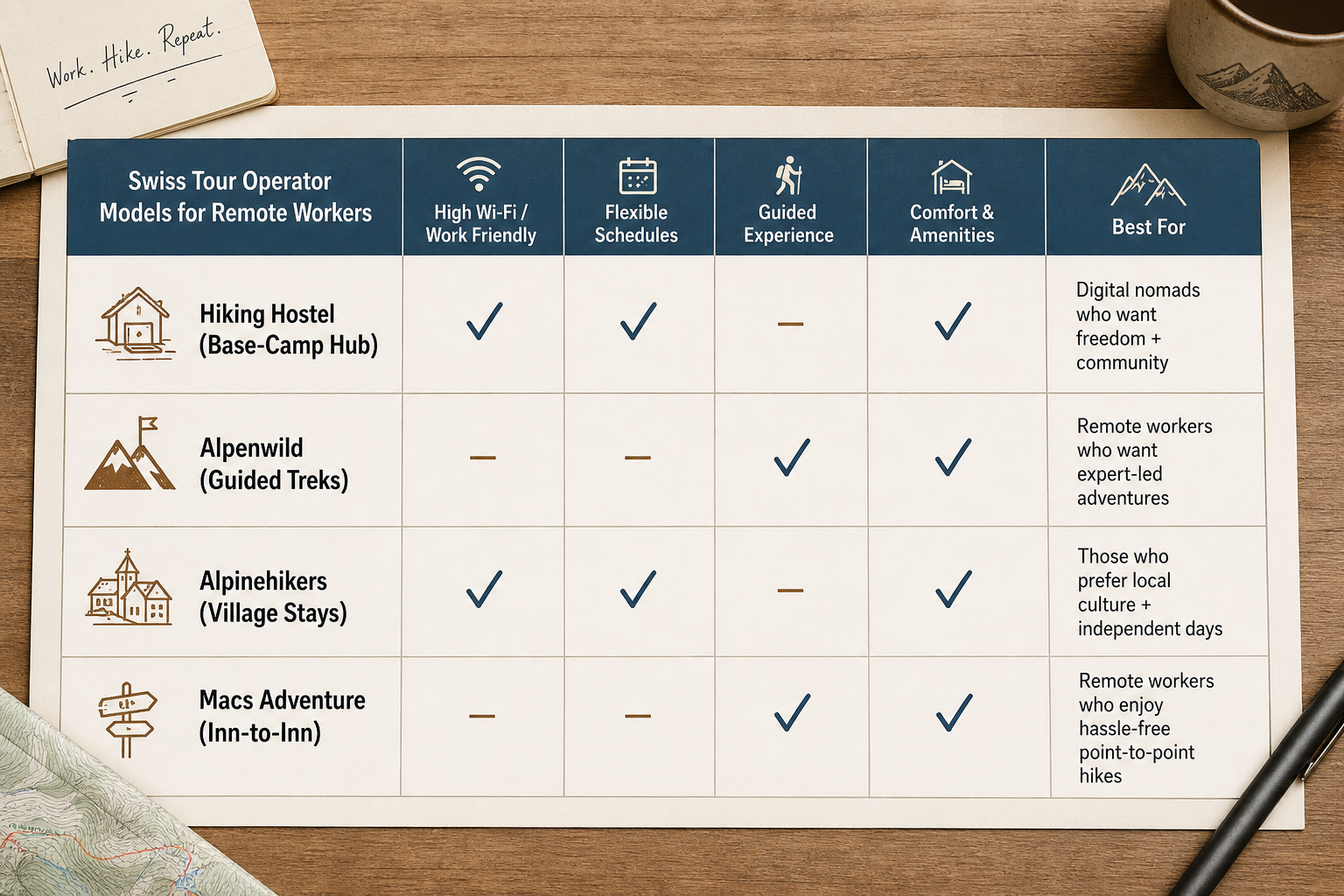
Different travel styles require different tour formats. Below is an practical review of how major operators and trip models serve remote workers searching for Swiss Alps hiking tours with reliable Wi-Fi.
+------------------------------------------------------------------------------------+
|                         NOMAD TOUR OPERATOR COMPARISON                             |
+---------------------+-----------------------+------------------+-------------------+
| Operator / Model    | Target Traveler       | Wi-Fi Reliability| Daily Flexibility |
+---------------------+-----------------------+------------------+-------------------+
| Hiking Hostel       | Nomads, Solo,         | Excellent        | High              |
| Base-Camp Model     | Backpackers           | (Dedicated Hub)  | (Flexible Hikes)  |

+---------------------+-----------------------+------------------+-------------------+
| Alpenwild           | Guided Luxury &       | Moderate         | Low               |
| Guided Trekking     | Classic Hikers        | (Hotel Dependent)| (Fixed Itinerary) |

+---------------------+-----------------------+------------------+-------------------+
| Alpinehikers        | Custom & Self-Guided  | Good             | Medium            |
| Village Tours       | Private Travelers     | (Valley Hotels)  | (Self-Paced)      |

+---------------------+-----------------------+------------------+-------------------+
| Macs Adventure      | Independent Walkers   | Moderate         | Medium            |
| Self-Guided         | On Inn-to-Inn Routes  | (Local B&Bs)     | (Strict Points)   |

+---------------------+-----------------------+------------------+-------------------+
1. Hiking Hostel (Best Overall for Social Digital Nomads & Budget Control)
At Hiking Hostel, weekly summer hiking packages in the Swiss Alps are built specifically around a social base-camp concept. Operating out of designated mountain hubs in Liddes (Valais region near Mont Blanc) and St. Stephan (Bernese Oberland near Gstaad and Interlaken), these trips solve the exact pain points remote workers face.
Instead of relocating daily, guests stay in community-focused, budget-friendly host lodges equipped with high-speed internet, common working tables, and communal dining. Package inclusions handle airport transfers, daily door-to-trail minibus transport, cooked meals, and organized group excursions.
Because transport is handled in-house, you do not waste time managing Swiss train schedules or carrying heavy work packs between mountain passes. If you need to stay behind for a crucial afternoon Zoom meeting, you can join a shorter morning trail or work undisturbed from the chalet balcony while looking out over alpine peaks.
- Best for: Solo travelers, digital nomads, backpackers, and active remote workers seeking community.
- Regions covered: Valais, Great St. Bernard Pass, Chamonix/Mont Blanc, Aosta Valley, Bernese Oberland, Glacier 3000, and Interlaken.
- Wi-Fi quality: Excellent base lodge connectivity optimized for daily online tasks.
- Why social accommodation wins: Check out Hotels in Swiss Mountains? Why Social Lodges Beat Luxury to see why shared mountain chalets offer a far better productivity and networking environment than traditional quiet hotels.
2. Alpenwild (Best for Fully Guided Traditional Treks)
Alpenwild is a premier operator for classic guided walking tours across the Bernese Oberland, Tour du Mont Blanc, and the Haute Route. They specialize in comfortable, full-service itineraries with premium hotel bookings.
While Alpenwild provides unmatched mountain leadership and deep local knowledge, their itineraries are demanding and tightly scheduled. Groups set off early each morning and move to a new village by late afternoon. This leaves little downtime for deep work during business hours. However, for digital nomads taking a partial holiday or working strictly asynchronous half-hours, their valley hotel selections generally feature steady Wi-Fi.
- Best for: Hikers who prioritize luxury guidance over daily workspace flexibility.
- Considerations: Fixed daily schedules leave narrow time windows for calls or client deadlines.
3. Alpinehikers (Best for Tailored Car-Free Village Stays)
Alpinehikers specializes in custom, self-guided, and small-group alpine tours. They frequently arrange accommodations in car-free mountain villages like Wengen, Mürren, and Zermatt.
Car-free alpine villages offer excellent cellular towers and quiet boutique hotels equipped with reliable fiber connections. Alpinehikers allows guests to customize their itinerary length, making it possible to request 2-night or 3-night stays in specific locations to build dedicated work days into the trekking schedule.
- Best for: Self-directed remote workers who want custom itineraries with multi-night stops in connected villages.
- Considerations: Custom self-guided packages are costly during peak summer months.
4. Macs Adventure (Best for Self-Guided Inn-to-Inn Walking)
Macs Adventure offers self-guided walking tours throughout Switzerland, arranging local B&B accommodations and daily luggage transfers.
This format gives nomads complete freedom over their daily walking pace. You walk without a guide, following navigation apps on your phone. However, because you sleep in a different small hotel or mountain inn every night, internet speeds vary significantly depending on local topography and hotel infrastructure. If you book an inn-to-inn package through Macs Adventure, verify that each nightly stop features confirmed Wi-Fi rather than basic village coverage.
Detailed Look: Base-Camp Guided Tours vs. Hut-to-Hut Trekking for Nomads
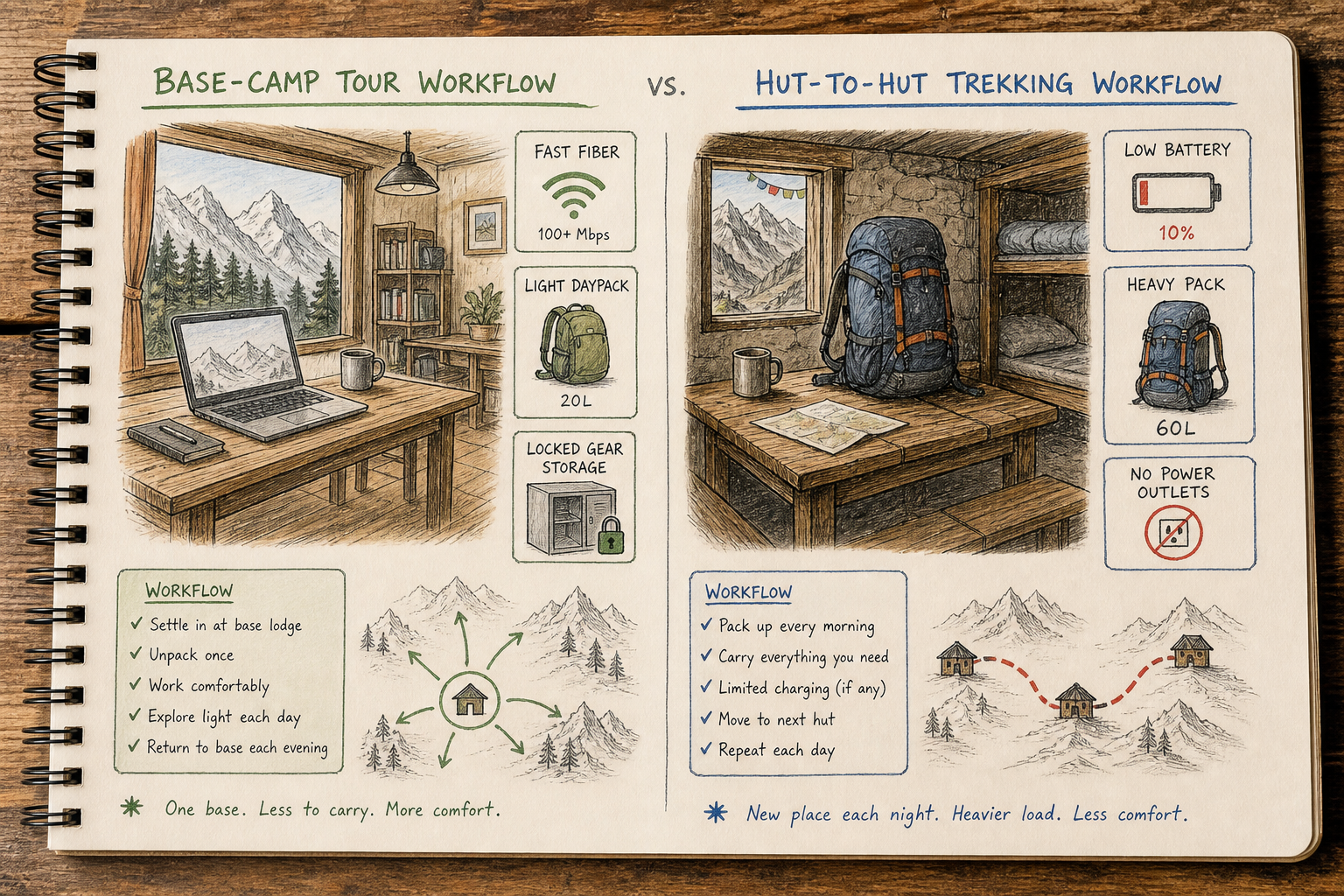
A major debate for remote workers visiting Switzerland is whether to choose a base-camp tour model or attempt classic hut-to-hut trekking across alpine passes.
While sleeping in remote Swiss Alpine Club (SAC) huts high above the tree line is an iconic experience, it poses serious operational challenges for anyone holding a remote job.
+-----------------------------------------------------------------------------------+
|                        BASE-CAMP VS. HUT-TO-HUT WORKFLOW                           |
+-----------------------------------------------------------------------------------+
| BASE-CAMP MODEL (e.g., Liddes / St. Stephan Lodges)                               |
| [Morning Hike: 4-5 Hrs] ---> [Return to Base] ---> [Stable Workspace / High-Speed]|
| Result: Full work output, secure laptop storage, predictable routine.              |

+-----------------------------------------------------------------------------------+
| HUT-TO-HUT MODEL (Point-to-Point Treks)                                           |
| [Heavy Backpacking] ---> [Reach Remote SAC Hut] ---> [Weak Satellite / No Outlets]|
| Result: Battery stress, dropped calls, missed client deadlines.                   |

+-----------------------------------------------------------------------------------+
The Technical Reality of High Alpine Huts
SAC mountain huts sit at elevations between 2,000 and 3,200 meters. They generate electricity via solar panels and diesel generators, meaning power outlets in dormitories are extremely limited or non-existent. Internet access, if present at all, relies on high-latency satellite connections reserved primarily for weather updates and hut operations.
If your work requires Zoom calls, Git commits, or uploading large media files, working from a traditional hut is impossible. For detailed advice on how traditional trekking circuits function, review our guide on How to Plan Hut to Hut Hiking in Switzerland (7 Tips).
The Base-Camp Advantage
In contrast, staying at a base lodge in a valley town like Liddes or St. Stephan provides the ideal compromise:
- Monitored Workspaces: You work from quiet dining halls, outdoor chalets, or dedicated work tables equipped with extension cords and high-speed VDSL or fiber.
- Lightweight Daypacks: You hike with a light 20-liter daypack carrying water, layers, and rain protection. Your delicate $2,000 laptop stays safely locked in your room.
- Weather Flexibility: If mountain storms roll in over the Valais peaks, you stay comfortable indoors working on fast Wi-Fi, swapping trail days without losing accommodation bookings.
- Social Community: You return every evening to family-style group dinners where you can connect with other active remote workers, solo travelers, and backpackers. Finding this social balance is covered in detail in our article on Guided Hiking in Switzerland: Finding Your Social Group.
Best Swiss Regions for Nomad Hikers
Switzerland features distinct regions, each offering unique terrain, transportation connections, and remote work setups.
                      SWISS NOMAD HIKING REGIONS

       [ Bernese Oberland / St. Stephan ]
       * Highlights: Eiger, Glacier 3000, Interlaken
       * Vibe: Iconic peaks, lush valleys, rapid transit
       * Work setup: High-speed valley hubs

                                |
                                v

       [ Valais Region / Liddes Base ]
       * Highlights: Mont Blanc views, Great St. Bernard Pass
       * Vibe: Sunny, uncrowded, high alpine passes
       * Work setup: Quiet chalets, cross-border access

                                |
                                v

       [ Upper Engadine / Via Engiadina ]
       * Highlights: Maloja, Silvaplana, Lake trails
       * Vibe: Wide sunny valleys, high plateau walking
       * Work setup: Resort town Wi-Fi networks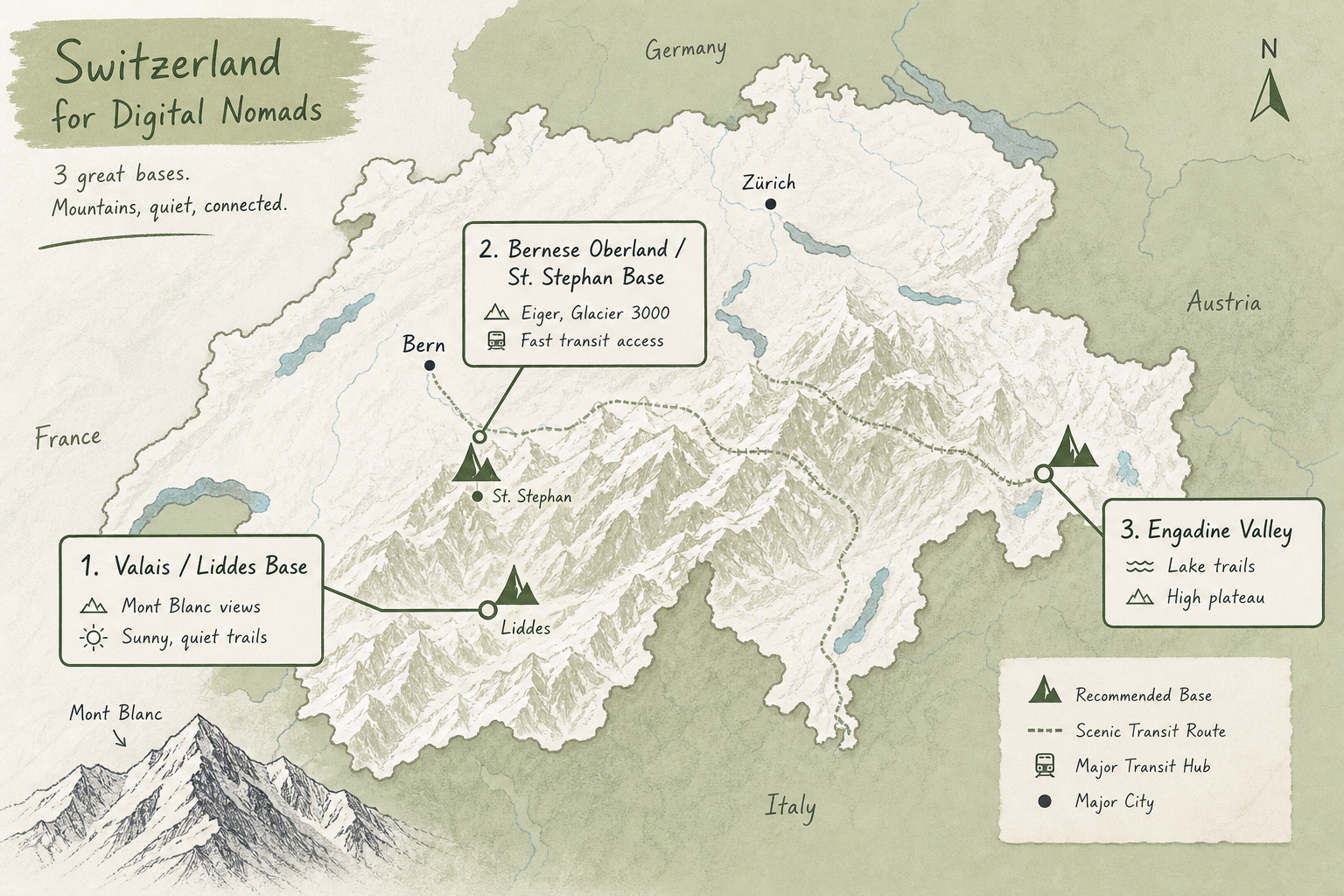
1. Valais & St. Bernard Region (Base Hub: Liddes)
The Valais canton in southwestern Switzerland is famous for having the highest concentration of 4,000-meter peaks and receiving more sunshine than almost anywhere else in the country.
Based in Liddes, hikers enjoy immediate access to quiet trails around the Great St. Bernard Pass, scenic routes facing Mont Blanc, and dramatic high-altitude lake circuits. Because Liddes sits along an ancient alpine transit corridor, day trips across borders are fast and seamless.
- Key Excursions: Guided day trips into Chamonix for Mont Blanc views, cross-border hikes into the Italian Aosta Valley, and high-level alpine loops in the Grand Combin range.
- Nomad Rating: Exceptional. Uncrowded trails mean quiet hiking, while local valley hubs provide strong mobile coverage and reliable lodge Wi-Fi.
- Top Trail Tip: Learn more about quiet border trails in our guide to 5 Best Hiking Trails in Switzerland Near Mont Blanc.
2. Bernese Oberland & Simmental (Base Hub: St. Stephan)
The Bernese Oberland contains Switzerland’s iconic postcard mountains: the Eiger, Mönch, and Jungfrau. Base camps in St. Stephan offer direct access to the Simmental valley, Gstaad, Glacier 3000, and nearby Interlaken.
- Key Excursions: Glacier walking at Glacier 3000, cliffside trails above Lauterbrunnen, and mountain lake circuits near Lenk.
- Nomad Rating: High. Exceptional public transportation and strong local infrastructure make moving between mountain tops and valley laptop setups simple.
- Top Excursion Tip: For rest days or social biking outings, check out how to Find the Right Mountain Bike Group for Alpine Trails.
3. Engadine Valley (Via Engiadina Trail)
Located in the eastern canton of Graubünden, the Upper Engadine valley offers wide, sunny terrain perfect for long, scenic walks. Stage 1 of the Via Engiadina from Maloja to Silvaplana follows high-altitude terraces along mountain lakes.
- Nomad Rating: Moderate-High. Excellent self-guided infrastructure and well-connected resort villages, though costs for food and hotels are higher than in Valais or Simmental.
Daily Schedule: Structuring a Work-and-Hike Day in the Alps
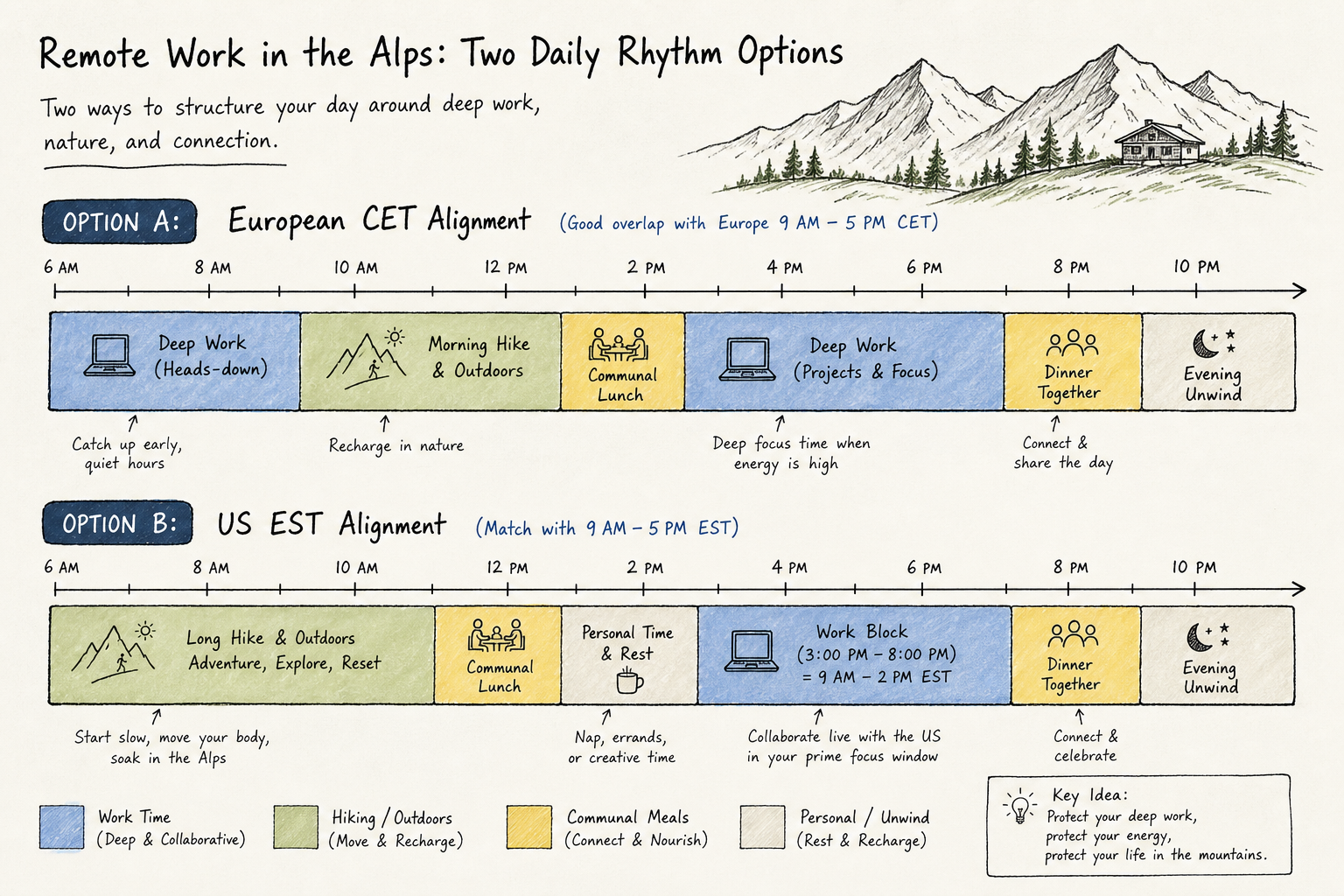
Balancing a 15-kilometer mountain hike with a full remote workload requires structure. Here are two realistic daily schedules that remote workers use during week-long alpine tours.
+------------------------------------------------------------------------------------+
|                         NOMAD DAILY ROUTINE TIMELINES                              |
+------------------------------------------------------------------------------------+
| OPTION A: European Time Zone Alignment (CET)                                       |
| 06:30 - 08:00 | Focused Morning Work Block (Email, Code, Writing)                  |
| 08:00 - 13:30 | Guided Alpine Hike & Trail Lunch                                   |
| 14:00 - 18:30 | Deep Afternoon Work Session & Client Calls                         |
| 19:00 - 21:00 | Communal Lodge Dinner & Evening Social                             |

+------------------------------------------------------------------------------------+
| OPTION B: North American Time Zone Alignment (EST / PST)                          |
| 07:30 - 14:00 | Full-Day Alpine Excursion or Valley Hike                           |
| 14:00 - 15:00 | Return to Lodge, Shower & Afternoon Coffee                         |
| 15:00 - 20:00 | US Work Hours (9:00 AM - 2:00 PM EST Work Block)                   |
| 20:00 - 21:30 | Late Group Dinner & Rest                                           |

+------------------------------------------------------------------------------------+
Practical Tips for Managing Time Zones
- Async Communication: Set expectations with your team or clients before your trip. Shift routine communication to Slack or email so you are not tied to live calls during peak trail hours.
- Download Offline Maps: Download maps on AllTrails or Swisstopo over lodge Wi-Fi before heading out. Never rely on live cellular streaming for mountain navigation.
- Pack a Dedicated Work Pouch: Keep chargers, dongles, travel adapters (Swiss Type J plugs are distinct from standard European Europlugs!), and noise-canceling headphones organized in one dedicated bag so you can convert any dining space into a clean desk in two minutes.
Nomad Packing System: Gear, Tech, and Layering
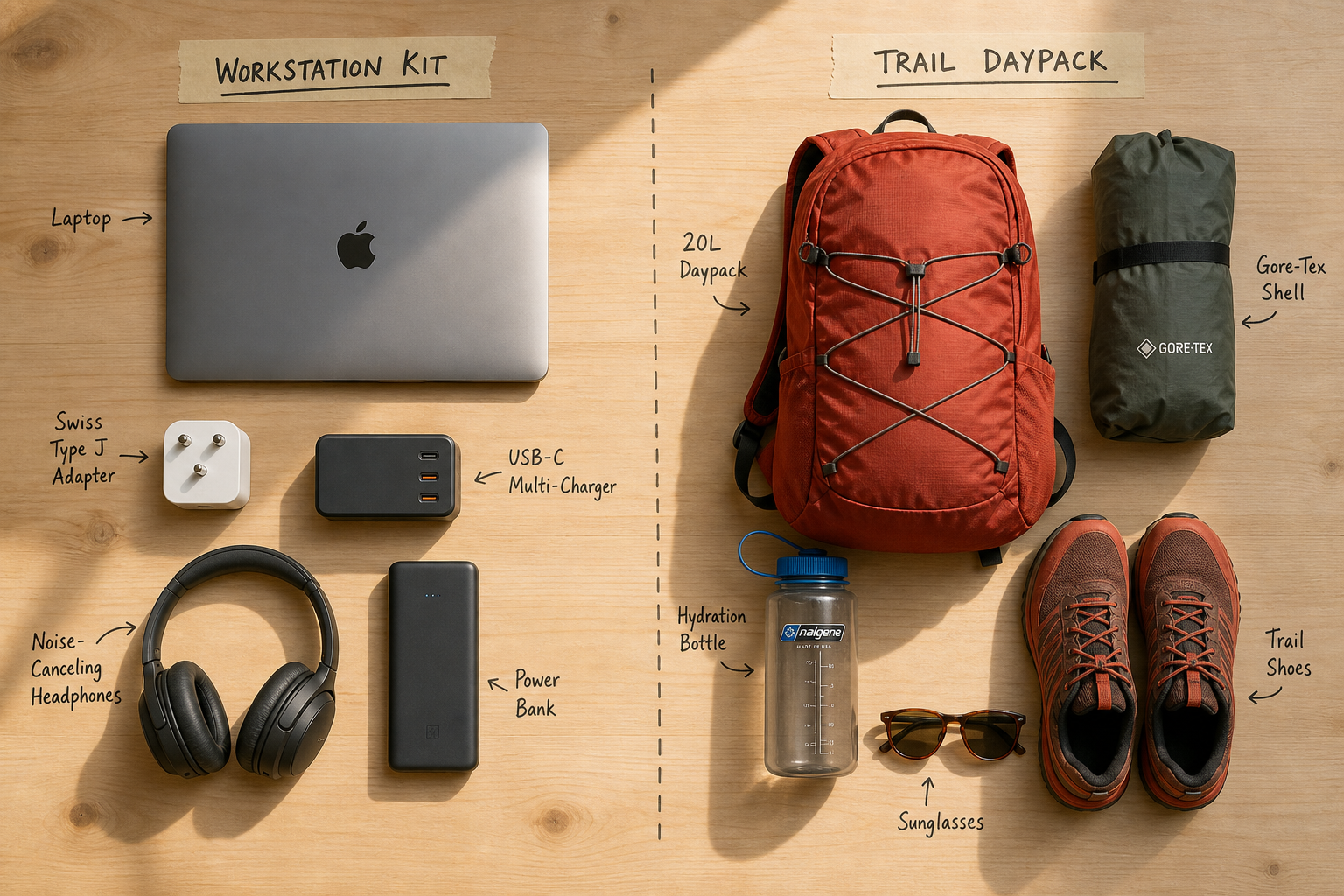
Packing for a hybrid remote work and alpine hiking trip requires balancing heavy electronics with lightweight trail safety gear. Follow this essential gear framework:
+------------------------------------------------------------------------------------+
|                             NOMAD DUAL-PACKING SYSTEM                              |
+----------------------------------+-------------------------------------------------+
| WORKSTATION KIT (Stays at Base)  | TRAIL DAYPACK (20-25 Liters)                    |
+----------------------------------+-------------------------------------------------+
| * Laptop & Charger               | * Waterproof Shell Jacket (Gore-Tex)            |
| * Swiss Type J Plug Adapter      | * Mid-layer Fleece or Down Jacket               |
| * Multi-Port USB-C GaN Charger   | * Sturdy Trail Runners / Hiking Boots           |
| * Noise-Canceling Headset        | * 10,000 mAh Power Bank & Phone Cable           |
| * Compact Laptop Riser Stand     | * 1.5L Water Hydration System / Flask           |
| * Universal Power Bank (20k mAh) | * Sun Protection (Hat, Glacier Glasses, SPF50) |

+----------------------------------+-------------------------------------------------+
Trail Tech & Power Management
- Swiss Power Adapter: Switzerland uses Type J outlets. Standard round European 2-pin plugs (Type C) fit into Swiss sockets, but grounded 3-pin plugs (Type E/F) used in Germany or France will not work without an adapter.
- Compact Power Bank: Bring a lightweight 10,000 mAh battery bank on trail days. Low temperatures accelerate phone battery drain, especially when taking photos or using GPS tracking.
- Layering Clothing: Weather shifts rapidly in the Swiss Alps. Always carry a waterproof jacket and insulating mid-layer in your daypack, even if the valley morning starts bright and clear. For a detailed breakdown of clothing needs, consult our guide on Swiss Alps Summer: A Simple 5-Step Packing Guide.
Rest Days and Cross-Border Excursions
One advantage of booking a base-camp tour in southern or western Switzerland is the ability to take world-class day trips without switching hotels.
When your work schedule calls for a lighter activity day, or when you want to combine alpine views with regional travel, several iconic day excursions are easily accessible from Valais and Bernese Oberland bases:
- Aosta Valley, Italy: A short drive through the Great St. Bernard Tunnel brings you to the Roman historic center of Aosta. Enjoy authentic Italian espresso, pasta lunches, and warm mountain views. For itinerary details, read about taking an Aosta Day Trip.
- Chamonix & Mont Blanc, France: Take a day trip to Chamonix to ride the Aiguille du Midi cable car and view Mont Blanc up close. Learn how to navigate the area smoothly with our guide on Mountain Mont Blanc: 7 Ways to Visit Without the Crowd.
- Glacier 3000 & Gstaad: Experience high-altitude glacier walking and suspension bridges, followed by an afternoon stroll through the alpine village of Gstaad.
- Interlaken & Alpine Lakes: Enjoy lake kayaking or scenic train rides between Lake Thun and Lake Brienz on rest days.
Budget Breakdown: What Remote Workers Should Expect to Spend
Switzerland is one of Europe’s highest-cost destinations. Understanding average costs helps you choose between booking independent accommodations or choosing an all-inclusive nomad hiking package.
| Expense Category | Independent DIY Traveler (Per Week) | Tour Package Model (e.g., Hiking Hostel) |
|---|---|---|
| Accommodation | 700 – 1,400 CHF (Private Airbnbs) | Included (7-night host lodge stay) |
| Local Transport / Gondolas | 250 – 450 CHF (Train passes & cable cars) | Included (Minibus host transfers) |
| Meals & Dining | 350 – 600 CHF (Restaurants & groceries) | Included (Home-cooked group meals) |
| Airport Transfers | 120 – 200 CHF (Geneva/Zurich rail) | Included in full package transfers |
| Work Spaces | 100 – 250 CHF (Coworking day passes) | Included (Lodge workspace & Wi-Fi) |
| Estimated Total | 1,520 – 2,900 CHF per week | Predictable bundled week rate |
For travelers balancing remote work budgets, choosing a bundled package eliminates surprise transport charges and expensive restaurant bills, keeping total spending manageable.
Frequently Asked Questions
Can I do video calls on mountain hut Wi-Fi in Switzerland?
No. High mountain huts (SAC huts above 2,000 meters) rely on satellite systems or limited cellular relays. Bandwidth is reserved for emergency operations and weather tracking. Video calls will lag or drop. For reliable video calls, work from base lodges in valley towns like Liddes or St. Stephan.
What cellular network works best on Swiss mountain trails?
Swisscom offers the widest cellular coverage in high alpine regions, followed closely by Sunrise. Buying a local prepaid eSIM or using a roaming plan that hooks into Swisscom towers gives you the best reliability on trails.
Are Swiss Alps hiking tours suitable for solo remote workers?
Yes. Social base-camp tours are specifically designed for solo travelers and nomads. Staying at a social mountain lodge with shared evening meals makes it easy to make friends and find hiking partners without spending money on private guides.
What happens if I have an urgent work deadline during a planned group hike?
Base-camp tour setups provide complete flexibility. Because you return to the same lodge every evening, you can easily opt out of a morning hike, stay at the chalet to complete your work on high-speed Wi-Fi, and rejoin the group for evening meals or shorter afternoon outings.
Do I need high-altitude mountaineering experience for these hiking tours?
No. Most nomad-friendly hiking tours focus on day hikes along marked alpine trails (T1 to T3 difficulty level). You only need moderate fitness, comfortable trail footwear, and a willingness to walk 8 to 15 kilometers with steady elevation changes.
Choosing the Right Swiss Hiking Tour for Your Remote Work Setup
Combining a remote career with world-class Swiss Alps hiking does not require sacrificing productivity or spending a fortune. By avoiding point-to-point treks with spotty mountain hut internet and choosing a social base-camp tour model, you get the best of both worlds: high-speed Wi-Fi, dedicated workspace stability, and direct transport to the finest hiking trails in Valais and the Bernese Oberland.
When planning your summer trip, evaluate your time zone needs, verify guaranteed base-lodge Wi-Fi speeds, and choose an operator that handles local logistics so you can focus on your work and enjoy the mountains.