Best affordable Swiss Alps hiking tours for solo travelers
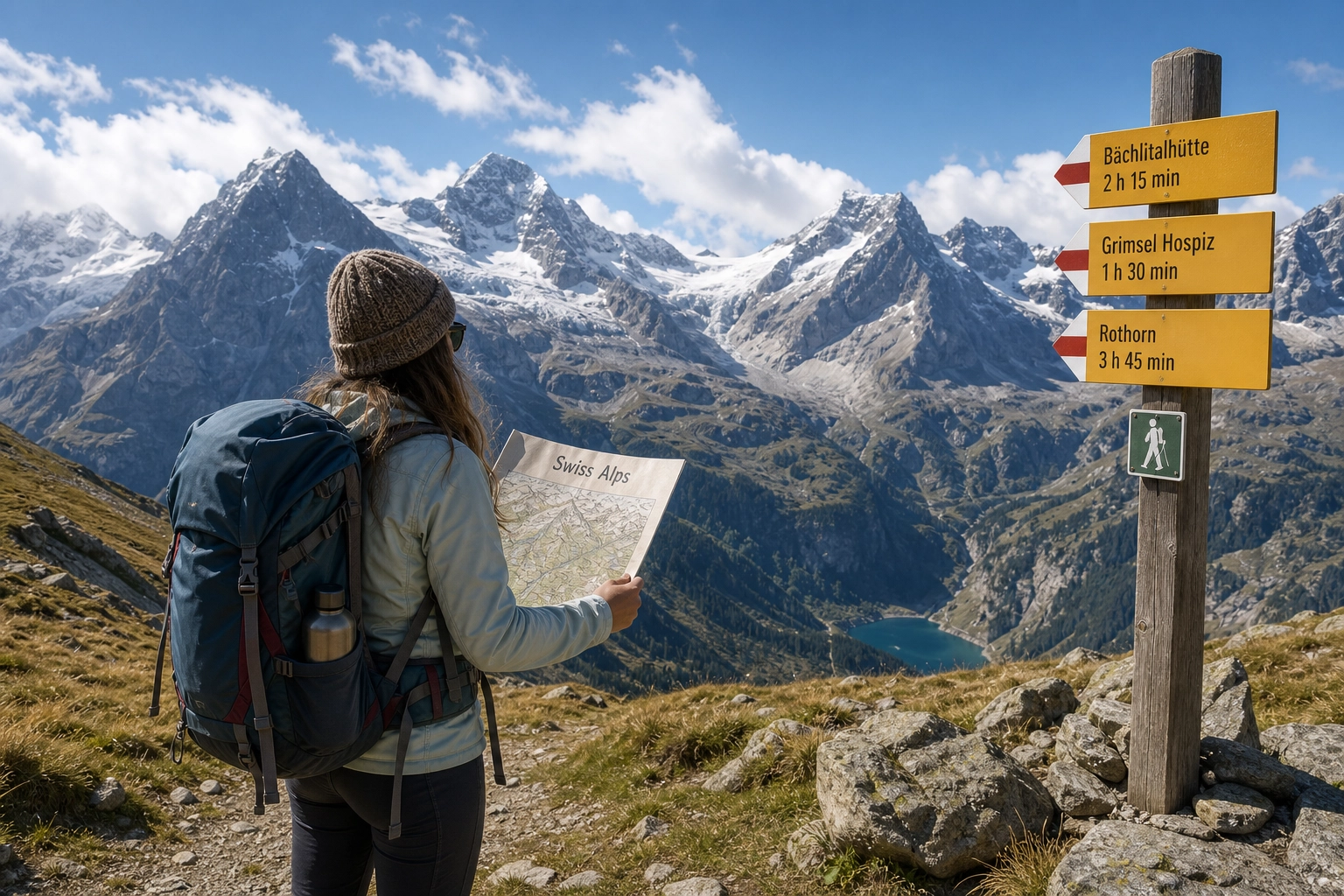
Planning a solo trip to the Swiss Alps usually begins with sweeping daydreams of jagged glaciers and blooming alpine meadows—and ends with severe sticker shock. When you start tallying up the individual costs of mountain trains, cable cars, nightly accommodation, and high-altitude meals, the math quickly becomes hostile to the average backpacker, digital nomad, or budget-conscious traveler.
Switzerland is notoriously expensive, but the barrier to entry isn’t the mountains themselves; it’s the logistics. If you try to piece together a dynamic, multi-region itinerary on your own, you are going to pay a premium for flexibility.
This is why booking comprehensive packages—specifically the best affordable Swiss Alps hiking trips with accommodation included—is actually the secret to hacking Swiss travel. By bundling a basecamp bed, daily meals, local transport, and organized excursions into a single upfront cost, you bypass the daily financial friction that ruins so many independent alpine trips.
In this guide, we are going to break down the true economics of hiking in Switzerland, compare the top specialized tour operators, and explain why the “basecamp” model is the most effective way for solo travelers to experience world-class routes around Mont Blanc, Valais, and the Bernese Oberland without draining their savings.
The Hidden Economics of Swiss Alps Hiking
Before you can evaluate whether a hiking tour is “affordable,” you need a realistic baseline of what a do-it-yourself (DIY) trip actually costs. Many solo travelers underestimate the daily operational costs of moving through the Swiss mountains.
If you want to read up on general budget strategies before diving into package comparisons, check out these 7 Tips for Hiking in Switzerland (Without the High Cost).
The Solo DIY Penalty
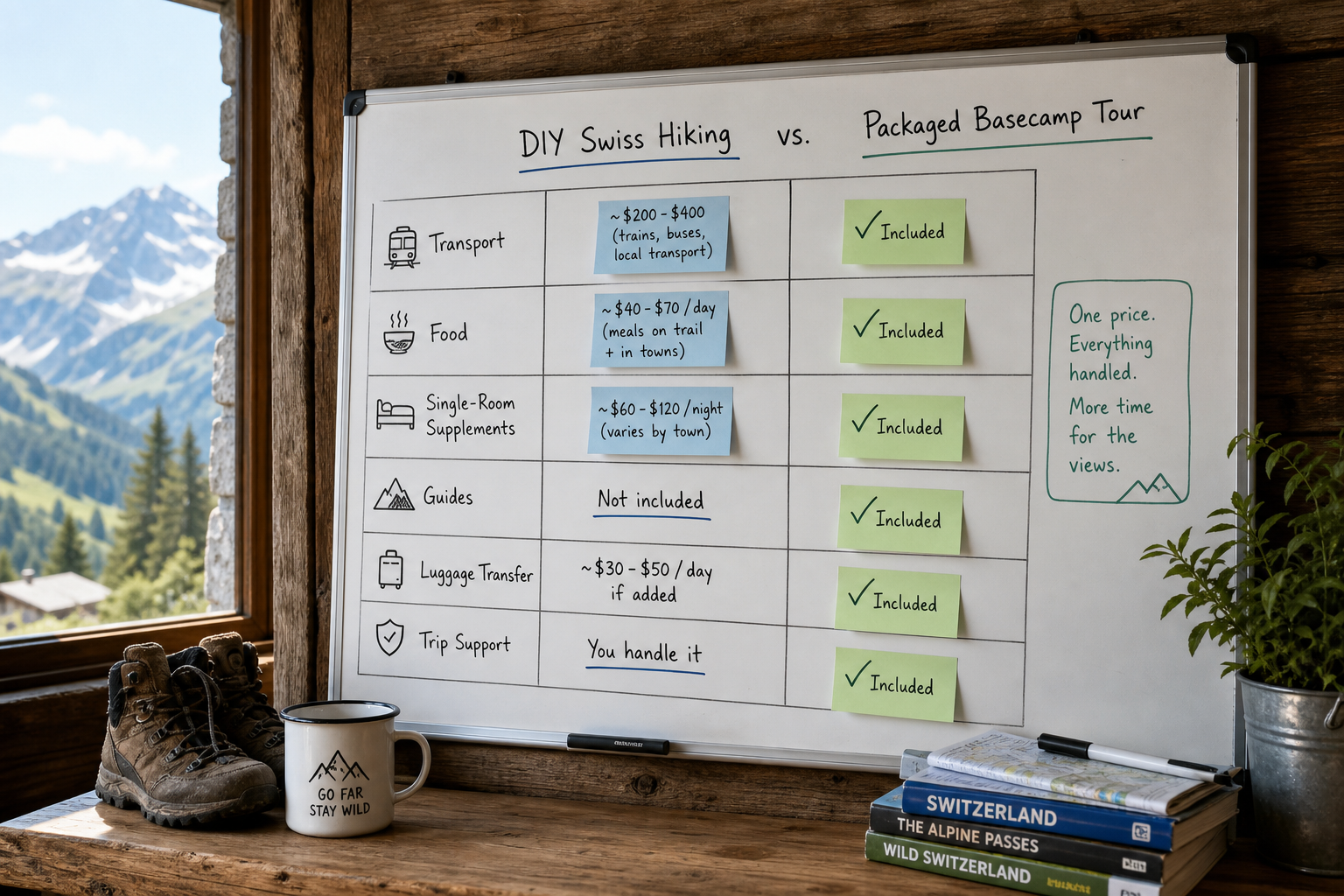
When you travel independently, you face what the industry calls the “single supplement penalty.” Most traditional mountain hotels price their rooms based on double occupancy. If you want a bed to yourself in a valley town like Grindelwald or Zermatt, you are often paying 80% to 100% of the cost of a two-person room.
Beyond the bed, there are three primary financial traps for the independent hiker:
- Point-to-Point Transport: Swiss public transport is incredibly efficient but priced accordingly. Taking a train from a valley base to a trailhead, combined with a mandatory cable car to bypass a steep, forested ascent, can easily cost CHF 40 to CHF 80 per day.
- Mountain Food Pricing: Food delivered to a high-altitude restaurant via helicopter or steep funicular carries a heavy markup. A basic bowl of Goulash soup or a plate of Rösti mid-hike will routinely set you back CHF 25.
- Logistical Inefficiencies: If you are moving accommodations every night, you are paying for luggage transfers (expensive) or carrying everything on your back (limiting your route choices and speed).
The Bundled Advantage
When you opt for a week-long hiking holiday with accommodation, meals, and daily trail transport included, operators leverage economies of scale. Because they book a block of hostel beds for the entire season, buy groceries in bulk, and operate their own 9-seater vans for trailhead drop-offs, they can offer a weekly rate that is significantly lower than the sum of its parts.
For a solo traveler, a package that includes a bed, breakfast, packed trail lunch, dinner, and daily shuttle service transforms an unpredictable expense sheet into a single, fixed, manageable cost.
Why “Accommodation Included” is the Solo Traveler’s Best Asset
For backpackers and digital nomads, the appeal of a pre-packaged hiking week extends far beyond the price tag. The logistics of alpine accommodation dictate the entire rhythm of your trip.
Social Infrastructure
Solo travel shouldn’t mean isolation. If you rent a cheap Airbnb on the outskirts of an alpine village, you miss out on the shared culture of mountain travel. Dedicated hiking hostels and social lodges are engineered for connection.
When accommodation and meals are included in your package, you naturally fall into a community rhythm. You share breakfast with the same group of hikers, tackle the trails together or separately, and reconvene at long communal tables for dinner to swap stories and route conditions. This environment is highly conducive to finding a hiking partner for a tricky ascent the next day. If you want to learn more about this dynamic, read our guide on Guided Hiking in Switzerland: Finding Your Social Group.
Furthermore, Hotels in Swiss Mountains? Why Social Lodges Beat Luxury explains how communal spaces, shared trail maps, and gear-drying rooms offer far more practical value to a hiker than a boutique hotel’s spa.
Digital Nomad Feasibility
If you work remotely, traditional hut-to-hut trekking is largely off the table. Mountain huts are incredible, but they are notorious for zero cellular reception, paid (and slow) Wi-Fi, and a severe lack of electrical outlets.
A basecamp model—where you stay in one valley hostel for a week and take day trips into the mountains—provides the reliable infrastructure digital nomads require. You get stable Wi-Fi, desk space, and guaranteed charging ports every evening, allowing you to hike hard during the day and clear out your inbox at night.
The Basecamp Model vs. Traditional Hut-to-Hut Trekking
When people think of organized Swiss hiking trips, they often default to the hut-to-hut model. While iconic, it is not the only—or necessarily the best—way to experience the Alps on a budget.
If you are set on a multi-day traverse, you’ll need to know How to Plan Hut to Hut Hiking in Switzerland (7 Tips). However, for many solo travelers, the “Basecamp Model” offers a superior blend of affordability, comfort, and flexibility.
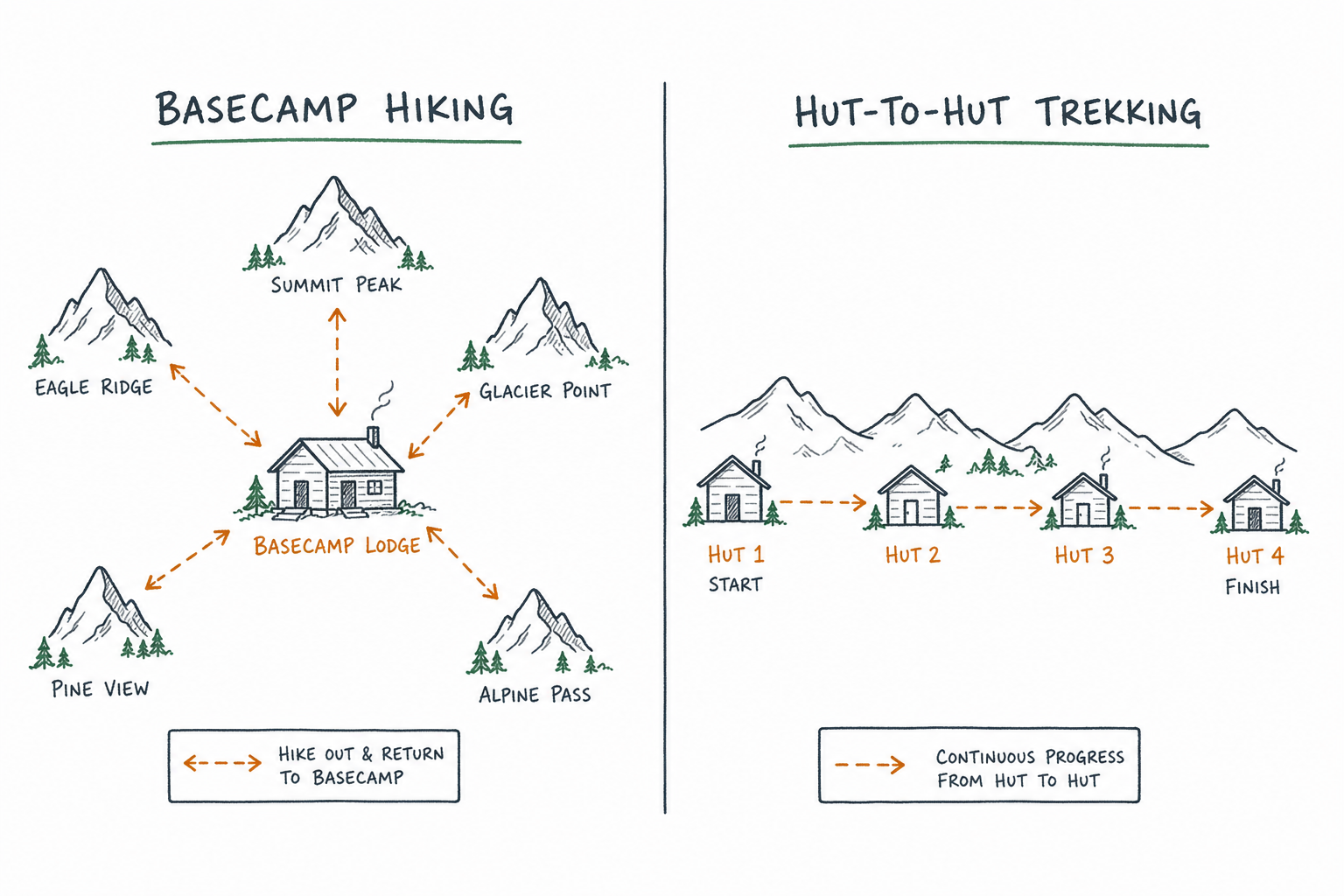
Traditional Hut-to-Hut Trekking
- The Concept: You hike from point A to point B, sleeping in a different high-altitude mountain refuge each night.
- The Cost: High. Even in dorms, half-board (bed, dinner, breakfast) in a Swiss hut costs roughly CHF 80-100 per night. You must also buy all your trail lunches and drinks at mountain prices.
- The Weight: You must carry a 35-45L backpack containing all your clothing, sleep sheet, toiletries, and emergency gear for the duration of the trek.
- The Rigidity: If a massive thunderstorm rolls in on day three, you are stuck. You either hike through dangerous conditions to reach your reserved bed, or you bail into a valley and forfeit your non-refundable deposit.
The Basecamp Model (The Hiking Hostel Approach)
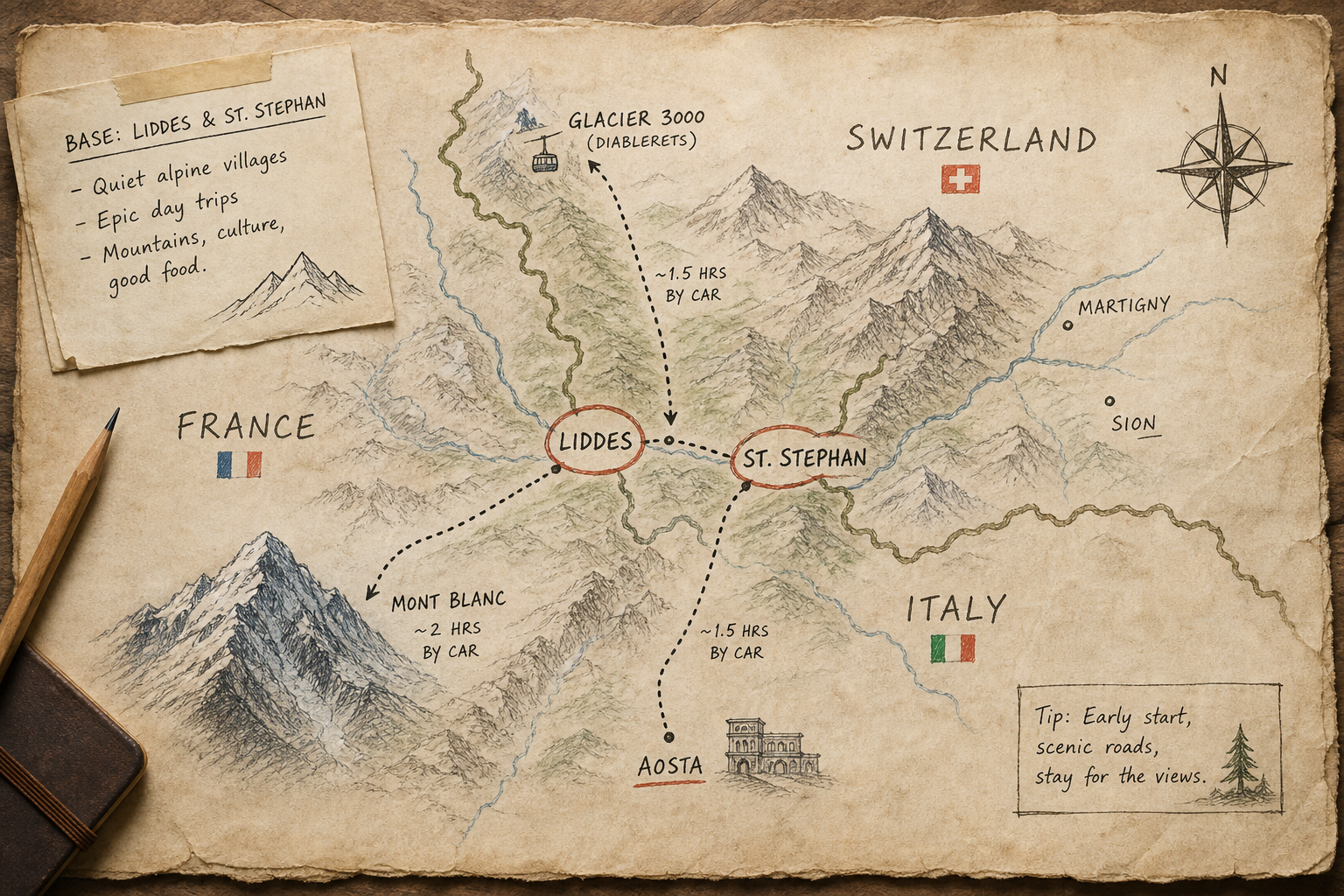
- The Concept: You unpack once at a comfortable valley hostel or lodge (e.g., in Liddes or St. Stephan). Each morning, dedicated transport drops you at a different trailhead. You hike a spectacular route and are picked up in the afternoon.
- The Cost: Highly affordable. By utilizing hostel-style accommodation and valley-level grocery sourcing for packed lunches and dinners, operators can keep the per-day cost exceptionally low.
- The Weight: You only carry a light 15-20L daypack with water, lunch, and a rain jacket.
- The Flexibility: If the weather in one valley is poor, the daily transport van can simply drive the group to a neighboring valley with better conditions or organize an excursion to a nearby town or attraction.
Top Tour Operators for Budget-Friendly Alpine Hiking
The market for Swiss hiking tours is vast, but most cater to the luxury demographic, charging upwards of $4,000 a week for baggage transfers and boutique hotels. However, a specific tier of operators specializes in value-driven, logistics-first experiences.
Based on search visibility and market presence, here are the top operators filling the gap for affordable, accommodation-included tours:
1. Hiking Hostel (The Social Basecamp)
Built specifically for solo travelers, backpackers, and digital nomads, Hiking Hostel offers week-long summer packages that strip away the stress of alpine logistics. Instead of moving every day, guests base themselves in strategic hubs like Liddes (Valais) or St. Stephan (Bernese Oberland).
The core offering is a flat-rate package that includes hostel accommodation, all meals (breakfast, packed trail lunches, and communal dinners), airport transfers, and—crucially—daily trail transport via 9-seater vans. This allows hikers to tackle the region’s best routes with only a daypack. The inclusion of organized excursions across borders (like Aosta or Chamonix) adds massive value that independent travelers would struggle to coordinate on a budget.
2. AlpsAdventures
Operating heavily in the western Alps, AlpsAdventures is well-regarded for its structured short-term itineraries. They frequently offer compact packages, such as a 4-Day Tour du Mont Blanc experience.
This is a great option if you are short on time but still want a highly organized, guided experience. They focus on clean, comfortable accommodations and provide excellent local guides to navigate the complex logistics of the Mont Blanc region.
3. Hut to Hut Hiking Switzerland
If you are dead-set on the traditional multi-day traverse, Hut to Hut Hiking Switzerland specializes exactly in this niche. They take the headache out of coordinating bookings across multiple independent mountain cabins—a notoriously frustrating process due to different booking systems, languages, and deposit requirements.
They offer both guided and self-guided variations. While traditional hut trekking is generally more expensive than a basecamp model, this operator is highly efficient at packaging it into the most affordable version possible.
4. MyMountains & Alpenwild
These two operators offer a broader spectrum of active travel. MyMountains provides a versatile array of outdoor adventures, from skiing to summer hiking, making them a solid choice for multi-sport enthusiasts.
Alpenwild is a major player in the market, though they traditionally lean toward the premium side of active travel. They are deeply committed to authentic alpine experiences and offer phenomenal guided tours, though budget-conscious backpackers might find their packages stretch the definition of “affordable.”
5. Alpinehikers
For those who want to mix the security of a package with the independence of solo travel, Alpinehikers excels at customized and self-guided tours. They provide detailed route notes, manage all your accommodation bookings, and handle baggage transfers. You pay a premium for the customization, but it saves immense planning time.
Prime Regions for Basecamp Hiking on a Budget
Where you choose to hike dictates the cost of the trip. High-profile resort towns like Zermatt and St. Moritz command premium prices for everything from a bed to a beer.
Affordable hiking tours strategically utilize “secondary” valley towns as hubs. These towns offer authentic charm, cheaper infrastructure, and immediate access to the exact same trails the luxury tourists are hiking.
Here are the top hubs for budget-conscious solo travelers:
Liddes and the Valais Region
Situated in the canton of Valais, the village of Liddes sits on the route to the Great St. Bernard Pass. It is a tactical masterstroke for a basecamp. From Liddes, a tour operator’s van can easily deploy hikers into diverse alpine environments.
Valais is characterized by its towering 4,000-meter peaks and rugged, sun-drenched valleys. From a Liddes base, you have access to sections of the legendary Tour du Mont Blanc without paying Chamonix hotel prices. In fact, you can easily explore the 5 Best Hiking Trails in Switzerland Near Mont Blanc as day trips.
If you want to experience the highest peak in Western Europe without the immense logistical hassle, a basecamp in Liddes offers an easy jumping-off point. Read more on how to navigate this in Mountain Mont Blanc: 7 Ways to Visit Without the Crowd.
St. Stephan and the Bernese Oberland
Located in the Simmental valley, St. Stephan is an idyllic, traditional Swiss village that offers a stark contrast to the ruggedness of Valais. The Bernese Oberland is the Switzerland of postcards: impossibly green pastures, wooden chalets, grazing cows, and massive glaciated backdrops.
Basing a week in St. Stephan allows affordable access to premium destinations like Glacier 3000, Gstaad, and the wider Interlaken region. (Interestingly, evaluating mountain infrastructure in winter can also yield clues for summer travel; see Which Swiss Ski Resort Fits a Backpacker’s Budget? for insights into regional pricing).
Cross-Border Excursions: The Hidden Value
One of the greatest benefits of a centralized basecamp with dedicated transport is the ability to cross borders for a day. The Alps span multiple countries, and culture shifts dramatically within a one-hour drive.
For example, from a base in Valais, a tour package might include an organized excursion over the pass into Italy. Exploring the Aosta Valley offers incredible hiking, distinct Roman history, and a chance to enjoy Italian food (and coffee) at a fraction of Swiss prices. While our guide Skiing in the Italian Alps? Try This Aosta Day Trip focuses on winter, the summer hiking equivalent is equally spectacular and frequently integrated into affordable week-long packages.
A Typical Week on a Social Basecamp Hiking Tour
To understand the true value of these “accommodation included” packages, you have to look at the daily rhythm. Here is what a typical week looks like for a solo traveler joining a budget-friendly, organized hiking hostel trip:
Day 1: Arrival and Integration
- Afternoon: Utilize the included airport or regional train station transfer. Arrive at the lodge (e.g., in Liddes), check into your dorm or private room, and meet your fellow hikers.
- Evening: A communal welcome dinner cooked by the hostel staff. This is where you find out who shares your pace and hiking ambitions for the week.
Day 2-3: Guided or Self-Guided Exploration
- Morning (7:30 AM): Large buffet breakfast. You pack your provided trail lunch (sandwiches, fruit, Swiss chocolate) into your daypack.
- Departure (8:30 AM): The 9-seater vans load up and drive 20-40 minutes to the trailhead, bypassing expensive cable cars or long walks up paved valley roads.
- The Hike: You spend 5-7 hours on the trail. Because you only carry a daypack, you move efficiently. You might conquer a ridge line with views of the Grand Combin or traverse a high balcony trail.
- Afternoon (4:00 PM): The van picks the group up at the end of a point-to-point hike (impossible to do cheaply with a rental car).
- Evening: Hot showers, cold beers on the terrace, and another communal dinner.
Day 4: The “Rest” or Excursion Day
- To prevent burnout, midweek usually involves an organized excursion. The vans might take the group to Chamonix for a closer look at Mont Blanc, or across the Italian border to Aosta for lighter valley walking, gelato, and espresso.
Day 5-6: Pushing the Limits
- With legs fully acclimatized, these days are for bigger vertical gains. Hikers might split into two groups: one tackling a challenging peak ascent, and another taking a moderate alpine lake loop.
- Note for multi-sport enthusiasts: In areas like these, you’ll often cross paths with mountain bikers. If you ever consider switching gears, knowing how to Find the Right Mountain Bike Group for Alpine Trails is a similar process to finding the right hiking lodge.
Day 7: Departure
- Final breakfast, packing up, and taking the included transfer back to the transit hub. You leave having spent virtually zero additional Francs beyond your initial booking.
Managing Your Gear and Logistics
One of the massive advantages of a basecamp package is the reduction in gear requirements. When you don’t have to pack for a multi-day unsupported trek, your luggage shrinks dramatically.
Packing for a Daypack Strategy
When your accommodation is fixed and your meals are provided, you only need to dress for the day’s weather.
Your 20L daypack should contain:
- Hydration: Minimum 2 liters of water. Mountain streams are pristine, but high pastures often have livestock, meaning filtration is required if you rely on natural sources.
- Layers: A high-quality lightweight rain shell (Gore-Tex or similar), a fleece mid-layer, and a moisture-wicking base layer. The temperature can drop 15 degrees Celsius when a cloud covers the sun at 2,500 meters.
- The Provided Lunch: Keep it accessible at the top of your pack.
- First Aid & Sun Protection: High-altitude UV rays are brutal. Sunscreen, sunglasses, and a basic blister kit are mandatory.
For a comprehensive checklist on outfitting yourself for the season, review our Swiss Alps Summer: A Simple 5-Step Packing Guide.
Footwear: The Great Debate
Because you are returning to a lodge every night and not carrying 15kg of gear, you do not necessarily need heavy, stiff, traditional leather mountaineering boots.
Many modern hikers on basecamp tours prefer rugged trail running shoes (like Hoka Speedgoats or Salomon Speedcross) or lightweight approach shoes. They dry faster in the lodge boot room overnight and save massive amounts of energy over a 15km day. However, if you have weak ankles, stick to mid-height, lightweight hiking boots.
Decision Matrix: Choosing the Right Trip for Your Travel Style
With multiple affordable options on the table, how do you choose the right package? Use this framework to align your goals with the right operator and style.
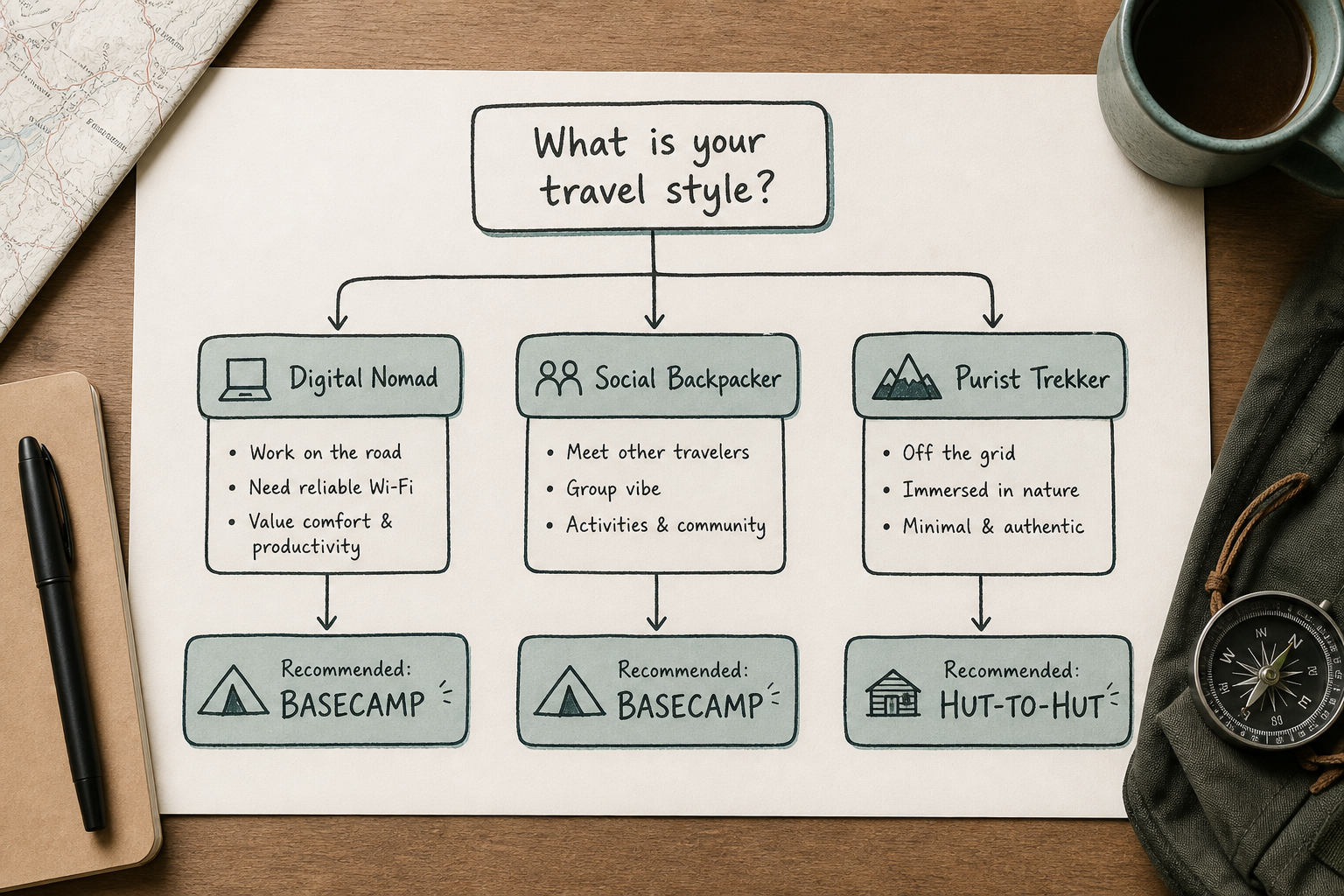
1. The Social Solo Traveler / Backpacker
- Your Goal: Maximize time on the trail, keep costs strictly contained, meet international travelers, and avoid logistical planning.
- The Best Choice: The weekly basecamp package (like Hiking Hostel). You get the social atmosphere of communal dinners, the budget certainty of included meals and transport, and a fixed bed to return to.
2. The Digital Nomad
- Your Goal: Work for a few hours in the evening, require reliable Wi-Fi, need a desk, but want to crush big hikes during the day.
- The Best Choice: The basecamp model. Mountain huts cannot support your tech needs, and moving hotels daily is too disruptive to your workflow.
3. The Purist Trekker
- Your Goal: Complete a linear, multi-day traverse (like the Tour du Mont Blanc or Walker’s Haute Route), sleep at high altitude, and disconnect completely.
- The Best Choice: A specialized operator like Hut to Hut Hiking Switzerland or AlpsAdventures. You will pay more, and you must carry more weight, but you achieve the continuous journey.
4. The Custom Small Group
- Your Goal: You have 3-4 friends, a moderate budget, and specific trails you want to hit at your own pace without strangers.
- The Best Choice: Self-guided packages from Alpinehikers or MyMountains, where they book the affordable 3-star pensions and manage the luggage transfers, leaving the daily execution to you.
Making the Alps Accessible
The Swiss Alps feature some of the most spectacular, well-maintained, and awe-inspiring hiking trails on earth. It is a tragedy that the region’s reputation for extreme wealth deters so many passionate, budget-conscious hikers from experiencing it.
By leveraging organized, accommodation-included packages—specifically those utilizing a social basecamp model with daily van transport—you can entirely bypass the exorbitant costs of traditional Swiss travel. You trade the stress of train schedules and $25 mountain lunches for communal dinners, streamlined trail access, and a community of like-minded solo travelers.
The mountains do not care about your budget, but how you choose to base yourself at their feet changes everything.