Best hiking hostels in the Swiss Alps for budget travelers
Planning a trip to the Swiss Alps often feels like an exercise in financial damage control. Standard hotel rooms in mountain hubs like Zermatt or Grindelwald easily run upwards of CHF 250 a night, while round-trip mountain railway fares can strip CHF 80 from your wallet before you even take your first step on the trail. For solo travelers, backpackers, and outdoor enthusiasts who want high-altitude scenery without four-figure credit card bills, the traditional alpine vacation model breaks down fast.
An affordable alpine holiday with hostel accommodation and daily hikes offers a pragmatic alternative. By shifting from high-end resort hotels to purpose-built hiking hostels, you immediately drop your nightly lodging costs by 60% to 75%. More importantly, basing yourself at a well-located hostel equipped for hikers resolves the complex daily logistics of alpine transit, trail transfers, and meal prep.
Whether you are exploring the high-mountain passes of Valais or the lush valleys of the Bernese Oberland, staying in a hostel designed around daily trail access provides the freedom of the mountains alongside a natural, social community.
What makes a true “hiking hostel” in the Alps?
Not every budget lodge or city hostel qualifies as a dedicated alpine basecamp. Standard urban hostels focus on nightlife and proximity to train stations, but a true hiking hostel is built specifically to support active mountain days.
When you return from an eight-hour trek with muddy boots, soaked waterproofs, and an empty stomach, the amenities inside the building matter just as much as the view outside your window.
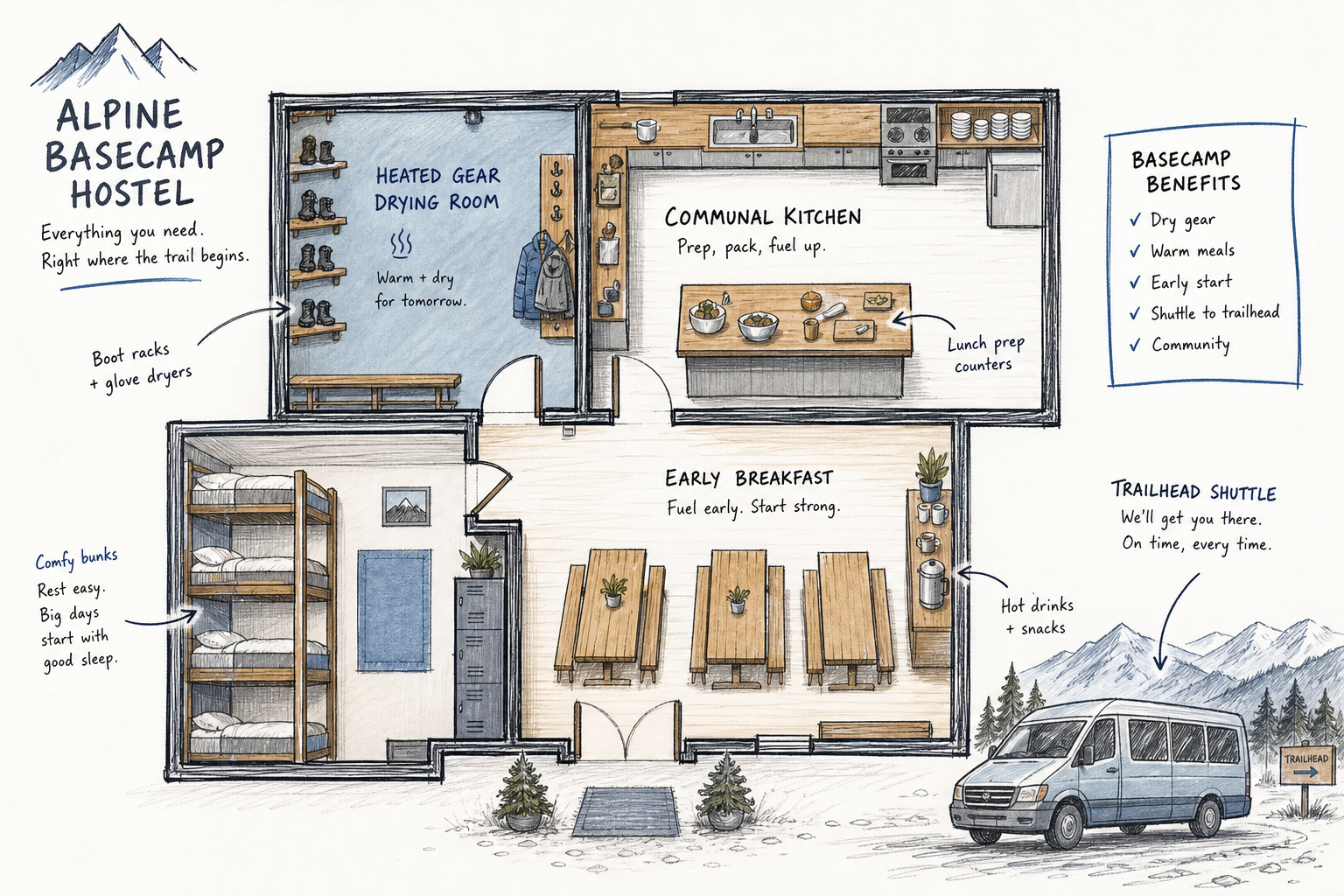
+-----------------------------------------------------------------------+
|                   THE ANATOMY OF A HIKING HOSTEL                      |
+-----------------------------------------------------------------------+
|                                                                       |
|   [ DRYING ROOM ]           [ TRAIL TRANSPORT ]     [ SOCIAL HUB ]    |
|   Heated boot racks,        Direct trail drop-offs  Communal dinners  |
|   gear pegs & dehumidifier  & local transit passes  & route planning  |
|                                                                       |
|   [ EARLY BREAKFAST ]       [ PACKED LUNCHES ]      [ RECOVERY AREA ] |
|   4:30 - 6:30 AM starts     High-calorie trail      Saunas, terraces  |
|   for high-pass routes      food & hydration refills & stretch spaces |
|                                                                       |

+-----------------------------------------------------------------------+
Essential amenities for mountain hikers
A property optimized for outdoor travelers offers specific infrastructure that makes daily mountain excursions seamless:
- Dedicated drying rooms: High-efficiency boot dryers and heated drying pegs are non-negotiable. Mountain weather changes rapidly, and waking up to dry socks and moisture-free boots is critical for maintaining foot health over a full week of trekking.
- Early-bird breakfast schedules: Alpine weather follows a predictable afternoon thermal pattern. Storm clouds frequently build over peaks after 2:00 PM. A proper hiking hostel serves breakfast as early as 5:30 AM or 6:00 AM, allowing guests to hit the trail before mid-morning heat and late-day storms develop.
- Flexible kitchen and meal options: Self-catering facilities with heavy-duty cooktops, labeled storage, and ample refrigeration space allow budget travelers to prepare high-protein dinners. Alternatively, hostels offering family-style group dinners eliminate the stress of cooking after a 20-kilometer trek.
- Direct trailhead transit support: Top-tier outdoor lodges either sit directly on major trail junctions or offer dedicated shuttle vans to take guests to strategic trailheads, bypassing expensive public tourist lifts.
- Trail matching and route intelligence: Staffed by experienced mountain runners, guides, or local trail enthusiasts, a good lodge provides daily weather bulletins, avalanche risk reports, and context-specific route advice based on your fitness level.
Strategic location: Main hubs vs. quiet valley villages
Budget hikers face a distinct choice when selecting a location in Switzerland: stay in world-famous resort towns or set up basecamp in quieter, authentic valley villages.
| Location Category | Typical Nightly Cost | Cable Car & Transit Expenses | Social Scene | Trailhead Proximity |
|---|---|---|---|---|
| Major Resort Hubs *(e.g., Zermatt, Lauterbrunnen, Grindelwald)* | CHF 65 - 110 (Dorm) | High (Heavy reliance on private scenic cog railways) | High (International backpackers, busy bars) | Immediate access to iconic peaks, but crowded trails |
| Quiet Valley Basecamps *(e.g., Liddes, St. Stephan, Martigny)* | CHF 35 - 65 (Dorm) | Low (Free regional bus cards or lodge shuttles) | High (Focused outdoor community, shared dinners) | Direct access to quiet passes, cross-border routes & pristine nature |
| High-Altitude Huts *(SAC / Refuges)* | €60 - €90 / CHF 70 - 100 (Half Board) | Variable (Requires walking in/out) | Moderate (Quiet, early quiet hours around 9:00 PM) | Located directly on high-altitude pass lines |
Choosing quieter valley nodes like Liddes in lower Valais or St. Stephan in the Simmental valley provides a significantly better balance of affordability, comfort, and direct trail variety. You escape the inflated tourist prices of major resort plazas while keeping world-class mountain routes within a quick 20-minute drive or train ride.
The basecamp hostel model vs. hut-to-hut trekking
Many hikers assume that the only way to experience deep alpine wilderness is through a continuous hut-to-hut trek, such as the Tour du Mont Blanc or the Walker’s Haute Route. While alpine huts (known as Cabanes in French or Hütten in German) offer unmatched high-altitude sleeping locations, relying entirely on mountain huts presents hidden financial and logistical downsides for budget travelers.
HUT-TO-HUT TREKKING MODEL
[Pack 12kg Gear] ──> [Hut A] ──> [Hut B] ──> [Hut C]
  • High daily cost (€70–€100/night)
  • Fixed itinerary (No weather flexibility)
  • Heavy packs required every single day

HOSTEL BASECAMP MODEL
             ┌──> [Trailhead 1: Alpine Lakes] ──┐
[Hostel Hub] ├──> [Trailhead 2: Glacier Pass]  ├──> Return to Hostel
             └──> [Trailhead 3: Ridge Walk]    ┘
  • Lower total cost + self-catering option
  • Flexible daily choices based on weather
  • Light daypack hiking (Drying rooms & full kitchen)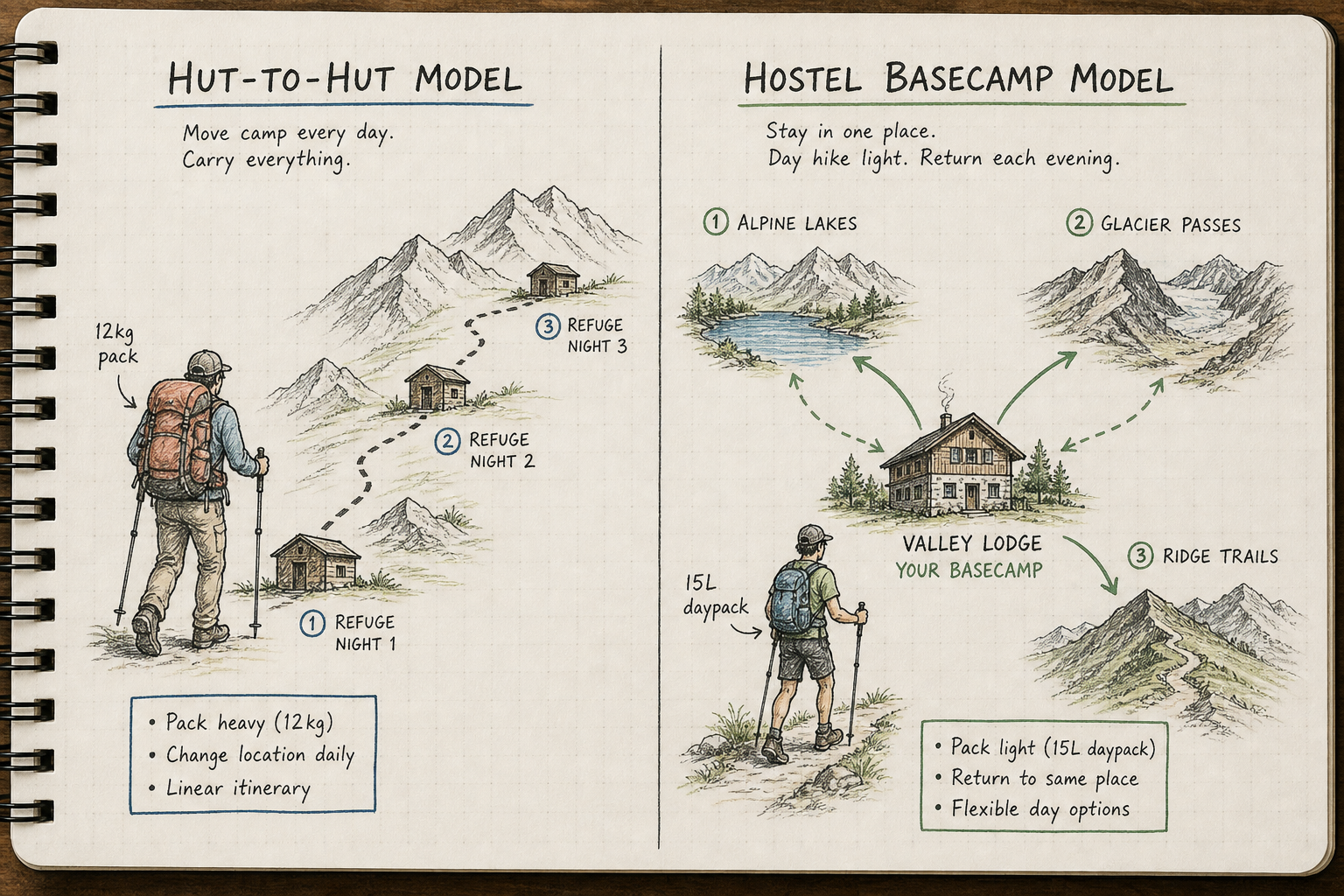
Cost and flexibility comparisons
Staying at a permanent valley hostel basecamp and taking daily hikes offers distinct advantages over moving to a new high-altitude mountain hut every night:
- Strict reservation lock-ins: Swiss Alpine Club (SAC) huts and regional refuges require bookings months in advance during peak summer (July and August). If a major rainstorm or electrical storm hits, you are still forced to hike through hazardous weather to reach your next paid bed. A hostel basecamp lets you adjust your daily plan instantly—swapping a exposed high-ridge trek for a lower forest valley walk on rain days.
- Cost structures: High-altitude mountain refuges generally charge between €70 and €90 per night for a dorm bed with basic dinner and breakfast, as noted in discussions on alpine trek budgeting (see Reddit TMB cost discussions). While this includes food, water must often be purchased at CHF 6–8 per bottle due to altitude supply constraints. A village hostel gives you full control over your food budget through grocery shopping or structured family-style meals.
- Pack weight and physical recovery: Carrying a 12-kilogram multi-day backpack up 1,200 meters of vertical gain every day severely taxes your knees and ankles. Basecamping allows you to hike with a light 15-liter or 20-liter daypack containing only your water, warm layers, lunch, and a rain shell. You return each evening to a real mattress, hot showers, and unrestricted wifi.
For detailed strategies on organizing high-altitude traverses when you do decide to head above the tree line, read our guide on how to plan hut to hut hiking in Switzerland.
Premier Swiss regions for hostel-based hiking
Selecting the right region for an affordable alpine holiday comes down to trail variety, regional transit infrastructure, and mountain terrain profile. Two regions in particular stand out for offering high-value hiking hostels paired with exceptional trail connectivity.
Valais and the Grand Saint-Bernard valley
Located in southwestern Switzerland, the Valais region boasts the highest concentration of 4,000-meter peaks in Europe, including the Matterhorn, Grand Combin, and Mont Blanc massif views.
+-------------------------------------------------------------------------+
|                    VALAIS BASECAMP TRAIL NETWORK                        |
+-------------------------------------------------------------------------+
|                                                                         |
|                       [ Chamonix / Mont Blanc ]                         |
|                                  ^                                      |
|                                  | (35 min drop-off)                    |
|  [ Val de Bagnes ] <─── [ LIDDES BASECAMP ] ───> [ Aosta Valley, IT ]   |
|   (Verbier Trails)               |                (Great St. Bernard)   |
|                                  v                                      |
|                        [ Champex-Lac Loop ]                             |
|                                                                         |

+-------------------------------------------------------------------------+
Basing yourself in a central Valais village like Liddes along the historic Grand Saint-Bernard route unlocks immediate access to diverse alpine landscapes:
- Lac de Louvie & Val de Bagnes: A classic high-alpine route starting near Fionnay, featuring dramatic suspension bridges, steep switchbacks, and sightings of wild ibex overlooking turquoise glacial reservoir lakes.
- Lac Blanc & Champex-Lac Circuits: Tranquil alpine lake trails framed by dense pine forests and granite spires, perfect for moderate hiking days.
- Cross-Border Passages into Italy: Hiking south toward the Italian border leads past ancient Roman roads, high mountain monasteries, and pass routes down into the sunny Aosta Valley.
Because Valais sits on the border of France and Italy, staying here allows for seamless day trips to neighboring mountain culture hubs. You can hike in Switzerland on Monday, take an excursion to Chamonix on Tuesday, and enjoy fresh pasta in Aosta on Wednesday.
Explore options in this area with our overview of the 5 best hiking trails in Switzerland near Mont Blanc.
Bernese Oberland and the Simmental Valley
The Bernese Oberland is famous for its dramatic limestone cliffs, cascading waterfalls, and sprawling mountain meadows. While main towns like Interlaken and Grindelwald carry premium price tags, positioning your basecamp slightly further west in the Simmental valley—around St. Stephan, Zweisimmen, or Lenk—drastically lowers costs while preserving easy access to the region’s best terrain.
+-------------------------------------------------------------------------+
|                 SIMMENTAL / OBERLAND TRAIL NETWORK                      |
+-------------------------------------------------------------------------+
|                                                                         |
|                       [ Glacier 3000 / Les Diablerets ]                 |
|                                  ^                                      |
|                                  |                                      |
|  [ Adelboden / Engstligen ] <─── [ ST. STEPHAN ] ───> [ Lake Oeschinen ]|
|                                  |                     (Kandersteg)     |
|                                  v                                      |
|                        [ Gstaad Ridge Trails ]                          |
|                                                                         |

+-------------------------------------------------------------------------+
Key trail highlights from a Simmental basecamp include:
- Oeschinensee (Kandersteg): Often rated as Switzerland’s most breathtaking alpine lake. You can avoid cable car costs by taking the traditional foot-path ascent from Kandersteg train station straight up through the forest gorge to the upper cliff walk.
- Iffigfall and Wildstrubel Nature Reserve: A lush valley route lined with roaring waterfalls, limestone karst formations, and quiet ridge ascents free from large tour groups.
- Gstaad to Glacier 3000 Panoramas: High-altitude ridge trails offering sweeping 360-degree views across the Bernese Alps, Lake Geneva basin, and Valais range.
To see how winter budget planning compares to summer trail basecamps, check out our breakdown on which Swiss ski resort fits a backpacker’s budget.
Daily logistics: How an organized hiking hostel week works
For solo travelers and digital nomads, the single largest barrier to an alpine vacation is logistics: researching bus schedules, buying individual train tickets, finding hiking partners, and figuring out trail difficulty ratings in a foreign language.
Integrated week-long trip programs at hostels like Hiking Hostel eliminate these headaches by combining social lodge accommodation with full daily trail support.
TYPICAL DAY AT AN ALL-INCLUSIVE HIKING HOSTEL
07:00 AM  ──> Communal Breakfast & Pack Trail Lunch
08:15 AM  ──> Private Shuttle Transfer to Trailhead
09:00 AM  ──> Group Trail Hike (Guided or Tracked Routes)
03:30 PM  ──> Trailhead Pick-up & Return Shuttle
04:30 PM  ──> Gear Drying, Shower, Sauna & Relax
06:30 PM  ──> Family-Style Dinner & Evening Social Planning
Integrated trail transport and transfers
Public transport in Switzerland (the SBB rail and PostBus network) is incredibly punctual and comprehensive, but daily individual fares quickly add up. A short 15-minute PostBus ride to a remote pass can cost CHF 12 to CHF 18 each way without a half-fare card.
Organized hiking hostel packages incorporate private mini-bus shuttles directly into the week’s cost:
- Airport Pickups: Vans pick up guests directly from major travel nodes like Geneva Airport (GVA) or regional hubs like Martigny and Bern.
- Direct Trailhead Drops: Instead of taking three connecting trains and a bus, guests step out of the hostel door straight into a private shuttle van that delivers them to the exact starting point of the day’s hike.
- Flexible Trailhead Pickups: If a group finishes a cross-pass hike on the opposite side of a mountain ridge, the hostel shuttle meets them at the destination valley floor, saving hours of complex public transit detours.
Group dynamics and social atmosphere
Hiking alone in high-alpine terrain requires serious mountain navigation skills and careful safety planning. Staying in a social, community-focused lodge provides built-in hiking partners, qualified staff leadership, and automatic safety check-ins.
Rather than sitting alone in a hotel room after a long day outdoors, guests gather around large communal dining tables to share meals, discuss trail conditions, and trade stories. This environment is particularly well-suited for solo backpackers and remote workers looking for community.
To learn more about finding your ideal group pace on the trail, see our guide on guided hiking in Switzerland and finding your social group.
A complete 7-day budget hostel itinerary
This sample seven-day blueprint demonstrates how to structure an affordable alpine holiday using basecamps in Valais (Liddes) and the Bernese Oberland (St. Stephan). It maximizes scenic trail time while keeping transport costs down.
+-------------------------------------------------------------------------+
|                  7-DAY ALPS BASECAMP ITINERARY MAP                      |
+-------------------------------------------------------------------------+
|                                                                         |
|  [Day 1: Arrival & Liddes Warm-up]                                      |
|        │                                                                |
|        ▼                                                                |
|  [Day 2: Grand Saint-Bernard Pass Trek] ──> (Cross-Border to Italy)     |
|        │                                                                |
|        ▼                                                                |
|  [Day 3: Val de Bagnes Glacier Trail]                                   |
|        │                                                                |
|        ▼                                                                |
|  [Day 4: Day Excursion to Chamonix] ──────> (Mont Blanc Ridge Walk)    |
|        │                                                                |
|        ▼                                                                |
|  [Day 5: Basecamp Transit to St. Stephan]                               |
|        │                                                                |
|        ▼                                                                |
|  [Day 6: Oeschinensee High Cliff Trail]                                 |
|        │                                                                |
|        ▼                                                                |
|  [Day 7: Wildstrubel Summit Loop & Departure]                           |
|                                                                         |

+-------------------------------------------------------------------------+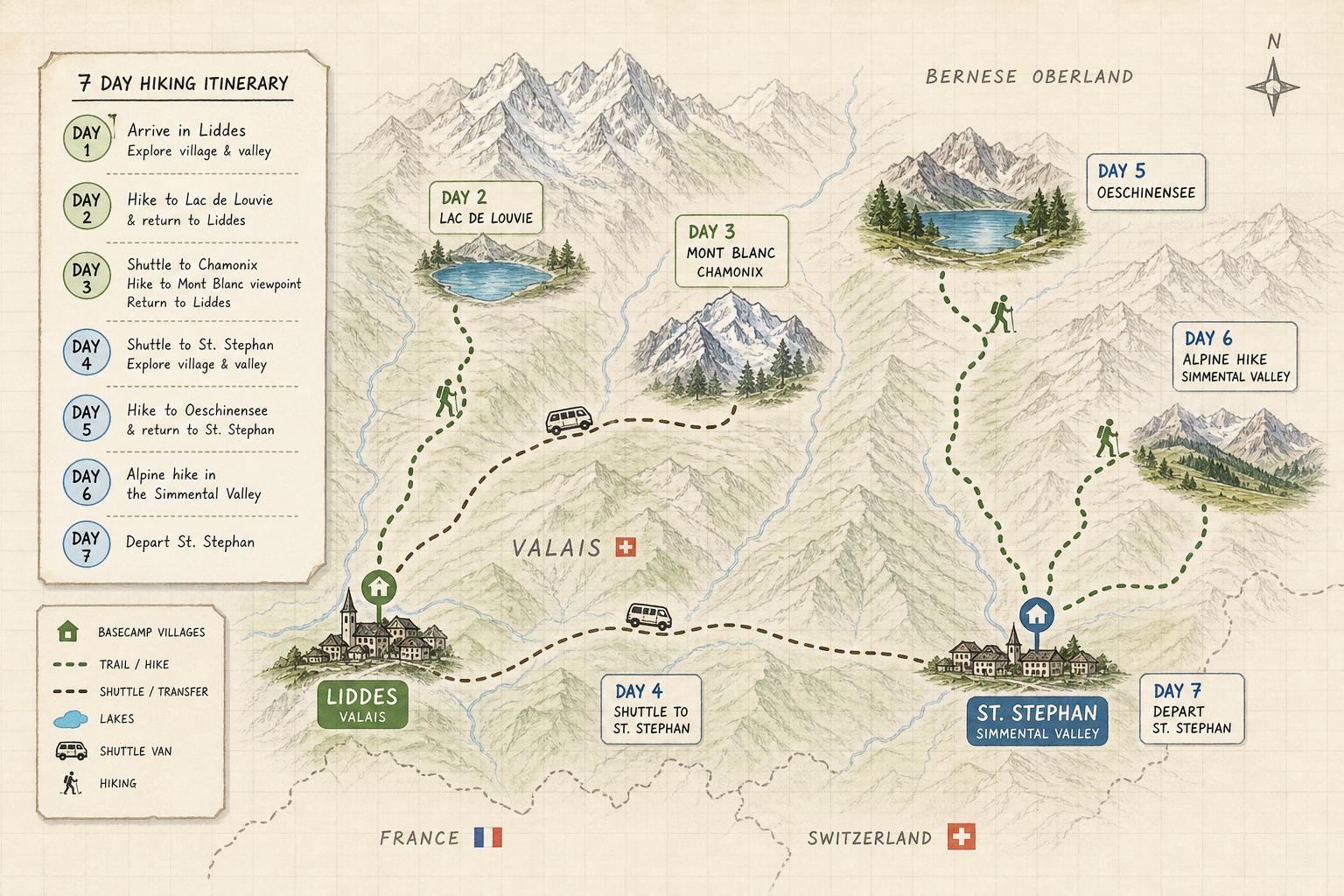
Day 1: Arrival in Liddes and orientation trail
- Morning/Afternoon: Arrive via Geneva Airport or regional rail into Martigny, followed by a short transfer up into the Grand Saint-Bernard valley to Liddes. Check into the hostel, drop your gear, and complete a equipment check.
- Late Afternoon Hike: Walk the local Bisse de Liddes—an easy, flat historic irrigation channel trail winding through pine forests and traditional timber alpine hamlets (6 km, 150m elevation gain).
- Evening: Group dinner at the hostel to go over the week’s weather forecast and safety protocols.
Day 2: Grand Saint-Bernard Pass to Italy
- Trail Distance: 14 km | Elevation Gain: 850m | Duration: 5–6 hours
- Route: Shuttle up to the historic Grand Saint-Bernard Hospice at 2,469 meters elevation. Hike along high alpine ridges past turquoise glacial tarns, crossing the border into Italy along ancient stone paths once used by Roman legions.
- Highlight: Visiting the world-famous Saint-Bernard monastery hounds before descending to a quiet mountain trattoria on the Italian side for lunch.
Day 3: Val de Bagnes and Lac de Louvie
- Trail Distance: 16 km | Elevation Gain: 1,050m | Duration: 6–7 hours
- Route: Shuttle transfer to Fionnay. Ascend steep, wooded switchbacks before breaking out above the tree line into the high Louvie basin. Walk along the edge of Lac de Louvie, with dramatic views of the Grand Combin massif across the valley.
- Highlight: Spotting large herds of native alpine ibex grazing on steep moraine slopes near the SAC Louvie hut.
Day 4: Cross-border day excursion to Chamonix & Mont Blanc
- Trail Distance: 12 km | Elevation Gain: 650m | Duration: 5 hours
- Route: Take a morning van excursion across the French border into the Chamonix valley. Hike the Grand Balcon Sud trail from Col des Montets towards La Flégère, enjoying unbroken views across the valley floor directly up to the summit icefields of Mont Blanc (4,807m).
- Highlight: Experiencing iconic Mont Blanc scenery while staying based in quieter, lower-cost Swiss accommodations. You can also review regional hut information on the Auberge de Jeunesse HI Chamonix for comparison.
- For tips on avoiding crowded spots around Mont Blanc, check out our guide on 7 ways to visit Mountain Mont Blanc without the crowds.
Day 5: Transfer to Bernese Oberland & Lenk Waterfalls
- Trail Distance: 9 km | Elevation Gain: 400m | Duration: 3.5 hours
- Route: Travel northeast into the Bernese Oberland to set up basecamp at St. Stephan in the Simmental valley. Afternoon hike through the raw nature reserve surrounding the Iffigfall waterfall, ending in the high alpine meadows of Lenk.
- Highlight: Transitioning from the dramatic granite walls of Valais to the lush, green pastures and limestone peaks of the Bernese Alps.
Day 6: Oeschinensee cliff trail loop (Kandersteg)
- Trail Distance: 15 km | Elevation Gain: 900m | Duration: 6 hours
- Route: Morning van ride to Kandersteg. Skip the cable car line and walk up the direct trail to Oeschinensee. Continue on the upper panoramic cliff route towards Heuberg for world-class aerial views of the deep blue lake framed by 1,000-meter sheer rock walls.
- Highlight: Stopping at mountain farms along the upper loop to sample fresh mountain cheese (Alpkäse) directly from local farmers.
Day 7: Wildstrubel ridge walk and departure
- Trail Distance: 11 km | Elevation Gain: 550m | Duration: 4 hours
- Route: Take an early shuttle to the upper Simmental ridge trails. Enjoy a sweeping farewell ridge walk looking back across the Bernese Oberland peaks before returning to the hostel for gear packing and afternoon train departures.
Smart budgeting strategies for Swiss mountain trips
Even when using budget hostel accommodation, everyday expenses in Switzerland can catch travelers off guard. Applying a few field-tested budgeting rules helps keep your overall holiday expenses surprisingly low.
+-----------------------------------------------------------------------+
|                   SWISS ALPS BUDGET CHECKLIST                         |
+-----------------------------------------------------------------------+
|                                                                       |
|  FOOD & DRINK                                                         |
|  [ ] Buy groceries at Coop / Migros instead of mountain cafes         |
|  [ ] Carry a reusable 1.5L bottle (Swiss tap water is pristine)       |
|  [ ] Cook communal hostel dinners to split grocery costs              |
|  [ ] Pack high-calorie trail snacks (nuts, dried fruit, chocolate)    |
|                                                                       |
|  TRANSPORTATION & ACCESS                                              |
|  [ ] Get an SBB Half Fare Pass for long train connections             |
|  [ ] Utilize free regional Guest Cards provided by hostels            |
|  [ ] Choose human-powered foot ascents over paid cable cars           |
|  [ ] Take advantage of hostel shuttle drops to remote trailheads      |
|                                                                       |

+-----------------------------------------------------------------------+
Self-catering vs. mountain restaurants
Dining at mountain huts (Bergrestaurants) during a trail lunch is tempting, but a simple rosti with an egg and a soda will easily cost CHF 25 to CHF 32 per person. Over a seven-day trip, daily trail restaurant stops add over CHF 200 per person to your total spend.
- Grocery Supermarkets: Stick to Swiss supermarket chains like Coop, Migros, or Denner located near valley train stations. Basic staples like bread, local Gruyère cheese, cured meats, fruit, and muesli bars cost a fraction of restaurant prices.
- Drinking Water: Never spend money on bottled water in Switzerland. Village fountains marked Trinkwasser (or Eau Potable) and tap water inside hostels provide clean, mineral-rich mountain water for free.
- Hostel Dinner Packs: Preparing pasta, rice, or stir-fry meals in communal hostel kitchens—or booking half-board hostel packages with family dinners included—keeps your total daily food spend under CHF 25.
Navigating Swiss transport passes efficiently
Public transport pricing can be confusing for international visitors. Here is how to choose the right pass:
- SBB Half Fare Card (CHF 120 for 1 month): If you are traveling across Switzerland by train before or after your hostel week, this pass pays for itself quickly by cutting all national train, bus, and mountain railway fares by 50%.
- Local Guest Cards (Free): When you stay in host communities like Liddes or St. Stephan, your hostel pays a small daily tourist tax that grants you a local guest card. This card provides free unlimited rides on local valley buses and regional trains within specific zones.
- Hostel Shuttles: Choosing an all-inclusive hostel package that includes airport transfers and daily trailhead shuttles completely removes your reliance on individual ticket purchases.
For comprehensive budget hacks on gear, passes, and avoiding hidden fees, read our full guide on 7 tips for hiking in Switzerland without the high cost.
Smart summer packing to eliminate rentals
Buying or renting forgotten technical gear in Swiss mountain gear shops carries steep price tags. Packing smartly from home ensures you do not spend CHF 150 on an emergency fleece or CHF 40 on waterproof cover bags.
- Layering System: Bring a lightweight merino wool base layer, a mid-layer fleece, and a packable, rated waterproof hardshell jacket.
- Footwear: Broken-in, waterproof trail running shoes or light hiking boots with Vibram soles are superior to brand-new, heavy leather boots.
- Trekking Poles: Collapsible aluminum poles reduce strain on your knees during steep 1,000-meter descents and allow you to maintain a fast, efficient cadence.
To refine your gear list down to the essentials, follow our guide on Swiss Alps summer packing in 5 simple steps. Furthermore, if you prefer two wheels to two feet, explore how to find the right mountain bike group for alpine trails.
Real-world scenario: How Marcus saved CHF 1,200 on his alpine hiking week
To see how the numbers play out in practice, consider the experience of Marcus, a 31-year-old remote software developer from London who wanted to spend a week hiking in the Swiss Alps in mid-August.
+-----------------------------------------------------------------------+
|                    COST COMPARISON: MARCUS'S TRIP                     |
+-----------------------------------------------------------------------+
|                                                                       |
|  OPTION A: DIY STANDARD HOTEL & CABLE CARS                            |
|  • 3-Star Hotel in Zermatt (7 Nights):                  CHF 1,820     |
|  • Solo Train & Cable Car Fares:                        CHF   440     |
|  • Mid-range Restaurant Dinners & Lunches:              CHF   560     |
|  TOTAL COST:                                            CHF 2,820     |
|                                                                       |
|  OPTION B: ORGANIZED BASECAMP AT HIKING HOSTEL                        |
|  • Week Package (Dorm Bed, Dinners, Breakfast, Shuttles): CHF 1,150   |
|  • Supermarket Trail Lunches & Snacks:                  CHF   120     |
|  • SBB Regional Transfer Ticket:                        CHF   350     |
|  TOTAL COST:                                            CHF 1,620     |
|                                                                       |
|  SAVINGS:                                               CHF 1,200     |
|                                                                       |

+-----------------------------------------------------------------------+
Originally, Marcus planned a DIY trip staying at budget hotels in Zermatt and Grindelwald. However, after calculating the cost of private rooms, daily cable car lifts, train tickets between hubs, and solo restaurant meals, his estimated total reached CHF 2,820 for seven days.
Instead, Marcus booked an all-inclusive week at a dedicated hiking hostel basecamp in Valais. His week package included:
- 7 nights of hostel accommodation in a small 4-bed dorm room
- Cooked daily breakfasts and hot family-style group dinners
- Airport pick-up and drop-off from Geneva
- Daily minibus shuttles directly to and from quiet alpine trailheads
- Small group hiking excursions to Chamonix and the Italian border
By switching to the hostel basecamp model, Marcus reduced his total trip spend to CHF 1,620—saving CHF 1,200 while making lifelong friends on the trail and avoiding all transportation planning.
Excursions and cross-border options from your hostel
One of the greatest benefits of staying in southwest Swiss hostel hubs is the ability to take day trips into neighboring countries without changing your accommodation base.
+-----------------------------------------------------------------------+
|                    REGIONAL EXCURSION RADIUS                          |
+-----------------------------------------------------------------------+
|                                                                       |
|  [ CHAMONIX & MONT BLANC ] ─── (35 min van drive from Valais)         |
|  • Hike Grand Balcon Sud, views of Mer de Glace & Mont Blanc summit   |
|                                                                       |
|  [ AOSTA VALLEY, ITALY ] ────── (40 min van drive through pass)       |
|  • Explore Roman ruins, historic castles, authentic Italian cuisine   |
|                                                                       |
|  [ INTERLAKEN & JUNGFRAU ] ─── (45 min train from Simmental)          |
|  • Lake kayaking, high ridge walks above Lake Thun and Lake Brienz    |
|                                                                       |
|  [ GLACIER 3000 / GSTAAD ] ─── (25 min shuttle from St. Stephan)      |
|  • Walk across the Peak Walk suspension bridge between glacier peaks  |
|                                                                       |

+-----------------------------------------------------------------------+- Aosta Valley Day Trip (Italy): Passing south through the Grand Saint-Bernard Tunnel or over the historic summer pass delivers you straight into the Aosta Valley in northern Italy. You can hike through vineyards and alpine pastures framed by the southern face of the Matterhorn (Cervino) before enjoying an affordable Italian lunch. To see how winter excursions operate along this corridor, see our breakdown on skiing in the Italian Alps via an Aosta day trip.
- Glacier 3000 & Gstaad Excursions: Located a short drive from St. Stephan in the Simmental valley, Glacier 3000 offers year-round snow access and the Peak Walk—a suspension bridge connecting two mountain peaks at over 3,000 meters elevation.
- Interlaken Adventure Days: From a Simmental hostel base, you can take an easy day trip to Interlaken to experience high-altitude paragliding, lake kayaking on Lake Thun, or trail runs beneath the Eiger North Face.
If you are comparing traditional mountain accommodations with community lodges during your trip planning, review our perspective on why social mountain lodges beat luxury hotels.
Frequently asked questions
Is solo hiking in Switzerland safe if I stay at a hostel?
Yes. Switzerland is consistently rated among the safest travel destinations in the world. Trail marking systems managed by Schweizer Wanderwege are standardized: yellow signs indicate standard walking paths, white-red-white painted blazes mark mountain hiking trails (Bergwanderwege), and white-blue-white signs indicate alpine routes requiring technical experience. Staying at a social hiking hostel adds an important layer of safety, as staff track guest itineraries, coordinate group outings, and provide real-time updates on local weather conditions.
How much spending money do I need per day at a hiking hostel?
If your lodging, breakfast, dinner, and daily trail transport are covered in a hostel package, you only need CHF 15 to CHF 25 per day for trail lunch supplies (bread, cheese, fruit, chocolate) and an afternoon coffee or cold drink in a valley village. If you choose a self-catering hostel without meals included, budget roughly CHF 30 to CHF 45 per day for groceries and local bus transportation.
Are Swiss hiking hostels suitable for digital nomads?
Many modern alpine hostels cater directly to remote workers and digital nomads. Hostels like Hiking Hostel feature high-speed fiber internet, quiet communal workspaces, and plentiful power outlets. This setup makes it easy to complete focused remote work blocks early in the morning or late in the afternoon while spending the peak sun hours out on the trail.
What is the best month for a hostel-based hiking holiday in Switzerland?
The core alpine summer season runs from late June through late September:
- July and August: Deliver warm weather, fully open high-mountain passes, and lush alpine wildflowers, though popular trails see higher traffic.
- September: Widely considered by locals to be the finest month for alpine hiking. High-altitude trails remain completely clear of snow, mountain air becomes crisp and clear, stable autumn weather patterns set in, and trails are much quieter than during peak mid-summer.
Pre-booking preparation checklist
Before finalizing your reservation for an affordable alpine holiday with hostel accommodation and daily hikes, walk through this quick preparation checklist to ensure your trip runs smoothly.
| Preparation Category | Key Action Items | Verification Status |
|---|---|---|
| Passes & Documents | Verify passport validity (at least 3 months beyond planned exit from Schengen zone). Purchase SBB Half Fare pass online if planning extensive train travel. | [ ] Complete |
| Hostel Amenities | Confirm selected hostel provides gear drying rooms, kitchen access, early breakfast hours, and complimentary local tourist guest cards. | [ ] Complete |
| Trail Gear | Pack broken-in waterproof footwear, moisture-wicking synthetic socks, layers (merino wool base, fleece, rain shell), 20L daypack, and collapsible trekking poles. | [ ] Complete |
| Logistics & Shuttles | Confirm airport pickup times or train connections to your basecamp village (e.g., Liddes or St. Stephan). Download offline trail maps via apps like Swisstopo or AllTrails. | [ ] Complete |
| Travel Insurance | Ensure your travel insurance policy specifically covers high-altitude hiking up to 3,000 meters elevation and mountain search-and-rescue services (such as Rega membership). | [ ] Complete |
Basing your vacation at a purpose-built hiking hostel bridges the gap between mountain adventure and financial realism. By combining shared accommodation, family-style meals, and direct trailhead shuttle access, you can experience the breathtaking trails of the Swiss Alps on a budget—without compromising on safety, comfort, or group community.