Best Swiss hostels for solo hikers
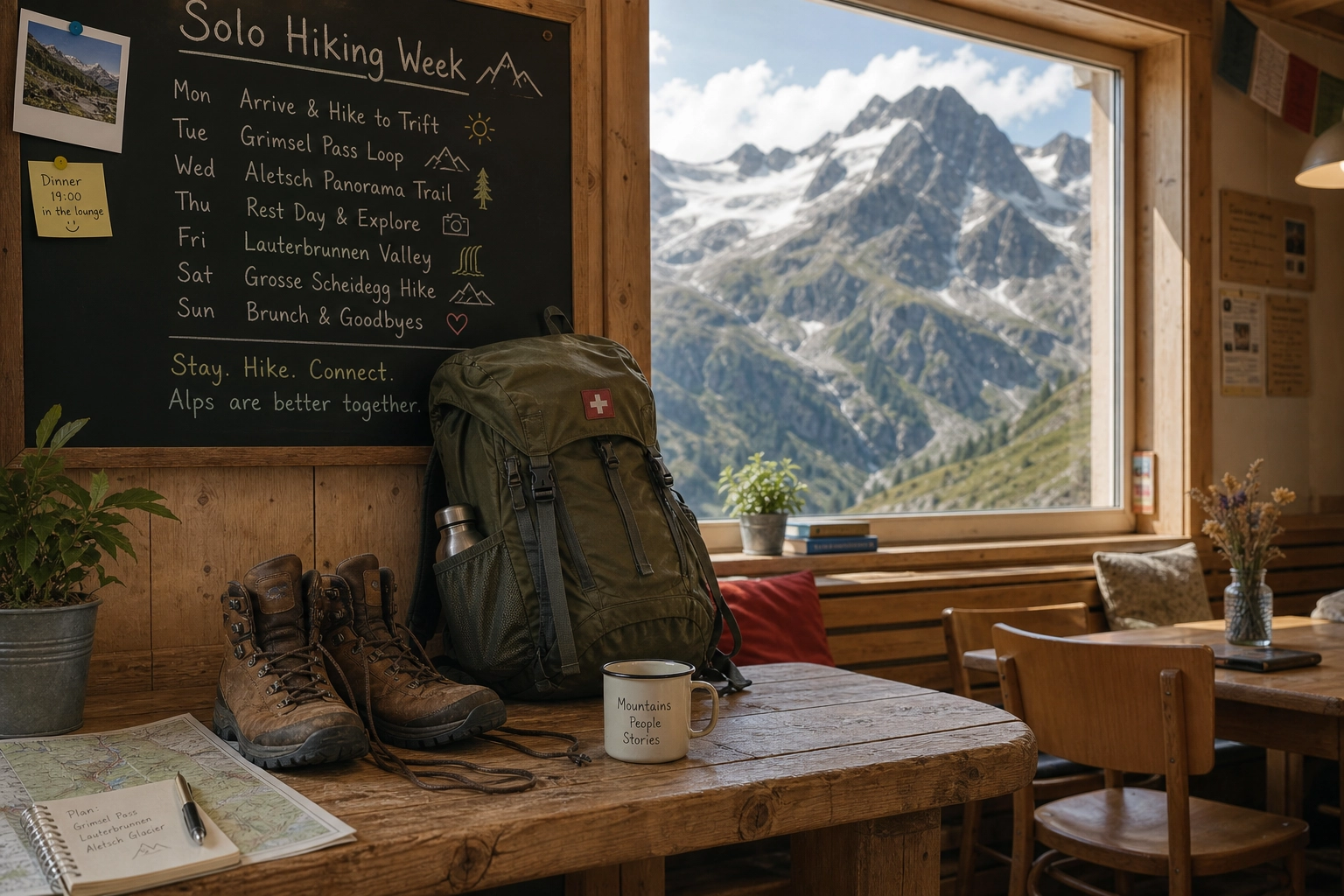
Hiking solo in Switzerland is an incredible experience, but let’s be honest—Swiss prices can easily drain a backpacker’s wallet. A single night in a standard Zermatt or Grindelwald hotel can consume your entire week’s accommodation budget. Yet, the alternative isn’t just pitching a tent in the freezing rain.
Staying at the right hiking hostels not only keeps your budget intact, but it also hooks you up with a built-in community of fellow solo hikers to hit the trails with. If you are navigating the Alps alone, your choice of accommodation dictates your entire experience. Book a sterile, luxury hotel, and you might spend the week without speaking to another hiker. Book an authentic alpine hostel, and you’ll find yourself swapping trail beta over morning coffee and joining impromptu group hikes to glacier lakes by noon.
The absolute best hiking hostels in Switzerland for solo travelers are strategically located near the country’s most legendary trailheads, equipped with gear-drying rooms, and designed to foster social connections.
Here is a comprehensive breakdown of the best basecamps, social lodges, and organized hostel experiences for solo backpackers in the Swiss Alps.
The Core Difference: City Hostels vs. Alpine Hiking Hostels
If your only experience with hostels involves noisy dorms in Berlin or party hostels in Barcelona, you need to recalibrate your expectations for Switzerland. Alpine hiking hostels are a completely different breed of accommodation.
In Zurich or Geneva, hostels cater to gap-year travelers bouncing between bars. In the Swiss Alps, the hostel empties out by 7:30 AM because everyone is catching the first gondola. By 9:30 PM, the dorms are mostly silent.
If you are wondering why hotels in Swiss mountains often lose out to social lodges for solo travelers, it comes down to shared purpose. Everyone in a hiking hostel is there for the mountains.
Essential Criteria for a Top-Tier Hiking Hostel
When evaluating where to stay, look for these specific features that separate a generic budget bed from a true hiker’s basecamp:
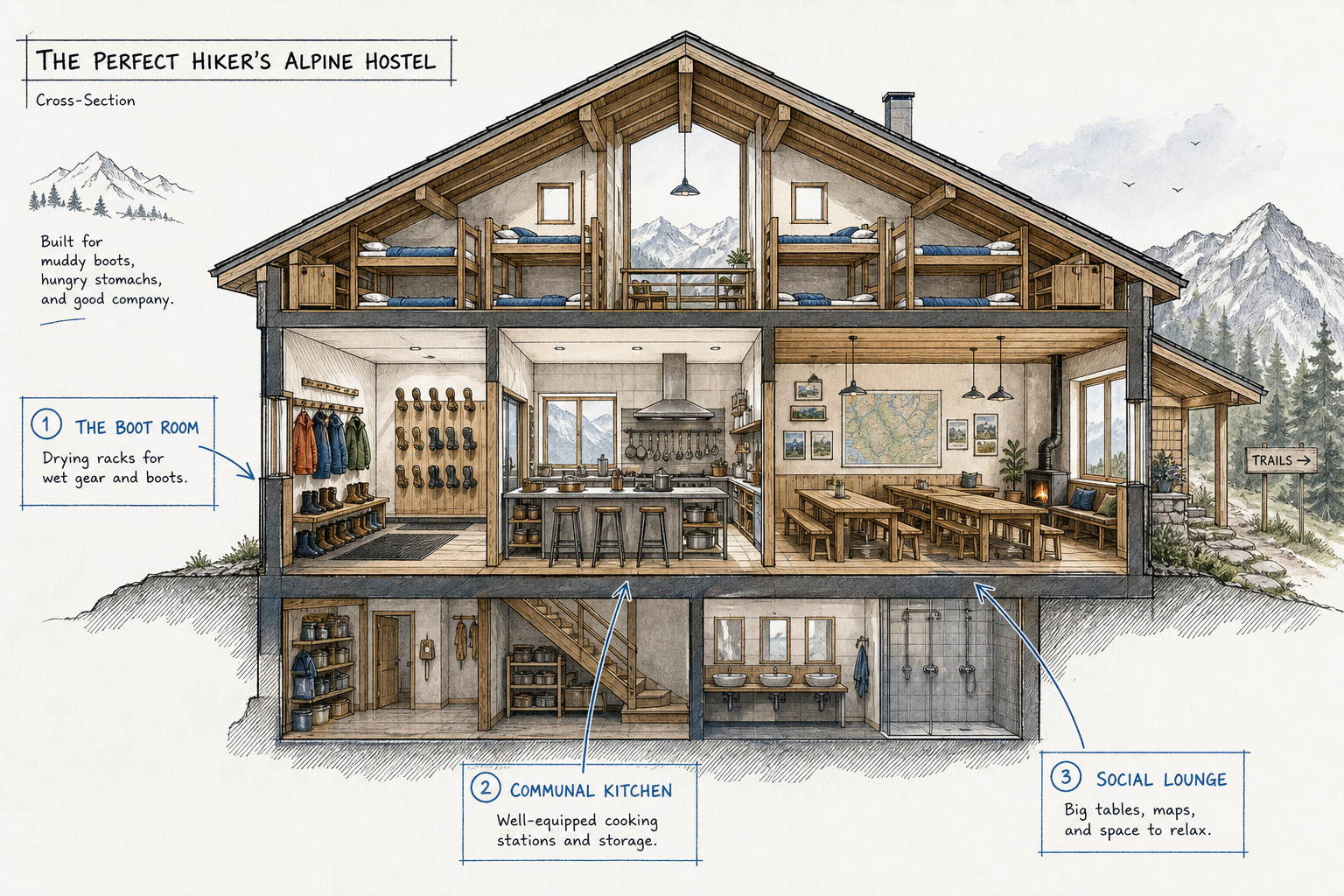
- The Boot Room (Schuhraum): A dedicated, heated room for drying wet hiking boots, waterproof jackets, and muddy gear. If a hostel lets you bring wet hiking boots into the dorm, it’s not a real mountain hostel.
- Early Breakfast Hours: Mountain weather is best in the morning, and afternoon thunderstorms are common in summer. Good hiking hostels serve breakfast by 6:30 AM or 7:00 AM so you can hit the trail safely.
- Guest Kitchens: Eating at Swiss restaurants every night will destroy a backpacker’s budget. A fully equipped communal kitchen is mandatory for keeping costs down.
- Lounge Layout: The best hostels force interaction. They have large communal wooden tables rather than scattered two-seaters, making it easy for a solo hiker to sit down and ask, “What route is everyone doing today?”
- Proximity to Transport: You shouldn’t have to walk two miles along a busy highway to reach the trailhead or the nearest SBB train station.
The Best Hiking Hostels in the Jungfrau Region
The Jungfrau region—encompassing Interlaken, Lauterbrunnen, Grindelwald, and Wengen—is arguably the most famous hiking destination in Switzerland. Because it draws massive crowds, finding an authentic, well-priced basecamp here requires careful planning.
1. Mountain Hostel Gimmelwald (Lauterbrunnen Valley)
If you want to wake up, step outside, and immediately be surrounded by towering, snow-capped peaks, this is your spot. Located in a tiny, car-free alpine village perched on a cliffside above the Lauterbrunnen Valley, it feels like an authentic mountain refuge but with a highly social, laid-back backpacker vibe.
Why it’s great for solo travelers:
The communal lounge and outdoor deck are legendary for mingling. The hostel features a lively bar area where hikers gather every evening to play cards, drink local Rugenbräu beer, and compare trail notes. Everyone here is an outdoor enthusiast, so finding a hiking buddy for the day is effortless.
Key Amenities for Hikers:
- Rustic but warm dormitories.
- A legendary communal kitchen where hikers cook together.
- A lively bar with a pool table.
- Direct access to the Schilthorn cable car.
Top Trails Accessible from the Doorstep:
- The Tanzbödeli (Dancing Floor): A strenuous but rewarding steep hike leading to a flat alpine plateau offering 360-degree views of the Eiger, Mönch, and Jungfrau.
- Schilthorn Peak: You can hike all the way up to the Piz Gloria revolving restaurant (famous from the James Bond film On Her Majesty’s Secret Service) directly from the hostel, saving the hefty cable car fee.
- Rotstockhütte: A classic alpine hut hike perfect for a day trip or an overnight detour.
2. Backpackers Villa Sonnenhof (Interlaken)
Interlaken is the ultimate logistical basecamp for the Jungfrau Region. While it’s a larger hostel located in a bustling town rather than a quiet alpine village, Backpackers Villa consistently wins awards for being exceptionally welcoming to solo travelers without crossing into rowdy “party hostel” territory.
Why it’s great for solo travelers:
They offer brilliant free perks that bring people together, including a massive communal kitchen, a free breakfast buffet, and free entry to the local public pools and mini-golf. The staff are regional experts, monitoring mountain weather webcams, and will help you map out day hikes over the front desk.
Key Amenities for Hikers:
- Extremely clean, modern facilities with privacy curtains on beds.
- Free public transport ticket for the local Interlaken area.
- On-site coin laundry (vital for mid-trip backpackers).
- Large lockers for storing bulky gear.
Top Trails Accessible (via short train ride):
- Hardergrat Trail: Access the funicular to Harder Kulm just a short walk from the hostel. From there, experienced hikers can tackle sections of the infamous, razor-thin Hardergrat ridge.
- Schynige Platte to First: A short train ride to Wilderswil gets you to the historical rack railway up to Schynige Platte, starting one of the most scenic high-altitude hikes in the country.
- Oeschinensee (Kandersteg): Easily accessible for a day trip from Interlaken, leading to one of the most stunning blue glacier lakes in the Alps.
The Valais & Mont Blanc Region: Organized Basecamp Hostels
For many solo backpackers, the pure DIY approach of booking individual hostels and navigating Swiss train schedules every morning becomes exhausting. If you are looking for the social benefits of a hostel combined with the logistical ease of a guided tour, the Valais region offers a different model.
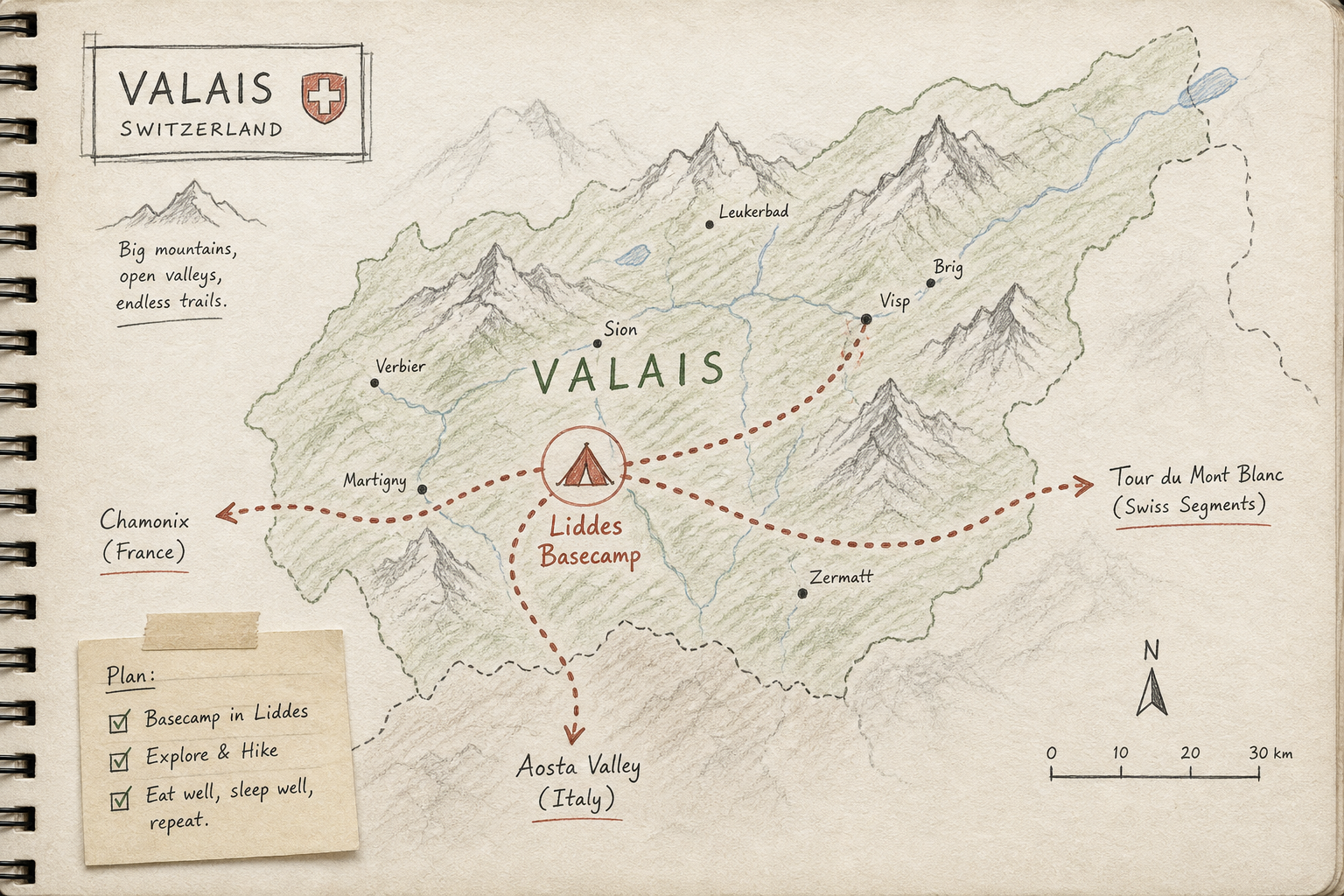
Rather than bouncing from town to town, establishing a single basecamp in the Valais region—specifically around Liddes—allows you to tackle major iconic routes without carrying a 40-liter backpack every day.
The Liddes Basecamp Experience (Hiking Hostel Packages)
Instead of a traditional transient hostel where guests stay for one night and leave, the basecamp model in Liddes operates on a week-long package structure designed specifically for solo travelers, digital nomads, and budget-conscious hikers.
Why it’s great for solo travelers:
You arrive as a solo hiker, but you spend the week with the same cohort of 10-15 backpackers. This entirely removes the anxiety of trying to make new friends in a hostel kitchen every single night. Because guided hiking in Switzerland helps you find your social group, these organized weeks include hostel accommodation, meals, airport transfers, and daily trail transport. You get the authentic hostel community without the logistical headache of planning bus routes.
Top Excursions from a Liddes Basecamp:
- The Tour du Mont Blanc (TMB) Segments: Liddes is perfectly positioned to tackle the Swiss segments of the TMB. You can explore some of the 5 best hiking trails in Switzerland near Mont Blanc and experience Mountain Mont Blanc without the heavy crowds.
- Aosta Valley (Italy): A quick trip through the Great St. Bernard Pass drops you into Italy. While many know this route for winter sports—often asking if skiing in the Italian Alps is worth an Aosta day trip—the summer hiking here provides an incredible contrast in food, culture, and trail landscapes compared to the Swiss side.
- Chamonix Day Trips: Access the dramatic jagged needles (Aiguilles) of the French Alps for a day before retreating to the quieter, more affordable Swiss basecamp.
The Zermatt & Matterhorn Region
Zermatt is notoriously expensive. It is a luxury resort town filled with five-star wellness hotels and Michelin-starred restaurants. However, solo backpackers can still experience the shadow of the Matterhorn without going bankrupt.
3. Zermatt Youth Hostel
Part of the official Swiss Youth Hostel Association, this property offers the most affordable beds in Zermatt, hands down.
Why it’s great for solo travelers:
It democratizes access to the Matterhorn. The dining hall is massive, and because they offer affordable half-board options (dinner included), nearly every guest eats at the same time. Sitting down at a long table with a plate of hot food is the easiest way to find partners for the next day’s glacier hike.
Key Amenities for Hikers:
- Views of the Matterhorn right from the dining room windows.
- Ski-room that converts to a heavy-duty hiking boot drying room in summer.
- Affordable three-course dinners (a massive money-saver in Zermatt).
- Quiet hours strictly enforced, ensuring proper rest.
Top Trails Accessible from the Doorstep:
- The Five Lakes Walk (5-Seenweg): A classic Zermatt hike featuring the iconic reflection of the Matterhorn in the Stellisee and Leisee lakes.
- Gornergrat to Riffelberg: Take the expensive train up to Gornergrat, but hike the long, scenic route back down to town to save money on the descent while enjoying views of the Gorner Glacier.
- Charles Kuonen Suspension Bridge: A day trip down the valley to Randa allows you to hike up to the longest pedestrian suspension bridge in the Alps.
The Bernese Oberland: St. Stephan & Gstaad Region
While Jungfrau and Zermatt draw the international crowds, regions like Gstaad and the Simmental Valley offer a more localized, deeply traditional Swiss alpine experience.
St. Stephan Basecamps
Similar to the Liddes model, St. Stephan serves as an ideal organized basecamp for solo travelers who want to explore the Bernese Oberland without paying Interlaken or Gstaad prices. Located in the Simmental valley, it offers rapid access to high-altitude glacier environments and lush, rolling alpine meadows.
Why it’s great for solo travelers:
The area is less intensely commercialized than Grindelwald. Hiking groups formed at St. Stephan basecamps often have entire trails to themselves. It’s also an excellent region if you are looking to mix hiking with other sports—it’s incredibly easy to find the right mountain bike group for alpine trails in this valley.
Top Excursions from St. Stephan:
- Glacier 3000: A spectacular high-altitude suspension bridge (Peak Walk by Tissot) connecting two mountain peaks. From here, you can hike across the glacier itself.
- Lauenensee: A pristine, romantic alpine lake surrounded by waterfalls and untouched moors.
- The Lenk Valley Waterfalls: Easy, stunning hikes leading to the Simmenfälle and Iffigfälle, perfect for lower-intensity recovery days.
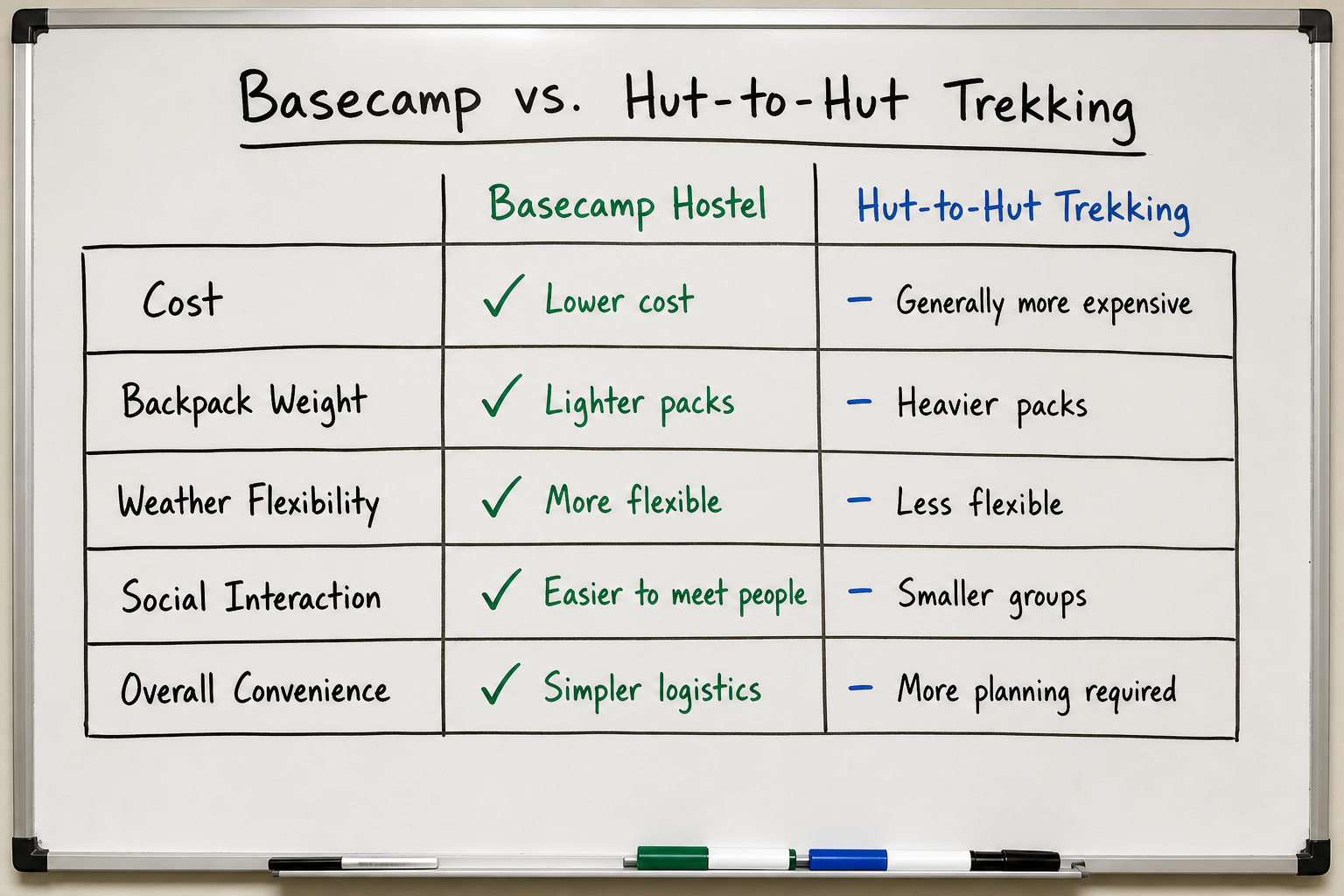
Basecamp Hostels vs. Hut-to-Hut Trekking for Solos
Many solo hikers heading to Switzerland dream of doing a multi-day hut-to-hut trek, like the Haute Route or the Via Alpina. However, committing to a multi-day trek alone comes with significant logistical pressure.
If you are debating between staying at a central basecamp hostel versus booking mountain huts, consider this breakdown:
The Case for the Basecamp Hostel
Staying at a hostel in a valley town (like Interlaken, Gimmelwald, or a package basecamp in Liddes) means you sleep in the same bed for multiple nights.
- Weather Flexibility: If a massive thunderstorm rolls in on Tuesday, you simply take a rest day, visit a local dairy, or take a train to a different valley.
- Lighter Packs: You only carry a daypack. Your laptop, extra clothes, and heavy toiletries stay in your hostel locker.
- Cost Control: You have access to grocery stores every evening to buy cheap food.
The Case for Hut-to-Hut Trekking
High-altitude SAC (Swiss Alpine Club) huts offer an unmatched immersion in the mountains, but they are unforgiving for solo backpackers on a tight budget or strict schedule.
- Rigid Itineraries: If you get a blister or the weather turns dangerous, your subsequent hut reservations are ruined. Huts are fully booked months in advance, so you cannot easily adjust your schedule.
- Heavy Packs: You must carry all your safety gear, sleeping liners, extra layers, and snacks for several days.
- Higher Costs: Huts require purchasing costly half-board meals since you cannot cook your own food in their facilities.
If you do decide to tackle the high routes, knowing how to plan hut to hut hiking in Switzerland is critical. For most first-time solo visitors, however, a vibrant basecamp hostel offers the best balance of epic day hikes, social interaction, and safety.
A Day in the Life of a Solo Backpacker at a Swiss Hiking Hostel
To truly understand the rhythm of a Swiss alpine hostel, here is what a typical day looks like for a solo traveler:
6:15 AM - The Wake-Up:
There is no sleeping in. The dorm room stirs early as hikers quietly pack their daypacks using headlamps or the soft glow of their phones to avoid waking anyone who is taking a rest day.
6:45 AM - Breakfast & Beta:
Down in the communal dining room, the atmosphere is electric. Hikers are buttering thick slices of Zopf bread and drinking strong coffee. This is where the magic happens for a solo traveler. You overhear two backpackers discussing their plan to tackle the Oeschinensee loop. You ask about their route, check the Swisstopo app on your phone, and within five minutes, you’ve joined their expedition for the day.
7:30 AM - The Commute:
Boots are retrieved from the drying room. You walk to the local bus stop or train station. Because you are with your new hostel crew, the 40-minute scenic train ride to the trailhead feels like a breeze, filled with stories of past treks in Patagonia or Nepal.
1:00 PM - The Summit Lunch:
High above the treeline, facing an active glacier, you pull out your squashed Coop supermarket sandwich and a block of Appenzeller cheese. It tastes better than a Michelin-starred meal. You share some Swiss chocolate with your group while watching marmots dart between the rocks.
4:30 PM - The Return:
You arrive back at the hostel. The first priority: boots off. The second priority: a hot shower.
6:00 PM - The Kitchen Choreography:
The hostel kitchen becomes a chaotic, beautiful dance of backpackers boiling pasta, chopping vegetables, and sharing leftover spices. You team up with your hiking buddies to cook a massive communal pot of spaghetti bolognese, splitting the cost so dinner comes out to 4 CHF per person instead of 35 CHF at the restaurant next door.
8:30 PM - Maps and Beer:
The lounge is full. Topographical maps are spread across the wooden tables. Over a glass of cheap local wine or a Feldschlösschen beer, you plan tomorrow’s route. By 10:00 PM, you are dead tired, crawling into your bunk, ready to do it all again.
Maximizing Your Swiss Hostel Experience (Practical Tips)
Surviving and thriving in Swiss hostels requires a specific approach to logistics, packing, and etiquette.
1. Master the Supermarket Strategy
Switzerland has two dominant supermarket chains: Coop and Migros. As a solo backpacker at a hostel, these stores are your lifeline.
- Timing: Buy your trail lunches the night before. Many village supermarkets open at 8:00 AM, which is far too late if you want to catch the first gondola at 7:30 AM.
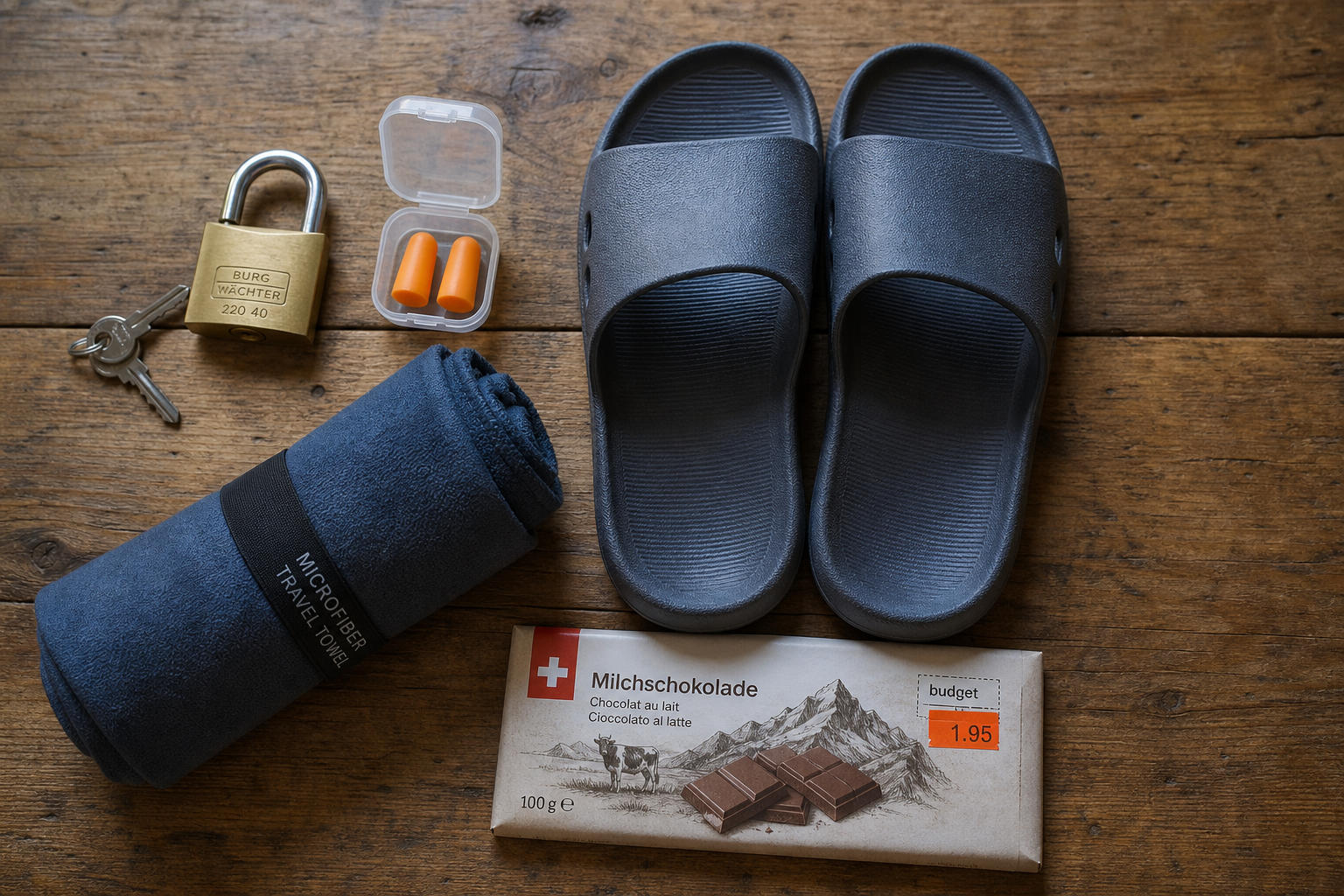
- Budget Hack: Look for items with the orange “Prix Garantie” (Coop) or “M-Budget” (Migros) stickers. These are the absolute cheapest baseline products (pasta, oats, chocolate) and will save you heavily.
- For more detailed financial survival strategies, review these 7 tips for hiking in Switzerland without the high cost.
2. Pack specifically for the Hostel Environment
A hiking hostel requires a few unique packing items that a standard hotel does not. When building your Swiss Alps summer packing list, ensure you include:
- A sturdy padlock: Not all hostels provide them for their lockers.
- High-quality silicone earplugs: An absolute necessity in a 10-bed dorm where hikers are waking up at different hours.
- A quick-dry microfiber towel: Most mountain hostels charge 3-5 CHF to rent a towel.
- Indoor slip-on shoes or flip-flops: Hiking boots are strictly forbidden past the boot room in almost all Swiss alpine accommodation.
3. Leverage the SBB Transport Network
Getting to remote alpine hostels requires utilizing the Swiss transit system. If you are not on an organized basecamp package that provides transport, you must download the SBB Mobile App. It is the single most important app for your trip, showing real-time schedules for trains, postbuses, and gondolas.
- If you plan to hop between various hostels, buy a Half Fare Card (Halbtax) immediately. It cuts the price of almost all trains, buses, and cable cars in half for 30 days.
- If you are staying at an organized basecamp like those in Liddes or St. Stephan, your daily trail transport is usually coordinated for you, saving you from calculating train schedules every morning.
4. Understand Hostel Etiquette
- The Kitchen Clean-Up: In Switzerland, cleaning up after yourself is taken very seriously. Wash, dry, and put away your dishes immediately. Do not leave them in the sink to soak.
- Label Your Food: Use the provided markers and tape in the kitchen to label your grocery bags with your name and checkout date. Unlabeled food in the fridge is treated as “free up for grabs.”
- Respect Quiet Hours: Mountain hostels enforce quiet hours strictly, usually starting at 10:00 PM. People are resting for dangerous, high-altitude alpine starts.
Frequently Asked Questions
Are Swiss hiking hostels safe for solo female travelers?
Yes, exceptionally safe. Switzerland consistently ranks as one of the safest countries in the world for solo female travelers. Alpine hiking hostels are community-focused environments where guests look out for one another. Most hostels offer female-only dormitories, and crime rates in mountain villages are virtually nonexistent. The biggest safety risk is on the trail itself, which is why the hostel environment is so valuable—you can easily find a group to hike with instead of tackling tough alpine ridges alone.
Do I need to book Swiss mountain hostels far in advance?
For the peak summer season (July and August), absolutely. The best hostels in Lauterbrunnen, Zermatt, and Interlaken book up months in advance. If you are traveling in the shoulder seasons (June or September), you have a bit more flexibility, but weekend bookings are always tight. If you are booking an organized basecamp package (like a week in Liddes), you should secure your spot in the spring.
Do Swiss hostels provide bedding and towels?
By law, Swiss hostels provide all necessary bedding (sheets, pillows, duvets). You do not need to bring a sleeping bag unless you are heading up to high-altitude SAC mountain huts. However, towels are rarely included for free in dorm rooms. Bring your own travel towel to avoid daily rental fees.
Can I use a hiking hostel as a base for winter sports?
Yes! Many hiking hostels transition smoothly into winter sports bases. The drying rooms switch from holding muddy hiking boots to ski boots and snowboards. If you are a winter traveler, it’s worth exploring which Swiss ski resort fits a backpacker’s budget to see which hostels operate year-round.
Finding Your Alpine Home
Choosing the right accommodation as a solo backpacker in Switzerland is about much more than just finding a cheap place to sleep. It is about positioning yourself at the foot of world-class trails, gaining access to vital gear-drying facilities, and surrounding yourself with a community of like-minded adventurers.
Whether you choose to brave the lively communal kitchens of the Jungfrau region, seek out the shadow of the Matterhorn in Zermatt, or opt for the stress-free camaraderie of an organized basecamp in Liddes or St. Stephan, the Swiss Alps are built for the solo traveler. Pack your earplugs, grab your hiking boots, and get ready to share some incredible trail miles with strangers who will become fast friends.