Budget Swiss hiking guide
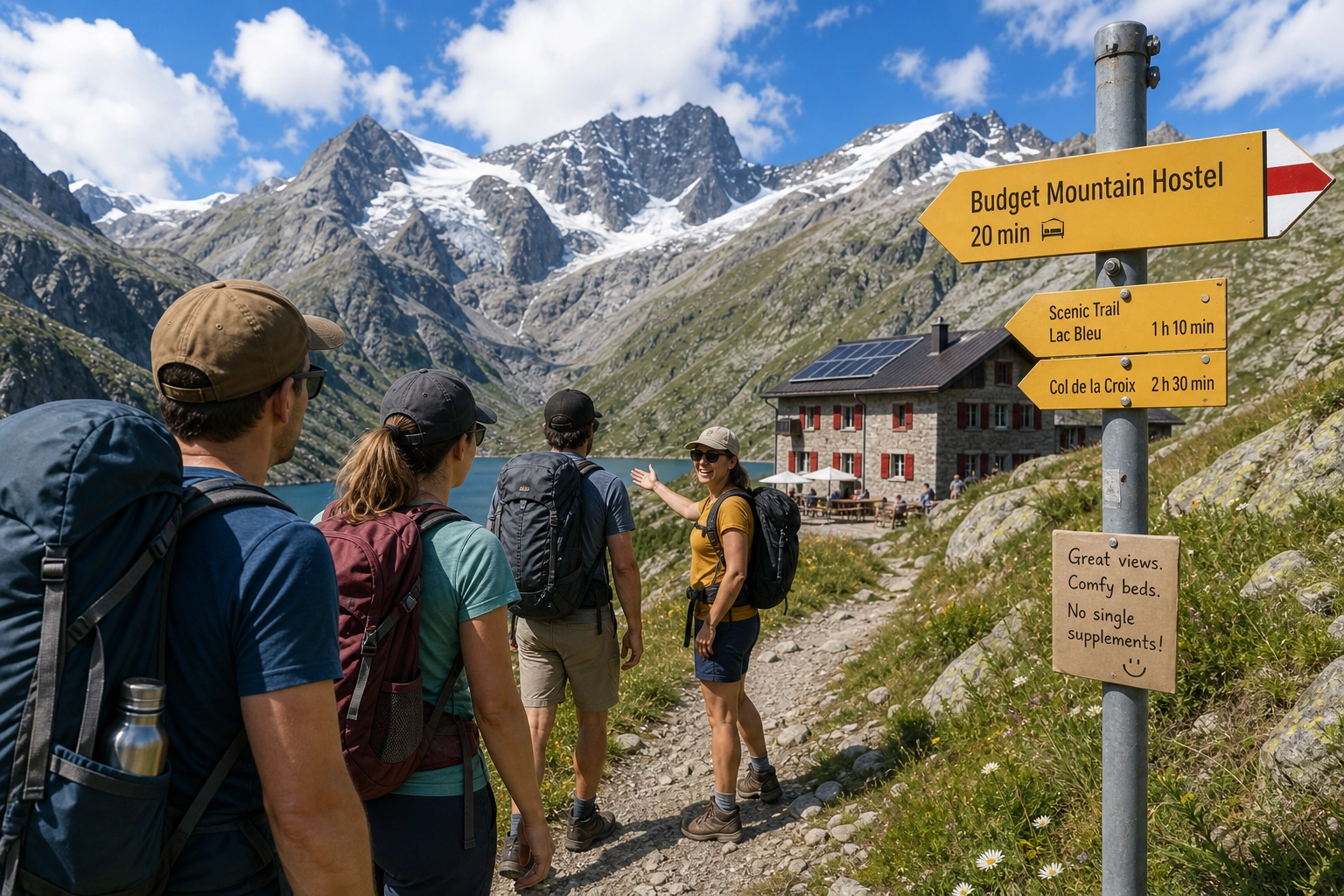
Switzerland is arguably the greatest hiking destination on the planet. The trail network is immaculate, the public transit system runs like a metronome, and the alpine views are unparalleled. But for a solo traveler, booking a guided hiking holiday in the Swiss Alps usually leads to a staggering realization at checkout: the cost.
Between luxury hotel defaults, daily luggage transfers, high-end mountain dining, and the dreaded single supplement, traditional guided tours routinely push $5,000 to $7,000 for a single week. If you are a backpacker, a digital nomad, or simply a budget-conscious outdoor enthusiast, the traditional Swiss hiking market is not built for you.
However, you do not have to abandon the idea of a guided, social hiking experience in Switzerland. The solo travel demographic is shifting rapidly—Kiplinger notes that solo trips are a booming industry where travelers actively seek to sidestep single supplements and find communal, social group tours.
This guide breaks down how to navigate the Swiss Alps on a budget, why the basecamp model is replacing expensive inn-to-inn treks, and how to find the best guided hiking holidays in Switzerland for solo travelers without draining your savings.
Why Solo Travelers Overpay for Swiss Hiking Holidays
To understand how to budget for the Alps, you first need to understand why traditional tours cost so much. The classic Swiss hiking model was designed decades ago for an older, affluent demographic. When solo travelers try to book these packages, they are hit with compounded costs.
The Single Supplement Trap
Most premium operators base their pricing on double occupancy. If you are traveling alone, hotels charge the tour operator nearly the same rate for a room with one occupant as they do for two. The operator passes this cost directly to you. This single supplement can add anywhere from 20% to 50% to your total trip cost. While some operators try to pair you with a roommate, this isn’t always guaranteed, leaving you on the hook if numbers are uneven.
The Logistics of Inn-to-Inn Trekking
Famous routes like the Haute Route require moving to a new hotel or mountain hut every single day. Operators like Ryder-Walker and Alpenwild organize impeccable inn-to-inn logistics, including daily luggage transport. Moving bags from valley to valley via vans, postal buses, and sometimes even helicopters is incredibly expensive. You are paying for a complex, invisible logistical machine working behind the scenes while you walk.
Premium Dining Defaults
Standard tours typically include multi-course dinners at three- or four-star hotels. While Swiss gastronomy is excellent, paying for a 70 CHF four-course meal every night quickly inflates the baseline cost of the tour.
If you want the trail experience but don’t care about luxury bedding or white-tablecloth dinners, you are paying for amenities you don’t actually value.
The Basecamp Model: Guided Hiking Without the Luxury Mark-Up
For budget-conscious solo travelers, the most effective way to experience the Swiss Alps is to abandon the inn-to-inn model and embrace a “basecamp” approach.
Instead of moving every day, you stay in one central location for the week and use local transport to access different trailheads. This is the model we use at Hiking Hostel, and it systematically eliminates the high costs associated with traditional tours.
How Basecamping Fixes the Budget
- Zero Luggage Transfers: Because you unpack once, there is no need to hire drivers to move your bags. This strips hundreds of francs off the tour price.
- Eliminating the Single Supplement: By utilizing hostel-style accommodations with shared or dorm rooms, solo travelers pay per bed, not per room. If you read our guide on Hotels in Swiss Mountains? Why Social Lodges Beat Luxury, you’ll see how communal lodging naturally drives costs down while improving the social atmosphere.
- Centralized Catering: Meals are prepared at the hostel rather than purchased at premium restaurant markups. You get hearty, hiker-focused food (breakfasts, packed lunches, and communal dinners) without the resort-town premium.
- Weather Flexibility: On an inn-to-inn trek, you must hike to your next hotel regardless of the weather. From a basecamp, if a massive storm hits the high alpine passes, your guide can pivot and choose a lower-elevation forest trail or schedule a cultural excursion instead.
Comparing Guided Hiking Styles for Solo Backpackers
Choosing the right trip depends heavily on your budget, your desire for social interaction, and your tolerance for logistical planning. Here is how the three primary models stack up for a solo traveler.
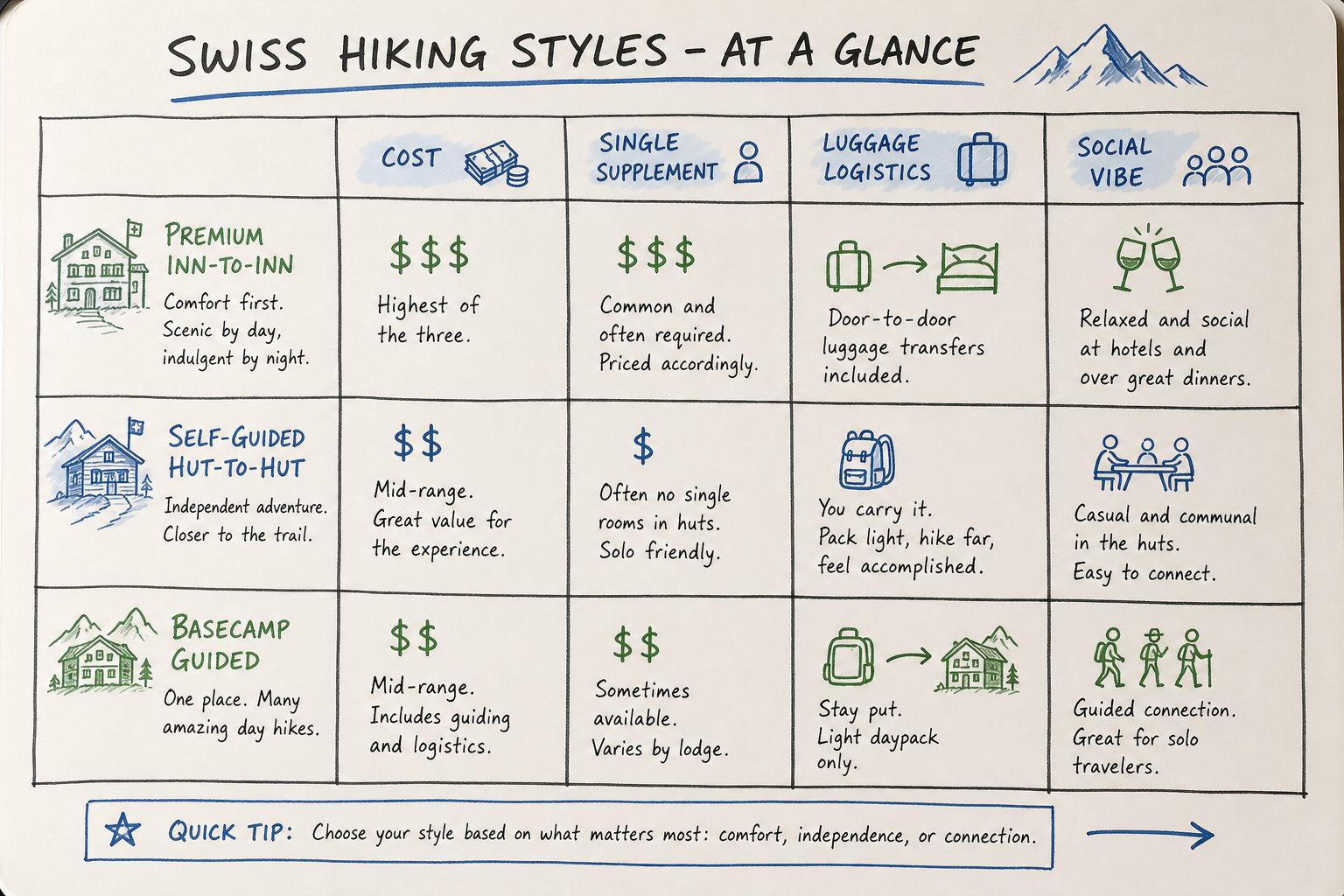
| Feature | Premium Inn-to-Inn (e.g., Alpenwild, Ryder-Walker) | Self-Guided Hut-to-Hut | Basecamp Guided (Hiking Hostel) |
|---|---|---|---|
| Average Cost (1 week) | $4,500 - $7,000+ | $1,200 - $2,000 | $800 - $1,500 |
| Single Supplement | High (Often $500 - $1,000+) | N/A (Pay per dorm bed) | None (Shared hostel rooms) |
| Luggage Logistics | Fully managed daily transfers | You carry everything in your pack | Unpack once; carry a daypack |
| Social Vibe | Formal, usually older demographic | Solitary or small ad-hoc groups | Highly social, backpackers, nomads |
| Guiding | Fully guided | None (You navigate) | Fully guided daily hikes |
| Meals | Luxury hotel dining | Hut food (basic, carb-heavy) | Communal hostel meals & packed lunches |
If you have the budget and want a luxurious, moving journey, operators running the classic Haute Route or custom trips via Alpine Adventure provide incredible service. If you want to carry a 40-liter pack and manage your own navigation, reading up on How to Plan Hut to Hut Hiking in Switzerland (7 Tips) will get you started.
But for solo travelers who want a guide to handle the trails, a guaranteed social group, a light daypack, and a price tag that leaves room for a few beers, the basecamp model wins decisively.
Best Regions for Budget-Friendly Guided Hikes
The first rule of hiking in Switzerland without the high cost is knowing where to stay. The “Big Three” Swiss destinations—Zermatt, Grindelwald, and St. Moritz—are magnificent, but they charge a massive premium for the privilege of sleeping in their postal codes.
By staying just one valley over, you get the same mountains, fewer crowds, and a fraction of the cost.
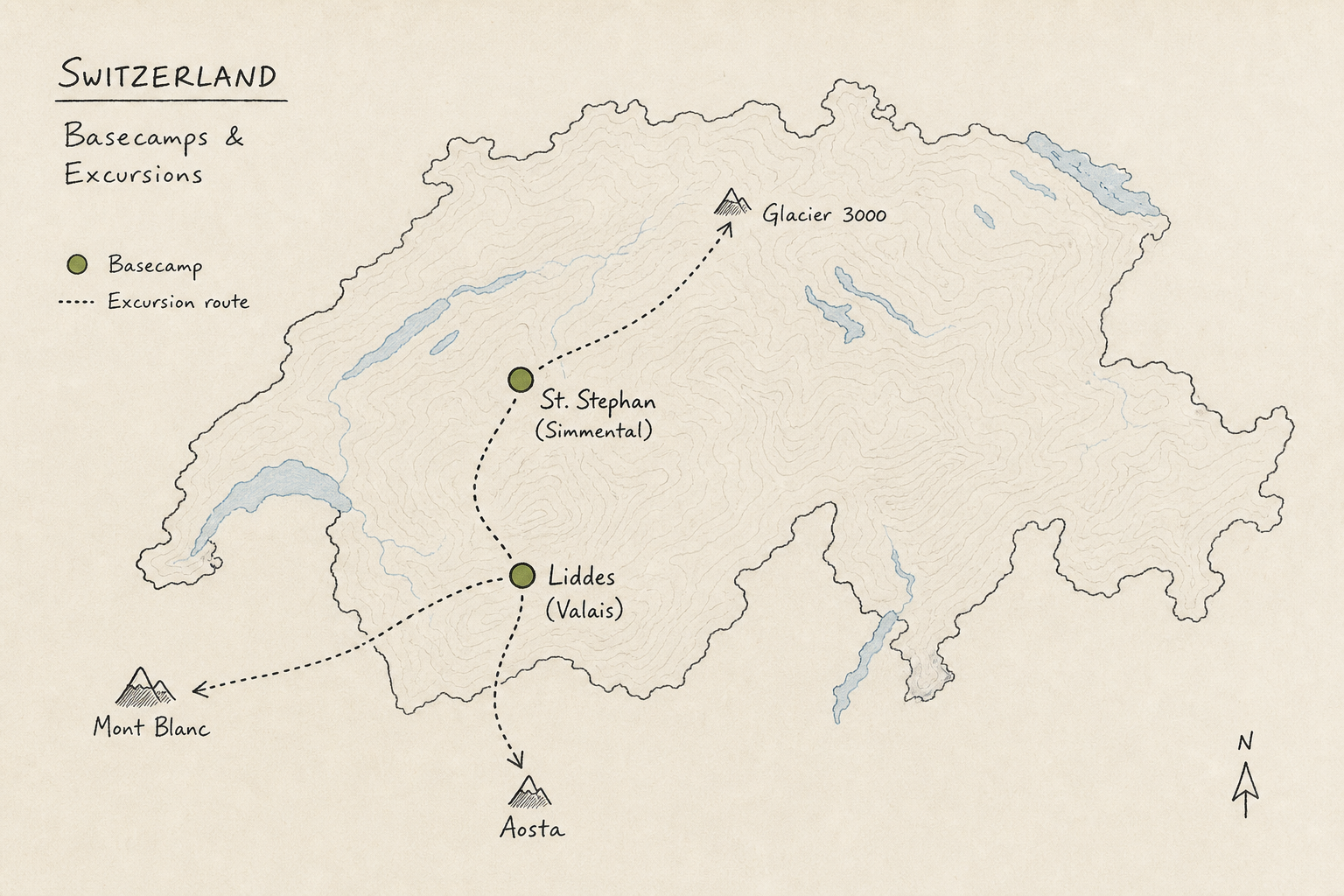
Valais Region: The Liddes Basecamp
Liddes is a small, authentic alpine village situated on the route toward the Great St. Bernard Pass. It serves as an optimal basecamp for budget hiking because it sits at the crossroads of major alpine routes without the resort-town inflation.
- The Trails: From Liddes, you have immediate access to sections of the Tour du Mont Blanc and the pristine Val Ferret. You can hike up to high-altitude lakes and ancient monasteries.
- The Excursions: Liddes is highly strategic. It allows for organized day trips over the border. You can explore the 5 Best Hiking Trails in Switzerland Near Mont Blanc, take a quick drive to Chamonix to see the highest peak in Western Europe, or head south for an Aosta day trip to experience the Italian Alps.
- The Vibe: Quiet, rustic, and deeply connected to traditional Swiss mountain farming life.
Simmental Valley: The St. Stephan Basecamp
St. Stephan is located in the Bernese Oberland, adjacent to the famous (and expensive) Gstaad region.
- The Trails: This region offers lush, green rolling alps, dramatic limestone peaks, and iconic Swiss cow pastures. It provides access to the Lenk valley, numerous waterfalls, and jagged ridgelines.
- The Excursions: From St. Stephan, it is incredibly easy to organize excursions to Glacier 3000 (where you can walk a suspension bridge between two peaks), or take a scenic train ride to Interlaken for a day of lake swimming or adventure sports.
- The Vibe: Classic Swiss postcard scenery. It’s also an excellent hub if you want to eventually find the right mountain bike group for alpine trails, as the Simmental valley is highly bike-friendly.
Structuring Your Budget: Where Does the Money Go?
When planning a solo trip, you need to account for hidden costs. A cheap flight to Geneva or Zurich is only the beginning. Here is a realistic breakdown of how to structure your budget and where a package deal actually saves you money.
1. Transportation (The Silent Budget Killer)
Switzerland’s public transit is a marvel, but it is not cheap. A standard train ticket from Geneva Airport to a mountain village can easily cost 70 to 100 CHF each way. Furthermore, taking a cable car up to a trailhead can cost 30 to 50 CHF for a single round trip.
- The DIY Route: Solo travelers usually buy a Swiss Travel Pass (starting around 240 CHF for a few days) or a Swiss Half Fare Card (120 CHF for a month, giving 50% off most tickets).
- The Package Route: A good guided basecamp holiday includes airport transfers and daily trail transport in private vans. This removes the need to buy an expensive nationwide rail pass, locking in your transit costs upfront.
2. Food and Drink
A basic burger in a Swiss mountain restaurant will cost around 25 CHF. A beer is 7 to 9 CHF. If you are buying three meals a day at restaurants, you will spend over 100 CHF daily just to stay fueled.
- The DIY Route: Budget hikers survive on Migros and Coop grocery stores, buying bread, cheese, and cured meats. It works, but it gets repetitive.
- The Package Route: Look for holidays that include meals. At a hiking hostel, you typically get a substantial buffet breakfast, ingredients to pack your own trail sandwich, and a hot, communal dinner. You only pay out of pocket for your evening beers or a coffee at a mid-hike mountain hut.
3. Gear and Equipment
You do not need to buy brand new, top-of-the-line Arc’teryx gear to hike in Switzerland. Summer in the Alps requires layers, good footwear, and rain protection. Review our Swiss Alps Summer: A Simple 5-Step Packing Guide to see how you can pack for a week using gear you likely already own.
Finding Your Social Group on the Trail
The most overlooked aspect of booking a guided hiking holiday as a solo traveler is the group dynamic.
If you book a traditional, high-end tour, you may find yourself as the only 30-something digital nomad in a group of retired couples. While hikers generally get along well, the evening vibe in a quiet four-star hotel dining room is very different from a hostel common room.
Why the Basecamp Model Fosters Better Connections
When you stay in a hiking hostel, you are surrounded by like-minded people. The demographic naturally skews toward solo travelers, backpackers, and budget-conscious professionals.
Because everyone returns to the same basecamp every afternoon, you aren’t just socializing with your specific hiking group. You are sharing beers on the terrace with people who did a different trail that day, swapping stories, and playing cards in the evening.
This environment is specifically engineered for solo travelers. It completely removes the intimidation factor of arriving alone. Within three hours of checking in, you will have met the 10 to 15 people you’ll be sharing the trails with for the next week. For more on this dynamic, read our deep dive on Guided Hiking in Switzerland: Finding Your Social Group.
A Typical Week on a Budget Guided Tour
What does a week actually look like when you aren’t worrying about luggage transfers or train schedules? Here is a realistic look at a basecamp hiking week in the Alps.
Day 1: Arrival and Acclimatization
You arrive at Geneva Airport, meet the transfer van, and ride up into the mountains. After checking into your dorm or shared room, there is a welcome dinner. You meet your guide, discuss the week’s weather forecast, and get to know your fellow solo travelers.
Day 2: The Shake-Out Hike
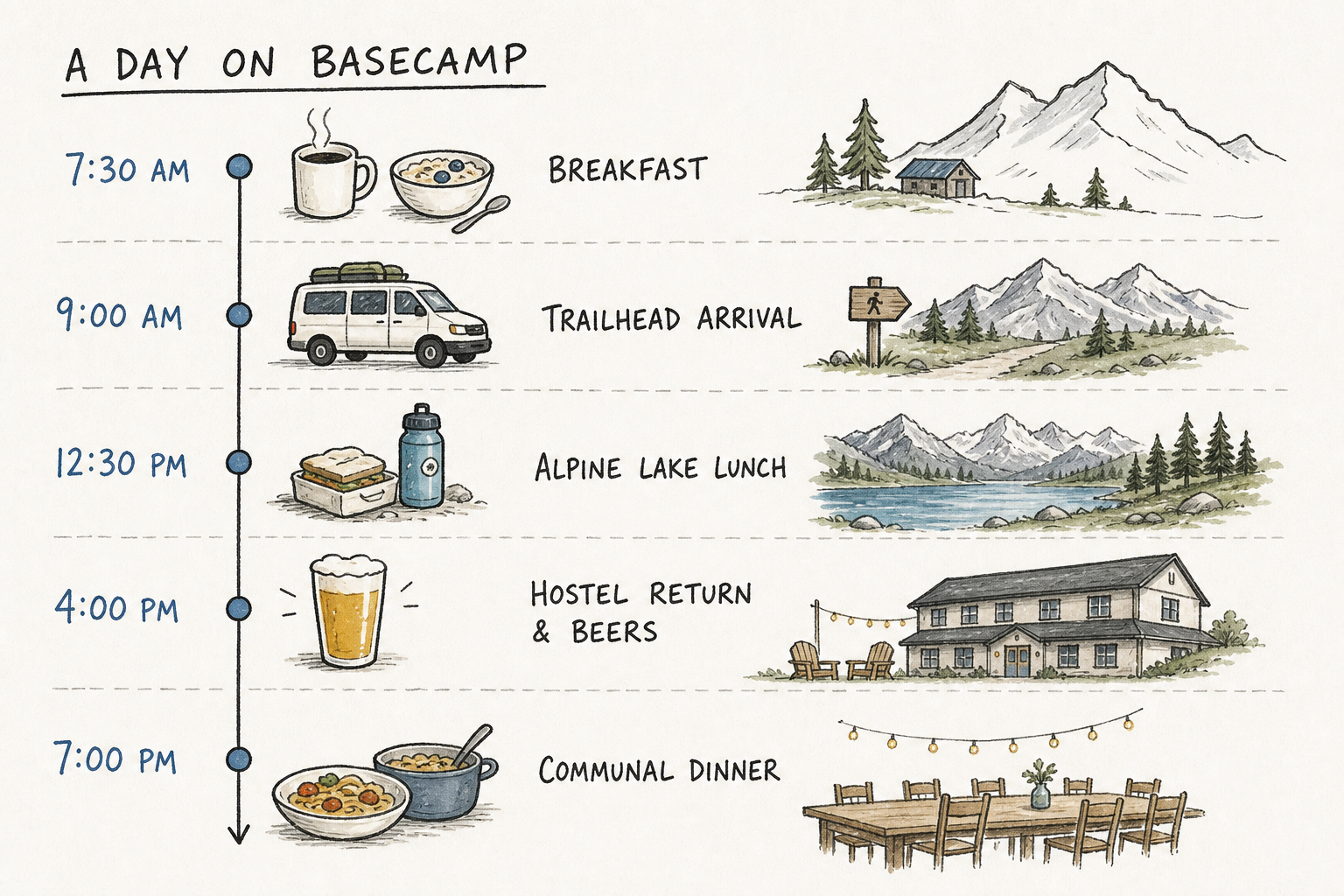
Breakfast at 7:30 AM. You pack your lunch from the provided buffet. The group loads into the van for a short 15-minute drive to the trailhead.
The first day is usually a moderate hike—perhaps 10 kilometers with 500 meters of elevation gain. The guide uses this day to assess the group’s fitness levels. You stop at an alpine lake for lunch, take a dip if you’re brave enough to handle glacier runoff, and hike back down. You are back at the hostel by 4:00 PM for showers and terrace beers before dinner.
Day 3: Pushing into the Alpine Zone
Now that the group is acclimatized, the van drops you higher up the valley. You hike above the treeline, entering the rocky, dramatic landscapes Switzerland is famous for. You might cross a high mountain pass, taking photos of grazing Ibex or Chamois. The physical exertion is higher today, making the hot hostel dinner taste exponentially better.
Day 4: The Excursion Day
To rest the legs, the middle of the week often involves an excursion. From a base like Liddes, you might take the van across the border. You can explore Mountain Mont Blanc: 7 Ways to Visit Without the Crowd or wander through the Roman ruins and gelaterias of Aosta, Italy. It’s a cultural reset before heading back into the high mountains.
Day 5 & 6: Peak Bagging and Ridges
The final two hiking days are usually the most spectacular. Depending on group fitness, the guide might choose a challenging ridge walk or a summit hike to a non-technical peak. You will likely stop at a high-altitude SAC (Swiss Alpine Club) hut for a coffee or a slice of fruit tart—a classic Swiss trail tradition.
Day 7: Departure
After a final breakfast and exchanging contact info with your new friends, the transfer van takes you back to the airport or a central train hub.
5 Mistakes Solo Travelers Make When Booking Swiss Alps Trips
Even with a guided, budget-friendly setup, solo travelers often make a few critical errors during the planning phase.
1. Misunderstanding “Self-Guided” Packages
Many budget operators advertise cheap “self-guided” packages. Be aware that this simply means they book your hotels and hand you a GPS track. You are entirely responsible for navigating, deciding if the weather is safe, and hiking alone. If your goal is a social experience and peace of mind, ensure the package explicitly says guided.
2. Overpacking for the Trail
If you choose an inn-to-inn trek and opt out of luggage transfer to save money, you will be carrying a 40-liter backpack over mountain passes. This is grueling. Even on a basecamp trip, some travelers bring massive daypacks filled with unnecessary gear. You only need two liters of water, a rain shell, a warm layer, sunscreen, and your lunch.
3. Ignoring Altitude and Fitness Reality
Swiss trails are steep. Even moderate trails involve significant elevation gain. If you live at sea level, the altitude (many trails range from 2,000 to 2,800 meters) will slow you down. A good guide will pace the group appropriately, but doing some stair-climbing or local hill hikes before your trip will vastly improve your experience.
4. Booking Flights Before Confirming the Tour
Guided basecamp weeks operate on strict schedules (usually Saturday to Saturday or Sunday to Sunday) to facilitate group airport transfers. Do not book a mid-week flight until you know exactly when the tour’s transfer van departs from the airport. If you miss the van, a last-minute train ticket to the valley will eat into your budget.
5. Assuming “Budget” Means Unsafe
In Switzerland, budget does not mean compromising on safety. The trails are identical whether you paid $5,000 or $1,000. Certified guides must pass the same rigorous cantonal requirements. The cost savings in a budget package come entirely from shared lodging, communal food, and centralized transport—never from cutting corners on safety.
Frequently Asked Questions
Is it safe to hike solo in Switzerland?
Yes, Switzerland is incredibly safe, and the trails are meticulously marked with yellow (easy), red-white (mountain), and blue-white (alpine) markers. However, weather can change rapidly in the Alps. Joining a guided group eliminates the stress of navigating fog or sudden thunderstorms alone.
Do I need to be an expert mountaineer to join a guided hiking holiday?
Not at all. Guided hiking holidays are designed for walkers, not climbers. You will not need ropes, crampons, or ice axes. You just need a reasonable level of cardiovascular fitness and the ability to walk 4 to 6 hours a day on uneven terrain.
How far in advance should I book?
Because budget-friendly social tours eliminate the single supplement, they are highly sought after by solo travelers and sell out quickly. You should aim to book your summer (July/August) hiking holiday by February or March.
Can I accommodate dietary restrictions on a budget tour?
Yes. Basecamp hostels are accustomed to cooking for modern travelers. As long as you notify the operator in advance, vegetarian, vegan, and gluten-free diets can generally be accommodated with communal meals.
What if I want to ski instead of hike?
While this guide focuses on summer, the same rules apply to winter. If you are a solo traveler looking for budget snow sports, check out our guide on Which Swiss Ski Resort Fits a Backpacker’s Budget?
The Smart Way to Hike the Alps
Booking a guided hiking holiday in Switzerland as a solo traveler shouldn’t require taking out a small loan. By looking past the luxury inn-to-inn operators and focusing on basecamp models, you can bypass the single supplement entirely.
Staying in a central valley like Liddes or St. Stephan allows you to experience the exact same world-class trails, dramatic glaciers, and alpine meadows as the premium tours, but with a built-in social group of like-minded backpackers and nomads.
You unpack once, let the guide handle the logistics and transit, and spend your mental energy where it belongs: enjoying the views, connecting with new friends, and conquering the trail. By rethinking where you sleep and how you eat, the Swiss Alps become an accessible, unforgettable adventure.