Affordable Guided Hiking Tours in Switzerland (Save $500+)
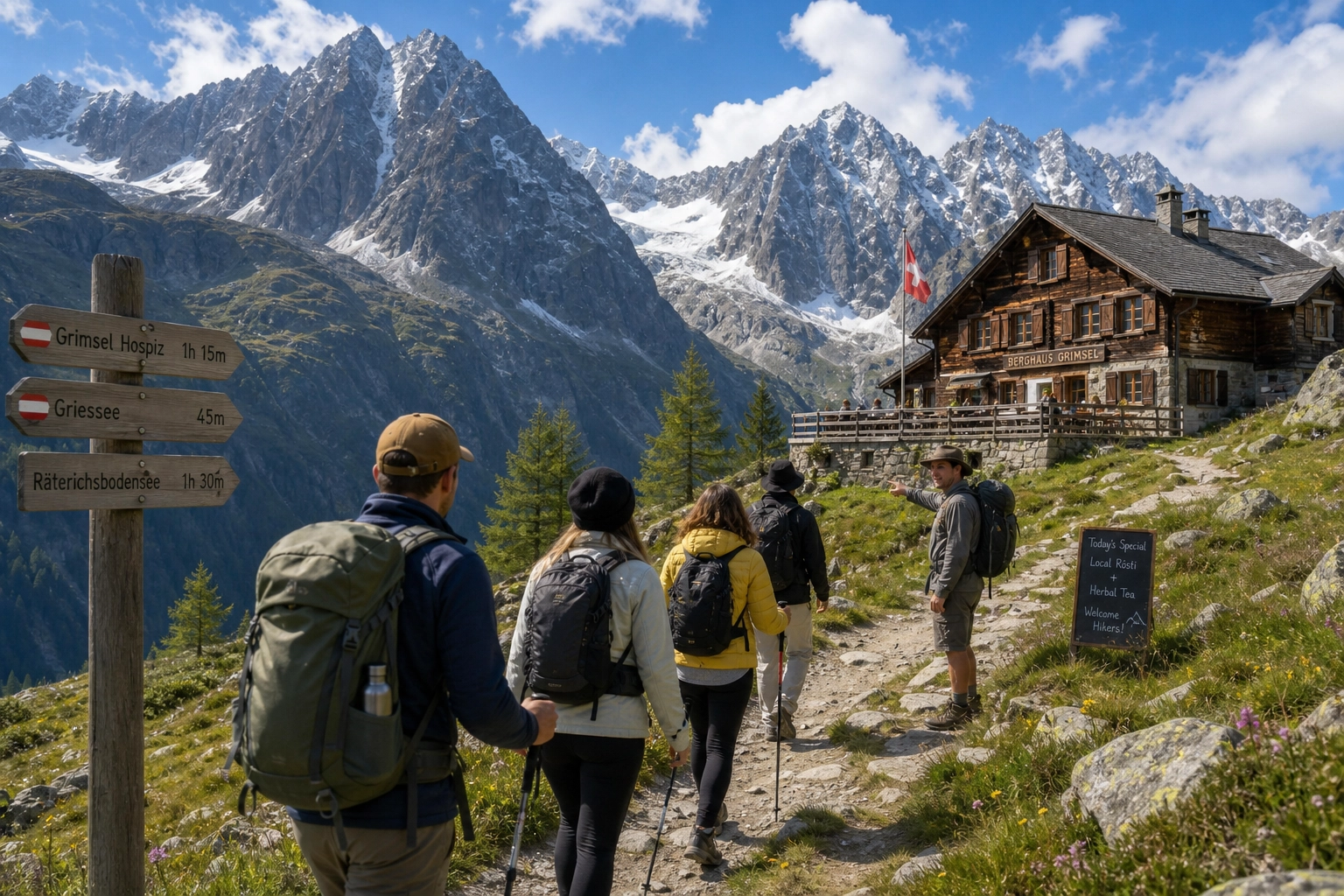
Switzerland and the word “affordable” rarely share the same sentence. When most hikers start researching alpine adventures, they quickly run into a wall of sticker shock. A standard seven-day guided trek through the Swiss Alps often starts at $4,000 per person, not including flights.
These premium packages bundle luxury hotels, baggage transfer services, and private mountain guides into a seamless—but heavily marked-up—itinerary. If you are a solo traveler, a digital nomad, or a budget-conscious backpacker, those numbers can easily push a Swiss hiking trip out of reach.
But there is a different way to experience the Alps. By shifting away from luxury hotel-hopping and embracing community-driven adventure lodges, you can access the exact same dramatic peaks, pristine glaciers, and world-class trail networks for a fraction of the cost.
In this guide, we will break down exactly how you can save $500 or more on your trip by utilizing basecamp models, volunteer-led excursions, and smart logistical planning. We will cover how to find the right social group, decode the Swiss trail system, and access iconic regions without the luxury price tag. For foundational money-saving strategies before you even book your flights, read our 7 Tips for Hiking in Switzerland (Without the High Cost).
The Hidden Costs of Traditional Alps Hiking Tours
To understand how to save money, you first need to understand where your money goes on a standard guided tour.
Traditional commercial hiking operators build their packages around maximum comfort and minimal friction. This means moving linearly from town to town, requiring daily logistical support.
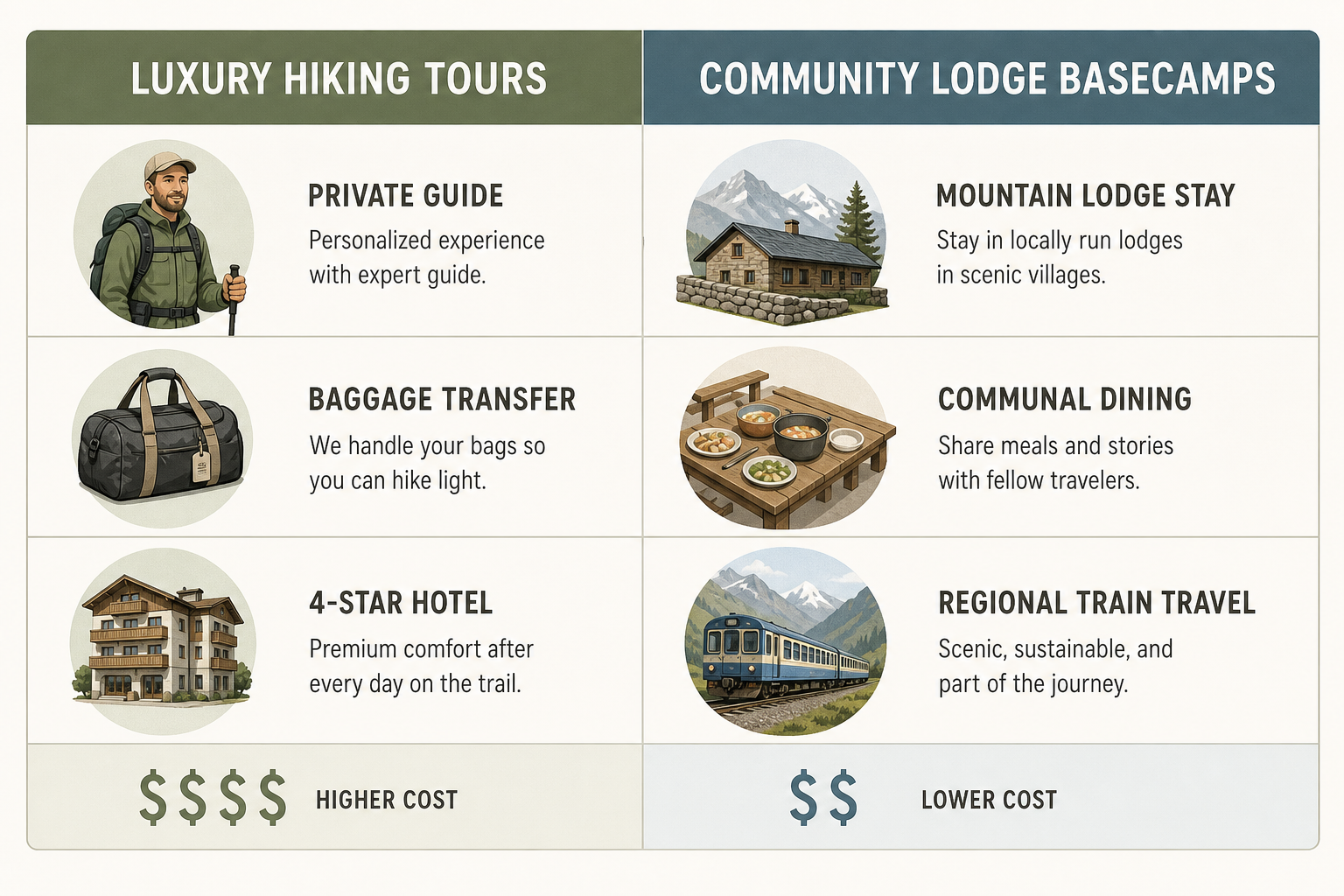
Here is a breakdown of the invisible premiums built into standard guided packages:
- Daily Baggage Transfers: Paying a dedicated driver to move your suitcase from one valley to the next while you hike costs roughly $30 to $50 per day, embedded into the tour price.
- High-End Accommodation: Moving every night means you are constantly paying single-night premiums at four-star alpine hotels, which rarely offer discounts for short stays.
- Private Mountain Guides: Certified UIAGM mountain guides charge upwards of $600 to $800 per day. While essential for technical glacier crossings, their services are overkill for well-marked, non-technical hiking paths.
- Restaurant Dining: Standard tours book three-course meals at expensive tourist-centric restaurants every evening, adding $60 to $100 per day to your food budget.
The Basecamp Alternative
Instead of paying for constant movement, the most effective way to cut costs is the “basecamp model.” By staying at a single adventure lodge—like Ski Hostel in the Liddes or St. Stephan regions—you eliminate baggage transfers entirely. You unpack once, utilize regional transport to reach different trailheads each day, and return to the same comfortable bed at night.
This approach not only slashes logistical costs but also provides massive weather flexibility. If a storm hits one valley, a basecamp model allows you to easily pivot and take a train to a neighboring, sunnier valley for the day. For a deeper dive into why this model works, check out our guide on Hotels in Swiss Mountains? Why Social Lodges Beat Luxury.
Decoding the Swiss Trail Grading System
One reason hikers pay high premiums for guided tours is the fear of getting lost or accidentally wandering onto dangerous terrain. Switzerland actually has one of the most meticulously maintained and clearly marked trail systems in the world.
Understanding the trail markers allows you to confidently join community-led groups or tackle trails with volunteers without needing a $700-a-day private guide. The Swiss use a three-tier color-coding system:
1. Yellow Markers (Wanderwege)
These are standard walking paths. They are wide, well-graded, and often paved or covered in packed gravel. You do not need specialized hiking boots for these; sturdy walking shoes are sufficient. These trails connect villages, wrap around low-elevation lakes, and are entirely risk-free regarding exposure or steep drops.
2. Red and White Markers (Bergwanderwege)
These are true mountain trails and make up the bulk of alpine hiking in Switzerland. They involve steep ascents, uneven rocky terrain, roots, and occasionally minor stream crossings. You need proper hiking boots, physical fitness, and an understanding of mountain weather. While you might encounter narrow sections, any truly dangerous drop-offs are typically secured with steel cables or chains to hold onto.
3. Blue and White Markers (Alpinwanderwege)
These are alpine routes requiring technical experience. You will encounter glaciers, snowfields, scrambling sections where you must use your hands, and severe exposure. Do not attempt blue and white trails unless you have advanced mountaineering experience or are accompanied by a certified mountain guide.
Most affordable guided programs focus exclusively on the red and white trails, delivering breathtaking high-alpine scenery while keeping risk profiles low enough that community volunteers and experienced hosts can safely lead groups.
Finding Your Tribe: The Social Element of Guided Hikes
I recently spoke with a digital nomad who tried to piece together a solo hiking trip across the Bernese Oberland. She spent $180 a night on basic, soulless hotel rooms, ate dinner alone reading her Kindle, and felt completely isolated despite being surrounded by stunning scenery. The logistics consumed her evenings, leaving her exhausted before the next day’s hike even began.
This is the primary failure mode of budget independent travel in Switzerland. It is cheap(er), but it is lonely.
Affordable guided tours built around community lodges solve this. Places like Ski Hostel act as central hubs, gathering solo travelers, international backpackers, and remote workers into a cohesive group. The lodge curates weekly adventure programs where the itinerary is planned for you.
Instead of staring at a map alone in a hotel room, you are discussing the next day’s elevation gain over a communal, home-cooked meal. You gain the logistical ease of a premium guided tour—where transport, trail selection, and pacing are managed by hosts—without the sterile corporate atmosphere. To learn more about navigating the social dynamics of group trekking, read Guided Hiking in Switzerland: Finding Your Social Group.
Regional Spotlights: Where to Base Your Swiss Adventure
Switzerland is divided into distinct cantons, each with its own character, microclimate, and price point. Basing yourself in ultra-famous resort towns like Zermatt or St. Moritz guarantees premium pricing on everything from coffee to cable cars.
To save money, you need to base yourself in the valleys just outside these major hubs. You get the same mountain views, but pay valley prices.
The Val de Bagnes and Liddes Region
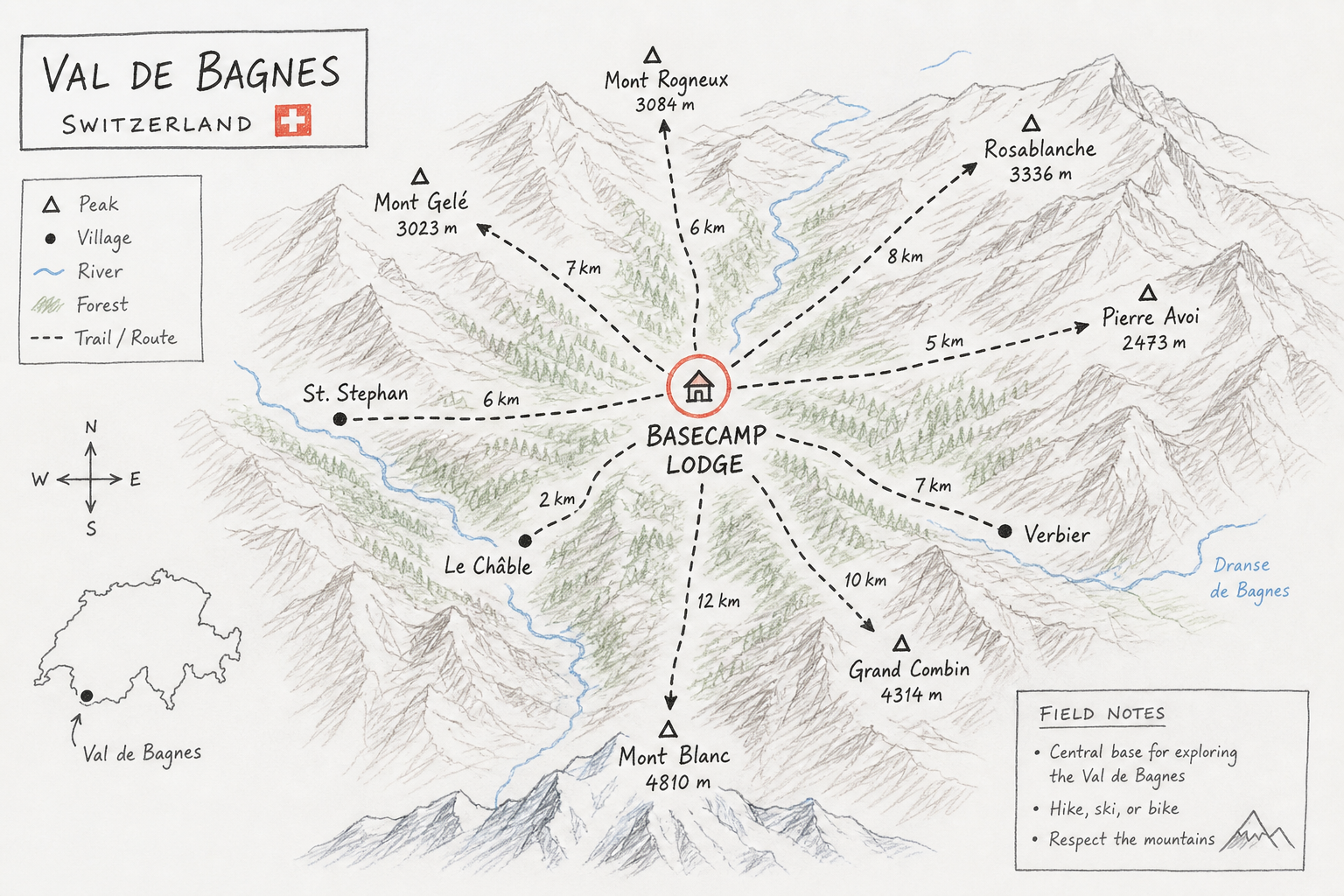
Located in the canton of Valais, the Val de Bagnes is a paradise for hikers seeking dramatic, rugged landscapes. It serves as a quieter, more authentic gateway to the Mont Blanc massif and the Grand Combin. Basing yourself in Liddes offers direct access to over 250 kilometers of trails ranging from gentle valley walks to grueling vertical ascents.
From here, organized lodge excursions frequently take guests to scenic viewpoints that rival anything in Chamonix, minus the crowds. If you are planning to explore this specific area, see our list of the 5 Best Hiking Trails in Switzerland Near Mont Blanc.
St. Stephan and the Bernese Oberland
The Bernese Oberland is famous for its lush green valleys set against the towering, glaciated peaks of the Eiger, Mönch, and Jungfrau. While Interlaken and Grindelwald are the busy tourist hubs, staying in a village like St. Stephan offers a quiet, culturally rich basecamp. It provides rapid train access to the high trails while maintaining a “home away from home” atmosphere.
Cross-Border Excursions: The Three-Country Advantage
One of the greatest geographical advantages of hiking in the Swiss cantons of Valais or Geneva is the proximity to both France and Italy. You are not just limited to Swiss trails.
Community-driven lodges often organize border-crossing day trips. You might wake up in Switzerland, drive through the Great St. Bernard Pass, and be on an Italian trail by 9:00 AM.
These cross-border trips offer several distinct advantages:
- Cultural Variety: Experience Swiss precision in the morning and a relaxed Italian espresso culture in the afternoon.
- Weather Dodging: The Alps act as a massive weather barrier. If it is pouring rain in Switzerland, there is a high probability that the sun is shining just an hour south in Italy’s Aosta Valley.
- Cost Savings on Food: Lunch at a mountain refuge in Italy costs roughly half of what it does in Switzerland.
While famous for winter sports, the Aosta Valley is equally spectacular for summer hiking. For context on accessing this region, check out our guide: Skiing in the Italian Alps? Try This Aosta Day Trip (the geographical logistics remain identical in the summer months).
Similarly, access to the Mont Blanc region via the French border allows you to witness Europe’s highest peak without paying Chamonix hotel rates. Discover how to navigate this in Mountain Mont Blanc: 7 Ways to Visit Without the Crowd.
Essential Gear Logistics on a Budget
When you book a luxury hiking tour, you are often sent a multi-page PDF of required gear that assumes you have an unlimited budget at REI. The truth is, summer alpine hiking requires surprisingly little specialized equipment if you approach it strategically.
Renting vs. Buying
If you are a digital nomad or backpacker traveling through Europe for several months, carrying bulky hiking boots, trekking poles, and waterproof shells is a logistical nightmare.
This is another area where adventure lodges shine. Places like Ski Hostel offer comprehensive gear rental. Instead of spending $150 on trekking poles and $200 on a daypack you will only use for a week, you can rent well-maintained equipment directly from your host for a few dollars a day.
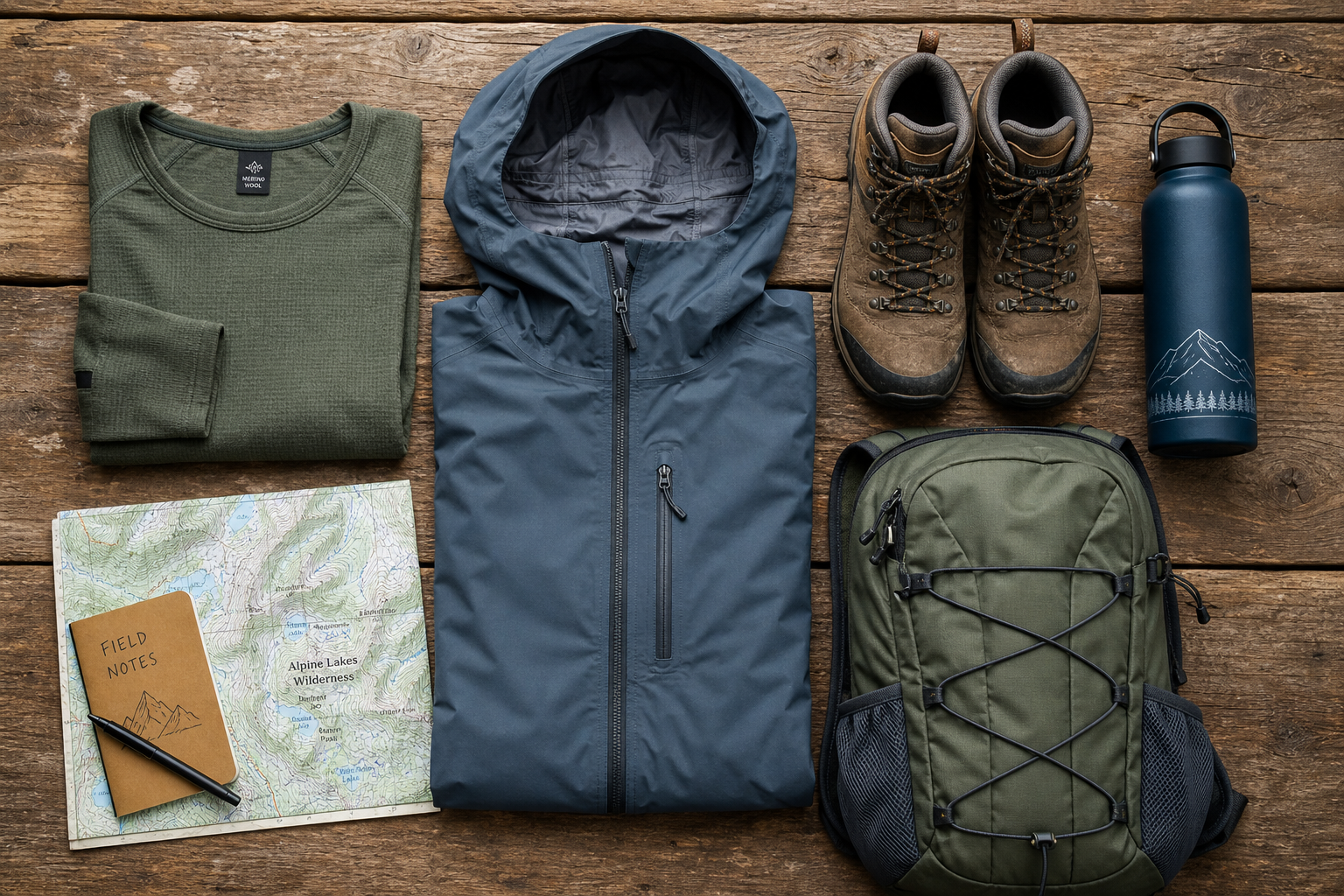
The Core Summer Packing List
If you do choose to bring your own gear, focus on the “three-layer system”:
- Base Layer: Synthetic or merino wool t-shirts. Avoid cotton entirely, as it traps sweat and chills you in the high-altitude wind.
- Mid Layer: A lightweight fleece or packable synthetic puffer jacket. Even in July, temperatures above 2,500 meters can drop near freezing if a cloud rolls in.
- Outer Layer: A dedicated, seam-taped waterproof shell. A cheap plastic poncho will tear on rocks and turn into a sauna as you climb.
For a complete, minimalist packing breakdown, review our Swiss Alps Summer: A Simple 5-Step Packing Guide.
Integrating Hut-to-Hut Experiences
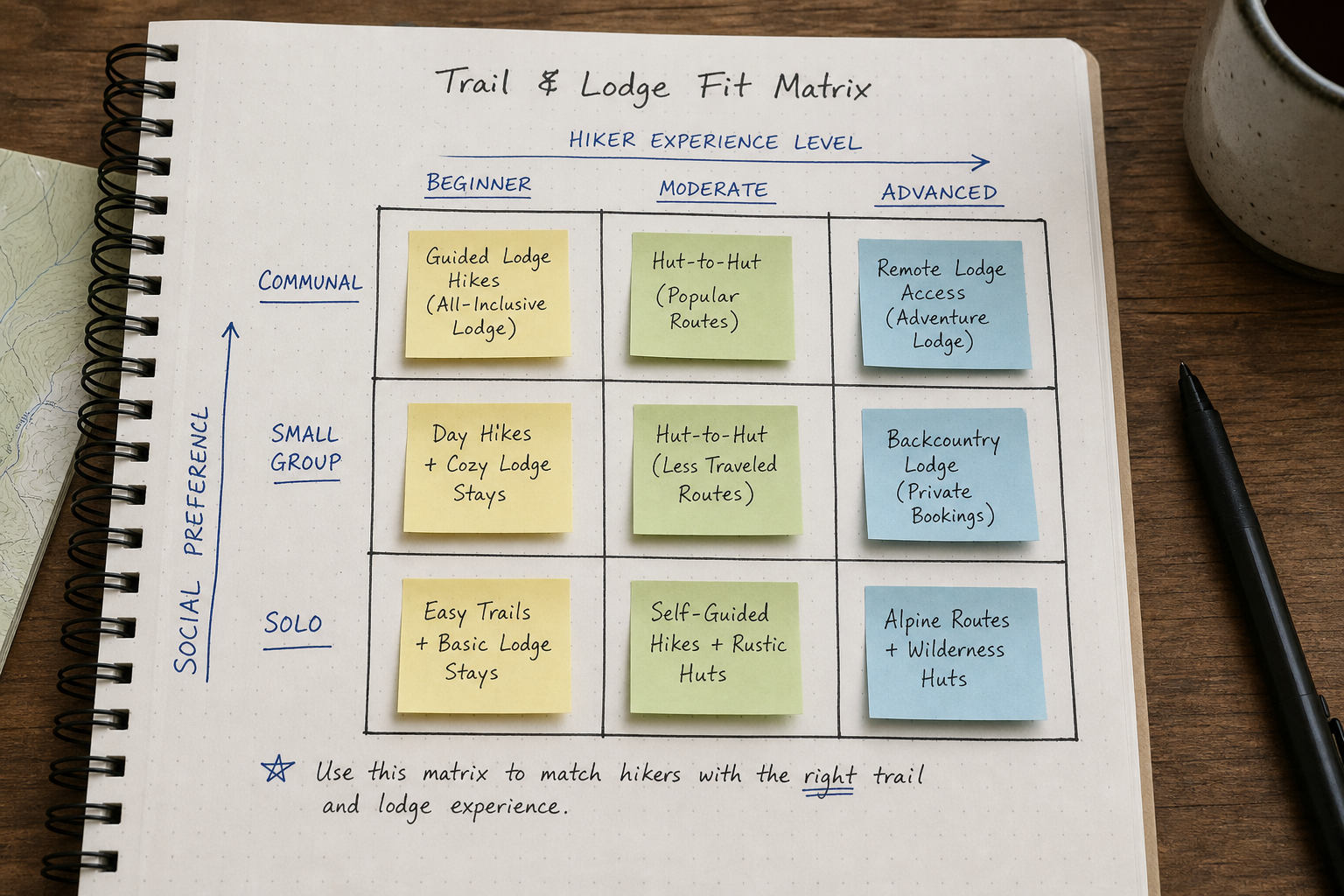
Many hikers dream of the classic European “hut-to-Hut” trek, where you sleep in high-altitude mountain refuges accessible only by foot. However, booking these huts independently is notoriously difficult. They often require speaking French or German to call the warden directly, and they book out six months in advance.
Some international tour agencies charge thousands of dollars to organize hut-to-hut logistics.
However, a smart, budget-friendly strategy is to use an adventure lodge as your primary basecamp and arrange a single, overnight “mini-trek” to a high mountain hut.
This gives you the romance of a night in the high peaks watching the alpenglow, without the physical exhaustion (and high cost) of spending seven consecutive nights in dormitory beds with limited showers. You can leave your main luggage secured at your basecamp lodge and hike up to the hut with only a lightweight daypack containing a sleeping liner and toothbrush. To plan this effectively, read How to Plan Hut to Hut Hiking in Switzerland (7 Tips).
The Reality of Mountain Nutrition
Food is the silent budget-killer in Switzerland. If you rely on eating out for every meal, you will easily spend $100 a day.
- Breakfast at a bakery: $15
- Lunch at a mountain restaurant (Rösti and a beer): $35
- Dinner at a village restaurant (Fondue or steak): $50+
Affordable guided programs solve this by bringing dining in-house. At community-driven lodges, communal dinners are a cornerstone of the experience. Hosts and volunteers prepare large, hearty meals designed specifically to refuel hikers.
At Ski Hostel, for example, the menu often features Brazilian-influenced cuisine—a dense, flavorful, and incredibly satisfying departure from the heavy cheese-and-potato standard of traditional Swiss mountain food.
These communal dinners serve a dual purpose. Not only do they drastically reduce your daily food costs, but they act as the social glue of the trip. Sharing a massive bowl of feijoada or gathering around a BBQ while discussing the day’s elevation gain builds friendships much faster than sitting at separate tables in a formal restaurant.
Furthermore, basecamps allow you to prepare your own packed lunches. Access to a communal kitchen or a host-provided sandwich spread means you can pack high-energy food for the trail, bypassing the expensive mid-mountain restaurants entirely.
Off-Trail Perks: Digital Nomads and Rest Days
Hiking every single day is a recipe for burnout, no matter how fit you are. Rest days are critical, and this is where the environment of your accommodation truly matters.
If you are paying for a premium linear tour, a rest day often means sitting in a hotel room in a tiny village with nothing to do.
At an adventure lodge, rest days are built into the community fabric. You might spend the day utilizing high-speed Wi-Fi to catch up on remote work (a crucial feature for digital nomads), participating in a restorative spa night, or simply lounging in shared spaces reading and talking with other international travelers.
If you want an active rest day, many regions offer alternative mountain sports. Switching from hiking boots to pedals for a day provides a completely different perspective of the alpine valleys. If this interests you, check out Find the Right Mountain Bike Group for Alpine Trails.
Frequently Asked Questions About Guided Swiss Hikes
Are guided hiking tours in Switzerland worth the cost?
If you book a traditional luxury tour, you are paying primarily for convenience and privacy. If those are your top priorities, yes. However, if you value social connection, flexibility, and adventure, a community-led lodge program offers 90% of the experience for roughly 30% of the price. The value proposition of affordable, basecamp-style guided tours is undeniably higher for budget-conscious travelers.
How fit do I need to be for an alpine hiking tour?
Switzerland’s trail infrastructure allows for all skill levels. Community lodges typically assess the group’s fitness level upon arrival and tailor the weekly program accordingly. While you don’t need to be an elite athlete, you should be comfortable walking 10 to 15 kilometers a day with moderate elevation gain (500 to 800 meters). Cardiovascular training—like stair climbing or running—in the months leading up to your trip will greatly enhance your enjoyment.
Can I hike in the Swiss Alps in winter?
While high-altitude red and white trails are buried under snow and avalanche danger is real, winter offers a completely different kind of magic. Many trails are converted into groomed winter walking paths (marked with pink signs), and snowshoeing excursions replace summer peak-bagging. If you are interested in the winter side of mountain tourism, consider reading Which Swiss Ski Resort Fits a Backpacker’s Budget?.
Final Thoughts on Building Your Itinerary
Hiking in Switzerland does not require draining your savings account, nor does it require you to figure out every complex logistical detail alone.
By choosing an all-inclusive adventure lodge over scattered hotel bookings, you unlock a streamlined, budget-friendly way to experience the Alps. You gain access to local knowledge, shared transport, home-cooked meals, and most importantly, an international community of like-minded outdoor enthusiasts. Whether you are tackling the trails around the Val de Bagnes or crossing borders into Italy for the day, the mountains are best experienced when the logistics fade into the background, leaving you free to simply enjoy the climb.