11 Scenic Hikes in the Alps Every Backpacker Needs
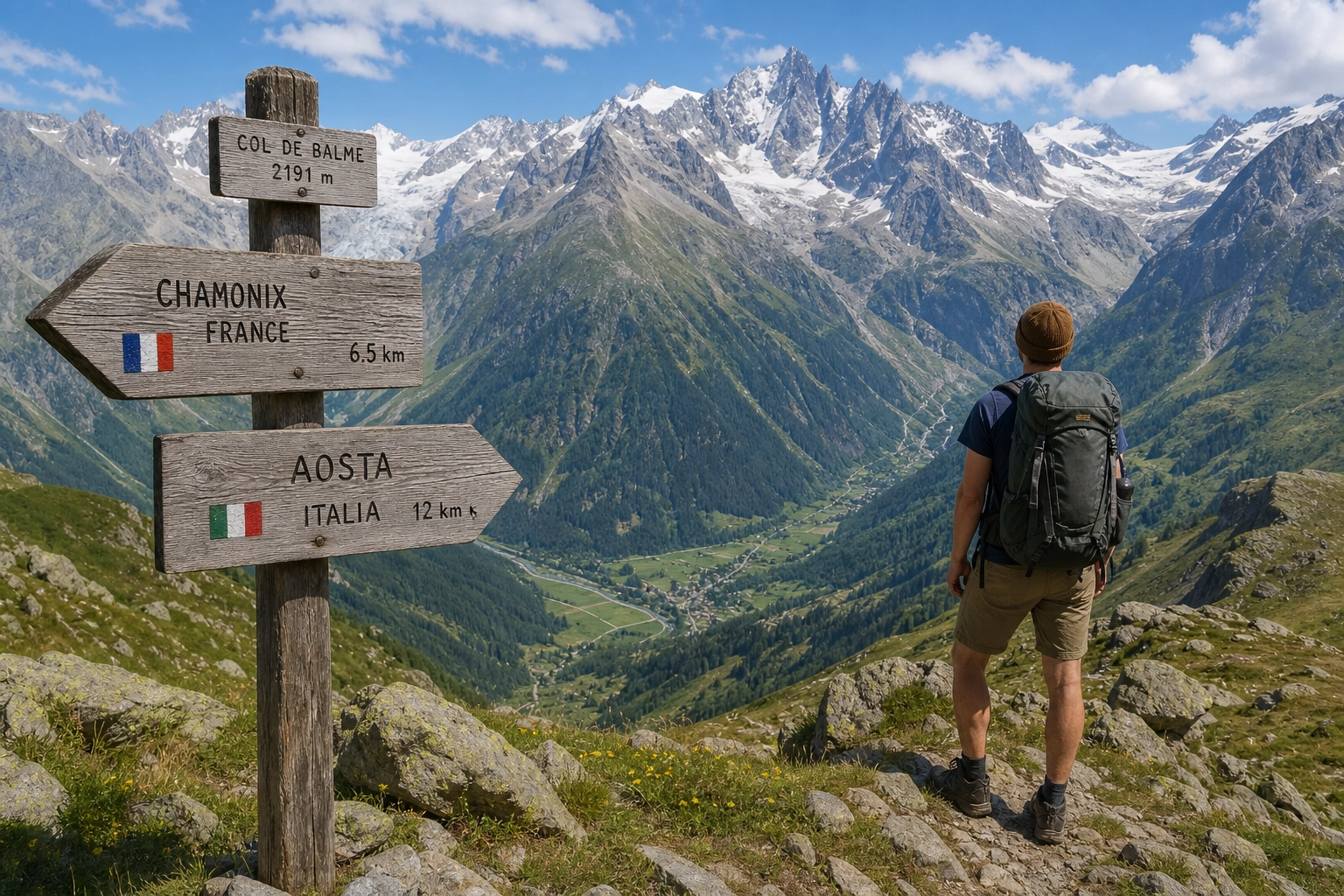
The Alps have a reputation problem. For decades, glossy travel magazines have painted this massive mountain range as an exclusive playground for the ultra-wealthy. If you solely trust Instagram, you might think hiking here requires a five-star chalet, a private funicular, and a trust fund just to buy a plate of rösti.
The reality on the ground is entirely different.
For solo travelers, digital nomads, and budget-conscious backpackers, the Alps offer one of the most accessible, well-connected, and breathtaking trail networks in the world. You don’t need to spend $500 a night at a luxury spa hotel to experience massive glaciers, craggy limestone peaks, and deep emerald valleys. By anchoring yourself in community-driven basecamps—like the social hubs found in Liddes or St. Stephan—you can access world-class trails across Switzerland, Italy, and France without draining your savings.
This guide breaks down 11 of the best hikes in the Alps tailored specifically for backpackers. We’ve bypassed the crowded tourist traps to focus on trails that deliver massive scenic payoffs, authentic mountain hut culture, and opportunities to connect with an international community of like-minded hikers.
Why Cross-Border Alpine Travel is a Backpacker’s Secret Weapon
Most travelers make the mistake of isolating their trip to a single famous town—like Zermatt or Grindelwald—and paying the premium that comes with that exclusivity.
Smart backpackers take a regional approach. By staying in strategic valleys like the Val de Bagnes or the St. Stephan region, you place yourself at the intersection of three distinct Alpine cultures. Within a single hour’s drive, you can eat a hearty Swiss raclette for dinner, cross the border for an espresso in the Italian Aosta Valley the next morning, and finish the weekend staring at the French side of Mont Blanc.
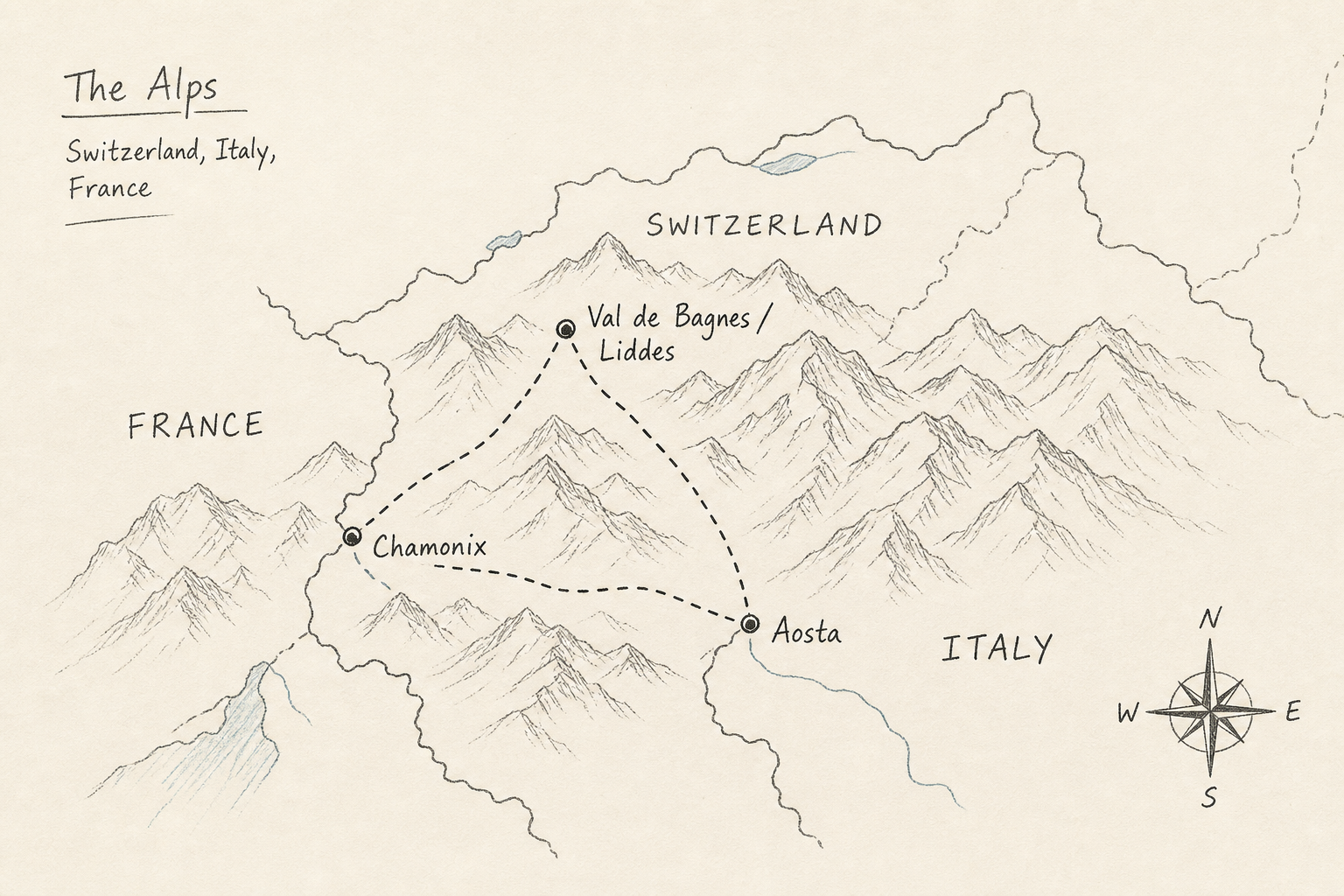
This cross-border strategy isn’t just about collecting passport stamps; it’s a vital budgeting tactic. It allows you to leverage the world-class infrastructure of the Swiss transport system while taking advantage of the cheaper food and varied terrains in neighboring Italy and France.
Here are the 11 scenic hikes that make this region a globally unmatched destination for backpackers.
The Swiss Classics: Big Peaks, Deep Valleys
Switzerland is the heart of Alpine hiking. The trails here are meticulously maintained, marked with the iconic yellow signposts, and dotted with mountain huts (cabanes) that serve hot meals at high altitudes.
1. Cabane du Vélan (Liddes)
If you want to experience authentic Swiss alpine culture without competing with thousands of day-trippers, start in the quiet, rugged terrain of Liddes.
- Location: Liddes, Valais (Switzerland)
- Distance: 9.5 km (Round trip)
- Elevation Gain: ~900m
- Difficulty: Moderate to Challenging
- Time Needed: 4.5 - 5 hours
The Experience:
Starting from the hamlet of Bourg-St-Pierre near Liddes, this trail winds up through a deep, raw alpine valley before kicking up a steep, rocky moraine. The payoff at the top is the Cabane du Vélan, a striking, futuristic-looking mountain hut perched at 2,642 meters. Unlike the hyper-crowded trails near Zermatt, the hike to Vélan feels wild and secluded. You’ll likely share the trail with a few local mountaineers and marmots whistling from the boulder fields.
Backpacker Tip:
The hut serves incredible homemade soup and tart. It’s the perfect place to meet other international hikers over a communal table. Because this trail is slightly off the main tourist circuit, prices at the hut are generally more reasonable than those found on the Haute Route.
2. Lac de Mauvoisin to Cabane de Chanrion
Deep in the Val de Bagnes, this hike combines monumental human engineering with untouched wilderness.
- Location: Val de Bagnes, Valais (Switzerland)
- Distance: 14 km (Round trip)
- Elevation Gain: ~550m
- Difficulty: Moderate
- Time Needed: 5 - 6 hours
The Experience:
The trailhead begins at the Mauvoisin Dam—the highest arch dam in Europe. You literally walk through tunnels carved into the mountain alongside the massive artificial lake. Once you clear the lake, the valley opens up into a vast, rolling alpine pasture surrounded by glaciers. The terrain here feels enormous and humbling. Cabane de Chanrion sits at the far end of this valley, acting as a crossroads for multi-day trekkers coming from Italy and Chamonix.
Backpacker Tip:
This is a fantastic initiation hike for those new to the Alps. The elevation gain is gradual over a long distance, making it less punishing on the knees. If you are looking to learn how to plan hut to hut hiking in Switzerland, Chanrion is an excellent first overnight stay.
3. The Gastlosen Tour (Fribourg/Bern Border)
Often called the “Swiss Dolomites,” this jagged limestone range offers a completely different aesthetic from the snow-capped giants of the Valais.
- Location: Near Jaun / St. Stephan region
- Distance: 11 km (Loop)
- Elevation Gain: ~800m
- Difficulty: Moderate
- Time Needed: 4 hours
The Experience:
Accessible via a short trip from the St. Stephan area, the Gastlosen are a spectacular wall of sheer limestone spires jutting out of green rolling pastures. The loop trail takes you right to the base of these vertical walls, through dense pine forests, and across alpine meadows. Halfway through the hike, the Chalet du Soldat offers a perfect resting spot right beneath the most imposing peaks.
Backpacker Tip:
Because this is a lower-altitude hike (maxing out around 1,900m), it clears of snow much earlier in the season than the glacier trails. It’s a prime target for late May or early June when higher passes are still impassable.
4. Tour des Combins – Liddes to Cabane de Mille
The Tour des Combins (TDC) is a multi-day trek that circles the Grand Combin massif, but backpackers short on time can tackle its most scenic segments as day hikes.
- Location: Liddes, Valais (Switzerland)
- Distance: 12 km (Round trip)
- Elevation Gain: ~1,100m
- Difficulty: Challenging
- Time Needed: 5.5 - 6.5 hours
The Experience:
Climbing out of the Liddes valley, this segment of the TDC is a grueling but immensely rewarding ascent. You climb through fragrant larch forests before breaking the treeline into exposed, sweeping pastures. At the summit sits Cabane de Mille, offering a flawless 360-degree panorama. On a clear day, you can see the Mont Blanc massif to the west and the Matterhorn to the east.
Backpacker Tip:
This is a stellar alternative for hikers who want the grandeur of a multi-day trek without the logistical headache of booking six different huts. If you are trying to read up on 7 tips for hiking in Switzerland (without the high cost), utilizing day-segments of famous long-distance trails is tip number one.
Cross-Border Excursions: Italy and France
One of the greatest perks of a Swiss basecamp like Ski Hostel is the ability to easily hop international borders. Here is where the regional strategy pays off.
5. Col de Fenêtre (Switzerland to Italy)
Walk across an international border using the same high-altitude pass utilized by the Romans and Napoleon’s army.
- Location: Great St. Bernard Pass (Swiss/Italian Border)
- Distance: 8 km (Loop)
- Elevation Gain: ~400m
- Difficulty: Easy to Moderate
- Time Needed: 3 - 4 hours
The Experience:
Starting near the famous Grand St. Bernard Hospice (home of the rescue dogs), this trail takes you past three pristine alpine lakes (Lacs de Fenêtre) reflecting the Italian peaks. The actual Col de Fenêtre pass marks the border between Switzerland and Italy. Standing on the ridge, you gaze down into the Italian Aosta Valley. The terrain is rocky, barren, and striking.
Backpacker Tip:
Because the trailhead starts at nearly 2,400 meters, you get high-alpine views with minimal climbing effort. It’s an ideal “rest day” hike. Furthermore, if you are visiting in the winter, this region transitions beautifully; you might even consider returning to read about skiing in the Italian Alps for an Aosta day trip.
6. Gran Paradiso National Park: Rifugio Vittorio Sella
Trade Swiss precision for Italian wilderness and world-class wildlife spotting in the Aosta Valley.
- Location: Cogne, Aosta Valley (Italy)
- Distance: 11 km (Round trip)
- Elevation Gain: ~900m
- Difficulty: Moderate
- Time Needed: 4.5 hours
The Experience:
A quick border crossing from the Valais brings you to Cogne. The hike up to Rifugio Vittorio Sella was originally a hunting trail for Italian royalty. Today, Gran Paradiso is Italy’s oldest national park, heavily protected and teeming with Alpine Ibex (Stambecco). The trail is masterfully graded, zig-zagging up a steep canyon beside a roaring waterfall until it flattens into a massive glacial basin.
Backpacker Tip:
Food in Italian rifugios is significantly cheaper than in Swiss cabanes. Plan to eat lunch at the top. A massive plate of polenta with wild boar stew and a double espresso will cost a fraction of what you’d pay across the border.
7. Lac Blanc (Chamonix, France)
The definitive view of the Mont Blanc massif, accessible via a short day trip from the Swiss border.
- Location: Chamonix-Mont-Blanc (France)
- Distance: 8 km (Round trip from La Flégère cable car)
- Elevation Gain: ~500m
- Difficulty: Moderate
- Time Needed: 3.5 hours
The Experience:
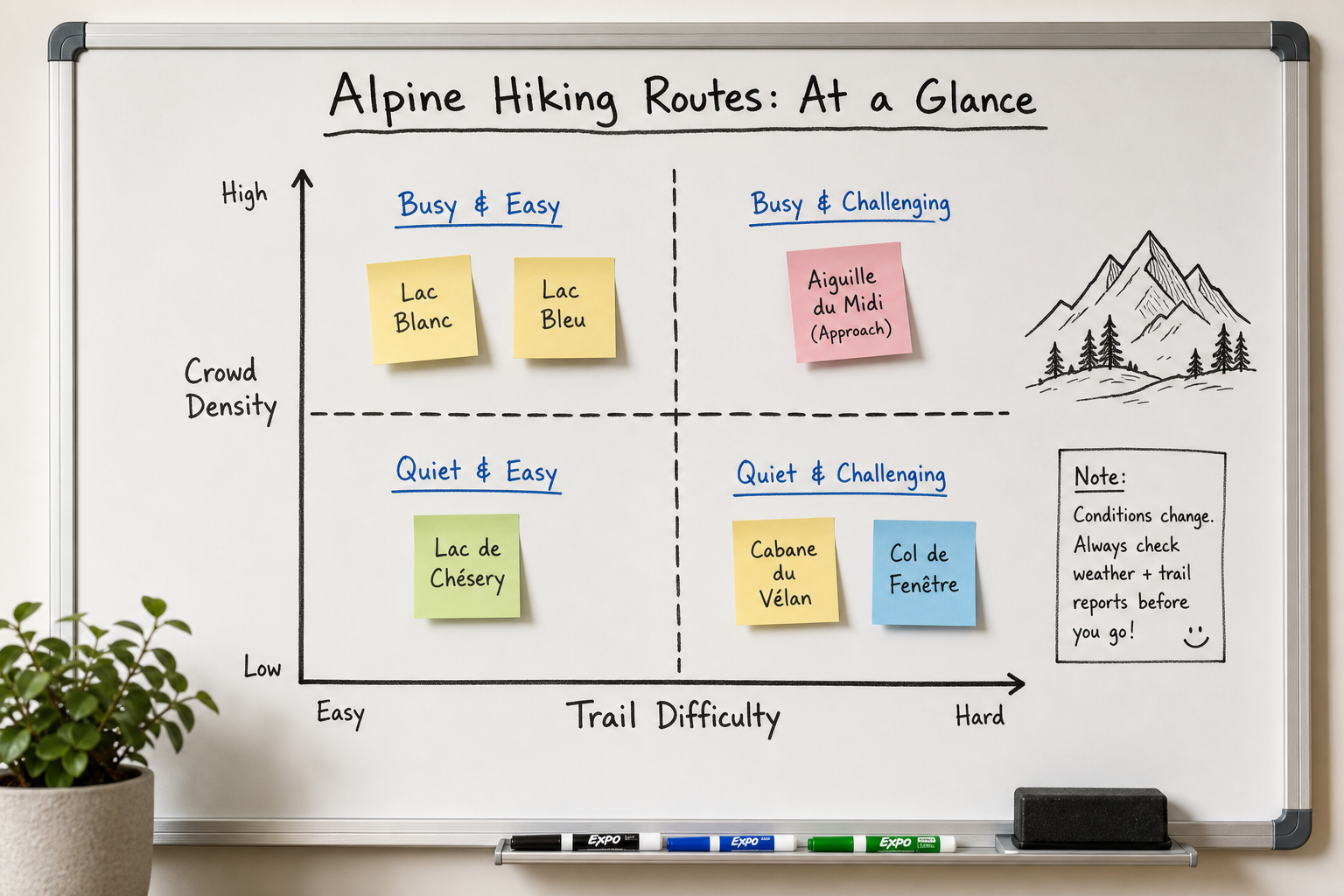
Lac Blanc is arguably the most famous day hike in the French Alps. Located in the Aiguilles Rouges nature reserve, the trail forces you to stare directly at the glaciers tumbling off Mont Blanc the entire way up. The lake itself often holds ice well into July and provides a mirror reflection of the highest peak in Western Europe.
Backpacker Tip:
Because of its fame, Lac Blanc gets incredibly crowded. To avoid the bottlenecks, start early or go late in the afternoon. For more tactics on navigating this busy area, check out our guide on Mountain Mont Blanc: 7 ways to visit without the crowd.
Hidden Gems & Backpacker Favorites
These trails are the bread and butter of the seasoned digital nomad and long-term backpacker—high reward, lower foot traffic, and great community vibes.
8. Val d’Arpette (Champex-Lac to Trient)
A rugged, challenging variant of the Tour du Mont Blanc (TMB) that filters out the casual walkers.
- Location: Champex-Lac (Switzerland)
- Distance: 14 km (Point-to-point)
- Elevation Gain: ~1,190m
- Difficulty: Very Challenging
- Time Needed: 7 - 8 hours
The Experience:
Instead of taking the easier Bovine route on the TMB, this trail cuts straight up the Val d’Arpette to the Fenêtre d’Arpette pass (2,665m). It is a steep, boulder-hopping ascent that requires route-finding skills. The reward is a raw, unimpeded view of the Trient Glacier, which you can nearly touch as you begin your descent.
Backpacker Tip:
This hike is physically demanding and requires stable weather. Do not attempt it in the rain, as the boulder fields become dangerously slick. For alternatives in the area, explore the 5 best hiking trails in Switzerland near Mont Blanc.
9. Plaine Morte Glacier Trail
A surreal, lunar landscape high above the Rhone Valley.
- Location: Crans-Montana / St. Stephan proximity
- Distance: Variable (Cable car access required)
- Elevation Gain: Minimal on the plateau
- Difficulty: Easy (once at altitude)
- Time Needed: 2 - 3 hours on the ice
The Experience:
Taking a cable car up to 3,000 meters, you step out onto the Plaine Morte (Dead Plain) glacier. It’s a vast, flat expanse of ice and rock that looks more like Antarctica than the typical green Swiss Alps. Walking across a marked trail on the glacier is a humbling experience, highlighting the fragile state of Alpine ice.
Backpacker Tip:
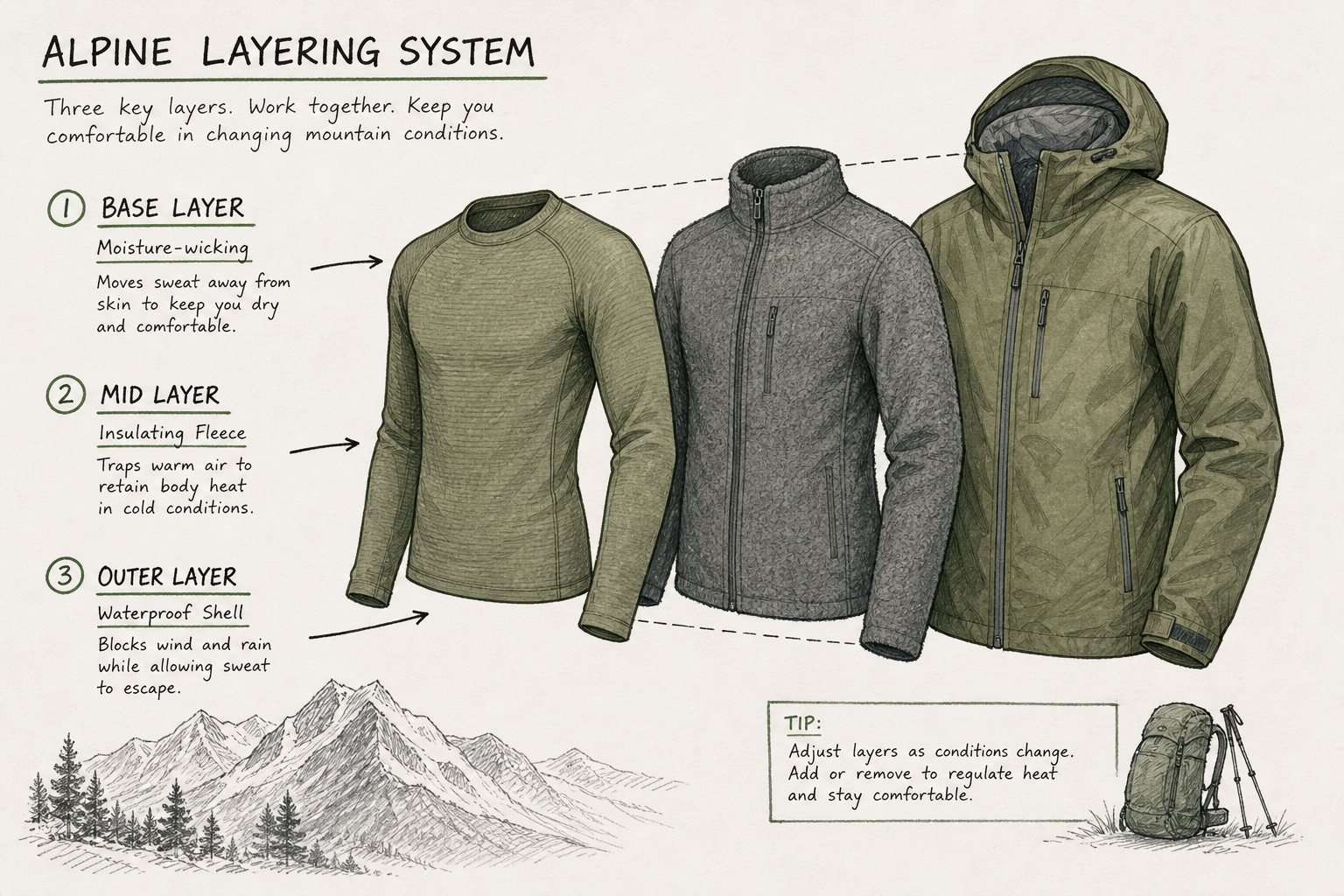
Even in August, the wind at 3,000 meters can be freezing. Proper layering is non-negotiable. Review our Swiss Alps summer 5-step packing guide to ensure you have the right windproof shells and micro-spikes before heading up.
10. The Five Lakes Walk (Zermatt)
Yes, Zermatt is expensive, but this specific hike is too spectacular to leave off the list—and there are ways to do it cheaply.
- Location: Zermatt, Valais (Switzerland)
- Distance: 9.8 km (Loop)
- Elevation Gain: ~241m (mostly downhill if you take the funicular up)
- Difficulty: Easy
- Time Needed: 3 - 4 hours
The Experience:
The Seenweg (Five Lakes Walk) passes by Stellisee, Grindjisee, Grünsee, Moosjisee, and Leisee. Three of these lakes offer perfectly clear reflections of the Matterhorn. The trail weaves through ancient Swiss stone pine forests and alpine meadows filled with Edelweiss.
Backpacker Tip:
Zermatt’s restaurants will destroy a backpacker’s budget. Buy your groceries at the Coop in Visp before taking the train up the valley. Pack a heavy lunch, hike the loop, and take the train back to a more affordable basecamp by dinner time.
11. Oeschinensee Panorama Trail
A UNESCO World Heritage site featuring what many consider the most beautiful lake in the Alps.
- Location: Kandersteg (Bernese Oberland)
- Distance: 8.5 km (Loop above the lake)
- Elevation Gain: ~450m
- Difficulty: Moderate
- Time Needed: 3.5 hours
The Experience:
The Oeschinensee is a massive, glacier-fed lake with impossibly blue water, surrounded on three sides by sheer, 3,000-meter cliffs. While the shoreline gets crowded with tourists, the high panorama trail climbs hundreds of meters above the water, offering plunging views and a peaceful, airy traverse beneath the towering Blüemlisalp massif.
Backpacker Tip:
Skip the overpriced gondola and hike up from Kandersteg town (adds about 1.5 hours and 400m elevation). It saves money and acts as a great warm-up.
The Backpacker’s Alpine Strategy: Basecamps over Hotels
The most common mistake hikers make in the Alps is booking a new hotel every night and carrying a 15kg backpack across mountain passes. Not only is this exhausting, but it’s also the fastest way to drain your bank account.
The modern backpacker strategy relies on finding a central, affordable basecamp.
| Feature | Traditional Luxury Hotel | Social Mountain Lodge / Hostel |
|---|---|---|
| Price per Night | $150 - $400+ | $40 - $80 (often with meals) |
| Atmosphere | Quiet, isolated, formal | Communal dinners, shared itineraries |
| Logistics | Do-it-yourself | Hosts organize carpools to trailheads |
| Target Audience | Couples, luxury tourists | Solo travelers, digital nomads, backpackers |
By staying in places designed for communal living, you aren’t just saving money—you are tapping into a localized network of trail beta. You can split gas money for a day trip to Aosta, share the cost of a guide for a glacier crossing, or find companions for an intimidating hike. If you are debating your accommodation style, read more on why social lodges beat luxury hotels in the Swiss mountains.
Furthermore, these central valleys are multi-seasonal hubs. The same regions that offer budget-friendly ski access in the winter become prime hiking real estate in the summer. (Curious about the winter flip side? See which Swiss ski resort fits a backpacker’s budget).
Finding Your Social Group in the Mountains
Hiking solo is wonderful for introspection, but traversing high alpine terrain is objectively safer—and often more fun—in a group.
If you are a solo traveler or digital nomad looking to build a quick community, basecamps like Ski Hostel curate these connections organically through family-style dinners and weekend excursions. You don’t have to hire a private $600/day mountain guide to feel safe on the trails.
Instead, lean into the lodge community. Ask around at breakfast. Look into guided hiking in Switzerland to find your social group. And if you prefer two wheels to two boots, these same valleys have massive single-track networks. You can easily find the right mountain bike group for alpine trails just by chatting with the person in the bunk next to yours.
Final Checklist Before You Hike
Before you lace up and head toward the Cabane du Vélan or cross into Italy, keep these three non-negotiable alpine rules in mind:
- Start Early: Alpine thunderstorms typically roll in between 2:00 PM and 4:00 PM during the summer. Aim to be off high ridges by early afternoon.
- Respect the Layers: A sunny 25°C day in the valley can easily be a windy 5°C at the mountain hut. Never hike without a windproof shell and an insulating mid-layer.
- Carry Cash: While Switzerland is highly digitized, remote mountain huts (especially in Italy and France) often rely on physical cash (Francs or Euros) for their famous homemade pies and coffees.
The Alps do not have to be an exclusive, cost-prohibitive dream. By choosing the right basecamp, crossing borders strategically, and tapping into the backpacker community, you can hike the absolute best of Europe’s mountains without breaking the bank. See you on the trail.