Hiking Hostel vs Balmers Hostel: active solo hiking in Switzerland
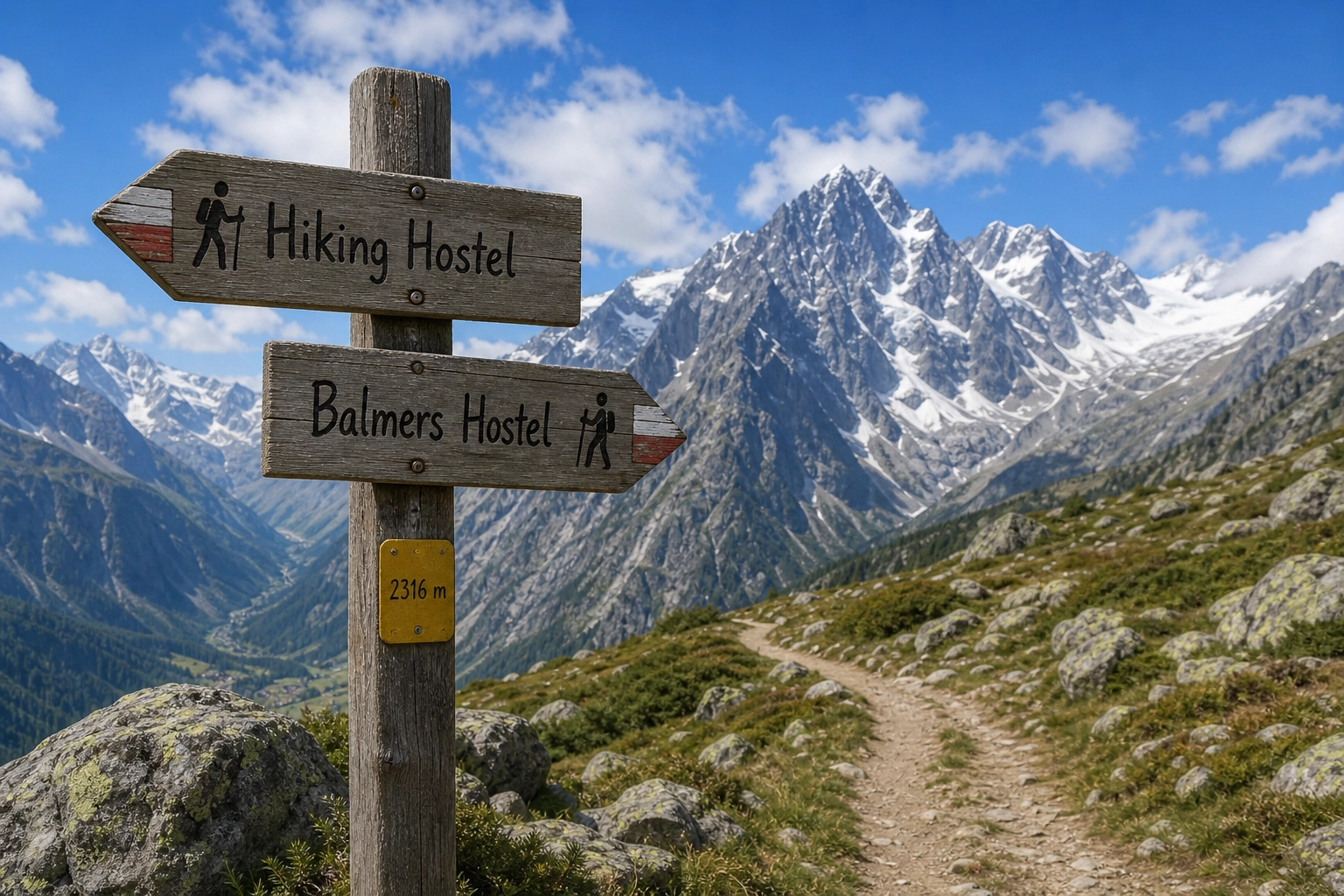
Planning an active summer trip to Switzerland as a solo traveler often leads to a common fork in the road: do you book a classic, independent backpacker hostel in an adventure hub, or do you join an organized, hiking-focused hostel week where logistics, meals, and group outings are handled for you?
Switzerland stands among the safest and most majestic alpine destinations in the world. According to Quick Whit Travel, navigating the Swiss travel network independently is straightforward, making the country a top destination for solo adventurers. However, straightforward transit does not automatically mean stress-free trail planning, easy group formation, or predictable daily spending.
For active solo hikers looking for the best summer experience, two names frequently surface: Balmers Hostel in Interlaken and Hiking Hostel based in the Valais and Simmental regions. While both cater to solo travelers, digital nomads, and outdoor enthusiasts, their models deliver entirely different holidays.
Balmers Hostel offers a legendary, flexible base for independent travelers who want to sample night life, try adrenaline sports like paragliding, and organize their own day hikes out of the Bernese Oberland. Hiking Hostel provides structured, week-long guided hiking packages in Liddes and St. Stephan, covering accommodation, airport transfers, daily trail transport, home-cooked meals, and curated day trips across Switzerland, France, and Italy.
This guide breaks down every practical detail of both options—from trail access and daily routines to real financial costs and social atmospheres—so you can choose the holiday structure that matches your fitness, budget, and travel style.
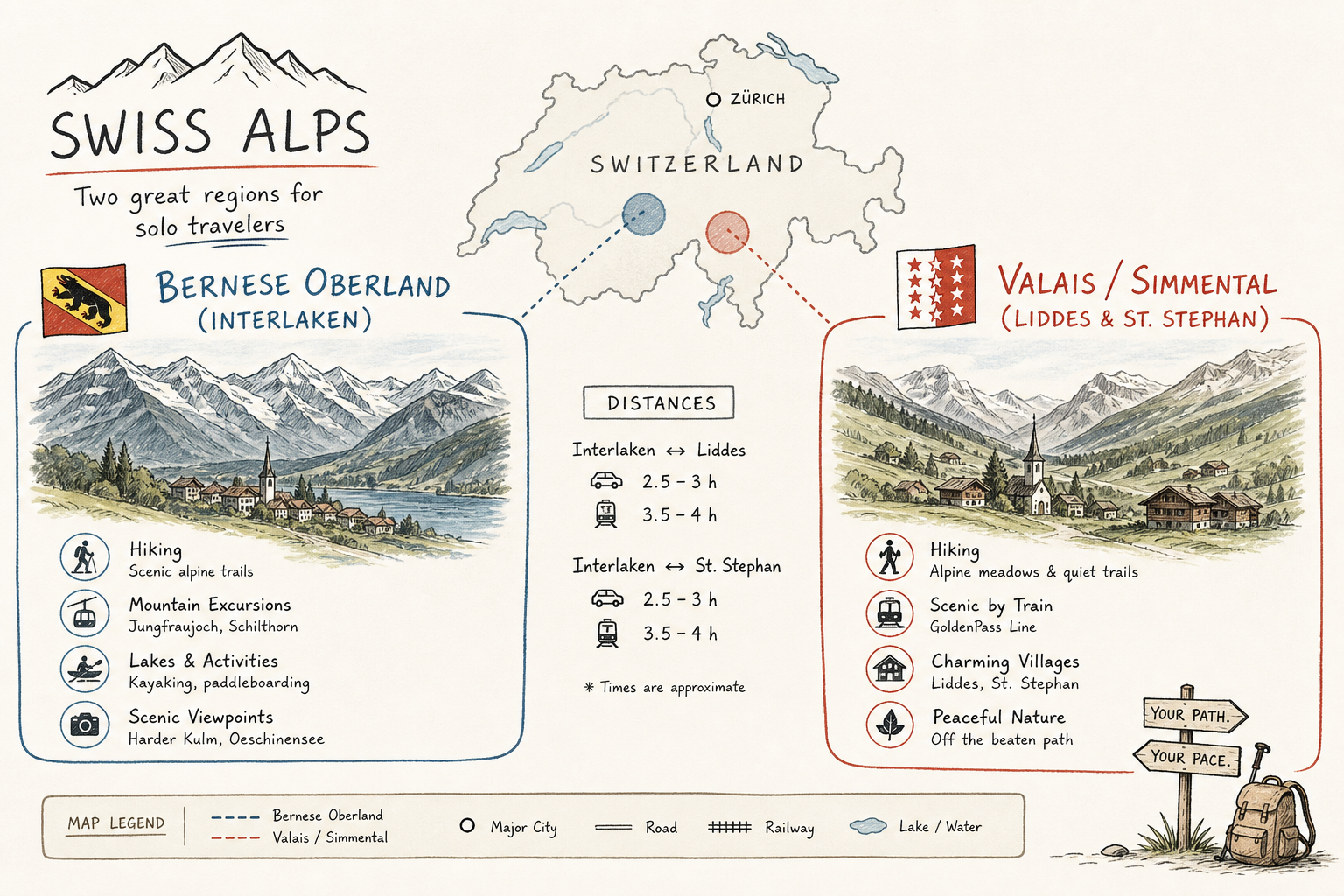
Swiss Alps for Solo Travelers: Understanding the Two Models
Before comparing accommodation facilities, it helps to understand the fundamental difference between independent hub travel and structured active week holidays.
The Independent Hub Model (Interlaken / Balmers)
In a traditional backpacker hub like Interlaken, you purchase accommodation by the night. Each morning, you decide what to do, figure out train schedules, buy cable car tickets, assemble packed lunches, and find trail companions in the common area. You retain maximum spontaneity, but you carry full responsibility for navigation, budget management, and safety on high alpine routes.
The All-Inclusive Hiking Week Model (Hiking Hostel)
An organized active week operates like a social lodge experience designed specifically for mountain lovers. You book a six- to seven-night stay that includes your dorm or room, daily breakfast, trail lunches, group dinners, airport transfers, and private transport directly to trailheads. Every morning, a professional or experienced leader guides a group hike tailored to conditions and group fitness. You get the social atmosphere of a hostel combined with the seamless execution of a mountain trekking camp.
To see how social lodging changes your entire alpine experience compared to isolated hotel rooms, explore our guide on why social lodges beat luxury hotels in Swiss mountains.
Hiking Hostel vs Balmers Hostel: Side-by-Side Comparison
Selecting the right base dictates your daily budget, how many logistics decisions you make while on holiday, and how quickly you connect with fellow hikers.
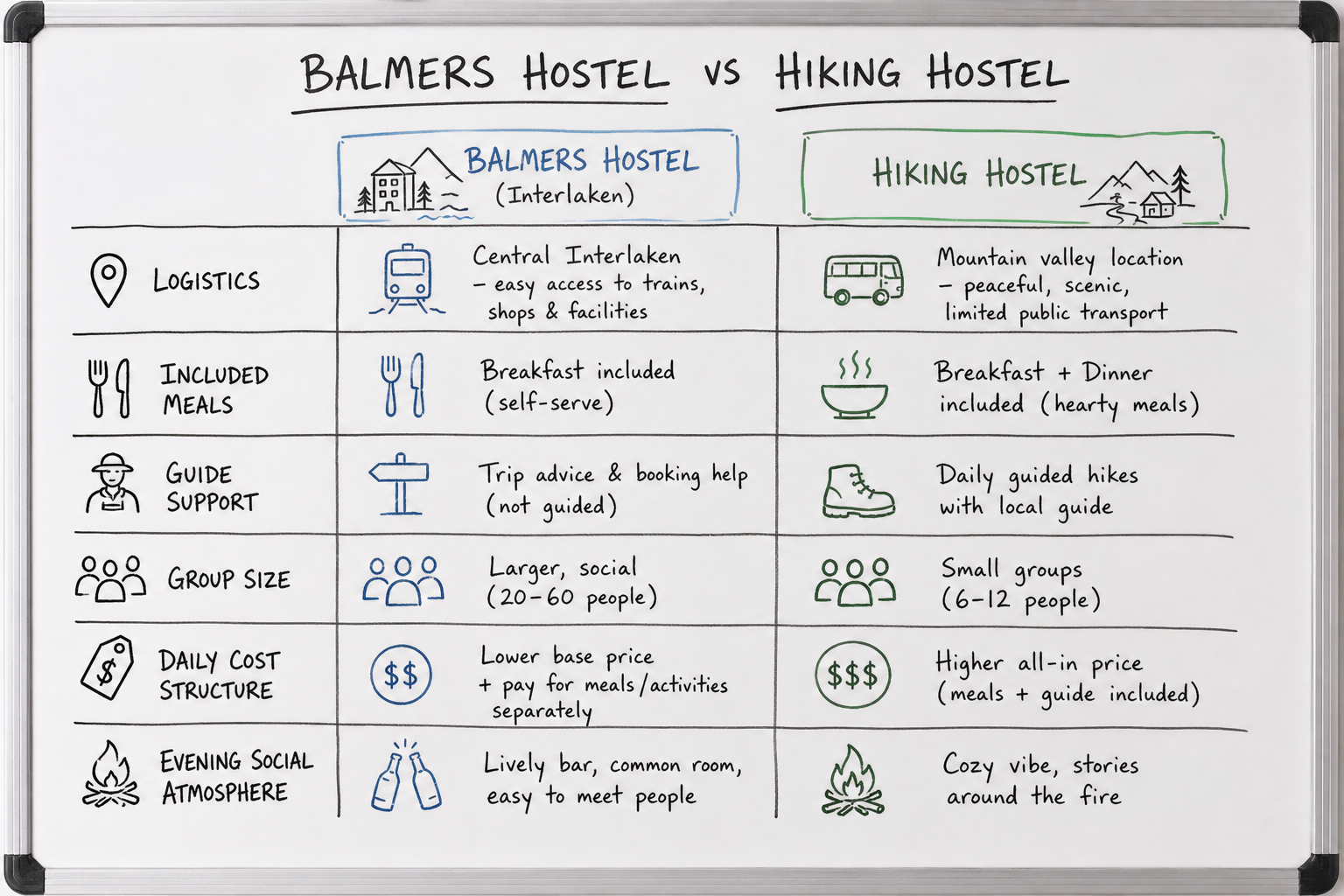
| Feature / Metric | Balmers Hostel (Interlaken) | Hiking Hostel (Liddes & St. Stephan) |
|---|---|---|
| Primary Location | Interlaken, Bernese Oberland | Liddes (Valais) & St. Stephan (Simmental) |
| Core Travel Concept | Independent backpacker & party hub | Week-long guided social hiking holiday |
| Target Traveler | Solo backpackers, adrenaline seekers, party-goers | Solo hikers, digital nomads, active outdoor enthusiasts |
| Meals Included | Guest kitchen / restaurant on-site (Meals bought separately) | Full board: breakfast, packed trail lunch, communal 3-course dinners |
| Daily Transport | Public buses & Swiss trains (Paid out of pocket) | Included private transport directly to remote trailheads |
| Airport Transfers | Not included (SBB train ticket required) | Included airport pick-up & drop-off options |
| Hiking Structure | Self-guided; self-planned routes | Daily organized group hikes led by mountain guides |
| Excursions Included | Optional paid third-party tours | Guided day trips (Mont Blanc/Chamonix, Aosta, Glacier 3000) |
| Evening Vibe | Metro Bar, party events, broad social mixer | Shared dinners, fireside chats, quiet night rest for big trail days |
| Cost Predictability | High variability (pay-as-you-go transport & food) | All-inclusive fixed pricing (minimal hidden expenses) |
Deep Dive: Staying at Balmers Hostel in Interlaken
Balmers Hostel is Switzerland’s oldest private hostel and remains an iconic stop for global backpackers. Located in Matten bei Interlaken between Lake Thun and Lake Brienz, Balmers has spent decades refining the independent youth hostel experience.
The Pros of Choosing Balmers
- Unbeatable Adrenaline Access: If your ideal holiday includes paragliding, skydiving, canyoning, or sky-high bungee jumps, Interlaken is the recognized capital of Swiss adventure sports. Balmers operates an outdoor center desk where you can book commercial excursions on the spot.
- Vibrant Nightlife: Balmers is famous for its Metro Bar, night events, and buzzing lawn games. If socializing over drinks late into the night is a primary holiday goal, Balmers excels.
- Maximum Spontaneity: You are not locked into a fixed weekly itinerary. If you wake up and decide to take a boat cruise across Lake Thun or spend the afternoon swimming instead of climbing a peak, you have complete freedom.
- Central Railway Connectivity: Interlaken Interlaken Ost and West stations connect directly to Grindelwald, Lauterbrunnen, Wengen, and Mürren, giving you rail access to iconic tourist peaks like the Eiger and Jungfraujoch.
The Hidden Challenges for Active Solo Hikers at Balmers
- High Daily Transport Costs: Public transportation in Switzerland is among the best in the world, but without dedicated travel passes, daily cable car and train rides stack up fast. A round-trip mountain railway up to Mürren or First can cost between 40 CHF and 100 CHF per day.
- Solo Trail Navigation & Safety: If you head out from Interlaken to attempt high alpine routes, you are responsible for checking weather windows, reading topographic maps, and assessing trail difficulties alone unless you meet someone at breakfast who happens to want the exact same route and pace.
- The Logistics Fatigue: After three straight days of researching trail buses, packing store-bought groceries, queuing at ticket kiosks, and navigating crowded tourist trains, independent travel in the Bernese Oberland can feel like work.
- Crowded Tourist Trails: Interlaken is the primary gateway for massive international tour groups. Popular trails like the North Face Trail or Bachalpsee can feel busy during peak summer months.
Deep Dive: The Hiking Hostel Week-Long Experience
Hiking Hostel approaches active Swiss holidays from a fundamentally different angle. Built around bases in Liddes (near the Mont Blanc massif in Valais) and St. Stephan (in the peaceful Simmental valley near Gstaad), Hiking Hostel operates structured, seven-day active holidays designed primarily for solo travelers.
The Core Highlights of Hiking Hostel
- Zero Planning Fatigue: From the moment you land, logistics are handled. Airport transfers bring you straight to the lodge. Daily mountain transport drops your group directly at the trailhead and picks you up at the finish line, eliminating train ticket queues and rigid bus timetables.
- Inclusive Daily Trail Transport & Professional Guidance: You hike in small, supportive groups matched by fitness level. Experienced guides navigate terrain, monitor alpine weather changes, and introduce hidden routes that traditional tourists rarely discover.
- Full Board Meals Crafted for Hikers: Eating out in Switzerland quickly strains a backpacker budget. Hiking Hostel includes hearty breakfasts, customizable packed lunches with trail snacks, and home-cooked family-style dinners every evening. Shared dinners mean solo travelers never eat alone.
- Cross-Border Alpine Excursions: Because Hiking Hostel bases are strategically located, weekly itineraries frequently include cross-border day trips. You can hike in the shadow of Mont Blanc out of Chamonix, cross over to the Italian Alps for alpine trails and pasta in Aosta, or visit high-altitude glaciers like Glacier 3000.
To learn more about crossing into Italy for a single-day mountain trek, read our guide on taking an Aosta day trip from your Swiss hiking base.
Who Might Prefer Another Option?
- Party Seekers: If your idea of a night out involves clubbing until 3:00 AM, Hiking Hostel’s early-to-bed mountain rhythm may feel too quiet.
- Strictly Independent Travelers: If you dislike group itineraries and prefer deciding your destination at noon every day, a structured week-long package will feel restrictive.
Budget Analysis: Breaking Down the Real Cost of Solo Travel in Switzerland
One of the biggest misconceptions solo travelers make when booking Switzerland is looking only at the nightly dorm bed rate. A 45 CHF bed in a popular hub can easily turn into a 180 CHF daily spend once transit, gondolas, and basic meals are factored in.
Let’s compare a typical 7-day DIY solo trip based at a traditional hostel in Interlaken versus a 7-day all-inclusive package with Hiking Hostel.
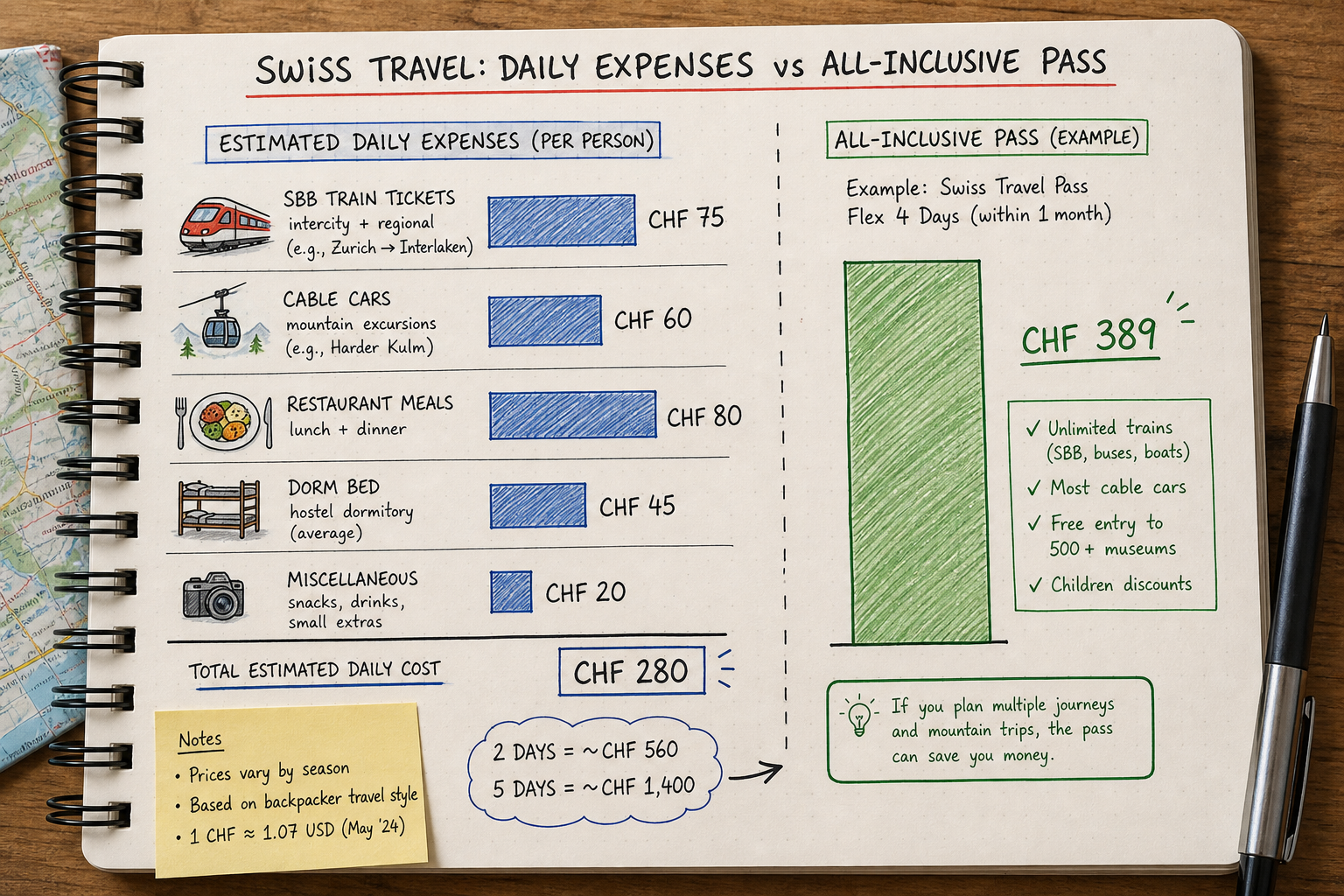
7-Day Expense Breakdown Comparison (Estimated Estimates in CHF)
| Expense Category | DIY Solo Hub (e.g., Balmers) | Hiking Hostel All-Inclusive Week |
|---|---|---|
| Accommodation (7 nights) | ~350 CHF – 450 CHF (Dorm bed) | Included |
| Airport Transfers (Return) | ~70 CHF – 120 CHF (SBB rail) | Included |
| Daily Trail Transit & Cable Cars | ~250 CHF – 420 CHF (Buses/Gondolas) | Included (Private vans & pass access) |
| Food & Dining (7 days) | ~250 CHF – 400 CHF (Coop groceries & cheap eats) | Included (Breakfast, trail lunches, 3-course dinners) |
| Guided Excursions / Navigation | 0 CHF (Self-guided) or 150+ CHF (Paid day tour) | Included (Daily guided group hikes + day trips) |
| Estimated Total Spend | 920 CHF – 1,390 CHF+ | Fixed Single Package Price |
When traveling independently, unexpected costs accumulate rapidly. Buying a single coffee and sandwich at a mountain station can cost 20 CHF. Missing a regional bus connection might force you to take a pricey local taxi.
With an all-inclusive hiking week, your core expense is settled before you leave home. This allows budget-conscious hikers and digital nomads to enjoy peak alpine terrain without constantly calculating rail fares. If you want more strategies to protect your wallet while exploring Switzerland, check out our guide on 7 tips for hiking in Switzerland without high costs.
The Social Vibe: Party Hub vs. Shared Trail Feats
Solo travel is rarely about being completely alone; it is about having the freedom to connect with people on your own terms. However, the type of social connection you experience depends heavily on your accommodation.
The Party & Mixer Vibe at Balmers
At Balmers, the social atmosphere centers around the common areas, beer garden, and Metro Bar. It is fast-paced, international, and energetic. You will meet travelers from all corners of the world who are passing through for 48 hours. The conversations are fun and lighthearted, but because people come for vastly different activities—some are skydiving, others are Euro-railing, and some are just relaxing—finding someone to commit to an 18-kilometer, 1,000-meter elevation hike at 7:00 AM can be challenging.
The Bond of Shared Trail Efforts at Hiking Hostel
At Hiking Hostel, the social group coalesces around physical achievement and shared mountain experiences. When you spend six hours climbing an alpine pass together, taking in views of Mont Blanc or the Valais peaks, you forge deep bonds quickly.
Returning to the lodge after a full day on the trails, sharing a hot shower, and sitting down to a large family-style dinner creates a warm, welcoming community. For introverted solo travelers or those who find bars overwhelming, guided group hikes provide an easy, organic way to make long-lasting friends without any social pressure. If you are curious about group dynamics on the trail, see our detailed article on finding your social group through guided hiking in Switzerland.
Comparing a Day in the Life: DIY Interlaken vs Hiking Hostel
To help visualize how your day unfolds under each model, here is a breakdown of a mid-week summer day.
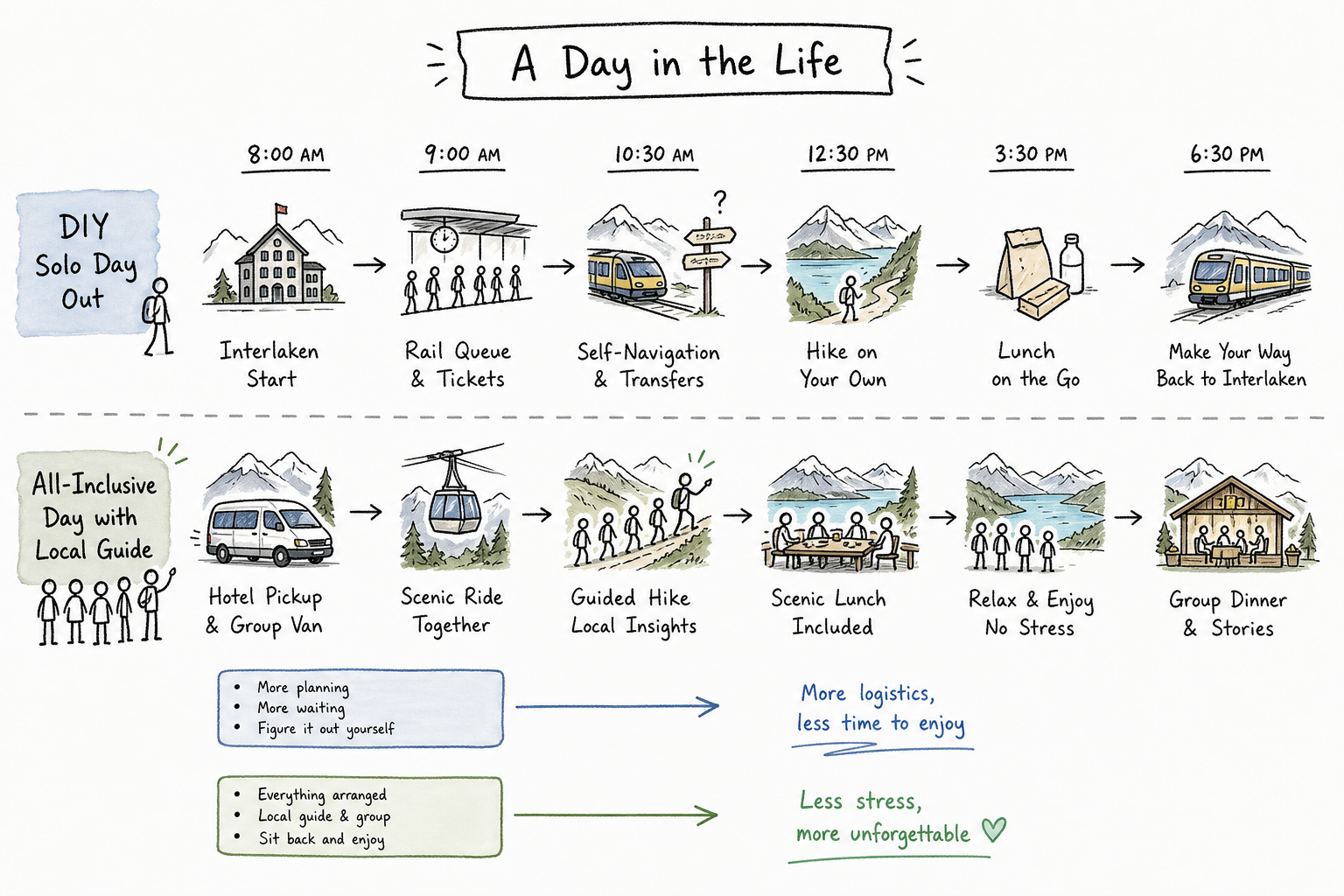
Scenario A: A Self-Guided Day at Balmers Hostel (Interlaken)
- 07:30 AM: Wake up, use the shared kitchen to brew coffee, and check weather apps for the Jungfrau region.
- 08:30 AM: Walk to Interlaken Ost station. Queue up to purchase rail tickets or figure out zone validity for your Swiss Pass.
- 09:30 AM: Board the train to Grindelwald, transfer to a regional bus, and take a gondola up to the trail head.
- 11:00 AM: Start your self-guided hike. Navigate trail markers while keeping an eye on changing alpine cloud cover.
- 01:30 PM: Eat a supermarket sandwich on the trail while cross-referencing map apps to ensure you do not miss the last gondola down.
- 04:30 PM: Take the cable car and train back to Interlaken. Stop by a grocery store to buy dinner ingredients.
- 07:00 PM: Cook in a busy hostel kitchen, then head down to the bar to grab a pint with fellow backpackers.
Scenario B: A Guided Trail Day with Hiking Hostel (St. Stephan or Liddes)
- 07:30 AM: Wake up to fresh mountain air and enjoy a freshly prepared lodge breakfast with coffee and tea.
- 08:30 AM: Pack your custom trail lunch (sandwiches, fruit, trail mix) provided by the kitchen host.
- 09:00 AM: Step into the hostel’s private van. Your guide drives the group directly to a high-altitude trailhead in Valais or the Simmental Valley.
- 09:45 AM: Begin a curated group hike. Your guide manages the pace, shares local natural history, and handles all navigation and route adjustments.
- 01:00 PM: Eat lunch together at a panoramic viewpoint overlooking glacier-capped peaks.
- 04:00 PM: Arrive at the trail finish line where private transport is waiting to take the group back to the lodge.
- 06:30 PM: Sit down for a family-style, three-course meal with your housemates, swapping trail stories into the evening.
Region & Trail Quality: Bernese Oberland vs Valais & Simmental
Where you stay dictates what scenery you step into each morning. Both regions are breathtaking, but they deliver distinct mountain environments.
Interlaken & Bernese Oberland
Interlaken sits between two turquoise lakes, framed by the famous trio of the Eiger, Mönch, and Jungfrau. The landscape is dramatic, featuring sheer cliff walls, gushing waterfalls (like Lauterbrunnen), and manicured alpine meadows. However, because it is famous worldwide, major spots are heavily built up with mountain railways, tourist shops, and cable cars.
Valais (Liddes) & Simmental (St. Stephan)
- Liddes (Valais): Nestled in the Grand St. Bernard valley near the Italian border, Liddes offers wilder, uncrowded alpine terrain. Routes here pass historic pass monasteries, alpine lakes, and dramatic granite walls near the Mont Blanc massif. For top route ideas in this area, read our guide to the 5 best hiking trails in Switzerland near Mont Blanc.
- St. Stephan (Simmental): Located near Gstaad in the Canton of Bern, St. Stephan features lush green valleys, traditional Swiss chalet villages, and access to high-altitude glaciers like Glacier 3000. It offers quiet, pristine hiking paths away from mass tourism crowds.
If you are interested in exploring higher-altitude multi-day treks beyond day bases, take a look at our expert guide on how to plan hut-to-hut hiking in Switzerland.
Decision Framework: Which Alpine Base Fits You Best?
If you are still weighing your options for your active summer holiday, use this quick checklist to decide.
                         +-----------------------------------+
                         |  What is your main summer goal?   |
                         +-----------------------------------+
                                           |
                  +------------------------+------------------------+
                  |                                                 |
                  v                                                 v
        [ Adrenaline & Party ]                            [ Guided Alpine Hiking ]
                  |                                                 |
                  v                                                 v
       +----------------------+                          +----------------------+
       | Do you want night-   |                          | Do you want meals,   |
       | life, paragliding,   |                          | transport, & guides  |
       | & daily flexibility? |                          | completely included? |
       +----------------------+                          +----------------------+
                  |                                                 |
         +--------+--------+                               +--------+--------+
         |                 |                               |                 |
         v                 v                               v                 v
     ( YES )            ( NO )                          ( YES )           ( NO )
        |                  |                               |                 |
        v                  v                               v                 v
+---------------+  +---------------+               +---------------+  +---------------+
| Choose        |  | Consider another              | Choose        |  | Re-evaluate   |
| BALMERS HOSTEL|  | regional hub                  | HIKING HOSTEL |  | custom travel |

+---------------+  +---------------+               +---------------+  +---------------+
Choose Balmers Hostel if:
- You want to try commercial adrenaline activities like skydiving, paragliding, or white-water rafting.
- You love late-night socializing, pub crawls, and energetic party environments.
- You are traveling through Switzerland for just 2 or 3 nights as part of a multi-country European train loop.
- You prefer total freedom over your schedule and do not mind researching routes and buying transit tickets daily.
Choose Hiking Hostel if:
- You are a solo traveler, digital nomad, or backpacker whose primary focus is serious day hiking in mountain scenery.
- You want a stress-free holiday where airport transfers, daily trailhead transport, and meals are fully taken care of.
- You want to save money by avoiding costly restaurant dining and individual cable car fares.
- You prefer intimate, supportive group dynamics and shared communal dinners over busy hostel bars.
- You want to visit iconic nearby destinations like Chamonix/Mont Blanc, Glacier 3000, or Aosta without renting a car.
Packing & Gear Considerations for Active Solo Hikers
Regardless of which accommodation model you choose, proper gear is critical for summer hiking in the Swiss Alps. Weather in high-altitude environments can shift from bright sunshine to icy rainfall in minutes.
According to alpine travel advice on Rick Steves Europe, mid-summer (July through August) brings open trails and warm valley conditions, but snow can linger on high passes well into July.
Core Gear Checklist for Swiss Summer Trails:
- Footwear: Broken-in trail running shoes or sturdy hiking boots with aggressive Vibram rubber lugs.
- Layering System: Breathable moisture-wicking base layer, lightweight fleece mid-layer, and a rated waterproof hardshell jacket.
- Daypack: 20L to 30L pack with an integrated rain cover and hydration bladder or water bottles.
- Sun Protection: High-SPF sunscreen, polarized sunglasses, and a wide-brim hat (UV rays are intense above 2,000 meters).
- Navigation & Safety: Fully charged smartphone with offline mapping tools (AllTrails, SwissTopo), portable power bank, and a basic outdoor first aid kit.
For a full gear checklist breakdown before your flight, read our complete guide to Swiss Alps summer packing in 5 simple steps.
Frequently Asked Questions (FAQ)
Is Switzerland safe for solo female hikers?
Yes, Switzerland consistently ranks as one of the safest countries in the world. High alpine trails are well-maintained, signage is standardized with clear yellow and red-and-white trail markers, and locals are helpful. Joining a guided week with Hiking Hostel offers an added layer of safety and companionship for solo female travelers who prefer not to navigate remote mountain routes alone.
Can digital nomads work comfortably while staying at a hiking hostel?
Both Balmers and Hiking Hostel offer high-speed Wi-Fi in communal spaces and rooms. However, Hiking Hostel’s week-long structure appeals specifically to remote workers who want to hike during prime daylight hours and focus on work during quiet mountain evenings without party noise.
How hard are the hikes on an organized Hiking Hostel week?
Routes are carefully selected to match the group’s fitness level, generally ranging from moderate mountain walks (3 to 4 hours, 400m elevation) to challenging alpine treks (5 to 7 hours, 900m+ elevation). Experienced guides offer options so everyone enjoys a rewarding day on the trail.
Can I visit Mont Blanc or Interlaken if I stay at Hiking Hostel?
Yes. One of the primary advantages of Hiking Hostel’s locations in Liddes and St. Stephan is their proximity to major alpine landmarks. Weekly packages regularly feature excursion day trips to Chamonix to view Mont Blanc, visits to Interlaken, cross-border trips to Aosta in Italy, and excursions to Glacier 3000.
If you are planning to visit the Mont Blanc region independently, review our tips on 7 ways to visit Mountain Mont Blanc without the crowds.
What if I also want to go mountain biking or skiing in winter?
Switzerland offers world-class multi-sport opportunities year-round. If mountain biking is on your summer checklist, read our guide on how to find the right mountain bike group for alpine trails. For winter budget travel, explore which Swiss ski resort fits a backpacker budget.
Summary: Making the Most of Your Solo Summer in Switzerland
Active summer holidays in Switzerland offer endless rewards, whether you are ascending granite passes in Valais or taking in lake views in the Bernese Oberland.
If your dream trip involves booking adrenaline jumps on short notice, staying up late in high-energy bars, and navigating regional trains on your own schedule, Balmers Hostel in Interlaken delivers the ultimate backpacker hub experience.
If you prefer to skip trail planning, avoid hidden transit costs, enjoy wholesome catered meals, and spend your days hiking spectacular alpine routes with an instant group of like-minded solo travelers, Hiking Hostel’s week-long packages in Liddes and St. Stephan provide an unforgettable, all-inclusive mountain holiday.
Whichever path you select, the Swiss Alps offer unmatched beauty for solo travelers ready to step onto the trail.