
9 Hiking Tour Companies for Solo Travelers (2026 Review)
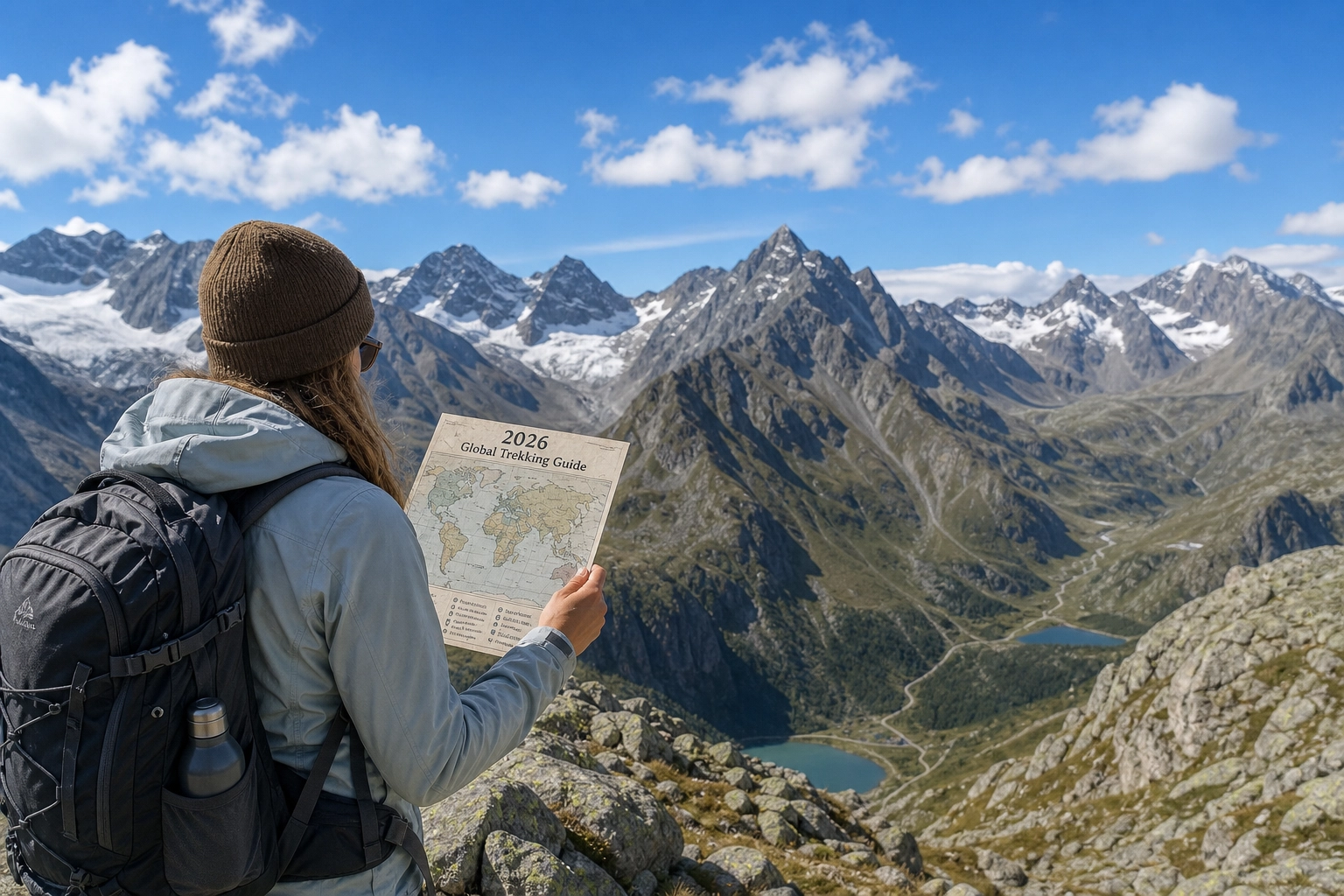
Standing alone at a trailhead with nothing but a map and a 40-liter backpack is a romantic notion, but the reality of solo hiking often involves a heavy logistical burden. Booking remote mountain huts months in advance, navigating foreign transit systems, and managing emergency safety protocols can quickly turn a vacation into a part-time job.
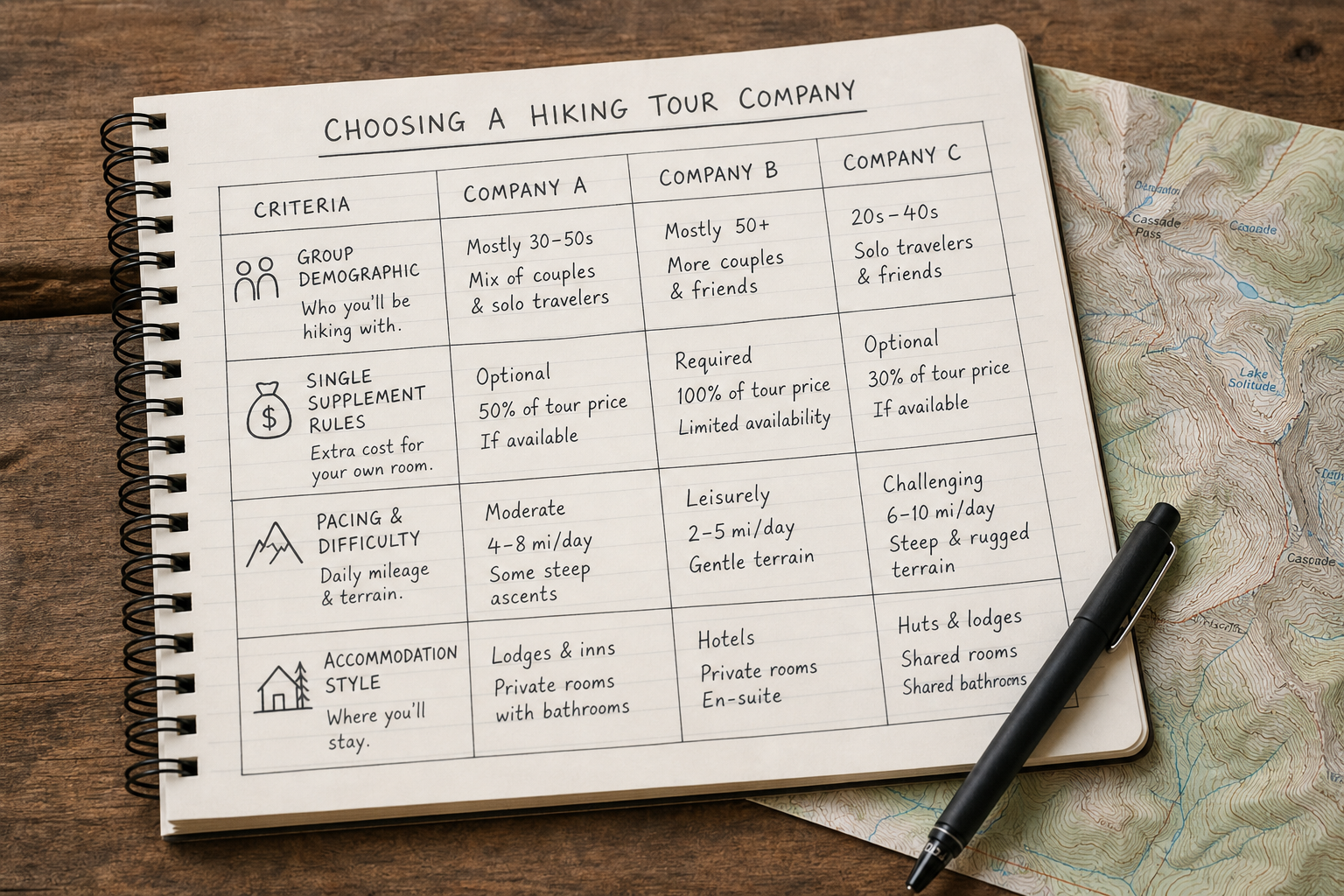
For solo travelers, digital nomads, and international backpackers, joining an organized group or a social mountain lodge offers a compelling alternative. It removes the friction of route planning and provides an instant community of like-minded outdoor enthusiasts. But the guided trekking industry is vast, and choosing the wrong operator can mean spending your hard-earned time off with a mismatched demographic or paying exorbitant “single supplement” fees.
Whether you are looking for a luxury inn-to-inn traverse, a rugged tent-based expedition, or a localized basecamp model, this review breaks down the best hiking tour companies and adventure models available for solo travelers in 2026.
Why Solo Travelers Are Pivoting to Guided and Group Hikes
The traditional narrative dictates that solo travel must be done entirely independently. However, the last few years have seen a massive shift in how individuals approach mountain tourism.
The Single Supplement Shift
Historically, solo travelers were penalized by the travel industry with single supplement fees—a surcharge to cover the cost of a single person occupying a double room. In 2026, many forward-thinking hiking tour companies have abolished these fees by offering “willing to share” programs, where you are paired with a same-sex roommate.
Safety and Alpine Risk Management
Trekking in serious environments like the Swiss Alps or the Rockies carries inherent risks: sudden weather changes, rockfalls, and altitude sickness. Expert hiking guides manage these variables. You don’t have to worry about reading a topographical map in a whiteout; you just have to focus on putting one foot in front of the other.
The Social ROI
Many solo travelers aren’t looking for isolation; they are looking for connection. Group tours and social lodges act as a filter, naturally gathering people who share a passion for the outdoors. If you want to dive deeper into this dynamic, reading up on Guided Hiking in Switzerland: Finding Your Social Group offers a closer look at how these dynamics play out on the trail.
Understanding Trip Styles: Which Framework Fits You?
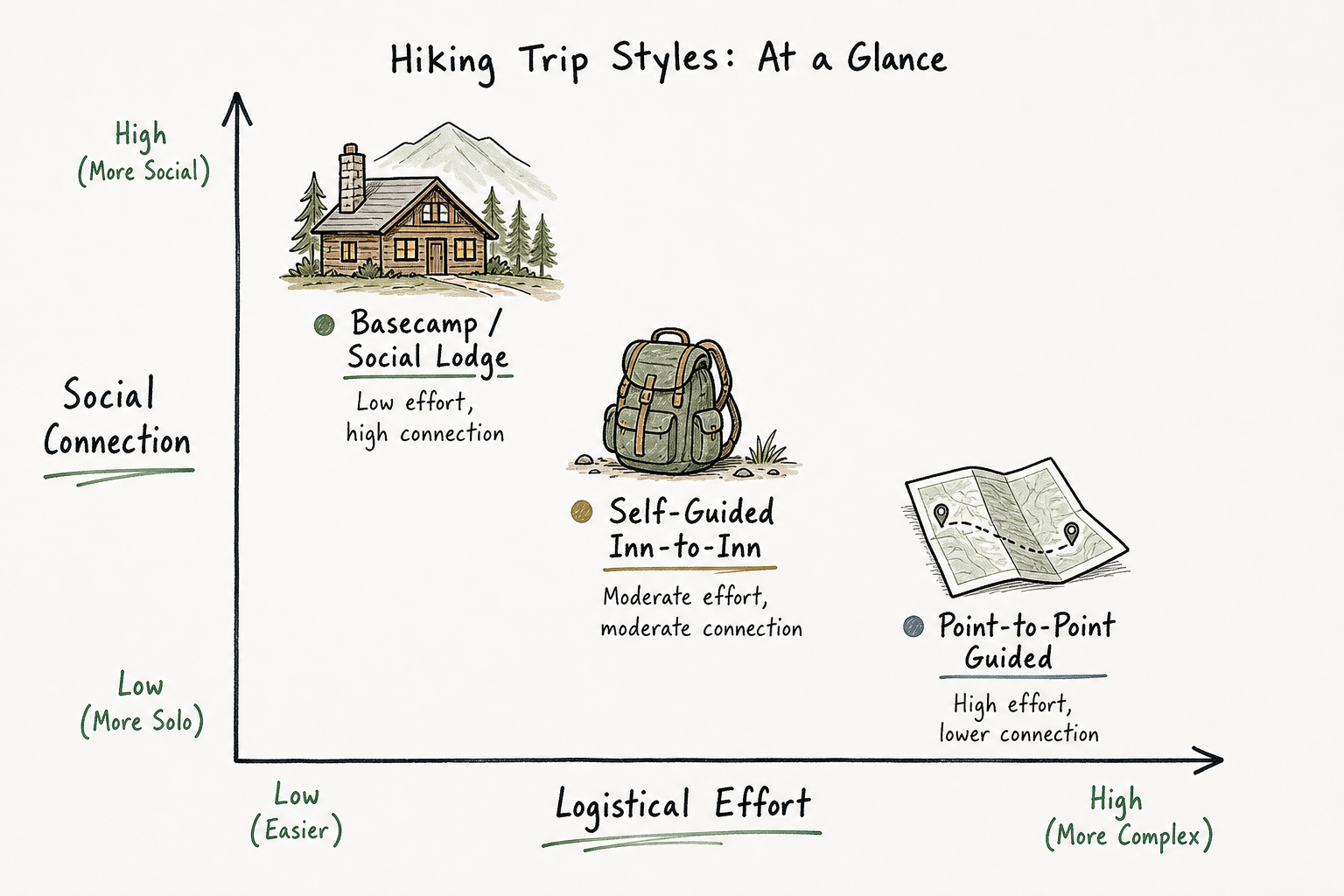
Before diving into the specific companies, you need to identify your preferred travel framework. Hiking tour companies generally fall into one of three categories:
- Point-to-Point Guided (The Classic Tour): You start in Town A and walk to Town B over several days. A guide leads the way, and a logistics team transports your heavy luggage between hotels.
- Self-Guided Inn-to-Inn: The company books your accommodations, provides GPS tracks, and moves your bags, but you hike entirely on your own timeline.
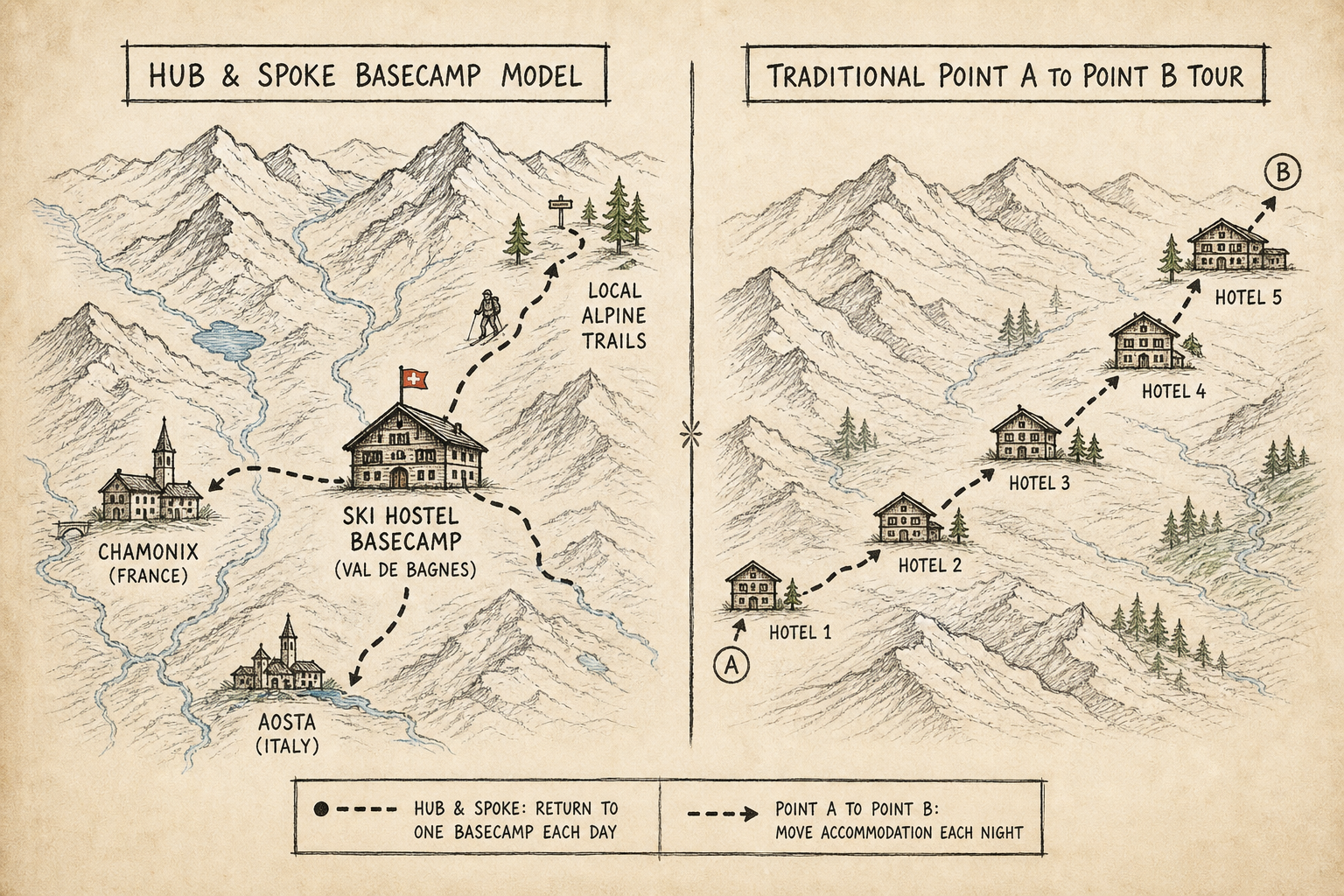
- The Basecamp / Social Lodge Model: You unpack once at a central mountain lodge. Each day, you tackle different surrounding trails, returning to the same bed and community dinner every night.
The 9 Best Hiking Tour Companies for Solo Travelers
We evaluated these operators based on their solo-friendly policies, demographic alignment, guide quality, and logistical execution.
1. Wildland Trekking
Best for: Rugged, gear-inclusive North American and global backpacking.
Wildland Trekking built its reputation in US National Parks, offering everything from mule-assisted basecamps in the Grand Canyon to rugged backpacking in Yellowstone. They have since expanded globally.
For solo travelers, Wildland is highly appealing because they provide almost all the necessary gear—tents, sleeping bags, and backpacks. If you are flying in from overseas or don’t own high-end lightweight gear, this saves hundreds of dollars. Their guides are deeply knowledgeable, focusing heavily on backcountry safety, Leave No Trace principles, and natural history.
- Vibe: Rugged, educational, and expedition-focused.
- Solo Policy: Offers willing-to-share options to avoid single supplements on lodge-based trips; no supplements on tent-based trips.
2. G Adventures (Via TourRadar)
Best for: Budget-conscious backpackers and young professionals seeking global diversity.
Frequently highlighted on platforms like TourRadar, G Adventures is a behemoth in the small-group travel space. They specialize in high-energy, socially driven tours. Their “Active” travel style focuses explicitly on trekking, biking, and multi-sport itineraries.
G Adventures is famous for its lack of mandatory single supplements. If you are traveling solo, they will pair you with a roommate. Their groups usually skew younger (20s to early 40s), making them ideal for international backpackers looking to meet a global network of peers.
- Vibe: Highly social, fast-paced, and budget-friendly.
- Solo Policy: No single supplement if willing to share.
3. Ski Hostel: The Alpine Basecamp Alternative
Best for: Digital nomads, budget-conscious hikers, and highly social solo travelers who hate unpacking daily.
While traditional tour companies move you from hotel to hotel, Ski Hostel offers a radically different model for solo travelers in the Swiss Alps. Located in the Liddes and St. Stephan regions, this community-driven adventure lodge acts as a stationary hub for your mountain activities.
Instead of rigid point-to-point itineraries, Ski Hostel provides an all-inclusive stay featuring home-cooked meals, local transport, and gear rental. The hostel curates weekly adventure programs, led by the host and volunteers, giving solo travelers access to over 250 kilometers of trails in the Val de Bagnes region. Because it operates as a basecamp, you avoid the daily packing grind. It’s also significantly more affordable than traditional tours.
The real differentiator is the social infrastructure. After a day of exploring 5 Best Hiking Trails in Switzerland Near Mont Blanc, guests return for communal dinners, BBQ gatherings, and Brazilian-influenced cuisine. They also organize border-crossing day trips to Chamonix and Aosta.
- Vibe: “Home away from home,” highly communal, deeply localized.
- Solo Policy: Solo travelers book single beds in shared spaces or private rooms; built-in community eliminates solo isolation.
4. Exodus Travels
Best for: Classic European walking holidays with flexible pacing.
Exodus Travels has spent decades perfecting the European walking holiday. They offer a massive catalog of itineraries, from the Amalfi Coast to the Julian Alps.
What makes Exodus great for solo travelers is their precise activity grading system. Trips are rated from 1 (leisurely) to 7 (tough), ensuring you don’t accidentally book a trip that is far below or above your fitness level. They also frequently run “Solo Departures,” which are dedicated trips where only solo travelers are allowed to book, completely removing the awkwardness of being the “third wheel” among couples.
- Vibe: Classic, well-paced, culturally immersive.
- Solo Policy: Dedicated solo-only departures available; willing-to-share options on standard trips.
5. Backroads
Best for: Premium comfort, e-bike integration, and luxury lodging.
If your definition of a hiking vacation involves challenging daytime elevation gain followed by Michelin-starred dining and high-thread-count sheets, Backroads is the industry standard.
Backroads trips are premium investments. They often feature multiple guides and support vans, allowing groups to split by ability. If you want to push for a summit while another guest prefers a meadow walk, Backroads can accommodate both simultaneously. The demographic tends to skew older (40s-70s) and more affluent.
- Vibe: Luxury, highly supported, flexible pacing.
- Solo Policy: Single supplements are usually required if you want a private room, though they occasionally offer roommate matching depending on the trip.
6. EF Adventures (Go Ahead Tours)
Best for: Cultural integration and approachable hiking for diverse ages.
EF Adventures balances outdoor activity with heavy cultural programming. Their hiking tours aren’t just about bagging peaks; they include wine tastings, historical tours, and local artisan visits.
For solo travelers, EF’s social dynamic is very welcoming. They limit group sizes to keep the experience intimate and often attract a mix of solo travelers and small groups of friends. Their guides (Tour Directors) manage all logistics from the moment you land, making them an excellent choice for first-time international solo hikers who want zero stress.
- Vibe: Educational, balanced, culturally rich.
- Solo Policy: Private rooms require a supplement, but pricing is often more accessible than luxury competitors.
7. Ryder-Walker Alpine Adventures
Best for: Dedicated Alps specialists and serious trekkers.
When you want to hike the Eiger Trail or the Haute Route, you want an operator that specializes exclusively in that region. Ryder-Walker is a boutique operation known for its deep expertise in the Alps.
They excel at classic inn-to-inn routes. Their guides are often locally based or have decades of experience in the specific valleys they tour. For a solo traveler, joining a Ryder-Walker trip means tapping into a wealth of alpine knowledge.
- Vibe: Serious mountain focus, boutique, authentic alpine.
- Solo Policy: Roommate matching is usually available, though the smaller scale of the company means it depends heavily on the specific departure.
8. Road Scholar
Best for: Educational travel for the 50+ demographic.
Formerly known as Elderhostel, Road Scholar caters exclusively to older adults. Their hiking and walking tours are categorized not just by physical difficulty, but by educational rigor.
For older solo travelers, Road Scholar is a goldmine. The community is intellectually curious, and the itineraries feature expert instructors—geologists, historians, and naturalists. They explicitly market to solo travelers, and many of their trips boast a 30-40% solo participation rate.
- Vibe: Intellectual, mature, community-focused.
- Solo Policy: Excellent roommate matching program; very transparent pricing.
9. Gather and Go Travel Networks
Best for: Independent self-guided walkers who want logistics handled.
Gather and Go Travel highlights operators that specialize in self-guided inn-to-inn hiking. This is a unique hybrid for solo travelers who want the solitude of walking alone but don’t want to carry a 30-pound pack or deal with booking logistics.
In a self-guided setup, the company provides you with a detailed briefing, custom GPS tracks, and emergency contacts. You walk at your own pace, alone, while a transfer service moves your main luggage to your next quaint B&B or alpine inn.
- Vibe: Independent, self-paced, logistically seamless.
- Solo Policy: Single supplements are unavoidable here since you aren’t in a group, but the overall cost is much lower than hiring a private guide.
The Basecamp vs. Tour Dilemma: Making the Call
When choosing how to spend your mountain holiday, the biggest decision a solo traveler must make is between a moving itinerary and a stationary basecamp.
If you choose a point-to-point tour—like walking from Chamonix to Zermatt—you experience a distinct sense of geographical progress. The landscape changes daily. However, you are married to the itinerary. If it rains, or if you twist a knee, you still have to pack your bags and move to the next hotel.
Alternatively, basecamps like Ski Hostel offer unmatched flexibility. If you wake up tired, you can take a rest day, use the high-speed Wi-Fi to answer emails (a perk for digital nomads), or join a lower-impact activity. You unpack once. For a deep dive into why stationary mountain hubs are gaining popularity over traditional hotels and moving tours, check out Hotels in Swiss Mountains? Why Social Lodges Beat Luxury.
Border-Crossing Excursions
A unique advantage of a well-placed basecamp in a region like Val de Bagnes is the ability to cross international borders for day trips. You can sleep in Switzerland but spend the day exploring Italian trails. (If you’re visiting in the colder months or shoulder seasons, this regional overlap is detailed in Skiing in the Italian Alps? Try This Aosta Day Trip).
Practical Prep for Solo Travelers Joining a Group
Even when joining a guided company or a lodge, you still need to show up prepared. The group will rely on you to be self-sufficient regarding your basic fitness and personal kit.
1. Dial in Your Packing System
Packing for a guided tour or a lodge stay is different than packing for a solo backpacking trip. You generally need “trail clothes” and “lodge clothes.” For a streamlined approach to avoiding overpacking, refer to our Swiss Alps Summer: A Simple 5-Step Packing Guide.
2. Understand Regional Budgeting
Guided tours have high upfront costs but virtually eliminate on-the-ground spending. Conversely, independent or basecamp travel requires you to manage day-to-day transit and trail lunches. To manage costs effectively in famously expensive regions, read up on 7 Tips for Hiking in Switzerland (Without the High Cost).
3. Consider Multi-Sport Crossovers
Many hikers also dabble in alpine cycling. If you are staying at a hub that offers access to both, you might want to mix up your itinerary. Group dynamics for cycling can differ from walking; learn more in Find the Right Mountain Bike Group for Alpine Trails.
4. Hut-to-Hut Considerations
If you decide against a fully guided company and want to attempt a classic hut route on your own or with friends you meet at a lodge, you must understand the etiquette and booking systems of alpine refuges. How to Plan Hut to Hut Hiking in Switzerland (7 Tips) is required reading before attempting these routes.
Frequently Asked Questions (FAQ)
Do I need to be an elite athlete to join a hiking tour?
No. The best hiking tour companies use detailed grading systems (e.g., 1 to 5, or “Leisurely” to “Strenuous”). Be honest with yourself about your cardio fitness and joint health. The biggest mistake solo travelers make is booking a trip that is too aggressive, leading to exhaustion rather than enjoyment.
Are single supplements mandatory?
Increasingly, no. Companies like G Adventures, Wildland Trekking, and Exodus offer “willing to share” programs where they pair you with a same-sex roommate to waive the fee. Social lodges like Ski Hostel naturally bypass this issue by offering shared dorms alongside private options.
What if I want to see Mont Blanc without the crowds?
Mont Blanc is heavily trafficked. If you book a standard Tour du Mont Blanc with a large operator, you will be walking in a crowd. Consider localized operators or basecamps that utilize secondary trails with identical views. For alternative routing ideas, read Mountain Mont Blanc: 7 Ways to Visit Without the Crowd.
Does this apply to winter trips?
The same rules for group dynamics apply in winter. If you are a backpacker transitioning from summer hiking to winter snowsports, you’ll face similar choices between luxury resorts and community hubs. See Which Swiss Ski Resort Fits a Backpacker’s Budget? for seasonal context.
Final Thoughts: Matching the Tour to Your Vibe
The golden rule for a solo traveler booking a hiking vacation is to align the company’s core demographic with your own expectations. If you want high-energy evenings and global networking, an aggregator small-group tour or an alpine basecamp like Ski Hostel is your best bet. If you want to learn about geology over a glass of wine, look toward Road Scholar or Exodus.
Take the time to evaluate your desired daily mileage, your budget for single supplements, and your tolerance for packing and unpacking. The mountains are vast enough to accommodate every style of traveler—you just have to choose your path.