Hiking Trip Packages: Everything Included for Your Stay
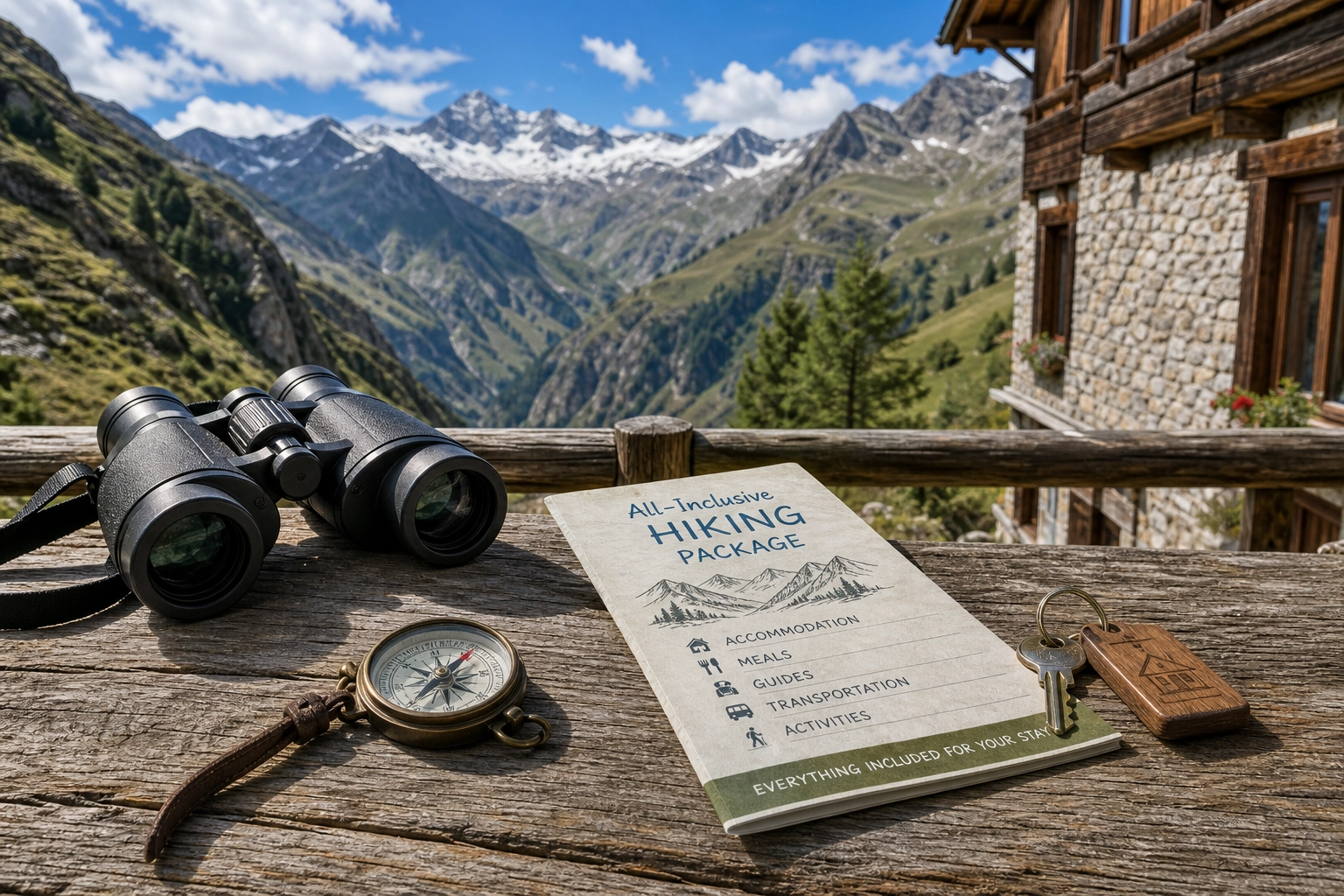
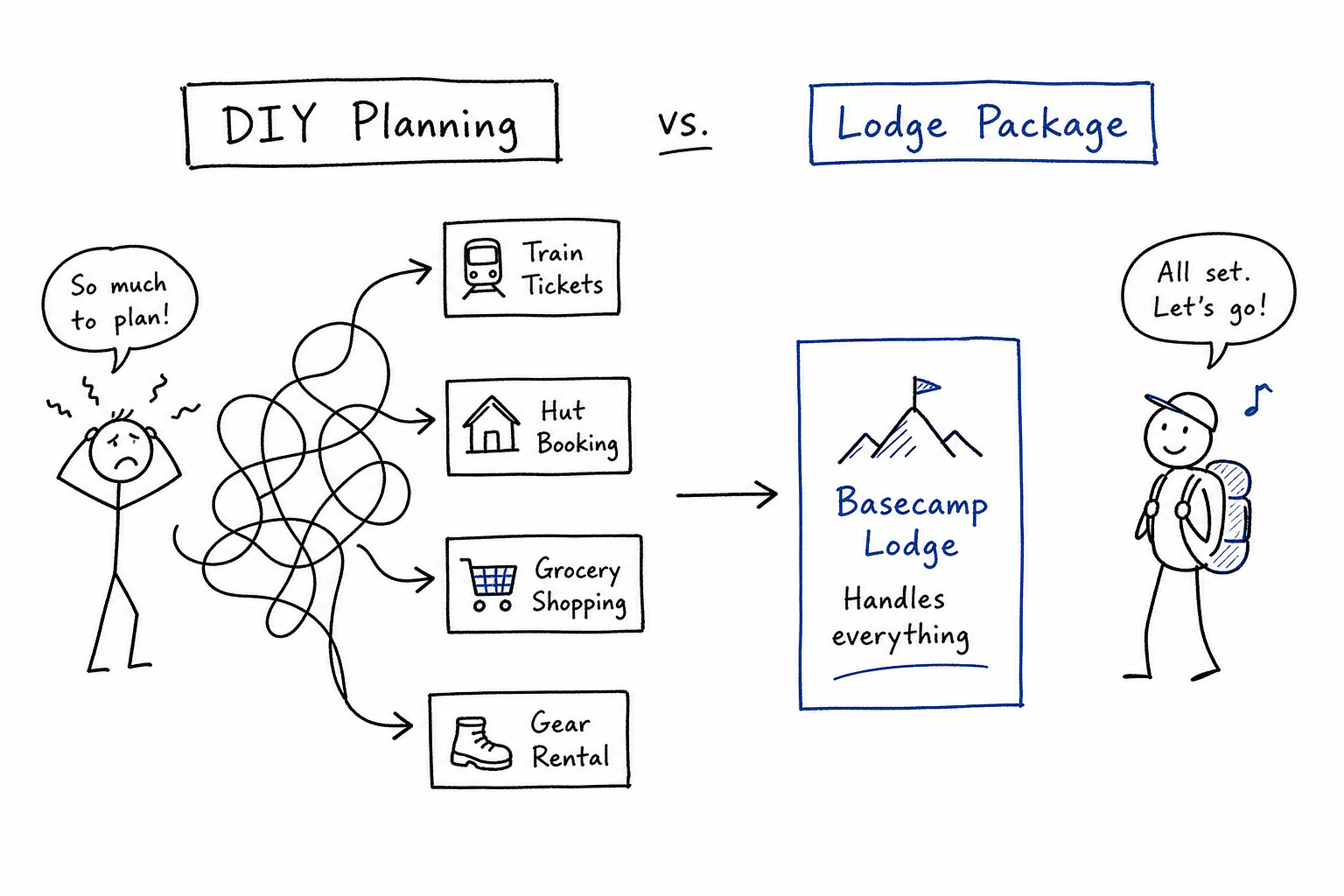
Planning a multi-day mountain trek independently usually starts with enthusiasm and ends with a dozen open browser tabs, a confusing array of train timetables, and a creeping sense of logistical dread. You find yourself trying to translate rural bus schedules, mapping out grocery store hours in remote alpine villages, and calculating exactly how many pairs of wool socks you can stuff into a 40-liter pack.
Hiking trip packages solve this friction. By bundling accommodation, route planning, meals, and local transport into a single booking, they allow you to focus entirely on the trail. However, not all packages are created equal. The industry spans everything from rigid, luxury bus tours to dynamic, community-driven adventure lodges.
Choosing the right package requires understanding your own travel style, your budget, and what you actually want out of your time in the mountains. This guide breaks down the mechanics of all-inclusive hiking stays, how to evaluate different models, and why a centralized “basecamp” approach is rapidly becoming the preferred choice for modern outdoor enthusiasts.
The Hidden Costs of DIY Alpine Hiking
The appeal of planning your own trip is usually rooted in a desire for freedom and cost savings. The reality, especially in high-cost regions like the Swiss Alps, is often quite different. When you tally up the individual components of a mountain trip, the DIY approach frequently costs more in both money and time.
Here is what independent hikers typically have to manage:
- Fragmented Accommodation: Booking a mix of hostels, hotels, and mountain huts. Huts often require booking months in advance and frequently sell out.
- Transport Logistics: Navigating multiple train lines, post buses, and cable cars just to reach the trailhead.
- Caloric Planning: Carrying days’ worth of dehydrated meals or paying a premium for food at high-altitude restaurants.
- Gear Rentals: Sourcing trekking poles, appropriate boots, or weather-specific gear from expensive resort-town shops.
When you book a package, these elements are negotiated and managed at scale. The lodge or tour operator already has the transport vans, the bulk food supplies, and the gear fleet. More importantly, they have the local knowledge to pivot when a sudden thunderstorm washes out your planned route.
For budget-conscious travelers, this bundled approach is often the only way to make notoriously expensive mountain regions accessible. If you want a deeper look at managing expenses, our guide on 7 Tips for Hiking in Switzerland (Without the High Cost) covers strategies for keeping your daily spend manageable.
Types of Hiking Tour Packages
The term “package” covers a wide spectrum of travel styles. Before you hand over your credit card, you need to understand the underlying structure of the trip you are booking.
The Traditional Guided Walking Tour
These are often run by large international travel companies. You move from luxury hotel to luxury hotel, with your luggage transported separately by a support vehicle. You walk with a large group and a dedicated guide on a strict daily schedule.
While companies like Backroads or Road Scholar execute this model flawlessly, it tends to attract an older demographic with a high budget. These packages prioritize comfort and predictability over raw adventure or social spontaneity.
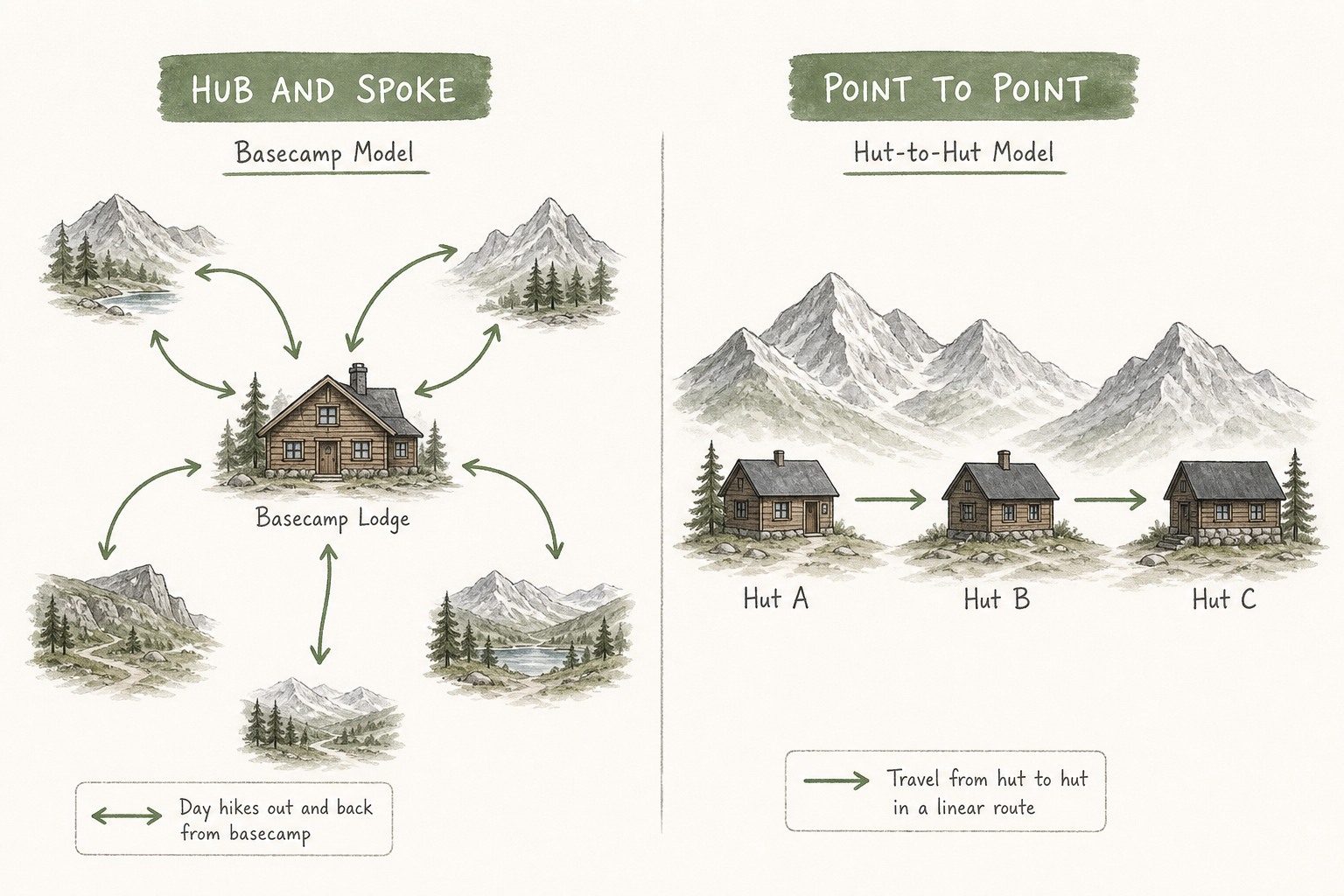
The Point-to-Point (Hut-to-Hut) Trek
This model focuses entirely on continuous forward movement. You carry a moderately sized backpack and hike from one high-altitude mountain refuge to the next. The package operator handles the complicated hut reservations and provides a detailed digital map or a guide.
This is a purist’s experience, but it lacks flexibility. If you wake up exhausted or the weather turns dangerous, you still have to hike to your next bed. There are no rest days built into a tight hut-to-hut itinerary. We break down the logistics of this style in our guide on How to Plan Hut to Hut Hiking in Switzerland (7 Tips).
The Adventure Lodge “Basecamp” Model
This is the fastest-growing segment in adventure hospitality, and it strikes a perfect balance for solo travelers, digital nomads, and budget-conscious hikers.
Instead of moving your belongings every day, you unpack once at a central, community-driven lodge. The package includes your bed, your meals, and daily guided (or self-guided) excursions that radiate out from the lodge like spokes on a wheel.
This model offers massive advantages:
- Weather Resilience: If a high pass is snowed in, the local guides simply pivot the group to a lower-valley forest trail or a cultural excursion.
- Pacing Flexibility: If your knees need a break, you can skip a day of hiking, hang out at the lodge, use the high-speed Wi-Fi to catch up on work, and join the group for a BBQ in the evening.
- Community: Because you return to the same shared spaces every night, you actually get to know your fellow travelers.
For a deeper dive into why this communal model is replacing traditional accommodation, read our breakdown: Hotels in Swiss Mountains? Why Social Lodges Beat Luxury.
What to Expect: A Day in the Life of a Basecamp Package
To truly understand the value of an all-inclusive adventure package, it helps to walk through a typical day. Let’s look at how a well-structured basecamp lodge operates.
Morning: High-Quality Fuel and Briefings
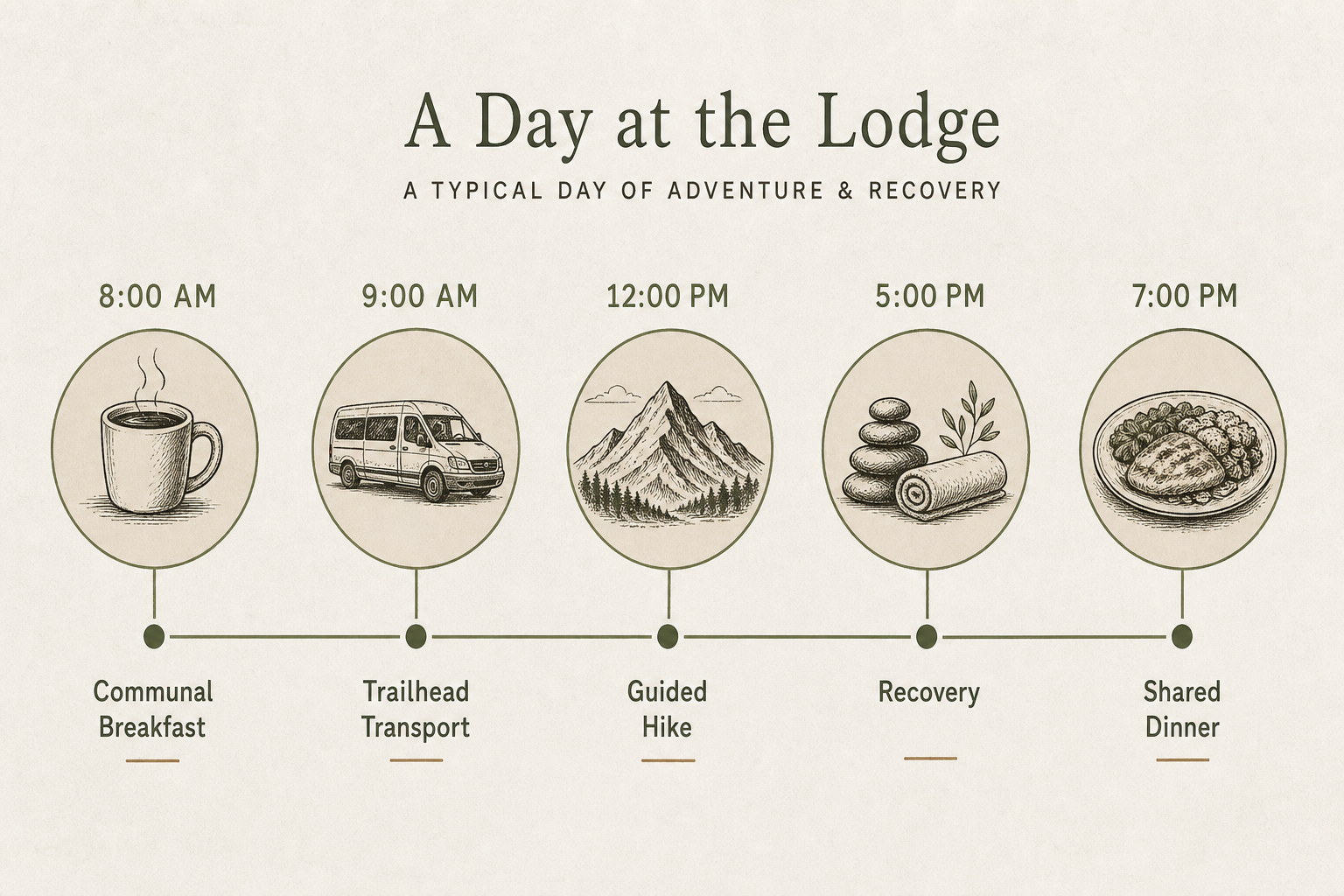
You wake up in your shared or private room and head down to a communal dining area. Unlike the stale croissants of a budget hotel, the breakfast is substantial—designed specifically for people about to burn thousands of calories. Think local cheeses, fresh bread, oats, and strong coffee.
During breakfast, the host or lead guide throws a topographical map on the table. They explain the day’s route, point out where the snowline starts, and divide the group based on skill levels or desired pace. You grab your pre-packed lunch from the kitchen staff and head to the lodge’s private transport van.
Midday: The Trail Experience
Because transport is handled, you skip the crowded public cable cars. The van drops you at a secondary trailhead that most tourists never see.
You hike with a small group of international travelers. The guide sets a sustainable pace, points out local flora, and ensures nobody takes a wrong turn at unmarked intersections. Around 1:00 PM, you stop at an alpine lake, pull out the lunch provided by the lodge, and eat with your group while looking at the Mont Blanc massif.
Evening: Recovery and Connection
By 4:30 PM, the van picks you up and brings you back to the lodge. This is where the basecamp model truly outshines traditional tours. You drop your muddy boots in the drying room and step into a social environment.
You might spend an hour in a shared spa or sauna, easing your muscles. Later, the smell of a Brazilian-influenced communal dinner fills the lodge. You sit at a long table with digital nomads, solo backpackers, and families, sharing stories from the trail. There is no need to wander around a strange town looking for an affordable restaurant; everything is handled in-house.
If you are traveling alone and worry about finding hiking partners, this setup removes all the friction. Learn more about making these connections in Guided Hiking in Switzerland: Finding Your Social Group.
Essential Inclusions to Look For in Your Booking
When evaluating hiking trip packages, operators will use terms like “all-inclusive” loosely. You need to read the fine print to understand exactly what your money covers. A high-value package should bundle the following core components.
1. Comprehensive Local Transport
Mountain public transport is incredibly efficient, but it adds up fast. A single round-trip ticket on a Swiss post bus and a connecting cable car can easily consume a large portion of your daily budget.
Look for packages that include either a regional transport pass or, better yet, private shuttle vans operated by the lodge. Private shuttles allow groups to access obscure trailheads and execute point-to-point hikes without worrying about missing the last bus down the mountain. Platforms like 57hours often highlight the importance of included logistics in their guided offerings.
2. Calorie-Dense, Home-Cooked Meals
Hiking requires immense energy output. If a package only includes a basic continental breakfast, you will spend a fortune buying lunches at mountain restaurants and dinners in resort towns.
A true all-inclusive stay covers three meals a day. Pay attention to the style of food. A lodge that prides itself on home-cooked, culturally diverse meals (like incorporating hearty Brazilian stews or local alpine cheese dishes) shows a commitment to the guest experience that goes beyond basic catering.
3. Gear Rental Libraries
Traveling with technical mountain gear is a hassle. Hard-shell jackets, trekking poles, microspikes, and heavy boots take up valuable luggage space. Quality lodges maintain a comprehensive gear room.
If you book a package, check if gear rental is included or offered at a steep discount. This allows you to fly with just a carry-on bag and outfit yourself upon arrival.
4. Expert Route Curation
You do not just want a guide who walks in front of you; you want a local expert who knows the terrain intimately. A good package provides layered options: a challenging ridge scramble for the experts and a scenic valley walk for beginners. They should manage the safety elements, monitor incoming weather fronts, and handle all emergency protocols.
5. Cross-Border Flexibility
The best alpine regions sit on international borders. If you are staying in the Swiss Val de Bagnes or Liddes region, you are incredibly close to Italy and France. Superior packages will utilize this geography, offering day trips through the Great St. Bernard Pass into places like Aosta, Italy, or Chamonix, France.
This adds immense value to a standard package. You can hike in Switzerland on Tuesday and eat authentic pasta in an Italian mountain town on Wednesday. We detail one of these specific excursions in our guide: Skiing in the Italian Alps? Try This Aosta Day Trip (the route is equally stunning for summer hiking).
Adapting Packages for Different Traveler Profiles
The beauty of the basecamp package model is its adaptability. It serves several distinct types of travelers, often bringing them together under one roof.
The Solo Traveler and Digital Nomad
For solo travelers, safety and socialization are primary concerns. Venturing into high alpine environments alone carries inherent risks. Joining a lodge-based package provides instant hiking partners and the safety net of knowledgeable staff.
For digital nomads, reliable infrastructure is critical. You cannot work from a remote mountain hut with no cellular reception. A basecamp lodge provides high-speed Wi-Fi, dedicated co-working areas, and the flexibility to hike in the morning and take Zoom calls in the afternoon.
The Budget-Conscious Backpacker
Switzerland is notoriously expensive. Backpackers often skip the Alps entirely because of the cost of luxury resorts. An all-inclusive lodge package flips this dynamic. By sleeping in shared rooms, eating communal meals, and utilizing volunteer-led or staff-managed transport, backpackers lock in a fixed cost for their entire stay.
If you are trying to navigate the region on a tight budget, read our breakdown on Which Swiss Ski Resort Fits a Backpacker’s Budget? to see how alternative accommodation models change the financial math.
Families Seeking Safe Adventure
Taking children into the mountains requires careful planning. A sudden weather change or an unexpectedly steep trail can turn a fun family outing into a stressful ordeal.
Package operators remove this stress by selecting family-appropriate trails and managing the pacing. Furthermore, the communal atmosphere of an adventure lodge gives children space to play and interact with others, rather than being confined to a sterile hotel room.
The Multi-Sport Enthusiast
Many hikers also want to experience the Alps on two wheels. Some lodges offer hybrid packages that mix hiking days with mountain biking days, providing the heavy downhill bikes, helmets, and lift passes required. If you are interested in mixing disciplines, check out Find the Right Mountain Bike Group for Alpine Trails.
Choosing the Right Region for Your Hiking Package
A package is only as good as the terrain it accesses. When researching destinations, you want a region that offers dense trail networks, dramatic scenery, and a variety of difficulty levels.
The Mont Blanc Massif and Val de Bagnes
This area is arguably the premier hiking destination in Europe. The sheer scale of the glaciers, the deep green valleys, and the iconic jagged peaks offer a lifetime of exploration.
However, the main trails (like the Tour du Mont Blanc) can become incredibly crowded during the peak summer months. Booking a package based slightly off the main circuit—such as in the Liddes or St. Stephan regions—allows you to access the same world-class views without walking in a single-file line of tourists.
For specific route recommendations in this area, explore the 5 Best Hiking Trails in Switzerland Near Mont Blanc and our strategies for Mountain Mont Blanc: 7 Ways to Visit Without the Crowd.
How to Pack for an All-Inclusive Alpine Trip
Packing for an all-inclusive lodge stay is vastly different from packing for an independent backpacking trip. Because you do not need to carry a sleeping bag, a tent, cooking gear, or five days of food, your packing list shrinks considerably.
Your primary focus should be on a layering system to manage the unpredictable alpine weather. You need a moisture-wicking base layer, an insulating mid-layer (like fleece or a lightweight down jacket), and a waterproof hard shell.
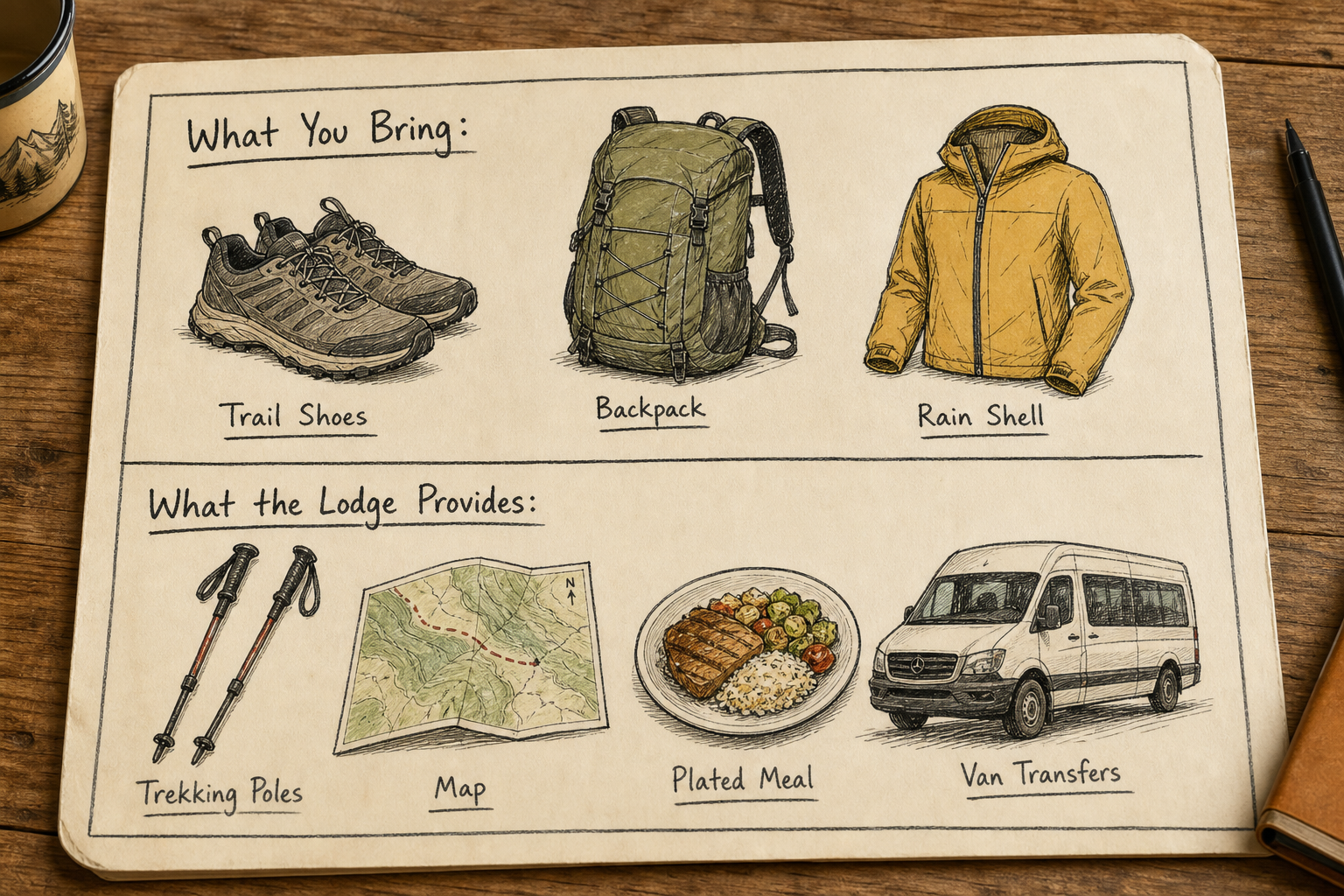
Beyond clothing, prioritize a comfortable, well-fitted daypack (20 to 30 liters is perfect), a hydration bladder, and high-quality trail running shoes or hiking boots. The lodge will handle the heavy lifting. For a precise checklist, review Swiss Alps Summer: A Simple 5-Step Packing Guide.
Red Flags When Booking Hiking Tours
Not every operator delivers on the promise of a seamless package. Keep an eye out for these common red flags when researching options:
- “Breakfast Only” Inclusions: If a package only includes breakfast, you are not buying an all-inclusive stay. You are simply booking a hotel room. The cost of buying lunches and dinners in alpine towns will quickly blow out your budget.
- Vague Transport Details: If the itinerary says “transport available” rather than “transport included,” expect to pay out of pocket for buses and cable cars.
- No Alternative Itineraries: A good operator will proudly state their bad-weather alternatives. If a company guarantees a specific high-altitude summit regardless of conditions, they are either inexperienced or prioritizing marketing over safety.
- Mandatory Single Supplements: Many traditional tour companies penalize solo travelers with massive “single supplement” fees. Community lodges usually offer shared room options, allowing solo travelers to pay a fair base rate.
Platforms like TourRadar allow you to compare hundreds of packages, but always read the fine print regarding meals, local transport, and group sizes before committing.
Frequently Asked Questions About Hiking Trip Packages
How fit do I need to be to book a hiking package?
It depends entirely on the model. Hut-to-hut treks require a high baseline of fitness because you must carry weight and hit daily mileage targets. Basecamp models are highly adaptable. Because you return to a lodge each night, you can choose a demanding 20-kilometer peak ascent one day and a flat 5-kilometer lake walk the next. Lodges cater to everyone from complete beginners to seasoned mountaineers.
Do I need to tip my hiking guides?
Tipping culture varies by region. In Europe, tipping is generally less expected than in North America, as hospitality staff and guides receive a living wage. However, if a guide or volunteer host goes above and beyond to manage your logistics, cook your meals, and keep you safe on the trail, a modest tip at the end of the week is a welcome gesture of appreciation.
Can I skip a day of hiking if I am tired?
In a traditional point-to-point tour, skipping a day is logistically difficult and often requires paying for an expensive private taxi to transport you to the next hotel. In a basecamp lodge package, skipping a day is entirely normal. You can stay back, read a book by the fire, use the Wi-Fi, or explore the local village at your own pace.
Rethinking Your Next Mountain Adventure
The mountains demand respect, preparation, and energy. Spending half your trip managing spreadsheets, stressing over train connections, and hunting for affordable groceries detracts from the reason you traveled there in the first place.
Hiking trip packages—specifically those built around a communal, basecamp lodge—strip away the logistical friction. They offer a fixed, predictable cost, expert local guidance, and a built-in community of like-minded travelers. By handing the complex details over to people who live and breathe the local terrain, you free yourself to fully engage with the trails, the culture, and the sheer scale of the alpine environment.
When you prioritize connection, flexibility, and shared experiences over isolated luxury, the mountains become far more accessible, and the adventure becomes significantly more profound.