Visit Mont-Blanc Mountain in Chamonix (A Day Trip Guide)
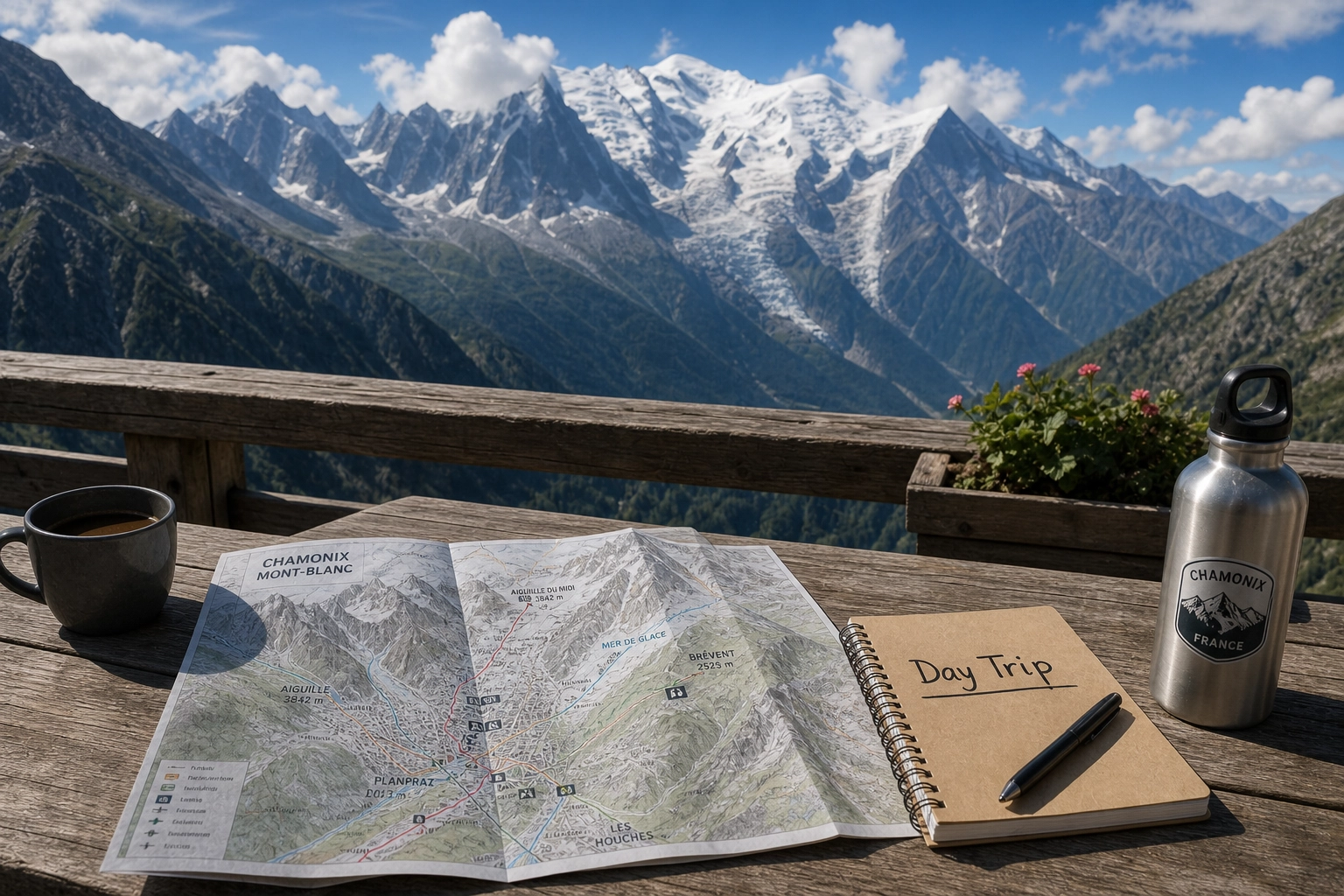
Mont Blanc is not just a mountain; it is the undisputed apex of Western Europe. Standing at 4,805 meters, the “Roof of Europe” casts a massive shadow over the Arve Valley and the bustling town of Chamonix, France. For decades, this dramatic peak was strictly the domain of hardcore alpinists willing to risk life and limb on the ice.
Today, the reality is entirely different.
Chamonix has transformed from an isolated farming village into a highly cosmopolitan global hub. You can wake up, sip a cappuccino, step onto an engineering marvel of a cable car, and stand at 3,842 meters before lunchtime—without ever strapping on a pair of crampons.
But this accessibility comes with a catch. Staying in Chamonix itself has become astronomically expensive, crowded, and at times, overwhelming. For savvy digital nomads, backpackers, and budget-conscious hikers, the secret is simple: don’t sleep at the foot of the mountain. Instead, make your base in the neighboring Swiss Alps, enjoy the community atmosphere of an adventure lodge, and cross the border for an epic, curated day trip.
Here is your comprehensive guide on how to visit Mont-Blanc mountain in Chamonix efficiently, affordably, and unforgettably.
Why Chamonix is the Ultimate Mont-Blanc Gateway (And Why You Shouldn’t Sleep There)
To understand Chamonix, you have to look at its history. When it hosted the first Winter Olympics in 1924, it secured its place on the global map. But in recent years, the town has shifted aggressively toward the luxury market. Michelin-starred restaurants sit next to high-end boutique gear shops, and accommodation prices surge wildly during peak summer and winter months.
If your goal is to experience authentic mountain culture, overpaying for a cramped hotel room in a busy valley is a mistake. This is exactly Hotels in Swiss Mountains? Why Social Lodges Beat Luxury.
By basing yourself in a communal adventure lodge in regions like the Val de Bagnes or Liddes in Switzerland, you gain a massive logistical advantage. You get affordable, home-cooked meals, a built-in community of likeminded travelers, and high-speed Wi-Fi to knock out a morning of remote work. Then, you simply hop in a shared van for a stunning cross-border drive to Chamonix for the day.
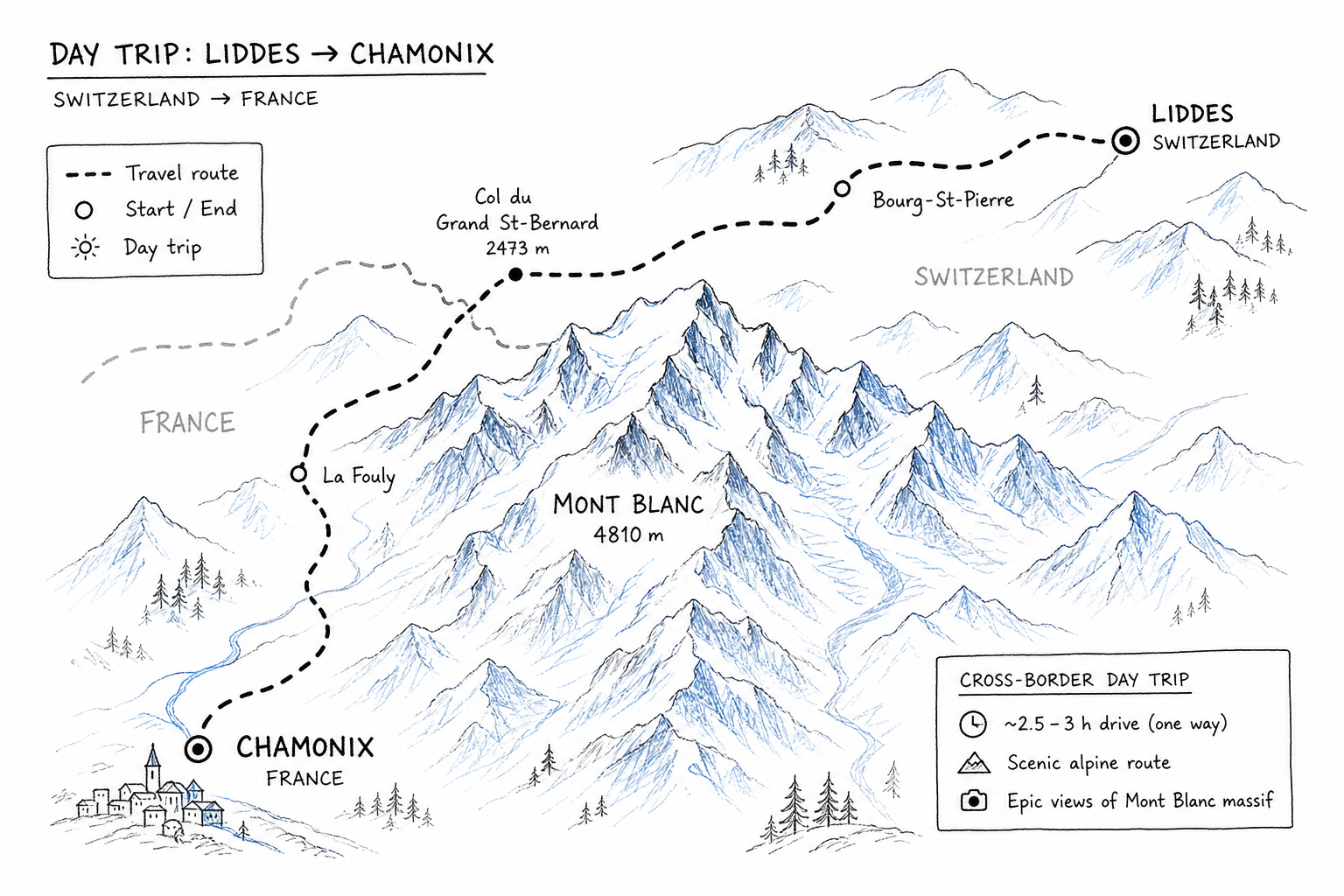
This cross-border tactic isn’t limited to France. If you love experiencing multiple alpine cultures in one trip, it is the exact same strategy you would use when Skiing in the Italian Alps? Try This Aosta Day Trip. You sleep where it’s social, and you travel where the icons are.
The Cross-Border Day Trip Itinerary: Timing is Everything
Visiting Chamonix as a day trip requires tight logistics. The valley can trap heat in the summer, afternoon clouds frequently roll in to obscure the peaks, and lift lines at the major attractions can stretch for hours if you arrive at the wrong time.
If you are traveling with a managed lodge or hostel group, the transport is usually handled for you. If you are driving yourself across the Swiss-French border, you need a bulletproof timeline.
The Optimal 1-Day Itinerary
- 06:30 AM – Alpine Start: Hit the road early from your Swiss base camp. You need to cross the mountain passes before the inevitable camper van and tour bus traffic begins.
- 08:00 AM – Arrival in Chamonix: Park in one of the central lots (Parking du Mont-Blanc or Parking de l’Aiguille du Midi). Head straight to the cable car ticket office before the crowds.
- 08:30 AM to 11:30 AM – The Roof of Europe: Ride up to the Aiguille du Midi. Dedicate at least two to three hours up here, moving slowly to acclimate to the altitude.
- 12:00 PM to 13:30 PM – Valley Lunch: Return to town. This is the time to explore the cosmopolitan streets, grab a budget-friendly artisan bakery lunch, or split an alpine tartiflette with your travel group.
- 14:00 PM to 17:00 PM – The Mer de Glace: Take the historic red cog railway to Montenvers. Walk (or take the new gondola) down to the ice cave to witness the reality of the changing glaciers.
- 17:30 PM – Apres and Departure: Grab a celebratory drink at a local brasserie in Chamonix before retreating to the quiet, communal atmosphere of your Swiss mountain home.
This schedule leverages the crispest morning visibility for the high peaks and leaves the lower-altitude glacier experience for the afternoon when skies might be partly clouded.
The Two Non-Negotiable Attractions (Zero Climbing Experience Required)
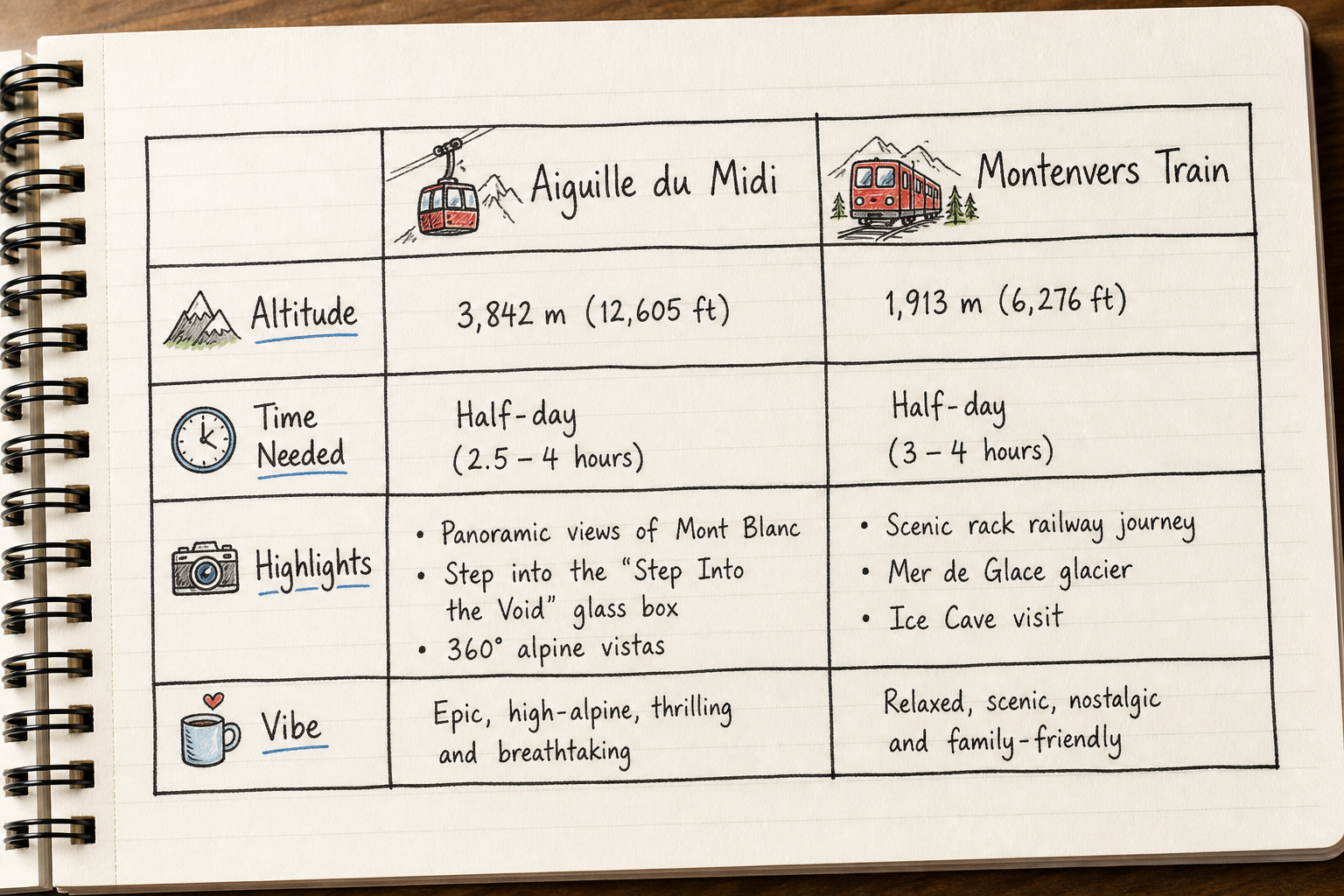
The main draw of Chamonix for non-mountaineers boils down to two spectacular feats of alpine engineering: the Aiguille du Midi cable car and the Montenvers Railway. You can easily do both in one day, provided you manage your time well.
1. Aiguille du Midi (3,842m)
The journey up the Aiguille du Midi holds the world record for the highest vertical ascent of any cable car in the world, whisking you from 1,035 meters to 3,842 meters in less than 20 minutes. It is an extraordinary experience that demands respect.
Once at the top terraces, you are suddenly eye-to-eye with the summit of Mont Blanc and the Bossons glacier. The sheer vertical drops and jagged peaks stretch endlessly across France, Switzerland, and Italy.
Key features to explore at the summit:
- The Step into the Void: A 2.5m glass box suspended suspended in mid-air over a 1,000-meter vertical drop. Put on your protective slippers (provided onsite) and lean back, looking straight down past your feet to the jagged rocks below.
- The Tube: A steel pipe wrapped around the central peak that allows a full 360-degree circuit of the summit towers without retracing your steps.
- The Elevator to the Summit Terrace: Do not miss the hidden elevator that shoots up through the core of the rock itself to the absolute peak viewing platform.
The Reality of Altitude
At 3,842 meters, there is significantly less oxygen than at sea level. The air is thin, and the temperature can be anywhere from 15 to 25 degrees Celsius colder than down in Chamonix. Moving too quickly will result in sudden dizziness, shortness of breath, and a racing heart. Take deliberate, slow steps. Drink plenty of water, and if you start to feel nauseous or develop a pounding headache, descend immediately.
2. Montenvers Train & The Mer de Glace
If the Aiguille du Midi is about conquering the high peaks, the Montenvers railway is an emotional journey into the heart of a shifting landscape.
Departing from a separate train station just behind the main Chamonix train terminal, this charming red cog railway takes about 20 minutes to climb up through the pine forests to an elevation of 1,913 meters. At the top, you are presented with an sweeping view of the Mer de Glace (Sea of Ice), France’s largest glacier, flanked by the dramatic peaks of Les Drus and Les Grandes Jorasses.
The Reality of Climate Change:
The Mer de Glace is rapidly retreating. Each year, it loses significant depth and length. To get down to the “Grotte de Glace” (an ice cave carved freshly into the glacier each year), you once only had to descend a few steps from the train station. Today, it requires taking a new gondola system down, followed by descending hundreds of metal stairs bolted to the rock walls.
Markers along the stairwell indicate where the surface of the ice used to be in the 1990s, 2000s, and 2010s. It is a sobering, profoundly visible reminder of environmental shifts. The climb back up those stairs is physically demanding, so pace yourself.
Escaping the Chamonix Crowds: Alternative Views and Hikes
If the idea of standing shoulder-to-shoulder in a cable car doesn’t appeal to you, there are numerous ways to appreciate the Mont Blanc massif from a distance.
In fact, some of the best views of the mountain aren’t found directly on it. To truly see the scale of Mont Blanc, you need to step across the valley to the Aiguilles Rouges range. Taking the Brévent cable car or the Flégère gondola will place you on the opposite side of the valley, offering an unobstructed, panoramic view of Mont Blanc in its entirety.
If you prefer boots on the ground rather than cables in the sky, you can skip the Chamonix lift lines entirely and opt for nearby trails that cross the border or skirt the massif.
For more specific strategies on avoiding peak-season congestion, check out Mountain Mont Blanc: 7 Ways to Visit Without the Crowd. If your primary goal is putting in serious trail miles rather than sightseeing, Chamonix can sometimes feel a bit too “paved” at the lower elevations. Many hikers prefer exploring the quieter trails on the Swiss side before popping over for the big views. You can find excellent alternatives by exploring the 5 Best Hiking Trails in Switzerland Near Mont Blanc.
If you are traveling solo, navigating cross-border trail logistics can be tricky. Joining organized groups at a hostel takes the guesswork out of route planning. You can read more about how to do this in Guided Hiking in Switzerland: Finding Your Social Group.
What to Pack for a High-Altitude Day Trip
One of the most common mistakes travelers make when taking the day trip to Chamonix is dressing for the valley floor and neglecting the summit temperatures. It might be a balmy 25°C (77°F) while eating a croissant in town, but the moment you step out of the cable car at the Aiguille du Midi, it could be -5°C (23°F) with a biting wind.
Packing smart means packing layers.
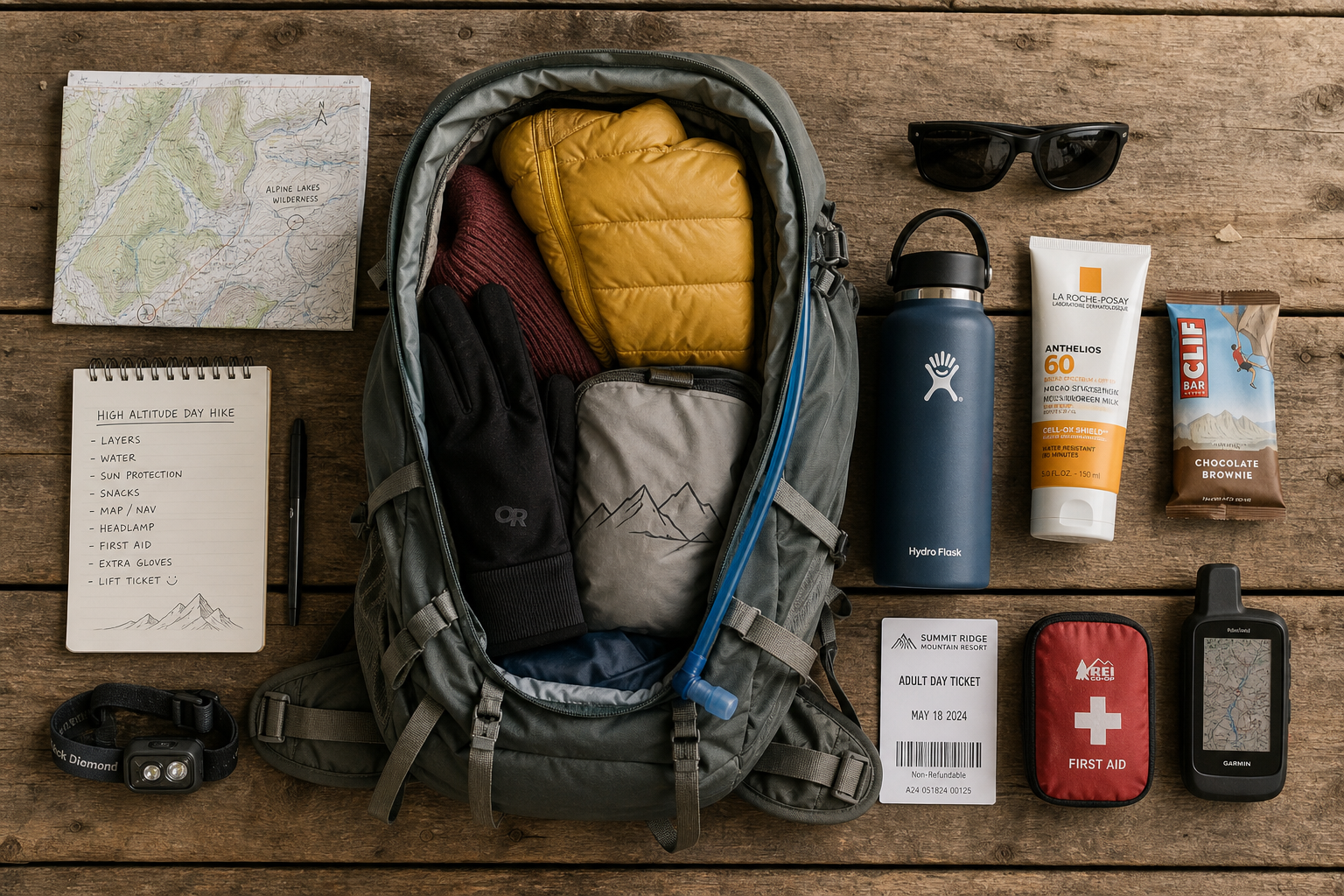
Your Day Trip Packing Checklist:
- The Insulator: Pack a highly compressible down or synthetic puffy jacket. You will absolutely need it at 3,800 meters.
- The Windbreaker: A lightweight GORE-TEX or similar wind/rain shell to block the high-altitude gusts on the viewing terraces.
- Eyewear: Category 3 or 4 UV-blocking sunglasses. The glare off the high-altitude snow and glacial ice is blinding and can cause snow-blindness if you aren’t protected.
- Footwear: Sturdy, comfortable approach shoes or light hiking boots. Even if you are just taking the train to Montenvers, you will be walking up and down hundreds of metal grate stairs to reach the ice cave.
- Sun Protection: High-SPF sunscreen and SPF lip balm. The thinner atmosphere means UV rays are incredibly intense.
- Hydration: A reusable water bottle. Start drinking on the drive from your Swiss lodge and continue drinking throughout your ascent to stave off altitude sickness.
If you’re unsure how to condense all of this into a daypack while still traveling light for a multi-week trip, review our Swiss Alps Summer: A Simple 5-Step Packing Guide.
Dining in Chamonix: From Cosmopolitan Splurges to Backpacker Bites
The culinary scene in Chamonix perfectly mirrors its transition from a rustic mountain village to a luxury destination. The town is deeply rooted in Savoyard cuisine—hearty, calorie-dense foods originally designed to sustain farmers through brutal winters.
The Alpine Staples:
- Tartiflette: A rich casserole made of potatoes, reblochon cheese, lardons, and onions.
- Fondue Savoyarde: A blend of local cheeses melted with white wine and garlic, eaten with chunks of crusty bread.
- Raclette: Half a wheel of cheese heated at the table, scraped generously over boiled potatoes, pickles, and cured meats.
Budget Strategy for Day-Trippers:
Eating a sit-down meal in the center of Chamonix (especially rue du Docteur Paccard) will rapidly drain a backpacker’s budget. Instead, hit up one of the local artisan bakeries (boulangeries) for a massive, freshly made baguette sandwich filled with local ham and gruyere. Eat it by the river or pack it up the mountain.
Alternatively, grab a quick bite at highly rated casual spots like Poco Loco (famous for its burgers and crêpes) rather than the white-tablecloth brasseries. If you are staying at a community-driven adventure lodge in Switzerland, your dinner is likely already provided when you return, which drastically cuts down on your daily food expenditure.
Extending Your Alpine Adventure
Chamonix is just one piece of the puzzle. The beauty of basing yourself in the Swiss Alps is that Mont Blanc serves as a brilliant day trip, but the rest of your week can be filled with varied, distinct regional adventures.
If you prefer high-speed descents in the summer months, the trail networks back across the border offer some of the best downhill riding in Europe. You can easily Find the Right Mountain Bike Group for Alpine Trails through your lodge community.
For those looking to extend their hiking beyond day trips, the region is famous for the Tour du Mont Blanc (TMB)—a grueling but magnificent multi-day trek that circles the massif through France, Italy, and Switzerland. Preparing for a trek like that requires a different mindset. Learn more about tackling multi-day routes in How to Plan Hut to Hut Hiking in Switzerland (7 Tips).
If you’re looking for broader ways to save money across the region without sacrificing the views, read our essential 7 Tips for Hiking in Switzerland (Without the High Cost).
And for winter travelers, knowing how to balance premium excursions like Chamonix with affordable local slopes is critical. See our breakdown on Which Swiss Ski Resort Fits a Backpacker’s Budget? to plan your winter itinerary.
Frequently Asked Questions (FAQ)
Do I need to bring my passport for a day trip to Chamonix from Switzerland?
Yes. Even though Switzerland is part of the Schengen zone (meaning there are typically no hard border checks), you are crossing an international border into France. Border police occasionally perform spot checks on vans and buses crossing over the mountain passes, so always carry your physical passport or EU ID card.
Do I need to be fit to visit Mont Blanc?
If your goal is just to see the mountain and experience the views via the Aiguille du Midi cable car or the Montenvers train, you do not need extreme fitness. However, the altitude at 3,842 meters places significant stress on your cardiovascular system. Furthermore, descending to the ice cave at the Mer de Glace requires climbing over 500 steep stairs.
When is the best time to visit Mont Blanc to avoid crowds?
The absolute peak seasons are mid-July through August (summer vacationers) and February through March (winter ski holidays). To experience Chamonix with fewer crowds, target the “shoulder seasons.” Late May, June, September, and early October offer excellent visibility and manageable lift lines, though some secondary lifts and mountain huts may be closed.
Can I see Mont Blanc without buying expensive lift tickets?
Absolutely. While the cable cars get you into the high alpine zone, the mountain is so massive it dominates the valley skyline. Simply walking around the town of Chamonix, visiting Lac des Gaillands, or hiking up the Petit Balcon Sud trails will grant you incredible views of the massif entirely for free.
The Real Value of the Alpine Hub
Chamonix-Mont-Blanc is an extraordinary place that every mountain lover should see once. The sheer scale of the glaciers, the impossible engineering of the cable cars, and the deep-rooted mountaineering history make it a mandatory stop on any European alpine itinerary.
But the cosmopolitan reality of modern Chamonix means it is better experienced as a surgical strike rather than a prolonged, expensive stay. By choosing a communal, budget-friendly basecamp in the Swiss Alps, you get the absolute best of both worlds. You get the authentic, social “home away from home” atmosphere with likeminded travelers, and you still get to stand on the Roof of Europe.