Ski Resort Swiss Alps: 7 Hidden Gems for Solo Travelers
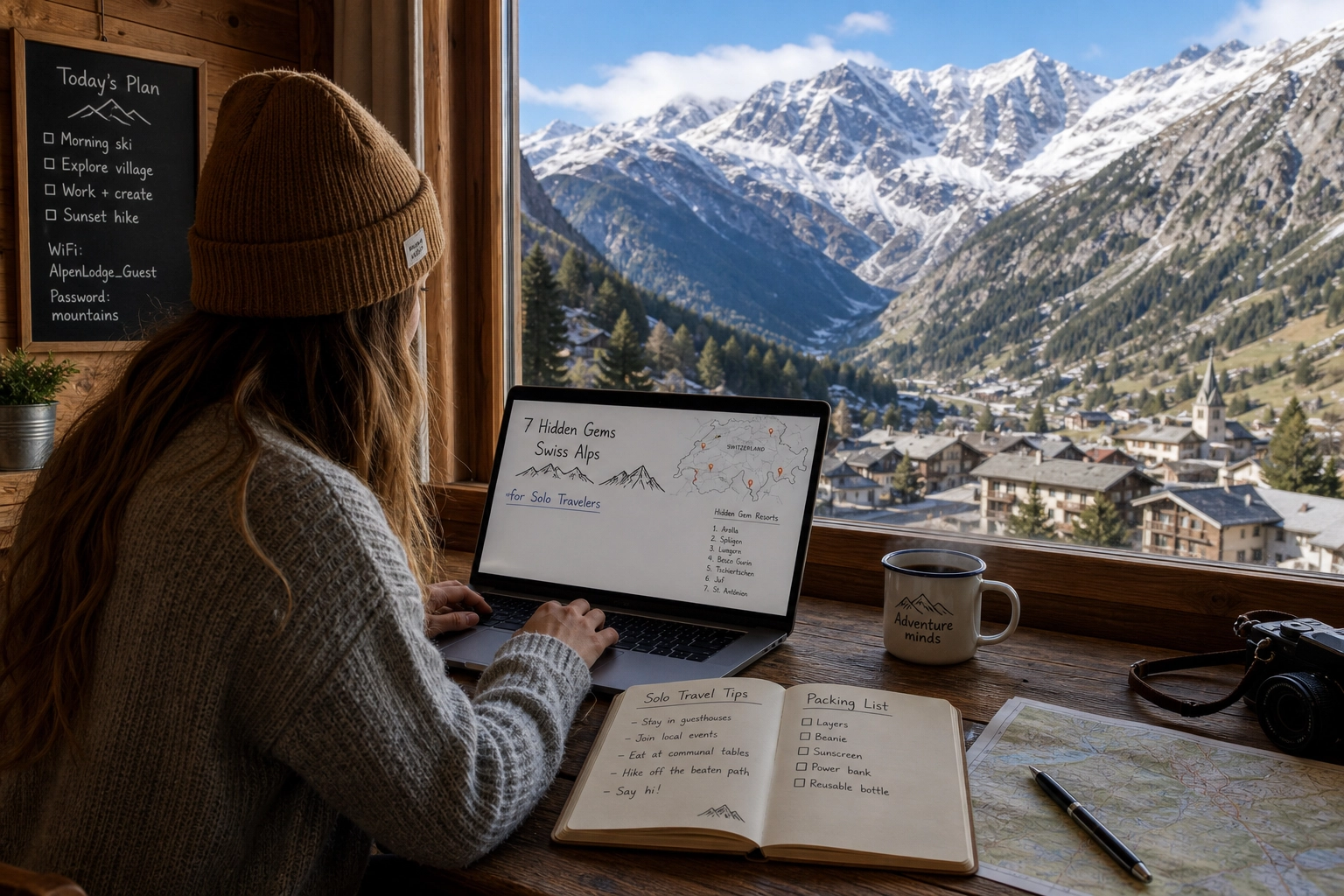
Most people imagine the same predictable scene when they think of a Swiss Alps ski trip: crowded gondolas, £20 cocktails, sterile luxury hotels, and couples retreating to private chalets. If you are a solo traveler, a digital nomad, or an international backpacker, that traditional alpine model feels incredibly isolating—not to mention financially exhausting.
The mainstream resorts in Switzerland are designed around groups and deep pockets. But the Alps hold a closely guarded secret. Just a few valleys over from the famous mega-resorts lie hidden gem mountain towns. These quieter regions offer deeper powder, authentic local culture, affordable access to massive trail networks, and, most importantly, a communal atmosphere where it is actually easy to meet people.
Finding the right basecamp changes the entire equation of skiing in Switzerland. When you trade the glitz of Zermatt for the community-driven valleys of Liddes or St. Stephan, you unlock an entirely different winter experience.
Here is your guide to bypassing the crowds and discovering the best hidden gem ski resorts in the Swiss Alps for solo travelers.
The “Solo Tax” in the Swiss Alps (And How to Evade It)
Traveling alone in the mountains usually comes with hidden penalties. Traditional hotels charge steep single supplements, independent gear rental shops offer zero group discounts, and booking a private transfer up the valley can destroy your budget before you even clip into your skis.
Worse than the financial solo tax is the social one. Standard alpine hotels offer little in the way of communal space. You ski alone, eat dinner alone in a quiet dining room, and scroll your phone until bedtime.
Evading this trap requires a shift in how you travel. The secret is to stop booking isolated hotel rooms in mainstream towns and start seeking out community-driven adventure lodges in secondary valleys.
By anchoring yourself at an all-inclusive basecamp—where hosts organize daily group itineraries, home-cooked communal dinners, and shared transport—you instantly eliminate the solo tax. You get the benefits of group logistics without having to organize a group yourself.
What Makes a Ski Resort Perfect for Solo Travelers?
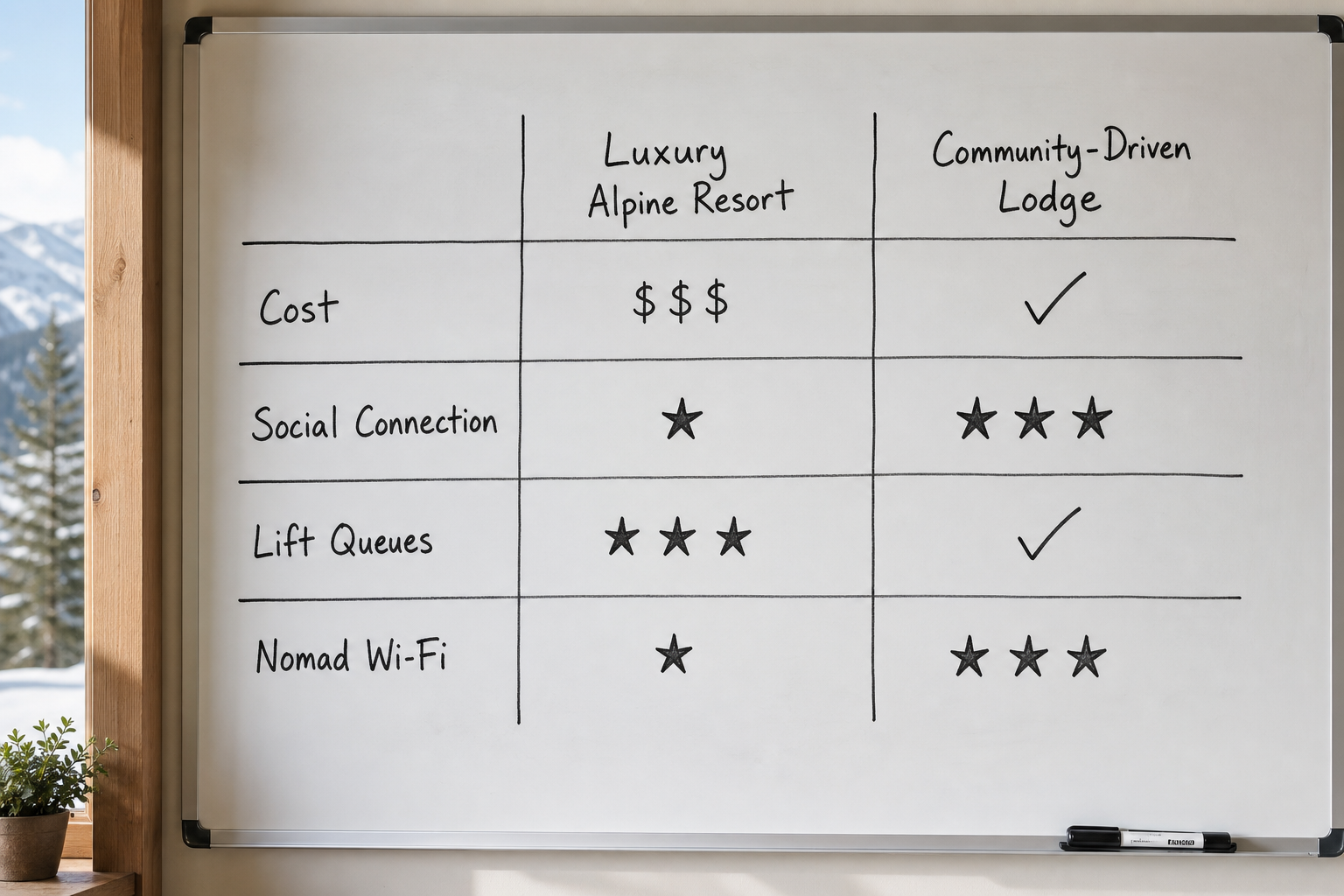
Not every small mountain town makes a good solo base. Some are simply too quiet, lacking the infrastructure to support remote work or social connection. When evaluating a destination, look for these specific criteria:
- Communal Lodging Options: Are there adventure lodges or social hubs, or only luxury chalets? To understand why this matters, read our breakdown on Hotels in Swiss Mountains? Why Social Lodges Beat Luxury.
- High-Speed Wi-Fi and Workspaces: Digital nomads need reliable infrastructure to balance deep work with deep powder.
- Border-Crossing Potential: Proximity to Italy or France allows you to chase weather systems and experience different alpine cultures on day trips.
- Off-Piste Accessibility: Smaller resorts often leave vast swaths of side-country un-tracked for days, perfect for advanced riders who want raw terrain without the rush.
7 Hidden Gem Ski Resorts in the Swiss Alps
If you want to know Which Swiss Ski Resort Fits a Backpacker’s Budget?, start by looking at these seven locations. They offer the perfect blend of terrain, community, and affordability.
1. Liddes (Val de Bagnes / Grand St. Bernard)
Nestled in the heart of the Grand St. Bernard valley, Liddes is the ultimate strategic basecamp for the solo adventurer. While the masses flock to nearby Verbier and pay a premium for the privilege, Liddes offers a quiet, community-focused haven just down the road.
Liddes is home to the Ski Hostel, functioning as a central hub where solo travelers, backpackers, and digital nomads converge. From here, you have direct access to over 250 kilometers of trails across the region. Because the logistics are managed by local hosts and volunteers, you can wake up, join a group heading to the lifts, and spend the day exploring hidden freeride zones like Super St. Bernard.
Solo Traveler Tip: The best part of Liddes isn’t just the skiing; it’s the after-hours vibe. Returning to a shared space for spa nights, BBQ gatherings, or unexpectedly brilliant Brazilian-influenced home-cooked meals turns a solitary ski day into a deeply social experience.
2. St. Stephan (Obersimmental)
St. Stephan is a masterclass in geographical hacking. Located in the peaceful Obersimmental valley, this traditional village connects directly into the sprawling Gstaad Mountain Rides network.
Instead of paying Gstaad prices and dealing with the luxury crowd, you can stay at the Ski Hostel’s St. Stephan location. You get the exact same perfectly groomed blue and red cruisers, massive vertical drops, and modern lift infrastructure, but you start and end your day in a warm, “home away from home” atmosphere.
Solo Traveler Tip: Use the local train line. The rail system in this valley is incredibly efficient, allowing you to easily bounce between different sectors of the ski domain without needing a rental car.
3. Bruson
Geographically part of the famous 4 Vallées but spiritually a world away, Bruson sits directly across the valley from Verbier. While Verbier’s slopes get tracked out by 10:30 AM on a powder day, Bruson’s tree runs hold fresh snow for days.
The vibe here is strictly local. You will share old-school chairlifts with farmers and hardcore freeriders. It is an exceptional spot for intermediate and advanced solo skiers who want to lap quiet, technical terrain.
4. Arolla (Val d’Hérens)
At 2,000 meters above sea level, Arolla sits at the end of a dramatic, winding valley road. It is raw, rugged, and entirely immune to mass tourism. With only a handful of drag lifts, you might initially underestimate it—until you realize those lifts provide access to some of the most spectacular high-altitude ski touring in Europe.
Arolla is a gathering place for mountain purists. Solo travelers who prefer earning their turns will find a welcoming, albeit serious, community of alpinists here.
5. La Fouly (Val Ferret)
Tucked away near the convergence of the Swiss, Italian, and French borders, La Fouly is a tiny, intimate resort that punches well above its weight. It is incredibly beginner-friendly on the lower slopes, making it a great spot for those looking for guided instruction without the pressure of a massive resort.
For experts, La Fouly is a launchpad. The backcountry routes leading up toward the border peaks are legendary.
6. Grimentz-Zinal (Val d’Anniviers)
While gaining popularity, the linked resorts of Grimentz and Zinal still feel like a well-kept secret compared to nearby Zermatt. Grimentz is a picture-perfect historic village filled with sun-blackened timber chalets.
The terrain here is steep and demanding. The new cable car connecting the two resorts created a freeride paradise. Solo travelers will appreciate the dedicated avalanche training centers and the easy-going, ski-focused bars at the base where finding a touring partner for the next day is surprisingly easy.
7. Belalp
If you want sweeping views of the Aletsch Glacier without the tourist traps, Belalp is your destination. Accessible only by cable car from the valley town of Blatten, this car-free plateau offers wide-open, sunny slopes.
Because it takes a bit of effort to get there, Belalp naturally filters out the chaotic weekend crowds. It attracts a laid-back demographic, making it a peaceful retreat for remote workers who want to take a few laps on their lunch break.
The Financial Blueprint: Skiing on a Backpacker’s Budget
Skiing in Switzerland will never be dirt cheap, but it can be highly affordable if you understand how to structure your spending.
1. Opt for All-Inclusive Social Stays
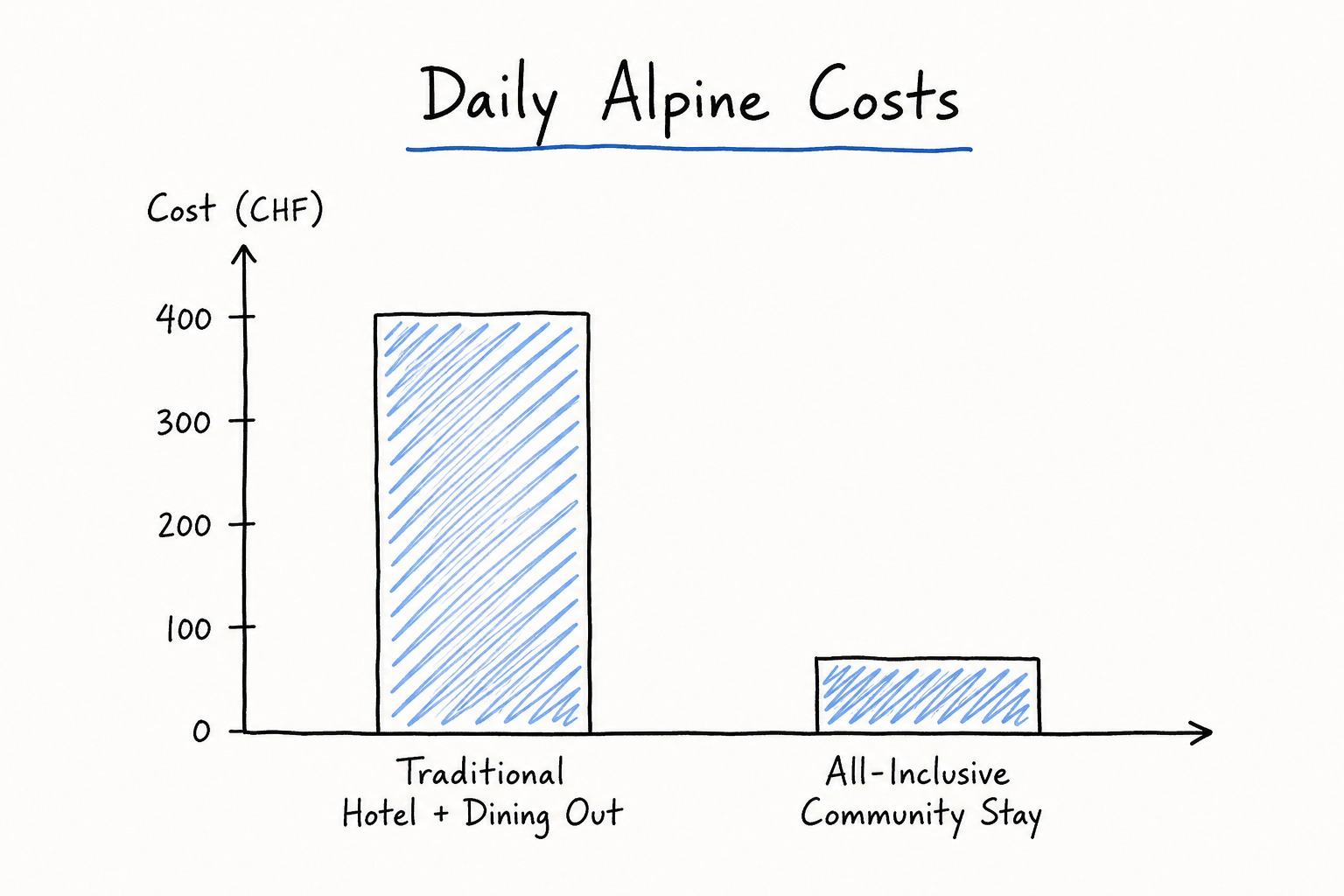
When you book a traditional hotel, you are only paying for a bed. You then have to source breakfast, lunch on the mountain (often CHF 25-40), and dinner at a restaurant (easily CHF 40-60).
Community-driven adventure lodges flip this model. By bundling your accommodation, hearty home-cooked meals, and gear rental discounts into a single weekly package, your daily cash burn drops dramatically. You aren’t paying restaurant markups, and sharing transport to the lifts cuts travel costs to near zero.
2. Leverage Regional Passes
If you are staying for more than a week, look into regional passes like the Magic Pass, which covers dozens of hidden gem resorts (including Grimentz-Zinal and parts of the Val de Bagnes) for a fraction of the cost of daily tickets.
3. Rent Off-Mountain
Renting gear directly at the base of a mega-resort guarantees you will pay the highest possible premium. Social lodges usually hold their own fleet of well-maintained rental gear for guests or have negotiated deep discounts with local valley shops.
Crossing Borders: Tactical Day Trips to Italy and France
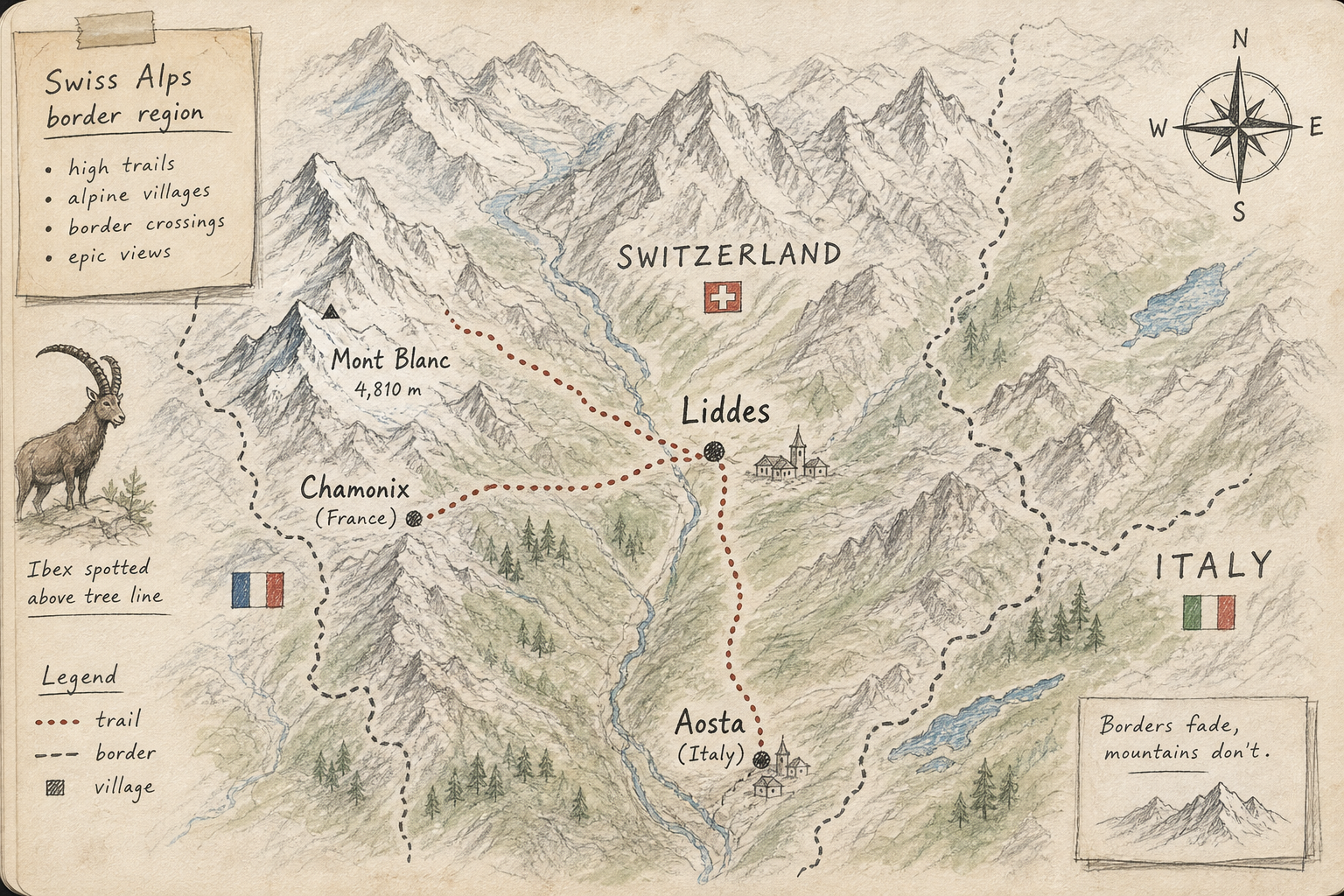
One of the greatest advantages of basing yourself in a region like Liddes is the ability to ski three countries in a single week. You aren’t trapped in one valley.
The Italian Espresso Run
When the storms roll in from the south, Switzerland might be cloudy while the Italian side of the Alps is bathed in sun and fresh snow. From the Grand St. Bernard region, crossing into the Aosta Valley is a fast, stunning drive.
The vibe changes instantly. Lift tickets are cheaper, the coffee is exceptional, and you can spend the day riding completely different terrain. If you are curious about the logistics, check out our guide: Skiing in the Italian Alps? Try This Aosta Day Trip.
The Chamonix Excursion
France’s iconic Chamonix valley is also within striking distance. While Chamonix itself is hardly a hidden gem, accessing it as a day trip from a quiet Swiss basecamp allows you to cherry-pick the best conditions. You can tackle the famed Vallée Blanche or enjoy the views of Mont Blanc, then retreat back to your peaceful lodge for a communal dinner, leaving the chaotic French après-ski scene behind.
For tips on navigating the region smartly, read Mountain Mont Blanc: 7 Ways to Visit Without the Crowd or explore our summer scouting tips in 5 Best Hiking Trails in Switzerland Near Mont Blanc.
The Digital Nomad Alpine Routine
The rise of Starlink and fiber-optic alpine networks has made the Swiss Alps a legitimate destination for remote workers. However, successfully combining remote work with mountain sports requires discipline and the right environment.
Traditional hostels are terrible for deep work—they are too loud and lack proper seating. Luxury hotels are too isolating. Community adventure lodges hit the sweet spot, often providing dedicated co-working tables and high-speed Wi-Fi designed specifically for nomads.
The Ideal Split-Day Schedule:
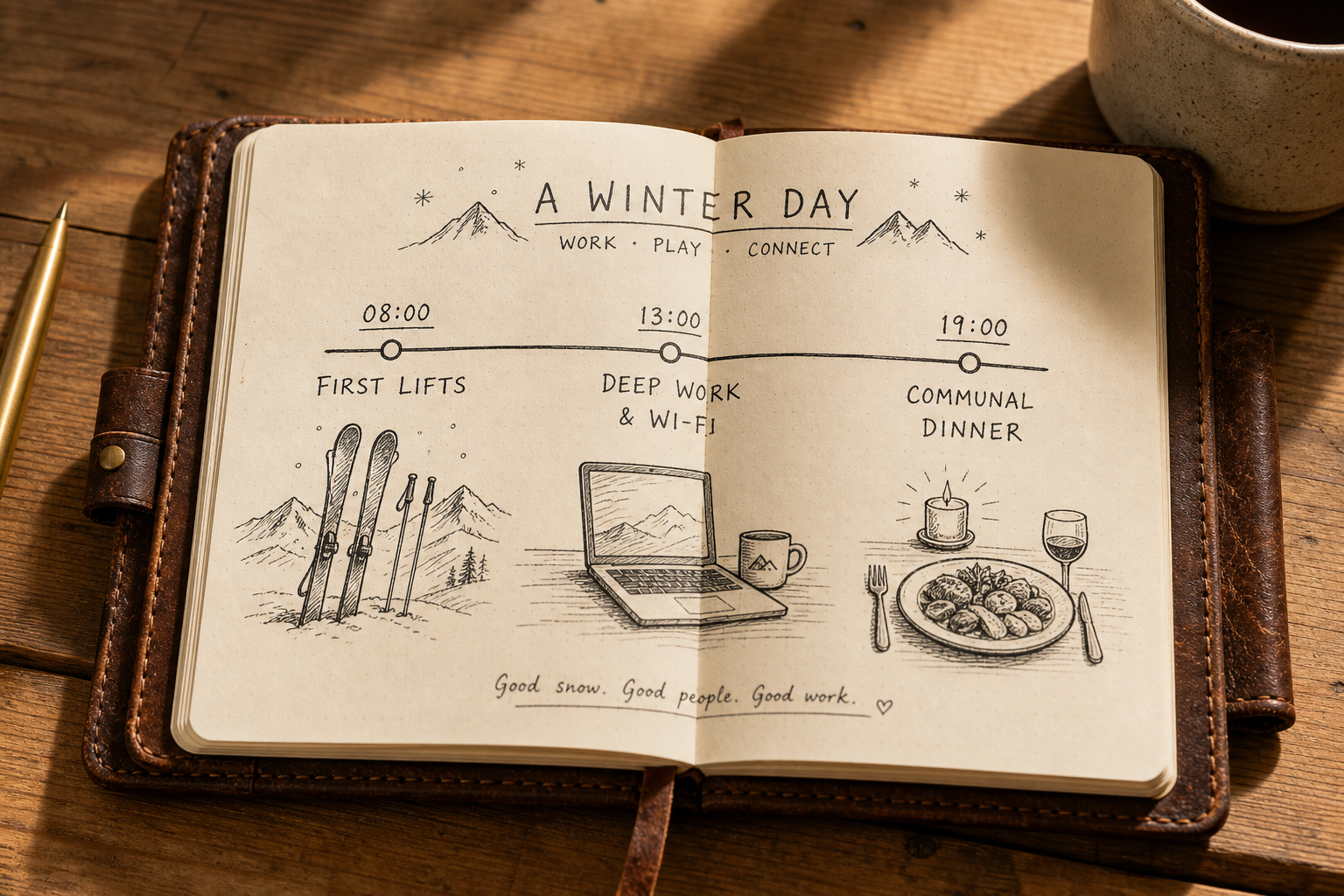
- 07:30: High-protein communal breakfast.
- 08:30 - 12:30: Catch the first lifts. Ride hard for four hours while the snow is best and the US/UK time zones are asleep.
- 13:00 - 18:00: Return to the lodge. Shower, grab a coffee, and log in for a focused 5-hour work sprint in the communal workspace.
- 19:00: Close the laptop and join the house for a communal dinner, trading stories with people who skied different zones that day.
Summer Scouting: Why Winter Isn’t the Only Season
Many solo travelers who discover these hidden gems in the winter end up returning in the summer. The infrastructure that makes places like Liddes and St. Stephan so appealing for skiing—the community, the access, the guided itineraries—translates perfectly to summer alpine sports.
When the snow melts, these valleys reveal over 250 kilometers of world-class trails. The shared logistics shift from ski transport to trailheads. If you are thinking about extending your stay or returning, getting involved in organized summer activities is highly recommended.
Whether you need to Find the Right Mountain Bike Group for Alpine Trails, or want to learn How to Plan Hut to Hut Hiking in Switzerland (7 Tips), the communal lodge model remains your best asset.
For a deeper dive into summer preparations, check out 7 Tips for Hiking in Switzerland (Without the High Cost) and Guided Hiking in Switzerland: Finding Your Social Group.
A 5-Step Solo Packing Strategy
Packing for a solo winter trip requires ruthless efficiency. You have no one to help you drag three heavy suitcases onto a Swiss train.
- Wear Your Bulkiest Gear in Transit: Wear your winter boots and heavy jacket on the plane or train. It frees up massive amounts of luggage space.
- Rethink the Ski Bag: Unless you have highly specialized touring skis, rent your hard goods locally. Carrying a 190cm ski bag solo across multiple train platforms is a miserable experience.
- Prioritize Merino Wool: Base layers made of merino wool resist odor for days. You can pack half as many shirts and rely on the lodge’s laundry facilities.
- Bring a Proper Tech Organizer: As a digital nomad, your cables, adapters, and power banks need to be easily accessible, not tangled at the bottom of a duffel.
- Pack for the Lodge, Not Just the Mountain: Bring comfortable, casual clothes for communal dinners and spa nights. (For a breakdown of warmer weather packing, our Swiss Alps Summer: A Simple 5-Step Packing Guide covers similar minimalist principles).
The Final Word on Solo Alpine Travel
Skiing the Swiss Alps solo does not mean you have to be alone, nor does it mean you have to drain your savings account. By looking past the glossy brochures of the mega-resorts and pointing your compass toward valleys like Liddes and St. Stephan, you find the real soul of the mountains.
It is in these hidden gems that the focus shifts away from luxury and back to what actually matters: deep snow, challenging terrain, and sharing a brilliant, home-cooked meal with a table full of new friends who love the mountains just as much as you do.