
Swiss Alps Guided Hiking Tours: 5 Routes for Every Level
Navigating the Swiss Alps independently often feels like solving a high-stakes logistical puzzle. Between deciphering the SBB train schedules, timing the last gondola descent, navigating complex trail networks, and swallowing the steep cost of mountain-top restaurants, the actual hiking can sometimes become an afterthought.
For solo travelers, digital nomads, and budget-conscious adventurers, traditional luxury trekking packages—often costing thousands of dollars—are out of reach. Conversely, going completely solo can be isolating and physically risky if you are unfamiliar with alpine weather systems.
This is where a community-driven basecamp model changes the equation. By centralizing accommodation, meals, transport, and guide knowledge in a single social hub, you strip away the friction of mountain exploration. Instead of worrying about logistics, you wake up, grab a packed lunch, load into a group van, and focus entirely on the trail ahead.
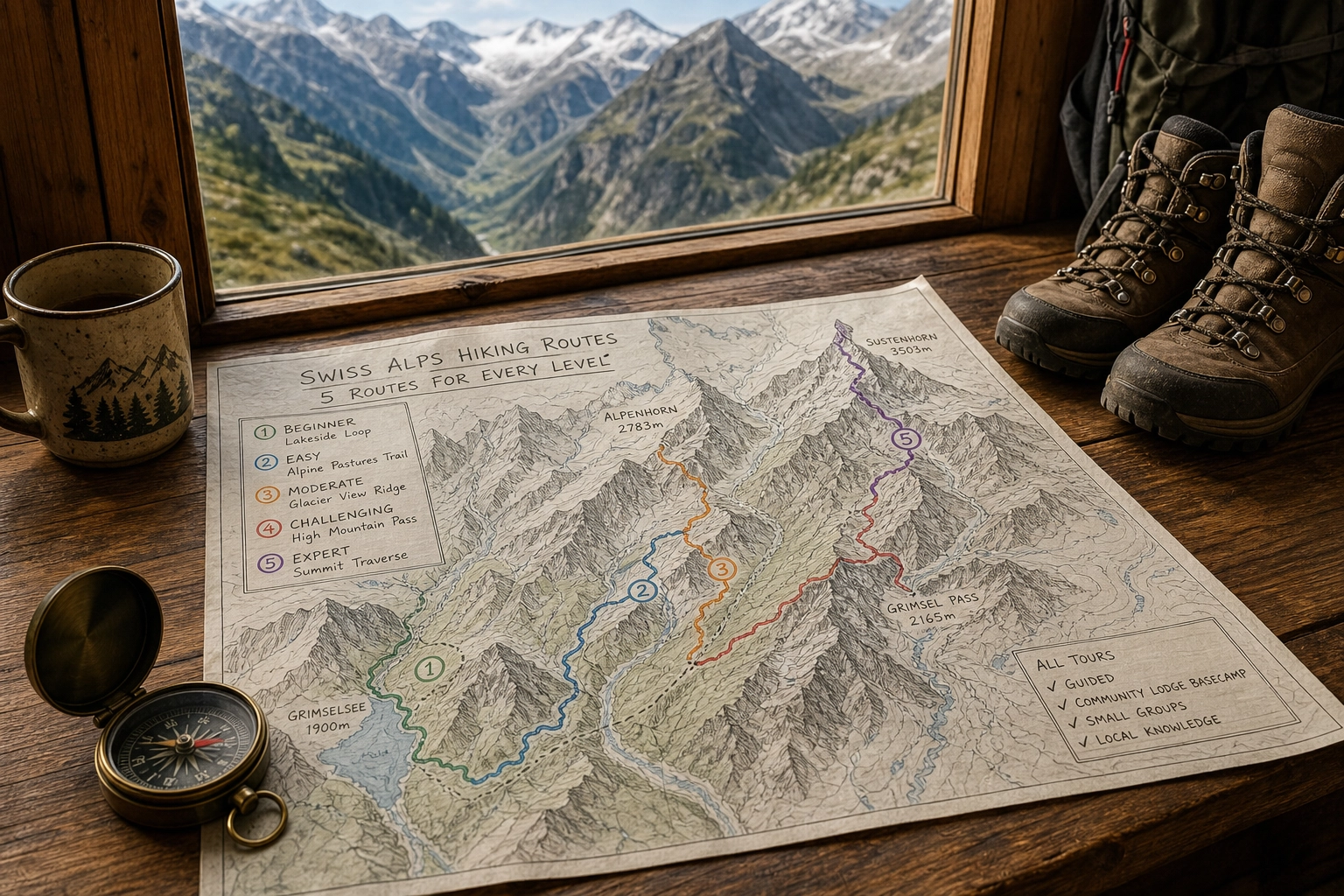
Whether you are lacing up hiking boots for the first time or training for a high-altitude traverse, the trails accessible from the Liddes and St. Stephan regions offer something for everyone. Here are five meticulously planned guided routes that span every skill level, designed to build your confidence and connect you with a global community of hikers.
Why Choose a Guided Basecamp Model?
Before detailing the routes, it is worth understanding how guided alpine tours operate. The industry generally splits into two camps: premium, hotel-to-hotel tours managed by large operators, and stationary, basecamp-style guided programs run by adventure lodges.
Traditional luxury outfitters, such as Backroads, often build itineraries around luggage transfers and premium dining. While excellent for luxury seekers, they rarely foster the raw, communal backpacker energy that younger travelers or digital nomads crave.
Opting for a social lodge model completely shifts the dynamic:
- Centralized Logistics: Your host and volunteers handle the driving. You don’t need to rent a car or buy expensive daily train tickets to reach remote trailheads.
- Built-in Community: You hike alongside the same group of international travelers you share breakfast with, quickly turning strangers into trail partners. You can read more about this dynamic in Guided Hiking in Switzerland: Finding Your Social Group.
- Cost Predictability: With home-cooked meals, communal dinners, and included trail lunches, your food budget is locked in.
- Adaptive Scheduling: If a severe thunderstorm rolls over the Val de Bagnes on a Tuesday, a localized guide simply swaps the itinerary for a lower-elevation forest hike.
Independent vs. Social Lodge Guided Hiking
| Feature | Independent DIY Hiking | Social Lodge Guided Tour |
|---|---|---|
| Route Planning | Requires hours of map study and app navigation. | Pre-planned by local experts based on current conditions. |
| Transportation | Expensive public transit; strict bus schedules. | Private group van; flexible departure times. |
| Social Aspect | High chance of isolation; brief chats on the trail. | Immediate community; communal dinners and shared spaces. |
| Cost Management | High variability (expensive restaurants, varied transport). | Flat rate for bed, meals, and guiding. |
| Safety Support | Solely reliant on personal skills and emergency services. | Experienced group leaders; collective first aid and pacing. |
For a deeper dive into why community spaces offer better value, check out Hotels in Swiss Mountains? Why Social Lodges Beat Luxury.
Decoding Swiss Trail Difficulty Levels
Switzerland has one of the most organized trail networks on earth, managed by the Swiss Alpine Club (SAC). Understanding their color-coded system is the first step in choosing your route. A guided tour removes the navigation stress, but knowing what is underfoot helps you prepare physically.
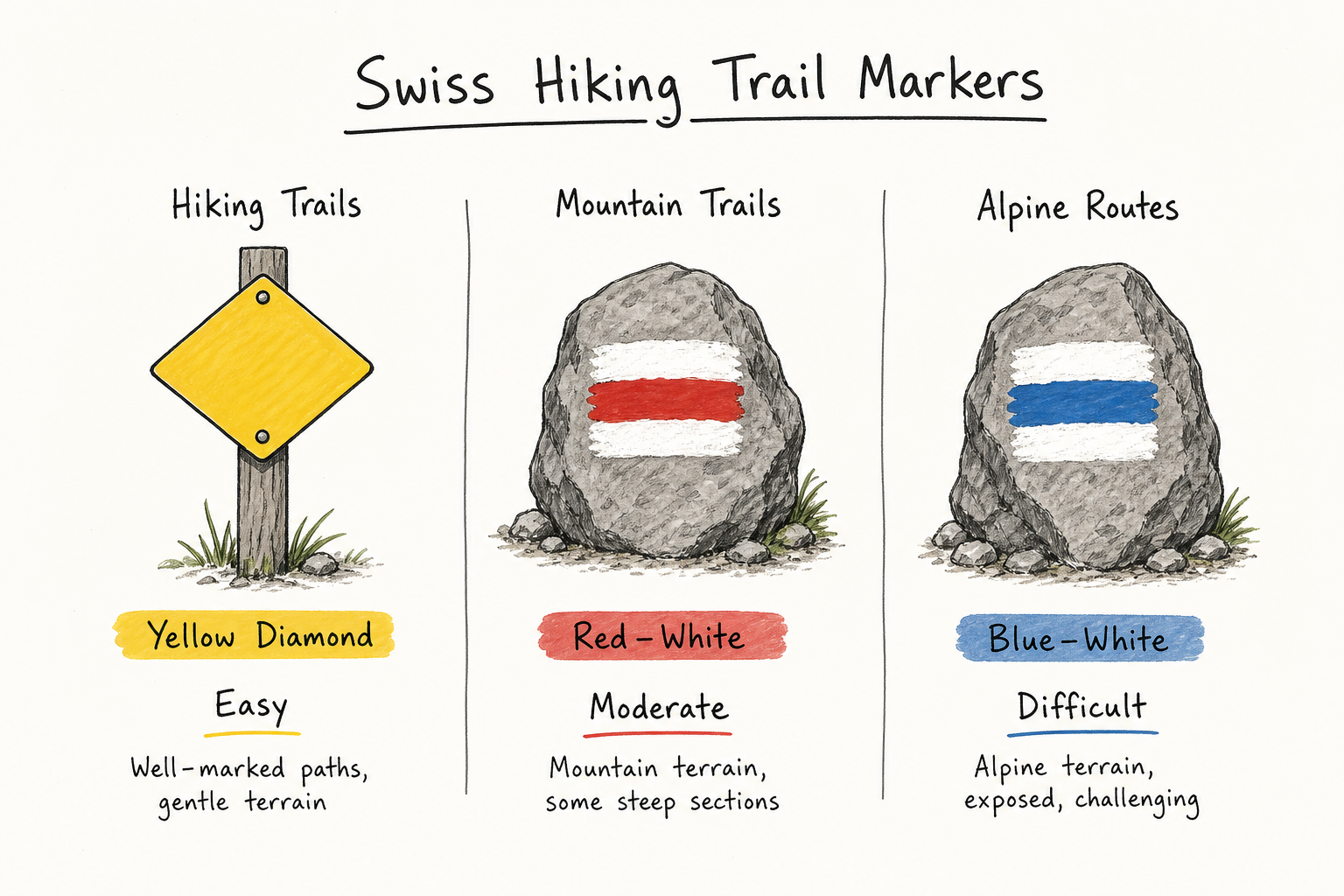
- Yellow Indicators (T1 - Hiking Trails): These are wide, well-maintained paths. They might be paved or packed dirt. Expect gentle gradients, suitable for sneakers or light trail runners. No technical skills required.
- Red-and-White Indicators (T2/T3 - Mountain Trails): The classic alpine experience. These paths are often steep, narrow, and uneven. You will encounter roots, rocks, and potentially exposed sections secured by fixed cables or chains. Sturdy hiking boots are mandatory.
- Blue-and-White Indicators (T4/T5 - Alpine Routes): Reserved for experts. These routes cross scree, glaciers, and severe exposure. You often need to use your hands for balance. They require specialized footwear and a head for heights.
Our guided itineraries primarily focus on Red-and-White trails, pushing you safely out of your comfort zone while keeping risk exceptionally low.
Route 1: The Val de Bagnes Introductory Circuit (Beginner)
The Swiss Alps do not require you to suffer to see spectacular views. The Val de Bagnes region, accessible quickly from our Liddes basecamp, offers a gentle introduction to alpine environments without the punishing elevation gain.
The Route Profile:
- Distance: 8 - 10 kilometers
- Elevation Gain: ~300 meters
- Terrain: Yellow and easy Red-and-White trails (T1/T2)
- Pace: Relaxed, with frequent stops for photography and snacks.
The Experience:
This route typically begins with a short van ride up the valley, bypassing the grueling forest ascents. The group steps onto the trail directly in the alpine pasture zone. The focus here is on acclimatization and soaking in the classic Swiss aesthetic: rolling green meadows, historic wooden chalets with slate roofs, and the distant ringing of Herens cowbells.
Guides use this introductory day to teach basic trail mechanics. You will learn the ‘rest step’ for steady uphill pacing, how to properly adjust trekking poles for descents, and the etiquette of passing other hikers.
Around midday, the group stops at an alpine buvette (a small mountain hut). While you enjoy your packed lunch, the guide might source fresh local cheese from the dairy next door. It is an unhurried, highly social day that builds the group’s stamina for the week ahead.
Route 2: St. Stephan & The Bernese Oberland Panorama (Intermediate)
Moving up in difficulty, we cross into the terrain surrounding St. Stephan. The Bernese Oberland is famous for its dramatic, jagged limestone peaks that contrast sharply with the softer valleys below.
The Route Profile:
- Distance: 12 - 15 kilometers
- Elevation Gain: ~600 - 800 meters
- Terrain: Standard Red-and-White trails (T2/T3)
- Pace: Moderate, requiring sustained cardiovascular effort.
The Experience:
This is a true hiking day. After an early communal breakfast, the group tackles a sustained climb out of the St. Stephan valley. The trail zigzags through dense pine forests before breaking above the tree line around 1,800 meters.
Here, the path flattens out into a spectacular balcony walk. To your left, the valley drops away; to your right, the imposing walls of the Bernese Alps rise sharply. This route introduces moderate rocky terrain where foot placement matters.
Why do this guided? Managing pacing on an 800-meter climb is difficult for solo hikers, who often burn out in the first hour. A guide sets a sustainable rhythm, ensuring the entire group reaches the panorama point with energy to spare. The reward at the top is a shared trail lunch with sweeping views of glaciers and distant 4,000-meter peaks.
Route 3: The Cross-Border Aosta Day Trek (Intermediate to Advanced)
One of the unique advantages of a basecamp in Liddes is proximity to international borders. You can eat breakfast in Switzerland, hike across a historic mountain pass, and drink espresso in Italy by the afternoon.
The Route Profile:
- Distance: 14 - 16 kilometers
- Elevation Gain: ~800 - 1,000 meters
- Terrain: Red-and-White trails, rocky passes, minor snow patches early in the season (T3)
- Pace: Steady, with a significant push over the pass.
The Experience:
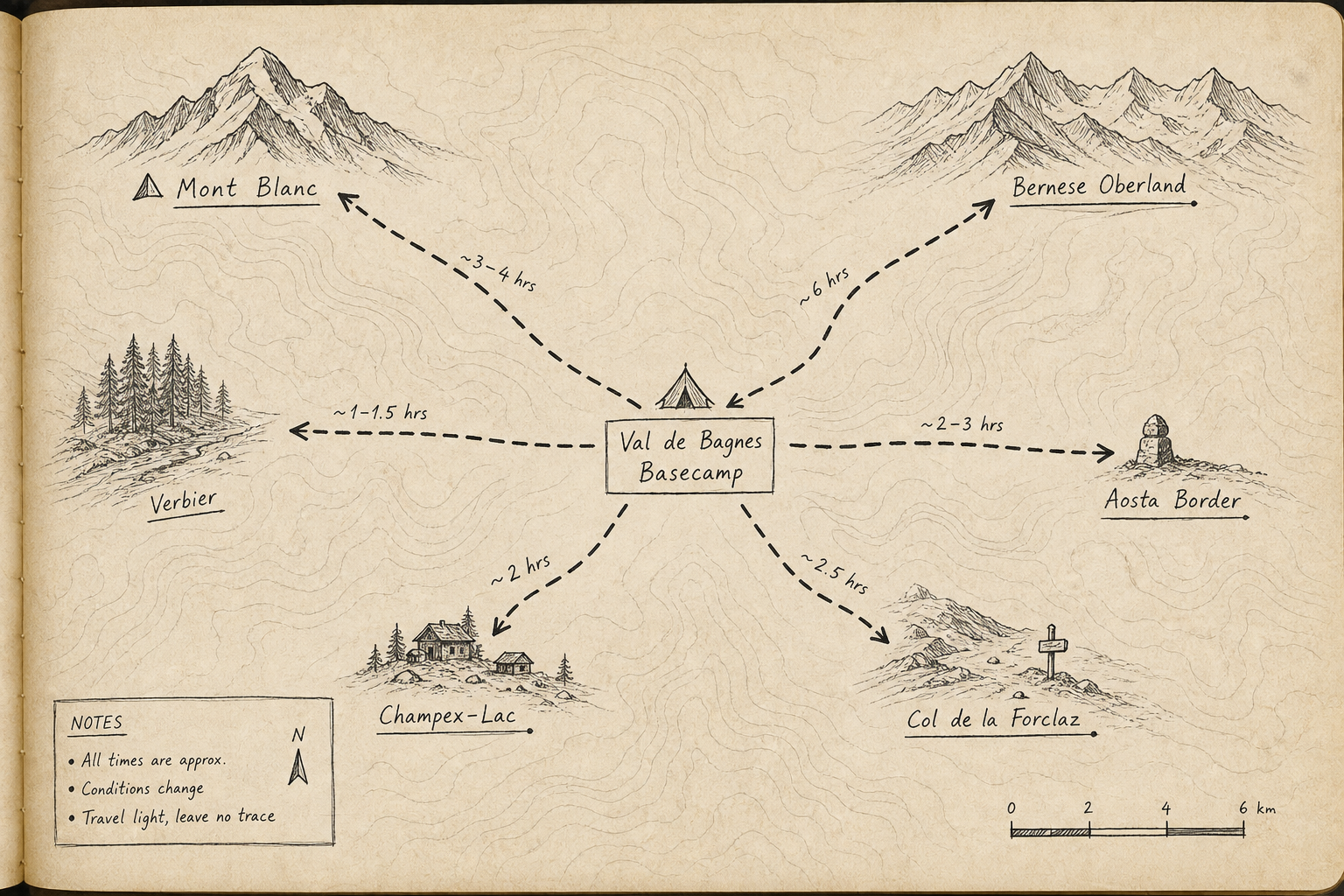
Tracing the historical routes used by Roman legions and Napoleon’s army, this trek ascends toward the Great St. Bernard Pass or similar high-altitude border crossings. The environment here feels vastly different from the lush valleys—it is stark, rocky, and heavily exposed to the elements.
The climb requires endurance and mental focus, especially when navigating loose scree near the summit ridge. Reaching the border marker is a triumphant moment for the group.
The descent into the Aosta Valley (Italy) brings a sudden shift in climate and vegetation. The air often feels warmer, and the architecture changes instantly. After completing the descent, the group van (which has driven around to meet you) whisks you into an Italian alpine village for well-earned pizza and gelato before heading back to the Swiss lodge.
(Note: If you love multi-country access, it translates beautifully to winter sports as well. Read more in Skiing in the Italian Alps? Try This Aosta Day Trip.)
Route 4: Sections of the Tour du Mont Blanc (Advanced)
The Tour du Mont Blanc (TMB) is arguably the most famous long-distance trail in Europe. While completing the entire 170-kilometer circuit takes 10 to 12 days, a guided basecamp model allows you to cherry-pick the absolute best, most dramatic Swiss sections without carrying a heavy multi-day backpack.
The Route Profile:
- Distance: 16 - 20 kilometers
- Elevation Gain: ~1,000 - 1,200 meters
- Terrain: Steep, challenging Red-and-White trails, narrow balcony paths, significant exposure (T3/T4)
- Pace: Fast and deliberate.
The Experience:
Accessing the TMB network near the Trient Valley or the French border near Chamonix requires a short morning drive. These trails are physically demanding, featuring relentless ascents that test your leg strength and cardiovascular capacity.
You will hike alongside massive glaciers that seem close enough to touch and cross high-suspension bridges over rushing meltwater rivers. The presence of a guide is invaluable here. The TMB is incredibly popular, and independent hikers often struggle with the crowds. A knowledgeable leader knows exactly when to start the hike to avoid bottlenecks and which alternate side-trails offer the same views in total solitude.
Because this is an advanced day, the group camaraderie becomes a critical support system. Pushing through the final 200 meters of elevation to a mountain col is much easier when your hostel mates are cheering you on. For more ideas on tackling this region, see Mountain Mont Blanc: 7 Ways to Visit Without the Crowd and 5 Best Hiking Trails in Switzerland Near Mont Blanc.
Route 5: The High-Altitude Hut-to-Hut Challenge (Expert)
For those who want to experience the absolute peak of Swiss alpine culture, a guided overnight excursion into the high mountains is the ultimate test. Leaving the comfort of the basecamp behind for one night, the group ascends into the domain of mountaineers.
The Route Profile:
- Distance: 20+ kilometers spread over two days
- Elevation Gain: 1,500+ meters
- Terrain: Challenging alpine paths, boulder fields, fixed ropes (T4)
- Pace: Measured, cautious, endurance-focused.
The Experience:
This route targets the high, wild country of the Tour des Combins or upper Val de Bagnes. You carry a slightly larger pack containing a sleeping bag liner, a change of clothes, and extra water. The trail leaves the tree line quickly, entering a lunar landscape of granite and ice.
Navigating boulder fields requires intense concentration. The air is thinner, making every step feel heavier. The guide carefully manages the group’s safety, assessing weather patterns and ensuring no one gets left behind on technical descents.
The destination is an SAC (Swiss Alpine Club) mountain hut perched on a ridge. Spending a night in a high-altitude refuge is a rite of passage. You share a hearty, simple meal of soup and pasta with climbers and hikers from around the world, sleeping in dormitory-style bunks. The next morning, you watch the sunrise illuminate the glaciers before beginning the long, knee-testing descent back to civilization.
To prepare for this type of excursion, read our guide on How to Plan Hut to Hut Hiking in Switzerland (7 Tips).
The Ski Hostel Difference: A Day in the Life
Booking a guided tour through a standard travel agency often means retreating to a sterile hotel room after the hike. The social lodge experience is designed to keep the momentum going.
Here is what a typical day looks like on a basecamp-guided hiking package:
- 7:30 AM: Wake up and head to the dining room. Coffee is brewing. You join fellow travelers at long wooden tables for a carbohydrate-rich breakfast (oats, fresh bread, cheese, fruit).
- 8:15 AM: Pack your day bag. A sandwich station is set up for you to build your trail lunch.
- 8:45 AM: The group loads into the hostel van. The guide briefs everyone on the day’s weather and route profile.
- 9:30 AM - 3:30 PM: On the trail. The group stays together, sharing snacks, taking photos, and supporting each other through the steep sections.
- 4:30 PM: Return to the lodge. Boots come off. You hit the showers or relax in the communal lounge. Some digital nomads might log online via high-speed Wi-Fi to clear a few emails.
- 7:00 PM: The evening peaks with a communal dinner—often featuring a massive Brazilian-influenced BBQ or home-cooked local specialties. Stories from the trail are shared over local beers.
This all-in-one experience where logistics, equipment, and group itineraries are fully managed by the host and volunteers creates an environment where solo travelers never feel alone.
Budgeting for Your Swiss Alps Hiking Tour
Switzerland is notoriously expensive. According to standard industry pricing from operators like Exodus Travels, a multi-day guided trek can easily exceed $2,500 per person, not including flights.
A basecamp model slashes these costs dramatically without sacrificing the quality of the trails.
By pooling resources for transport, cooking meals in-house, and leveraging local guide knowledge, a social lodge provides an affordable entry point to world-class terrain. You pay a single flat rate for your bed, food, and daily guided excursions. There are no surprise $40 cable car tickets or $35 mountain-top hamburgers to worry about.
For more specific breakdown strategies, dive into 7 Tips for Hiking in Switzerland (Without the High Cost).
Essential Gear for Guided Alpine Treks
Even with logistics handled, the mountains demand respect. Alpine weather can shift from intense, sunburn-inducing heat to a freezing rainstorm in under 30 minutes. The key is packing practical, modular layers rather than heavy, single-use items.
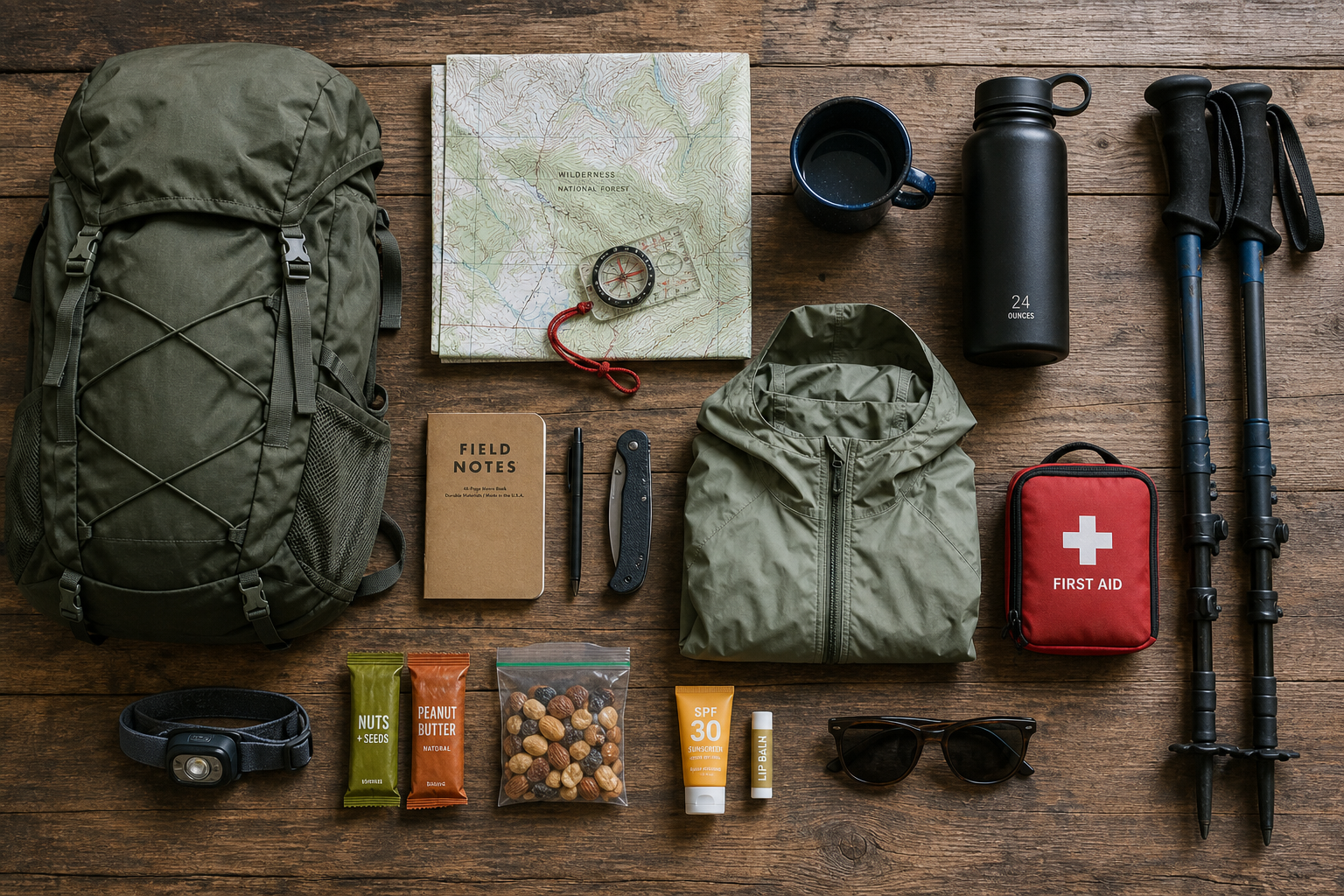
Your daily pack should strictly include:
- Footwear: Sturdy, broken-in hiking boots with deep ankle support. Trail runners are only acceptable for Beginner (T1) routes.
- Moisture Management: Merino wool or synthetic base layers. Avoid cotton, which stays wet and cold against your skin.
- Insulation: A lightweight fleece or packable down jacket.
- Shell: A high-quality, fully waterproof and windproof rain jacket.
- Hydration: At least 2 liters of water capacity (bottles or a hydration bladder).
- Sun Protection: Category 3 or 4 sunglasses, SPF 50 sunscreen, and a wide-brimmed hat. UV radiation is significantly stronger at altitude.
- Trekking Poles: Highly recommended for saving your knees on steep 1,000-meter descents.
If you are traveling light, remember that social lodges often provide gear rentals, saving you the hassle of flying with bulky equipment. Review our complete checklist in Swiss Alps Summer: A Simple 5-Step Packing Guide.
(Note: If you prefer two wheels to two feet, our lodge also supports biking adventures. Learn more in Find the Right Mountain Bike Group for Alpine Trails.)
FAQs on Swiss Alps Hiking Tours
When is the best time to book a summer hiking tour?
The prime alpine hiking window is surprisingly short. Mid-July through early September offers the best conditions, as the high passes are finally clear of snow. June can still feature significant snowpack above 2,000 meters, requiring route adjustments. September offers crisp air, fewer crowds, and stunning autumn colors, though evenings get cold.
Do I need to be an elite athlete to join a guided tour?
Absolutely not. That is the beauty of the 5-route progression. If you maintain a baseline level of cardiovascular fitness (e.g., jogging a few times a week or regular walking), you can easily handle the beginner and intermediate routes. The guides manage the pace to ensure nobody is left gasping for air.
What happens if the weather turns bad?
Mountain weather is inherently unpredictable. If a severe storm system moves in, a good guide will never force a high-altitude hike. Instead, the itinerary shifts to lower-valley trails, forest walks, or even a rest day featuring a trip to local thermal baths or a cheese factory. Safety always supersedes the planned itinerary.
Can I switch between hiking and winter sports?
While this guide focuses on summer terrain, the infrastructure remains the same year-round. The trails you hike in July become the slopes you ski in January. To see how the lodge transitions for winter, read Which Swiss Ski Resort Fits a Backpacker’s Budget?.
Taking the Next Step
The Swiss Alps do not have to be an intimidating, logistically impossible dream reserved for luxury travelers. By choosing a guided, community-focused basecamp, you outsource the stress and focus entirely on the experience.
You get the physical challenge of the climb, the unparalleled beauty of the glaciers, and the profound satisfaction of returning to a warm lodge, a hot meal, and a group of friends who just shared the exact same adventure. Pack your boots, pick your level, and let the mountains do the rest.