7-Day Swiss Alps Summer Itinerary for Social Hikers
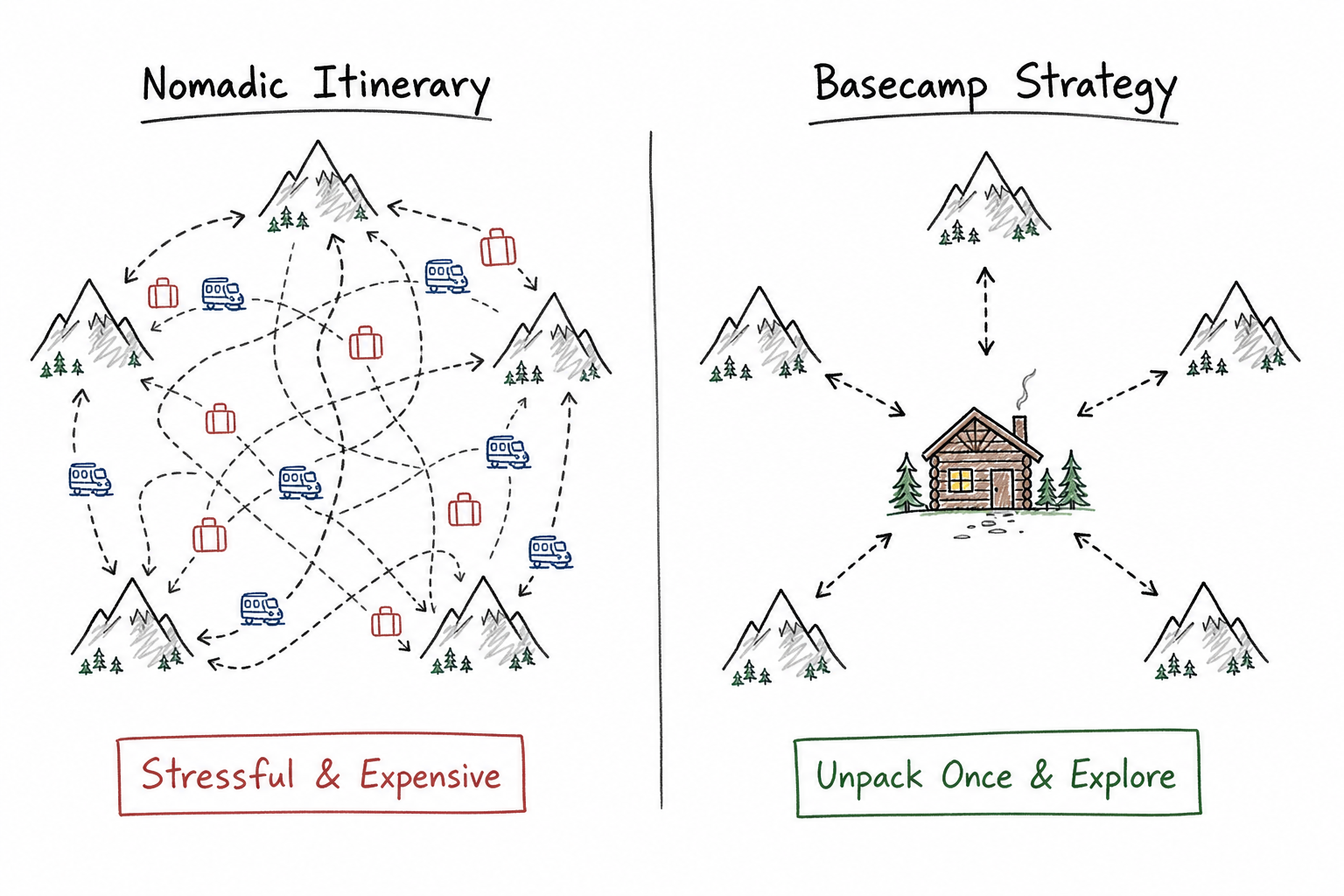
Most Swiss Alps itineraries look less like a vacation and more like a grueling train schedule. They instruct you to wake up at 6:00 AM, pack your bags, sprint to a crowded platform, and relocate to a new town every single day. By day four, the majestic peaks blur together through a train window, and you are too exhausted to actually enjoy the trails.
For solo travelers, digital nomads, and budget-conscious backpackers, this traditional nomadic approach is not just tiring—it is isolating and expensive. Constantly moving prevents you from forming real connections with fellow travelers, finding the hidden trails locals actually use, or taking a much-needed rest day to catch up on remote work.
There is a better way to experience the mountains.
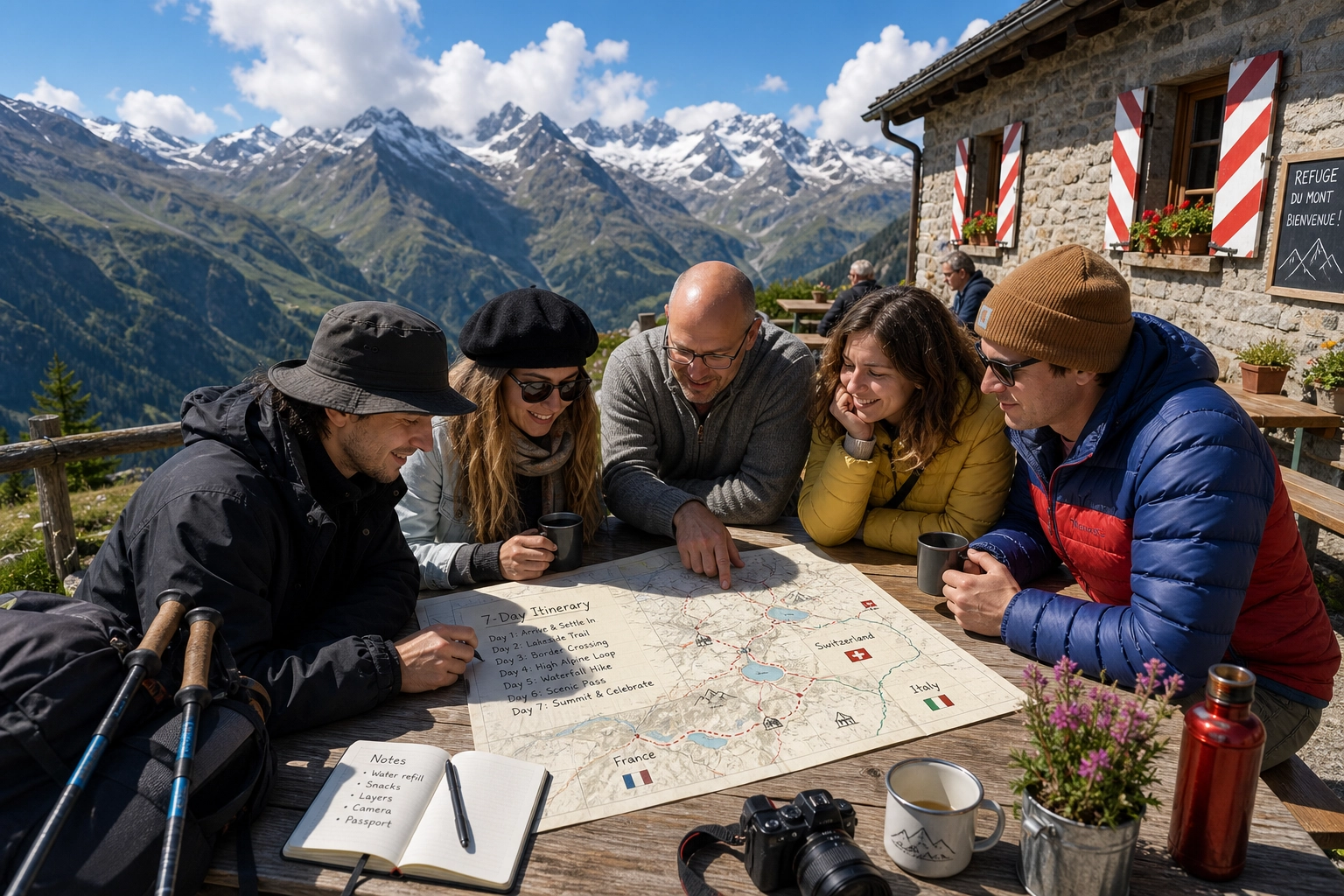
By adopting a “basecamp” strategy—setting up in a community-driven adventure lodge and taking organized day trips—you eliminate logistical headaches. You unpack once. You share communal dinners. You find hiking partners for your exact skill level. This 7-day Swiss Alps summer itinerary is designed for social hikers who want to trade luxury hotel isolation and chaotic transit schedules for authentic community, shared adventures, and strategic border-crossing excursions.
The Basecamp Advantage: Why Social Lodges Change the Game
Traditional travel advice often pushes visitors toward expensive luxury resorts or sterile budget hotels where guests rarely speak to one another. But if your priority is mountain adventure and human connection, the accommodation you choose dictates your entire trip.
Basing yourself in a dedicated hiking hub—like the community-driven Ski Hostel in the Liddes or St. Stephan regions—flips the standard Swiss travel model on its head. Hotels in Swiss Mountains? Why Social Lodges Beat Luxury highlights how shared environments naturally foster the kind of impromptu adventures you cannot buy at a concierge desk.
The Logistics of Staying Put
When you use a central lodge as your hub in a region like the Val de Bagnes, you gain direct access to over 250 kilometers of trails without the daily friction of checking out.
Instead of navigating expensive, multi-leg train journeys with a heavy backpack, you can rely on the lodge’s organized transport. Hostels focused on outdoor adventures typically bundle logistics into the experience. You wake up, grab gear from the in-house rental, pile into a van with a dozen other hikers, and hit the trailhead. At the end of the day, you return to high-speed Wi-Fi, a hot shower, and a home-cooked meal.
Building a Mountain Community
Finding people to hike with in a foreign country can be intimidating. At a social lodge, the group dynamics are built into the schedule. You will share breakfast with digital nomads wrapping up morning calls, international backpackers comparing trail notes, and families seeking structured outdoor days. By day two, you will have naturally filtered into groups based on pace and ambition.
Pre-Trip Logistics: Preparing for a Swiss Summer
The Swiss Alps summer season is distinct, beautiful, and sometimes unpredictable. Before diving into the daily schedule, you need a firm grasp on weather, budgeting, and packing.
Weather Expectations (June to September)
Summer in the Swiss Alps generally spans from mid-June to late September. While the valleys can reach a balmy 25°C to 30°C (77°F to 86°F), high-altitude conditions remain volatile. You can start a hike sweating in a t-shirt and end up needing a thermal layer and a rain shell at the summit pass.
According to travel guides evaluating Switzerland in summer, visitors should always prepare for sudden afternoon thunderstorms, especially in July and August. The key to thriving here is flexible layering.
The Minimalist Packing Strategy
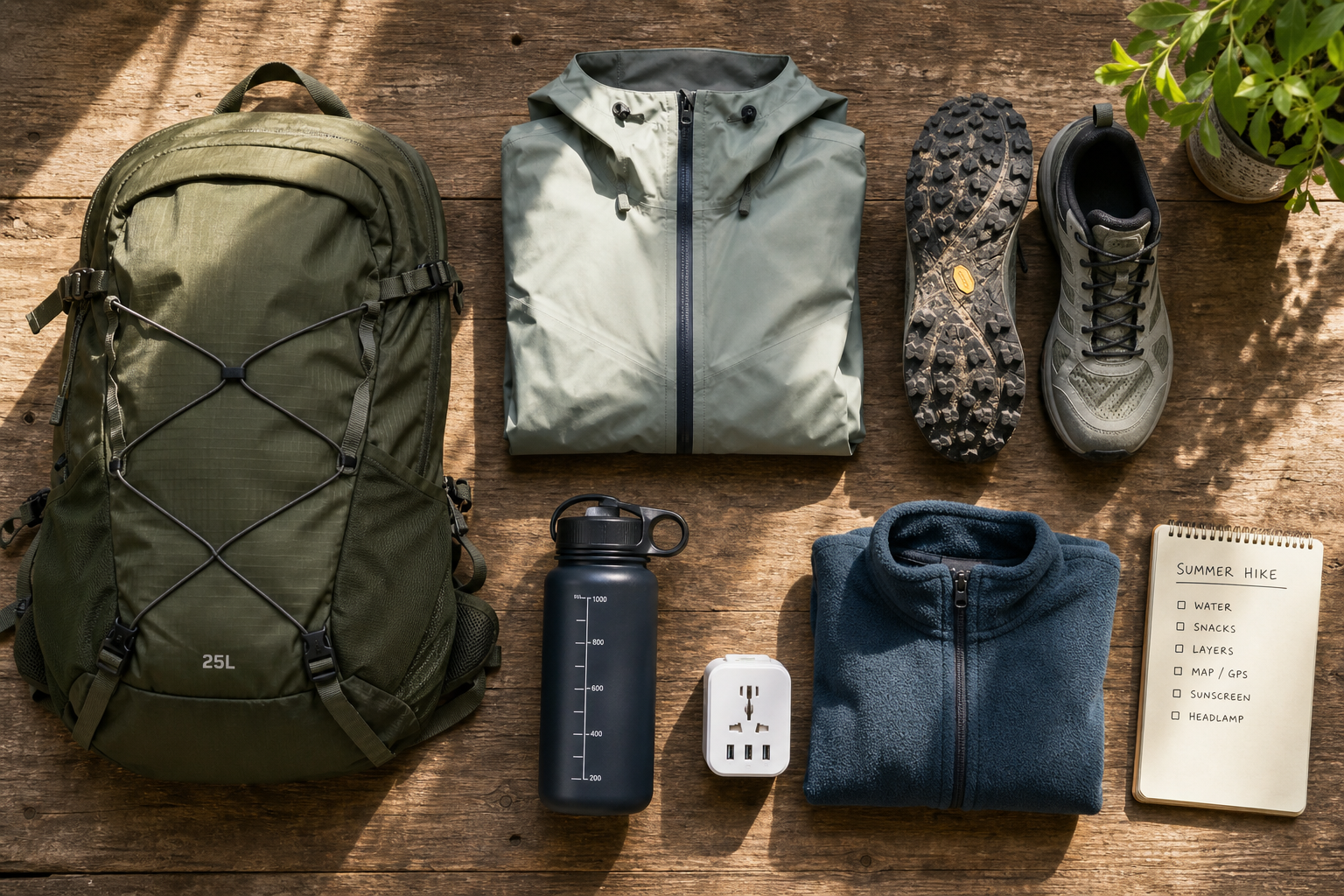
Social hikers do not want to be weighed down by massive suitcases. Because you are staying at a basecamp that likely offers laundry and gear rentals, you can travel light. Focus on modular clothing that transitions from muddy trails to communal dinners.
For a deep dive into exactly what to bring, review our Swiss Alps Summer: A Simple 5-Step Packing Guide. Your core list should include:
- Footwear: Trail running shoes with aggressive lugs (e.g., Vibram soles) are often preferred over heavy, stiff hiking boots for summer day hikes.
- Layers: A moisture-wicking base layer, a mid-weight fleece, and a high-quality Gore-Tex rain shell.
- Daypack: A 20-30L pack for water, snacks, and extra layers during excursions.
- Tech: A universal European adapter (Switzerland uses Type J plugs, which are unique), a power bank, and your laptop if you are working remotely.
Managing Your Budget
Switzerland is notoriously expensive, but an all-inclusive or basecamp model significantly flattens your daily spend.
When you book a package that includes accommodation, home-cooked meals, and trailhead transport, your variable costs plummet. You are no longer spending 40 CHF on a mediocre dinner or shelling out for daily regional train passes. For more strategies on keeping costs down without sacrificing the experience, read 7 Tips for Hiking in Switzerland (Without the High Cost).
The 7-Day Social Hiker’s Itinerary
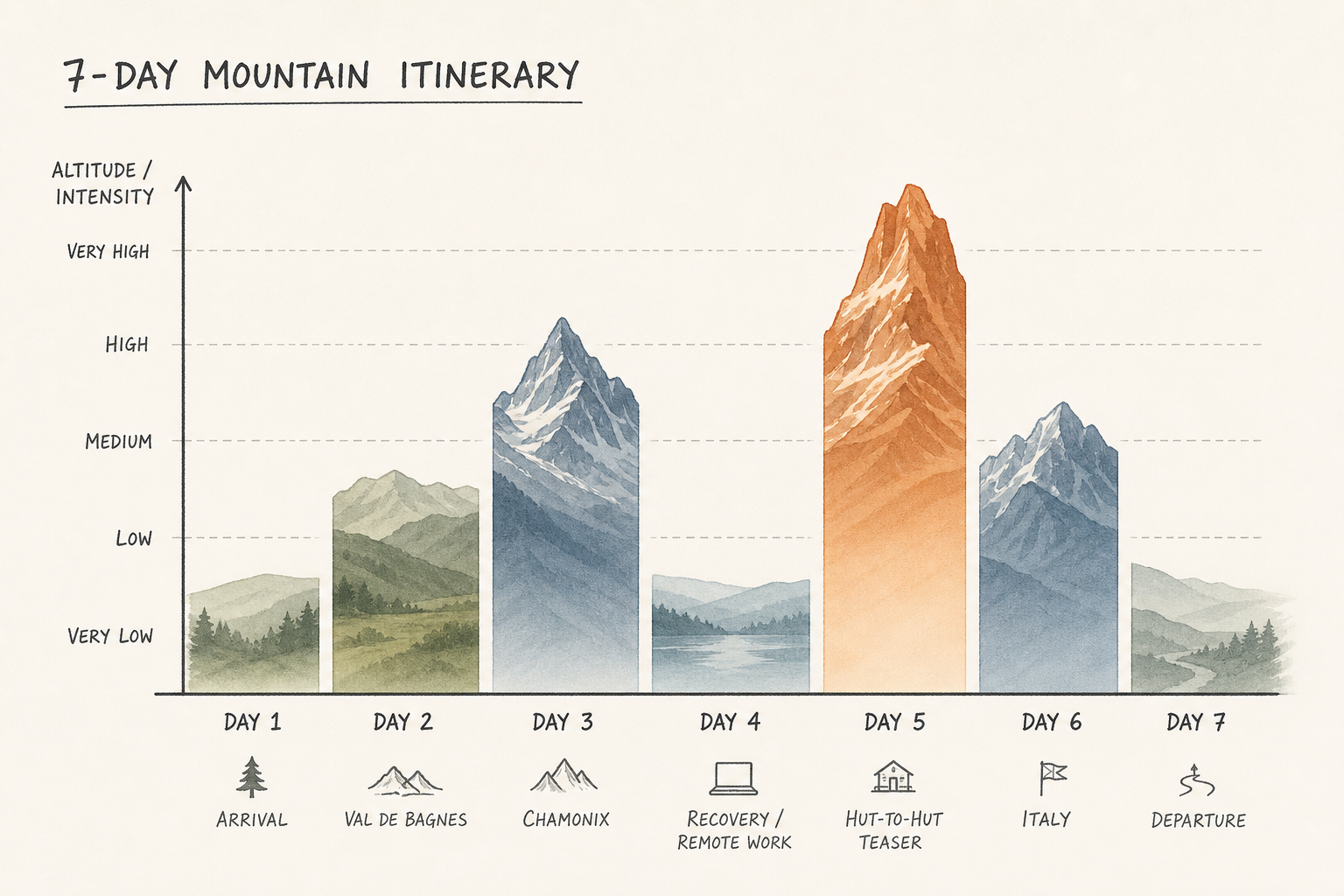
This itinerary is built around a stay in the Liddes/Val de Bagnes region, leveraging its strategic location near international borders and iconic massifs. It balances high-intensity alpine challenges with cultural excursions and necessary downtime.
Day 1: Arrival, Acclimation, and the Welcome Dinner
Morning/Afternoon: The Arrival
Whether you fly into Geneva or Zurich, your first day is about transitioning from the chaos of international travel to the rhythm of the mountains. Take the scenic train network toward the Val de Bagnes region. The transition from flatland cities to towering granite walls is immediate and striking.
Upon arriving at your lodge, resist the urge to immediately hit a massive trail. Altitude takes a toll. Check into your room, unpack your gear, and take a 45-minute stroll around the village to loosen your legs. If you are staying at a place like Ski Hostel, this is the perfect time to introduce yourself in the shared spaces, test the Wi-Fi if you have remote work pending, and review the week’s adventure board.
Evening: The Communal Feast
The defining feature of a social basecamp is the evening meal. Instead of eating alone in a restaurant, you sit at long, shared tables. Expect hearty, home-cooked food—perhaps a Brazilian-influenced BBQ that reflects the diverse, international staff, mixed with local Swiss ingredients.
This dinner serves a functional purpose: it is where you find your hiking partners. You will meet the trail runners aiming for 2,000 meters of elevation gain, the photographers looking for a slow scenic route, and the guides who will brief you on tomorrow’s weather.
Day 2: Exploring the Val de Bagnes (Finding Your Pace)
Morning: The Shakedown Hike
Day two is the “shakedown” day. It is designed to test your gear, evaluate your fitness level, and solidify your new social bonds. The Val de Bagnes offers a web of trails ranging from gentle valley walks to aggressive vertical kilometers.
Group up with the friends you made at dinner. A guided group hike is the safest and most enjoyable way to start. As noted in Guided Hiking in Switzerland: Finding Your Social Group, having a knowledgeable local or volunteer lead the way removes the stress of navigation, allowing you to focus on the conversation and the scenery.
Expect to hike through lush summer pastures, passing traditional wooden chalets and hearing the ubiquitous clanging of cowbells.
Afternoon/Evening: Recovery and Rosti
Return to the lodge mid-afternoon. This is prime time for digital nomads to log a few hours of work while the European timezone overlaps with the US East Coast. For everyone else, it is time to stretch, use foam rollers, and relax on the terrace. Dinner tonight might lean traditional—think hearty Swiss Rosti (pan-fried potatoes) to replenish burned carbohydrates.
Day 3: The French Border Crossing – Chamonix & Mont Blanc
Morning: The Excursion
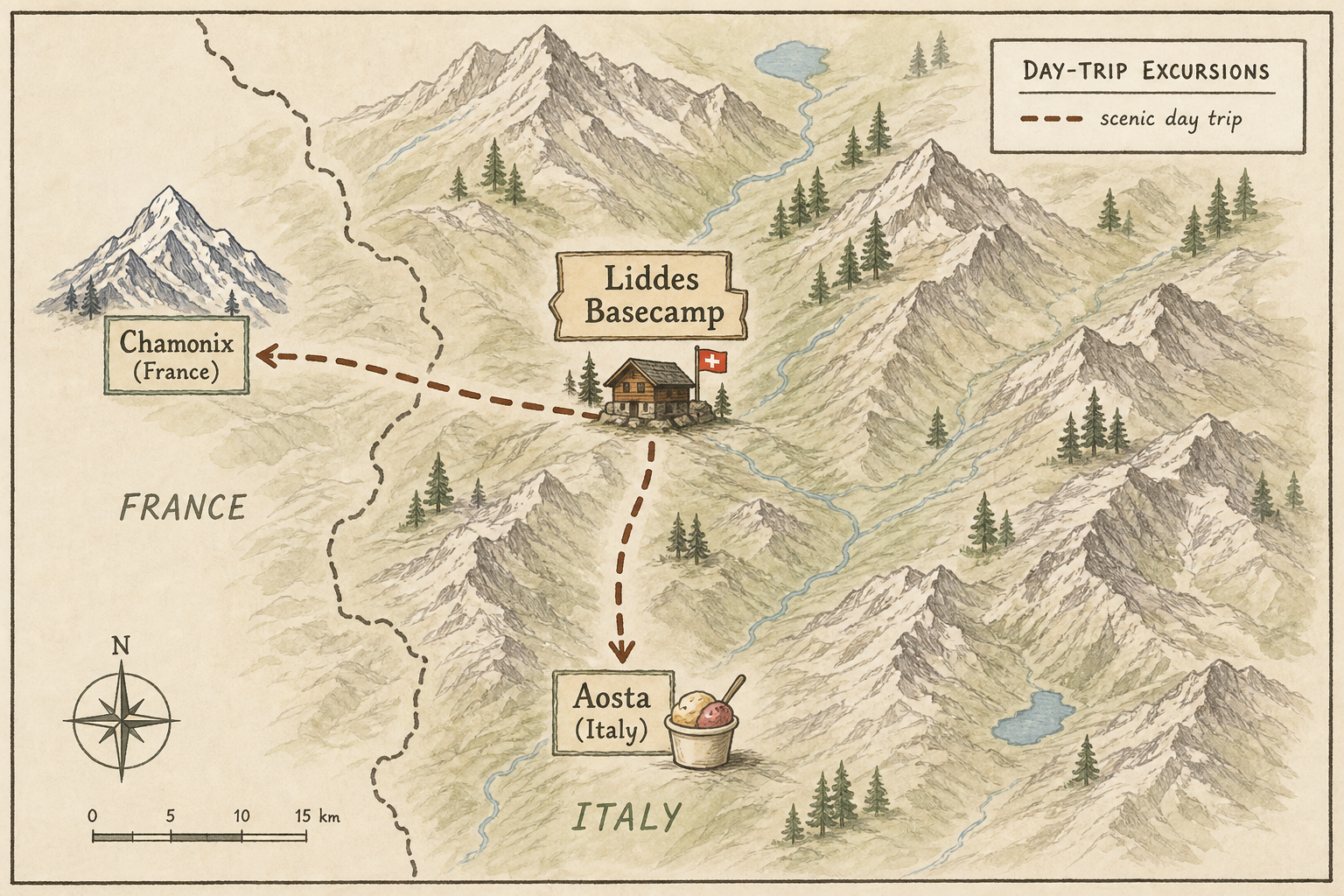
One of the massive benefits of basing yourself in the Liddes region is proximity to international borders. Today, the hostel transport vans load up early for a cross-border excursion into France to witness the towering majesty of Mont Blanc.
While the Swiss side of the Alps is pristine and orderly, Chamonix offers a slightly wilder, alpinist energy. You don’t have to be a mountaineer to enjoy it. There are numerous accessible routes that offer staggering views of the glaciers. Review 5 Best Hiking Trails in Switzerland Near Mont Blanc for trail profiles that straddle these borders.
Afternoon: Exploring the Hub of Alpinism
After a solid morning hike—perhaps utilizing a cable car to skip the treeline and access the high balconies—spend the afternoon wandering Chamonix. Grab a French pastry, watch the paragliders land in the center of town, and soak in the bustling, gear-obsessed atmosphere.
Evening: Avoiding the Crowds
Chamonix can get incredibly crowded in the summer. The beauty of the basecamp model is that you get to leave the chaotic tourist traps behind. You return to the quiet sanctuary of your Swiss lodge. For tips on managing the high-season congestion, check out Mountain Mont Blanc: 7 Ways to Visit Without the Crowd.
Day 4: Active Recovery, Remote Work, or Alpine Wheels
Morning: Choose Your Own Adventure
By day four, physical fatigue usually sets in. A 7-day itinerary requires pacing. Today is split into two tracks based on your needs.
Track A: The Digital Nomad & Spa Day
If you are working remotely, use the morning to bunker down with the lodge’s high-speed Wi-Fi. The communal areas quiet down as the hardcore hikers leave, providing a spectacular, distraction-free office overlooking the peaks. In the afternoon, take advantage of the lodge’s spa or sauna facilities to soothe aching muscles.
Track B: Two Wheels
If you still have energy but want to rest your hiking muscles, switch disciplines. The Swiss Alps in summer are a premier destination for mountain biking. Rent a hardtail or full-suspension bike. Many local transport networks allow bikes on gondolas, meaning you can skip the grueling ascents and focus on thrilling, scenic downhills. Need advice on finding a crew? Read Find the Right Mountain Bike Group for Alpine Trails.
Evening: Low-Key Night
Keep the evening relaxed. Play board games in the lounge, share photos from the Chamonix trip, and prep gear for tomorrow’s big push.
Day 5: The High Altitude Challenge (Hut-to-Hut Teaser)
Morning: The Push
Today is the physical peak of the itinerary. You are acclimated, rested, and ready for a higher, harder route.
Depending on the group’s ambition, this might involve tackling a segment of a famous multi-day route, like the Tour du Mont Blanc or a historical pass like the Great St. Bernard Pass. The terrain here changes drastically from the lush valleys. Expect stark granite, lingering snowfields, and glacial lakes.
Lunch: The Swiss Alpine Club (SAC) Hut Experience
Aim to reach a high-altitude mountain hut by midday. These remote refuges are perched in seemingly impossible locations. Even if you aren’t spending the night, stopping at a hut for a bowl of soup, a slice of fruit tart, and a coffee is a quintessential Swiss experience.
If this day hike sparks an interest in longer expeditions, you can start gathering intel from the locals or read up on How to Plan Hut to Hut Hiking in Switzerland (7 Tips) for a future visit.
Evening: Celebration
Returning from a massive alpine effort bonds a group quickly. Expect high energy at dinner, swapped stories about sketchy scree fields or incredible wildlife sightings (keep an eye out for Ibex and Marmots), and maybe a few well-deserved local beers.
Day 6: The Italian Escape – Aosta Valley Excursion
Morning: Crossing the Pass
The Swiss Alps share a long, porous border with Italy. Today, the hostel vans head south through the tunnels or over the alpine passes down into the Aosta Valley.
Culturally and geographically, the shift is jarring in the best way possible. The architecture changes, the language flips to Italian, and the trailside vegetation feels distinctly warmer and more Mediterranean. You are still in the shadow of the same mountains, but viewing them from a completely different world.
Afternoon: Culture and Carbohydrates
Hike a scenic loop in the Gran Paradiso National Park or simply explore the Roman ruins scattered throughout Aosta. The primary goal of the afternoon, however, is culinary. Trade the heavy Swiss cheese for authentic Italian pasta, espresso, and world-class gelato.
Evening: The Final Basecamp BBQ
Return to the lodge in the late afternoon. As this is the final full evening for many on a 7-day schedule, the hostel will likely throw a farewell BBQ. This is where the social aspect shines brightest—exchanging contact info with your new hiking partners, planning future trips, and enjoying the warm, “home away from home” atmosphere that defines places like Ski Hostel.
Day 7: Sunrise Summit and Departure
Morning: The Alpine Start
For those willing to sacrifice a few hours of sleep, wake up at 4:30 AM for a short, steep hike to a local viewpoint. Watching the sunrise hit the snow-capped peaks, turning them a vibrant, glowing pink (the Alpenglow), is the ultimate parting gift from the Alps.
Return to the lodge by 8:00 AM for a massive final breakfast.
Late Morning: Packing and Goodbyes
Pack up your gear. Because you utilized a basecamp strategy, you aren’t rushing to make a 9:00 AM train just to check into your next hotel. You can take your time, enjoy a final coffee on the terrace, and wait for the coordinated transport to drop you back at the main regional train station.
Afternoon: The Journey Home
As you ride the train back down toward Geneva or Zurich, the contrast between this trip and a standard tourist itinerary will be obvious. You haven’t just skimmed the surface of five different cities; you have deeply explored a region, crossed two international borders, and built a community of friends.
Swiss Transport and Logistics: Making It Seamless
While the basecamp model handles your daily trailhead logistics, you still need to get to the lodge initially. Switzerland possesses the most efficient, integrated public transport network in the world, but it requires some planning.
The Swiss Travel Pass vs. Point-to-Point Tickets
For a traditional, highly mobile itinerary (like those detailed by Rick Steves), a comprehensive Swiss Travel Pass is almost mandatory. However, for a basecamp itinerary, the math changes.
Since your lodge is handling the expensive, multi-leg day trip transport via their own vans, you only need to cover your airport-to-lodge transfer and perhaps one or two independent cable car rides.
- The Half Fare Card: This is usually the best mathematical choice for basecamp travelers. It costs an upfront fee (around 120 CHF for a month) and gives you 50% off almost all trains, buses, and cable cars.
- Saver Day Passes: If you know your exact arrival and departure dates from the airport, booking “Saver Day Passes” 60 days in advance can secure full-country transit for as little as 29 CHF a day.
A Note on Family Travel
If you are traveling with children, the Swiss system is incredibly generous. The “Swiss Family Card” (free with any standard adult pass) allows children under 16 to travel on public transit entirely for free.
Furthermore, the social lodge environment is surprisingly family-friendly. It provides structured activities and built-in playmates for kids, while giving parents the opportunity to relax or tackle harder trails while the children are engaged. Publications like National Geographic frequently highlight how multi-generational travel is uniquely supported by Swiss infrastructure, but a basecamp model takes the stress out of daily relocation.
Expanding Your Repertoire: General Swiss Hiking Tips
If you find yourself eager to explore beyond the itinerary, keep these general principles in mind for navigating the broader Swiss trail network.
Understanding the Yellow Signs
Swiss trails are famously well-marked with yellow directional signs. Understanding the color coding on the tips of these signs is critical for safety:
- Plain Yellow: Standard walking paths. Suitable for families, sneakers, and casual strolls. Often paved or wide gravel.
- Red-and-White Tips: Mountain trails. These require sturdy footwear, a decent fitness level, and spatial awareness. You will encounter steep drop-offs, roots, and rocky terrain.
- Blue-and-White Tips: Alpine routes. These are highly technical, often requiring hands for scrambling, and sometimes crossing glaciers or utilizing fixed ropes. Do not attempt these without proper mountaineering experience or a certified guide.
For a breakdown of incredible routes across all three categories, browse 9 Scenic Hiking Routes in Switzerland for Every Level.
Trail Etiquette and Safety
- Right of Way: Uphill hikers generally have the right of way. Step aside and let them maintain their momentum.
- Cows and Fences: You will frequently walk through pastures with livestock. Do not pet the calves, give cows a wide berth, and always reconnect the wire handles on electric fences after passing through.
- Emergency Services: Save the number 1414 in your phone. This connects you directly to REGA, the Swiss air rescue service. In an absolute emergency, they are highly efficient, but mountain rescues are expensive—ensure your travel insurance covers high-altitude helicopter evacuation.
Looking Ahead: The Winter Contrast
It is common for summer visitors to fall in love with the Alps and immediately begin planning a return trip for the winter season. The terrain transforms completely, replacing hiking boots with skis and snowboards.
The same basecamp philosophy applies to winter travel. Staying in a community lodge rather than an overpriced resort town allows you to stretch your budget and find the best snow. If you are already curious about how this translates to the colder months, Which Swiss Ski Resort Fits a Backpacker’s Budget? breaks down the economics of winter alpine travel.
Frequently Asked Questions (FAQ)
How fit do I need to be for a 7-day hiking itinerary?
The beauty of a basecamp model is flexibility. Because you aren’t forced to hike 15 miles with a heavy pack just to reach your next hotel, you can tailor your daily exertion. Lodges cater to all skill levels. If you need a rest day, take one. If you want a casual 3-mile walk, the guides will point you in the right direction.
Is it safe to travel solo in the Swiss Alps?
Switzerland is consistently ranked as one of the safest countries in the world. However, the mountains themselves are inherently risky. Solo travel is incredibly safe from a personal security standpoint, but hiking alone in remote alpine terrain carries risks if you injure yourself. Staying at a social hostel solves this by providing instant access to hiking groups and guides.
What if I have dietary restrictions?
Switzerland is heavily reliant on dairy and meat (cheese fondue, raclette, sausage). However, community lodges and international hostels are remarkably adaptable. Places like Ski Hostel, which feature diverse menus (like Brazilian cuisine), are usually well-equipped to handle vegetarian, vegan, and gluten-free requests if notified in advance.
Do I need cash, or are cards accepted everywhere?
While major stations and large supermarkets take cards, the Alps run on cash. Mountain huts, small village bakeries, and rural bus drivers often only accept Swiss Francs (CHF). Always carry 50 to 100 CHF in small denominations during your day hikes.
Can I drink the tap water?
Yes. Switzerland has some of the cleanest tap water in the world. Furthermore, almost every village features public fountains constantly running with fresh, drinkable mountain spring water. Bring a reusable bottle and fill up on the go—just avoid fountains explicitly marked “Kein Trinkwasser” (Not drinking water).
Redefining Your Mountain Experience
A summer trip to the Swiss Alps does not have to be a stressful, isolating, or budget-breaking endeavor. By rejecting the exhausting standard itineraries and embracing a basecamp philosophy, you unlock a fundamentally better way to travel.
Staying at a community lodge allows you to focus on what actually matters: challenging yourself on the trails, soaking in the pristine glacial views, and sharing a table with people who share your passion for the outdoors. You get the epic border-crossing excursions to Chamonix and Aosta, the deep exploration of the Val de Bagnes, and the restorative downtime required to actually enjoy a vacation.
Pack your layers, leave the massive suitcase behind, and prepare to find your community in the heart of the mountains. The trails are waiting. Every peak is higher, every meal tastes better, and every sunset is richer when you have a crew to share it with.