Swiss Alps Vacation Summer: All-Inclusive for Less
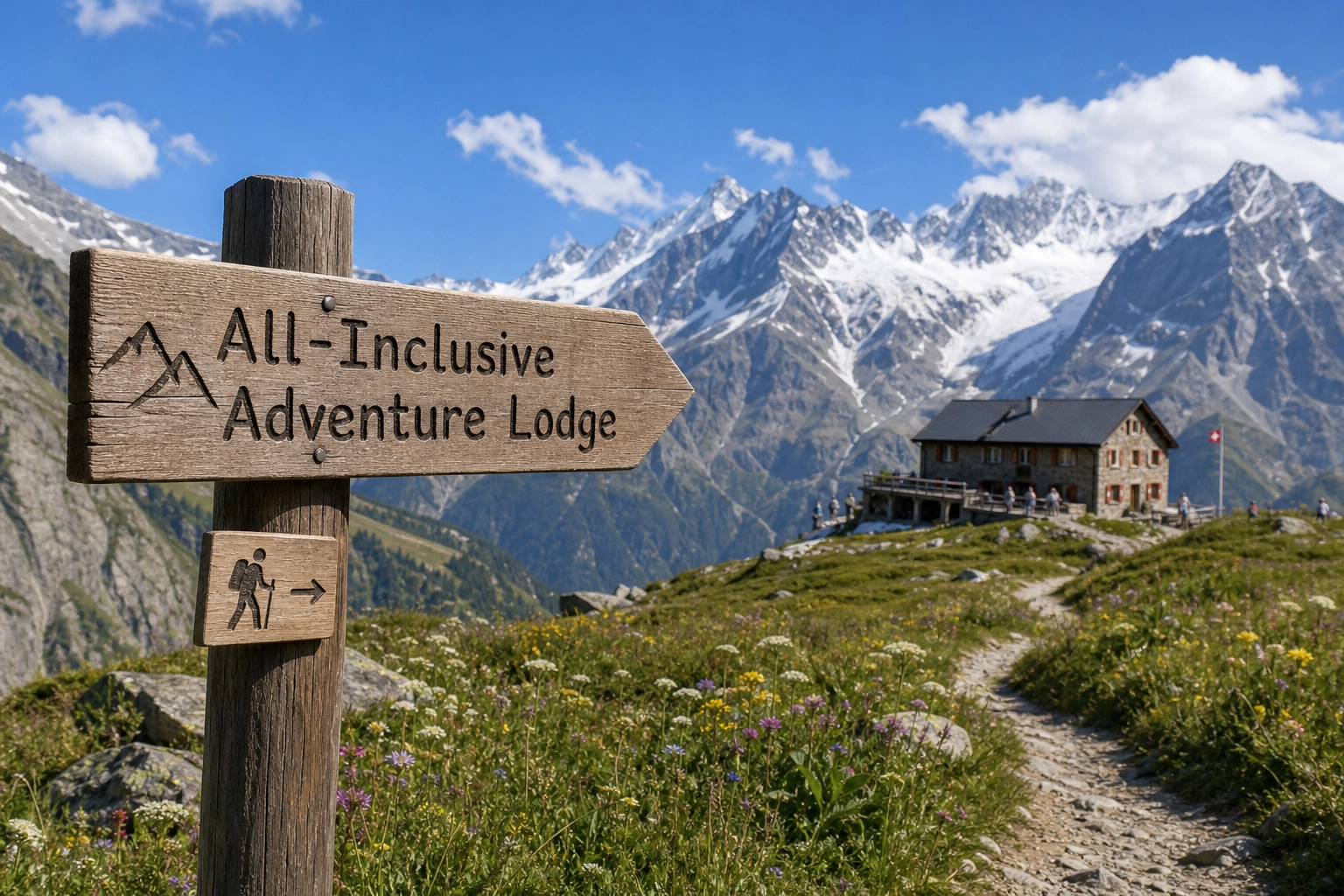
Mention a summer trip to the Swiss Alps, and most people immediately picture two things: breathtaking jagged peaks and a rapidly depleting bank account. Switzerland has a well-earned reputation for being one of the most expensive travel destinations on earth. Between cogwheel trains, high-altitude cable cars, 40-franc fondues, and luxury chalets, a standard one-week itinerary can easily rival the cost of a down payment on a car.
But treating the Alps strictly as a luxury playground is a mistake. The mountains themselves don’t charge admission.
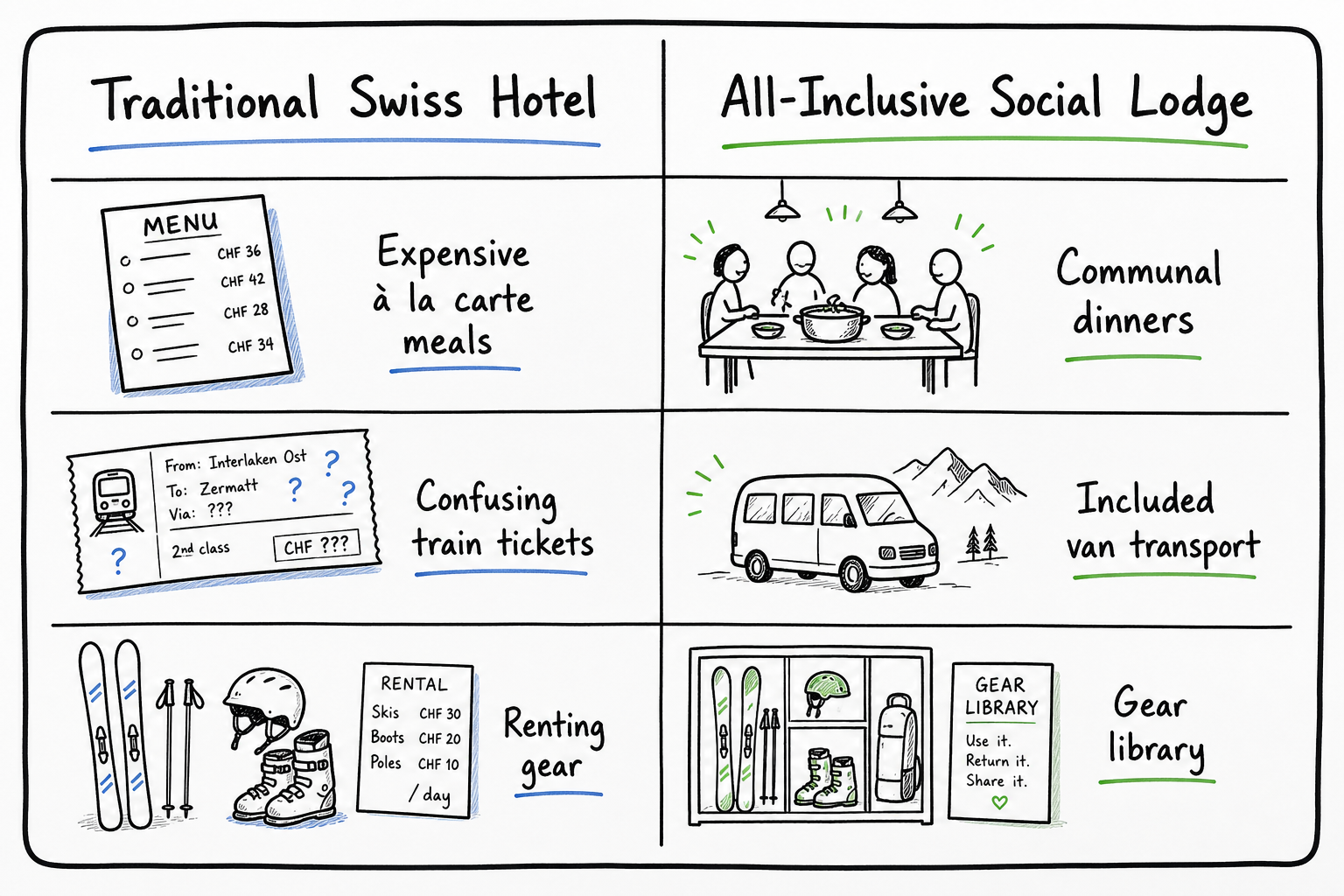
By rethinking how you handle accommodation, logistics, and meals, you can experience world-class alpine adventures without the premium price tag. The secret lies in stepping away from traditional resort towns and embracing the community-driven, all-inclusive lodge model. This approach solves the three biggest budget drainers—food, transport, and gear—by bundling them into a shared, social experience.
Whether you are a solo traveler looking for a hiking crew, a digital nomad needing high-speed Wi-Fi between trail runs, or a family wanting a managed adventure without the stress of logistics, here is how to execute a Swiss Alps vacation this summer for less.
Why Traditional Swiss Vacations Break the Bank (And How to Fix It)
The standard approach to visiting Switzerland involves booking a hotel in a famous valley—like Lauterbrunnen or Zermatt—and then paying a la carte for every single experience.
Consider a typical day: You pay for a hotel room, buy breakfast at a café, pay for a regional train to a trailhead, rent hiking poles or a mountain bike from a high-street outfitter, eat a restaurant lunch at a mountain hut, and return to town for a formal dinner. The friction of organizing these moving parts is high, and the cumulative cost is staggering.
Social lodges operate on a completely different model. Places like Ski Hostel in the Liddes and St. Stephan regions are designed specifically for outdoor enthusiasts who prioritize mountain access and community over spa robes and room service.
By bundling home-cooked meals, gear rental, and daily transport to trailheads, the all-inclusive hostel model eliminates the “tourist tax” you pay for convenience in major resort towns. More importantly, it provides a built-in community. Instead of sitting alone at a restaurant, you are sharing communal dinners—perhaps a Brazilian-influenced BBQ—and swapping trail notes with international backpackers and guides. If you are debating accommodation styles, understanding Hotels in Swiss Mountains? Why Social Lodges Beat Luxury is the first step to cutting your budget in half.
Decoding the Swiss Summer Season: Weather and When to Go
Summer in the Alps is relatively short and heavily dictated by altitude. While the valleys might be sweltering in early June, passes above 2,500 meters can remain choked with snow until July. Timing your trip requires balancing weather, trail accessibility, and crowd levels.
June: The Shoulder Season
- Conditions: Valleys are lush, green, and covered in wildflowers. Daytime temperatures range from 15°C to 23°C (59°F to 73°F).
- Trail Access: Lower elevation trails (under 2,000m) are entirely clear. However, high-altitude passes and glacier approaches may still require micro-spikes or be completely impassable.
- The Verdict: Perfect for mountain biking and valley hikes. Crowd levels are low, making it a highly cost-effective time to travel.
July and August: Peak Summer
- Conditions: The warmest months, with valley temperatures often hitting 25°C to 30°C (77°F to 86°F). Afternoon thunderstorms are common, usually building up around 3:00 PM or 4:00 PM.
- Trail Access: Every trail, pass, and hut is open. This is prime time for high-alpine peak bagging and extensive hut-to-hut routes.
- The Verdict: The absolute best weather for serious adventure, but also the busiest. Staying in secondary valleys like Val de Bagnes rather than the main tourist corridors is crucial for avoiding the crush of peak-season crowds.
September: The Golden Month
- Conditions: Temperatures begin to drop, especially at night, but the days are often crystal clear with lower humidity.
- Trail Access: Most trails remain open until the first heavy snowfalls, usually in late September or early October.
- The Verdict: Ideal for photography and long, demanding hikes. The summer rush has evaporated, leaving the mountains quiet and peaceful.
Where to Base Your Swiss Adventure
Choosing your basecamp dictates everything from your daily budget to the types of trails you can access. While central Switzerland offers iconic views, the southern and western cantons—specifically Valais—offer deeper, more rugged terrain with easier access to international borders.
Liddes and St. Stephan: The Strategic Basecamps
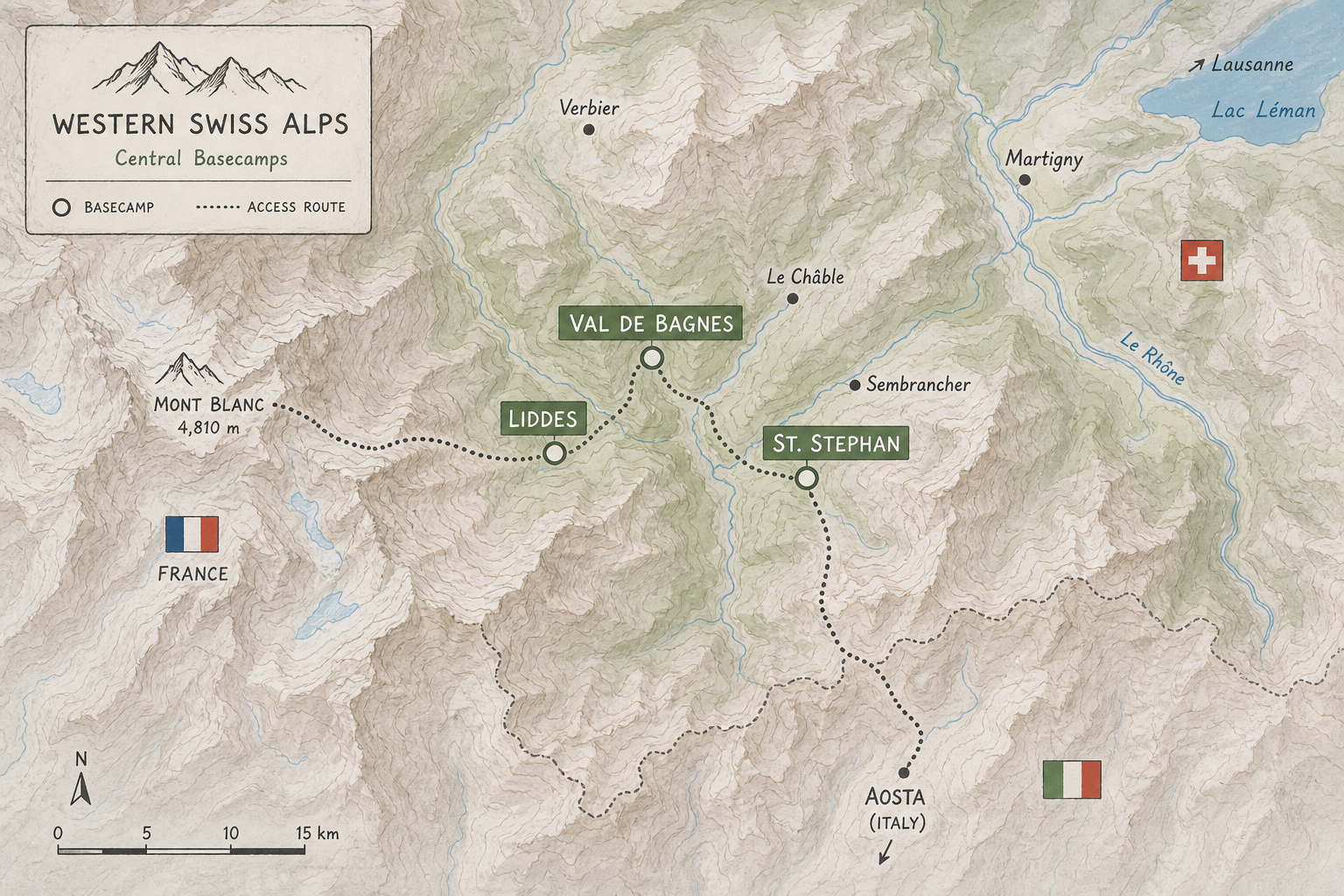
Situated away from the primary tourist thoroughfares, regions like Liddes and St. Stephan function as strategic hubs. They offer the charm of authentic farming villages while serving as launchpads into massive trail networks. Liddes, in particular, places you right in the heart of the Val de Bagnes region, granting direct access to over 250 kilometers of trails without the hour-long cable car queues found elsewhere.
Staying in a community-driven lodge here means you aren’t just renting a bed; you are tapping into local knowledge. The hosts and volunteers handle the logistics, running transport vans to various trailheads, effectively solving the “last mile” problem that often forces budget travelers onto crowded, bus-accessible-only paths.
The Mont Blanc Massif
Basing yourself in western Valais puts the iconic Mont Blanc right in your backyard. Instead of staying in expensive Chamonix, you can approach the massif from the quieter Swiss side. For strategies on navigating this famous peak, check out Mountain Mont Blanc: 7 Ways to Visit Without the Crowd. Furthermore, there are spectacular day hikes just a short drive away; you can explore the 5 Best Hiking Trails in Switzerland Near Mont Blanc to get maximum views for minimal transit time.
The “All-Inclusive” Difference for Outdoor Enthusiasts
When most people hear “all-inclusive,” they picture wristbands, swim-up bars, and massive buffets. In the context of adventure tourism, an all-inclusive mountain lodge is a completely different beast. It is a logistical engine designed to maximize your time outdoors while driving down costs.
Here is how an adventure-focused all-inclusive model changes the game:
1. Unified Logistics and Transport
Navigating the Swiss public transit system is efficient but incredibly expensive. A round-trip bus ride to a distant trailhead can easily cost 30 CHF per person. An adventure lodge bundles this transport. Volunteers load the vans in the morning, drop groups at different trailheads based on skill level, and pick them up in the afternoon.
2. Gear Libraries
If you want to try mountain biking for one day and hiking the next, renting gear from a shop will drain your budget fast. Community lodges typically maintain a library of gear—from hiking poles and daypacks to mountain bikes. You borrow what you need for the day’s itinerary, saving hundreds of francs over a week.
3. Food as a Community Event
Dining out in Switzerland is notoriously pricey. By opting for a lodge that provides home-cooked communal dinners, you save massively. But it’s more than just cost savings. Sharing a Brazilian-influenced feast after an 8-hour hike with a table full of digital nomads and backpackers fosters a “home away from home” atmosphere that you simply cannot replicate in a standard hotel.
4. Built-in Guides and Partners
Solo travelers often hesitate to tackle high-altitude routes alone due to safety concerns. At a social lodge, itineraries are curated weekly. You are grouped with guests of similar abilities, often led by professionals or experienced volunteers. This ensures safety and instant camaraderie. If you’re traveling alone, Guided Hiking in Switzerland: Finding Your Social Group explains how this dynamic transforms a solo trip into a team adventure.
Core Summer Activities in the Alps
With logistics handled, the focus shifts to the terrain. The Swiss Alps cater to absolute beginners seeking scenic walks and hardened experts looking for serious vertical gain.
Hiking and Peak Bagging
The sheer volume of trails in regions like Val de Bagnes is staggering. Trails are meticulously marked with yellow signs (standard walking paths) and red-and-white stripes (mountain trails requiring sturdy footwear).
If you are planning to string multiple days together, you can venture into the alpine club network. Spending a night at altitude is a rite of passage, and learning How to Plan Hut to Hut Hiking in Switzerland (7 Tips) will prepare you for the unique etiquette and packing requirements of these remote shelters. For day hikers wanting to optimize their time without overspending, 7 Tips for Hiking in Switzerland (Without the High Cost) is an essential read.
Mountain Biking (MTB)
Summer transforms the ski slopes into world-class downhill and enduro trails. The terrain here is steep, technical, and immensely rewarding. If you are new to alpine riding, trying to navigate the complex trail maps alone can lead you down paths well above your skill level. A key benefit of a social lodge is tapping into the collective knowledge to Find the Right Mountain Bike Group for Alpine Trails, ensuring you ride routes appropriate for your experience.
Border-Hopping Excursions
One of the massive geographical advantages of staying in southern Valais is the proximity to both France and Italy. A popular feature of curated lodge itineraries is cross-border day trips.
You can drive over the Grand St. Bernard Pass into Italy to explore the Aosta Valley. While many visitors associate this area with winter—perhaps wondering Skiing in the Italian Alps? Try This Aosta Day Trip—summer in Aosta offers incredible Italian food, Roman ruins, and cheaper espresso, making for a perfect rest-day excursion. Similarly, Chamonix, France, is just a scenic drive away, allowing you to experience the French side of Mont Blanc before returning to the quieter, more communal Swiss side for dinner.
Packing for a Swiss Alps Summer
The most common failure mode for summer visitors to the Alps is packing for a single climate. Mountain weather is volatile; a sunny 25°C valley floor can transition to a 5°C windstorm at a 2,800m pass within two hours.
The 3-Layer System
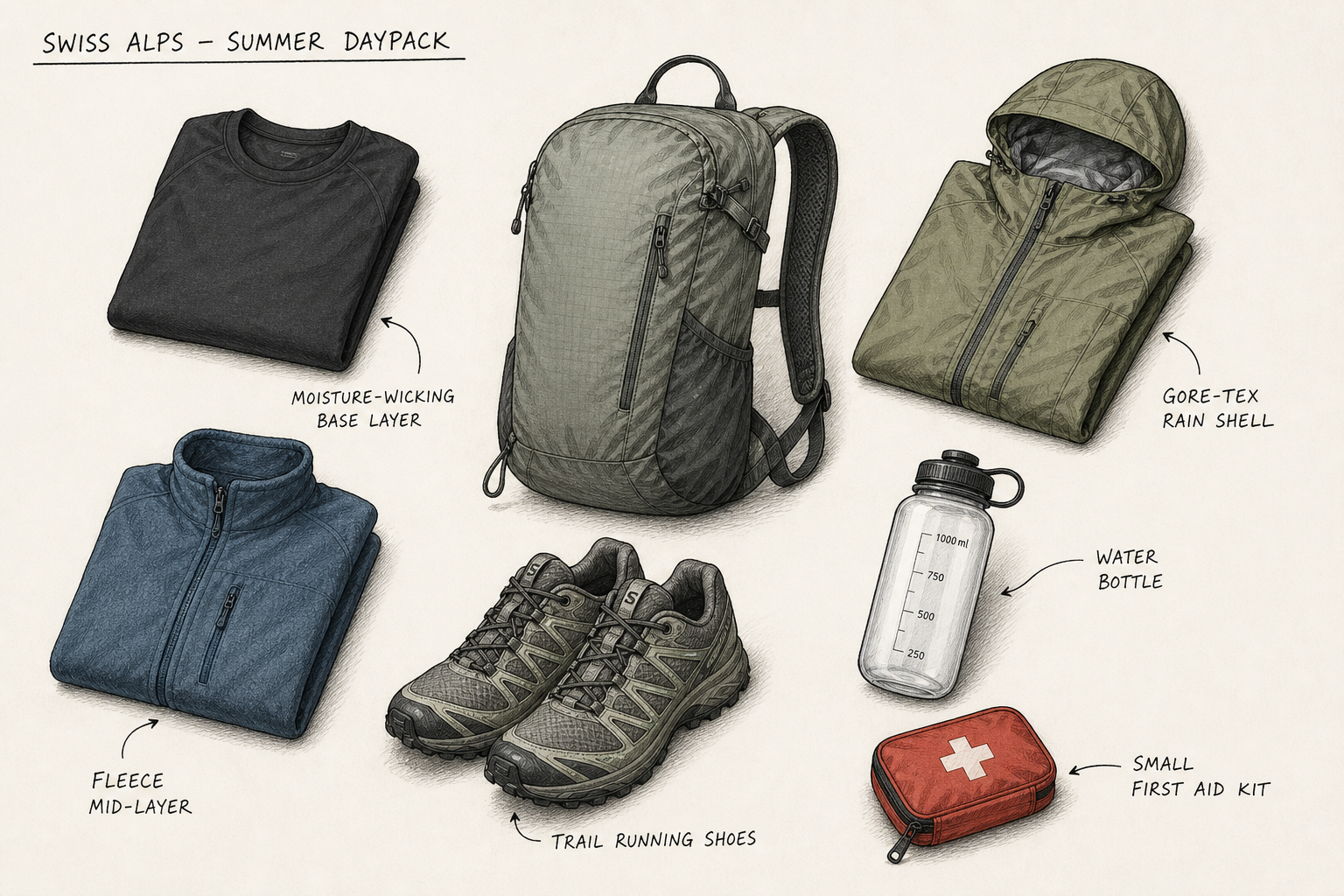
You don’t need a massive suitcase; you need a smart, modular layering system.
- Base Layer: Moisture-wicking synthetics or merino wool. Never cotton. You will sweat heavily on the ascents and freeze when you stop if your shirt stays wet.
- Mid-Layer: A lightweight fleece or a breathable synthetic puffy jacket. This traps body heat during rest breaks or breezy ridge walks.
- Outer Shell: A high-quality, lightweight Gore-Tex (or equivalent) rain jacket. This is non-negotiable. Afternoon thunderstorms roll in fast, and getting wet at altitude is dangerous.
Footwear and Gear
Leave the heavy, rigid leather mountaineering boots at home unless you are crossing glaciers. Modern trail running shoes or lightweight synthetic hiking boots are much better suited for 90% of summer alpine trails. They dry faster and cause fewer blisters.
Because your lodge handles the heavy gear, your daily pack only needs to carry water, snacks, layers, and a first aid kit. For a comprehensive checklist, refer to our Swiss Alps Summer: A Simple 5-Step Packing Guide.
Transportation: Navigating Switzerland Like a Pro
Even with an all-inclusive lodge handling your daily trailhead drops, you still need to get to the lodge from the airport (usually Geneva or Zurich). Switzerland’s public transit network (SBB) is legendary for its punctuality, but it requires strategic purchasing to avoid overpaying according to abroadwife.com’s guide to the Swiss Alps in summer.
The Swiss Travel Pass vs. Half Fare Card
If you are spending your entire vacation doing DIY travel across multiple cities, the Swiss Travel Pass (which offers unlimited rides on trains, buses, and boats) makes sense.
However, if you are heading straight to a basecamp like Liddes and relying on lodge transport for your daily activities, the Swiss Travel Pass is overkill. Instead, buy the Swiss Half Fare Card. It costs 120 CHF for a month, and gives you 50% off almost all public transit, including many cable cars. It usually pays for itself on the round-trip airport train ticket alone.
The SBB Mobile App
Download the SBB Mobile app before you land. It is the single most useful tool for navigating Switzerland. It provides real-time platform changes, allows you to buy tickets instantly without standing at kiosks, and integrates seamlessly with your Half Fare Card.
Building Community: Solo Travelers, Digital Nomads, and Families
The demographic of alpine travelers is shifting. The days of exclusive, quiet luxury are being replaced by a desire for connection. The architecture and programming of social lodges reflect this shift.
For the Solo Traveler and Backpacker
Hostels have always been the lifeblood of budget travel, but traditional city hostels often focus on nightlife and drinking. Adventure lodges pivot this energy toward the outdoors. You wake up early, tackle a grueling peak with people you met the night before, and return for a communal spa night. If you are already looking ahead to winter and wondering Which Swiss Ski Resort Fits a Backpacker’s Budget?, establishing relationships at a summer lodge often leads to returning with the same crew for ski season.
For the Digital Nomad
The rise of remote work has created a new class of traveler: those who want to hike in the morning and code in the afternoon. Adventure lodges have adapted by installing high-speed Wi-Fi and designing shared spaces that function as co-working hubs during the day. You can take a Zoom call with views of the snow-capped Grand Combin, close your laptop at 3 PM, and be on a mountain bike by 3:15 PM.
For Families
Organizing a family trip to the Alps can be a logistical nightmare, as noted by National Geographic’s family planning guide. Coordinating meals that kids will eat, finding trails that aren’t too dangerous, and managing equipment rentals is exhausting for parents.
The all-inclusive lodge format absorbs this friction. Kids integrate into the communal environment, meals are handled, and guides can suggest family-friendly trails that feature marmot sightings or suspension bridges rather than exposed cliff edges.
Structuring Your Week: A 7-Day Summer Itinerary
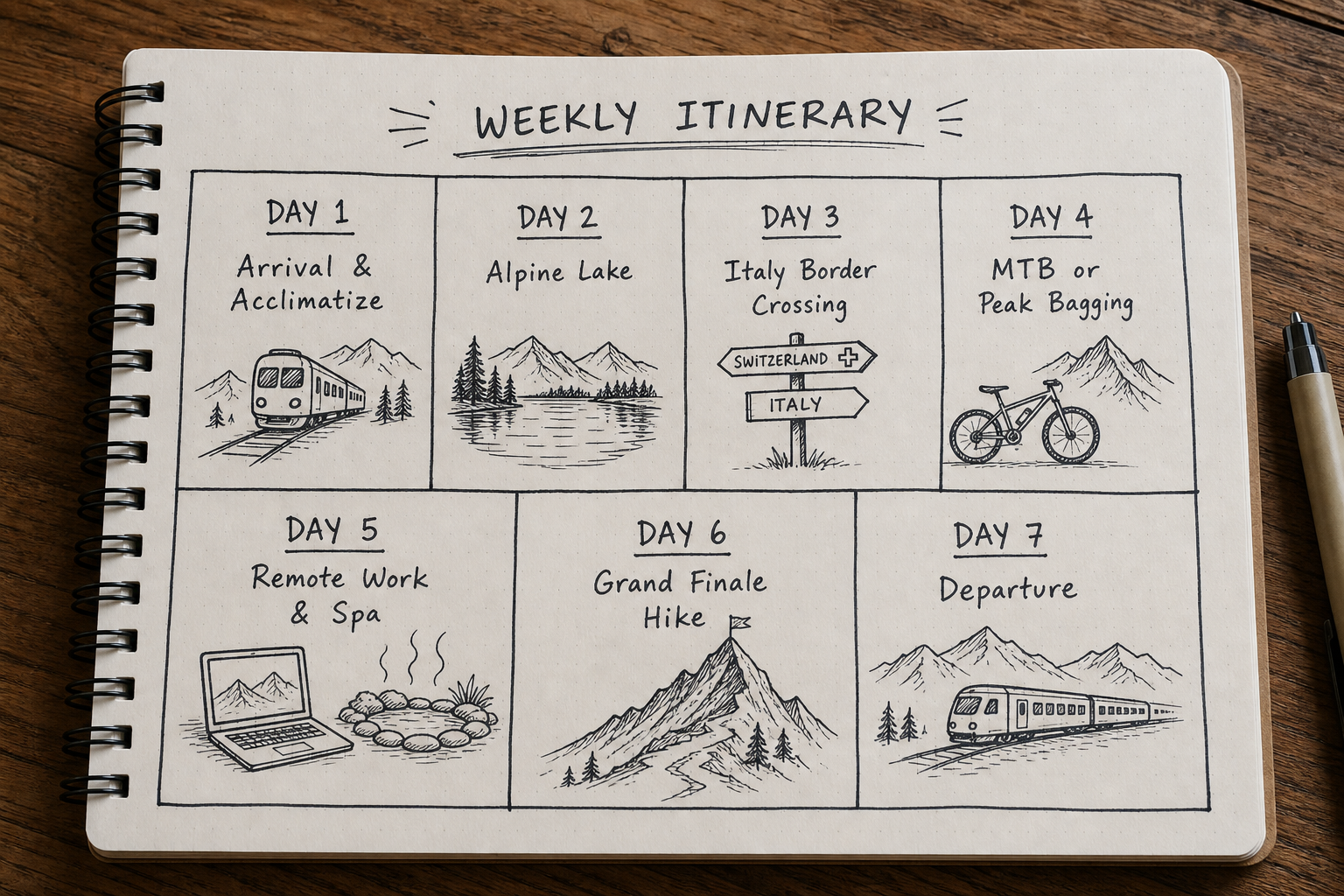
To see how this all comes together, here is a realistic 7-day blueprint for an all-inclusive summer stay in the Liddes/St. Stephan region.
Day 1: Arrival and Acclimatization
- Arrive via train from Geneva. Lodge pickup at the local station.
- Check-in, gear sorting, and a short, low-elevation orientation hike to shake out the travel fatigue.
- Welcome communal dinner (e.g., Brazilian BBQ) to meet the week’s crew.
Day 2: The Alpine Lake Introduction
- Breakfast at the lodge.
- Lodge transport drops the group at a mid-elevation trailhead.
- Hike to a high alpine lake (like Lac des Dix or Lac de Mauvoisin). Pack a picnic lunch.
- Return for a restorative evening in the lodge’s shared spaces.
Day 3: The Border Crossing (Italy or France)
- Load into the vans for a day trip over the pass.
- Spend the day in Aosta, Italy. Enjoy a lighter walking day exploring Roman ruins and eating authentic gelato.
- Return to Switzerland by late afternoon.
Day 4: Pushing Limits (Peak Bagging or MTB)
- For hikers: Tackle a challenging ascent near Mont Blanc, gaining over 1,000 meters of elevation.
- For bikers: Grab a mountain bike from the lodge library and hit the enduro trails in the Val de Bagnes network.
Day 5: Recovery and Remote Work
- A slower morning. Digital nomads catch up on work using the high-speed Wi-Fi.
- Afternoon localized activity: visiting a local Swiss cheese dairy or a short valley trail run.
- Lodge spa night or hot tub session to soothe tired muscles.
Day 6: The Grand Finale Hike
- The most spectacular route of the week, often involving a suspension bridge, a glacier viewpoint, or a traverse along a high ridge.
- Farewell dinner at the lodge, swapping photos and stories from the week.
Day 7: Departure
- Breakfast, pack up, and lodge transport back to the local train station for the journey home.
Frequently Asked Questions (FAQ)
How much does a week at an all-inclusive adventure lodge typically cost?
While prices vary by season, a fully catered week (accommodation, food, gear, and local transport) at a community lodge often costs 40% to 50% less than booking basic hotels and paying for meals and transit out-of-pocket in major hubs like Zermatt or Grindelwald. You can easily cap your daily spend because the major variables are pre-paid.
Do I need to speak French or German?
No. While Liddes is in the French-speaking part of Valais, and St. Stephan leans German, Switzerland is incredibly multilingual. English is the lingua franca of international social lodges, making it effortless to connect with both the staff and fellow guests.
Are these lodges suitable for absolute beginners in hiking?
Yes. A major advantage of the curated weekly program is that routes are tailored to the group’s ability. If you have never hiked at altitude, the hosts will start you on wide, graded trails and help you master pacing and layering before attempting steeper ascents.
Can I do this trip if I have dietary restrictions?
Unlike remote alpine mountain huts, which often serve a set menu of meat and cheese with no alternatives, basecamp lodges usually accommodate vegetarians, vegans, and gluten-free diets easily—provided you notify them when booking.
Final Thoughts on Your Alpine Summer
A summer vacation in the Swiss Alps does not require a luxury budget, nor does it mean you have to sleep in a cramped, noisy dorm room above a pub. By choosing an all-inclusive, community-driven lodge, you strip away the logistical headaches and financial anxiety of Swiss travel. You replace expensive restaurant meals with shared Brazilian BBQs, confusing transit schedules with organized van drops, and solitary hikes with a ready-made community of global adventurers.
Pack your layers, lace up your trail shoes, and prepare for a mountain experience defined by connection, challenge, and breathtaking landscapes.