
Best Swiss hiking holiday packages for full board accommodation
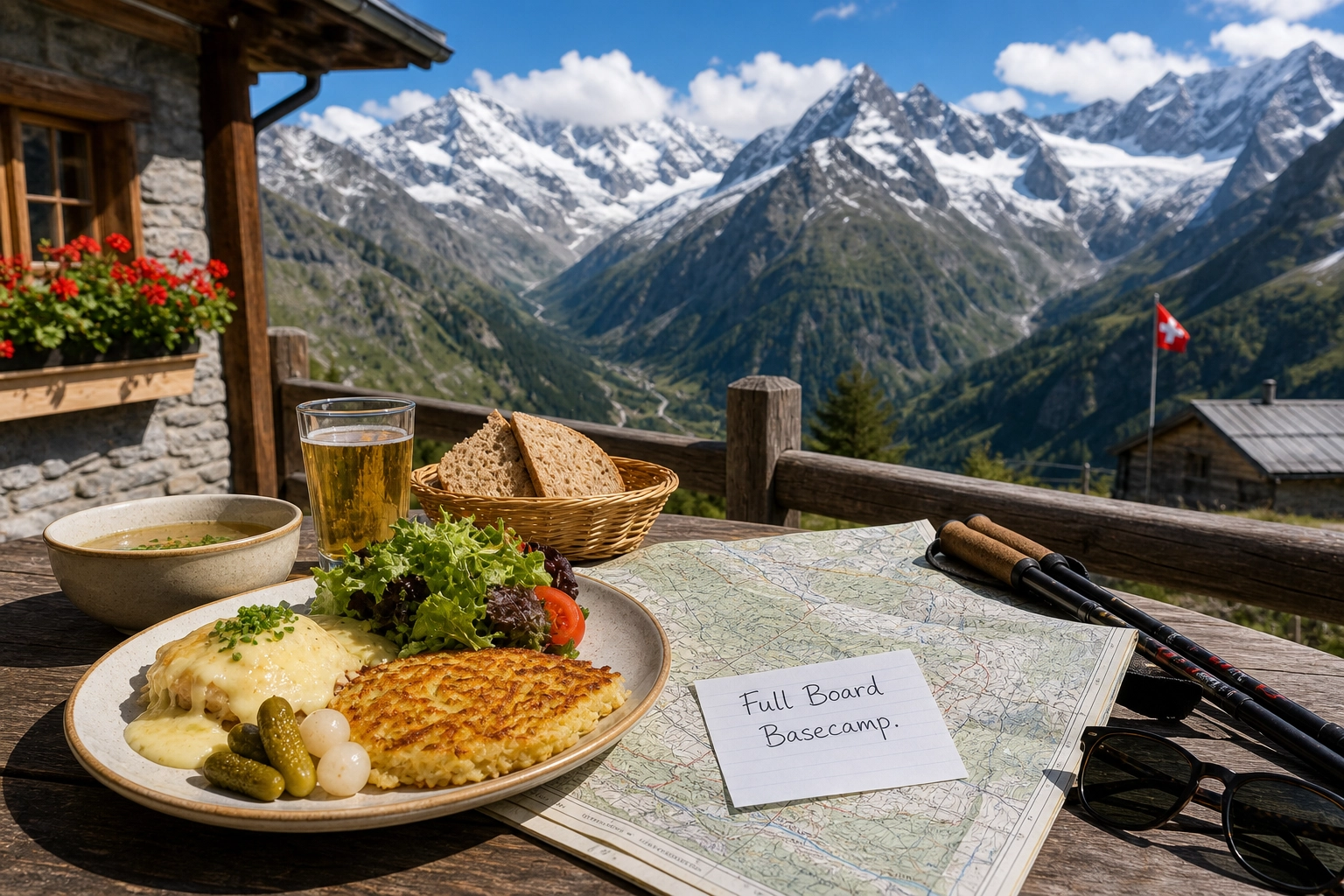
Buying lunch at a mountain restaurant in the Valais or Bernese Oberland can easily cost 35 to 50 Swiss Francs per person for a basic rosti, a soup, and a drink. Add dinner at a local village restaurant, and you are looking at another 60 to 80 Francs per night. Over a seven-day trip, daily food expenses often eclipse the cost of your room.
Full board accommodation changes the math completely. When your package includes breakfast, a packed trail lunch, and a hearty three-course dinner every day, you bypass the infamous Swiss dining tax while eliminating mealtime logistics. You wake up, eat breakfast, grab your trail lunch, head onto the mountain, and return to a freshly cooked evening meal with fellow hikers.
Choosing the wrong full board model can ruin a trip. Some traditional mountain guesthouses serve rigid, heavy multi-course dinners at fixed times that conflict with long trail days. Other self-guided tour providers offer “full board” that consists of nothing more than a store voucher or a basic sandwich.
This guide breaks down how full board hiking packages work in Switzerland, where to find options that suit budget-conscious hikers, and how to choose between social lodge basecamps, mountain guesthouses, and moving hut-to-hut treks.
What Full Board Accommodation Means on a Swiss Trail Holiday
In traditional hospitality, “full board” mean three meals served in a restaurant dining room: breakfast, lunch, and dinner. On an active mountain holiday, sitting in a dining room at noon is impractical when you are mid-way along a high ridge or crossing an alpine pass.
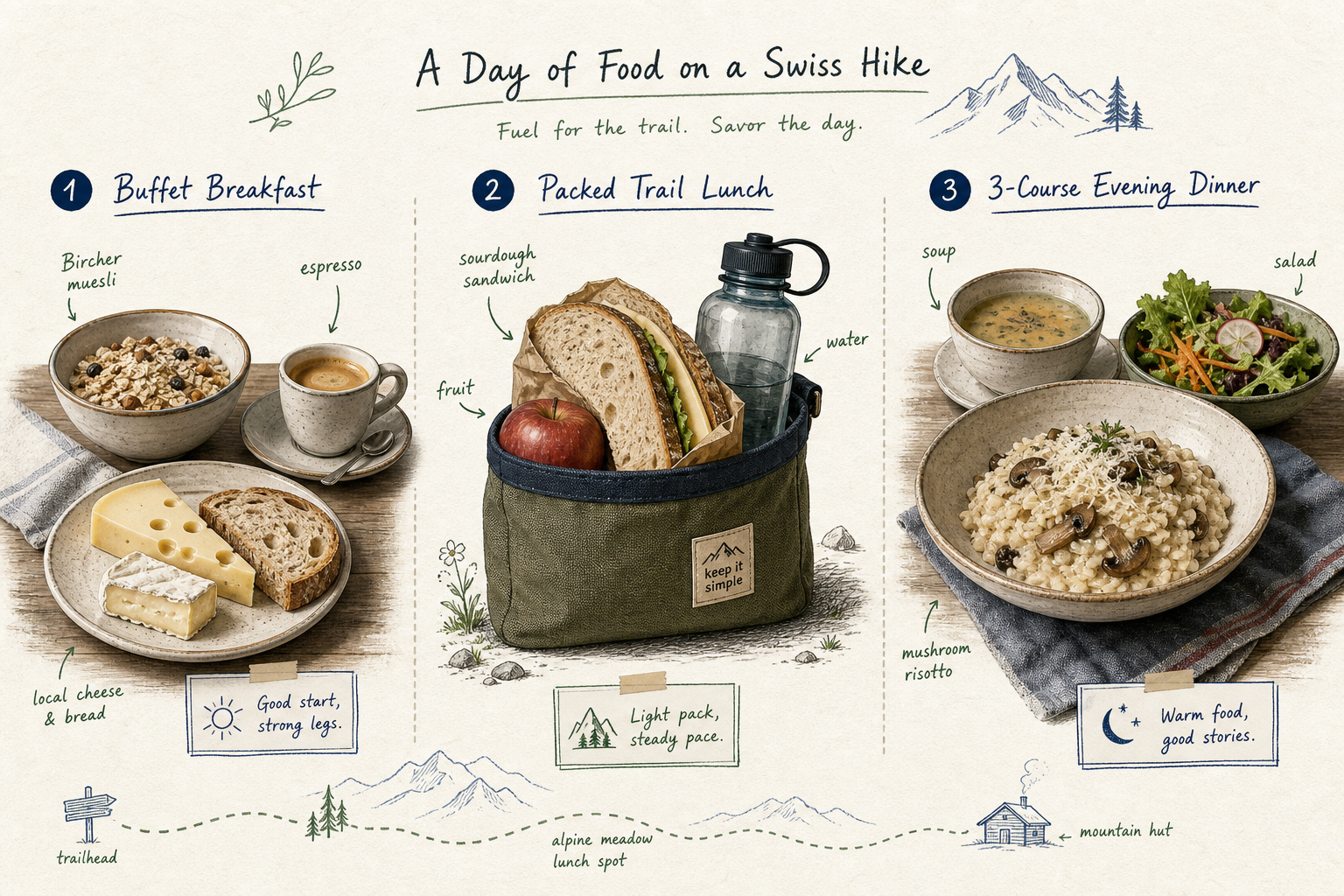
In the context of Swiss hiking packages, full board accommodation standardizes into three practical meals:
- Buffet Breakfast: Swiss cheeses, muesli, whole-grain breads, preserves, eggs, coffee, and tea served early enough to catch morning transport.
- Packed Trail Lunch: A portable lunch built at breakfast or packed by kitchen staff. This usually includes heavy sourdough or rye sandwiches, local cured meat or alpine cheese, fresh fruit, a nut or cereal bar, and water refills.
- Three-Course Evening Dinner: A warm, communal meal served after trail return. Dinner usually consists of a starter soup or fresh salad, a carbohydrate-dense main dish (such as risotto, polenta, pasta, or traditional alpine stews), and a dessert.
       TYPICAL SWISS HIKING MEAL TIERS

+-------------------+--------------------------------------------+
| MEAL PLAN         | WHAT IS INCLUDED                          |
+-------------------+--------------------------------------------+
| Bed & Breakfast   | • Morning breakfast buffet                 |
| (B&B)             | • Lunch: Out-of-pocket on trail / cafe     |
|                   | • Dinner: Out-of-pocket at village bistro  |

+-------------------+--------------------------------------------+
| Half Board        | • Morning breakfast buffet                 |
| (Demipension)     | • Lunch: Out-of-pocket on trail / supermarket|
|                   | • Evening multi-course dinner              |

+-------------------+--------------------------------------------+
| Full Board        | • Morning breakfast buffet                 |
| (Vollpension)     | • Packed trail lunch prepared every morning|
|                   | • Evening multi-course cooked dinner       |

+-------------------+--------------------------------------------+
Understanding the distinction between half board (demipension) and full board (vollpension) is critical when budgeting. Half board is standard across traditional Swiss mountain inns, but buying daily sandwich supplies at mountain supermarkets (like Coop or Migros) or stopping at trailside huts quickly adds 15 to 25 CHF per day. True full board handles all three meals, removing daily grocery runs from your schedule.
When comparing options, look closely at how the mid-day meal is handled. Higher-end packages provide self-assembly stations at breakfast where you can build your own sandwich using fresh bread, local cheeses, and spreads, ensuring you carry food you actually enjoy.
Types of Full Board Swiss Hiking Packages
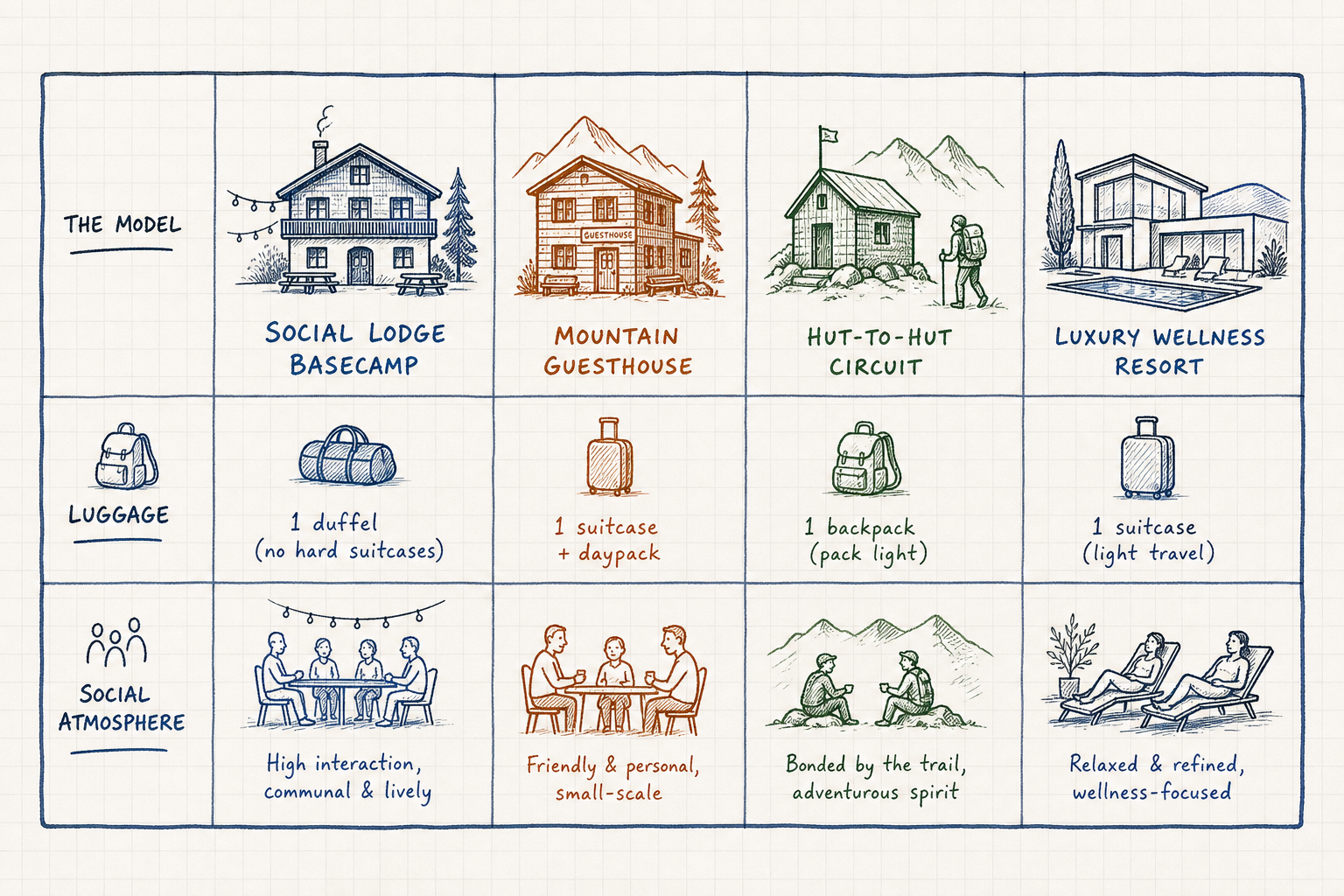
Not all full board holidays offer the same experience. The right setup depends on whether you prefer carrying a heavy backpack every day, staying in one location with lightweight trail packs, or socializing with an international group after hours.
1. Social Lodge & Hostel Basecamp Packages
Social lodge packages operate from a permanent chalet or hostel basecamp. Instead of packing your bags every morning and moving to a new hotel, you unpack once for the week.
Your hosting team provides breakfast, packs or helps you assemble trail lunches, handles transfers to and from local trailheads, and hosts communal family-style dinners in the evening.
+-----------------------------------------------------------------------+
|                   SOCIAL BASECAMP PACKAGE MODEL                       |
|                                                                       |
|   [ Central Basecamp Lodge ] ----> Daily Morning Shuttle              |
|              ^                           |                            |
|              |                           v                            |
|     Communal Dinner & Lounge     Day Hiking Routes                    |
|     (Unpack Once for 7 Days)     (Light Daypack Only)                 |
|              ^                           |                            |
|              |                           v                            |
|   Breakfast & Trail Lunch Prep <-- Evening Shuttle Return             |

+-----------------------------------------------------------------------+
This model works well for solo travelers, backpackers, digital nomads, and budget outdoor enthusiasts. Because the lodge operates as a communal hub, solo hikers can join guided or self-guided group walks during the day without paying single supplements or dining alone at night.
To see how communal lodging stacks up against conventional alpine hotels, read our guide on why social lodges beat luxury options for Swiss mountain trips.
2. Mountain Guesthouses (Berggasthaus) & Alpine Inns
Traditional mountain guesthouses sit above timberline or along pass routes, accessible only on foot or via small cable cars. Facilities like Gasthaus Brünig Kulm offer woodsy, rustic accommodations with cozy trailside dining, while Gasthaus Alpenblick provides snug rooms with traditional Swiss mountain hospitality.
Full board at a Berggasthaus delivers an authentic, quiet alpine environment. However, because these properties sit far from main transit hubs, stay lengths are usually limited to two or three nights before you run out of nearby trail options. They suit hikers who want off-grid quiet rather than high-energy group dynamics.
3. Circuit Treks & SAC Hut-to-Hut Chains
For trekkers who want to cover distance across famous routes—like the Tour du Mont Blanc, Walker’s Haute Route, or Bear Trek—hut-to-hut networks provide full board lodging along the route. Accommodations range from high-altitude Swiss Alpine Club (SAC) huts to small family-run mountain pensions.
While hut-to-hut full board keeps you moving across stunning terrain, it comes with strict tradeoffs:
- Dormitory sleeping: Most SAC huts use shared bunk rooms with 10 to 20 beds per room.
- Weight on your back: You must carry all clothing, toiletries, and gear for the week.
- Rigid schedules: Meals are served strictly at set times (usually 6:30 PM for dinner and 6:00 AM for breakfast). Miss dinner, and there are no alternative food sources nearby.
If you are weighing a multi-day moving trek against a stationary basecamp, check out our tutorial on how to plan hut to hut hiking in Switzerland.
4. Luxury Alpine Wellness Resorts
At the high end of the market, five-star wellness hotels offer full board hiking packages that pair daily guided mountain walks with multi-course gourmet meals, spa treatments, and private transfers. These packages provide top-tier comfort, but they carry prices starting at 400 to 800 CHF per night, making them less suited to budget-conscious travelers or younger hikers seeking an informal, social atmosphere.
Comparing Swiss Full Board Hiking Models
| Feature / Criteria | Social Lodge Basecamp | Mountain Guesthouse (*Berggasthaus*) | Hut-to-Hut Circuit (*SAC Huts*) | Luxury Wellness Resort |
|---|---|---|---|---|
| Typical Cost (per week) | 800 – 1,400 CHF | 1,200 – 1,800 CHF | 900 – 1,500 CHF | 3,000 – 6,000+ CHF |
| Meal Style | Communal breakfast, DIY trail lunch, 3-course group dinner | Traditional buffet, packed lunch, fixed alpine menu | Simple hut breakfast, trail snack, hearty single-menu dinner | Multi-course gourmet meals, tailored trail lunches, wine pairings |
| Luggage Storage | Unpack once; carry daypack only | Unpack once; carry daypack only | Carry full pack daily (or pay expensive luggage transfer fees) | Unpack once; carry daypack only |
| Social Environment | Very high; built for solo travelers & groups | Moderate; family & couple focused | High; communal tables in mountain huts | Low to Moderate; private, quiet focus |
| Flexibility on Bad Weather Days | High; day trips to towns, spas, or low-elevation valleys | Low; limited options off the mountain | Low; must walk to the next hut regardless of weather | High; full spa & resort facilities |
| Included Transport | Daily shuttles to nearby trailheads included | Limited; usually requires cable car fees | None; entirely self-propelled | Private drivers & valley passes |
What a Full Board Day Looks Like on the Trail
To see how a full board package works in practice, let us look at a typical day during a summer week based in the Valais region.
       A DAY IN THE LIFE: FULL BOARD BASECAMP HIKING

 07:30 - 08:30   [ Breakfast Buffet & DIY Trail Lunch Packing ]
 08:45 - 09:30   [ Van Transfer to Trailhead (e.g., Champex-Lac) ]
 09:30 - 13:00   [ Morning Hike: Ridge Climb & Alpine Views ]
 13:00 - 13:45   [ Scenic Trailside Lunch with Packed Supplies ]
 13:45 - 16:30   [ Afternoon Descent & Trail Finish ]
 16:30 - 17:15   [ Afternoon Return Shuttle to Lodge ]
 17:15 - 19:00   [ Shower, Relaxation, & Digital Nomad Co-Working ]
 19:30 - 21:30   [ 3-Course Communal Dinner & Next-Day Briefing ]
Morning: Fueling Up & Assembling Lunch
Breakfast opens at 7:30 AM in the communal dining hall. The spread includes fresh bread, local butter, mountain cheeses, cured ham, muesli, yoghurt, fruit, and espresso. Next to the buffet, a lunch assembly station is stocked with wax wraps, sandwich bags, apples, nuts, energy snacks, and trail mix.
You build your custom sandwich, pack an extra piece of fruit, fill your water bladder, and grab your daypack. By 8:45 AM, the group loads into private shuttles heading toward the morning’s trailhead.
Mid-Day: High-Altitude Trail Lunch
By 1:00 PM, after climbing 700 vertical meters toward an alpine col above Champex-Lac or through the Val de Bagnes, the group stops at a scenic viewpoint overlooking the Grand Combin massif.
Instead of waiting in line at a busy mountain restaurant or worrying about whether a remote hut accepts credit cards, you pull out your custom-packed sandwich, local cheese, and trail snacks. You sit on an open granite ledge, take in the panorama, and enjoy lunch without spending extra money or losing trail time.
Evening: Social Dinners & Trail Briefings
After returning to the lodge by late afternoon, there is time to shower, relax in the garden, or catch up on remote work. At 7:30 PM, everyone gathers for a family-style dinner: a hot vegetable soup starter, a main course of slow-cooked braised beef with creamy polenta (or a vegan lentil ragoût), and homemade apple tart for dessert.
Over dinner, hosts review the weather forecast and trail options for the next day, adjusting plans based on the group’s energy levels and trail conditions.
Top Swiss Regions for Full Board Hiking Weeks
When selecting a full board package, location dictates the terrain, transit convenience, and cultural variety you experience. Two regions in particular offer exceptional bases for multi-day hiking holidays.
       SWISS ALPS REGIONAL BASECAMP LOCATIONS

                    +-------------------+
                    |   SWITZERLAND     |
                    +---------+---------+
                              |
            +-----------------+-----------------+
            |                                   |
            v                                   v
   +------------------+                +------------------+
   |  VALAIS REGION   |                | BERNESE OBERLAND |
   |  Base: Liddes    |                | Base: St. Stephan|
   +--------+---------+                +--------+---------+
            |                                   |
  • Mont Blanc Border trails          • Simmental Alpine Valleys
  • Grand St. Bernard Pass            • Glacier 3000 & Gstaad
  • Excursions: Chamonix / Aosta      • Excursions: Interlaken / Oeschinensee
1. Valais & The Mont Blanc Borderlands (Base: Liddes)
The Valais canton in southwestern Switzerland delivers classic high-alpine scenery, featuring 4,000-meter peaks, expansive glaciers, and dry, sunny microclimates. Basing your week in a traditional village like Liddes—situated along the historic Grand St. Bernard Pass route—puts you minutes from quiet, dramatic mountain trails.
Key hiking highlights and day trips from a Valais base include:
- Grand St. Bernard Pass: Historic trails crossing ancient Roman trade routes into Italy, featuring alpine lakes and high mountain passes.
- Val de Bagnes & Mont Fort: High-elevation balcony trails facing the Grand Combin glacier network.
- Cross-Border Day Trips: Proximity to major alpine transit hubs allows easy day trips to Chamonix and Mont Blanc in France, or down into the sunny Aosta Valley in Italy.
If you are planning to explore trails near the French border, review our guide on the 5 best hiking trails in Switzerland near Mont Blanc. For travelers who want to stretch their legs across international borders, explore our guide to skiing and summer day trips in the Italian Alps via Aosta.
2. Bernese Oberland & The Simmental Valley (Base: St. Stephan)
The Bernese Oberland is famous for lush green valleys, dramatic limestone cliffs, and landmark glaciers. Setting up a base in the quiet Simmental valley at St. Stephan offers peaceful evenings away from major tourist hubs while maintaining easy access to world-class terrain.
Key hiking highlights and day trips from a Bernese Oberland base include:
- Glacier 3000 & High Alpine Ridges: High-altitude glacier hiking and suspension bridge walks with views spanning the Bernese and Valais Alps.
- Gstaad & Lenk Valley Trails: Gentle river walks, cascading waterfalls like the Simmenfälle, and high mountain pastures.
- Interlaken & Lake Oeschinen: Day trips to famous alpine lakes surrounded by sheer vertical rock faces.
For travelers who want to venture near Chamonix without battling huge summer tour groups, read our guide on 7 ways to visit Mountain Mont Blanc without the crowd.
How Full Board Packages Save You Money in Switzerland
Switzerland consistently ranks as one of the most expensive travel destinations in the world. However, fixed-cost full board packages strip unpredictable daily expenses out of your budget.
+-----------------------------------------------------------------------+
|             DAILY COST BREAKDOWN: DIY vs. FULL BOARD                  |
|                                                                       |
| DIY / Pay-As-You-Go Daily Cost:                                       |
|   • Mid-range Hotel Room (B&B):       140 CHF                         |
|   • Trailside Lunch & Drink:           30 CHF                         |
|   • Dinner at Village Bistro:          65 CHF                         |
|   • Local Trail Shuttles & Transport:  25 CHF                         |
|   TOTAL DIY DAILY COST:               260 CHF (~1,820 CHF / week)     |
|                                                                       |
| Full Board Social Lodge Daily Cost:                                   |
|   • All-inclusive Lodge Stay:         130 CHF                         |
|     (Includes Bed, Breakfast, Trail Lunch, 3-Course Dinner,           |
|      Trail Transfers & Airport Pickups)                               |
|   TOTAL FULL BOARD DAILY COST:        130 CHF (~910 CHF / week)       |

+-----------------------------------------------------------------------+
To optimize your overall travel budget beyond accommodation, read our complete guide on 7 tips for hiking in Switzerland without the high cost.
Hidden Costs to Watch Out For
While a full board package covers your primary living costs, always inspect the fine print before booking to avoid unexpected on-the-ground fees.
1. Daily Trail Shuttles & Valley Transfers
Some full board hotels include meals and lodging, but leave transit entirely up to you. In alpine valleys, relying on local postbuses, mountain trains, or taxis can add 20 to 40 CHF per day if you do not carry a Swiss Travel Pass or local guest card. Look for full board packages that include daily mini-bus shuttle transport to and from trailheads.
2. Mountain Cable Cars and Gondolas
If a trail starts high above the valley floor, you may need a cable car lift to reach the trail head. Some premium packages cover gondola passes, while standard packages offer discounted rates through regional visitor cards. Always clarify whether cable car rides are included in your weekly rate.
3. Trail Drinks & Evening Beverages
While full board covers food, alcoholic drinks (wine, beer, digestifs) and bottled soft drinks are almost always billed separately at dinner. Most social lodges run an honor-system honesty bar where guests log their drinks on a tally sheet paid at checkout.
4. Airport and Train Station Pickups
Getting from Geneva, Zurich, or Basel airport to remote mountain villages can take two to three train connections. Dedicated hiking week packages often include scheduled shuttle pick-ups from major transit hubs, saving you up to 100 CHF each way in train fares.
What to Pack for a Full Board Hiking Week
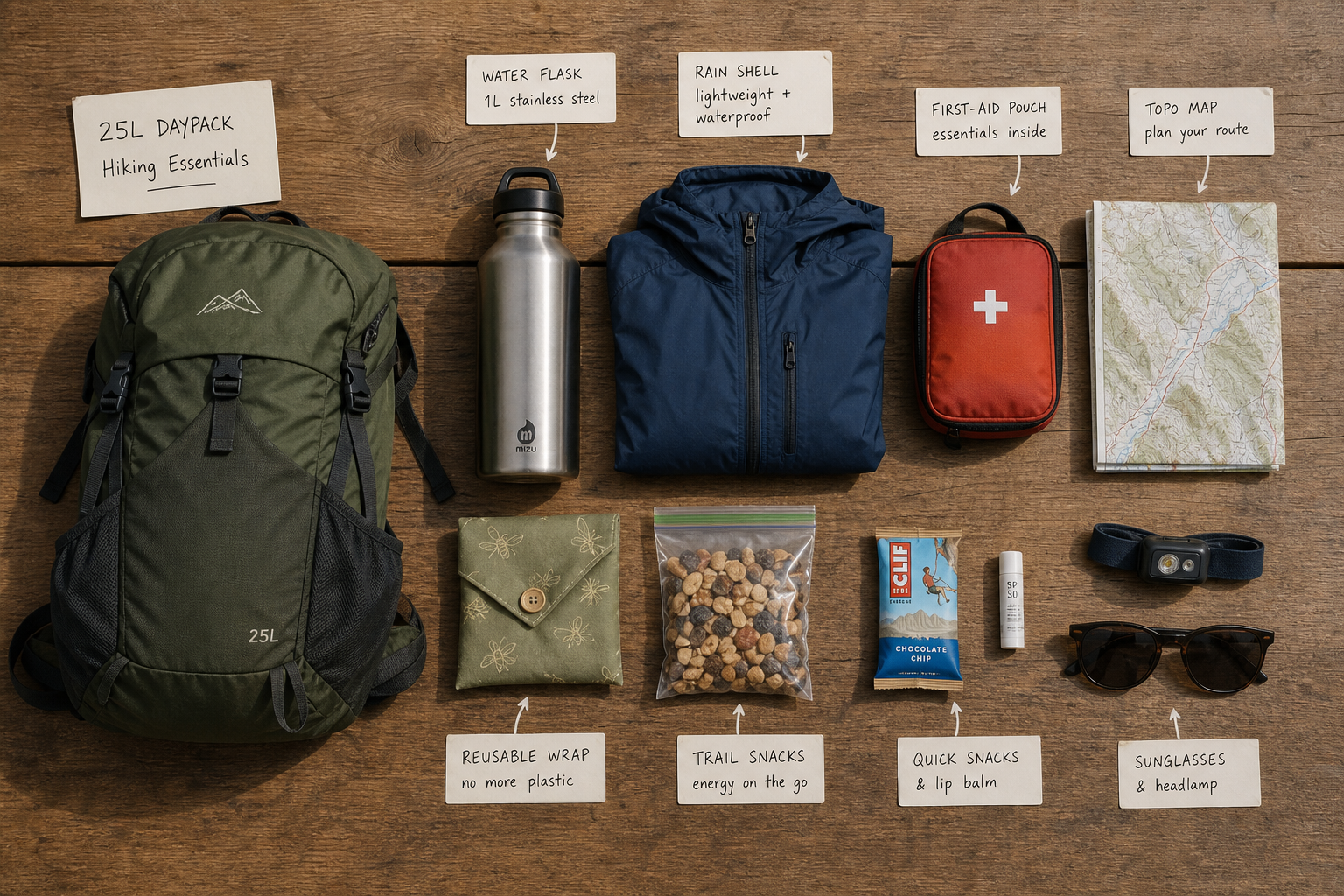
Because a full board basecamp package means you return to the same comfortable room each night, you do not need to haul a massive 60-liter backpack over high mountain passes. You can leave your main suitcase or duffel at the lodge and carry a lightweight 20- to 30-liter daypack on the trail.
       BASECAMP DAYPACK ORGANIZER SYSTEM

+------------------------------------------------------------------+
| TOP POCKET (Quick Access)                                        |
| • Sunglasses, Sunscreen, Lip Balm, Headlamp                      |

+------------------------------------------------------------------+
| MAIN COMPARTMENT                                                 |
| • Waterproof Shell Jacket & Pants                                |
| • Mid-layer Fleece or Packable Down Jacket                       |
| • Full Board Packed Trail Lunch Box & Snacks                      |
| • Reusable Hydration Bladder / Flask (1.5 - 2 Liters)            |
| • Small Personal First Aid & Blister Kit                         |

+------------------------------------------------------------------+
| OUTER / SIDE POCKETS                                             |
| • Trekking Poles (stowed when not in use)                        |
| • Reusable Wax Wrap for Sandwiches                               |

+------------------------------------------------------------------+
Key Items for Your Daily Trail Pack
- 20L to 30L Ergonomic Daypack: Features structured waist straps and an integrated rain cover.
- Reusable Lunch Box & Sandwich Wrap: Reduces single-use plastic waste when packing your daily trail lunch at the breakfast buffet.
- Hydration System: A 1.5 to 2-liter water bladder or insulated wide-mouth bottles. Alpine trail water from village fountains is pure, cold, and free.
- Layering Clothing System: A moisture-wicking synthetic or merino base layer, a warm fleece or lightweight packable down mid-layer, and a reliable waterproof jacket.
- Footwear: Sturdy, broken-in trail running shoes or mid-cut hiking boots with high-traction Vibram soles.
For a detailed packing list broken down by season, check out our guide to Swiss Alps summer: a simple 5-step packing guide.
Solo Travelers: Why Full Board Social Packages Excel
Solo hiking in a foreign country can feel intimidating. Navigating complex alpine train timetables, studying topo maps alone, and sitting alone at restaurant tables every night can make a solo trip feel isolating rather than invigorating.
       SOLO HIKER SOCIAL PACKAGE ADVANTAGE

 [ Shared Lodge Accommodation ] + [ Full Board Meal Table ]
                   |
                   v
 [ Instant Daily Hiking Companions & Group Shuttles ]
                   |
                   v
 [ Shared Trail Experiences & Evening Briefings ]
Full board social packages solve these friction points:
- No Single Supplements: Many budget-friendly lodges offer shared dorm rooms or affordable private rooms without charging double rates.
- Built-In Social Connections: Shared family-style dinners create an easy environment to swap stories, talk gear, and plan routes with fellow travelers.
- Group Safety on High Trails: Hiking with lodge companions or hosted trail leaders adds safety when crossing high passes, snowfields, or steep ridges.
To find out how to match with the right group dynamic on the trail, check out our complete breakdown on guided hiking in Switzerland: finding your social group.
How to Choose the Right Swiss Full Board Package
Before putting down a deposit on a Swiss hiking holiday, run through this step-by-step decision checklist to ensure the package fits your fitness level, travel style, and budget.
       FULL BOARD DECISION FLOWCHART

            [ Are you traveling solo or on a budget? ]
                                |
                   +------------+------------+
                   | YES                     | NO
                   v                         v
     [ Do you want to unpack once? ]    [ Luxury Resort / ]
                   |                    [ Private Hotel   ]
          +--------+--------+
          | YES             | NO
          v                 v
[ Social Lodge Basecamp ]  [ Hut-to-Hut Trek ]
(e.g., Liddes / St. Stephan)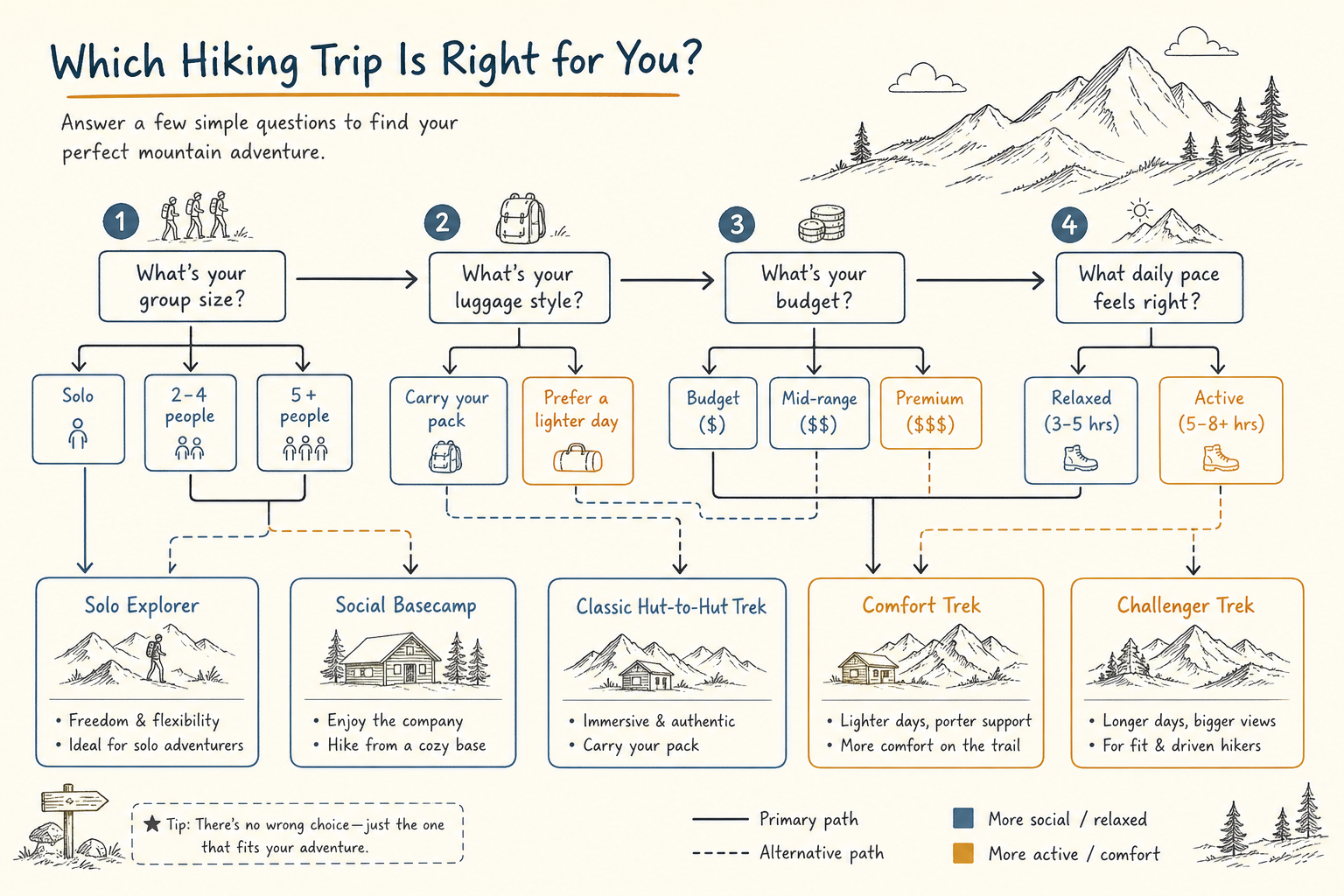
Step 1: Determine Your Preferred Daily Pace
Are you looking for relaxed 3-hour valley walks with photo stops, or challenging 7-hour mountain routes with 1,200 meters of elevation gain? Basecamp packages often offer multiple trail options each day, allowing you to choose between casual or intense routes depending on your energy levels.
Step 2: Verify Meal Flexibility & Dietary Support
If you are vegan, vegetarian, gluten-free, or have severe allergies, confirm that the lodge kitchen caters to dietary needs. Communal lodges that cook fresh meals daily can easily accommodate dietary requirements when notified ahead of time.
Step 3: Check Transport and Excursion Coverage
Confirm whether airport transfers and daily trail shuttles are included. Packages that handle transport logistics save you hundreds of Francs and eliminate the stress of deciphering regional train schedules.
Step 4: Review Bad-Weather Alternatives
Mountain weather in the Alps can change quickly. A quality basecamp host provides alternative rainy-day itineraries—such as day trips to nearby towns, thermal baths, or cultural landmarks like the Matterhorn Museum or Chillon Castle.
If your summer trip extends into early winter, you might also want to explore our comparison on which Swiss ski resort fits a backpacker’s budget or check out trail-adjacent activities like mountain biking by reading how to find the right mountain bike group for alpine trails.
Frequently Asked Questions
Can dietary restrictions (vegan, gluten-free) be accommodated on full board packages?
Yes. Most modern full board hiking lodges accommodate vegetarian, vegan, gluten-free, and dairy-free diets. Because meals are prepared fresh in house, lodge chefs can adapt menus easily when notified prior to arrival.
How do full board trail lunches work in practice?
Instead of a pre-made box lunch sitting in a fridge for hours, full board basecamps set up a self-assembly lunch bar during breakfast. Guests build fresh sandwiches using local breads, cheeses, and cold cuts, and grab fruit, energy bars, and trail snacks before heading out.
Is a basecamp full board package better than a moving hut-to-hut trek?
It depends on your travel goals. Moving hut-to-hut treks let you cover continuous distance, but require carrying all your gear on your back and sleeping in multi-bed dorms. Basecamp packages let you unpack once in a comfortable room, carry a light daypack, and adapt your daily routes based on local weather and energy levels.
Are alcoholic drinks included in full board packages?
Typically, no. Full board covers three full meals: breakfast, trail lunch, and a three-course dinner. Soft drinks, beer, and wine are billed separately, usually through an honor-system bar tab settled at the end of your stay.
How do I get to basecamp locations like Liddes or St. Stephan?
Most full board hiking operators coordinate scheduled shuttle pick-ups from major Swiss airport hubs such as Geneva or Zurich. Alternatively, Switzerland’s efficient SBB train network connects major airports directly to local valley stations, where hosts can pick you up.
Summary Checklist for Booking Your Full Board Swiss Hiking Week
Before locking in your Swiss summer hiking package, review this quick checklist to ensure maximum value:
- [ ] Verify Meal Inclusions: Does “Full Board” include a proper DIY trail lunch or just a breakfast roll?
- [ ] Check Transport: Are airport transfers and daily trailhead shuttles included in the total price?
- [ ] Confirm Luggage Setup: Will you unpack once at a central basecamp lodge or carry gear every day?
- [ ] Review Social Vibe: Is the lodge configured for solo travelers and groups with communal dining tables?
- [ ] Ask About Off-Trail Options: Does the host organize day trips to regional highlights like Chamonix, Aosta, or Interlaken on rest days?
Choosing a full board accommodation package turns a complex, expensive Swiss vacation into an organized, stress-free alpine adventure. By bundling your lodging, high-energy meals, and trail logistics into one clear rate, you can spend less time managing budgets and menus—and more time exploring world-class trails in the Swiss Alps.