Where to Stay in Swiss Alps in Summer (Beyond Hotels)
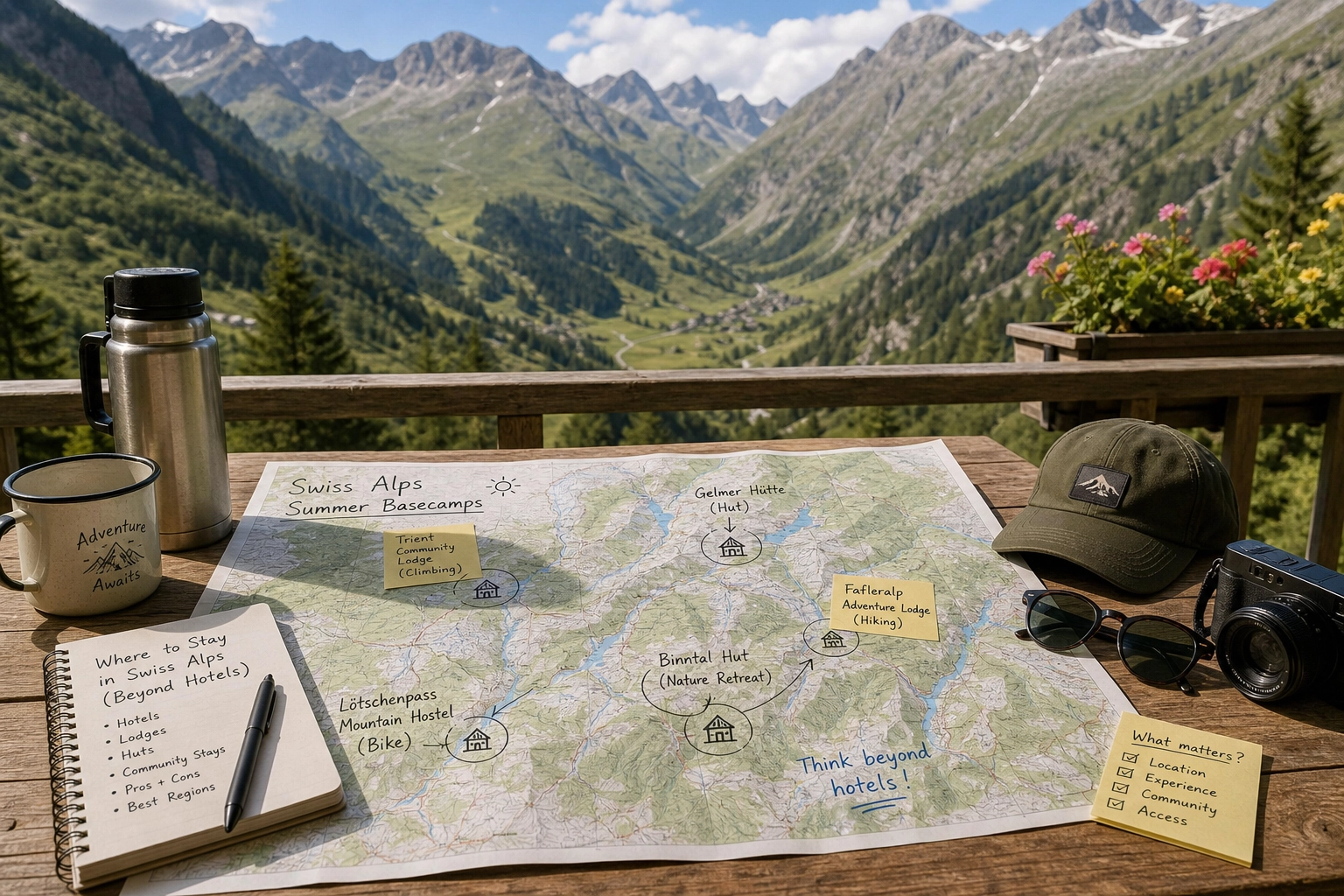
Most travelers planning a summer trip to the Swiss Alps default to a predictable formula: they open a booking engine, search for a luxury resort in a famous valley, and end up paying a premium for a room they barely spend time in. They eat expensive, solitary meals at the hotel restaurant, queue for the same overcrowded cable cars, and leave feeling like they saw the mountains through a glass window rather than actually experiencing them.
The reality of alpine culture is completely different. The Swiss mountains are built on a tradition of communal living, shared trail stories, and practical basecamps. If your goal is to genuinely connect with the landscape and the people who hike it, traditional luxury hotels actually work against you. They isolate you from the community of international backpackers, digital nomads, and lifelong alpinists who make summer in the Alps so dynamic.
Choosing where to stay in the Swiss Alps during the summer isn’t just about picking a town; it’s about choosing a travel philosophy. We’re going to bypass the standard hotels in Swiss mountains—because social lodges beat luxury every time when it comes to authentic mountain experiences. Instead, this guide breaks down the best regions, the rise of community-driven adventure lodges, and how to position yourself for the best hiking, biking, and socializing the Alps have to offer.
The Problem with the Standard Swiss Hotel Experience
If you search for the best places to stay in the Alps, you’ll inevitably find lists of five-star luxury resorts offering infinity pools and white-glove service. While visually stunning, these properties introduce three distinct problems for outdoor enthusiasts:
- Logistical Friction: Traditional hotels assume you are there to relax, not to summit a 3,000-meter peak. They rarely offer early-morning hiker breakfasts, in-house gear rentals, or a host who can dynamically reroute your itinerary based on localized weather patterns.
- Social Isolation: After a long day on the trails, a quiet hotel room is a missed opportunity. The best trail intelligence—which routes are washed out, where the ibex are grazing, which mountain hut serves the best Rosti—is traded over communal dinners, not at private, candlelit tables.
- The Budget Trap: Switzerland is notoriously expensive. Dropping hundreds of francs a night on a room leaves less budget for the actual experiences: mountain guides, cable car passes, and border-crossing excursions.
Top Regions for Your Summer Basecamp
Switzerland’s geography means your basecamp dictates your entire trip. You cannot easily commute between major valleys. Here is a breakdown of where to position yourself based on what you want to achieve.
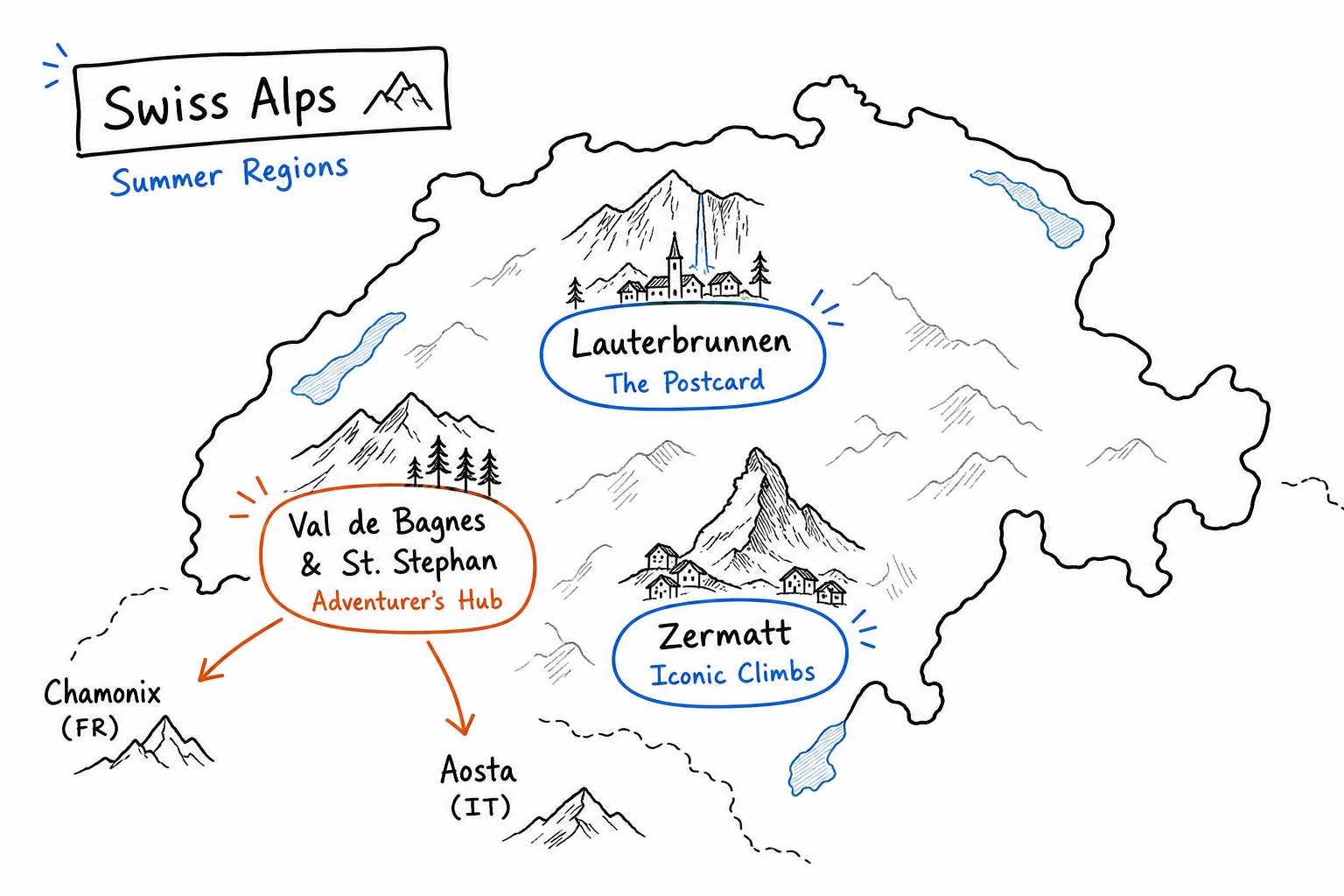
The Val de Bagnes & St. Stephan Regions (The Adventurer’s Hub)
While the masses flock to Interlaken, savvy hikers head to the Val de Bagnes and the surrounding valleys of Liddes and St. Stephan. This region is the beating heart of authentic alpine adventure.
Choosing a basecamp here offers immediate access to over 250 kilometers of diverse trails, ranging from relaxed valley walks to aggressive high-altitude scrambles. More importantly, this area acts as a strategic crossroad. You are situated perfectly to launch border-crossing excursions into Aosta in Italy or head over toward Chamonix in France.
If you want to tackle the mountain Mont Blanc: 7 ways to visit without the crowd, staying on the Swiss side in a town like Liddes provides a tranquil retreat to return to after dealing with the heavy tourism across the border. It is also the ideal starting point for exploring the 5 best hiking trails in Switzerland near Mont Blanc.
The Lauterbrunnen Valley (The Postcard)
Lauterbrunnen, famous for its 72 waterfalls and dramatic vertical cliffs, is arguably the most photographed valley in Europe. Villages like Mürren, Wengen, and Grindelwald sit perched above the valley floor, offering spectacular views of the Eiger, Mönch, and Jungfrau peaks.
As noted in many guides to the Swiss Alps in summer, the Lauterbrunnen Valley is car-free in many upper sections, requiring you to rely heavily on the Swiss rail and cable car network.
- Pros: Unmatched scenery; dense network of easy-to-navigate trails; excellent train connectivity.
- Cons: Highly congested from June to August; dining and accommodation carry a severe “view tax”; finding authentic community spaces here is difficult due to the transient tourist crowds.
Zermatt & The Matterhorn Region (The Iconic Climbs)
Zermatt is a mountaineer’s historic playground. Situated at the end of the Mattertal valley, this car-free town is dominated by the jagged silhouette of the Matterhorn. It’s an excellent hub for high-altitude glacier treks and accessing some of the most dramatic terrain in the country.
- Pros: World-class infrastructure; access to 4,000-meter peaks; excellent late-summer skiing.
- Cons: Extremely expensive; heavily commercialized high street; can feel more like a luxury shopping mall than a mountain village.
Beyond Hotels: 4 Alternative Accommodation Types for Summer
Once you’ve chosen your region, the next step is rethinking the roof over your head. The true Swiss alpine experience happens when you align your accommodation with your adventure goals.
1. Community-Driven Adventure Lodges
For solo travelers, digital nomads, and budget-conscious hikers, the community-driven adventure lodge is the ultimate basecamp. These are not standard youth hostels. Think of them as hybrid spaces that combine the social energy of a backpacker hostel with the operational efficiency of an alpine guiding company.
At a place like Ski Hostel—located strategically in Liddes and St. Stephan—the focus shifts from room amenities to comprehensive mountain experiences. These lodges manage the friction of alpine travel.
- All-Inclusive Logistics: Instead of figuring out bus schedules and gear rentals on your own, the host and volunteers manage group itineraries, provide transport to trailheads, and supply the necessary equipment.
- The Social Ecosystem: You aren’t just renting a bed; you’re joining a temporary family. Weekly adventure programs are curated to include communal dinners, spa nights, and backyard BBQ gatherings. You might find yourself sharing a meal of Brazilian-influenced cuisine with an international crew of hikers before planning the next day’s route together.
- Remote Work Readiness: Unlike rustic mountain huts, modern adventure lodges cater to digital nomads with high-speed Wi-Fi and dedicated shared spaces, allowing you to work a few hours before hitting the trails.
If you want to meet climbing partners or join a crew for a long trek, this is where you start. For advice on integrating into these groups, check out guided hiking in Switzerland: finding your social group.
2. High-Altitude Mountain Huts (Cabanes / Hütte)
Switzerland boasts an incredible network of over 150 SAC (Swiss Alpine Club) huts perched on ridges and glaciers. These range from simple stone shelters with no running water to massive, multi-story timber buildings offering hot meals, local beer, and dormitory-style beds.
Staying in a hut allows you to tackle multi-day routes without carrying a tent or cooking gear. You wake up at 2,500 meters, watch the sunrise hit the glaciers, and are immediately on the trail.
Because hut availability is limited and requires precise routing, it requires careful logistical prep. If this appeals to you, read up on how to plan hut to hut hiking in Switzerland (7 tips).
3. Dedicated Mountain Biking Hubs
During the summer, many ski resorts transition aggressively into downhill and enduro mountain biking destinations. While you can stay anywhere, dedicated bike lodges offer secure overnight tool storage, wash stations, heavy-duty washing machines for muddy gear, and on-site mechanics.
If you are coming to Switzerland primarily for the gravity trails in Verbier or Lenzerheide, finding an accommodation that specifically advertises to bikers is non-negotiable. They will also help you find the right mountain bike group for alpine trails.
4. Agri-Tourism and Farm Stays
For families or travelers looking for a quiet, pastoral experience, Swiss farm stays offer a glimpse into traditional agricultural life. You typically rent a room in a working dairy farm, waking up to the sound of cowbells. While charming, they are usually located lower in the valleys, requiring you to drive or take transit to reach the higher, more dramatic trailheads.
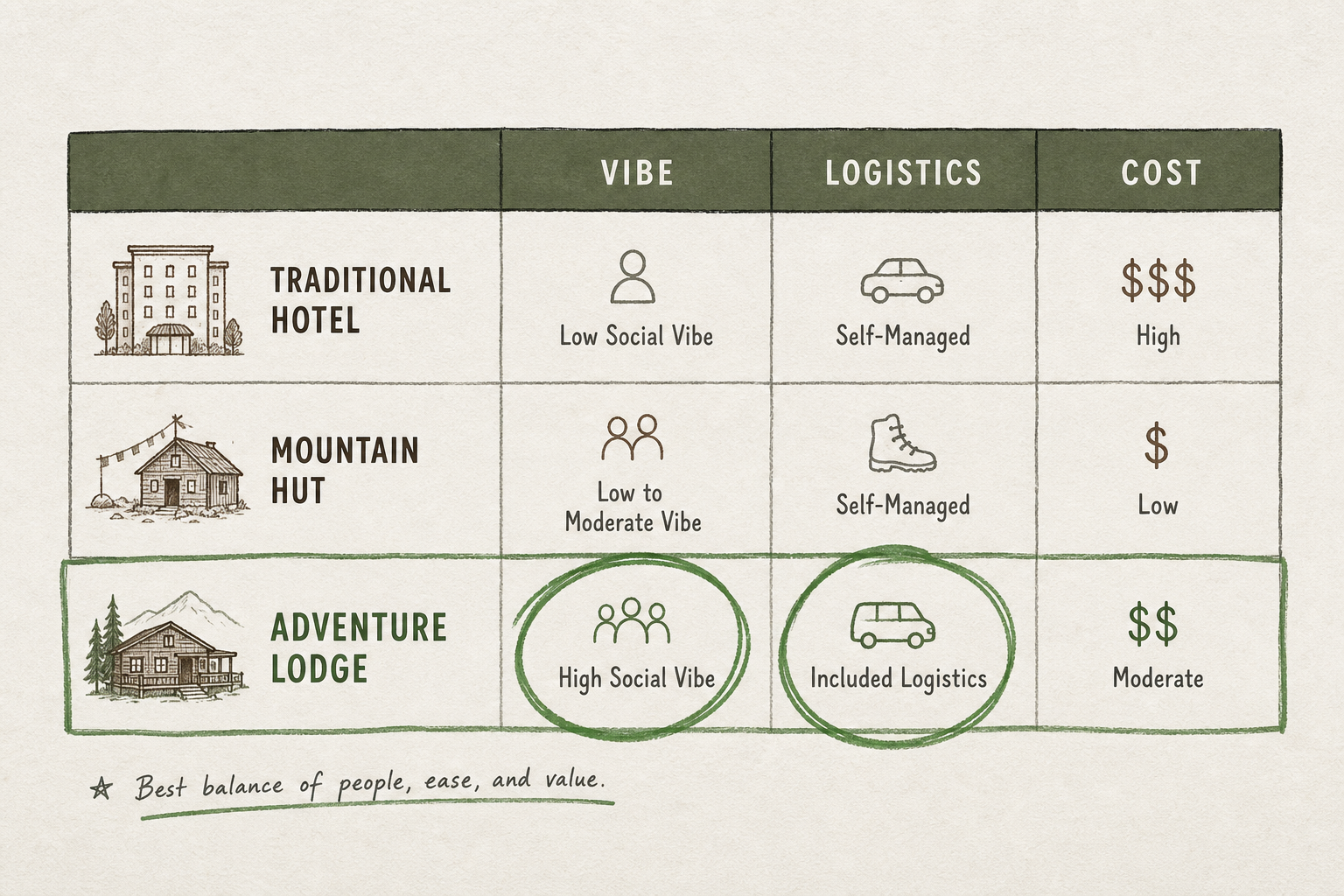
Comparing Accommodation Types (Decision Matrix)
To make the right choice, you need to weigh your budget against your logistical needs and desired social atmosphere.
| Feature | Traditional Hotel | Mountain Hut (SAC) | Adventure Lodge | Farm Stay |
|---|---|---|---|---|
| Price Per Night | $$$$ | $$ | $ - $$ | $$ |
| Vibe | Private, formal, quiet | Rustic, communal, early-to-bed | Social, high-energy, international | Quiet, pastoral, family-oriented |
| Food | A la carte, expensive | Set menu, hearty local fare | Home-cooked communal dinners | Fresh, local, often self-catered |
| Logistics Support | Concierge (tourist advice) | None (you are on your own) | Guided hikes, transport, gear rental | Minimal |
| Best For | Luxury seekers, short stays | Multi-day trekkers, alpinists | Solo travelers, digital nomads, groups | Families, slow-paced travelers |
Logistics: Planning Your Summer Alps Basecamp
Once you’ve chosen your accommodation style, integrating into the local infrastructure is the next hurdle.
Transport and Connectivity
Switzerland’s public transport is legendary, but it requires strategy to use economically.
- Trains vs. Driving: If you are staying in a major valley like Lauterbrunnen or a car-free town like Zermatt, a Swiss Travel Pass (or a Half-Fare card) is essential. However, if you are basing yourself in a community lodge in a regional hub like Liddes, having a car (or utilizing the lodge’s provided transport) gives you the flexibility to cross into Italy (Aosta) or France (Chamonix) without relying on complex, multi-border train schedules.
- Digital Connectivity: Don’t assume every mountain stay has reliable internet. Many insider guides to the Swiss Alps in summer warn that while cellular coverage is generally good, high-speed Wi-Fi in remote valleys can be patchy. If you are a digital nomad, confirm that your chosen lodge is explicitly set up for remote work.
Group Dinners and Mountain Food
Food in Switzerland is a significant expense, and eating out three times a day will rapidly drain your budget. This is a primary reason why all-inclusive or communal lodge setups are so valuable.
When you do eat out, look for traditional alpine calories designed for heavy exertion.
- Fondue: While often thought of as a winter dish, fondue is served year-round in mountain huts. It’s heavy, communal, and perfect after a 15-kilometer hike.
- Rösti: A massive pan of shredded, fried potatoes, often topped with bacon, eggs, and local alpine cheese.
- Communal BBQs: Many adventure lodges host weekly BBQs. It’s a chance to trade traditional Swiss cheese for grilled meats and varied international cuisines (like Brazilian fare) brought in by international hosts.
What to Pack for a Social Summer Stay
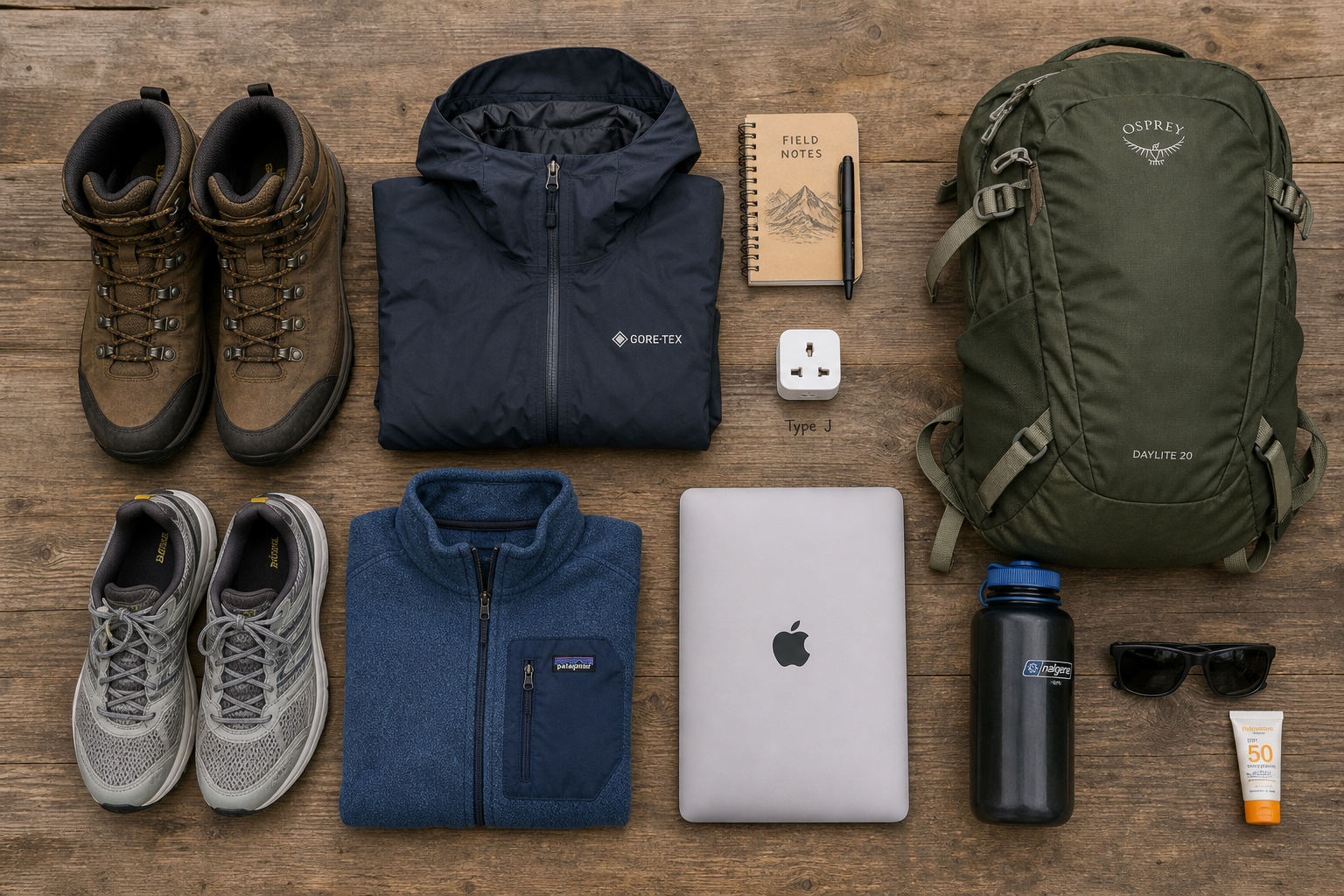
Packing for a summer stay in a mountain lodge requires a completely different approach than packing for a city break in Zurich or a luxury hotel in Geneva. You need gear that transitions seamlessly from high-altitude exertion to relaxed, communal living.
Summer in the Alps is notoriously volatile. You might start a hike in a t-shirt at 25°C and find yourself in a sleet storm at the summit three hours later.
The Basecamp Checklist:
- Trail Footwear: Rigid, waterproof hiking boots for high-altitude rocky trails, and a pair of lightweight trail runners for valley paths.
- Lodge Wear: Comfortable, casual clothing for communal dinners and lounging. Leave the formal wear at home; mountain lodges operate on a strict “comfort first” policy.
- Layering System: A moisture-wicking base layer, a fleece mid-layer, and a packable Gore-Tex shell.
- Daypack (20-30L): Essential for carrying water, snacks, and extra layers on daily excursions.
- Tech Gear: If you’re working remotely, a universal power adapter (Switzerland uses Type J plugs, which are different from the rest of Europe) and a reliable power bank.
For a more granular breakdown of exactly what goes into your bag, review our Swiss Alps summer: a simple 5-step packing guide.
How to Save Money Without Sacrificing the Experience
Switzerland consistently ranks as one of the most expensive countries in the world, which is why where to stay in the Swiss Alps is often the most stressful part of trip planning. However, a tight budget doesn’t mean you have to miss out on the best routes or the best views.
- Ditch the A La Carte Meals: As mentioned, securing accommodation that includes home-cooked communal meals or allows you access to a shared kitchen will save you anywhere from 30 to 60 CHF per day.
- Rethink the Cable Cars: Gondolas are incredibly expensive. Opt for trails that start lower in the valley, or use local postal buses which are often cheaper than private cable car networks. For a complete list of budget strategies, read 7 tips for hiking in Switzerland (without the high cost).
- Choose a Winter Resort in Summer: Many famous ski resorts drop their prices significantly during the summer months. Accommodations that cater to skiers in January often become budget-friendly hiker havens in July. Curious about which ones? See which Swiss ski resort fits a backpacker’s budget?
- Leverage Included Transport: Basecamps that offer their own transport to various alpine resorts and trailheads eliminate the need to rent a car or buy expensive point-to-point train tickets.
FAQ: Swiss Alps Summer Stays
How long should I stay in the Swiss Alps?
To truly settle into a rhythm, aim for a minimum of 5 to 7 days in one basecamp. This allows you to acclimatize, complete several substantial hikes, and factor in a rest day (or a bad weather day) without feeling rushed. Constantly moving to a new valley every two days guarantees you will spend most of your trip looking out of a train window.
Are mountain lodges good for digital nomads?
It depends entirely on the lodge. Traditional SAC huts have zero connectivity. However, modern community-driven adventure lodges are increasingly tailoring their spaces for remote workers. Look specifically for lodges that advertise high-speed Wi-Fi, dedicated workspaces, and a social environment that respects working hours.
Do I need to book accommodation far in advance?
Yes. Summer (mid-June through mid-September) is peak hiking season. Mountain huts often book out months in advance for popular routes like the Haute Route. Even flexible adventure lodges and hostels fill up quickly during July and August, especially if you are traveling with a group or require a private family room.
What are the best hiking routes if I base myself in the Val de Bagnes?
The region offers everything from the easy bisse (irrigation channel) walks to challenging multi-day treks. If you want a comprehensive list of routes categorized by difficulty, explore these 9 scenic hiking routes in Switzerland for every level.
Finding Your Alpine Home Away From Home
The Swiss Alps are too vast and too beautiful to experience in isolation. Booking a standard hotel room might provide a comfortable bed, but it walls you off from the vibrant, international community that comes alive in the mountains every summer.
By shifting your focus toward community-driven adventure lodges, you solve the logistical headaches of mountain travel, dramatically reduce your daily costs, and guarantee you have a built-in crew to share a beer with after a long day on the trails. Whether you are a solo backpacker looking for climbing partners, a digital nomad needing a reliable connection between hikes, or a family wanting a structured outdoor itinerary, the right basecamp makes all the difference.
Choose your region wisely, pack for unpredictable weather, and prioritize social connection over luxury amenities. The mountains are waiting, and the trail stories are much better when you have someone to share them with.